
By Alvin Lansana Kargbo
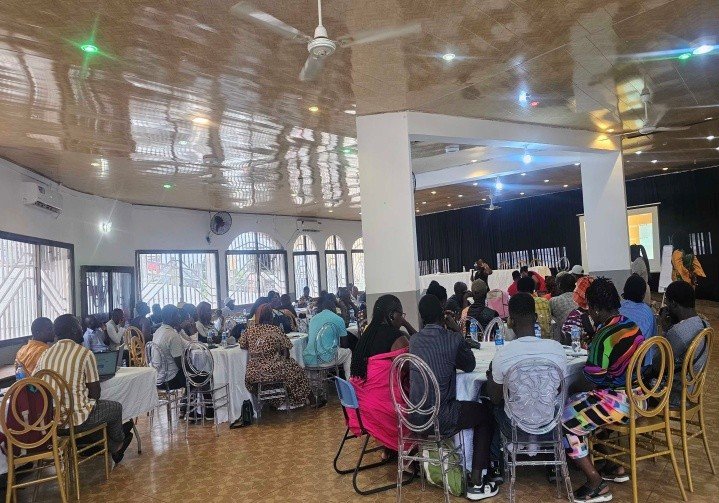
Stakeholders in climate resilience, health service delivery and disaster management have reaffirmed their commitment to strengthening preparedness and resilience in informal settlements following a two-day stakeholder engagement workshop organized under the Urban SHADES Project in Freetown.
Held from 6 to 7 May 2026 at New Sella Spot, 31 King Harman Road, the workshop brought together government institutions, community representatives, disaster response actors and researchers to advance intervention strategies aimed at addressing the growing impact of climate-related disasters in vulnerable urban communities.
The Urban SHADES Project, meaning Strengthened Health Service Delivery and Resilience in Informal Urban Spaces in the Context of Extreme Weather Events, is being implemented by the Sierra Leone Urban Research Centre (SLURC), the Centre for Dialogue on Human Settlement and Poverty Alleviation (CODOHSAPA), and the Institute of Gender and Children’s Health Research (IGCHR SL), with the Liverpool School of Tropical Medicine (LSTM) serving as the lead institution.
The workshop achieved four major outcomes designed to strengthen climate resilience interventions and institutional coordination within informal settlements. Stakeholders reviewed and validated findings from the project’s formative research phase to guide intervention implementation under Phase Four of the initiative. This follows the successful completion of Phase One on formative research, Phase Two on intervention design, and Phase Three on participatory design.
Participants also agreed on specific institutional and operational responsibilities for implementing interventions in targeted communities. In addition, stakeholders formalized a Memorandum of Understanding (MoU) to strengthen accountability, collaboration and shared ownership among participating institutions.
Another key outcome of the engagement was the establishment of a stakeholder working group tasked with coordinating activities, monitoring progress and ensuring a smooth intervention process throughout the implementation phase.
The engagement brought together representatives from the Ministry of Health, Freetown City Council, National Disaster Management Agency (NDMA), National Early Warning and Response Mechanism Coordinating Centre, Sierra Leone Meteorological Agency, National Fire Force, community stakeholders, disaster management committees, community health workers and co-researchers from Moyiba, Susan’s Bay and CKG communities.
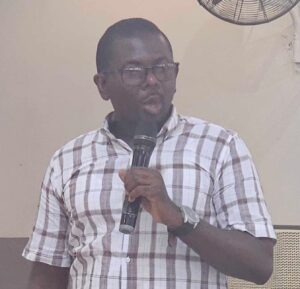
Speaking during the opening session, Braima Koroma, Director of Research and Training at SLURC, described the engagement as more than a routine workshop, emphasizing that it represented a platform for collective action and partnership between institutions and communities.
He urged participants to contribute their expertise and experiences toward developing a coordinated framework capable of protecting vulnerable communities from climate-related disasters while strengthening resilience in informal settlements.
Koroma noted that the workshop marked a significant transition from the research stage of the Urban SHADES Project to the intervention implementation phase, stressing the need for sustained collaboration and clearly defined institutional responsibilities beyond the project lifespan.
Providing an overview of the project, Dr. Abu Conteh described Urban SHADES as a multidisciplinary participatory research initiative focused on understanding how climate change intensifies social and health vulnerabilities in informal settlements.
According to him, local communities have remained central to the project since its inception, with residents actively participating as co-researchers in project design, field research and data analysis.
He further disclosed that the initiative works closely with disaster management institutions, meteorological agencies and health authorities to improve preparedness, strengthen emergency response systems and enhance resilience against climate-related risks.
Dr. Conteh explained that the workshop forms part of broader science engagement activities aimed at strengthening early warning systems, improving emergency response capacity and promoting institutional collaboration during extreme weather events.
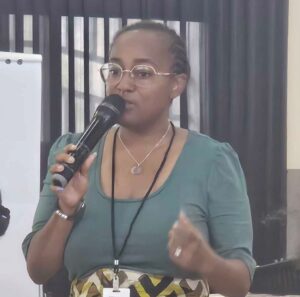
Presenting findings from Phase One research, Dr. Desta Alie highlighted serious environmental and public health challenges affecting residents in Moyiba, Susan’s Bay and CKG communities.
According to her presentation, flooding, blocked drainage systems, deforestation, poor sanitation and unregulated construction were identified as major drivers of climate-related disasters. She noted that rapid urbanization and population growth have further increased environmental degradation and vulnerability in informal settlements.
Dr. Alie revealed that recurring outbreaks of cholera, diarrhea, typhoid, malaria, respiratory illnesses and heat-related conditions remain major health impacts associated with extreme weather events.
She further highlighted persistent barriers to healthcare access, including shortages of drugs and medical supplies, overcrowded facilities, inadequate health infrastructure and long distances to healthcare centres, particularly affecting elderly residents and persons with disabilities.
Speaking on behalf of participating communities, Nancy Sesay of Susan’s Bay Community said the initiative has significantly improved awareness of disaster preparedness and hazard identification.
She emphasized the importance of proactive measures ahead of the rainy season, warning that delayed responses to flooding often worsen humanitarian and health conditions in vulnerable settlements.
The workshop concluded with stakeholders calling for sustained investment in climate resilience, improved early warning systems, stronger emergency response mechanisms and enhanced collaboration between institutions and local communities to address the increasing impact of climate change in Freetown’s informal settlements.