
By Amin Kef (Ranger)
According to UNICEF Sierra Leone, the growing impact of climate change is placing millions of children across the country at increasing risk, with the most vulnerable communities facing severe threats to their health, education, safety and future livelihoods.
Marking World Environment Day 2026, UNICEF highlighted that climate-related disasters such as floods, extreme heat and unpredictable weather patterns are disrupting essential services that children depend on every day. The organization stressed that urgent and coordinated action are needed to protect children from the devastating effects of the climate crisis.
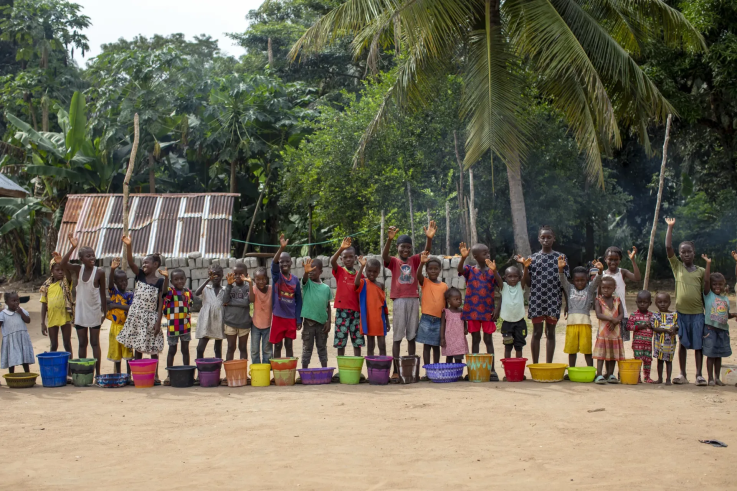
UNICEF noted that when floods destroy water facilities, classrooms become unsafe due to extreme heat and health centres lose access to clean water during emergencies, children are often the first and hardest affected. These environmental shocks are increasingly damaging school infrastructure, interrupting learning and exposing children to greater health and protection risks.
The agency pointed out that climate change is not simply an environmental issue but a child rights issue, particularly in countries like Sierra Leone where children make up a significant portion of the population.
With an estimated 41 percent of Sierra Leone’s population under the age of 15, nearly half of the country’s citizens are vulnerable to climate-related challenges. UNICEF stated that many children are already experiencing disrupted access to safe drinking water, increased exposure to diseases and growing obstacles to education and overall well-being.
Sierra Leone remains one of the countries most susceptible to climate change, facing recurring floods, environmental degradation and increasingly unpredictable weather conditions. According to available projections cited by UNICEF, if effective adaptation measures are not implemented, climate impacts could reduce the country’s Gross Domestic Product by as much as 9 to 10 percent by 2050, while coastal flooding alone could place hundreds of millions of dollars’ worth of assets at risk.
The organization also drew attention to the close relationship between climate change and poverty. Environmental shocks are making it more difficult for families to survive, particularly those already struggling with limited access to essential services.
Flooding, rising temperatures and erratic rainfall patterns are placing additional pressure on the country’s already fragile water and sanitation systems. UNICEF revealed that only 17.8 percent of Sierra Leone’s population has access to basic sanitation services, while nearly 38 percent lack access to basic water services.
Economic vulnerability is another major concern. UNICEF reported that more than six out of every ten children in Sierra Leone live in poverty, limiting their opportunities and access to quality healthcare, education and other essential services. Without stronger social protection systems, those challenges are expected to worsen, directly affecting children’s growth and development.
The agency emphasized that climate-related shocks are increasing the risk of disease outbreaks when water supply systems fail. Floods and environmental disasters also continue to damage schools, forcing closures and increasing the likelihood of children dropping out of education. Interruptions to healthcare services further expose children to additional risks during critical stages of their development.
UNICEF believes that addressing those challenges requires strengthening the systems that support children every day. This includes ensuring that communities maintain access to clean water, schools remain operational and health facilities continue functioning even during emergencies.
The organization underscored the importance of building climate-resilient water, sanitation and hygiene systems, as well as strengthening health, education and child protection services. It also highlighted ongoing efforts to improve preparedness, maintain continuity in healthcare and learning during climate shocks, and expand climate education programmes to equip children with the knowledge and skills needed to adapt to a changing environment.
UNICEF further linked this year’s World Environment Day to the upcoming Day of the African Child on 16 June, which focuses on achieving universal access to water, sanitation and hygiene for every child across Africa. The agency said both observances provide an opportunity to strengthen the connection between climate action and investments in essential services for children.
To accelerate progress, UNICEF called on the Government of Sierra Leone, development partners, donors and the private sector to increase investments in climate-resilient infrastructure across schools, health facilities and communities. It also urged stakeholders to strengthen systems that ensure the continuity of water, health, education and child protection services during climate emergencies.
Other key recommendations include increasing financing for programmes that protect vulnerable children, expanding early warning systems, strengthening disaster preparedness in schools, training frontline workers on climate risk management and psychosocial support, and promoting climate change education and community awareness to empower young people as champions of resilience.
UNICEF concluded that climate action is about more than reducing greenhouse gas emissions. It is fundamentally about protecting children from climate-related risks and safeguarding their future.
As Sierra Leone commemorates World Environment Day 2026, UNICEF’s message remains clear: placing children, especially the most vulnerable, at the heart of climate action is essential for building a resilient and equitable nation where every child has the opportunity to survive, learn and thrive. Achieving this vision, the agency stressed, will require sustained investment, stronger preparedness systems and collective action to protect children before, during and after climate-related disasters.