

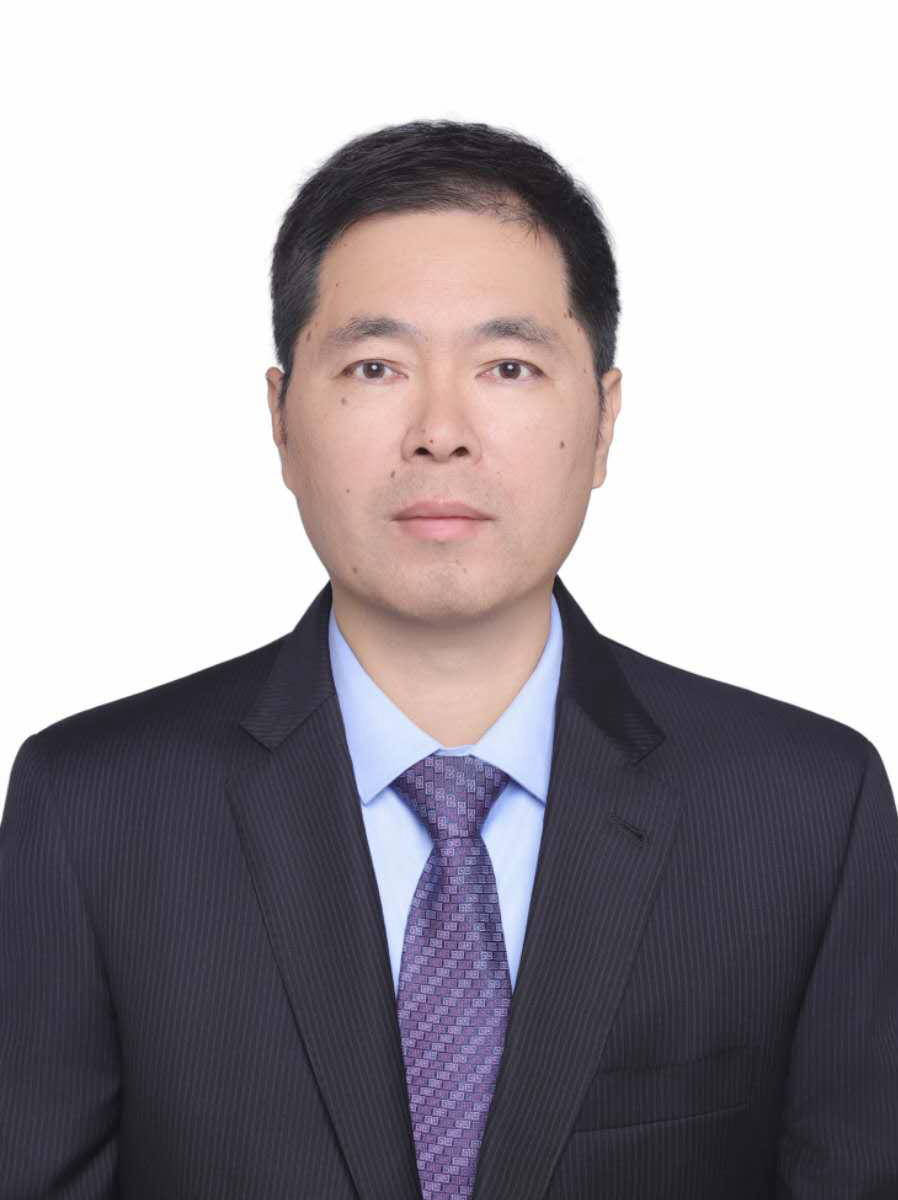
Recently, Ambassador Zhao Yong accepted a written interview with Sierra Leonean Media on the Taiwan question. He elaborated the historical context of the Taiwan question, expounded on the one-China Principle and exposed the erroneous actions of “Taiwan independence” separatist forces as well as the sinister intentions of external forces seeking to “use Taiwan to contain China.” The main points are as follows:
- Could the Ambassador please briefly outline the origins of the Taiwan question?
Taiwan has belonged to China since ancient times. The historical context is clear and the legal basis is indisputable. In 230 AD, during the Three Kingdoms period, Sun Quan, King of Wu Kingdom, dispatched officials and troops to Taiwan. Ever since Song and Yuan dynasties, successive central Governments of China had established administrative control over Taiwan. In 1895, the defeated Qing Dynasty Government was forced to cede Taiwan to Japan, but Japan’s colonial history in Taiwan has no legitimacy. Taiwan compatriots never ceased their dauntless struggle throughout the Japanese occupation. In 1937, the Chinese people threw themselves into an all-out war of resistance against Japanese aggression, and the struggle against Japanese colonial rule in Taiwan was an integral part of the Chinese nation’s nationwide resistance. After Japan’s defeat in 1945, Taiwan was liberated and returned to China’s territory. The restoration of Taiwan to China is an important part of the outcomes of WWII victory and post-war international order. A series of instruments with legal effect under international law, including the Cairo Declaration, the Potsdam Proclamation, and the Japanese Instrument of Surrender, have all clearly affirmed China’s sovereignty over Taiwan. The question regarding the status of Taiwan has already been completely settled following the victory of the War of Resistance against Japanese Aggression in 1945.
- How should we understand the one-China Principle? What is its connection to UNGA Resolution No. 2758?
The one-China Principle has three fundamental implications: There is but one China in the world. Taiwan is an inalienable part of China’s territory. The Government of the People’s Republic of China is the sole legal government representing the whole of China. The one-China Principle is the premise and foundation of UNGA Resolution No. 2758, which solemnly affirms and fully embodies the one-China Principle. The resolution makes clear that there is only one China in the world, that the Government of the People’s Republic of China is the sole legitimate representative of the whole of China, including Taiwan, and that there are no “two Chinas” or “one China, one Taiwan.” Sierra Leone was one of the co-sponsors of the resolution, and China deeply appreciates this.
The adoption of the Resolution No.2758 has had broad and far-reaching political implications, and the international community has generally adhered to it. To date, 183 countries have established and developed diplomatic relations with China on the basis of the one-China Principle. At the same time, following the adoption of the Resolution, all official U.N. documents referred to Taiwan as “Taiwan, province of China.” It was clearly stated in the official legal opinions of the Office of Legal Affairs of the U.N. Secretariat that “the United Nations considers ‘Taiwan’ as a province of China with no separate status” and the “‘authorities’ in ‘Taipei’ are not considered to enjoy any form of government status.” In accordance with the one-China principle, organizations such as the World Trade Organization, the Asia-Pacific Economic Cooperation, and the Asian Development Bank have made arrangements for Taiwan to participate in their activities under the name “Chinese Taipei.” These vivid examples of multilateral and bilateral diplomatic practices fully demonstrate the understanding and respect of all parties for China’s efforts to safeguard its national sovereignty and territorial integrity, which continue to solidify the international community’s commitment to the one-China principle.
- What is China’s comment on the recent visit by Lai Ching-te, the so-called leader of Taiwan Region, to Eswatini?
China has repeatedly reaffirmed that there’s no longer a so-called “ROC president” in the world anymore. Anyone who wears that false title is acting against history and will only invite disgrace upon themselves. Previously, Lai Ching-te had planned to make a clandestine visit to Eswatini last April, but his scheme was thwarted due to the firm adherence of relevant African countries to the One-China Principle. What was even more shocking was that on May 2, just hours within the Yilan earthquake, Lai Ching-te ditched the people in Taiwan who were still reeling from the disaster and sneaked onto a foreign plane to “smuggle” himself out of the island, squandering taxpayers’ money and performing a laughable stunt in front of the world. That just added yet another episode to the scandalous “Taiwan independence” separatism.
The undignified act of Lai Ching-te and his like once again proves that the one-China principle has long been a basic norm in international relations and prevailing international consensus. No matter how “Taiwan independence” forces try to cover up their nature or change appearance, nothing can save their reputation or help them escape the denunciation of the international community.
- Based on the One-China Principle, how can China and Sierra Leone work together to safeguard each other’s core interests and achieve common development?
China and Sierra Leone share a deep-rooted traditional friendship, and both sides have consistently and firmly supported each other’s core interests. In recent years, the Sierra Leonean government has repeatedly reaffirmed its firm adherence to the One-China Principle. In the 2024 China-Sierra Leone joint statement on deepening comprehensive strategic cooperative partnership, the Sierra Leonean side reiterated its firm commitment to the one-China principle, recognizing that the government of the People’s Republic of China is the sole legal government representing the whole of China, and Taiwan is an inalienable part of China’s territory. The Sierra Leonean side firmly opposes any form of “Taiwan independence” or external interference in the internal affairs of China, reaffirms that it will not develop any form of official exchanges with Taiwan and will support all efforts made by the Chinese government to achieve national reunification. The Chinese side deeply appreciates the firm stance of Sierra Leone on Taiwan question, which not only serves as the political foundation of China-Sierra Leone relations but also vividly demonstrates the deepening political mutual trust between the two countries. China is willing to work with Sierra Leone to continue firmly supporting each other on issues involving each other’s core interests and major concerns, uphold the purposes and principles of the Charter of the United Nations, safeguard international fairness and justice, and jointly promote world peace, security, and prosperity.