
By Amin Kef-Ranger
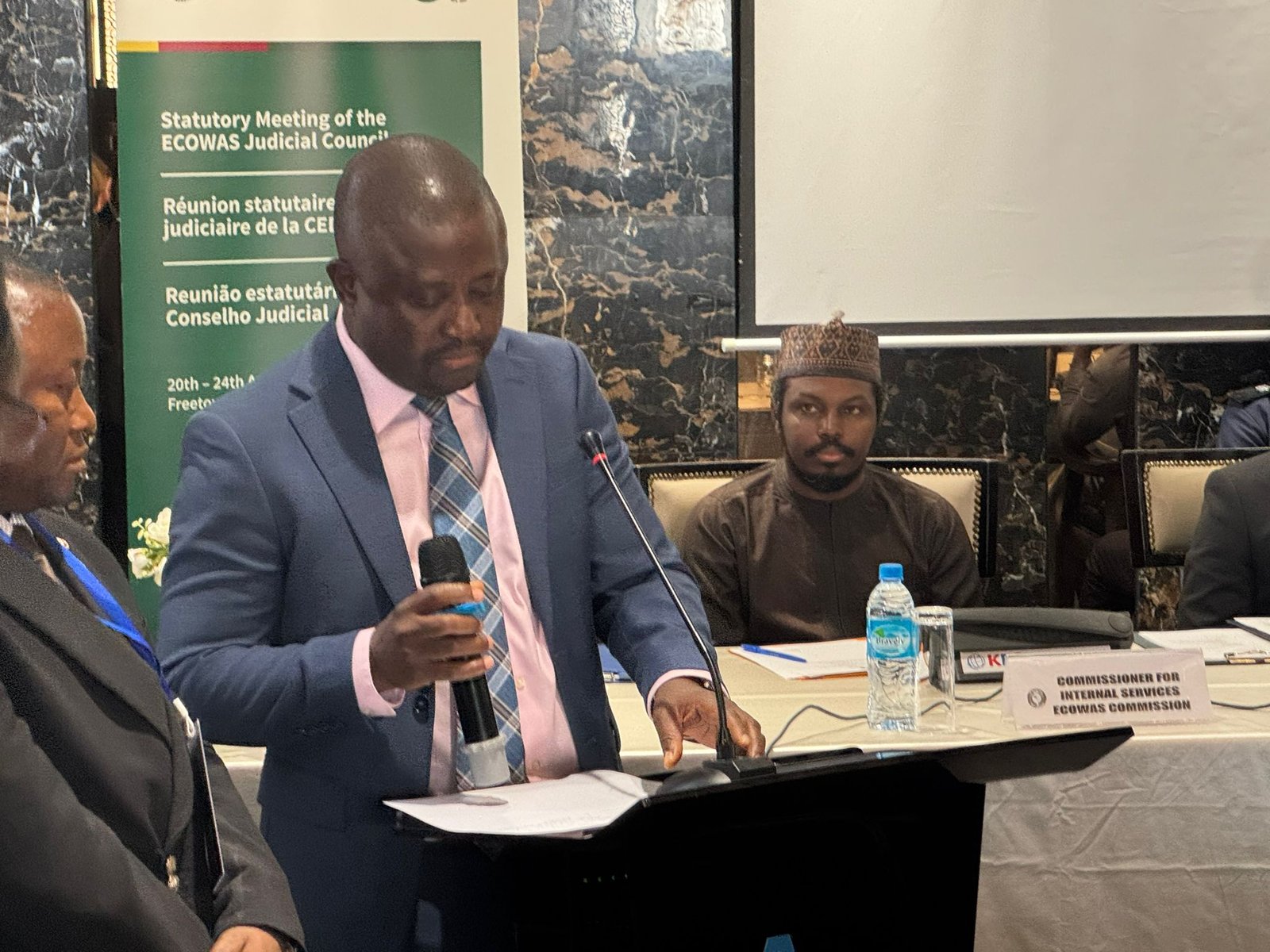
Sierra Leone’s Attorney General and Minister of Justice, Alpha Sesay, has called for stronger regional judicial cooperation across West Africa, describing it as critical to advancing justice, protecting human rights and deepening economic integration within the sub-region.
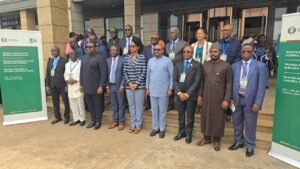
Speaking at the Statutory Meeting of the ECOWAS Judicial Council held at the Atlantic Lumley Hotel Conference Centre on Lumley Beach Road in Freetown on April 23, 2026, the Attorney General said the gathering comes at a pivotal moment in Sierra Leone’s legal evolution.
Addressing delegates, Alpha Sesay stated that the country is undergoing what he described as a “transformative legal renaissance,” driven by a series of reforms introduced under the leadership of Julius Maada Bio. He outlined key milestones including the enactment of the Criminal Procedure Act of 2024, the abolition of the death penalty, progressive gender laws, the criminalisation of child marriage and ongoing constitutional review processes aimed at strengthening democratic governance.
“Our direction is clear: to move away from justice for the few and toward justice for all,” he told participants, emphasizing the government’s commitment to building an inclusive and accessible justice system.
Despite these domestic gains, the Attorney General cautioned that no national justice system can operate effectively in isolation, particularly within a region confronted by transnational crime, evolving security challenges and shifting political landscapes. He underscored the importance of collective legal responses to shared threats, noting that stronger collaboration among ECOWAS member states is essential for effective justice delivery.
He described the ECOWAS Judicial Council as a vital institution in upholding the rule of law across the region, strengthening the ECOWAS Community Court of Justice and maintaining public trust in regional legal mechanisms. According to him, the Council’s oversight role is key to ensuring that citizens across West Africa view regional adjudication as both a safeguard against injustice and a protector of fundamental human rights.
Alpha Sesay further highlighted the economic implications of robust judicial cooperation, stating that a predictable and harmonised legal environment is crucial for attracting investment and facilitating cross-border trade. He noted that effective enforcement of judgments across jurisdictions remains central to building investor confidence and fostering regional prosperity.
“When we strengthen judicial cooperation, we do more than advance legal theory; we build the legal infrastructure for regional prosperity,” he said.
He also called on stakeholders to prioritize harmonization of legal frameworks, improved access to justice through the adoption of technology, and the reinforcement of judicial independence. He stressed that safeguarding the autonomy of courts is essential to maintaining fairness, credibility and public confidence in the justice system.
“Let us strengthen the safeguards that preserve judicial independence, ensuring that our courts remain enduring symbols of impartiality and truth,” he urged.
The Attorney General concluded by reminding delegates that the outcomes of the meeting in Freetown carry significant implications for more than 400 million citizens within the ECOWAS region, underscoring the Council’s responsibility in shaping the future of justice and governance across West Africa.