

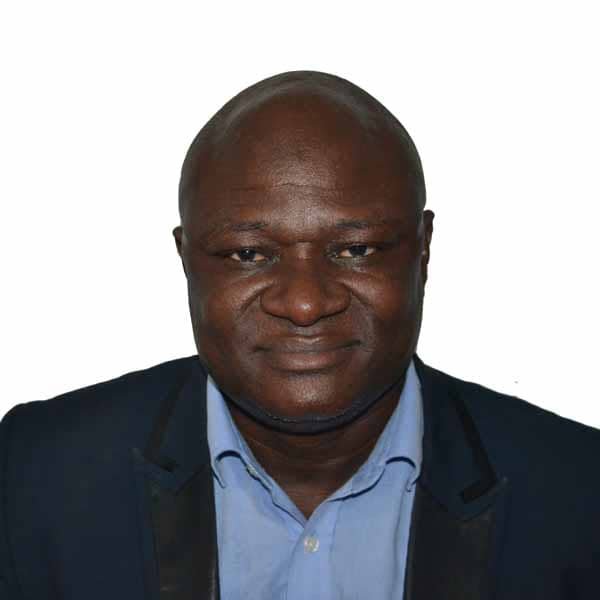
The Regional Studies Association (RSA) has honoured Braima Koroma, Director of Research and Training at the Sierra Leone Urban Research Centre (SLURC), and five other researchers with the 2026 Best Paper Award for the journal Area Development and Policy.
The award-winning paper, titled “Accessibility, (Dis)advantage and Everyday Mobility Practices and Experiences: The Cases of Maputo and Freetown,” was recognised as the journal’s most impactful contribution published in 2025.
Koroma co-authored the paper with Daniel Oviedo, Clémence Cavoli, Alexandria Z. W. Chong, Joaquín Romero de Tejada and Yasmina Yusuf. Their research examines how residents of Freetown, Sierra Leone, and Maputo, Mozambique, experience everyday transportation and access to essential services.
Published in Area Development and Policy, Volume 10, Number 2, the study explores how social and transport disadvantages influence people’s ability to reach workplaces, schools, healthcare facilities, markets and other important destinations.
The researchers argue that accessibility involves much more than roads, transport routes and available services. It also reflects people’s lived experiences, aspirations, financial circumstances and dependence on informal transport systems.
The paper identifies income, gender, age, disability, residential location, road conditions and personal safety as major factors affecting mobility and access to opportunities in the two cities.
As part of the research, focus-group discussions were conducted with 12 to 13 participants from each of eight selected communities. In Freetown, the study covered Cline Town, Moyiba, Southridge and Brookfields, while the Maputo research involved Chamanculo, Maxaquene, Muhalaze and participants from several middle-class communities.
The discussions were conducted in Krio in Freetown and Portuguese in Maputo, enabling participants to explain their daily transport experiences in languages with which they were familiar.
The findings show that rapid urban growth has forced many residents to settle in communities far from city centres, where land may be more affordable but access to roads, transport and essential services remains limited.
Some residents prioritise acquiring land and constructing homes, even when this means living in areas with inadequate infrastructure and increased exposure to flooding and other natural hazards.
Walking was identified as the most common means of transportation in both cities. However, pedestrians face several challenges, including poor roads, potholes, inadequate drainage, limited street lighting, lack of pavements, traffic congestion, extreme weather, road dust and the risk of crime and harassment.
The research also highlights the important role played by informal transport services. In Freetown, commuters depend heavily on commercial motorbikes commonly known as okadas, kekehs, taxis and poda-podas. In Maputo, residents frequently use chapas and open-box trucks known as “My Love.”
Although these transport services are essential to daily life, passengers regularly experience overcrowding, unsafe driving, unreliable operations, high fares and poor treatment.
Weather conditions also have a significant impact on mobility. Freetown’s long rainy season makes roads muddy, slippery and dangerous, particularly in hillside communities. Transport operators sometimes increase fares during heavy rainfall, leaving commuters with limited alternatives.
Night travel is also considered unsafe because of poor street lighting, robbery, harassment and mistrust of some transport operators.
According to the study, women, children, older people and persons with disabilities face greater transport disadvantages. Some operators reportedly refuse to transport passengers with reduced mobility, while women often adjust their travel times and routes to reduce their exposure to harassment and gender-based violence.
Many participants expressed a desire to own private vehicles because they associate car ownership with safety, independence, reliability and freedom from the difficulties of public transportation. However, the researchers warned that increased private vehicle ownership could worsen traffic congestion, pollution and inequality.
The paper concludes that transport systems in Freetown and Maputo are neither sufficiently accessible nor sustainable. It recommends improvements in roads, drainage, pedestrian facilities, street lighting and affordable public transportation.
It also calls for better integration of formal and informal transport services, stronger consideration of gender and disability, improved land-use planning and greater community participation in transport-related decisions.
Commenting on the award, SLURC Executive Director Dr. Joseph Macarthy said the recognition underscored the value of research focused on mobility and inequality.
“This recognition from the Regional Studies Association celebrates excellence in regional research, and we are delighted to see this important work on urban mobility and inequality take centre stage,” he said.
Koroma expressed appreciation to the RSA for recognising the collaborative research and its contribution to discussions on sustainable urban development.
“I sincerely thank the Regional Studies Association for this recognition. It is an honour to see our collaborative work acknowledged, and I hope it continues to inspire inclusive and sustainable approaches to urban mobility across Africa and beyond,” he stated.
The RSA praised the paper for its originality, methodological rigour and policy relevance, noting that it supports South–South knowledge exchange and promotes inclusive planning for urban transport systems.
The award represents a major achievement for Koroma and his co-authors and further strengthens the international visibility of SLURC-led research. It also elevates discussions around accessibility, inequality and sustainable mobility in cities across Africa and the wider Global South.
The full paper is available through SLURC’s website at www.slurc.org under the publications section.