
By Foday Moriba Conteh
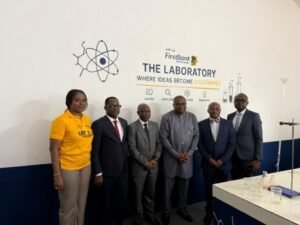
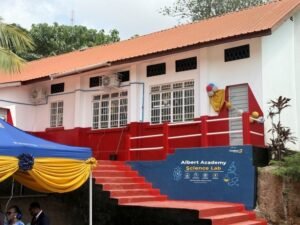
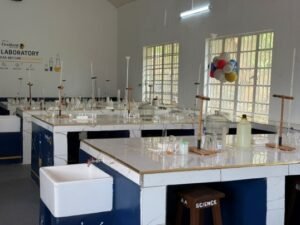
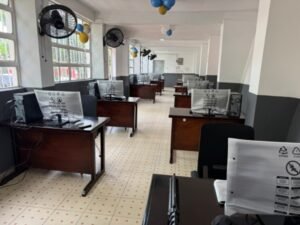
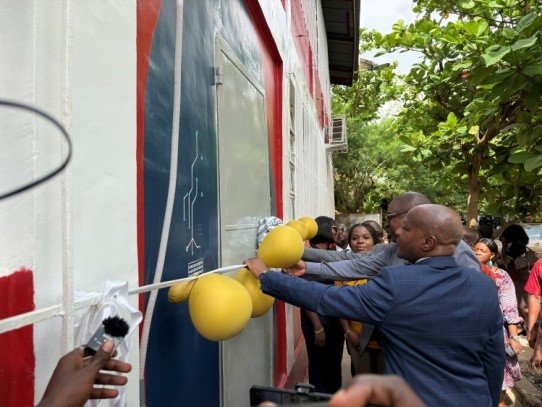
FirstBank Sierra Leone on Tuesday, June 2, 2026, officially commissioned and handed over newly renovated, well-equipped solar-powered Science and Computer Laboratories to Albert Academy Secondary School in Freetown as part of its Leadership Acceleration Programme (LAP 3.0) Corporate Social Responsibility initiative.
The commissioning ceremony brought together senior executives from FirstBank Group, including the Group Chief Executive Officer, FirstBank Nigeria representatives, FirstBank Sierra Leone Management, education authorities, alumni, students and other key stakeholders in the education and development sectors.
Managing Director of FirstBank Sierra Leone, Udeme Udoh, described the initiative as a significant milestone in the bank’s efforts to support education and human capital development in Sierra Leone.
He said the Leadership Acceleration Programme (LAP 3.0) is a flagship initiative designed to identify, train and develop high-potential leaders across FirstBank’s subsidiaries, preparing them for future leadership roles within the institution.
According to him, the third cohort of the programme included participants from several countries across Africa and beyond, who underwent intensive leadership training and were required to execute a CSR project as part of their development.
Udeme Udoh explained that after assessments and consultations, Albert Academy was selected for the intervention due to critical needs identified in both its ICT and science laboratories, which were subsequently upgraded under the project.
He commended FirstBank Sierra Leone Management, the LAP 3.0 cohort and school authorities for their collaboration, noting that the project was completed within a short timeframe through effective teamwork.
Udeme Udoh emphasized that education remains the foundation of national development adding that no society can achieve meaningful progress without strong investment in learning institutions.
He urged students to take full advantage of the upgraded facilities and maintain strong academic discipline, noting that Albert Academy has a long history of producing leaders in governance, banking, science and other fields.
He also encouraged students to develop a savings culture and build early relationships with financial institutions such as FirstBank, describing the bank as a long-term partner in their growth and development.
Executive Director of FirstBank Sierra Leone, Boblinda Bami-Caulker, said the project goes beyond infrastructure development and represents a symbol of leadership, collaboration, innovation and sustainable development.
She explained that LAP 3.0 is a leadership development programme that brings together high-performing staff from FirstBank subsidiaries across Africa and other regions, including Nigeria, Ghana, Gambia, Senegal, Guinea, the Democratic Republic of Congo, Sierra Leone and the United Kingdom.
Boblinda Bami-Caulker disclosed that 139 participants were involved in the third cohort, which began in June 2025 and ran for seven months of intensive classroom and virtual training focused on leadership development.
She said a core requirement of the programme is the implementation of CSR projects aligned with FirstBank’s SPARK initiative, which is designed to create measurable social impact in communities.
She noted that Sierra Leone was selected after a competitive process, with Albert Academy chosen following a needs-based assessment of several schools.
According to her, the renovated laboratories were designed to improve science and ICT education while promoting environmental sustainability through solar energy systems.
She said the project is anchored on three pillars: improving education and inclusion, promoting environmental sustainability and supporting community development.
She further encouraged students to make effective use of the facilities, describing them as a platform for nurturing future innovators, scientists and leaders.
Principal of Albert Academy, Junisa Vandy, described the intervention as a transformative milestone for the school, particularly in science and ICT education.
He said the project began with a simple assessment but has grown into a long-term investment that will significantly improve teaching and learning outcomes.
Junisa Vandy noted that the upgraded laboratories now contain modern equipment, scientific tools and computer systems designed to support practical and experiential learning.
He emphasized that science education should be practical, not only theoretical, adding that the new facilities will enable pupils to conduct experiments, test ideas and innovate.
The Principal thanked FirstBank for selecting Albert Academy after a competitive process and commended staff, engineers and contractors for their work.
The Principal urged pupils to take responsibility for maintaining the facilities, stressing that proper care would ensure long-term benefit for future generations.
President of the Albert Academy Alumni Association, Zainab Attire Bangura, expressed appreciation to FirstBank for what she described as a major boost to academic excellence and institutional development.
She said the intervention reflects the school’s historic legacy of producing national leaders and professionals across multiple sectors.
Zainab Bangura noted that the upgraded laboratories would help prepare pupils for leadership roles in science, technology and other fields, both nationally and internationally.
She called on students to protect and maintain the facilities, adding that sustainability is key to ensuring long-term impact.
The President of the Albert Academy Alumni Association also acknowledged support from global alumni chapters and reaffirmed the Association’s commitment to strengthening partnerships for educational development.
Chairman of the FirstBank Board of Directors, Kobi Walker, encouraged pupils to fully utilize the laboratories, describing them as tools for shaping future scientists, engineers and national leaders.
He highlighted Albert Academy’s long-standing history of producing prominent figures in politics, medicine, banking, sports and the arts.
Kobi Walker said the project reflects FirstBank’s Corporate Social Responsibility commitment to giving back to society and investing in future generations.
He urged pupils to take care of the facilities and maintain a strong culture of responsibility noting that future students must benefit from the same resources.
Governor of the Bank of Sierra Leone, Dr. Ibrahim L. Stevens, who is also an alumnus of Albert Academy, described the event as deeply personal, recalling his student days more than 40 years ago.
He said the school played a key role in shaping his academic and professional journey.
Dr. Ibrahim Stevens commended FirstBank for investing in education and innovation, while emphasizing the importance of digital skills and financial technology.
He encouraged pupils to use the ICT facilities to develop innovative ideas and referenced the Bank of Sierra Leone’s regulatory sandbox initiative for fintech development.
The Governor also stressed the importance of maintenance culture and urged pupils to preserve the facilities for future generations.
FirstBank Group Managing Director and CEO, Oluasegun Alebiosu, said the bank, established in 1894, has a long tradition of producing leaders across Africa.
He noted that CSR is central to FirstBank’s identity and is driven by the belief that “the best of humanity is when humanity gives.”
Oluasegun Alebiosu said the bank’s initiatives in education, healthcare and community development demonstrate its commitment to improving lives across the continent.
He emphasized that the new laboratories are intended to support the development of future scientists, engineers and entrepreneurs.
Oluasegun Alebiosu urged pupils to maximize the opportunity and remain focused on academic excellence, expressing optimism that Albert Academy will continue to produce future leaders.
The commissioning of the solar-powered Science and ICT laboratories marks a significant milestone under FirstBank’s LAP 3.0 CSR programme, which combines leadership development with community impact across Africa. Stakeholders described the project as a major contribution to strengthening science and ICT education in Sierra Leone at a time when digital innovation is critical to national development.