

By Amin Kef (Ranger)
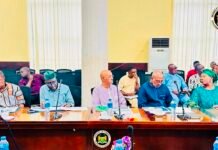
The morning show on Epic Radio on October 20, 2025, focused on one of Sierra Leone’s most pressing social issues, the growing consumption of the synthetic drug Kush among the country’s youth and the recent decision by the Sierra Leone Police to deny clearance for a planned peaceful protest against the scourge.
The programme, which brought together key stakeholders, featured Alphonsus B.M. Gbanie, Executive Director of the Human Rights Defenders Network (SL); Michael Tamba Komba, Head of the Anti-Drug Abuse Initiative and Campaign; Brima Kamara, Head of Police Media; Francess Mummy Jabati, a mother of a Kush addict from Bo; and Ibrahim Samuel Dugba, Director at the National Drug Law Enforcement Agency (NDLEA).
The discussion came against the backdrop of the worsening Kush crisis that continues to devastate families and communities across Sierra Leone. Because of the drug’s destructive effects, President Julius Maada Bio on April 4, 2024, declared the situation a State of Emergency. Yet, nearly two years later, many citizens believe that little tangible progress has been made in tackling what has become a national nightmare. Although rehabilitation centres were established under the Government’s emergency response framework, those facilities remain poorly funded and are struggling to function effectively. Families of victims say they have been left to fight the crisis alone, as the number of Kush-related deaths continues to rise in both urban and rural areas.
It was in response to this growing despair that the youth-led Anti-Drug Abuse Initiative, headed by Michael Tamba Komba, announced plans for a “1,000 Youth Peaceful March” on October 24, 2025, to raise awareness about the dangers of Kush and call for stronger Government action. However, their request for police clearance was denied by Inspector General of Police, William Fayai Sellu, a move that has provoked criticism and constitutional debate.
Speaking during the radio discussion, Michael Tamba Komba said the intention of the march was purely peaceful and aimed at drawing attention to the growing devastation Kush is causing. “Our democracy guarantees the right to peaceful assembly under Section 26 of the 1991 Constitution,” he stated, expressing disappointment at the police’s decision.
Responding to the controversy, Police Media Head, Brima Kamara explained that the denial was based on concerns over public safety. “We are not confident that the organizers can maintain full control over participants,” he said. “There is a likelihood the protest could degenerate into chaos or mayhem.” He encouraged the youth group to focus instead on community sensitization activities.
Human rights advocate, Alphonsus Gbanie, sharply criticized the police’s stance, describing it as a violation of constitutional rights and a blow to the national effort against Kush. “Since President Bio declared Kush a national emergency, preventing people who want to take action means undermining the President’s own commitment,” he argued. Alphonsus Gbanie also called on the Government to create an Emergency Fund, similar to those established during the Ebola and COVID-19 crises, to raise resources for rehabilitation, awareness and enforcement.
In an emotional moment, Francess Mummy Jabati recounted how her university-graduate son’s addiction destroyed his life and family. “He was a brilliant boy,” she said tearfully. “Kush has taken everything from us. The Government must act now before it’s too late.”
NDLEA Director, Ibrahim Samuel Dugba, admitted that while his agency continues to raise awareness, it faces severe logistical and financial challenges. “We have not received our budgetary allocation for a long time from the Ministry of Finance,” he lamented. “We lack vehicles and essential tools to effectively carry out our operations.”
The discussion ended with a shared consensus among the panelists that the Kush epidemic has exposed deep weaknesses in national drug policy, governance and law enforcement. While the State of Emergency was an important first step, many warned that without urgent and coordinated action, Sierra Leone risks losing an entire generation to addiction; a tragedy that the nation’s Constitution was designed to prevent.