

By Alvin Lansana Kargbo
The High Commission of India in Freetown on Monday, 6th October 2025, hosted an India–Sierra Leone Roundtable on Aquaculture and Fisheries at the Country Lodge Hotel on Hill Station in Freetown. The forum aimed to deepen bilateral cooperation, enhance knowledge sharing and explore sustainable strategies for developing Sierra Leone’s aquaculture and fisheries sector.
The roundtable brought together key stakeholders from both countries, including Government officials, scientists, entrepreneurs and representatives of international organizations. Discussions focused on building a framework for technology transfer, capacity building and private-sector partnerships to strengthen Sierra Leone’s blue economy.
In his opening remarks, India’s High Commissioner to Sierra Leone, B.C. Pradhan, emphasized that the roundtable was the product of over six months of collaboration with Sierra Leone’s Ministry of Fisheries and Marine Resources. He said the engagement stemmed from earlier partnerships involving the Indian Council of Agricultural Research (ICAR) and organizations such as World Peace.
Highlighting India’s transformation in food production and aquaculture since independence, B.C.Pradhan recalled the country’s journey from famine to global leadership in agriculture. Today, India ranks second in aquaculture production and leads in several agricultural categories, including milk, food grains, fruits and vegetables.
He stated that India is eager to share its experience and scientific expertise with Sierra Leone, particularly in the areas of training, research and institutional collaboration. “Capacity building remains central to our cooperation,” B.C Pradhan noted, pointing to the Indian Technical and Economic Cooperation (ITEC) program, which provides training opportunities for Government professionals and scientists in India.
The High Commissioner also revealed that 37 Sierra Leonean students are currently studying at top Indian universities on fully funded scholarships covering tuition, airfare, accommodation and stipends. He pledged that more scholarships would be available next year, reinforcing India’s commitment to human capital development.
B.C Pradhan underscored aquaculture’s vast potential to complement Sierra Leone’s marine fisheries noting that while marine resources are naturally limited, aquaculture offers scalable and sustainable opportunities for employment, food security and economic growth. He added that such development aligns with Sierra Leone’s Feed Salone agenda and the Big Five Game Changers, promising “low-cost, high-impact gains for livelihoods and nutrition.”
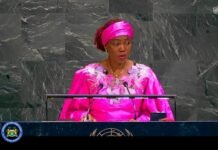
Princess Dugba, Sierra Leone’s Minister of Fisheries and Marine Resources, welcomed the collaboration and expressed her Ministry’s determination to build a resilient and sustainable aquaculture sector. She said the country stands to benefit greatly from India’s experience in freshwater and marine aquaculture.
The Minister highlighted that Sierra Leone’s marine fisheries currently hold an estimated 450,000 metric tons of fish, with a maximum sustainable yield of about 250,000 metric tons per year, a decline from the 500,000 metric tons recorded five decades ago. She stressed that expanding aquaculture was therefore crucial to maintaining long-term fish production and protecting marine ecosystems.
While current revenues from the fisheries sector range between $6.5 million and $10 million annually, Princess Dugba noted that the sector has the potential to generate over $59 million if properly managed and supported by modern aquaculture practices.
She outlined Government priorities, including freshwater aquaculture in inland valley swamps and the development of mariculture through the cultivation of oysters, shrimp, seaweed and commercial marine fish species. She said seaweed, for instance, could be used for fertilizer production, while oysters and shrimp could serve export markets.
The Minister encouraged Indian private-sector participation in joint fish-farming projects and value-added processing, including investments in ice-making machines and blast freezers at fish harbors to strengthen the value chain.
Dr. Joykrushna Jena, representing the Indian Council of Agricultural Research (ICAR), said the delegation’s mission was to understand Sierra Leone’s aquaculture landscape and identify areas for collaboration. He noted that aquaculture has globally surpassed captured fisheries in production, with India producing about 19.5 million tons of fish annually, growing steadily at 6–10% for several decades.
Dr. Joykrushna Jena attributed India’s success to research, breeding technology and private-sector engagement, emphasizing that the focus now includes food safety, gender inclusion and environmental sustainability. He said India operates 113 research institutes, 731 Farm Science Centers and 78 agricultural universities, including 30 centers specializing in fisheries and aquaculture.
The Indian Council of Agricultural Research representative assured participants that India’s experience in technology, training and innovation could be tailored to Sierra Leone’s context, helping the country build a modern, inclusive and profitable aquaculture industry.
Sheku Sei, Director at the Ministry of Fisheries and Marine Resources, provided an overview of Sierra Leone’s fisheries landscape, describing the country’s 570-kilometer coastline and 30,000 km² continental shelf as rich in biodiversity. He said that while Sierra Leone hosts over 200 marine species, inland aquaculture remains limited to catfish and tilapia.
He identified major opportunities in expanding inland aquaculture and mariculture, particularly oyster and shrimp farming, citing prior successful pilots in mangrove areas. Sheku Sei noted that smallholder fish farming and large-scale catfish operations have proven economically viable and could generate millions in revenue with adequate investment and technology transfer.
He said aquaculture could become a cornerstone of Sierra Leone’s economic diversification, providing employment for women and youth while protecting marine biodiversity. “With Indian expertise and investment in technology, inputs and training, we can accelerate sustainable aquaculture growth, protect our marine environment and improve food security,” Sheku Sei concluded.
The India–Sierra Leone Roundtable on Aquaculture and Fisheries marked a significant step toward building an enduring partnership between the two countries. Both sides agreed to strengthen collaboration in research, training and private investment, laying the groundwork for a robust aquaculture ecosystem that can transform Sierra Leone’s fisheries sector and contribute to national development.