
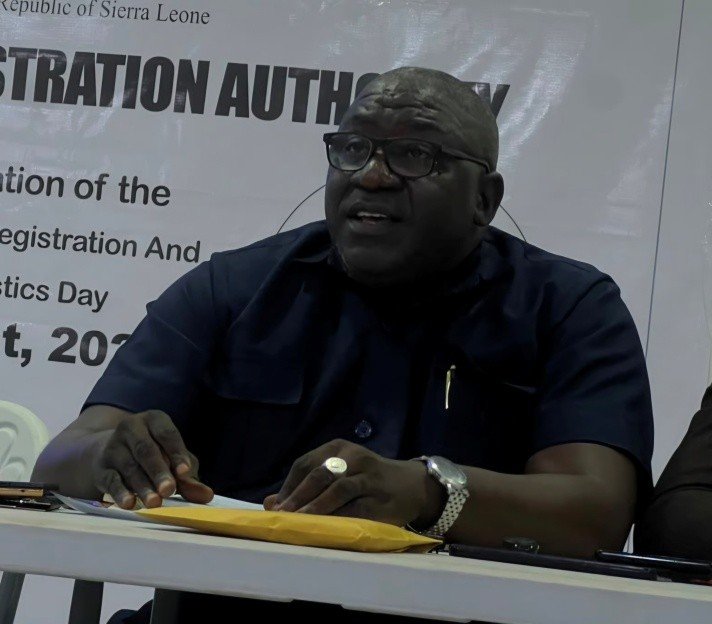
The National Civil Registration Authority (NCRA) commemorated the 9th Africa Civil Registration and Vital Statistics Day with calls for stronger investment in an integrated, decentralized and digital civil registration system to ensure universal legal identity in Sierra Leone.
The commemoration was held on Monday, 10th August 2026, at the NCRA headquarters on Kingharman Road in Freetown, under the theme: “The New CRVS Decade (2027 to 2036): Consolidating the Gains of AP AI – CRVS and Securing the Future of CRVS in Africa through Integration, Decentralization and Digitalization.”
The commemoration brought together Government institutions, development partners, Civil Society Organisations, financial institutions, child focused organisations and community representatives.
In his statement, NCRA Director General, Mohamed Mubashir Massaquoi, said civil registration is a fundamental responsibility of Government because “behind every statistic was a human being whose identity, rights and opportunities were at stake.”
He said the new CRVS decade provided Sierra Leone with an opportunity to consolidate the progress already made while advancing integration, decentralization and digitalization.
The DG said NCRA had strengthened national identity infrastructure, integrated civil registration with identity management, issued secure identity documents and established an identity verification platform being used by institutions, including financial and telecommunications companies.
He said the next phase should move beyond producing identity documents towards a continuous identity system that follows individuals throughout their lives, from birth registration to death registration, and supports access to education, healthcare, social protection, financial services and employment.
Mohamed Mubashir Massaquoi stressed that integration did not mean unrestricted access to personal information, but required agreed standards, governance and responsible collaboration among institutions. He also called for registration services to be taken closer to rural and underserved communities, warning that digitalization should not exclude people without access to technology or connectivity.
Speaking also at the ceremony, UNICEF of Child Protection Patrick Halton called for stronger investment to achieve universal birth registration, describing it as “the foundation of legal identity and a gateway to children’s rights.”
Patrick Halton said birth registration helped protect children from child marriage, trafficking and child labour, while facilitating access to education, healthcare and social protection.
He cited the 2019 Demographic and Health Survey, which showed that more than three quarters of children under five had been registered, while about nine in ten children under one had been registered. However, only about one third of children under five had a birth certificate.
He called for birth registration to be integrated into maternity services, health facilities, immunization programmes and community health platforms, alongside decentralized and digital services. He disclosed that about US$1.16 million would be required over the next three years to strengthen staffing, training, supplies, interoperability, monitoring and public awareness.
Representing the Electoral Commission of Sierra Leone, Ado Davies highlighted NCRA’s role in supporting a credible voters’ register ahead of the 2028 elections.
He said NCRA and ECSL had separate mandates, with NCRA responsible for identifying and registering citizens, while ECSL registers eligible voters. He said linking the two systems would help verify eligible voters and prevent duplication.
Ado Davies said the institutions would continue strengthening their Memorandum of Understanding and use technology to improve data verification. First time voters not already captured by NCRA, he explained, would first complete civil registration before proceeding with voter registration.
He said similar arrangements were used during the 2023 elections and called for greater investment in technology, infrastructure and legislation ahead of the 2028 polls.
Representing the Bank of Sierra Leone, Philip Bangura highlighted the importance of the National Identification Number to the financial sector.
Philip Bangura said a unique NIN would address challenges caused by individuals using multiple forms of identification, strengthen Know Your Customer procedures and improve credit reporting.
He also said linking national identity to financial services would help combat fraud, particularly in mobile money and digital transactions, while supporting financial inclusion. He called for continued collaboration between NCRA, the Central Bank and financial institutions.
Civil society representative, Alphonso Manley, called for stronger community engagement and public awareness, saying civil registration is closely linked to legal identity, access to services and the protection of citizens’ rights.
Alphonso Manley urged NCRA and Civil Society Organisations to work together to take information and registration services closer to communities. He welcomed digitalization but stressed the need for strong data protection and privacy safeguards.
Children Forum Network representative, Mary Julius, said legal identity is fundamental to child protection and access to education and other essential services. She called for continued collaboration among NCRA, Government, development partners and child focused organisations to ensure that no child is left unregistered.
President of Market Women representing women in Sierra Leone, Haja Marie Bob Kandeh, also urged authorities to make registration services more accessible to women and other vulnerable groups.
She said many market women faced difficulties travelling long distances or leaving their businesses to access Government services. She called for services to be brought closer to communities and for stronger collaboration with women’s organisations to improve awareness and identify people who remain outside the registration system.
The stakeholders collectively called for a civil registration system that is accessible, secure and integrated with other national systems while ensuring that children, women, rural communities and other underserved groups are not left behind.
The commemoration provided a platform for NCRA and its partners to assess progress and set priorities for the new CRVS decade, with universal legal identity, digitalization, decentralized services, data protection and stronger institutional collaboration identified as key priorities.