

By Amin Kef (Ranger)
In the life of every democracy, there are defining periods when the relationship between citizens and the state is tested, recalibrated and sometimes renewed. For Sierra Leone, 2025 stands out as such a moment; a year widely regarded as the turning point when the nation deliberately reclaimed its public square and re-established sustained dialogue between Government and the governed.
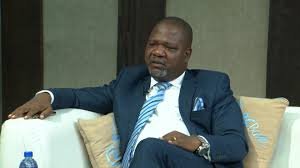
According to Chernor Bah, Minister of Information and Civic Education, the year was not characterized by political slogans or episodic communication, but by a deliberate commitment to open governance, structured engagement and public accountability. Across town halls, weekly press conferences, civic festivals, policy reforms and community conversations, both at home and abroad, the Government of Sierra Leone made a conscious decision to govern in public and with the people.
For many years, public communication in governance has often been reduced to broadcasting: Government speaks and citizens listen. In 2025, that approach was fundamentally redefined.
Minister Chernor Bah disclosed that over the course of the year, he personally participated in more than 40 major media engagements, supported by 36 weekly press conferences and three special national briefings. Those platforms brought together 92 Government officials, as well as representatives from civil society and the private sector, generating over 56 hours of live public engagement.
More than 500 questions were answered directly and in real time; without scripts and without filters. That, the Minister explained, was central to restoring public trust. Beyond traditional media, civic communication generated more than three million social media interactions, reflecting not just reach, but genuine citizen response, critique and participation.
“Effective communication is not about speaking louder,” Chernor Bah noted. “It is about listening better and responding honestly.”
One of the most impactful initiatives of 2025 was the Civic Day Series, which became the clearest expression of the new philosophy of participatory governance. Over nine months, Government officials travelled across seven districts, engaging citizens in more than 25 hours of structured dialogue on over 20 national issues, including education, employment, agriculture, healthcare and governance.
More than 3,000 citizens took part, raising over 200 direct questions. In Kambia District, a local leader captured the significance of the initiative when he remarked that it was the first time in his lifetime that Government officials had come to his community to explain their work directly.
That sentiment, observers say, underscored the importance of decentralizing governance communication and ensuring that national policies are understood at community level.
For the first time in Sierra Leone’s history, that civic engagement model was extended beyond national borders. A U.S. Civic Day Series brought together more than 300 members of the Sierra Leonean diaspora, reinforcing the principle that governance responsibilities transcend geography and that citizenship remains active beyond the country’s shores.
If the Civic Day Series took Government to the people, the Salone Civic Festival brought the entire nation together in a shared democratic space.
The second edition of the festival was deliberately designed as a modern public square; open, inclusive and interactive. More than 80 Government and private-sector institutions participated, openly showcasing their work, responding to public questions and receiving feedback.
Attendance ranged between 5,000 and 8,000 citizens, complemented by extensive national media coverage and over 700,000 digital interactions across leading platforms.
President Julius Maada Bio described the festival as an opportunity to deepen democratic peace by bringing Government closer to the people, improving access to information and allowing citizens a meaningful voice in governance. For many participants, the festival symbolized a shift away from closed-door governance towards openness and transparency.
For the first time, the festival also welcomed more than ten international speakers from global institutions such as Columbia University, UNESCO and UNFPA, placing Sierra Leone’s civic renewal within a broader international democratic discourse.
Recognizing that democracy is shaped not only by institutions but also by narratives, the Ministry of Information and Civic Education invested significantly in young digital content creators during 2025.
Thirty emerging storytellers were trained through a three-month programme that combined skills development, access to equipment and civic education. The objective, officials explained, was not propaganda, but partnership; empowering citizens to tell their own stories truthfully, creatively and responsibly.
That initiative acknowledged the growing influence of digital media in shaping public opinion and sought to ensure that civic discourse remains informed, balanced and grounded in national realities.
The year also recorded several historic firsts that expanded the scope of national dialogue.
The first Presidential Town Hall in Kenema brought together 1,500 citizens in direct engagement with national leadership. More than 50 questions were posed, with 20 Ministers and over 30 senior officials present not as observers but as active participants.
On Independence Day, the Independent Symposium provided a non-partisan platform for reflection on Sierra Leone’s history and its relevance to contemporary governance. With 2,000 attendees and four eminent speakers, the symposium reinforced the idea that independence is not merely a historical milestone, but an ongoing civic obligation.
Officials were keen to emphasize that public engagement without tangible outcomes risks becoming mere performance. In 2025, dialogue was reinforced by policy action.
Three major national policies were approved: the Records and Archives Policy, the Media and Information Policy and the National Film Policy. Together, those frameworks aim to strengthen transparency, protect information access, preserve institutional memory and promote cultural expression.
The Government also revived The Sierra Leone Daily Mail, restoring a historic public institution as a modern platform for national conversation. In parallel, groundwork was laid for a comprehensive Data Protection Policy and legislation, scheduled for completion in 2026; an increasingly vital safeguard in a digital era.
Building on the foundations laid in 2025, the Government plans to expand the Civic Day Series to additional districts, including Kailahun, Karene, Kono, Pujehun, Falaba, Koinadugu and Bonthe, ensuring inclusive national participation.
Parliament is also expected to consider a Data Protection Law and a Records and Archives Law, further entrenching transparency and accountability. Meanwhile, preparations are underway to scale up the Salone Civic Festival in 2026, targeting 10,000 participants, 100 showcase institutions, 20 international guests and multiple town halls.
As Sierra Leone enters a new chapter, one lesson from 2025 remains clear: public engagement must be continuous, inclusive and institutionalized.
“In 2025,” Minister Chernor Bah reflected, “Sierra Leone did more than improve communication; we began to build a new democratic culture.” One where citizens are informed and respected, where Government shows its work openly and where the public square belongs to everyone.
For many observers, that cultural shift may prove to be one of the most enduring legacies of the year.