The Minister of Information and Civic Education, Chernor Bah, has provided an important update on ongoing drug-related investigations during the Ministry’s weekly Press Conference held on Tuesday, October 21, 2025. The briefing addressed developments surrounding the recent incident involving a Sierra Leone Embassy vehicle in Guinea found with suspected illicit substances.
The Minister confirmed that Guinean authorities have completed their investigation into the matter and have officially charged those arrested in connection with the case to court. He, however, emphasized that the investigation found no evidence implicating the then Sierra Leone Ambassador to Guinea.
“The Guinean authorities have cleared the former Ambassador of any criminal involvement. His recall by President Julius Maada Bio was purely a matter of discretion and not a disciplinary measure,” Chernor Bah explained.
It could be recalled that earlier this year, Guinean authorities impounded a vehicle belonging to Sierra Leone’s Embassy after discovering seven suitcases containing suspected cocaine. Two occupants of the vehicle were immediately detained for questioning.
Following the discovery, Sierra Leone’s Minister of Foreign Affairs and International Cooperation, Alhaji Musa Timothy Kabba, announced the urgent recall of Ambassador Alimamy Bangura to Freetown to provide a full account of the incident. The Foreign Affairs Minister clarified that the envoy was not in the vehicle at the time of the arrest and was never placed under detention.
He further disclosed that approximately $2,000 (about £1,600) in cash was found with the suitcases, though the exact weight of the suspected drugs had not been determined. Alhaji Musa Timothy Kabba assured that both Sierra Leone and Guinea were fully cooperating in a transparent investigation to ensure justice is served.
“Anyone found guilty of violating Sierra Leonean or international drug trafficking laws will face the full force of justice,” the Minister emphasized.
The case came amid growing regional concerns over the trafficking of cocaine through West Africa, which has become a major transit route between Latin America and Europe.
Meanwhile, Sierra Leone continues to battle the local scourge of Kush—a dangerous psychoactive drug that has caused widespread social and health problems. In response, President Julius Maada Bio earlier declared drug abuse a national emergency, urging stronger law enforcement and community support to curb the menace.
Minister Chernor Bah reiterated the Government’s commitment to transparency, accountability and collaboration with international partners to ensure that Sierra Leone remains steadfast in the global fight against drug trafficking and substance abuse.
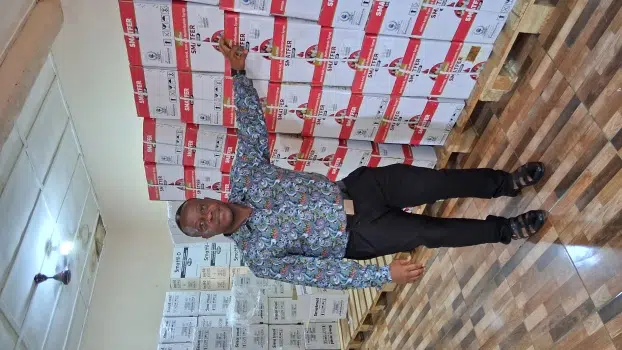
Dr. Joseph A.K. Kamara, Chief Executive Officer of Singsong Hospital and Singsong Imports and Distribution
By Ibrahim Sesay
Singsong Medical, a subsidiary of Singsong Hospital, has officially opened its public warehouse at 86 Campbell Street in Freetown, offering a wide range of affordable medical products designed to improve access to quality healthcare across Sierra Leone. The opening ceremony took place on Tuesday, October 28, 2025 and attracted residents, health practitioners and community leaders who praised the initiative as timely and impactful.
Speaking at the event, Dr. Joseph A.K. Kamara, Chief Executive Officer of Singsong Hospital and Singsong Imports and Distribution, described the opening as a major milestone in the company’s 15-year journey in hospital service and healthcare delivery. He said the establishment of the warehouse represents a continuation of Singsong’s commitment to dependability, affordability and public trust in healthcare services.
“We have been in hospital service for the past 15 years and based on the quality and genuineness of the products we provide, we decided to create our own brand; one that represents dependability, affordability and confidence,” Dr. Joseph A.K. Kamara stated. He emphasized that all Singsong products meet the quality assurance standards set by the Pharmaceutical Society of Sierra Leone, adding that the warehouse is equipped with proper storage facilities, including regulated humidity and cooling systems, to ensure the effectiveness and safety of all products.
Dr. Joseph A.K. Kamara noted that the company has worked to keep its prices moderate while maintaining the highest standards. “We have tried to make our prices competitive without compromising on quality. This is part of our broader effort to make healthcare affordable for everyone, both rich and poor,” he said.
Products displayed at the new warehouse include Smatfil-D (a sex stimulant and endurance enhancer), Alberol (for worm infections), SMATKIT (for ulcers), SMATCIP (for typhoid fever), SMATGYL (for urinary tract infection and amoebic dysentery), Smatmal (for malaria), SMATDOL (for headache, fever and joint pain), SMATSIL (for indigestion and gastric ulcer) and SMATFER (for anemia).
According to Dr. Joseph A.K. Kamara, the initiative forms part of a “backward integration” strategy aimed at strengthening public confidence in locally branded pharmaceutical products while reducing the country’s dependency on imports. He said the company’s vision is to make Singsong a household name synonymous with quality and trust in the health sector.
Several residents who attended the event welcomed the opening, noting that the warehouse’s central location and affordable pricing will ease the financial burden on ordinary citizens. Others expressed optimism that the company’s decision to open its warehouse to the public will encourage transparency, build consumer confidence and promote trust in local pharmaceutical brands.
The opening of the Singsong Medical warehouse represents an important step in expanding healthcare access and affordability in Sierra Leone, further solidifying the company’s role as a reliable partner in advancing public health and well-being.
Africell Sierra Leone has announced that it will introduce a new data plan on November 3, 2025, designed to enhance service quality, ensure fairness and maintain affordability for customers nationwide. The telecommunications company stated that the new bundle will provide faster, more reliable internet access while remaining fully compliant with the standards of the National Telecommunications Authority (NaTCA), the regulatory body responsible for overseeing and ensuring fair, transparent and efficient telecommunications operations in Sierra Leone.
According to Africell’s Media Relations Manager, Abdul Karim Sesay, the upcoming introduction reflects Africell’s continued commitment to improving customer experience and ensuring equitable access to data services across the country. He explained that the initiative is part of a broader effort to balance affordability with high service quality and consistent network performance.
Expanding on the rationale behind the new plan, Abdul Karim Sesay noted that the decision was guided by a need to manage network resources effectively while maintaining optimal internet speeds for all users. “The old ‘open’ unlimited model allowed a small number of heavy users to consume excessive bandwidth, which in turn slowed down internet speeds for others,” he explained. “With the new structure, we are introducing fairness and balance, ensuring that everyone enjoys a faster and more stable browsing experience.”
He clarified that the introduction of the new data plan does not mean the removal of unlimited access. “Customers will continue to enjoy unlimited browsing,” he emphasized. “What we are implementing is an internationally accepted best practice that regulates internet speed only after unusually high data consumption within a short period. It’s about fairness and maintaining service quality for all.”
Abdul Karim Sesay stressed that Africell remains committed to affordability. “Africell continues to be Sierra Leone’s most affordable and customer-focused network. This upcoming plan represents an upgrade in service quality, not a price increase,” he affirmed.
He further highlighted that the new structure will greatly improve browsing and streaming quality while reducing congestion across the network. “Customers can expect more stable connections and a smoother online experience throughout the day,” he said.
Reaffirming Africell’s transparency and customer engagement, Abdul Karim Sesay noted that the company has been engaging Civil Society groups, the media and online influencers to explain the objectives of the upcoming changes. He also emphasized that the initiative benefits all users, including those in rural areas, by ensuring that bandwidth is distributed equitably across the country.
Concluding, Abdul Karim Sesay reiterated that the introduction of the new data plan aligns with NaTCA regulations and global telecommunications standards. “This new initiative is about improving service delivery, protecting customer interests and reinforcing Africell’s mission to keep Sierra Leone connected through affordable, high-quality and reliable communication services,” he said.
As October marks Blindness Awareness Month, Sierra Leone has welcomed a major milestone in its fight against avoidable blindness. Noor Dubai Foundation, in partnership with Choithram International Foundation and the Ministry of Health, has successfully completed the first cycle of a three-year cataract outreach programme aimed at restoring vision and improving quality of life for thousands of Sierra Leoneans.
The initiative, supported by the UAE’s Mohammed bin Rashid Al Maktoum Global Initiatives, has already provided over 1,500 cataract surgeries in its first year, with a target of 6,000 surgeries and 60,000 screenings over the project’s lifespan. Implemented through Choithram Memorial Hospital in Freetown, with technical support from India’s Choithram Netralaya (Eye Hospital), the programme is designed to strengthen local ophthalmic capacity and ensure sustainable eye care delivery across the country.
A 2021 Rapid Assessment of Avoidable Blindness (RAAB) study found that 5.4% of Sierra Leoneans aged 50 and above suffer from blindness, affecting more than 43,000 people, primarily due to untreated cataracts. The outreach programme, therefore, represents a crucial step in addressing one of the country’s most urgent public health challenges.
Dr. Manal Taryam, CEO of Noor Dubai Foundation, emphasized the human impact of the initiative: “Ensuring access to quality eye care is not just about restoring sight; it’s about restoring dignity, independence and opportunity. Through this initiative, we aim to empower communities by eliminating avoidable blindness and strengthening local ophthalmic capacity for long-term impact.”
Each year, a six-month surgical outreach camp will be held between January and June to deliver free surgeries, post-operative care, and follow-up services at district hospitals. To remove barriers to access, patients will receive free transportation, meals, accommodation and medication throughout their treatment period.
Chairman of Choithrams Group, L.T. Pagarani, hailed the partnership as a model for impactful humanitarian collaboration. “Through the Lighthouse Project, we are bringing the spirit of goodwill and global partnership to life; delivering goodness the way we do every day at Choithrams,” he said, acknowledging the UAE leadership, Noor Dubai Foundation and Sierra Leone’s Ministry of Health for their joint commitment.
Beyond direct medical intervention, the programme includes monthly training for Sierra Leonean ophthalmologists and nurses to build local expertise. Researchers from Queen’s University Belfast, led by Dr. Gabriel Osei-Anokye and Dr. Ving Fai Chan, are evaluating the initiative’s medical and socio-economic outcomes to ensure continuous improvement and long-term sustainability.
With the success of its first phase, the cataract outreach programme stands as a beacon of hope for thousands living with preventable blindness; an inspiring testament to how international collaboration and compassion can illuminate lives in need.
NP (SL) Limited, one of Sierra Leone’s most trusted and indigenous petroleum marketing companies, has reiterated its commitment to excellence, innovation and sustainability in the downstream petroleum industry. The company continues to distinguish itself as a model of quality service, environmental stewardship and customer satisfaction through the implementation of its Integrated Management System (IMS) Corporate Objectives.
Company Executives disclosed that the IMS framework is anchored on six key pillars aimed at driving sustainable growth, ensuring regulatory compliance and enhancing customer-focused operations. These pillars, they noted, serve as guiding principles that reflect NP’s dedication to maintaining superior operational standards, ethical business practices and continuous improvement across all departments.
A hallmark of NP’s reputation is its consistent delivery of petroleum products that meet both local and international standards. Working closely with the Sierra Leone Standards Bureau (SLSB) and the Petroleum Regulatory Agency (PRA), the company applies rigorous quality control and periodic product testing to guarantee fuel efficiency and compatibility with modern engines and machinery. This approach, NP emphasized, strengthens consumer confidence and reinforces its standing as a dependable energy provider.
Efficiency and innovation remain central to NP’s operational success. The company has made significant investments in modern infrastructure and logistics systems, including recent upgrades at the Kissy Terminal. These developments have expanded storage capacity, streamlined supply chain operations and improved nationwide distribution, ensuring timely and cost-effective service delivery.
Customer satisfaction remains a cornerstone of NP’s philosophy. The company has built enduring relationships with its clients through professionalism, reliability and responsiveness. Its customer service teams operate 24/7, ensuring that inquiries are promptly addressed and client feedback is continuously integrated into service enhancements and tailored solutions.
Aligned with its sustainability goals, NP (SL) Limited continues to uphold environmental protection, occupational safety and community well-being. The company enforces strict environmental management protocols to minimize pollution risks while ensuring safe and healthy working conditions for staff, contractors and neighboring communities. This reflects NP’s broader vision of contributing to a cleaner, safer and more sustainable Sierra Leone.
Additionally, NP (SL) Limited maintains full compliance with industry regulations and promotes transparency in all its engagements with stakeholders. The company also prioritizes staff development through regular training and professional advancement programs, ensuring employees remain skilled and motivated to deliver quality service.
Through its unwavering dedication to excellence, innovation and sustainability, NP (SL) Limited continues to lead the petroleum marketing landscape in Sierra Leone. The company’s forward-looking strategies not only power the nation’s growth but also reaffirm its position as the most trusted and customer-driven petroleum enterprise in the country.
SLCAA DG Musayeroh Barrie Honoured with Africa Women Leadership
By Amin Kef (Ranger)
The Director General of the Sierra Leone Civil Aviation Authority (SLCAA), Musayeroh Barrie, has added another milestone to her distinguished leadership journey after being honoured with the Africa Women Leadership Impact Award and delivering the keynote address at the launch of the Africa Women Summit (AWS) UK Chapter.
The prestigious event, themed :“Daring to Rise, Excel, Achieve and Make an Impact (D.R.E.A.M. Live 2.0)”, was held on Sunday, October 26, 2025, at JK Banquets, Mitcham, London, bringing together influential African women leaders, professionals and entrepreneurs from across the continent and the diaspora to celebrate excellence, empowerment and innovation.
In her captivating keynote address, Musayeroh Barrie shared her remarkable personal journey one that began in Sierra Leone, continued in the United Kingdom and came full circle when she returned home at age 23. “I went back for a short holiday and that visit changed everything. What was meant to be temporary became permanent. I didn’t just go home; I found purpose and belonging,” she said.
She recalled how starting from scratch, without a notable family name or social connections, strengthened her resilience and belief in divine purpose and hard work. Her message to young people, particularly those in the diaspora, was simple yet profound: “The road isn’t paved in gold, but it can be done.”
Reflecting on her historic appointment in August 2023 as the first female and youngest Director General of a Civil Aviation Authority in the world, she noted that stepping into a technically demanding and traditionally male-dominated field was both humbling and daunting. “I was excited, proud and terrified; not because I doubted myself but because I had to balance leadership with motherhood,” she shared.
Musayeroh Barrie paid heartfelt tribute to her mother, who left her job in the UK to support her new journey in Sierra Leone. “When you see a woman thriving, know there’s a support system helping her stand tall,” she emphasized, dedicating her award to her mother, sisters and all women whose silent support fuels progress.
She also reflected on her leadership at the Sierra Leone Civil Aviation Authority, where she has spearheaded reforms aimed at transforming the country’s aviation landscape. “Civil aviation in Sierra Leone is no longer about moving people from point A to B. It’s about opening our skies to opportunity; ensuring safety, sustainability and sovereignty,” she said. She pointed to the relaunch of Air Sierra Leone, the establishment of a direct flight from Freetown to London Gatwick, and the strengthening of regulatory frameworks and safety oversight as key achievements that symbolize Sierra Leone’s renewed connectivity and global presence.
Musayeroh Barrie underscored that achievement is not about titles but about creating meaningful impact. “My proudest achievements are those that create new pathways for young African women so we can dream bigger, go further and fly higher,” she said. She extended gratitude to His Excellency President Dr. Julius Maada Bio for his confidence in her and for empowering young women based on credibility, capacity, and vision rather than lineage or tribe.
She concluded her keynote with a powerful call to action: “This summit must be more than a celebration; it must be a launchpad for African women to collaborate across borders, sectors, and generations. When African women rise, entire nations rise with us.”
During the ceremony, organizers of the Africa Women Summit described Musayeroh Barrie’s leadership as “nothing short of transformative.” They praised her for championing civil aviation excellence, spearheading Sierra Leone’s air transport modernization and representing the nation with distinction at international forums such as the ICAO Global Implementation Support Symposium in Abu Dhabi earlier this year. They also cited her recognition as one of Sierra Leone’s 50 Most Influential Women in 2025 as further proof of her trailblazing leadership and commitment to gender inclusion in a male-dominated sector.
“In recognition of these remarkable contributions to leadership, institutional transformation and women’s empowerment, we are honoured to present you with the Africa Women Leadership Impact Award,” the citation read, commending her for inspiring a generation of African women through her dedication and vision.
Back home, under her dynamic leadership, the SLCAA continues to demonstrate innovation and inclusivity. On October 25, 2025, the Authority organized a Next Generation of Aviation Professionals (NGAP) airport tour to inspire schoolchildren to explore aviation careers, featuring check-in simulations, firefighting demonstrations, and guided tours of the Freetown International Airport.
Addressing the young participants, Musayeroh Barrie encouraged them to broaden their aspirations beyond traditional professions. “There are more opportunities than being a lawyer or a doctor. We must help our children discover their potential because they are the foundation of our future,” she said.
Her visionary leadership has transformed the SLCAA into a model of institutional renewal, with over half of its workforce now under the age of 40—a reflection of her commitment to generational succession and gender inclusion. Earlier this year, she represented Sierra Leone at the 42nd ICAO Assembly (A42) under the theme “Safe Skies, Sustainable Future,” where she served as Vice Chairperson of the Administrative Commission.
Musayeroh Barrie, the first female Director General of the Sierra Leone Civil Aviation Authority and one of Africa’s youngest aviation executives, continues to break barriers and redefine leadership. Her story, rooted in courage, conviction and purpose, serves as a shining beacon of inspiration for women across Africa and the diaspora.
Afrimoney has officially partnered with the Freetown City Council (FCC) to enable residents and businesses to pay property rates and business licenses digitally, eliminating the need for physical visits to payment points. The partnership was launched on Tuesday, October 28, 2025, at the FCC in Freetown.
The collaboration forms part of Afrimoney’s broader mission to digitize financial transactions, allowing citizens to pay anytime, anywhere, while reducing dependence on cash. At the same time, it supports FCC’s objective to improve revenue collection, enhance service delivery and streamline civic payments across the city.
Speaking at the launch, Martinson Obeng-Agyei, CEO of Afrimoney, emphasized that the era of physically moving to pay civic fees is over. “Afrimoney exists to power the digital transformation everyone aspires to,” he said. Developed jointly with FCC’s technology and finance teams, the platform enables users to pay their property rates and business licenses directly from their phones at any time.
To make a payment, he said, citizens need to get an Africell sim, registered on Afrimoney and dial *161*2*11*12*5# to enter their property or business license details. He said the system also supports bulk payments, offering added convenience for organizations and local authorities. Martinson Obeng-Agyei highlighted that the platform is designed to compete with cash, saving users time while promoting responsible civic engagement through timely payment of taxes.
Africell Sierra Leone CEO, Shadi Al-Gerjawi, described Afrimoney as a platform designed to replicate and surpass the convenience of cash. He explained that Afrimoney has been integrated into daily life, from buying essentials and paying for transport to fueling at petrol stations and settling bills at restaurants. Adding FCC payments, he said, is a natural progression, enabling residents and businesses to fulfill civic obligations easily.
“Efficient tax collection funds essential services, from clean streets to public infrastructure. Now, payments can be made remotely, just like paying other fees,” Shadi Al-Gerjawi stated. He encouraged both individuals and businesses, regardless of payment size, to join the platform.
Mayor Yvonne Aki-Sawyerr hailed the partnership as a milestone in simplifying civic responsibilities, particularly for residents in hard-to-reach areas. She linked the launch to FCC’s ongoing sanitation drive, “Dorti Mus Go”, noting that 700 enforcement officers are actively sensitizing communities about compliance with the new by-law.
The Mayor also highlighted FCC’s previous digitization efforts, which began in 2019–2020 using satellite imagery to catalogue properties and issue demand notices. While earlier cashless payments were limited to FCC’s banking hall, the Afrimoney partnership removes those barriers, effectively bringing the bank to residents’ phones. She stressed that digital payment access ensures residents can meet obligations promptly, supporting city-wide initiatives such as sanitation and public infrastructure development.
The launch reinforces FCC’s commitment to modernizing municipal services while promoting compliance and efficiency in revenue collection. Residents and businesses are now encouraged to leverage Afrimoney to pay their property rates and business licenses, marking a significant step toward a fully digitized financial system for Freetown.
Businessman, Jihad Swaid, has issued a strong public statement denying allegations linking him and his son, Hady Swaid, to a purported fraudulent gold transaction involving Dr. Aruna Sree Sana and George Slim Ganda of Est. Miners Co. SL Ltd. The statement, dated 27th October 2025, categorically dismissed the claims circulating on social media as “entirely unfounded” and “misleading.”
In his clarification, Jihad Swaid emphasized that neither he nor his son were parties to the contract between Dr. Aruna Sree Sana and George Slim Ganda, nor did they receive any money from either party. He explained that Dr. Aruna Sree Sana had approached his son, a university student on holiday in Sierra Leone, for assistance in purchasing gold and offered him a 20% share of anticipated profit in a formal written agreement with George Slim Ganda.
According to Jihad Swaid, his son only served as a witness to the transaction and later extended a personal loan of $18,000 to Dr. Aruna Sree Sana to help her fulfill payment obligations. The loan, he said, was documented with Dr. Aruna Sree Sana’s written promise to repay within two weeks; a commitment that remains unfulfilled.
“All payments from Dr. Aruna Sree Sana were made directly to Mr. Ganda as stipulated in their agreement. Neither I nor my son received any portion of those funds,” Jihad Swaid stated. He further clarified that none of them acted as guarantors nor had any prior personal relationship with George Slim Ganda.
In May 2025, Dr. Aruna Sree Sana, through her legal representative, allegedly repeated what Jihad Swaid described as “baseless allegations” and also filed a report with the Criminal Investigation Department (CID). Jihad Swaid said he formally responded through his solicitors and filed a statement denying any involvement in fraudulent activity or conspiracy.
Jihad Swaid contends that Dr. Dr. Aruna Sree Sana’s repeated claims form part of an attempt to extort further money from his son, referencing a recent “threatening text message” she allegedly sent, which he said he chose to ignore.
While expressing sympathy for Dr. Aruna Sree Sana’s business losses, Jihad Swaid maintained that her financial dispute with George Slim Ganda is entirely private and unrelated to his family. He noted that although they have refrained from legal action over the unpaid loan, they reserve the right to pursue full repayment and damages if defamatory claims persist.
“I urge the public to disregard any misleading or defamatory statements concerning myself, my family or my business operations,” he concluded, reaffirming his commitment to fairness and compliance in all business dealings in Sierra Leone.
For media inquiries, Jihad Swaid directed all correspondence to his legal representatives, Marrah & Associates, 2nd Floor, 35 Jones Street, Freetown.
WFP is pleased to invite expressions of interest for the provision of goods and services of various categories.
Purpose: The purpose of this request for EOI is to identify suppliers and service providers with verified technical and financial capacity that will be supplying and providing various goods and services to World Food Programme as listed below. Eligible suppliers and service providers may be invited to participate in the bidding process for a proposed tender based on their specific categories.
Please note that UN WFP requires supporting documentation to register a vendor successfully.
Minimum requirements will be:
Company’s confirmation in writing of interest to participate in the prequalification process In company official letter head.
Valid business license.
Legal registration certificate from Inland Revenue Administration, GST registration certificate.
A minimum 3 years of experience in the sector.
Company profile.
Willing and ready to work with WFP according to its terms and conditions.
Existing registered vendors are also required to re-submit their interest, indicating any new goods or services now available.
This expression of interest will close on Friday 07 November, 2025
Please reply to the WFP Procurement Unit with the categories of Goods and, or Services applicable. Companies that are unable to satisfy the minimum requirements as above will not be considered for registration, for logistics related services kindly use the logistics email below.
This request for EoI is not an invitation to tender nor does it imply automatic selection to WFP’s shortlist. No rates/prices are required at this stage, and this invitation does not bind WFP to issue any tenders or contracts to the companies expressing their interest
Printing services (Posters banner signpost) and designing of items etc.
IT items: Computers and accessories, printers and printing consumables, Cisco access Point Cat 7 patch cords OWL conference cameras, Mobile Phones, Mobile portable projector screen, projector Mobile PA system, PDAs etc.
According to credible information gathered by this medium, an Indian businesswoman identified as Dr. Aruna Sree Sana, who also holds an American passport, is at the center of a controversial gold transaction in Sierra Leone that continues to attract serious public attention and scrutiny. Dr. Aruna Sree Sana has alleged that she was defrauded of $200,000 in a failed gold deal involving a Sierra Leonean man identified as George Ganda.
Dr. Aruna Sree Sana had reportedly presented herself as an investor seeking to buy gold in Sierra Leone but allegedly became entangled in a complex web of questionable dealings after entering into a transaction with George Ganda, who claimed to possess a consignment of gold for sale. Documents seen by this medium confirm the existence of a contract agreement between Dr. Aruna Sree Sana and George Ganda, in which George Ganda purportedly agreed to sell 16 kilograms of gold valued at $900,000. The contract indicated that Dr. Aruna Sree Sana would make an initial payment of $100,000; with the balance payable after the gold was sold in Dubai.
The agreement also provided for verification of the gold at the Government Gold and Diamond Office (GGDO), the official agency responsible for valuation and certification of gold and diamond exports in Sierra Leone. However, sources revealed that George visited the GGDO alone, without being accompanied by Dr. Aruna Sree Sana and later returned with a sealed parcel allegedly containing the gold. Upon receiving the parcel, Dr. Aruna Sree Sana reportedly paid George Ganda the agreed sum of $100,000, after which the package was kept under her custody pending transportation to Dubai.
According to the plan, both parties were to travel together to Dubai, hand-carrying the alleged gold. However, Dr. Aruna Sree Sana allegedly declined to travel by sea, citing fear and instead opted to go by road; leaving George Ganda to carry the gold alone via Sea Coach. Upon reaching Lungi International Airport, George Ganda reportedly advised that the 16 kilograms of gold were too heavy to be carried inside the aircraft cabin and should instead be placed in the luggage compartment.
George Ganda later claimed that on arrival in Ghana, the consignment was seized by Ghanaian Customs Officials due to the absence of an ECOWAS transit certificate. After several unsuccessful efforts to retrieve the consignment, Dr. Aruna Sree Sana and George returned to Freetown, where George allegedly promised to refund the $100,000 but failed to do so. Dr. Aruna Sree Sana subsequently made a report to the Criminal Investigation Department (CID), but the case has since produced no tangible outcome.
Despite those claims, serious doubts have emerged surrounding the entire transaction and Dr. Aruna Sree Sana’s role in it. Questions are being asked as to why she did not employ a legal representative in such a high-value international trade deal, why she permitted the gold to be handled without her supervision and why the consignment was never properly verified through official export channels.
Furthermore, sources have alleged that Dr. Aruna Sree Sana may have borrowed $18,000 from a young University student named Hadi Swaid to complete her payment to George. In a twist, Hadi Swaid has accused Dr. Aruna Sree Sana of attempting to extort more money from him through threats and false claims.
Dr. Aruna Sree Sana’s allegations may be part of a wider strategy to pressure others into financial settlements. The contradictions in her account, her avoidance of media inquiries and the unresolved nature of her dealings with George Ganda have left room for doubt and suspicion.
The unfolding saga has therefore raised numerous unanswered questions: Did Dr. Aruna Sree Sana indeed borrow money from Hadi Swaid to finance the transaction? Was George Ganda genuinely in possession of the alleged gold? Why were basic legal and procedural safeguards ignored in a transaction involving nearly one million dollars’ worth of gold?
Until these questions are adequately addressed, the entire episode remains clouded in controversy, suspicion and intrigue; a cautionary tale about the dangers of unregulated gold dealings and the blurred lines between fraud, deception and extortion.
Efforts made by this medium to contact Dr. Aruna Sree Sana for her side of the story proved futile as she did not respond to repeated phone calls or text messages. Meanwhile, George Ganda remains unreachable despite several attempts to verify his version of events.