Home Blog Page 166

Youth Minister Breaks Political Barriers in First-Ever Meeting with APC Youth Wing

By Foday Moriba Conteh

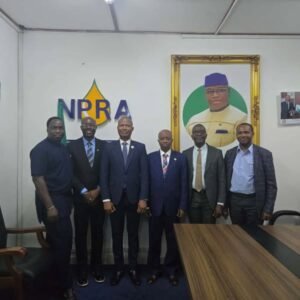
Taking a significant step toward fostering national unity and youth inclusion, the Minister of Youth Affairs, Ibrahim Sannoh, has met with Executive members of the APC Young Congress, the youth wing of the main opposition party. Widely hailed as unprecedented under the current SLPP-led administration, the meeting marks the first time a sitting Youth Minister has formally engaged with the APC’s youth leadership, signaling a new chapter in bipartisan youth collaboration.

Held at the Ministry of Youth Affairs, the discussion was centered on creating space for mutual cooperation, breaking political barriers and ensuring that youth development becomes a shared national agenda rather than a partisan one.

The Minister underscored the inclusive mandate of his Ministry, stating clearly that, “The Ministry of Youth Affairs does not belong to any political party; it belongs to all young people across Sierra Leone.” He encouraged the APC Young Congress to freely invite the Ministry to their programs and pledged the Ministry’s full support and participation in youth-centered initiatives, regardless of political affiliation.

“Every political party’s youth wing deserves a seat at the table,” he emphasized. “This Ministry belongs to the youth of Sierra Leone.”

Ibrahim Sannoh further affirmed his commitment to inclusive youth engagement, assuring that his office will continue to actively involve all political youth groups in national youth programs and development initiatives.

On behalf of the APC Young Congress, President Ansu Bernard responded with gratitude and optimism. He described the Minister’s outreach as a “genuine gesture of unity” and a “much-needed call to national purpose.” Ansu Bernard noted that such engagement could serve as a turning point in bridging political divides among the youth.

“Let this not just be a meeting but the beginning of something real and impactful,” he said. “When the heart is sincere and the mind is honest, only then can development reach all of us as young people.”

The historic dialogue has been widely welcomed by observers and youth stakeholders as a refreshing display of political maturity and visionary leadership. In a country where political divisions often run deep, the meeting is being seen as a rare but powerful move to place the interest of young people above party lines.

It also sends a clear message that youth unity is central to national progress and that inclusive dialogue, mutual respect and collaboration are the tools to shape a stronger Sierra Leone.

The engagement, analysts say, could lay the foundation for long-term partnerships between the Ministry of Youth Affairs and various youth wings, ensuring that young people across all political affiliations are empowered, heard and involved in the development of the country.

With the nation looking ahead, the meeting stands as a hopeful symbol of what is possible when youth leaders transcend political rivalry and commit to a shared vision for peace, development and progress.

King’s Production Receives SLAJ Award for Supporting the Media in Sierra Leone

By Foday Moriba Conteh

King’s Production Company Limited has been honored by the Sierra Leone Association of Journalists (SLAJ) with a Certificate of Appreciation, recognizing the company’s steadfast support for journalism and media development in Sierra Leone. The prestigious award was presented on Friday, 11th July 2025, during SLAJ’s official handing-over ceremony between outgoing and incoming national Executives, held at the Bintumani Hotel on Aberdeen in Freetown.

The award underscores King’s Production’s longstanding partnership with the media, acknowledging its role in promoting press freedom, public information access and the growth of independent journalism in Sierra Leone.

King’s Production SL Limited is part of the larger King’s Group of Companies, founded in 2000 with the establishment of King’s Foam and Mattress. In 2005, the company diversified into the beverage industry with the formation of King’s Production SL Limited, now one of the leading soft drink manufacturers in the country.

Spearheaded by brothers Khalil and Alie Hijazi, the company has grown from a modest family-run business into a national brand with strong export activity in neighboring Liberia. Over its 15 years of operations in Sierra Leone’s carbonated soft drink market, the company has been recognized for its market innovation, flexible production strategy and unwavering commitment to quality.

King’s Production boasts a diverse product line, including PET bottles, canned beverages and most recently, the Africanus juice brand. In 2018, the company launched a state-of-the-art factory line to meet growing consumer demand and to further enhance production capacity.

Commenting on the company’s journey and the recent honor by SLAJ, CEO Khalil Hijazi expressed gratitude for the recognition, reaffirming the company’s customer-first philosophy.

“Our customers and clients form the basis of the existence of King’s Production and our primary focus at all times is their satisfaction,” Khalil Hijazi said. “We have achieved remarkable growth by staying attuned to local market demands and swiftly adapting to meet them. This award from SLAJ affirms our commitment to contributing positively to Sierra Leone’s development, including the vital work of the media.”

He continued by underscoring that with a renewed focus on innovation and community partnership, King’s Production is poised to continue its robust growth and engagement across various sectors in the years ahead.

With SLAJ embracing a new chapter of leadership, the Association’s recognition of King’s Production Company Limited stands as a testament to the value of collaboration in building a transparent and accountable society.

FCC Mobilizes Over 1,000 Youth in Massive Flood Mitigation Drive

The Freetown City Council, in a robust effort to shield the city from the recurring threat of flooding, has intensified its flood mitigation initiatives by engaging over 1,000 young people in critical drainage clearance activities across the city over the past two weeks.

Working hand-in-hand with residents, FCC has been actively clearing silt and garbage from critical drainage channels in flood-prone communities. The initiative is part of the Council’s ongoing commitment to environmental protection and public health through proactive sanitation and flood prevention measures.

Through daily mobilization by Local Councillors, approximately 50 youths per community have been enlisted to clean gutters and waterways. This community-driven approach aims to foster local ownership, improve sustainability and ensure long-term impact.

So far, flood mitigation works have been successfully completed in several high-risk areas, including:

  • Mayenkineh, Calaba Town
  • Taylor Street, Kissy Old Road
  • Guard Street Market, Fourah Bay Road
  • Car Wash, Tengbeh Town
  • Congo Cross and Signal Hill Dump Sites
  • Macauley Street/Circular Road
  • Wallace Johnson Street (including the Central Mosque, Boss Station and Big Market area)
  • Guard Street–Dove Cut (Eastern Police area)
  • Malama Thomas Street
  • Salad Gron Market
  • Peace Market, Ferry Junction
  • Sani Abacha Street
  • Priscilla Street

This phase of the 2025 flood mitigation effort is being financed through FCC’s own-source revenue and supported by key partners, including Irish Aid, the Chinese Embassy, the Road Maintenance Fund Administration (RMFA) and other stakeholders.

The campaign aligns with FCC’s flagship “Dorti Mus Go” initiative, launched on June 27, 2025, at Calaba Town Market. The campaign focuses on enhancing urban sanitation and flood resilience by enforcing sanitation byelaws, encouraging the use of registered waste service providers and spearheading citywide cleanup and awareness programs.

FCC expressed its sincere gratitude to the Climate Action and Disaster Management Committee, the Sanitation Committee and the Disaster Risk Management Unit for their leadership and hands-on coordination of the project.

With efforts to build a cleaner, safer Freetown underway, FCC is urging all residents to stop dumping waste and wastewater into gutters and to register with FCC-approved waste service providers for proper disposal and effective waste management.


Opposition Leader Rejects Electoral Commissioner Nominee, Cites Constitutional Breach

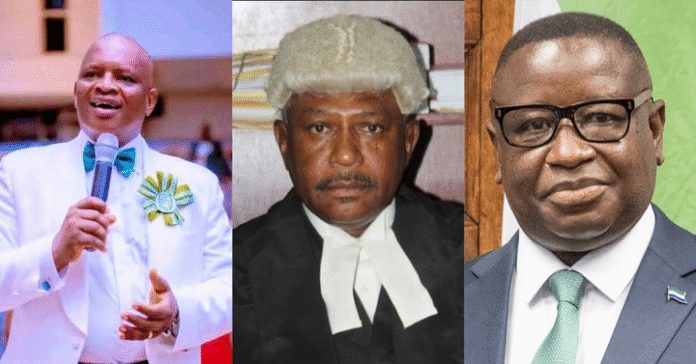
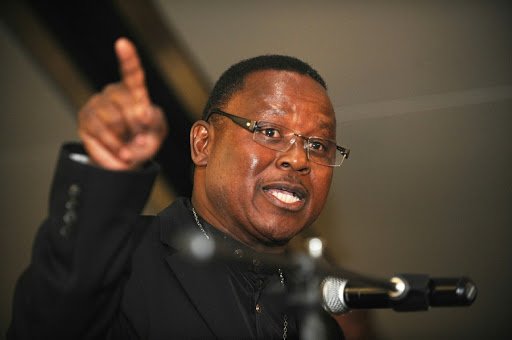
Leader of the Opposition in Parliament, Hon. Abdul Kargbo

By Foday Moriba Conteh

The Leader of the Opposition in Parliament, Hon. Abdul Kargbo, has openly rejected the appointment of Alex Pat Labib Saffa as the new Electoral Commissioner for the Eastern Region, citing what he describes as a clear violation of constitutional provisions.

The dramatic moment unfolded during a parliamentary interview session, where Members of Parliament were vetting presidential nominees for high-level public offices. In a strong act of protest, Hon. Abdul Kargbo walked out of the proceedings, expressing his disapproval of Alex Pat Labib Saffa’s nomination.

According to the Opposition Leader, the appointment is unconstitutional, as it involves a former public servant being nominated to a position that, in his view, requires strict political neutrality. “From my own side, I will not be part of anything that goes against the norm of our state, which is our constitution,” Hon.  Abdul Kargbo asserted.

The controversial nominee, Alex Pat Labib Saffa, was recently confirmed by a Press Release from State House as President Bio’s appointee to head the Electoral Commission in the Eastern Region.

Under Sierra Leone’s Constitution, all presidential nominees for key public offices, including Ministers and Commissioners, must be vetted and approved by Parliament. The appointment of electoral Commissioners in particular is considered sensitive due to the importance of maintaining the independence and impartiality of the Electoral Commission of Sierra Leone (ECSL), which oversees national and local elections.

Hon. Abdul Kargbo’s rejection of the nominee signals potential tensions between the ruling party and the opposition over the independence and credibility of electoral institutions. It also raises broader questions about adherence to constitutional checks and balances in key governance processes.

As of press time, there has been no official response from State House or the Electoral Commission regarding the opposition’s objections. However, political analysts warn that the unfolding disagreement may deepen mistrust between the two major parties, especially ahead of any future electoral processes.

The appointment of electoral Commissioners remains a critical element in strengthening democratic governance in Sierra Leone. Calls are now mounting for greater transparency and constitutional fidelity in such appointments to ensure public confidence in the country’s electoral system.

BSL Mandates Use of NIN for All Bank Transactions

By Amin Kef-Ranger

Marking a major step toward strengthening the country’s financial system and advancing digital integration, the Bank of Sierra Leone has issued a directive mandating the use of the National Identification Number (NIN) for all individual banking transactions and financial services.

According to an official notice released by the Central Bank, all new individual customer accounts must now be opened with a valid NIN issued by the National Civil Registration Authority (NCRA). Similarly, businesses are required to present a Tax Identification Number (TIN) issued by the National Revenue Authority (NRA) when opening new accounts.

The directive, which takes effect immediately, is part of broader efforts to enhance customer verification, promote financial integrity, curb fraud and facilitate interoperability within Sierra Leone’s growing digital financial ecosystem.

Furthermore, existing account holders are required to update their account records with their NINs by no later than 31st December 2025. Failure to do so may result in limited access to banking services.

The Central Bank also emphasized that customers wishing to access or utilize the National Payment Switch (NPS); a system designed to streamline and interconnect digital transactions across financial institutions must link their NIN to their bank accounts by 31st August 2025.

“The mandatory use of the National Identification Number will improve the accuracy of customer identification and strengthen the financial sector’s resilience against fraud and identity-related crimes,” the Bank stated in its announcement.

The National Identification Number, a unique and verifiable identifier, is issued by the NCRA as part of efforts to modernize civil registration and promote national data integration.

This policy follows two years of consultation and engagement between the Central Bank and various financial sector stakeholders. It marks a major step forward in the Government’s digitization agenda and its push toward a more inclusive, secure and efficient financial environment.

Commercial banks, microfinance institutions, mobile money providers and other financial service providers are expected to comply with the directive and support their customers in fulfilling the requirements.

Citizens are encouraged to promptly register with the NCRA to obtain their NIN and ensure it is linked to their bank accounts before the stated deadlines.

AASU Applauds President Bio’s Reappointment of Dr. Gilpin as Rokel Bank MD

By Amin Kef-Ranger

The All-Africa Students Union (AASU), the continental body representing over 80 million students across Africa, has issued a strong statement of commendation for His Excellency President Julius Maada Bio following his reappointment of Dr. Walton Ekundayo Gilpin as Managing Director of Rokel Commercial Bank (RCB).

In a Press Release from its Continental Secretariat in Accra, Ghana, the Union hailed the move as a bold reaffirmation of competence, continuity and visionary leadership within Sierra Leone’s public sector. AASU described Dr. Walton Ekundayo Gilpin’s reappointment as “not only a national endorsement of his remarkable performance but also a continental validation of his legacy in institutional transformation, financial discipline and innovation in public banking.”

Since assuming leadership at Rokel Commercial Bank, Dr. Walton Ekundayo Gilpin has overseen sweeping changes that have revitalized the institution, placing it among Sierra Leone’s top-performing banks. One of the most notable achievements under his stewardship is the unprecedented recapitalization of the bank. According to the AASU, the bank’s operating capital rose from Le91 billion to an impressive Le271 billion, making RCB the first commercial bank in Sierra Leone to exceed the Central Bank’s recapitalization benchmark within a single financial year.

“This milestone, achieved in a challenging economic climate, underscores Dr. Walton Ekundayo Gilpin’s visionary approach to financial governance and his unwavering commitment to excellence,” the Union noted.

The statement further highlighted the strategic expansion of the bank’s physical and digital footprint, citing the increase in branches to 18 and service outlets to 9 across the country. AASU commended Dr. Walton Ekundayo Gilpin’s leadership in deploying modern banking infrastructure, including ATMs and inclusive financial products tailored to underserved and rural communities.

“These efforts strongly align with the Sierra Leonean Government’s agenda on financial inclusion and economic empowerment,” the release added.

From Accra, AASU President H.E. Osisiogu Osikenyi E. expressed profound admiration for both President Bio and Dr. Walton Ekundayo Gilpin. “The reappointment of Dr. Walton Ekundayo Gilpin is a reaffirmation of what visionary leadership, when properly supported by political will, can achieve in Africa,” he said. “We applaud President Julius Maada Bio for prioritizing competence and institutional continuity.”

He continued: “Dr. Walton Ekundayo Gilpin’s work at Rokel Bank exemplifies the kind of homegrown success stories young Africans need to witness; leaders who reform systems and build institutions that serve the public interest with integrity and innovation.”

The Union emphasized the importance of replicating such transformative leadership across the continent, calling on other African Governments to emulate Sierra Leone’s example by entrusting key public institutions to competent professionals with proven track records.

“AASU believes that institutions like Rokel Commercial Bank, under dynamic leadership, are instrumental in enhancing youth access to finance, supporting entrepreneurial ventures and promoting educational empowerment across Africa,” the statement concluded.

Reaffirming its commitment to youth development and socio-economic progress, the Union pledged continued collaboration with financial institutions that champion economic inclusion, youth entrepreneurship, educational financing and sustainable development initiatives continent-wide.

Remembering History and Embracing Future – Ambassador Wang Qing

Ambassador Wang Qing

By Ambassador Wang Qing on the 80th Anniversary of the Victory of the Chinese People’s War of Resistance Against Japanese Aggression and the World Anti-Fascist War

This year marks the 80th anniversary of the Victory of the Chinese People’s War of Resistance Against Japanese Aggression and the World Anti-Fascist War, as well as the 80th anniversary of the founding of the United Nations. World War II was an unprecedented catastrophe in human history, inflicting immense suffering on all of humanity. Born out of profound reflection on this tragedy, the United Nations was established, laying the foundation for long-term global peace and the sustainable development of human civilization. Today, as we commemorate both anniversaries, we do so to remember history and jointly embrace the future, working together for lasting peace and sustainable development of the world.

We must always remember the lessons of war and cherish peace. War is a mirror that allows us to better appreciate the value of peace. Although the world has avoided another world war in the past 80 years, it has not been free of conflict. The Ukraine Crisis and the conflict between Iran and Israel have sounded the alarm once again: the obsession with power status, the frequent resort to force, and the pursuit of absolute security at the expense of others’ security inevitably lead to insecurity and heightened risks of war. Peace is like sunshine – easily taken for granted, but hard to survive without. The painful lessons of WWII remain fresh. Hegemonic acts of superiority and the law of the jungle—where the strong prey on the weak—must never be allowed to resurface.

We must uphold a correct historical perspective on WWII. Historical justice rests upon defending and remembering the truth. WWII was a war of aggression launched by the fascist bloc of Germany, Italy, and Japan in their quest for global domination. It engulfed five continents, drawing in over 80 countries and regions. China, at the horrific cost of 35 million military and civilian casualties, resisted Japanese militarist aggression tenaciously for 14 arduous years. Holding back Japan’s main overseas forces on the major Eastern theater of WWII, China made tremendous sacrifices and immense contributions to the victory of the World Anti-Fascist War. Learning from history and facing the future requires us to reject all erroneous words and deeds that distort, glorify, or deny the history of aggression and jointly safeguard historical truth to avoid repeating past tragedies.

We must safeguard the post-war international order. The international system centered on the U.N. is the concentrated embodiment of the outcomes of the WWII victory and has supported 80 years of global stability and prosperity. It is especially important to remember that Taiwan’s restoration to China is a victorious outcome of WWII and an integral part of the postwar international order. A series of instruments with legal effect under international law, including the Cairo Declaration and the Potsdam Proclamation, have all affirmed China’s sovereignty over Taiwan. The historical and legal fact therein brooks no challenge. Today, 80 years later, the U.N. is facing unprecedented challenges. Self-first policy, unilateralism, power politics and bullying are eroding the fundamental norms of international relations. Facing a turbulent and complex international situation, we must firmly uphold the U.N.-centered international system, the international order underpinned by international law, and the basic norms of international relations based on the purposes and principles of the U.N. Charter, and jointly practice true multilateralism.

We must improve global governance. Building a better world requires better global governance. As the balance of international forces shifts and global challenges multiply, we must enhance the representativeness, inclusiveness, and effectiveness of global governance, steering it toward greater justice and equity. China’s proposal to build a community with a shared future for mankind aims to encourage countries with different social systems, ideologies, histories, cultures, and development levels to share interests, rights, and responsibilities in international affairs, and build the broadest common ground for jointly building a better world. China advocates for equal and orderly multipolarity, ensuring that all countries, regardless of size or strength, can participate equally in the multipolarization process, enjoy their rights, and play their roles. We cannot allow one or few major powers to monopolize international affairs. We cannot allow countries to be categorized into different ranks based on so-called power status. We cannot allow a situation where some countries are at the table while others are on the menu.

The victory of the World Anti-Fascist War profoundly altered the historical trajectory of Africa and ushered in a new era of China-Africa solidarity and cooperation. Last year’s Forum on China-Africa Cooperation (FOCAC) Beijing Summit elevated the China-Africa relations to an all-weather China-Africa community with a shared future for the new era. China firmly supports Africa in playing a greater role on the international stage, correcting historical injustices, and increasing Africa’s representation and voice in the multilateral governance system. As a good friend, partner, and brother with a shared future, China is committed to working with African countries, including Sierra Leone, to jointly follow a path of peaceful development, mutually beneficial cooperation, and shared prosperity towards modernization. Together, we will elevate China-Sierra Leone relations and China-Africa relations to new heights, promote a more just and equitable international order and system, advance the building of a community with a shared future for mankind, and better benefit people across the world and our future generations.


Outamba Kilimi Buffer Zones Under Siege from Loggers

The forests of Upper Tambaka Chiefdom are under severe threat as rampant and uncontrolled logging continues to destroy the rich biodiversity surrounding the Outamba Kilimi National Park (OKNP) and its buffer zones. Once considered a stronghold of wildlife conservation and ecological balance, the chiefdom is now facing extensive deforestation, with devastating consequences for both the environment and the local communities.

According to residents and environmental stakeholders, illegal logging activities have decimated significant portions of community forests, which served as critical habitats for endangered species such as chimpanzees, elephants, red-flanked duikers and yellow-backed duikers. These forests not only housed diverse wildlife but also play a crucial role in sustaining the livelihoods of local people, particularly those dependent on agriculture.

Stakeholders further revealed that the planks harvested from these forests are being transported and exported to neighboring Guinea, with no economic returns or developmental benefits accruing to Upper Tambaka. “The roads are left in deplorable condition, the environment is damaged and the people are left worse off,” a concerned resident lamented. “We get nothing but dust, destruction and deforestation.”

Environmentalists warn that the unchecked logging has exacerbated climate change in the region, contributing to unpredictable rainfall patterns and declining agricultural productivity. “No forest means no rain and without rain, our farming suffers,” said another resident, pointing to the growing challenges faced by the chiefdom’s largely agrarian population.

Reports indicate that on a near-daily basis, large trucks travel from Guinea into Tambaka to collect planks from multiple collection points around the park and in surrounding community forests. The most active depositing sites include Lakatha Community in Thandatha Village and Sanya, a key loading zone near the Guinea border.

Despite the presence of Rangers and Forestry officials, who are deployed in partnership with Chiefdom authorities to safeguard the environment, enforcement remains weak and ineffective. Many residents believe that collaboration alone is not enough without stronger Government intervention and legal enforcement.

“The destruction of these forest corridors equates to the destruction of the park itself,” noted a conservation advocate. “These are high-value conservation areas that support both wildlife and human communities. Their loss threatens the entire ecological and economic system.”

Environmental degradation in Upper Tambaka is said to be more severe than in any other chiefdom within Karene District. What was once known as a bastion of conservation has become a hotbed of environmental exploitation. Many residents are now calling for urgent reforestation initiatives and community-led conservation efforts to reverse the damage.

“We must give back to nature by planting trees and protecting our environment,” urged a youth leader from the chiefdom. “If we don’t act now, we risk losing not just our forests, but our future.”

With pressure mounting for immediate action, concerned citizens and conservation groups are urging Government agencies and international partners to intervene and help preserve what remains of Upper Tambaka’s rapidly vanishing forests.

SLBA President Tuma Advocates for Intra-African Investment at UK Parliament

By Francess Wright

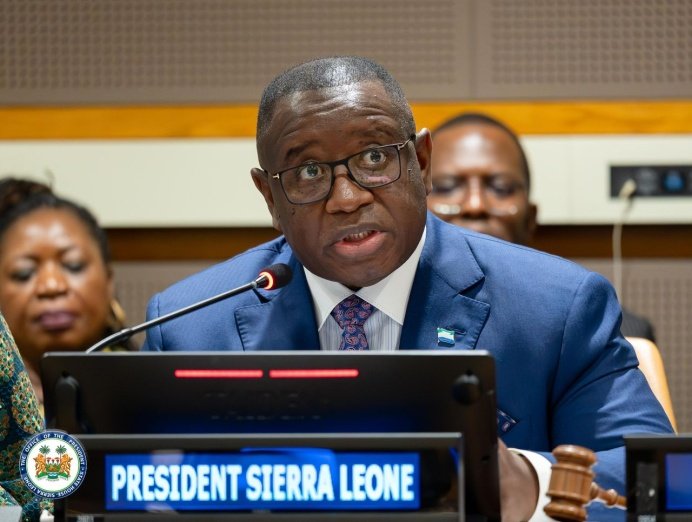
A historic and proud moment for Sierra Leone unfolded on July 10, 2025, when Tuma Adama Gento-Kamara Esq., President of the Sierra Leone Bar Association, became the first sitting President of the Association to address the UK House of Commons. Her impactful presence at the 15th African Achievers Awards, held at the renowned Palace of Westminster in London, has been widely celebrated as a milestone for both Sierra Leone and African women in leadership.

President Tuma Adama Gento-Kamara was a featured panelist in the opening session of the African Achievers Summit, themed: “Doing Business in Africa—Opportunities, Challenge and Strategies to Globalize African Business.” Speaking during Panel 1: Making Africa Business-Friendly, she joined a high-caliber group of thought leaders and Executives in a cross-sector conversation on strengthening Africa’s business environment through governance, infrastructure development, legal reform and innovation.

The session, moderated by Ezekiel Solesi, CEO of LIMBsimple, included fellow panelists Khalil Halilu (CEO, NASENI SHC), Alex Omiogbemi (Group Managing Director, Rainbow Group) and Mustapha Njie (CEO, TAF Africa Global). Despite the distinguished company, it was President Tuma Adama Gento-Kamara’s address that captured the audience’s attention with its clarity, strategic insight and grounded vision for Africa’s future.

She delivered a compelling argument on the untapped potential of the ECOWAS Trade Liberalization Scheme (ETLS), calling for African Governments to remove barriers that hinder intra-African investment. Her message was clear: “Make Africa business-friendly for African investors.” She highlighted the need for meaningful legal and institutional reforms, pointing to the importance of regulatory transparency, functional justice systems and trust in public institutions as the bedrock for unlocking African prosperity.

President Tuma’s remarks also underscored the urgency of fostering a Pan-African business environment; one in which African entrepreneurs can operate seamlessly across borders, driving regional growth from within. She called for an end to bureaucratic bottlenecks and advocated for policies that prioritize the private sector as a critical engine of development.

In a moment of national pride, President Tuma Adama Gento-Kamara extended warm congratulations to His Excellency President Julius Maada Bio on his appointment as Chairman of the ECOWAS Authority of Heads of State and Government, describing the appointment as a timely and fitting recognition of Sierra Leone’s growing leadership role in the region.

Her trailblazing journey continued the following evening, July 11, 2025 when she was invited to the House of Lords to serve as an Award Presenter during the celebratory dinner hosted by Baroness Sandip Verma. Sharing the stage with African achievers and prominent UK figures, including Diane Abbott MP, President Tuma Adama Gento-Kamara presented awards recognizing excellence and innovation across the continent. Her grace, composure and leadership stood as a beacon of inspiration throughout the event.

President Tuma Adama Gento-Kamara’s participation at the UK Parliament was more than ceremonial; it was a moment that symbolized Sierra Leone’s rising voice on the global stage and showcased the leadership potential of African women in law and governance. Her interventions resonated far beyond the halls of Westminster, sending a message of hope, transformation and unity across the continent.

Sierra Leone’s journey toward regional and international relevance is being shaped by President Tuma Adama Gento-Kamara’s contributions, which stand as a defining chapter; highlighting how leadership grounded in integrity, insight and action can influence the destiny of a nation.

Parliament’s Silence on Kasafoni Petition Fuels Distrust in Legislative Process

By Amin Kef-Ranger

A long-anticipated deliberation on a Public Petition concerning the disputed Kasafoni Land failed to take place as the Parliamentary Committee on Lands did not convene on Monday, July 14, 2025, leaving stakeholders and landowners deeply frustrated.

This petition, considered the first formal Public Petition submitted to Parliament since the end of Sierra Leone’s civil conflict, holds critical constitutional significance. It centers on the human rights and land ownership claims of the people of Kasafoni in the mineral-rich Tonkolili District.

Credible investigations reveal that the Kasafoni community alleges their ancestral lands were unlawfully seized by the Sierra Leone Mines and Minerals Development and Management Corporation (SLMMDMC) without their free, prior and informed consent ; a violation of the 1991 Constitution, the Public Land Ordinance and the Customary Land Rights Act.

Sources close to the petitioners confirm that the community had previously entered a lease agreement with Gento Group, a private company viewed as respecting their customary ownership and community development needs. The involvement of SLMMDMC is now perceived as an imposition that threatens both land tenure security and the validity of locally sanctioned agreements.

Tensions remain high in Tonkolili, where community members have vowed to defend their land rights through all legal and peaceful means. “We are the rightful custodians of Kasafoni Land and will not allow any institution to take what belongs to us without consent,” said a community leader who wished to remain anonymous.

Legal experts and civil society observers warn that the Committee’s failure to meet on such a sensitive issue risks further inflaming tensions and undermining public trust in the legislative process. “This is not just about land. It is about justice, constitutional rights and the future treatment of communities amid development,” said one observer.

This Parliamentary inaction raises serious concerns about the Government’s commitment to protecting community rights amidst growing interest in mineral-rich lands. The failure to address the petition signals a troubling direction toward a future where the Government may forcibly seize people’s lands or homes without prior notice.

Stakeholders are now urgently calling on Parliamentary leadership to prioritize resolving the Kasafoni Land Petition and uphold constitutional protections and land rights laws. As the situation unfolds, Parliament faces mounting pressure to deliver a decisive response—one that could set a precedent for land governance and human rights in post-war Sierra Leone.