Home Blog Page 187

Caritas Freetown Concludes Stakeholders’ Engagement on Kush Crisis in Western Urban and Rural Districts

By Foday Moriba Conteh

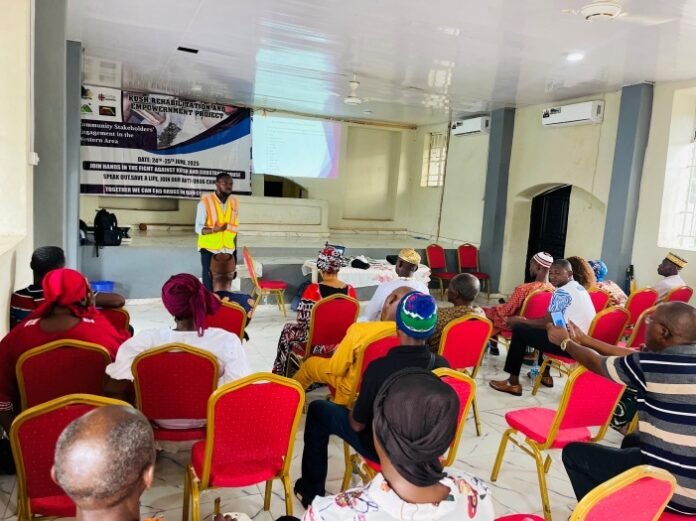
Caritas Freetown has taken a bold and strategic step to address the alarming rise in drug abuse, particularly the widespread use of Kush among Sierra Leone’s youth, by concluding a two-day stakeholders’ engagement in the Western Area Urban and Rural districts. Through its Kush Rehabilitation Empowerment Project and in collaboration with the National Drug Law Enforcement Agency, with support from ONG GUAGUACUNA and Atabal, the initiative convened community leaders and influencers to design grassroots-driven solutions aimed at curbing substance abuse and promoting rehabilitation.

The first engagement took place on Tuesday, June 24, 2025, at St. Anthony Hall on Skye Street in Freetown. It targeted leaders from Western Area Urban, including chiefs, pastors, imams and community heads, all unified in the goal of eradicating drug abuse in their neighborhoods.

The second session was held on Wednesday, June 25, 2025, at Frandy Community Centre in Waterloo, drawing in stakeholders from the Western Area Rural.

Speaking at the engagements, Murray Massaquoi, Project Manager of the Kush Rehabilitation Empowerment Project, emphasized the need for community-led intervention.

“We are here as part of our strategic implementation plan to fight Kush and substance abuse,” Murray Massaquoi stated. “Unlike past approaches where people visit communities and leave, our strategy brings stakeholders together to collaboratively develop a roadmap that addresses the problem from within.”

According to Murray Massaquoi, the project targets two main groups: communities and schools. Each represented community nominated two participants one religious leader and one secular community representative to ensure messages reach both moral and civic platforms like churches, mosques and town councils.

Murray Massaquoi also used the opportunity to educate attendees on the definition and types of drugs, differentiating between licit drugs like paracetamol and illicit substances such as cocaine, heroin and Kush. He warned that substance abuse leads to memory loss, mental illness, academic failure and in some cases death.

“We’ve given them the tools and information. Now they must go back to their communities, implement what they’ve learned and build local structures to tackle this crisis,” he said.

Although currently a pilot, Murray Massaquoi revealed that the program may expand to other parts of the country once its impact is assessed. He also announced the construction of a rehabilitation center for children affected by Kush in Makumba, which will initially support 16 seriously affected youths.

He emphasized that this is not just about raising awareness but it’s about healing, rehabilitation and saving lives.  “This is just the beginning,” said Murray Massaquoi. “We must not stop until every community is equipped, every youth is safe and every future is restored.”

Ibrahim Samuel Dugba, Director of Drug Prevention, Education and Training at the NDLEA, praised the initiative and emphasized the need for joint efforts.

“We are pleased that Caritas Freetown has partnered with us in such a timely and essential intervention. Our youth are losing their future to Kush and we must act now,” he said.

He also stressed that community stakeholders including chiefs, imams, pastors and parents are central to the fight. These individuals, he noted, can:

  • Develop and enforce local drug control policies
  • Facilitate access to rehabilitation and reintegration
  • Conduct SWOT analyses (Strengths, Weaknesses, Opportunities and Threats) to shape interventions

“This isn’t just a meeting it’s a capacity-building platform to prepare leaders to take action in their own communities,” he added.

Responding to criticisms about the visibility of the NDLEA’s operations, Ibrahim Samuel Dugba defended the Agency, saying:

“People sleep comfortably at night because our officers are out in the cold securing this nation. Arrests are being made; seizures are ongoing. What we need is support not skepticism from the public and media.”

Ibrahim Samuel Dugba concluded by making a call to action: “Stakeholders must rise now; mobilize, speak out and implement strong policies in their communities. Our collective goal must be to make Sierra Leone a drug-free nation.”

Ansu Konneh, Director of Mental Health and Psychosocial Services at the Ministry of Social Welfare, also commended Caritas Freetown, describing community leaders as “critical allies in the fight.”

“We’ve established rehabilitation centers in several districts, but real impact comes when communities are fully involved,” he said. “We must work collectively, with urgency to protect the future of our youth.”

Several community leaders also shared the challenges and hopes they carry in the fight against Kush.

Chief Pa Alimamy Kabba, from the Approved School Community in Wellington, Western Area Urban raised urgent concerns about whistleblower safety.

“When we report Kush dealers, we face threats and intimidation. The same people arrested are released in days and come back to retaliate against us,” he warned.

The Chief called on the Government to protect whistleblowers, arguing that this is key for stakeholders to work without fear. He also stressed the need for alternative livelihoods for drug-affected youths:

“If we encourage them to quit, we must provide job skills, education or other options to keep them from going back,” he stated.

Madam Eva Linkoh, Chairlady of Mama Beach Community, Western Area Rural shared a personal and emotional account of her community’s struggles.

“We lost a boy recently due to Kush. Many of our youths now suffer from swollen legs and festering wounds,” she revealed. “Even my own son is battling addiction.”

She issued a strong plea: “The situation is worsening. We must all rise now and fight this menace before it destroys an entire generation.”

Sheik Ibrahim Bangura, Acting Youth Coordinator of the Council of Imams, welcomed the engagement and pledged the support of religious leaders.

“We’ve seen how impactful our involvement can be. We will now use our mosques and sermons to preach against Kush and raise awareness.”

He noted that the majority of the population is youthful, making this fight not just timely but essential.

“This isn’t just a national issue it’s a moral one. We must guide our youth spiritually and socially to stay on the right path.”

The two-day stakeholders’ engagement spearheaded by Caritas Freetown marks a pivotal step in shifting the battle against drug abuse from policy desks to grassroots action. With the active involvement of traditional leaders, religious figures, civil society and Government institutions, there is renewed hope that Sierra Leone can make meaningful strides in curbing the Kush epidemic.

But as echoed by all stakeholders, this battle will only be won through collective action, strategic planning and long-term investment in youth empowerment and rehabilitation.


SLURC Validates Vision to Transform Lungi into Premier Administrative and Financial Hub

By Millicent Senava Mannah

A bold vision to reshape Sierra Leone’s urban future took center stage on Tuesday, June 24, 2025, as the Sierra Leone Urban Research Centre (SLURC), in collaboration with A.R.S Progetti S.P.A and the Ministry of Lands, Housing and Country Planning, hosted a high-level stakeholder validation workshop at the Brookfields Hotel in Freetown. Supported by the African Development Bank, through both technical and financial assistance, the event marked a significant milestone in the advancement of the Lungi Spatial Development Project.

Aimed at transforming Lungi into Sierra Leone’s future Administrative and Financial City, the project aspires to drive inclusive growth, enhance environmental sustainability and establish a new model of spatial planning for national development. The workshop brought together a cross-section of stakeholders, including representatives from key Government Ministries, Civil Society Organizations, academia and international development partners, to evaluate and validate the draft Spatial Development Framework.

Delivering the keynote address, Dr. Joseph Macarthy, Executive Director of the Sierra Leone Urban Research Centre, outlined the primary objectives of the workshop. Dr. Joseph Macarthy emphasized that the session was convened to critically review the draft Spatial Development Framework for Lungi, integrate stakeholder perspectives and ensure alignment with Sierra Leone’s broader national development strategies. According to him, the vision to transform Lungi into a resilient, economically vibrant and environmentally sustainable city can only be realized through collaborative and evidence-based planning.

The Executive Director detailed the planning milestones already achieved, including the preparation of an inception report, institutional analysis and a comprehensive situational assessment. He further highlighted the role of the Strategic Environmental and Social Assessment, which he described as a crucial instrument for identifying potential risks and recommending appropriate safeguards throughout the project’s implementation.

Participants engaged in intensive discussions on various components of the Spatial Development Framework, including the Situation Analysis, SWOT Assessment, Guiding Principles and the overall Vision Statement. The proposed development strategy rests on three foundational pillars : Protect, Develop and Synthesize intended to conserve Lungi’s natural resources, enable structured urban expansion and improve connectivity and service delivery across the region.

Lively plenary sessions and focused breakout discussions allowed stakeholders to examine priority themes such as urban governance, land use planning, environmental resilience and sustainable livelihoods. Throughout the day, participants shared technical feedback and offered strategic recommendations to improve the framework’s relevance, feasibility and long-term impact. Particular attention was given to the findings of the Strategic Environmental and Social Assessment, which addressed the potential environmental and social consequences of large-scale urban development and proposed mitigation measures to ensure sustainability.

At the conclusion of the workshop, stakeholders expressed strong support for the vision laid out in the draft Spatial Development Framework. They reaffirmed their commitment to ongoing collaboration and emphasized the importance of continued stakeholder engagement as the framework progresses toward finalization.

The revised Spatial Development Framework for Lungi, now reflecting the diverse insights gathered during the validation process, will be submitted to the Ministry of Lands, Housing and Country Planning for formal endorsement. Once adopted, the framework will serve as a comprehensive roadmap for Lungi’s transformation into a modern, inclusive and dynamic administrative and financial center.

This milestone signals a new era of structured and participatory urban planning in Sierra Leone, setting the stage for Lungi to emerge as a model city that embodies the principles of sustainability, resilience and equitable development.


NRA Strengthens Ties with Chinese Commerce Counselor to Enhance Revenue Reforms

By Amin Kef (Ranger)

The National Revenue Authority on Tuesday, June 25, 2025, welcomed the newly appointed Chinese Counselor for Commerce, Peng Wang and his delegation at its headquarters in Freetown, signaling a renewed commitment to strengthening economic ties and enhancing revenue collection. The courtesy visit underscored ongoing efforts to deepen bilateral cooperation between Sierra Leone and the People’s Republic of China, with a focus on fiscal governance, institutional development and trade facilitation.

Commissioner General of the NRA, Jeneba J. Bangura, warmly received the Chinese delegation and highlighted the Authority’s ongoing reforms aimed at modernizing tax and customs administration. She emphasized that digital transformation remains a key pillar of the NRA’s strategy, referencing the recent automation of duty waiver processing and streamlining of Goods and Services Tax (GST) exemption procedures.

“These reforms are designed to promote efficiency, transparency and accountability in our tax systems,” said Jeneba J. Bangura. “Diplomatic and development institutions will now be issued standardized one-year GST exemption certificates, complete with operational guidelines, to ensure consistency and prevent misuse of tax privileges.”

Jeneba J. Bangura also spoke on the Authority’s coordinating role in managing tax incentives, assuring that the NRA is committed to safeguarding fiscal integrity while facilitating legitimate exemptions.

In response, Counselor Peng Wang praised the NRA’s reform agenda and reiterated China’s support for Sierra Leone’s revenue mobilization efforts. He acknowledged past contributions from the Chinese Government, such as the donation of container scanners at the Queen Elizabeth II Quay and Gbalamuya border post, as well as the facilitation of international training programs for over 15 NRA personnel.

Counselor Peng Wang further revealed that the Chinese Embassy is prepared to sponsor more capacity-building initiatives tailored to the NRA’s priority areas, including tax administration and customs compliance. He also disclosed plans for the imminent establishment of a Chinese Chamber of Commerce in Sierra Leone, which he described as a strategic platform for continuous dialogue between Chinese businesses and national institutions like the NRA.

“The upcoming Chamber of Commerce will not only strengthen business-to-Government engagement but will also support mutual understanding and investment-friendly policy formulation,” Counselor Peng Wang added.

Jeneba J. Bangura expressed strong support for the proposed initiatives, particularly in areas such as GST compliance, rental income tax enforcement and institutional strengthening. She emphasized that the NRA is committed to internalizing knowledge gained from technical support programs and translating it into measurable improvements in service delivery and revenue outcomes.

The meeting ended on a high note, with both parties expressing goodwill and a shared determination to advance Sierra Leone’s development priorities through strategic cooperation, policy alignment and an improved investment climate.

Underscoring the importance of international partnerships in supporting national revenue systems, the engagement signals a forward-looking approach to sustainable economic collaboration between Sierra Leone and China.


EU Special Envoy Meets ECOWAS Chairman Julius Maada Bio to Deepen Sahel Cooperation

Amid deepening ties between the European Union and West Africa, the EU’s Special Representative for the Sahel, João Cravinho, held a high-level courtesy meeting with His Excellency President Julius Maada Bio, Chairman of the Authority of ECOWAS Heads of State and Government and President of the Republic of Sierra Leone.

The meeting, held on Tuesday June 24 2025 in Brussels, Belgium highlighted mutual interest in strengthening strategic collaboration to address the complex security and development challenges facing the Sahel and surrounding coastal states.

President Bio, recently elected as Chairman of the ECOWAS Authority, described the engagement as productive and forward-looking. “As the new Chairperson of the Authority of Heads of State and Government of ECOWAS, I am eager to collaborate with the EU to address the critical challenges facing our region,” he stated. “I believe that together we can make a significant impact.”

Special Representative, João Cravinho, congratulated President Bio on his appointment, calling it a recognition of his demonstrated leadership across the West African region. “We commend you for assuming this important responsibility. The European Union eagerly anticipates working closely with you to confront the region’s pressing issues,” João Cravinho said.

He further briefed the ECOWAS Chairman on his ongoing work in the Sahel, reiterating the EU’s goal of deepening its partnership with the region in order to promote peace, stability and inclusive development. João Cravinho also lauded President Bio’s personal and political journey, from military service to democratic leadership, describing it as “an inspiration across the Sahel.”

In response, President Bio thanked the European Union for its longstanding support and reaffirmed his administration’s commitment to regional peacebuilding and institutional dialogue. He underscored the importance of engaging with transitional Governments in the Sahel and prioritizing security cooperation as a cornerstone of ECOWAS’s regional agenda.

“The Sahel States need special attention,” President Bio emphasized. “As Chairman of the Authority, I am determined to strengthen our dialogue and cooperation with the region’s leaders.”

The meeting concluded with both parties affirming their shared vision for a stable, secure and prosperous Sahel region. The European Union’s outreach through this courtesy call reflects its deepening commitment to working with ECOWAS under President Bio’s leadership to address the region’s most urgent challenges, including terrorism, governance transitions and humanitarian concerns.

The courtesy meeting marked a significant step toward reinforcing international collaboration and aligns with ECOWAS’s broader objectives of promoting regional integration, security and sustainable development.


Widespread Rejection in Dansogoia, Sambaia & Diang Over Kasafoni Land Disagreement

By Amin Kef-Ranger

A coalition of traditional leaders, landowners and residents from Dansogoia, Sambaia and Diang Chiefdoms in the Tonkolili and Koinadugu Districts has sent a petition to the Parliament of Sierra Leone, calling for urgent intervention in what they describe as an unconstitutional takeover of community land in the Kasafoni area by a state-owned corporation.

The petition, submitted to the Rt. Hon. Speaker of Parliament and Chairman of the Public Petitions Committee on June 23, 2025, challenges the legality of claims made by the Sierra Leone Mines and Minerals Development and Management Corporation (SLMMDC) and the Ministry of Information and Civic Education. These claims, based on Statutory Instrument No. 1 of 2024, assert that SLMMDC has been vested with exclusive authority over the Tonkolili North Iron Ore Deposit in Kasafoni, including all leasing rights.

According to the lead petitioner, Paramount Chief Hon. Alhaji Musa Bamba Foray Kulio Jalloh III of Dansogoia Chiefdom, “The land in Kasafoni belongs to our people by right of ancestral inheritance and customary law. It cannot be removed from us through a statutory instrument that overrides the Constitution and other national laws.” He added that the move disregards both community rights and the principles of free, prior and informed consent.

The petitioners argue that Section 2 of the said regulation grossly violates the Customary Land Rights Act, 2022, the Mines and Minerals Development Act, 2022 and the 1991 Constitution of Sierra Leone. Paramount Chief Alimamy Bockarie F. Koroma III of Sambaia Chiefdom stated, “We were never consulted before these decisions were made. Our communities have already lawfully leased the land to the Gento Group of Companies and the process followed all due procedures under customary and statutory laws.”

That stance is further supported by Paramount Chief Sheku Mage of Diang Chiefdom, who emphasized the legitimacy of the agreement with the Gento Group. “The lease was concluded after extensive consultations and full community consent,” he said, describing the partnership as a reflection of the people’s will and long-term development goals.

The petition outlines several projects undertaken by Gento Group, highlighting its respect for traditional protocols and its contributions to local development. These include the construction of a health centre in Sasakala Village in Dansogoia Chiefdom, the installation of a potable water dam in Kasafoni Village and rehabilitation of key roads in Sambaia Chiefdom.

While SLMMDC maintains that its authority derives from the 2024 regulation intended to centralize mineral resource management, critics argue that the move undermines Sierra Leone’s legal commitments to decentralization and the protection of customary land governance. Community leaders contend that such state-led centralization, carried out without consultation, disregards their rights and fuels distrust.

The petitioners have urged Parliament to formally recognize their lease agreement with Gento Group, launch an investigation into SLMMDC’s conduct, initiate public hearings with all relevant stakeholders and declare Statutory Instrument No. 1 of 2024 null and void where legally permissible.

“We are not against development,” Paramount Chief Hon. Alhaji Musa Bamba Foray Kulio Jalloh III stressed. “But development must happen with the people; not at the expense of their rights. We believe Parliament, as the voice of the people, must act swiftly and justly.”

To ensure inclusivity, the petition was translated into Limba, Kuranko, Temne, Krio and Fullah to guarantee understanding across all affected communities. “Every villager understands what is at stake,” said one of the Chiefs. “This is not just about iron ore. It’s about dignity, heritage, and sovereignty.”

Now before Parliament, the petition intensifies the national conversation around land ownership, mineral governance and the enduring authority of customary law within Sierra Leone’s legal and political framework. The Public Petitions Committee is expected to review the matter and determine the appropriate course of action, which may include stakeholder consultations and a legal review of the contested statutory instrument.

Open Letter To The Organisers Of The Strengthening Families Conference

Strengthening Families Conference

As our nation welcomes key figures from around the world to spotlight a family values agenda spearheaded by the Church of the Latter Day Saints (LDS Church), we understand the eyes of the world will yet again be on Sierra Leone.

Our country has made bold, monumental strides for children, girls, women, and our families. From the Gender Equality and Women’s Empowerment Act to the Prohibition Against Child Marriage Act, to our landmark Radical Inclusion Policy, to the (two-times) unanimous Cabinet approvals of the Safe Motherhood and Reproductive Health Care Bill. These are powerful testaments to the leadership of President Julius Maada Bio and Her Excellency, the First Lady Fatima Maada Bio, whose tireless work has kept girls’ dignity, safety, and education at the heart of national progress.

And yet, while we celebrate how far we have come, we know there is still further to go – and we must guard these gains fiercely.

The conference organisers promise empowerment, education, and protection for women and children. We note that our First Lady will give a keynote address – and we trust and respect her leadership as a global advocate whose voice has inspired girls and mothers across Sierra Leone. But we are profoundly concerned by the version of ‘family values’ being brought to Freetown this week that lifts up the language of protection and empowerment but that through its backing by the LDS Church seems to hide an oppressive stance for girls and women, our dignity, our protection, and our freedoms.

As both a Sierra Leonean and a global hub for girls’ and women’s rights, we are guided by evidence. Our latest publication “Until Everybody is Free” documents the devastating impact of similar conferences in recent years by the LDS Church in Ghana, Nigeria and Côte d’Ivoire. It shows how these events have undermined progressive education, reversed vital health information for young people, rolled back hard-won gains to women’s freedoms, and emboldened policies that push already marginalised communities into silence and shame – all under the banner of “family protection.”

Our Nigerian sisters remind us plainly:

“It may seem like just another church event. But behind the nice sounding songs and smiling faces lies a movement designed to erase the hard-won rights of Sierra Leone’s women and children.”

So, we have honest questions for the LDS Church. Where do you stand on rights of girls and women…

Should girls who become pregnant be forced out of school?

Should a woman stay in an abusive marriage to protect her “family”?

Should girls be married before the age of 18?

Should girls be subjected to FGM in the name of culture?

Should girls and women be able to decide when and how to have children?

Should children be denied age-appropriate, truthful knowledge about their own bodies?

Should women be forced to carry forward pregnancies that jeopardize their lives and well being?

And why have communities in Nigeria, Ghana, and Côte d’Ivoire warned us about your gatherings?

We believe Sierra Leone’s families will be strongest when every girl is free and every woman is safe. These freedoms are deeply connected – protection, dignity, education, bodily autonomy – and we cannot stand aside while some rights are cherry-picked and others die on the vine. A true, comprehensive agenda for girls includes access to complete education – both schooling and an understanding of her body and sexual health – freedom from all forms of violence (child marriage, sexual and cultural violence), and the ability to survive pregnancy as well as make her own decisions about when and under what circumstances she has children.

So, to the LDS Church: we ask you to be transparent. Where do you truly stand on the rights, choices, and futures of Sierra Leone’s girls and women?

Welcoming the conversation,
Purposeful


Op-Ed: 20MW of Humiliation: Sierra Leone’s Power Crisis and the Collapse of National Dignity Under the Paopa Regime

#image_title

By: Lamrana Alieu Jalloh

I cannot begin without extending my heartfelt congratulations to you, Mr. President, Julius Maada Wonie Bio. Allow me to commend you on your recent appointment as Chairperson of the ECOWAS Authority during its 67th Ordinary Session. This is a remarkable milestone and I sincerely hope it brings meaningful progress, not only to your leadership but also to our nation and the broader West African sub-region.

On a more serious note and to the issues in-depth, there are moments in a nation’s history that force its people to confront hard truths. Today is one such moment for Sierra Leone. The recent revelation that our Government is seeking a paltry 20 megawatts of electricity from neighbouring Guinea, a country whose troops forcibly seized our territory in Yenga without consequence, is nothing short of a national disgrace. It is a sobering reminder that under the Paopa regime, failure is no longer an exception but the rule; institutionalized, normalized and even defended.

Let us be clear: Sierra Leone is not merely enduring a power crisis. We are suffering from a leadership crisis; one that cuts deeper than any blackouts ever could. The current administration, masquerading as a civilian Government, has revealed itself to be as impotent as it is indifferent. For a nation so rich in potential, it is a tragedy of generational proportions that we have sunk to this level of dependency and subjugation.

From seizing Yenga to scout for electricity in Conakry: The Bitter Irony! The events surrounding Yenga, our own sovereign land cannot be separated from this debacle. Guinean troops did not just “move in”; they seized Yenga, expelling Sierra Leoneans from their homes and asserting foreign authority on Sierra Leonean soil. This was not just an incursion; it was a humiliation. And instead of mounting a diplomatic or legal campaign to reclaim our territory, our Government is now begging Guinea for electricity. Think about that: the same country that violated our sovereignty now holds another plug to our national grid.

In any self-respecting nation, such a scenario would spark outrage, emergency sessions of Parliament and sweeping resignations. In Sierra Leone, it’s business as usual. The Commander-in-Chief unless otherwise may still be lounging in Abuja or cozying somewhere around Freetown in a state-of-the-art AC perhaps contemplating his next private jet destination while ordinary citizens sit in darkness, both literal and metaphorical.

Looking at this development between the two sister countries and the political situations on both sides, one may tend to ask: Civilian or Military Rule which brings better brain and progressive reign?

This episode lays bare a disturbing truth: the central problem in Africa today is not whether a regime wears civilian clothes or military fatigues. The issue is the complete presence or absence of visionary, accountable leadership. Democracy, when stripped of integrity and responsibility, is as hollow as any dictatorship. Sierra Leone is not failing because of democracy; it is failing because of what our democracy has become; a shell game run by elites with no loyalty to the people, but to themselves, political parties and the next cycles of elections.

It is so frustrating to ask; what is the moral or strategic calculus that allows our leaders to prioritize jet-setting and political theatre over national sovereignty and basic utilities? What sort of civilian leadership caves to the authority of a foreign military Government simply to secure 20MW of electricity, barely enough to power a district? This is not diplomacy; it is desperation. It is not strategy; it is surrender.

Using some legal lens, I may tend to be squeezed to further ask if this is not another Constitutional Dereliction?

The Sierra Leone Constitution, under Section 5, states that “sovereignty belongs to the people of Sierra Leone from whom Government through this Constitution derives all its powers, authority and legitimacy.” Yet, how does this Government derive its legitimacy when it cannot protect our territory, power our homes or stand with dignity on the international stage when it comes to fighting a just cause to protect Sierra Leoneans from foreign troops? When it fails to act in the interest of its citizens and instead submits to foreign humiliation, the Constitution becomes nothing more than a framed piece of paper.

Furthermore, Section 6(1) of our Constitution mandates that the state shall “take all steps to eradicate all corrupt practices and the abuse of power.” But what are we witnessing now if not a gross abuse of power through negligence? What is more corrupt than trading the dignity of a nation for a flicker of borrowed electricity?

With a voice trembling, yet resolute, not out of fear of becoming the next casualty of a system that devours those who dare to speak truth, but out of the weight of truth itself, I must assert without hesitation: The people deserve more. Not scraps of empty promises, but dignity, accountability and a leadership worthy of their hope.

This is not just about electricity. It’s about the soul of our republic. It’s about whether Sierra Leoneans will continue to be led by individuals who treat governance as a personal enterprise while the nation crumbles. We deserve leaders who will not sell our dignity for energy contracts or abandon our people for diplomatic niceties with those who violate our borders.

To those defending this decision as “pragmatic” or “necessary”: no amount of power is worth the cost of national pride. Sierra Leone must build its own capacity, harness its own resources and reclaim its rightful place, not just on a map, but in the conscience of its leaders. Until we do, we are merely renters in our own house, asking our neighbours, especially the coveted neighbours for candles while they occupy our bedrooms.

To the regime, please note that the embarrassment of Sierra Leone today is not just in your lack of power, but in the lack of your leadership with power. The Paopa regime has failed to prioritize the fundamental needs and dignity of the Sierra Leonean people. It has chosen convenience over courage, optics over action and submission over sovereignty.

It is not just disheartening, it is infuriating. And it is time we say so.

To the Commander-in-Chief, wherever your jet may take you next, know this: no runway abroad will ever be long enough to escape the judgment of a nation betrayed. Three years left and that is sufficient to stay home and do the needful!

UNIMAK Launches SLEEK to Transform Students into Entrepreneurs

#image_title

The University of Makeni (UNIMAK) marked a transformative moment in its academic journey with the official launch of the SLEEK project, Sierra Leone Education in Entrepreneurial Pedagogy and Skills, at the university’s auditorium in Makeni, on June 20, 2025. The event drew staff and students from all three campuses in Makeni, with strong representation from all seven faculties.

With the theme: “Empowering Education, Cultivating Entrepreneurs,” the launch signaled UNIMAK’s commitment to equipping students with practical entrepreneurial skills designed to foster innovation and job creation. Development Studies Year 3 student, Nabie Musa, expressed hope that SLEEK will empower students to become successful entrepreneurs after graduation. “This will help eradicate poverty in Sierra Leone,” she remarked.

This marks the first time the SLEEK project has been officially introduced into the UNIMAK academic environment. The project is led by Sheffield University Associate Professor, Dr. Samppa Kamara, who conceptualized SLEEK in 2022. He explained that the project is about “empowering job creators through pedagogy and learning, cultivating entrepreneurship and embracing Sierra Leone’s local resources.”

UNIMAK’s SLEEK Coordinator, Peter Lansana, described the program as an inclusive entrepreneurship initiative designed to prepare students to become job creators before leaving university. “Today’s gathering is more than the unveiling of a project. It is a bold declaration that Sierra Leone’s higher education institutions are stepping into a new era of relevance, resilience and responsiveness,” Peter Lansana said. “UNIMAK, as a pioneering entrepreneurial university, is proud to be at the heart of that transition.”

SLEEK aligns with the Erasmus+ Capacity Building in Higher Education programme and seeks to tackle systemic educational challenges such as outdated curricula, low graduate employability and weak academia-industry linkages. Through educator training, Entrepreneurship Academies and locally relevant pedagogical tools, the project aims to redefine learning to be more applied, inclusive and entrepreneurial.

Peter Lansana emphasized that the project, which officially began in January 2025, will focus on upskilling educators, empowering youth and women and strengthening UNIMAK’s business partnerships. “This launch is not just about institutional development,” he said. “It’s about unlocking opportunities for thousands of students and community entrepreneurs, especially women and youth, across Sierra Leone.”

Ann Njehu, a member of the SLEEK project team, reiterated that SLEEK is dedicated to developing a robust entrepreneurial ecosystem in Sierra Leone. “This is more than just a launch. It’s a call to action, a vision for a more empowered academic environment and a platform to shape the future of education in our university,” she said. Ann Njehu also emphasized that the program will help increase entrepreneurial output and job creation by equipping educators with a comprehensive, innovation-focused pedagogy.

The project is fully aligned with UNIMAK’s strategic vision to become a leading entrepreneurial university in Sierra Leone.

The official launch was performed by University Registrar Foday Augustine Bangura, who welcomed guests, staff and students. “Today marks a new chapter for stronger higher education, focused on producing entrepreneurial graduates who will foster job creation,” Foday Augustine Bangura said. He described SLEEK as a timely intervention that addresses key educational shortcomings while building an entrepreneurial academy aimed at empowering young people with practical business skills.

Also speaking at the event, the Chief Executive Officer of Innovation Sierra Leone, Francis Stevens George, encouraged students to become job creators. “Jobs are not enough in Sierra Leone, so please be job creators,” he urged. “We need an ecosystem that is responsive to your aspirations. People living abroad are not smarter than students in Sierra Leone; they just operate in systems that support business innovation.”

UNIMAK is also planning to launch a Pitch Night in the coming months, where students with strong business ideas will have the opportunity to present and possibly secure funding and mentorship.

With the launch of SLEEK, UNIMAK has positioned itself at the forefront of a national movement to reshape higher education and build a generation of entrepreneurs ready to transform Sierra Leone’s economy.


Tzu Chi Foundation Brings Lifesaving Relief to Fire Victims in Freetown Communities

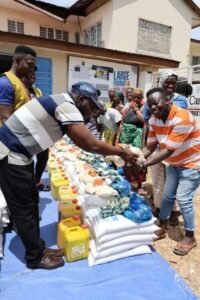
The Buddhist Tzu Chi Foundation has extended a lifeline of compassion to more than 500 individuals devastated by recent fire outbreaks in three Freetown communities, Kroo Bay, Blackhall Road and Congo Town, providing emergency relief that has brought comfort and renewed hope to families in distress.

Working in close partnership with Caritas Freetown, the humanitarian effort delivered vital food items including rice, multigrain, onions, seasoning cubes, palm oil and vegetable oil to ease the burden on families who lost their homes and possessions during the fires that struck three weeks ago. The aid could not have come at a more crucial time, as many of the victims continue to face uncertainty, displacement and hunger.

During the distribution ceremony, Caritas Freetown’s Programs Manager, Ishmeal Alfred Charles, spoke with heartfelt empathy for the affected families. He acknowledged the emotional toll disasters like these take and emphasized the deeper meaning behind the gesture. He conveyed messages of love and support from Dharma Master Cheng Yen, founder of the Tzu Chi Foundation, reminding beneficiaries that they are not forgotten. “This support is born from compassion,” he noted. “Though we cannot replace all that has been lost, we can walk beside you in your time of need.”

Margaret Bassie, representing Tzu Chi Foundation in Sierra Leone, reaffirmed the organization’s unwavering commitment to aiding disaster-stricken communities across the country. She described the severe impact the fires had on the three communities and underscored the Foundation’s resolve to respond with love and tangible help. “During the rainy season, the suffering of affected families becomes even more difficult and that’s why we are here; to stand with them through this hardship,” she explained.

The National Disaster Management Agency (NDMA) also lent its voice of support during the relief distribution. Gerald King, Regional Coordinator for the Western Region, praised Tzu Chi’s consistent role in augmenting Government responses to emergencies. He emphasized that their intervention helps bridge gaps during times when public resources may not be immediately available. Gerald King encouraged beneficiaries to share the food items responsibly and to continue supporting one another through recovery.

For many recipients, the relief came as a much-needed blessing. Among them was Mariam Kamara, a resident of Kroo Bay, who shared her experience with emotion and gratitude. “I want to thank Dharma Master,” she said tearfully. “We lost everything and now we live in a mosque. This food will keep my children and me from going hungry for the next few weeks.” Her words echoed the silent struggles of many others who found solace in the generosity extended to them.

Through this impactful intervention, the Tzu Chi Foundation has not only met immediate needs but has also delivered a strong message of hope and solidarity. In a time of loss and uncertainty, their compassion has reminded affected communities that even in the darkest of moments, humanity can shine brightest.

President Bio Elected Chairman of ECOWAS, Vows to Restore Order and Deepen Democracy

By Amin Kef (Ranger)

President Dr. Julius Maada Bio was elected Chairman of the Authority of Heads of State and Government of the Economic Community of West African States (ECOWAS), a historic milestone in regional leadership and cooperation. His appointment was confirmed during the 67th Ordinary Session of the ECOWAS Authority held on June 22, 2025, in Abuja, Nigeria, marking the first time a Sierra Leonean has assumed this prestigious role.

His election has been met with national pride and regional optimism, as he steps into the role at a critical time for West Africa, amid security threats, economic vulnerabilities and rising demands for democratic accountability. In his acceptance speech, President Bio expressed deep gratitude to his fellow Heads of State for the trust placed in him and his country, pledging to lead with commitment and integrity.

“I am both humbled and grateful to accept the honour of chairing the ECOWAS Authority of Heads of State and Government,” he said. “Thank you for placing your trust in me and in the Republic of Sierra Leone. I accept this responsibility with full awareness of the magnitude of the task ahead and the complexity of the moment.”

He paid tribute to his predecessor, Nigerian President Bola Ahmed Tinubu, for his “unwavering commitment to regional dialogue, economic recovery, and peace-building,” adding, “I am honoured to build upon the strong foundation you have established.”

President Bio announced four strategic priorities for his one-year term as Chairman:

  1. Restoring Constitutional Order and Deepening Democracy – Emphasizing the need to support transitional Governments and strengthen democratic institutions rooted in the rule of law.
  2. Revitalizing Regional Security Cooperation – Advocating for an overhaul of the region’s collective security systems, including enhanced intelligence sharing and rapid response mechanisms to confront terrorism, political instability and organized crime.
  3. Unlocking Economic Integration – Calling for full implementation of the ECOWAS Trade Liberalization Scheme (ETLS), development of cross-border infrastructure and support for value chains that generate jobs for women and youth.
  4. Building Institutional Credibility – Urging reform of ECOWAS institutions to become more transparent, efficient and people-centred.

“Our vibrant and youthful population, abundant natural resources and entrepreneurial spirit remain our strongest assets,” President Bio noted. “ECOWAS must be redefined, not as a distant institution, but as a proactive, people-centred vehicle for peace, inclusion and opportunity.”

He further stressed the importance of harmonizing trade, customs and quality standards to enhance intra-regional competitiveness and called for accelerating progress toward a monetary union.

The 67th Ordinary Session brought together regional leaders to assess the state of the Community, address security and political developments and chart a course for ECOWAS’s future. President Bola Ahmed Tinubu, in his opening remarks, reflected on the regional bloc’s 50-year journey, while urging stronger collective action against the rising tide of terrorism and violent extremism.

“While celebrating our achievements, we must confront the security threats that continue to endanger our aspirations,” President Tinubu said. “No single nation can address these challenges alone. We must rethink coordination, amplify political will and act decisively.”

Dr. Omar Alieu Touray, President of the ECOWAS Commission, commended ECOWAS’s progress as Africa’s most advanced regional economic community and noted encouraging diplomatic engagements with member states that recently withdrew. He emphasized the private sector’s pivotal role in sustainable development.

The summit also featured remarks from the United Nations and African Union, both reaffirming support for ECOWAS and urging increased efforts to combat terrorism, address inequality and harness youth potential through innovation and education.

In closing, President Bio reaffirmed his belief in the region’s potential: “West Africa’s future is not one of decline, but of possibility; if we act with courage, unity and moral clarity. Let us rise to this moment together, not as separate nations, but as a united community of destiny.”

As he begins his tenure, expectations are high that President Bio’s leadership will breathe new life into ECOWAS’s vision of transforming from an “ECOWAS of States” to an “ECOWAS of the People,” ensuring peace and prosperity for all by 2050.

The Economic Community of West African States (ECOWAS), established on May 28, 1975, now comprises 12 member states following the recent withdrawal of Burkina Faso, Mali, and Niger. The bloc represents over 300 million citizens and a combined GDP of approximately $735 billion. Through strategic reforms and deeper integration, ECOWAS aims to become a powerful force for regional transformation and continental progress.