
Home Blog Page 194

Confucius Institute Hosts 24th Chinese Bridge Chinese Proficiency Competition in Freetown

By Ibrahim Sesay 

Confucius Institute, Fourah Bay Colleage, University of Sierra Leone in Sierra Leone has hosted the 24th Chinese Bridge Chinese Proficiency Competition on the theme: “One World, One Family.” The event, held on June 10 at Bintumani Conference Centre, saw twelve contestants from Fourah Bay College and the College of Medicine and Allied Health Sciences competing to demonstrate their Chinese language proficiency and cultural talents. The competition also featured rounds in Chinese speaking, image interpretation and talent performance, underscoring the growing educational and cultural ties between China and Sierra Leone.

Speaking at the event, Minister of Technical and Higher Education, Dr. Haja Ramatulai Wurie commended the Confucius Institute and the Chinese Embassy in Sierra Leone for promoting language learning and cultural understanding.

“This event is not just a competition, it is a celebration,” she said. “ It is also a celebration of language, of youth and of the enduring friendship between the people of Sierra Leone and the People’s Republic of China.”

The Minister emphasized that the Chinese language serves as a bridge that fosters global cooperation and mutual respect and applauded students for mastering one of the world’s oldest and richest languages.

“Learning Chinese opens doors to academic opportunities, trade, innovation and diplomacy,” she added. “Whether you win today or not win, you are already Ambassadors of learning, cultural connection and Sierra Leone’s future.”

Professor Aiah Lebbie, Vice Chancellor and Principal of the University of Sierra Leone, shared the Minister’s sentiments. He praised the students for their courage and commitment to becoming “global citizens through language.”

“This competition is not just about language proficiency; it’s about becoming a bridge between cultures,” Prof. Aiah Lebbie said. “Through calligraphy, song or speech, you have demonstrated a deep embrace of global understanding rooted in respect, harmony and lifelong learning.”

He called on the participants to carry the values of “Confucian wisdom” with them and lauded their excellence and perseverance.

Also in attendance was His Excellency Wang Qing, Chinese Ambassador to Sierra Leone, who emphasized the increasing popularity of the Chinese language globally and its role in strengthening China-Sierra Leone relations.

“The Chinese language is more than a communication tool, it is a key to unlocking over 5,000 years of uninterrupted civilization,” he said. “It offers better job prospects for local youth and strengthens the bond of cooperation between our two countries.”

Ambassador Wang Qing highlighted the significance of the recent UN resolution, co-sponsored by China and Sierra Leone, establishing June 10 as the International Day for Dialogue Among Civilizations.

This year’s competition concluded with Effiong Solomon Joshua, a year four student majoring in Chinese language from Fourah Bay College, emerging as the winner. With visible excitement, he shared how the moment marked the climax of years of dedication.

“I feel very, very excited. I’ve been praying for this since my first year,” Solomon Joshua said. “This competition isn’t just a certificate for me; it’s a milestone. I believe I’m now more confident to compete on the international stage.”

He revealed how he plans to further develop his talents in performance, writing and spoken Chinese in preparation for global competitions where he will be representing Sierra Leone.

The Chinese Bridge competition, held annually, serves not only as a language contest but also as a celebration of cultural exchange and global friendship.

Youth Affairs Ministry and MMTU Unveil Six-Month Skills Training Initiative for Vulnerable Youth

By Foday Moriba Conteh

The Ministry of Youth Affairs (MOYA) has taken a major step toward youth empowerment and national development by signing a Memorandum of Understanding (MOU) with Milton Margai Technical University (MMTU) on 10 June 2025 to deliver intensive six-month vocational training programs targeting marginalized and at-risk young people.

The partnership aims to provide practical, in-demand skills that can lift youth out of cycles of addiction, poverty and unemployment. The training will cover a wide range of fields including nail technology, pastry and catering, plumbing, HVAC systems, graphic design, automobile technology, hairdressing and refrigeration and cooling; programs designed to be more than just technical courses, but stepping stones toward transformation.

The MOU follows the Minister of Youth Affairs, Ibrahim Sannoh’s, recent visits to communities affected by the harmful drug “Kush,” where he engaged directly with young people grappling with addiction. The agreement represents a proactive response to those encounters, offering a new path for rehabilitation and self-reliance.

Speaking at the signing ceremony, Vice Chancellor and Principal of MMTU, Professor Philip Kanu, emphasized the entrepreneurial core of the training program.
“These programs are designed to do more than just teach a trade. They will equip young people to become job creators rather than job seekers. That’s why entrepreneurship is embedded into every course,” he stated.

Deputy Minister of Technical and Higher Education, Sarjoh Aziz-Kamara, praised the initiative and acknowledged MMTU’s growing leadership role in practical education.
“This partnership reaffirms the university’s role as one of Sierra Leone’s first premium technical institutions committed to national progress,” he noted.

The Youth Affairs Minister, Ibrahim Sannoh delivered an impassioned address, describing the initiative as a decisive strategy in tackling youth vulnerability and economic instability.
“Skills development is the most potent weapon we have in the fight against poverty,” he affirmed. “Thanks to this partnership, our young people will not only gain skills, they’ll begin a journey; matriculating at the start and graduating as empowered individuals ready to build, innovate and lead.”

According to the Minister of Youth Affairs, the six-month courses will be practical, intensive and outcomes-driven, offering participants a supportive learning environment and clear pathways to entrepreneurship or employment. He emphasized that each student will receive hands-on training with a strong focus on real-world application and sustainability.

The Minister described the MOU as more than a symbolic gesture, stating that it marks a significant shift in Sierra Leone’s approach to youth development; one that prioritizes education that is accessible, marketable and rooted in the realities of the nation’s young people.

He further asserted that by equipping the next generation with skills and opportunities, the Government and its partners are investing not only in individuals but in the future of Sierra Leone itself.

The Minister concluded by underscoring the broader national impact of the initiative, stating that when youth are empowered with the tools to succeed, they don’t just change their own lives; they help reshape the destiny of their communities and country.

International College of Makeni Crowned Champions of 2025 National Debate Championship for Girls

By Alvin Lansana Kargbo

After six weeks of high-stakes debate, intellectual rigor and empowering dialogue, the International College of Makeni has been crowned the champion of the 4th Edition of the National Debate Championship for Girls. The grand finale, hosted at the Sierra Palms Hotel in Aberdeen, Freetown, on Sunday, June 8th, marked the culmination of a nationwide competition aimed at elevating the voices of young women across Sierra Leone.

Organized by Chozen Generation Sierra Leone, in collaboration with The Marigold Initiative and supported by Meraki Analytics and Monime, this year’s championship brought together 48 girls from 24 secondary schools across the country. Participants engaged in the British Parliamentary debate format, tackling some of the most critical issues facing women and girls in contemporary Sierra Leone.

In the final round, International College of Makeni, representing the Government Bench, faced off against Methodist Girls High School, representing the Opposition, on the motion: “This House Would Fully Decriminalize Abortion in Sierra Leone as Proposed in the Original Safe Motherhood Bill (2024), Regardless of the Reason, up to 14 Weeks.”

Both teams displayed exceptional critical thinking, persuasive reasoning and articulate delivery. However, the judges awarded the top prize to International College of Makeni, citing their well-structured arguments, ethical clarity and strong engagement with the motion.

The winning school took home NLe 15,000, while the runner-up, Methodist Girls High School, received NLe 10,000. Individual accolades, including the prestigious Best Debater Award, were also presented to outstanding participants.

Delivering the keynote address was Madam Michala Mackay, a leading advocate for women’s leadership and digital transformation. In an emotionally charged speech, she encouraged the girls to embrace their voices, challenge stereotypes and believe in their capacity to lead.
“I look around this room and I see beautiful voices; voices that are refusing to be silenced,” she said. “Let us lift each other up instead of pulling each other down.”

The championship, themed: “For All Women and Girls: Rights, Equality, Empowerment,” was not just a debate tournament; it was a platform for advocacy, leadership and transformation. Since its inception in 2016 by Tracy Jac-During, Project Lead at Chozen Generation Sierra Leone, the event has evolved into a national movement. What started as a city-based competition has expanded to provincial hubs like Bo and Makeni, making it more inclusive and accessible.

“This competition is about far more than winning,” said Tracy Jac-During. “It’s about giving girls the confidence and tools to speak up, advocate and lead in their communities.”

Throughout the tournament, debaters engaged in workshops, mentorship programs and digital literacy sessions. Topics ranged from gender-based violence and education access to reproductive health and political representation; issues that remain central to the fight for gender equality in Sierra Leone.

A representative from the victorious International College of Makeni team expressed deep pride in their achievement. “This is a proud moment for us, not just for our school but for girls in the provinces,” she said. “We’ve shown that the power to lead and speak out isn’t limited to Freetown. This experience has changed us and it’s only the beginning.”

The National Debate Championship for Girls has emerged as a vital forum for shaping the next generation of female leaders. By promoting informed discourse, fostering mutual respect and encouraging youth-led advocacy, the competition continues to inspire a cultural shift toward greater inclusion, equity and empowerment for women and girls across Sierra Leone.


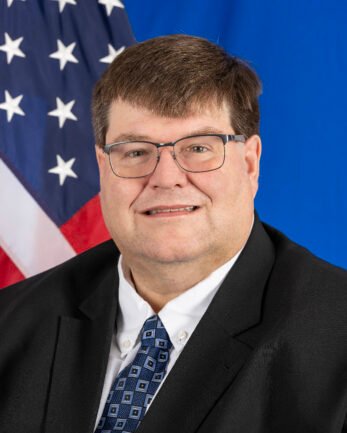
U.S. Embassy in Freetown Announces Suspension of Certain Visa Categories for Sierra Leoneans

Bryan David Hunt, Ambassador of the United States of America to the Republic of Sierra Leone

By Amin Kef (Ranger)

The United States Embassy in Freetown has on Monday June 9, 2025, announced the suspension of several categories of nonimmigrant visa issuance to nationals of Sierra Leone, in compliance with a recent presidential proclamation issued by the White House.

According to the Embassy, the suspension affects the issuance of tourist (B), business (B), student (F, M), and exchange visitor (J) nonimmigrant visas. This means Sierra Leonean nationals seeking to travel to the United States for tourism, business, study, or cultural exchange programs will not be issued new visas under these categories until further notice.

However, the U.S. Embassy clarified that the restriction does not apply to immigrant visas for certain eligible family members of U.S. citizens. These include spouses (IR-1/CR-1), children (IR-2/CR-2), parents (IR-5), and adopted children (IR-3, IR-4, IH-3, IH-4). Visas under these classifications will continue to be processed for Sierra Leonean applicants.

Importantly, the proclamation does not revoke existing visas. Individuals already in possession of valid U.S. visas may continue to travel to the United States and present themselves for entry at a U.S. port of entry. The Embassy, however, cautioned travelers to strictly adhere to the conditions of their visas to avoid violations such as overstaying, which could result in penalties, visa cancellation, or deportation.

“We strongly encourage all travelers to use their visa as intended,” the Embassy stated, “and to comply with all U.S. immigration regulations to avoid jeopardizing future travel opportunities.”

The new policy forms part of a broader executive action taken by the U.S. administration aimed at strengthening national security and managing immigration more stringently.

Read the full proclamation here:

https://www.whitehouse.gov/presidential-actions/2025/06/restricting-the-entry-of-foreign-nationals-to-protect-the-united-states-from-foreign-terrorists-and-other-national-security-and-public-safety-threats/


Report on Independent Review of ECSL and Election Institutions Presented to President Bio

President Dr. Julius Maada Bio has officially received the much-anticipated report on the Independent Management and Functional Review of the Electoral Commission for Sierra Leone (ECSL) and other Election Management Bodies (EMBs), a milestone in the country’s ongoing effort to strengthen democratic institutions and electoral credibility.

The comprehensive review, conducted by the Public Sector Reform Unit (PSRU) in partnership with the International Foundation for Electoral Systems (IFES), examined the institutional operations of the ECSL and related bodies. It highlighted critical operational challenges and produced 85 actionable recommendations aimed at improving electoral transparency, efficiency, and public trust.

Receiving the report at State House, President Bio extended appreciation to all stakeholders who contributed to the nationwide assessment process, including civil society organizations, youth and women’s groups, the media, traditional authorities, religious leaders and political actors. He described the review as a necessary and inclusive national undertaking that reflects his Government’s long-standing commitment to democratic deepening and institutional accountability.

President Bio recalled his personal history in Sierra Leone’s peacebuilding efforts and emphasized his belief in collective responsibility when addressing national challenges. He noted that his administration’s broader reform agenda, including the abolition of the death penalty, enhancement of gender equality, strengthening of the judiciary and repeal of repressive laws, stemmed from lessons learned through the Truth and Reconciliation Commission (TRC) and from his own experiences contesting national elections.

Highlighting the origins of the review process, the President pointed to his 3 August 2023 address during the State Opening of the Sixth Parliament, where he publicly proposed an independent mechanism to evaluate the performance and integrity of the ECSL. He reiterated his conviction that leadership must go beyond governance to address entrenched obstacles to peace and national cohesion.

“As President, I am not here to merely govern,” he declared. “I am here to resolve the deep-rooted challenges to our peace, democracy and national unity. That is why I made sure this process was inclusive, with participation from all stakeholders including the opposition APC. I thank everyone, especially the APC, for their candor, time and commitment.”

President Bio acknowledged the challenging environment under which the ECSL has operated, commending the Commission for its service despite constraints. He expressed gratitude to Sierra Leone’s international partners, including the European Union and the United Nations and appealed for their continued support in ensuring the full and timely implementation of the review’s recommendations.

Director of the Public Sector Reform Unit, Sulaiman Phoray Musa, praised President Bio’s leadership and noted that the review aligns with one of the flagship priorities of the Government’s “Big Five Game Changers” particularly the revamping of public sector institutions. He explained that the participatory process had unveiled significant institutional gaps within the ECSL and proposed reforms such as improved staff training, review of employment and promotion protocols, enhanced communication strategies and timely handling of observer reports and public outreach.

Additional expressions of support were delivered by the Chairperson of ECSL, the European Union Ambassador to Sierra Leone, the UN Resident Coordinator, and representatives from National Elections Watch (NEW). All commended the President for initiating and sustaining a credible, nationally mediated review process that ultimately led to the historic Agreement for National Unity between the Government and the APC.

The report was formally presented to President Bio by Chief Minister Dr. David Moinina Sengeh, who also chairs the Steering Committee overseeing the implementation of the Tripartite Committee Report. It marks a significant step toward strengthening Sierra Leone’s electoral architecture and upholding the rule of law as the foundation for free, fair and credible elections.

CRSG Empowers Employees with Mpox Prevention and Emergency First Aid Training

By Alvin Lansana Kargbo 

Demonstrating its deep-rooted commitment to employee welfare and community care, China Railway Seventh Group (SL) Ltd. (CRSG) hosted the 26th Chinese (Hunan) Medical Team for a comprehensive lecture and training session on Monkeypox and Malaria prevention, along with essential first aid and CPR instruction for its staff. The event took place on 6th June 2025 at CRSG’s headquarters in Mongeba, Grafton.

The event marked a significant moment in CRSG’s ongoing commitment to corporate social responsibility, employee welfare and cross-cultural collaboration. It aimed to strengthen disease prevention capacity among local employees and promote public health awareness in the face of rising health threats such as Monkeypox and seasonal Malaria outbreaks.

The training session, attended by dozens of CRSG staff, featured a three-part program: a lecture on Monkeypox awareness and prevention, Malaria prevention and treatment, hands-on CPR training and emergency response techniques. Those efforts are intended to empower employees with practical knowledge for both personal and community benefit.

The Team Leader, Liu Longfei, Head of the 26th Chinese Medical Team to Sierra Leone, in his statement, expressed appreciation to CRSG for facilitating the session and emphasized the significance of such educational outreach. “This collaboration reflects a shared commitment to public health. We encourage participants to make full use of the knowledge gained here today, it can save lives,” Liu Longfei stated.

Since arriving in Sierra Leone in March 2025, the 26th Medical Team has treated over 500 patients and promoted traditional Chinese medical techniques such as acupuncture. Comprising 23 members, including 19 specialists in fields ranging from general medicine to obstetrics and public health, the team operates out of the China-Sierra Leone Friendship Hospital.

Du Xinguo, the General Manager of China Railway Seventh Group (SL) Ltd., underscored the company’s long-standing dedication to Sierra Leone’s development. He highlighted the company’s involvement in numerous infrastructure projects over its 18 years in the country, including the construction of the China-aid Youyi Road, Juba Bridge, Savage Bridge and the Wellington-Masiaka Highway.

“This seminar is a practical embodiment of our corporate ‘family culture’ and our commitment to safeguarding the well-being of every employee, especially our Sierra Leonean staff,” Du Xinguo remarked. “We view Sierra Leone as our second home and we remain steadfast in pursuing both economic and social value for all stakeholders.”

Du Xinguo also announced the forthcoming release of CRSG’s Environmental, Social and Governance (ESG) Report later this year, which will be accompanied by a series of activities to deepen cooperation between Chinese and Sierra Leonean enterprises and promote sustainable development goals.

Delivering the keynote address, Wang Peng, Economic and Commercial Counselor of the Chinese Embassy in Sierra Leone, commended the initiative and its timely focus on Monkeypox prevention amid the current public health concern in the country.

“This lecture is not only important but urgent,” Wang Peng said. “It empowers individuals with lifesaving knowledge that they can pass on to their communities. China remains ready to provide additional aid and support in partnership with the Sierra Leonean Government.”

Wang Peng praised CRSG and the Medical Team for their proactive roles and encouraged other Chinese enterprises to follow suit in supporting Sierra Leone’s health sector. He also reaffirmed the enduring friendship and cooperation between the two nations, pointing to recent high-level state visits and joint initiatives under the Belt and Road framework.

This latest health education campaign by CRSG reflects a deepening of people-centered values in corporate operations and bilateral cooperation. Employees who participated in the training walked away with not just vital knowledge about disease prevention but also practical emergency response skills that can make a difference in critical situations.

With Sierra Leone facing evolving public health challenges, partnerships like this one exemplify integrated development where infrastructure, health and human capital progress together.

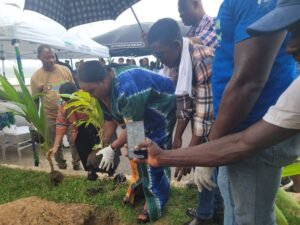
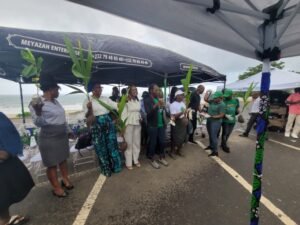
NTB Marks World Environment Day with Tree Planting Along Lumley-Aberdeen Beach

By Ibrahim Sesay

To promote ecotourism and environmental sustainability, the National Tourist Board, in partnership with the Ministry of Tourism and Cultural Affairs, on Thursday June 5, 2025 commemorated World Environment Day with a symbolic tree planting exercise along the Lumley and Aberdeen beach aimed at restoring ecological balance and conserving biodiversity. The initiative, which began on Thursday, will involve planting 300 diverse species including almond trees, royal palms and coconut trees along the coastline.

Deputy Minister of Tourism, Khadija Kamara, underscored the collaborative nature of the exercise, describing it as both symbolic and instructive.
“We are here to plant trees not only to beautify the beach but to raise awareness about the need to keep our beaches clean and protect our environment,” she said. “Building Sierra Leone is not the job of Ministries alone. It requires collective and collaborative effort.”

In her remark, NTB’s General Manager, Fatmata Mida Carew, said Thursday’s activity was a continuation of a broader plan to transform the Lumley-Aberdeen beach into an “eco-friendly, tourist-friendly” area.

“We started this process last year when we demolished unregulated beach bars,” she noted. “This tree planting exercise is part of the beautification and restructuring of this iconic beach. So far, we’ve planted over 20 trees today and we plan to cover selected areas stretching from the Atlantic Golf Club up to Aberdeen.”

She revealed ongoing partnerships with a private sector partner to establish public recreational facilities, including a beach garden and an outdoor gym, all of which will contribute to making the beach a more attractive destination.
“This year has been declared the Year of Ecotourism by the Ministry,” she added. “That means preserving both our culture and our environment.”

Fatmata Mida Carew also made a strong call to action for citizens and visitors to properly dispose of waste and use garbage bins provided along the beach.

“Plastic pollution and waste from upstream drainage are major challenges. The cost of cleaning the beach is high and we need everyone, especially philanthropists, to support the preservation and maintenance of our beaches.”

Marketing Manager of NTB, Lucinda Kargbo, described the tree planting as a strategic component of the Board’s ecotourism marketing plan.
“Tree planting is part of our strategy to market the beach through ecotourism,” she said. “It serves the dual purpose of providing shade and enhancing the beauty of the beach. When you look at our mountains and hilltops, their green scenery is part of what makes Sierra Leone attractive to tourists.”
The Planning and Development Manager, Umaru Woody, used the occasion to reflect on the importance of World Environment Day and called for greater individual responsibility.

“Our environment is our land, our life and our future,” he said. “If we are to promote ecotourism, we must connect conservation, nature and culture, all of which depend on a healthy environment. Without protecting our beaches, wildlife and protected areas, there is no foundation for sustainable ecotourism.”

The exercise concluded with the planting of trees by the General Manager of NTB, Deputy Minister of Tourism together with workers of NTB.

OPEC Fund and WFP Expand Eco-Friendly Kitchens in 440 Sierra Leonean Schools

The United Nations World Food Programme (WFP) on Thursday 5 June 2025 welcomes a US$ 1.2 million contribution from The OPEC Fund for International Development, to support clean cooking solutions in WFP-supported schools across Sierra Leone.

The new funding will boost WFP’s climate-smart kitchens initiative in 440 schools across Pujehun, Kenema and Kambia districts, with the installation of two fuel-efficient stoves per school and the creation of 15 community woodlots in selected schools to combat deforestation.

The support will also enable the training of volunteer cooks on stove use and maintenance, promoting cleaner cooking and protecting the environment.

“This initiative supports multiple development goals, from improving health and learning conditions for children to protecting the environment and reducing emissions,” said Walid Mehalaine, Head of Grants at the OPEC Fund. “Through our partnership with the World Food Programme, we are delivering practical, community-based solutions that make a real difference”.

While there is a growing Government and international commitment to promoting clean cooking solutions, in Sierra Leone, access remains limited, with majority of the population relying on traditional biomass fuels.

The Government is working with partners to improve access to clean cooking, but more investment and support are needed to address the challenge.

“Clean cooking technologies and efficient fuel usage in schools, will substantially reduce our carbon footprint associated with traditional cooking methods” said Yvonne Forsen, WFP’s Country Director and Representative for Sierra Leone. “This contribution reflects the OPEC Fund’s integrated approach to development, where climate, education and community resilience are addressed together”

WFP’s school feeding programme provides school meals to 254,000 pupils in five districts, including 26,000 school children benefiting from home-grown school feeding programme. The Government of Sierra Leone has prioritized home-grown school feeding as a key component of its National School Feeding Policy,

WFP is the world’s largest humanitarian organization, saving lives in emergencies and using food assistance to build a pathway to peace, stability and prosperity for people recovering from conflict, disasters and the impact of climate change.

At Innovation Summit 2025… President Bio Launches 5G Network, Champions Tech-Driven Development

President Dr. Julius Maada Bio reaffirmed his administration’s unwavering commitment to digital transformation and youth empowerment during the 2025 Digital Innovation Summit, held at the Bintumani Conference Center in Freetown on Wednesday, June 3.

Addressing a packed audience of innovators, entrepreneurs, policymakers and development partners, President Bio emphasized the critical importance of investing in young people, whom he described as “the engine of the Fourth Industrial Revolution.” He declared, “Sierra Leone must not just catch up; we must lead. You cannot participate meaningfully in the 21st century if you are not digitalized. Technology opens doors and we must make deliberate efforts to harness it.”

The summit, now in its second edition, brought together key players in the technology and innovation ecosystem to explore the nation’s digital progress and chart a path for future growth.

In her welcome address, Minister of Communications, Technology and Innovation, Salima Monorma Bah, lauded the President’s bold leadership in opening up Sierra Leone’s digital space. “President Bio has challenged us to think big and we are rising to that challenge,” she said. Madam Salima Monorma Bah highlighted key achievements, including the creation of the “One Government Platform”; a centralized portal that provides easy access to public services and information. She encouraged young Sierra Leoneans to embrace the digital revolution as the cornerstone of sustainable development.

Echoing those sentiments Chief Minister and Chief Innovation Officer, Dr. Moinina David Sengeh, reflected on the genesis and impact of the Directorate of Science, Technology and Innovation (DSTI), established under President Bio’s vision, five years ago. “Today, we are seeing real results; digital governance is improving service delivery, digital identity systems are streamlining access to services and our digital economy is beginning to thrive,” Dr. Moinina David Sengeh stated.

Throughout the summit, a series of presentations and tech demonstrations showcased local innovations ranging from e-health systems to digital farming solutions. President Bio expressed profound satisfaction with what he described as “proof of our youth’s potential to transform Sierra Leone.”

“One of the legacies I want to be remembered for is being a champion of Human Capital Development,” President Bio told attendees. “We are here for the youth and we are preparing the future for our children. I am deeply inspired by what I’ve seen today.”

He cited specific success stories, including the 2024 Presidential Innovation Prize winner from Kono District, who launched a digital farming hub and David Ogoo, a young tech entrepreneur who returned home to deploy innovation for social impact. “This is the Sierra Leone I dreamt of,” the President said, “where young people use innovation to help achieve the Sustainable Development Goals.”

In a powerful appeal to the private sector, President Bio called for stronger public-private partnerships to fuel innovation-driven development. “Innovation is one of my Five Big Game Changers and cuts across all national development pillars. My Government is ready to partner with businesses that share this vision,” he stated.

The summit concluded with a landmark announcement: the launch of Sierra Leone’s first open-access 5G network, a joint achievement through a strategic Government-Private Partnership with Zoodlab. The development marks a significant leap forward in the country’s digital infrastructure, promising faster, more reliable connectivity to support innovation and economic growth.

President Bio closed his address with a rousing call to action: “Now is the time. Let us innovate boldly, dream fearlessly and build a Sierra Leone that leads, not follows. The future belongs to the digital.”


India to Support Sierra Leone Police with Advanced Training and Security Reforms

As part of a strategic effort to enhance the capacity of the Sierra Leone Police and advance ongoing transition reforms, Inspector General of Police William Fayia Sellu has launched a high-level partnership initiative to secure advanced training opportunities for personnel.

The Inspector General of Police, on Wednesday, June 5, 2025, paid a courtesy visit to His Excellency Baisnab Charan Pradhan, the High Commissioner of India to Sierra Leone. The visit sought to further cement bilateral relations between the two nations while expanding training programmes that are critical to law enforcement development and national security.

During the meeting, IGP Fayia Sellu expressed profound gratitude to the Government of India for its continued support through the Indian Technical and Economic Cooperation (ITEC) programme. He emphasized that the training already provided under that initiative has had a tangible impact on the force’s operations.

“The Sierra Leone Police has greatly benefited from the training programmes you provide, which are vital to us as we face increasingly dynamic crime environments,” IGP Fayia Sellu stated. “We need to continually develop the capacity of our personnel, particularly in areas like forensic science and cybercrime investigations, to ensure we are equipped with the modern tools necessary to combat emerging threats effectively.”

The police chief also cited the involvement of BlueCrest College, an Indian-owned institution in Sierra Leone, as an example of fruitful collaboration and expressed optimism for more opportunities in line with the SLP’s ongoing transformation agenda.

“If the personnel are better equipped, they will provide better service delivery. We look forward to long-term cooperation with India in achieving this shared goal,” he added.

In response, High Commissioner Baisnab Charan Pradhan warmly welcomed the initiative and reaffirmed India’s commitment to supporting the professional development of Sierra Leone’s law enforcement personnel.

“The Indian Government is committed to providing more training programmes as they become available,” he assured. “We understand the value of a strong and well-trained police force and will inform you promptly of upcoming opportunities, including those targeting senior officers.”

Both parties agreed that investing in human capacity development remains a cornerstone for maintaining national security and deepening bilateral ties. The engagement marks a significant milestone in fostering strategic international partnerships geared toward institutional strengthening of the Sierra Leone Police.

The meeting ended with mutual assurances of continued collaboration, setting the stage for more comprehensive and specialized training programmes in the months ahead.