

Home Blog Page 210

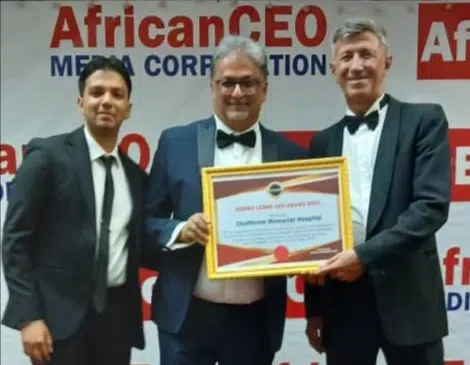
Choithram Memorial Hospital Receives Recognition for Excellence at the Sierra Leone Public Service Awards 2025

Choithram Memorial Hospital

By Alvin Lansana Kargbo

Choithram Memorial Hospital has been recognized for its outstanding contributions to private sector resilience, business growth, and human development at the 2025 Sierra Leone Public Service Awards. The event, organized by the African CEO Media Cooperation, was held on Friday, April 25th, at the Radisson Blu Mammy Yoko Hotel, on Aberdeen in Freetown.

Established as a key pillar in the country’s healthcare landscape, Choithram Memorial Hospital has earned a strong reputation for its commitment to providing quality, affordable healthcare. It offers a comprehensive range of medical services, from general medicine to specialized care, and has continually invested in modern facilities, staff training, and community outreach initiatives. Through these efforts, the hospital has contributed significantly to improving public health outcomes and building a more resilient healthcare system.

The Sierra Leone Public Service Awards aim to acknowledge institutions and leaders making remarkable impacts across sectors. Each year, the ceremony honors organizations whose efforts help shape Sierra Leone’s growth and inspire national pride.

Choithram Memorial Hospital has expanded services in specialized areas such as oncology and dialysis, and continues to invest in cutting-edge technology and staff development. Its consistent focus on delivering compassionate, state-of-the-art healthcare has reinforced its standing as a leader in Sierra Leone’s medical community.

The award was received by the Head of Choithram Memorial Hospital, Harish Agnani, who expressed his gratitude to the African CEO Media Cooperation for the recognition. He acknowledged the honor as a testament to the hospital’s continued dedication to excellence in healthcare.

In his remarks, Agnani reaffirmed the hospital’s commitment to providing top-notch health services to the people of Sierra Leone. He emphasized that this recognition serves as motivation for the hospital to further enhance its offerings, ensuring the best care for its patients and contributing to the improvement of healthcare standards in the country.

As the nation continues to strive toward improved public services, the contribution of institutions like Choithram Memorial Hospital remains crucial to building a healthier and more prosperous future for all citizens.


President Bio Reaffirms Hope, Resilience in 64th Independence Day Address

His Excellency Dr. Julius Maada Bio

By Amin Kef (Ranger)

In an inspiring Independence Day broadcast to the nation on Sunday, April 27, 2025, His Excellency Dr. Julius Maada Bio reflected on Sierra Leone’s journey of resilience, growth, and hope, as the country marked its 64th anniversary of freedom and self-determination.

In his address, President Bio honored the legacy of the nation’s founding fathers, praising their vision of a Sierra Leone built on unity, freedom, and justice. “Today, as we commemorate this milestone, it is remarkable how as a people we have continuously demonstrated resilience and self-determination in tackling national challenges,” the President said.

Highlighting key achievements over the past few years, President Bio recalled the government’s success in strengthening the education, health, and infrastructure sectors, despite hurdles like the COVID-19 pandemic and global economic instability. He emphasized the ambitious “Feed Salone” project, aimed at achieving food self-sufficiency, and noted significant strides made in mobilizing over $136 million in donor funding for agriculture.

While acknowledging the hardships of 2024 including soaring inflation, rising food prices, and persistent energy shortages President Bio applauded the resilience of citizens and the government’s quick interventions to alleviate the impact. “Through our shared commitment, we have over and again displayed the legacy of resilience and self-determination,” he said.

Turning to recent developments, President Bio expressed optimism that the nation’s hard work was beginning to yield results. He announced the launch of major agricultural projects, including a $105 million Livestock Development Project and a $45 million Cassava Value Chain Development Project. Irrigation work on 4,500 hectares of land is also underway to bolster year-round rice farming.

On the economic front, President Bio reported encouraging signs of recovery: inflation has fallen to 10.7% as of March 2025, the Leone has appreciated slightly against foreign currencies, and economic growth is projected at 4%, driven largely by agriculture and mining initiatives. New pricing formulas for petroleum, rice, and cement have also been introduced to stabilize markets and ensure affordability for consumers.

The President candidly addressed the nation’s ongoing energy challenges, describing reliable energy supply as crucial for Sierra Leone’s future. He outlined major efforts underway, including completed repairs at the Kingtom Power Plant, ongoing works at Blackhall Road, and the launch of major energy projects such as the Nant Energy Generation Project and the RESPITE solar project.

Sierra Leone’s inclusion as a beneficiary of the Africa-led Mission 300 Project which aims to bring electricity access to 300 million people in Sub-Saharan Africa by 2030 was also highlighted as a major milestone. Additionally, rural electrification is being expanded through a €50 million European Union-led solar initiative.

“I crave your indulgence and patience on this matter,” President Bio said, assuring citizens that significant transformation in energy supply is on the horizon.

In the health sector, President Bio celebrated remarkable improvements, particularly in maternal and child health. Maternal mortality has dropped dramatically from 1,165 deaths per 100,000 live births in 2013 to 354 today. Child mortality has also halved, with further reductions expected.

Across the country, over 230 health facilities have been equipped with solar systems, and major hospitals have undergone substantial upgrades. However, President Bio urged vigilance against the recent Mpox cases detected mainly in the Western Area, assuring citizens that healthcare systems are actively curtailing the outbreak.

Reflecting on the recent fire incident at State House and a spate of fire outbreaks across the country, President Bio urged citizens to ensure the safety of electrical installations and remain vigilant. “We must be watchful of the activities around us and take responsibility to protect lives and property,” he advised.

In his closing remarks, President Bio called on Sierra Leoneans to honor the spirit of independence by promoting love, unity, and shared purpose. “Independence is not just about freedom; it is also about love and unity. Let us stand together as one nation, united by a shared vision of a progressive and developed Sierra Leone,” he emphasized.

“Happy Independence Day. May God bless Sierra Leone,” President Bio concluded.

Orange Sierra Leone Celebrates Customer-Centric Approach with ‘My Customer My Boss’ Initiative

‘My Customer, My Boss’

In a bold move to reaffirm its commitment to customer satisfaction, Orange Sierra Leone has on 15th April, 2025 officially launched the ‘My Customer, My Boss’ initiative, an employee-driven customer engagement program that has now been adopted across all seventeen Orange Middle East and Africa (OMEA) countries.

Originally developed in Sierra Leone as a customer perception survey, the initiative has grown into a full-scale operational model, engaging more than 10,000 employees across the region. Staff members from all departments are mobilized to meet customers directly at their locations, gather feedback, and develop a deeper understanding of customer needs and expectations.

Speaking at the launch ceremony, Sekou Amadou Bah, Chief Executive Officer, Orange Sierra Leone, described the initiative as a fundamental shift in how the company views its relationship with its customers.

“‘My Customer, My Boss’ is not just another campaign; it is a movement. It reminds us that customers are not merely part of our business they are the very reason we exist. Their voices matter, their needs chart our course, and their satisfaction drives our success. We must be bold, caring, and responsible in all our actions,” Bah stated.

Alpha Bundu, Customer Experience Director at Orange Sierra Leone, also highlighted the pioneering role Sierra Leone played in the development of the initiative.

It is a proud moment that what started here is now a model across the OMEA region. This program allows us to hear directly from our customers, understand their perceptions, and adjust our services accordingly. It is a practical demonstration of placing the customer at the heart of everything we do,” he said.

Throughout the month-long campaign, employees have been grouped into clusters and assigned to schedule appointments with customers. During these visits, they conduct a brief customer satisfaction survey, present a postcard with a message of appreciation, and distribute branded tokens as a gesture of gratitude.

The initiative forms part of Orange Sierra Leone’s broader strategy to continuously improve the customer experience and foster deeper, more personal relationships with its clientele. By reinforcing a customer-first culture at every level of the organization, Orange Sierra Leone seeks not only to meet but to exceed customer expectations, living up to its enduring promise: Orange is Here! Orange De Ya!

One Year Into the MOE Leadership Change: The Same Old Problems, New Excuses

By Amin Kef (Ranger)

As the Ministry of Energy (MOE) underwent a change in leadership a year ago, many expected significant improvements in Sierra Leone’s energy sector. However, after 12 months, the nation continues to face persistent challenges. The key question remains: What has really changed?

Despite promises for improved energy supply, Sierra Leone is experiencing fewer hours of electricity. Power outages are becoming more frequent, with the electricity system failing more often than before.

Government officials continue to offer speeches explaining the situation, but tangible results seem absent. Reports of energy improvements appear more like empty promises, lacking substantial progress on the ground.

The nation’s energy sector is accumulating more debt owed to Independent Power Producers (IPPs) such as Karpowership and CLSG, and fuel suppliers. There is also a growing financial burden to the National Revenue Authority (NRA) after sealing the offices of the Electricity Distribution and Supply Authority (EDSA).

Several projects and initiatives were signaled as key advancements in the energy sector, but upon closer inspection, many of these were initiated under the previous administration at the Ministry:

  • Nant Power Station: A long-term project negotiated and finalized under the former administration remains a highlight for energy gains, but it was not an achievement of the current government.
  • World Bank TBEA 28 MW Solar: Set to be available only by 2026, this project was advertised, evaluated, and prepared during the previous administration at the ministry.
  • Electrification in Kailahun, Pujehun, Bonthe, and Moyamba: These electrification projects, hailed as progress, were also executed by the former energy administration.
  • Mini-Grids: Multiple mini-grids were launched under the former administration, contributing to rural electrification.
  • MCC (Millennium Challenge Compact): While it was prepared by the previous administration and now suspended, it was touted as a major energy gain by the current government.
  • New Meters: The introduction of new meters was another initiative finalized by the former energy administration, with 100 more meters to be distributed.

The truth is, the so-called “energy gains” under the current administration at the ministry are little more than a rebranding of long-standing initiatives led by the previous administration.

One of the latest projects to emerge is the touted “300 MW Compact,” which some see as little more than an exposure process to bolster presidential ambitions. While presented as a breakthrough, the compact may ultimately serve as yet another empty promise aimed at enhancing political visibility rather than solving the energy crisis.

Sierra Leone’s energy crisis cannot be solved through speeches and media exposure. It requires a comprehensive, cluster-based approach with a dedicated team focused solely on resolving the sector’s challenges. Leadership ambitions should not overshadow the urgent need for real solutions.

As the country faces ongoing power shortages and rising debts, the question remains: Who is truly responsible for the state of Sierra Leone’s energy sector a year after the leadership change in the ministry? The answer, it seems, is not as clear-cut as the promises made in speeches.

What has truly changed in Sierra Leone’s energy sector? A comparison of the efforts made by both the previous and current administrations highlights that many of the projects touted as “new” energy gains are, in fact, continuations of long-established initiatives. The real task lies in ensuring that these projects are completed, and the energy sector is reformed in a way that benefits the people of Sierra Leone rather than being used as a platform for political ambition.


CHRDI Demands Swift Action on Alleged Rape Case Involving Senior RSLAF Officer

Colonel Kwame Francis Kanu

By Amin Kef (Ranger)

The Campaign for Human Rights and Development International (CHRDI) has raised alarm over the ongoing challenges faced by women serving in the Republic of Sierra Leone Armed Forces (RSLAF), highlighting serious concerns about alleged sexual harassment, domestic violence, and rape. These disturbing issues have been alleged persisted within the military, underscoring the urgent need for comprehensive reforms to protect the safety and dignity of female personnel.

A particularly shocking case has recently come to light. Colonel Kwame Francis Kanu, a senior officer within RSLAF and the Commander, Training Command at Benguema, has been detained following serious allegations of raping a female junior officer, name withheld, of the same unit. According to sources, the incident took place on Wednesday, April 23, 2025, at Colonel Kwame’s quarter, Villa 3, Hill Cut Junction, Wilberforce in Freetown. It is alleged that the Colonel forced a female officer under his command to prepare food for him. As a subordinate, she had no choice but to comply. The Colonel was subsequently detained on the same day, April 23, 2025, as authorities launched a thorough investigation into the matter.

This alarming case brings into sharp focus the need for military authorities to address allegations of sexual violence within their ranks with the utmost seriousness and transparency. CHRDI, which previously raised concerns about sexual harassment and domestic violence within the RSLAF in January 2022, is calling for a prompt and transparent investigation into the current case to ensure justice is served and the integrity of the armed forces is maintained.

According to our investigations, a medical report detailing the condition of the alleged victim supports the gravity of the accusations, with findings indicating general body pain, bitten lips, and vaginal eruption, all of which suggest aggravated sexual assault. The evidence suggests that the matter is one of extreme urgency and requires a specialized legal approach.

Rape and other sexual offenses are considered serious criminal matters and must be treated with the utmost gravity, both within the military and beyond. The courage shown by the female officer in coming forward to report such a senior officer, coupled with the supporting medical report, points to a potential prima facie case of sexual assault.

Given the seriousness of the allegations, there are questions surrounding the jurisdiction and capacity of the RSLAF’s internal court systems. While the RSLAF’s court martial may address civilian offenses, including rape under section 72 of the Armed Forces of the Republic of Sierra Leone Act 1961, the established Sexual Offences Model Court (SOMC) in Sierra Leone should be considered the appropriate forum for handling such cases. The SOMC, established in 2020, specifically deals with rape and other sexual offenses, ensuring that victims can testify safely while protecting their identities.

Furthermore, CHRDI emphasizes that the military police may not possess the same level of specialized training as civilian law enforcement officers in handling sensitive cases such as rape. Given this, the organization advocates for the immediate referral of the case to the civilian police for a fair and thorough investigation.

The Sexual Offences (Amendment) Act of 2019 grants the Attorney General the authority to prosecute sexual offenses directly in the high court, bypassing the need for a committal trial. This legal framework, along with the expertise of the Sexual Offences Model Court, makes it imperative that this case be handled by civilian authorities to ensure a swift, fair, and transparent process.

CHRDI has called for the immediate handover of Colonel Kanu to the civilian police, urging that justice be served promptly and fairly in line with established legal standards.

As the investigation continues, it is alleged that this case is not just an isolated incident but part of a broader issue of gender-based violence within the armed forces. The urgent need for reforms to address these systemic issues and safeguard the rights of female military personnel is more apparent than ever.

This medium contacted the Director of Defence Public Relations and Information at the Ministry of Defence, Colonel Issa Bangura, for clarification regarding the rape allegation involving a senior officer. Colonel Bangura confirmed that the matter is currently under investigation and assured that further information would be provided once the investigation report is finalized. This medium remains committed to publishing the outcome once it becomes available.

Feed Salone Boosts WFP’s Home-Grown School Feeding Programme

A Flagging Off Ceremony was held on Wednesday 23 April 2025 at the World Food Programme (WFP) Kissy warehouse, to mark the dispatch of locally produced rice and pulses procured with support from the Ministry of Basic and Secondary Education (MBSSE) and the Ministry of Agriculture and Food Security for the Term 3, 2025/2026 school year. The event celebrated the collaboration between WFP and the Government of Sierra Leone, while recognizing the critical role of smallholder farmers in sustaining the Feed Salone strategy.

In 2025, with support from donors, including Germany, Iceland, Japan and the World Bank Funded Food Systems Resilience Programme (FSRP), WFP will procure over 40,000 (50kg) bags of locally produced rice and pulses from 8,355 smallholder farmers across seven districts, feeding of 270,000 school children. The Home-Grown School Feeding programme not only ensures that children receive nutritious and diversified meals but also supports local farmers by creating a stable market for their produce. In addition, selected schools are purchasing vegetables and Orange Fleshed Sweet Potatoes directly from women farmers groups, using funds transferred from WFP.

In her remarks, WFP Representative and Country Director, Ms. Yvonne Forsén emphasized the paradigm shift from imported to local rice. “More than 30 percent of the food we serve in schools today is grown right here in Sierra Leone. This represents a meaningful shift to empowering local farmers and strengthening the rural economy. And it’s a shift we are committed to accelerate,” she said.

On behalf of the Minister of Basic and Senior Secondary Education, Deputy Minister 1 ,Emile Gogra, called for increasing the capacity of smallholder farmers to produce more local rice for the home-grown school feeding programme, while the Minister of Agriculture and Food Security, Hon. Dr. Henry Musa Kpaka praised the Feed Salone strategy for enhancing food security and farmer livelihoods. “We had envisioned under the Feed Salone Strategy that the country can feed itself; WFP is showing us today that it can be done and that our farmers are ready. So, MAFS supported WFP this year to purchase rice and pulses, to feed the children in supported schools,” he said.

As the trucks loaded with food supplies departed Kissy warehouse for schools across the country, officials reaffirmed their commitment to expanding the programme further, aligning with the Government’s Feed Salone strategy to combat hunger and malnutrition.

With this expansion, Sierra Leone continues to demonstrate how local solutions can drive national development, ensuring a brighter future for its children and farmers alike.


Amb. Wang Qing Honoured at Bo School’s 119th Anniversary, Strengthens China-Sierra Leone Ties

By Amin Kef (Ranger)

In a celebration that blended history, pride and progress, the Chinese Ambassador to Sierra Leone, His Excellency Wang Qing, served as the Guest of Honour at the 119th Anniversary of Bo Government Secondary School, popularly known as Bo School, during its annual Speech Day and Prize-Giving Ceremony on Friday April 18, 2025. The event also marked the grand unveiling of the new “Beijing Building” student dormitory, a symbol of growing Sino-Sierra Leonean cooperation.

Organized by the Old Bo Boys Association (OBBA), the prestigious event brought together President Julius Maada Bio and First Lady Fatima Bio, alongside key Government officials, diplomats, traditional leaders, students, alumni and members of the public. The celebrations served not only as a nostalgic gathering for former students but also as a reaffirmation of Bo School’s national significance and its role in shaping leaders.

Ambassador Wang Qing’s participation as Guest of Honour underscored China’s steadfast support for Sierra Leone’s educational advancement. In his keynote address, Ambassador Wang praised Bo School’s rich legacy and applauded its role in cultivating discipline, leadership, and unity among Sierra Leone’s future leaders.

“I am deeply honored to join this historic celebration,” Ambassador Wang Qing said. “Bo School is not just an academic institution; it is a symbol of national pride and collective aspiration.”

Reaffirming the strong diplomatic ties between China and Sierra Leone, Ambassador Wang Qing highlighted education as a key pillar of bilateral cooperation. He noted that the China Ambassador’s Scholarship Programme continues to support Sierra Leonean students, including 20 Bo School pupils last year alone.

“We believe education is the foundation of national development. We are committed to deepening our cooperation and building a future where both our nations prosper together,” he added.

Ambassador Wang Qing also shared insights into China’s development model, explaining the achievements of Chinese modernization and its global significance. He emphasized China’s commitment to working with Sierra Leone to implement the ten major China-Africa partnership initiatives proposed by President Xi Jinping, particularly in education, infrastructure and digital innovation.

A highlight of the occasion was the ribbon-cutting ceremony for the newly constructed “Beijing Building,” a student dormitory co-inaugurated by Ambassador Wang Qing and President Bio. This structure, the fifth dormitory at Bo School and the only one named after a Chinese city, symbolizes a growing educational and cultural bridge between China and Sierra Leone.

President Julius Maada Bio, a distinguished alumnus of Bo School, delivered an emotionally charged speech reminiscing about his school days and underscoring the critical role Bo School played in shaping his personal and political journey.

“When children see the President returning to their school, it inspires them to dream bigger,” President Bio remarked. “Bo School taught us discipline and hard work; values that guided me from these school grounds to the presidency.”

President Bio reiterated his administration’s unwavering commitment to Human Capital Development, noting it as both a national priority and a personal mission. He also praised the First Lady’s efforts through the “Hands Off Our Girls” campaign and called on students, especially boys, to be champions for gender equality.

The Acting Principal of Bo School, Kosia Michael S. 4208, expressed gratitude to the President, Ambassador Wang Qing and all dignitaries for their support. He provided updates on the school’s academic performance, infrastructure developments and future plans to maintain Bo School’s status as a premier institution of learning.

The ceremony concluded with the awarding of academic prizes to outstanding pupils, reinforcing Bo School’s long-standing reputation for academic excellence, discipline and national unity.

Ambassador Wang Qing’s participation and the unveiling of the “Beijing Building” not only celebrated Bo School’s glorious past but also cemented a promising future of cooperation and shared progress between China and Sierra Leone.


As it Launches Jubilee Jombo Promotion… Africell Gives Subscribers a Chance to Win a Fully Furnished 3-Bedroom Flat

By Alvin Lansana Kargbo 

Africell Sierra Leone, in a partnership with Taf Salone, officially launched the highly anticipated Jubilee Jombo Promotion on Wednesday, April 23, 2025. The event, held at the Taf Salone Micro City in Tokeh, marked a celebratory union of two companies dedicated to transforming lives through innovation, connectivity and development.

The centerpiece of the promotion is a game-changing reward: one lucky subscriber will win a fully furnished 3-bedroom flat, symbolizing the campaign’s theme of turning loyalty into life-altering opportunity. In addition to the ultimate grand prize, the promotion also offers a series of exciting daily and weekly prizes including cash, smart phones, mini-generators and motorcycles (Okadas).

To enter, subscribers must simply recharge their phones with a minimum of NLe 25. And for those using Afrimoney the stakes are even higher, recharging via Afrimoney using the *161# code doubles the chances of winning.

Speaking at the launch, Africell Sierra Leone CEO, Shadi Gerjawi, highlighted the significance of the campaign in relation to Africell’s 20th anniversary in Sierra Leone and 25 years across Africa.

“This is not just the unveiling of a campaign; it is a celebration of history, resilience and meaningful service,” the CEO said. “We asked ourselves how to say thank you in a way that’s both memorable and meaningful. Jubilee Jombo is our answer, an expression of appreciation to every teacher, trader, student, nurse and everyday Sierra Leonean who has been with us on this journey.”

He underscored Africell’s mission to offer more than just telecommunications, calling the company a “development partner” dedicated to real impact. Shadi Gerjawi reaffirmed the company’s commitment to transparency, stating all draws would be conducted live, with winners announced on radio, television and social media.

Anita Sey, the General Manager of Taf Salone, expressed optimism about the partnership and its potential to change lives.

“This collaboration is about more than business,” she said. “It’s about empowering people with the hope of owning a home. Taf Salone is on a mission to build one million homes across Africa and this partnership with Africell aligns perfectly with that goal.”

She emphasized that the Jubilee Jombo promotion brings together two powerful ideas: connectivity and home ownership. “Together, we’re creating spaces where individuals can thrive and Africell helps connect those dreams to reality.”

Martinson Obeng-Agyei, CEO of Afrimoney, took the opportunity to reflect on the evolution of basic human needs in the digital era. He explained that in addition to food, clothing and shelter, connectivity has now become a crucial pillar of daily life.

“The internet is no longer a luxury; it’s a necessity for education, communication and commerce,” he said. “By using Afrimoney to recharge, subscribers not only enhance their financial freedom but they also stand a chance to become landlords. It’s a win-win.”

Martinson Obeng-Agyei encouraged participants to take full advantage of the promotion by using Afrimoney for airtime purchases, highlighting how digital tools are helping redefine access and opportunity across Sierra Leone.

The Jubilee Jombo draws will air every weekday, Monday to Friday at 6:30 PM on AYV TV, AfriRadio 105.3 FM, the Africell Facebook page and several major radio stations across the country.

This major promotion comes as both Africell and Taf Salone celebrate significant milestones. Africell’s 25 years of operations in Africa and Taf Africa Global 35-year legacy on the continent. The Jubilee Jombo campaign reflects a shared commitment to gratitude, growth and the continued upliftment of Sierra Leonean communities.

Africell Sierra Leone CEO, Shadi Gerjawi
Anita Sey, the General Manager of Taf Salone


Choithram Hospital’s Cataract Camp Records Over 190 Surgeries, Bringing Vision and Hope

By Ibrahim Sesay 

In a landmark effort to combat avoidable blindness across Sierra Leone, Choithram Memorial Hospital, in collaboration with the Ministry of Health, hosted a media briefing on Thursday, April 24, 2025, to provide updates on the ongoing nationwide Free Cataract Surgical Camp. The initiative, which has already made a life-changing impact on many Sierra Leoneans, is being implemented with the support of Choithram Netralaya and the Choithram International Foundation, with technical backing from Noor Dubai and the Mohammed Bin Rashid Al Maktoum Global Initiatives.

So far, a total of 2,018 people have undergone Level 1 screening, with 1,217 screened in Freetown and 801 in the provinces. Of these, 407 individuals proceeded to Level 3 screening at Choithram Memorial Hospital, including 358 from Freetown and 49 from the provinces. Remarkably, 193 patients have already received successful surgeries—153 from Freetown and 40 from the provinces.

Harish Agnani, a key figure behind the program, explained during the briefing that this free surgical camp is a four-month initiative aimed at conducting 1,000 cataract surgeries. Each month, a team of skilled ophthalmologists from India is deployed to Sierra Leone to perform these surgeries. He highlighted that the program is open to all, with special provisions in place to accommodate patients traveling from distant regions. “We provide transportation allowances and NLe 400 for meals to all patients coming from the provinces,” he said, noting the project’s inclusive and patient-centered approach.

The medical team includes Dr. Dhaivat Shah, a Retinal Surgeon; Dr. Milind Rokede and Dr. Rahul Singh, both Cataract Surgeons; and Dr. Pradeep Ramteke, a Pediatric Ophthalmologist. These specialists bring a wealth of expertise to the project, not only addressing cataract cases but also identifying and beginning to manage other serious eye conditions such as glaucoma and retinal detachment.

Dr. Gowrinath M. George, Medical Superintendent of Choithram Memorial Hospital, acknowledged that while the program has seen strong participation in Freetown, outreach in the provinces has been more challenging. “We suspect the slow pace in the provinces is due to difficult terrains and limited accessibility, but we are optimistic that more people will come forward as awareness spreads,” he stated.

Adding a medical insight, Dr. Dhaivat Shah said that during initial screenings, the team discovered several patients with complex conditions beyond cataracts. “Some presented with retinal detachment, others with advanced glaucoma. While our primary focus remains cataract surgeries, we are gradually expanding our scope to manage these additional cases,” he added.

Dr. Lloyd Harrison-Williams from the Ministry of Health outlined the broader health implications of the initiative, revealing that cataracts remain the leading cause of blindness in Sierra Leone. He cited alarming statistics, stating that cataract-related blindness rose from 54.2% in 2010 to 59.4% in 2021, predominantly affecting people aged 50 and above. He attributed this increase to a rise in life expectancy and emphasized the importance of regular eye check-ups, especially for older adults.

“Thanks to Government efforts, all public hospitals now have dedicated eye departments, which has enhanced the screening and referral process nationwide,” Dr. Harrison-Williams said. He also stressed the genetic nature of glaucoma and encouraged regular screenings and healthy dietary habits rich in vegetables and nuts to maintain good eye health.

The program has already changed many lives, with several beneficiaries at the briefing expressing deep appreciation for the restoration of their sight. For many, regaining their vision means regaining independence and hope, with some even calling it a “second chance at life.”

This initiative stands as a compelling example of what can be achieved through strong public-private partnerships in the healthcare sector. With continued support from international and local stakeholders, Sierra Leone is poised to make significant strides in reducing preventable blindness and enhancing the overall quality of life for its citizens.

Musayeroh Barrie Uplifts Quranic Education with Seating for 200 Children in Port Loko

By Amin Kef (Ranger)

In a remarkable display of philanthropy and commitment to grassroots educational development, the Bai Bureh Heritage Foundation has provided much-needed seating accommodation for 200 students at the Muhammad-Muhammad Quranic School in Port Loko City. The transformative gesture was made possible through the generous financial support of Musayeroh Barrie, Director General of the Sierra Leone Civil Aviation Authority.

Before the intervention, pupils at the school, located on Kambia Road, endured poor learning conditions, sitting on bare, dusty floors and using tarpaulins during lessons. The situation not only posed health risks but also severely hindered the pupils’ ability to concentrate and learn. The intervention forms part of the Foundation’s “Grass to Grace Education Program,” which is designed to uplift Quranic schools struggling with inadequate infrastructure and to promote the value of education among underprivileged children.

The Muhammad-Muhammad Quranic School was selected after a detailed needs assessment conducted by the Bai Bureh Heritage Foundation, which prioritized institutions in critical need of support. The Foundation found the school’s condition to be among the most urgent in Port Loko and acted swiftly to make a difference.

The formal handing-over ceremony took place on Sunday, April 20, 2025. In his keynote address, Amb. Unisa Totti Fofanah, Executive Director of the Bai Bureh Heritage Foundation, thanked Madam Musayeroh Barrie for her compassion and unwavering dedication to community upliftment. He emphasized that her support would have a lasting impact on the children’s educational and spiritual growth.

“Donors like Madam Musayeroh Barrie are the real catalysts for change in our society,” Amb. Unisa Totti Fofanah stated. “By supporting grassroots institutions, they help plant the seeds of knowledge, discipline and hope that will grow into a brighter future for these children.”

The school’s administration and local community leaders expressed deep appreciation for the timely intervention. They praised the Bai Bureh Heritage Foundation’s commitment to community-based development, noting the organization’s consistency in advocating for vulnerable schools and ensuring that critical needs are met through strategic partnerships.

“This donation goes beyond furniture,” said a member of the school’s Management. “It represents dignity for our children. It’s a message that they matter, that their education matters.”

The joy among the pupils was palpable as they sat comfortably on their new desks for the first time. In a touching moment, the children offered heartfelt prayers for Madam Musayeroh Barrie Musayeroh and the Bai Bureh Heritage Foundation, expressing gratitude and invoking divine blessings for their benefactors.

The impact of this initiative goes beyond the walls of the Quranic School. It serves as a powerful reminder of how meaningful and well-directed support can elevate entire communities. By ensuring access to dignified learning spaces, the initiative also contributes to national efforts aimed at improving education in both Islamic and secular institutions.

As more public-spirited individuals and organizations like Musayeroh Barrie join hands with credible community-based Foundations, there is renewed hope for bridging the educational divide in rural and underserved areas. The partnership between the Bai Bureh Heritage Foundation and Madam Musayeroh Barrie exemplifies the power of community-led development in addressing disparities and building a more equitable Sierra Leone.

In the words of Amb. Unisa Totti Fofanah, “When we invest in children, we invest in peace, in progress and in the promise of a better tomorrow.”