

By Amin Kef (Ranger)
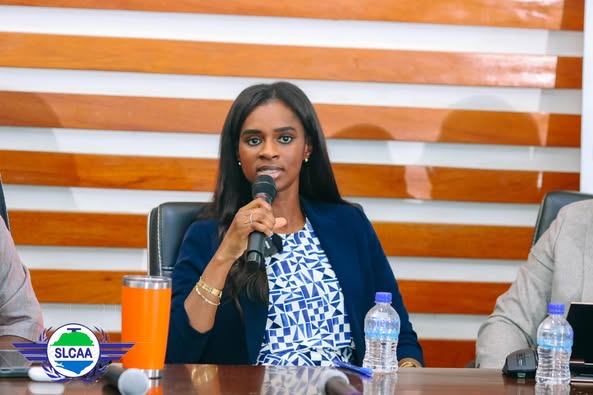
In a noteworthy update, Madam Musayeroh Barrie, Director General of the Sierra Leone Civil Aviation Authority (SLCAA), make known notable changes in passenger traffic for 2024. Madam Musayeroh Barrie highlighted that Freetown’s Lungi International Airport is set to welcome over 8,000 additional passengers this year, with incoming passenger numbers reaching 127,177 up from 119,005 in 2023. Meanwhile, departures are expected to decrease by approximately 3,000, totaling 121,486 compared to 124,440 in the previous year.
The overall passenger throughout for 2024 is anticipated to hit 248,583, surpassing the 243,445 recorded in 2023. This uptick reflects a positive trend in international travel for Sierra Leone, signaling recovery and growing interest in the region. The SLCAA remains optimistic about these developments, seeing them as a testament to the resilience and growth of the aviation sector.
Director General Madam Musayeroh Barrie’s leadership has also seen significant strides towards Sierra Leone’s removal from the European Union’s aviation blacklist, which has restricted airlines registered in Sierra Leone from flying into EU airspace since 2008. Since her appointment by President Dr. Julius Maada Bio in August 2023, Madam Musayeroh Barrie has spearheaded successful meetings with the EU safety commission, culminating in a roadmap that aims for Sierra Leone’s removal from the blacklist by 2025.
Under her stewardship, the SLCAA has also strengthened bilateral relations with Italy’s Civil Aviation Authority, evidenced by the historic Bilateral Air Service Agreement signed during President Pierlugu Umberto’s visit to Sierra Leone. This agreement lays the groundwork for enhanced cooperation and the development of air transport links between the two nations.
Madam Musayeroh Barrie’s proactive approach extends to consumer protection and regional cooperation, as demonstrated at the 1st Workshop of Air Transport Consumer Protection Focal Persons in West African States. Her unwavering commitment to safety has instituted rigorous protocols and oversight mechanisms, earning accolades from international regulatory bodies.
Her visionary leadership also focuses on capacity building and human resource development, championing initiatives that nurture talent and foster professional growth within the aviation sector. Through mentorship programs, training initiatives and educational outreach, she has empowered aspiring aviators and professionals, paving the way for a brighter future for the industry.
Madam Musayeroh Barrie’s leadership, marked by integrity, humility and a servant leadership ethos, continues to signify a new chapter of progress and excellence for Sierra Leone’s aviation sector. Her strategic vision and commitment are poised to steer the SLCAA towards greater heights, contributing to the nation’s socio-economic development and global standing in the aviation arena.






The Dilemma of Feed Salone: Aspirations vs. Reality in Rice Self-Sufficiency
By Amin Kef (Ranger)
With over 60% of our rice being imported, the quest for local rice self-sufficiency has never been more critical. Recently, Pa Lamin Banya raised a compelling point about the Feed Salone initiative, which was launched with great expectations to empower local farmers and reduce our dependence on imported rice. Yet, as we see the SLPP Government shifting back to negotiate with rice importers, many are left wondering: is this initiative truly committed to its original goals or has it become just another over-hyped development program?
Feed Salone was introduced with the aspiration of creating a sustainable agricultural landscape where local producers could thrive. The initiative aimed to bolster domestic rice production and ensure that consumers benefit from affordable, locally grown agricultural produce including rice. However, the reality of its implementation raises significant concerns. If Government is now engaging with the very importers it initially sought to challenge, can we reasonably conclude that the initiative is losing its way? For many, especially those who have witnessed similar programs come and go, this shift raises questions about the authenticity of Feed Salone’s objectives.
The challenges facing Feed Salone are not unique to our nation. Global market dynamics, climate change and shifting consumer demands create a complex landscape that can impede progress toward self-sufficiency. For instance, local farmers often struggle with inadequate access to resources, technology and markets, making it difficult for them to compete with imported rice. While the aspiration to reduce dependence on rice imports is commendable, the path to achieving this goal is fraught with obstacles that can lead to compromises.
Moreover, the need for transparency and accountability remains paramount for any program of such significance. If negotiations with rice importers become a regular occurrence, it is essential that stakeholders, including farmers, consumers and policymakers, are informed about the rationale behind these decisions and their potential impact on local production and pricing. For example, farmers need to know how pricing strategies will affect their livelihoods and whether they will receive adequate support to enhance their production capabilities.
To truly support local farmers and enhance domestic rice production, Government must focus on empowering its stakeholders. This could involve investing in agricultural technology, providing training programs for farmers and promoting cooperative models that enable smallholders to pool resources and access larger markets. Countries that have successfully achieved rice self-sufficiency often emphasize the importance of local investment and farmer education as critical components of their strategies.
In conclusion, while Pa Banya’s concerns stem from a place of skepticism, they highlight an essential conversation that must take place within our society. Is Feed Salone a genuine initiative aimed at bolstering agricultural productivity or has it become an over-hyped program that ultimately serves the interests of a few? As we navigate these complex challenges, let us advocate for policies that prioritize our farmers, boost local production and ensure that the aspirations of Feed Salone are grounded in reality.
Together, we can work towards a future where our nation is not only self-sufficient in rice production but also supports the livelihoods of our farmers and contributes to the overall well-being of our communities. It is time for all of us to engage in this critical dialogue and hold our leaders accountable for delivering on the promise of food security.