
Home Blog Page 296

George Emmanuel Tucker’s Tale of Escape from False Accusation in Sierra Leone

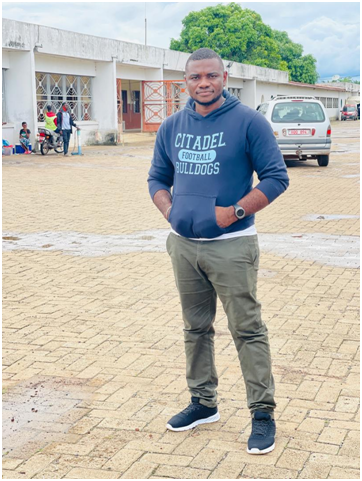
George Emmanuel Tucker

By Francess Wright

One of our ace reporters, Alvin Lansana Kargbo, currently on an official assignment in the Republic of Guinea, recently forwarded a deeply troubling human interest story that captured the Editorial Team’s attention for publication. While dining at a local restaurant, Alvin stumbled upon a Sierra Leonean named George Emmanuel Tucker, whose haunting tale of fear and uncertainty encapsulates the plight of many fleeing their homeland in search of safety.

As Alvin and George left the restaurant, their conversation naturally deepened, leading them to a nearby park where George, seemingly weighed down by his circumstances, began to unfold his story. He was born on August 8, 1987, to Fatmata Baby Tucker and Thomas Edison Tucker, growing up as one of five siblings in a close-knit Christian family. George shared that he is now a father himself, blessed with two sons and a daughter from his fiancée, whose name remained unspoken as emotions took over.

George’s life took a drastic turn following the coup attempt on November 26, 2023, aimed at toppling the Sierra Leone People’s Party (SLPP) Government led by President Julius Maada Bio. His childhood friend and schoolmate, Major Patrick Abu Odendeh Sesay, popularly known as PAO, became a central figure in this upheaval, marked as a principal suspect among the 32 individuals sought for questioning. The loyalty and camaraderie that once bound them were now overshadowed by fear and uncertainty.

“Since the coup attempt, my life has changed completely,” George lamented. He recalled how, in the aftermath of the attempted coup, he was repeatedly interrogated about PAO’s whereabouts. On December 5, 2023, he was summoned to the Criminal Investigation Department (CID) for questioning. From that moment, George felt the suffocating grip of paranoia closing in, as police surveillance of his movements and phone conversations intensified.

By June 20, 2024, George received alarming news: Major Patrick Abu Odendeh Sesay had been arrested in Guinea along with five others, facing extradition back to Freetown for a court martial hearing. The weight of this revelation struck George with a chilling realization of his precarious position. Just five days later, he became the target of police accusations himself, charged with “communicating with the enemy.” The situation escalated dramatically on June 25, 2024, when a contingent of police officers stormed his home, searching desperately for him.

“Luckily, my father and some good neighbors helped me escape,” George recounted, his voice tinged with gratitude and disbelief. The narrow alleyways of his childhood neighborhood became a maze of fear as he fled to Mongo, a remote village in the Falaba District, bordering Guinea. But even in this sanctuary, George could not escape the looming threat. Relatives and friends continually warned him not to return home, as police officers prowled the streets, questioning locals about his whereabouts.

“I felt trapped in my own country,” George said, his eyes filled with sorrow. The impending danger forced him to confront a painful choice: remain in Sierra Leone and risk imprisonment or flee and leave behind everything he knew. Finally, after weeks of living in constant fear, he decided to escape. On October 20, 2024, he crossed the border into Conakry, Guinea, his heart heavy with the weight of leaving his family and home behind.

As George Emmanuel Tucker recounted his story, the struggles of many Sierra Leoneans in similar predicaments became apparent. His experience reflects a broader narrative of political instability and the human cost of governance failures. Many citizens find themselves in a precarious position, torn between loyalty to their homeland and the need for personal safety. George Emmanuel Tucker ‘s story serves as a poignant reminder of the emotional toll such crises take on families, forcing them to navigate a landscape fraught with fear and uncertainty.

In Guinea, George Emmanuel Tucker found temporary solace but faced the grim reality of being an exile. He is not alone; there are countless others like him, forced to abandon their homes and families due to political turmoil. However, the path ahead remains uncertain.

George Emmanuel Tucker’s desire to return home is overshadowed by the potential consequences he might face upon his arrival. “I long for my family and my country,” he confessed, tears welling in his eyes. “But I fear I could be incarcerated for an indefinite period on trumped-up allegations.”

His story leaves us pondering the urgent need for political stability in Sierra Leone and the importance of addressing the root causes of unrest. As George continues to navigate his uncertain future, we are reminded that behind every headline and political turmoil are real people, enduring real suffering.

The humanitarian impact of political strife is often overlooked, but it shapes the lives of many. As our reporter Alvin Lansana Kargbo highlights George’s plight, we hope that it will resonate with readers and encourage conversations around the importance of justice, accountability and the need for a peaceful resolution to conflicts.

In the end, George Emmanuel Tucker’s journey is not just about fleeing his home country from danger; it is about a father’s love for his children, the pain of separation and the enduring hope for a reunification with his family in a safe country that he will call home.
Mother reports husband to police for threatening to kill their son

By Hassan Koroma

Boie Bah has reported her husband, Muctarr Jalloh to police, allegeding he threatened to kill their 26 years old son, Abu Bakarr Jalloh.

According to Bah, Muctarr, a Fullah elderly businessman and the Chief Imam of Wellington Community mosque has repeatedly been making the  threat after  their son refused to marry a woman from their tribe which the father  chose.

Abu Bakar reportedly refused because he believes he has the freedom to choose his partner, regardless of tribal affiliation. He did not only refuse his family’s wish to marry a Fullah woman, Bakarr went further to choose a woman from another tribe, worsening the situation that escalated into his  father thinking of an option to eliminate him.

Marriage within the Fullah tribe, one of the major ethnic groups in Sierra Leone remains largely endogamous. Fullah children, often, whether underaged or not, are forced to marry within their tribe, no matter what. Any marriages outside the tribe are strongly discouraged.

This practice, while it is intended to preserve the tribe’s cultural identity, and maintain clan unity, has been criticized as one that encourages early marriages and gender based violence.

Bah said her husband being a Fullah, is a typical traditional tribe’s man who only allows his children to marry their tribe’s men and women.

Fearing for the safety of her son, she decided to report the threat to the police.

“I know my husband well, he doesn’t make empty threats and the last time they almost engaged in a physical fight and that is the reason I have reported the matter to the police,” she told this medium at her Brima Lane, Wellington residence, Freetown.

In another development, Bah explained that since that threat by her husband, she has not seen nor heard the whereabouts of her son and his Limba partner, Iye Conteh. “That was the reason I reported the matter to the police.”

“As I am speaking to you right now, my husband has asked me to leave his house on the grounds that I supported my son, which is not so,” she added.

Bah said she tried to convince her son to follow the tradition and wish of his father, but the son told her he was now a modern educated man that cannot be controlled by customs and traditions.

She further explains that she has called for the intervention of other relatives, but all of them condemn the act of Abu Bakarr going against his father’s word and their tradition.

“As I am speaking, his   father is still angry and has vowed to kill my son,” she said.

Speaking to this medium in a telephone interview, Bah’s husband, Muctarr said he hates to respond to the issue because he does not want to hear anything that has to do with his son.

“I’m only waiting to see him, I know what to do. I don’t have a son that doesn’t listen to me,” he said.

The Chief Imam emphasised he considers that single act by his son to be disrespectful, and has led to his loss of respect in their community and among his fellow tribe’s men.

However Sierra Leone Police has decided to discharge the matter which Bah reported to them on the bases that it is a family and cultural issue, while her son,  Abu Bakarr remains unseen, and whereabouts still unclear, leaving the mother deeply bothered.

SLCS Details Status of Inmates After 2023 Prison Break: Over 1,300 Still at Large

By Amin Kef (Rangere)

The Sierra Leone Correctional Service (SLCS) has on October 8, 2024 released an official report detailing the situation surrounding the mass escape of inmates from various correctional facilities on November 26, 2023. This comes in response to an inquiry from The Calabash Newspaper regarding the status of the escapees.

In a letter addressed to the Managing Editor of The Calabash, the Acting Director General of SLCS, Brigadier General, Sahr DT Ngaujah confirmed that as of November 26, 2023, a total of 1,919 inmates were in custody. However, following the escape incident, the numbers have drastically changed:

– Total number of inmates escaped: 1,890

– Number of inmates still in custody: 29

– Total inmates recaptured: 514

– Inmates who returned voluntarily: 90

– Number of escapees still at large: 1,376

– Total discharges from the recaptured inmates: 203

– Discharges from voluntary returnees: 56

This alarming statistic highlights the significant challenge faced by the SLCS in managing the aftermath of the escape. The Acting Director General assured that the authorities are actively pursuing the escapees still at large, emphasizing the need for effective law enforcement collaboration.

In December 2023, SLCS first reported the escape of 1,890 inmates, primarily from facilities in Freetown. The Calabash Newspaper’s Managing Editor emphasized the importance of transparent communication in their inquiry, underscoring that timely and accurate information is crucial for public enlightenment.

The Director General’s response not only aims to provide clarity on the current status of the inmates but also seeks to promote trust and understanding within the community regarding the measures taken to address the situation. The SLCS has expressed its commitment to restoring order and ensuring the safety of the public as it works to recapture the remaining escapees.

This developing story remains a critical issue for Sierra Leone and further updates from the SLCS are anticipated as authorities continue their efforts to address the fallout from this significant incident.

Angela List’s Downfall: Mining Empire in Liberia Crumbles Under Corruption Allegations

By Esther Wright

In a shocking turn of events, Angela List, once a dominant figure in the mining industries of Liberia and Ghana, is witnessing the collapse of her empire amidst mounting corruption allegations. Her downfall marks the unraveling of years of influence, manipulation and controversial dealings that have now caught up with her.

For over two decades, Angela List commanded significant power in the mining sector, bolstered by her marriage to Australian mining mogul Paul List. However, the collapse of their marriage has coincided with the implosion of her business empire, exposing a trail of controversial alliances, shady deals and failed promises that have tarnished her reputation.

At the heart of Angela List’s downfall are the mining concessions in Liberia, once a source of her economic clout. Her failure to meet contractual obligations and deliver on promises has led to the revocation of these concessions, signaling the end of her dominance in the sector. For years, she had been accused of leaving chaos in her wake, with her business practices raising eyebrows among industry experts. Now, the consequences of these missteps are catching up with her as Liberia moves to reclaim control over its natural resources.

Angela List’s business troubles are compounded by a growing list of legal challenges. Accusations of fraud and embezzlement have surfaced in multiple countries, including Ghana, Jordan and Australia, placing her at the center of an international web of corruption. As the investigations unfold, many of her former allies in both the business and political spheres have begun to distance themselves from her, leaving her increasingly isolated.

Once considered untouchable due to her deep connections and political clout, Angela List now finds herself struggling to maintain her standing in a rapidly shifting landscape. Her long-time collaborators have begun to abandon her as the walls close in, signaling a dramatic fall from grace.

Amid the growing scrutiny, Angela List has reportedly resorted to manipulating the media to protect her image. Allegations have surfaced that she has attempted to suppress negative coverage and spread misinformation to shield herself from public criticism. By controlling the narrative, Angela List is believed to be working tirelessly to deflect attention from the scandals surrounding her and to salvage what remains of her reputation.

The impact of Angela List’s actions extends far beyond her personal downfall. Her involvement in both Liberia and Ghana’s mining sectors has only exacerbated existing issues of corruption, deterring foreign investors from engaging with these nations. Her toxic legacy threatens to undermine the economic progress of both countries, with investors increasingly wary of entering environments marred by political manipulation and unethical business practices.

As Liberia and Ghana strive to rebuild their economies and foster transparency, Angela List’s entanglement in corruption scandals stands as a glaring reminder of the challenges these nations face in combating entrenched systems of exploitation.

With her empire crumbling and her influence waning, there are increasing calls for Angela List to be held accountable for her actions. Political leaders, civil society groups and concerned citizens in both Liberia and Ghana are pushing for decisive measures to be taken against her. They argue that removing figures like Angela List  from the corridors of power is essential to promoting transparency, good governance and the rule of law.

As the scandal continues to unfold, Liberia and Ghana are at a critical juncture. Their ability to pursue justice and accountability in this high-profile case will serve as a litmus test for their commitment to rooting out corruption and attracting ethical foreign investment.

The fall of Angela List presents an opportunity for both countries to turn the page and embrace a future built on stronger institutions, economic integrity and a clear rejection of the corrupt practices that have hindered their development for too long.

SLANGO Endorses Afrimoney’s Digital Innovation at Third “Chop and Chat” Event

By Esther Wright

The Sierra Leone Association of Non-Governmental Organizations (SLANGO) expressed its enthusiastic endorsement of Afrimoney’s commitment to innovation during the third Afrimoney “Chop and Chat” corporate dinner, on October 16, 2024, held at the New Brookfields Hotel. The event saw the participation of over fifty NGOs, highlighting Afrimoney’s dedication to fostering relationships with its customers and stakeholders.

Alice Nenneh James, the National Coordinator of SLANGO, praised Afrimoney for its efforts in revolutionizing digital financial solutions in Sierra Leone. She emphasized the importance of such innovations in improving the efficiency of mobile money services, which are crucial for the growth of various sectors, including non-governmental organizations.

The “Chop and Chat” event served as a platform for fruitful dialogue between NGO representatives and Afrimoney, reinforcing the company’s commitment to listening to customer feedback and addressing their concerns. Afrimoney’s Chief Executive Officer, Martison Obeng-Agyei, reiterated the company’s dedication to building trust and confidence with its clientele. He stated, “Our first commitment is to you, our customers. We are here to tell you what we do so we can hear from you and then find ways to better our lot. We are committed to making this relationship work.”

Shadi Al Gerjawi, the Chief Executive Officer of Africell, also shared his positive experiences as an Afrimoney subscriber, detailing the advantages of the platform’s seamless transactions. His testimony highlighted the practical benefits that users can derive from utilizing Afrimoney’s services.

Peter Sam-Gbraka, the Development Secretary, commended Afrimoney’s innovative approach to digital financial services, noting its alignment with the Government of Sierra Leone’s fifth development priority. This emphasis on innovation is expected to support broader economic growth and development across the nation.

The event concluded with an engaging question-and-answer session, allowing attendees to voice their inquiries and suggestions, further cementing the collaborative spirit between Afrimoney and the NGO sector.

SLBA Wins Key Legal Battle: High Court Upholds Legitimacy of Case Against Leadership Dispute

By Millicent Senava Mannah

In a pivotal ruling delivered on Wednesday October 16, 2024, Honourable Justice Anthony Ganda of the High Court dismissed the jurisdictional and preliminary objections raised by the solicitors representing the defendants in the ongoing case involving the Sierra Leone Bar Association (SLBA) and its leadership. The decision not only affirms the legitimacy of the SLBA but also reinforces the importance of upholding the rule of law within the legal fraternity.

The case arises from disputes within the SLBA, where certain members, led by Augustine Sorie-Sengbeh Marrah, challenged actions taken by the Association’s leadership. Justice Anthony Ganda’s ruling emphasized that the court is the appropriate venue for resolving such matters, stating, “Considering the nature of the relief sought, I am of the view that this matter can be heard and determined by this court as it will not in any way cause injustice to the defendants/applicants herein.”

The court’s dismissal of the jurisdictional objections clears a significant hurdle for the SLBA, allowing it to pursue its claims regarding the validity of an Extraordinary General Meeting (EGM) convened on July 10, 2024. At that meeting, resolutions were passed to establish a ‘Care Taker Body’ that the SLBA contends were unauthorized and illegitimate.

The SLBA, represented by its President Tuma Jabbie, filed an Originating Summons on July 18, 2024, seeking multiple declarations and orders, including the nullification of the EGM and its resolutions and an injunction to prevent the defendants from misrepresenting themselves as Directors of the Association. Justice Anthony Ganda’s ruling empowers the SLBA to challenge these actions effectively.

The defendants had previously contended that the court lacked jurisdiction to hear the case, arguing that the issues at hand involved substantive disputes requiring witness testimony and cross-examination. However, Justice Anthony Ganda asserted that the matter is suitable for resolution through the Originating Summons, thereby maintaining the integrity and operational framework of the SLBA.

Justice Anthony Ganda issued three critical orders:

  1. The court is empowered to hear and determine the matter.
  2. The jurisdictional objections raised by the defendants/applicants are dismissed.
  3. Defendants/applicants are required to file an affidavit in opposition to the Originating Summons by October 23, 2024.

The court’s affirmation of its jurisdiction signifies a crucial step toward restoring order within the SLBA and upholding the rights of its members. The ruling allows for a thorough examination of the allegations concerning the legitimacy of the EGM and the election processes involved.

In response to the ruling, Tuma Jabbie expressed confidence in the judicial process and reaffirmed the SLBA’s commitment to upholding the principles of justice and transparency. “This ruling is a victory for all members of the Sierra Leone Bar Association and an affirmation of our dedication to lawful governance within our ranks,” she stated.

As the case progresses, it will be imperative for all parties involved to adhere to the court’s directives and work towards a resolution that prioritizes the interests of the SLBA and its members. The High Court’s decision marks a significant moment in Sierra Leone’s legal landscape, reinforcing the role of the Judiciary in ensuring accountability and justice within professional organizations.

Health Alert & Partners Conclude 3rd National Youth and Adolescent Family Planning Conference

By Foday Moriba Conteh

In a bid to create an invaluable opportunity for young people from across Sierra Leone to engage with healthcare workers and address critical issues facing youth and adolescents, Health Alert Sierra Leone, in partnership with the Government of Sierra Leone and supported by Momentum Country and Global Leadership (MCGL) USAID, concluded a two-day National Youth and Adolescent Family Planning & Sexual Reproductive Health Conference on Wednesday, October 9, 2024.

Themed: “Young People Breaking Cycles and Building Futures,” the conference, held at the Bintumani Hotel, Freetown, brought together stakeholders, NGOs, social change-makers, health workers and young people from the country’s 16 districts.

Victor Lansana Koroma, Executive Director of Health Alert Sierra Leone, underscored the critical role young people play in advancing family planning and sexual reproductive health policies during the National Youth and Adolescent Family Planning & Sexual Reproductive Health Conference.

He praised the efforts of Regional Coordinators and Steering Committee members, who have been the driving force behind many youth-focused initiatives. Victor Lansana Koroma highlighted that the conference has grown from humble beginnings, initially supported by FP2020 and later FP2030, to becoming a powerful platform for youth engagement.

The Executive Director recounted how, in 2019, a $5,000 grant brought together 70 young people across the country, a move that has since gained momentum with support from USAID’s Momentum Country and Global Leadership (MCGL). The conference has now become an annual gathering, bringing key stakeholders together to foster youth participation in decision-making processes.

He also noted the formation of the Adolescent and Youth (AY) mechanism, a youth-led platform that enables young people to engage with policymakers and contribute to national discussions on family planning.

“In 2020, young people were not at the table when family planning commitments were being developed,” Victor Lansana Koroma observed, “but today they are actively involved in shaping those policies.”

The Executive Director concluded by stressing that young people are now leading key initiatives. “You are in the driver’s seat. We are behind you and we know you will not let us down,” he told participants. He expressed gratitude to partners, including USAID Momentum, UNFPA and others for their continued support of youth-led initiatives. He also thanked the organizing team and media partners for making the conference a success.

Baindu A. Kosia, Country Director for Jhpiego and Consortium Lead for the USAID Momentum Project, emphasized the central role of youth in addressing Sierra Leone’s health challenges. “This conference is by youth, for youth. You have proven time and again that when given the opportunity, young people can over perform,” Baindu A. Kosia said, reflecting on the progress made since the conference’s inception.

Baindu A. Kosia highlighted youth-led initiatives from past conferences, such as innovative solutions to combat teenage pregnancy and improve maternal health, which were showcased during hackathons where youth participants impressed judges with groundbreaking ideas. “Kenema District won the hackathon in 2022, leading to the launching of the FP Keke Connect initiative by the Chief Minister, Dr. David Sengeh,” Baindu A. Kosia noted, encouraging this year’s participants to bring forward their best ideas.

She urged participants to continue their leadership beyond the conference: “You are the future and your future starts now. Break these cycles and you’ll build a better future for yourself and your communities.”

Margaret Bolaji, Youth Regional Partnerships Officer at FP2030, echoed the importance of family planning in empowering young people to make informed decisions about their reproductive health.

She shared her personal journey from a challenging background in Northern Nigeria to becoming a successful professional, thanks to access to comprehensive sexuality education and family planning services.

Margaret Bolaji commended the Sierra Leonean Government and partners such as USAID, UNFPA and FP2030 for their commitment to advancing youth and adolescent health.

She called for continued investment in family planning initiatives, emphasizing that the unmet needs of young people remain a key challenge. “Invest now,” Bolaji said, “Invest for a better, brighter future today. Young people are leading now and we are unstoppable.”

Mohamed Awauah Kamara, Team Lead of the AY Mechanism, expressed pride in coordinating the National Adolescent and Youth Conference since 2019. He praised the significant contributions of young participants over the years and the ongoing commitment to family planning under the FP2030 framework, which aims to meet Sierra Leone’s reproductive health goals by 2030.

He also acknowledged USAID for stepping in to support the conference through the MCGL project, ensuring its continuity despite previous funding challenges.

The Team Lead called on donor partners to trust the capacity of young organizations to implement projects, pointing out that the AY Mechanism operates in all 16 districts of Sierra Leone with a robust accountability structure in place.

In his keynote address, Dr. Charles Senessie, Deputy Minister of Health I, emphasized the vital role young people play in shaping national health policies.

He praised the conference as a crucial platform for youth empowerment and policy development, noting that past conferences have provided critical recommendations that shaped national policies and programs targeting youth and adolescent health.

“These conferences have been instrumental in informing key policies, such as the National Strategy for the Reduction of Teenage Pregnancy, the Family Planning Cost Implementation Plan and the FP2030 Commitments,” Dr. Charles Senessie stated.

Reflecting on the 2022 conference, Charles Senessie highlighted how it empowered young people to ensure their voices were heard and their needs reflected in the FP2030 document. He also expressed pride in launching the FP2030 commitments during the Sexual and Reproductive Health Conference in December 2023. The Deputy Minister reaffirmed the Government’s commitment to addressing the unique needs of young people, stating, “As a Government, we are deeply committed to placing youth at the center of our development strategies.”

Dr. Charles Senessie concluded by celebrating the successful launch of the Family Planning Keke Initiative in July 2024, which emerged from the 2022 conference. Supported by USAID Momentum, this initiative is now being implemented by young people in Kenema District with assistance from the District Health Management Team.

The event, organized in collaboration with the Ministry of Health and local health organizations, featured breakout sessions, discussions and workshops aimed at equipping young leaders with the knowledge and skills to address reproductive health issues which included with the Hackathons competition among the 16 districts seeing Kenema District winning it again for the second time.

As Peace Commission Supports Peace Process… Peace Guarantors and Political Parties Review Unity Agreement Amid Calls for Inclusivity

By Alvin Lansana Kargbo

The International Moral Guarantors convened a meeting with the Political Parties Registration Commission (PPRC) and political parties at the Electoral Commission for Sierra Leone (ECSL) Conference Room on Tower Hill in Freetown, to assess the progress of the unity agreement signed over a year ago. The meeting, held on Wednesday, October 16, 2024, brought together representatives from ECOWAS, the African Union (AU), the United Nations (UN) through UNOAS and the Commonwealth to evaluate the progress and explore ways to expedite the implementation of the agreement before the next election.

The unity agreement, signed on October 18, 2023, established an eight-point plan and over 80 recommendations through a Tripartite Committee. The focus of the current mission is to evaluate the situation and to determine measures to enhance the process of political stabilization in Sierra Leone. Representatives emphasized the importance of open and honest dialogue during the meeting to ensure a comprehensive understanding of the nation’s current status.

Representatives from the political parties raised concerns about the inclusivity of the Tripartite agreement, expressing dissatisfaction that 15 out of 17 registered parties feel excluded from the decision-making process, which has been dominated by the APC and SLPP. They highlighted the need for greater inclusivity to foster a fair and peaceful resolution, emphasizing the negative impact of misinformation on political unity. Concerns were also raised about the limited engagement between the authorities and political parties, with calls for more meaningful dialogue and transparency.

The parties also criticized Recommendation 70, arguing that it undermines Sierra Leone’s constitutional commitment to multi-party democracy, as outlined in the 1991 Constitution. They appealed to the international community to reconsider this recommendation, fearing it could destabilize the political landscape.

Prince Harding, representing the SLPP, stressed the importance of national unity and peace for economic development. He acknowledged the challenges posed by internal and external conflicts and emphasized the need for effective implementation of the peace agreements to attract investment. Highlighting the interconnectedness of peace and economic growth, he urged all parties to prioritize national interests over partisan goals and called for patience in the peace process.

In response, Her Excellency Fatoumata Jallow-Tambajang, former Vice President of The Gambia and co-leader of the international peace mission, underscored the importance of flexibility and consensus in political dialogues. She advocated for the inclusion of diverse perspectives within the political arena and praised the use of dialogue as a means to foster understanding and collaboration. Drawing on experiences from The Gambia, she emphasized the value of strengthening institutional capacities and the need for a collective approach to achieving peace.

The United Nations Special Representative of the Secretary-General (UNSRSG), His Excellency Leonardo Santo Simao, reinforced the need for peace as a foundational principle in political actions. While recognizing differing views on the balance between justice and peace, he highlighted that peace is essential for national stability and progress. He urged patience and a forward-looking approach, encouraging stakeholders to recognize the progress achieved so far despite ongoing challenges.

The Executive Secretary of the Independent Commission for Peace and National Cohesion, Hawa Samai, reiterated her organization’s commitment to supporting the peace process. She emphasized the importance of proactive communication and collaboration among stakeholders, encouraging continued efforts to address concerns through dialogue. She assured the audience that their voices are being heard and emphasized the Commission’s ongoing support.

As the meeting concluded, participants reaffirmed their commitment to working towards a peaceful and stable Sierra Leone. The international partners pledged their continued support, emphasizing the need for collective action and perseverance in the journey towards a more unified and stable nation.

Peace Moral Guarantors Engage Civil Society Organizations in Critical Peace Agreement Review

By Alvin Lansana Kargbo

The International Peace Moral Guarantors held a pivotal meeting with Civil Society Organizations (CSOs) on Thursday 17th October, 2024 at the Bintumani Conference Center in Aberdeen to review the progress of last year’s peace agreement and discuss strategies for its implementation ahead of the forthcoming elections. Facilitated by the Independent Commission for Peace and National Cohesion, the meeting sought to address concerns raised by the CSOs and to outline the next steps for fostering a stable political climate in Sierra Leone.

Prominent Civil Society Groups in attendance included CRN-SL, CHRDI, 50/50, NDMHR, HRDN, Marwopnet, CARL-SL, NDI, Slango, Action Aid, Civil Society Movement, WANEP-SL and Christian Aid. Representatives from these organizations expressed their views on the ongoing peace process, emphasizing the need for inclusivity, open dialogue and effective communication among all parties involved.

During the discussions, CSOs highlighted the significant role of youth in fostering peaceful dialogue and called for support to enable constructive conversations in their communities. They also recognized positive developments, such as the establishment of cross-party dialogue and the joint commitment to non-violence by both Government and opposition leaders. However, CSO representatives cautioned that public skepticism about recent election outcomes could impede further progress toward unity, stressing the need for transparency in executing the peace agreement.

A recurring theme among the CSO representatives was the necessity of involving all stakeholders in decision-making processes to ensure inclusivity. They warned against altering political procedures midway, noting that such actions could erode public trust and diminish participation. Additionally, constitutional reform was identified as a pressing issue, with calls for a consultative process that addresses deep-seated challenges and guarantees the rights of all citizens.

Concerns were also raised regarding rising incidents of sexual and gender-based violence targeting women in politics. The CSOs urged major political parties to collaborate on initiatives aimed at creating a more inclusive political environment, particularly for women. They pointed out the challenges posed by conflicting customary and national laws and advocated for stronger protections and accountability mechanisms to support women in politics.

Following these remarks, the International Peace Moral Guarantors responded to the concerns raised by the Civil Society Groups, emphasizing their commitment to addressing the challenges faced during the peace process. Key international figures, including former Vice President of The Gambia, H.E. Fatoumata Jallow-Tambajang, and the UN Special Representative of the Secretary-General, H.E. Leonardo Santo Simao, delivered statements at the gathering, reinforcing the importance of communication and collaboration for sustainable peace in Sierra Leone.

In her address, Fatoumata Jallow-Tambajang emphasized the crucial role of communication in building a cohesive civil society, particularly in the implementation of the National Unity Agreement. She highlighted that the gaps in communication between Government entities, political parties, CSOs and the public have created barriers to progress, leading to frustration and skepticism among the populace.

“The communication gap is a major challenge, creating mistrust between stakeholders and the public. We must improve communication channels to enhance understanding and collaboration among all parties,” she asserted, calling for an institutional mechanism to improve communication.

The former Vice President also criticized some political leaders for failing to communicate transparently with their supporters, noting that such actions foster fear and insecurity. She underscored the need for accountability and transparency, especially when monitoring and implementing the peace agreement’s recommendations. Additionally, she highlighted the importance of initiatives like the 50/50 strategy to support women’s participation in politics, stressing the need for committed women leaders who can advocate for women’s causes.

H.E. Leonardo Santo Simao, in his remarks, acknowledged the progress Sierra Leone has made in creating a more peaceful political atmosphere, crediting the collaborative efforts of citizens, political parties and CSOs.

“Peace and stability are the bedrock of economic progress,” he noted, commending the strides Sierra Leone has taken towards achieving peace. He emphasized the importance of regional knowledge-sharing, encouraging Sierra Leone to share its experiences with neighboring nations who face similar electoral challenges.

The UN Special Representative reaffirmed the United Nations’ support for regional cooperation, especially among women leaders and stressed the need for continued efforts to address issues like electoral violence against women. “Member states, civil society organizations and the media must work together to overcome these hurdles and make Sierra Leone a better place to live,” he stated. He also praised the collaborative efforts to implement recommendations from recent peace agreements and stressed the significance of maintaining progress despite ongoing challenges.

The meeting concluded with a renewed commitment from the International Peace Moral Guarantors to continue supporting the peace process, while CSO representatives expressed their readiness to work collaboratively towards a more inclusive and peaceful Sierra Leone.


LUC Rutile Division, Framed Over Alleged Case of Sexual Penetration

By Jonathan Hindolo Kurabu Esq (D Catalyst)

18 year old Sarah Samking,who resides in Moriba Town, Imperi Chiefdom, Bonthe District has over the weekend admitted that the Local Unit Commander of the Rutile Division, Superintendent Mustapha Alhaji Senesie was framed by her father and one Councilor Edmond M Kabaingai of ward 326, Imperi Chiefdom, Bonthe District

Her admission comes in the wake of an ongoing police investigation at the Regional Department of the Family Support Unit in Bo where the said Councilor, Edmond M. Kabaingai and Sarah’s father conspired against the LUC by making a formal report at the Rutile Police Division that the said LUC Supt. Mustapha Alhaji Senesie sexually penetrated a 16 year old girl.

Sarah Samking further revealed that her Father, Sam Samking and Councilor Edmond M. Kabaingai forged her birth certificate using the false name, Amie Samking projecting her age as a minor (16 years) which she later rejected and the said birth certificate was again changed at the Moriba Town Peripheral Health Unit by a Deputy CHO, Christiana John, to now appear as Sarah Samking with the same age outlook (16 years.( Audio available).

Evidence adduced proved that notwithstanding these inherent anomalies, Councilor Edmond M. Kabaingai presented the birth certificate and another fictitious School Report card bearing the Name, Sarah Samking and age,16.

The birth certificate which appeared to be forged, however proved that it was printed in 2015 yet issued in 2009 by the Deputy CHO Christiana John,an allegation the hospital management vehemently denied stating that the signature of the said fictitious Birth Certificate was forged and was as well not issued by the Moriba Town PHU.

Sarah Samking admitted in a conversation that she is above 18 years and her boyfriend, an OSD officer named John Arthur Jusu has been arrested and brought over to the Bo West Police Station for allegedly having an affair with an under age.

She said her OSD boyfriend is fully recognized by her family adding that the OSD boyfriend had traditionally informed her relatives about their relationship which her family accepted and they have been moving on well save his arrest and detention and appealed that her boyfriend be released unconditionally remarking that “e nor do natin” ( he did nothing).(Audio available upon request).

The school report card from TVSS also showed lots of anomalies.

Regional Coordinator, Family Support Unit in Bo,ASP Kanneh confirmed that OSD Officer, John Arthur Jusu is being investigated for allegedly having a sexual affinity with an under age.

He also confirmed that they have commenced investigation into the initial report made by Councilor Edmond M Kabaingai, Pastor Rogera and Sarah’s father over alleged case of sexual penetration of a 16 year old by the Local Unit Commander, Supt. Mustapha Alhaji Senesie.

LUC Rutile Division Superintendent Mustapha Alhaji Senesie denied the allegations and affirmed that his relationship with the said Councilor Edmond M. Kabaingai became strained over the said Councilor being one of the major masterminds for unrest around the Rutile company sites and an assault on a local chief and an Imam which is still under investigation at the Rutile Division.

Incessant efforts to contact Councilor Edmond M. Kabaingai to respond to the allegations before and after these revelations proved futile, despite being a member of all Whatsapp groups where Sarah’s admission was shared hence having constructive and actual knowledge of same.

It’s alleged that the LUC’s high-handedness in tackling crimes and clampdown on some accepted illegal activities in the Rutile axis is among the major causes for this conspiracy hence Councilor Edmond M. Kabaingai in a widely shared audio said LUC Supt. Mustapha Alhaji Senesie MUST GO(audio available upon request).

Sources say, LUC Supt Mustapha Alhaji Senesie is among the third Local Unit Commanders that have been framed by certain cabal in Moriba Town. They alleged that it’s now a pattern in Moriba Town no sooner the Cabal dislikes the Public Officers, they resort to surreptitious means to defame that individual.

Records show that considerable number of convicts who have served their jail terms or are serving their respective jail terms for sexual offences insists being framed by mostly relatives of the purported victims.

The Sexual Offences (Amendment) Act 2019 makes provision for the increase of the maximum penalty for rape and sexual penetration of a child from fifteen years up life imprisonment.

Section 19 of the Sexual Offences Amendment Act 2019 provides ” subject to Section 24 of the Children and Young Persons Act (Cap 44), a person who engages in an act of sexual penetration with a child commits an offence and is liable on conviction to life imprisonment”

Section 1 of the Sexual Offences Act 2012 provides” In this Act unless the context otherwise requires, “Child” means a person under the age of 18.”