Home Blog Page 47

Pee Cee & Sons Spreads Holiday Cheer with December Remittance Bonus Across Sierra Leone

By Amin Kef (Ranger)

Pee Cee Foreign Exchange Bureau Ltd has launched its highly anticipated December Promo 2025/2026, offering an attractive package of cash bonuses and premium gift items to customers receiving MoneyGram, Western Union and Ria transactions throughout the festive period. The promotion, which runs from 1st December 2025 to 3rd January 2026, is being implemented across all Pee Cee & Sons branches nationwide, making it one of the most expansive seasonal reward initiatives within Sierra Leone’s remittance landscape.

As part of this year’s Christmas Bonanza, customers receiving NLe 22,000 or more through any Pee Cee location will automatically receive a 1% cash bonus, added directly to their payout at the counter. According to the Bureau, the bonus is provided with no extra procedures, hidden conditions or additional requirements, ensuring a smooth and rewarding experience for thousands of households depending on remittances during the festive season.

In addition to the cash incentive, Pee Cee & Sons is also offering customers the opportunity to receive a wide variety of branded household items. These include:

  • Padi Evaporated Milk
  • Padi Cocoa
  • Padi Sweetened Condensed Milk
  • Royale Mayonnaise
  • Sweet Padi Seasoning Cube
  • Padi Vegetable Cooking Oil
  • Padi Malted Drink
  • Padi Tea Leaf
  • Padi 5kg Rice
  • And several other household favorites

The company notes that these items will be distributed while stock lasts, further enhancing the value customers receive during the festive promotion.

To ensure maximum accessibility, Pee Cee & Sons has published a comprehensive list of collection points across Freetown and provincial towns, enabling customers to conveniently access both their remittance payouts and accompanying festive rewards.

Freetown collection points include:
59 Wellington Street; 16 Goderich Road, Lumley; 31 Guard Street; 19 Fourah Bay Road; 10 Sani Abacha Street; 24 City Road, Portee; 9 Krootown Road; 32A Wilkinson Road; and 53 Abacha Street.

Provincial collection points include:
76 Kainkordu Road, Kono; 5 Palmer Street, Kabala; 54 Dambala Road, Bo; 39 Hanga Road, Kenema; 9A Liverpool Street, Waterloo; 29 Rogbaneh Road, Makeni; 137 Airport Ferry Road, Lungi; Lengor’s Compound, Kailahun; and 35 IDA Road, Kambia.

According to Pee Cee Foreign Exchange Bureau, the December Promo forms part of its longstanding commitment to rewarding customer loyalty, particularly at a time when many Sierra Leoneans rely heavily on financial support from relatives abroad. The institution emphasized its continued dedication to fast, reliable and customer-friendly service across the country.

Customers seeking additional information can visit any Pee Cee & Sons branch nationwide or contact the service line at 088076539.

With its combination of cash bonuses and essential household items, the Pee Cee Christmas Bonanza is set to bring added joy and meaningful support to families across Sierra Leone during the 2025/2026 holiday season.

Young People Present National Position Paper to Parliament on Inclusive Budgeting

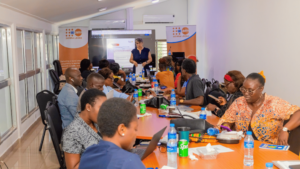
Representatives of Youth and Children’s Advocacy Panel (YACAP) in the well of Parliament present position paper on inclusive budgeting to MPs

In a major stride toward strengthening youth participation in national governance, the Youth and Children’s Advocacy Panel (YACAP), with support from UNICEF Sierra Leone and other development partners, on Monday presented a comprehensive National Youth Position Paper to the Government of Sierra Leone. The document details key recommendations aimed at ensuring greater inclusion of children, adolescents, youth and persons with disabilities in the country’s budgeting and development processes.

The position paper, which was developed following extensive nationwide consultations with 50 youth representatives, was officially submitted during a session held at the Sierra Leone House of Parliament. It was received by prominent Government officials, including the Deputy Clerk of Parliament, the Chairman of the Parliamentary Oversight Committee on Youth Affairs, the Opposition Leader and the Deputy Youth Chairman. Copies were also formally handed over to the Ministry of Finance, where they were received by the Financial Secretary and the Minister of Finance.

Focused on the formulation of the Fiscal Year 2026 (FY2026) National Budget, the document calls for the establishment of structured and institutionalized mechanisms to ensure that the voices and priorities of young people and other marginalized groups are integrated into national planning and resource allocation. According to YACAP that move is essential for creating a more equitable, responsive and inclusive development agenda.

The submission reflects increasing recognition of the role young people must play in fostering good governance and sustainable development. YACAP urged Parliament and the Ministry of Finance to meaningfully incorporate the recommendations into the ongoing FY2026 budget preparation process.

The Youth and Children’s Advocacy Panel (YACAP) is a youth-led organization committed to promoting and protecting the rights and interests of children, adolescents, youth and persons with disabilities, ensuring their voices are amplified within Sierra Leone’s national policy and development landscape.

Police Investigator Affirmed… No Direct Evidence Linking the Accused to Sia Kamara’s Death

By Foday Moriba Conteh

The High Court in Freetown on Friday, 28th November 2025, witnessed a tense and revealing session in the ongoing murder trial of Abdul Kpaka. The matter, presided over by Justice Alfred Ganda in Court No. 1, resumed with the continuation of the defense’s cross-examination of the lead police investigator, Detective Inspector Amara ;an exchange that exposed troubling gaps, inconsistencies and signs of possible bias in the police investigation.

Proceedings opened with clarifications regarding earlier testimony on who had custody of the deceased’s body during the investigation. Although D/Insp. Amara eventually insisted the police were in charge, that claim clashed sharply with testimony from the Virtues Funeral Home Manager, who said the police never contacted or visited them about the corpse. Their account corroborated that of PW2, Sylvester Patrick Kamara, who testified that he, not the police, coordinated the autopsy arrangements and transported the body to Connaught Hospital on 16th August 2024.

Lead Defense Counsel, E.T. Koroma, confronted the police witness with the contents of the autopsy request letter submitted as part of the investigation. The letter stated that the deceased, Sia Fatu Kamara, was “found lying down dead” and that foul play was suspected. When asked where that information came from, D/Insp. Amara failed to provide a clear source and merely described it as an “allegation.”

E.T. Koroma pointed out that no witness, including the complainant or the accused, ever made such a statement. He accused the police of inserting misleading information “in total variance with the facts” in order to influence the medical examiner’s findings. The police witness could not refute the claim, insisting only that there was no intent to mislead.

Evidence before the court shows that Sia Kamara fell, was rushed to Emergency Hospital unconscious, declared clinically dead after a failed CPR procedure and later taken home for prayers. The body remained at the funeral home for three days before autopsy; facts omitted from the police autopsy request. The Defense argued that such omissions cast doubt on the objectivity and thoroughness of the police investigation.

Under cross-examination, D/Insp. Amara conceded that both the accused and PW1, Christiana (the deceased’s sister), stated that Sia had a heart condition that sometimes caused difficulty breathing. He also confirmed that a heart infection medication (Metronidazole) was found in her bag during a police search.

The Defense argued that these facts further weaken the murder allegation, as no evidence directly links Abdul Kpaka to her death.

Pressed by E.T. Koroma, D/Insp. Amara admitted that the police had no direct evidence connecting the accused to the death. He instead cited “corroborative evidence,” including statements from witnesses, hospital outpatient records, the cause of death certificate and materials obtained during a search warrant. The defense insisted none of these documents accused Abdul Kpaka of killing Sia.

In a startling moment, D/Insp. Amara stated: “I do not believe the defendant when he said he was not guilty… but I believed the complainant’s account.”
That admission drew concern across the courtroom, raising questions about the investigator’s neutrality and whether bias influenced the handling of the case.

Cross-examination revealed that by the time Abdul Kpaka was charged, statements had not been obtained from:

  • The Emergency Hospital nurses who treated Sia
  • The doctor who pronounced her clinically dead
  • The funeral home Management who embalmed and stored the corpse

Those statements were only gathered two months later; long after the case had already been before the court and witnesses had begun testifying.

Surprisingly, D/Insp. Amara claimed he did not know whether the corpse had been embalmed before autopsy, stating only that he knew it was “preserved.” Defense Counsel argued that this lack of clarity further undermined the investigative rigour expected in a murder inquiry.

When questioned about whether the police ever requested a forensic examination of the body or visited the house where Sia was taken for prayers, the investigator admitted they did not. No explanation was provided as to why such critical investigative steps were skipped.

With no additional prosecution witnesses available after the cross-examination, Defense Counsel reminded Justice Ganda of two pending rulings on the bail application and a request for a case stated to the Supreme Court. The judge again postponed his decision, promising to deliver the rulings at the next hearing.

The matter was adjourned to Wednesday, 10th December 2025, when the prosecution is expected to present its next witness.


At Freetown International Airport… SLCAA Hosts TUI Airways for Pre-Operational Engagements & Security Audit as Plans to Expand Air Connectivity Advance

SLCAA's DG, Musa Yeroh Barrie (in the middle), speaking at an engagement with TUI Airways officials

By Amin Kef (Ranger)

The Sierra Leone Civil Aviation Authority (SLCAA) on 4 December 2025 held a brief but highly significant engagement with a visiting official from TUI Airways at the Freetown International Airport, marking another milestone in Sierra Leone’s ongoing efforts to attract major international carriers. The meeting brought together the Director General of SLCAA, Musayeroh Barrie, the Deputy Head of Security for TUI Airways, senior staff of the Authority, representatives of the airport Management and other key aviation stakeholders.

Despite its short duration, the engagement underscored Sierra Leone’s growing readiness to integrate into wider aviation networks and highlighted TUI Airways’ increasing interest in expanding operations within West Africa.

Addressing stakeholders during the engagement, Louis Savine-Tramiro Deputy Head of Security for TUI Airways outlined the company’s operational structure and expansion plans. He disclosed that TUI operates five airlines under its group framework and reaffirmed the airline’s intention to launch services linking London Gatwick to Lagos and Freetown before returning to the UK. He commended the Freetown International Airport, describing it as a modern infrastructure with facilities capable of meeting the operational and security requirements expected by international carriers conducting pre-operational assessments.

In her remarks, SLCAA Director General, Musayeroh Barrie, expressed gratitude to the Authority’s staff and airport personnel for consistently upholding international aviation standards; an achievement she said has helped build investor and operator confidence. She noted that Sierra Leone’s aviation sector has undergone significant strengthening, with improved regulatory capacity, enhanced airport infrastructure and a renewed focus on transparency across all operational processes. Musayeroh Barrie underscored that the presence of every stakeholder in the room was critical to maintaining the momentum required to attract and retain reputable airlines. She emphasized that sustained collaboration and open engagement are key to achieving successful outcomes in the country’s aviation growth agenda.

The Director General further stated her confidence that TUI Airways will eventually commence operations in Sierra Leone, stressing that the modernization of the Freetown International Airport positions the country favourably in the eyes of global carriers. “The airport is a well-built infrastructure and in the not-too-distant future, we believe TUI Airways will touch down on our tarmac,” she pointed out, thanking all participants for their commitment.

TUI Airways, one of Europe’s largest leisure airlines and a subsidiary of the globally recognized TUI Group, operates a fleet of more than 130 aircraft and serves over 150 destinations across several continents. With existing operations in Senegal and The Gambia, the airline has been steadily strengthening its African portfolio, aligning with rising demand for travel to and from the region. Its potential entry into the Sierra Leonean market is therefore seen as a strategic addition that could enhance tourism, diversify travel options and improve connectivity for the large Sierra Leonean diaspora in the United Kingdom.

The engagement marks another step forward for Sierra Leone’s aviation sector as the country seeks to expand direct international routes following significant upgrades to airport facilities and regulatory reforms. Should discussions with TUI Airways progress to full operational approval, the introduction of a Gatwick–Freetown service would bring considerable benefits, including increased tourism, greater passenger convenience and enhanced global connectivity. Optimism continues to grow that Sierra Leone will soon welcome one of Europe’s most trusted carriers into its skies.

TUI Airways official

At Sierra Leone Embassy… Weak Representation in Washington Sparks Demands for Immediate Ambassadorial Replacement

Sierra Leone's ambassador to the US presents his credentials to President Donald Trump

Sierra Leoneans in the United States are reeling from a new wave of immigration restrictions after President Donald Trump announced a “permanent pause” on migration from what he describes as “third world countries,” placing Sierra Leone among 19 nations now classified as “countries of concern.” The move has sparked widespread anxiety among families, students, workers and the broader diaspora community, many of whom already face visa uncertainties and stalled immigration processes.

The latest clampdown follows the November 27, 2025, shooting near the White House involving an Afghan national, an incident that U.S. authorities say triggered a reassessment of vetting and green card issuance policies. Although Sierra Leone had no connection to the incident, the nation once again finds itself caught up in sweeping immigration actions that place additional strain on its citizens.

While many Sierra Leoneans abroad view these developments as unfortunate, analysts argue they are the predictable result of years of limited diplomatic engagement in Washington, D.C. Despite longstanding warning signs, including sanctions dating back to 2017, successive Governments have failed to build a strong, strategic presence capable of advocating for Sierra Leonean nationals in times of heightened scrutiny.

The U.S. designation of Sierra Leone as a “recalcitrant country” more than eight years ago, due to insufficient cooperation over deportations, opened the door to recurring visa sanctions. Restrictions were expanded in June 2025, affecting B-1/B-2 visitor visas, F and M student visas, J exchange visas and most immigrant visas. Only immediate relatives and limited special categories were exempted.

With the latest directive, U.S. Citizenship and Immigration Services (USCIS) is now reviewing green cards previously issued to Sierra Leoneans;a measure that could lead to revocations or removals, particularly for those flagged over visa overstays or documentation concerns. The policy affects a portion of the 3.3 million green card holders from the newly labeled “countries of concern,” intensifying fears of arbitrary detentions and deportations.

The consequences are immediate and deeply personal. Students seeking education in the United States face rejections that derail their academic ambitions and weaken Sierra Leone’s future human capital. Entrepreneurs and professionals who rely on U.S. travel to strengthen partnerships find their plans stalled. Tourism, business exchanges and remittances, vital pillars of the national economy are expected to decline as a result of the tightened rules.

Families are perhaps the hardest hit. Immigrant visa suspensions have delayed reunifications, leaving loved ones separated indefinitely. Many Sierra Leoneans say the stigma of being grouped among countries portrayed as high-risk has damaged their dignity and international standing. These restrictions also intensify brain drain, pushing skilled professionals to pursue opportunities in regions with more welcoming immigration policies.

Observers warn that Sierra Leone’s predicament is not inevitable. Several nations previously subjected to U.S. visa sanctions, including Ghana, succeeded in securing partial relief through strategic diplomacy and cooperation on deportation agreements. Others have hired U.S. lobbying firms to open channels with the White House, Congress and key policy influencers.

By contrast, Sierra Leone’s diplomatic footprint in Washington remains thin. The embassy struggles with limited resources and staffing gaps, partly attributed to appointments driven by political loyalty rather than competence. The absence of lobbyists, policy advisers and consistent engagement with American institutions has left Sierra Leone without the leverage necessary to negotiate exemptions or mitigate punitive measures.

Diplomatic experts argue that proactive engagement with the Trump administration, particularly on issues of security cooperation, deportation compliance and enhanced vetting, could help shift perceptions and potentially secure targeted waivers for Sierra Leonean nationals.

As thousands of Sierra Leoneans confront an uncertain future in the United States, pressure is mounting on the Government to adopt a more assertive foreign policy stance. Strengthening the embassy, recruiting skilled personnel, engaging diaspora leaders and investing in lobbying networks are among the urgent actions recommended to restore Sierra Leone’s credibility and safeguard its citizens.

Sierra Leone cannot afford to remain passive, critics warn. Without decisive diplomatic intervention, the nation risks continued marginalization in U.S. immigration policy; at great cost to its people, its economy and its international reputation.

For many families affected by the latest restrictions, one message is clear: the price of political inaction has become too high. Only strong representation in Washington can help reverse their fortunes.

One Nation Reggae Concert Sets Freetown Ablaze With Historic Night of Music and Cultural Unity

Freetown on Friday, 28th November 2025, witnessed one of the most electrifying entertainment events in recent memory as the One Nation Reggae Concert transformed the Radisson Blu Garden into a powerhouse of music, culture and unity. The show delivered an extraordinary night that will be remembered as a defining moment for Sierra Leone’s creative industry.

The venue was packed to capacity long before the headline acts arrived. Fans poured in from every corner of the capital, creating a jubilant sea of reggae lovers eager to experience the long-awaited fusion of Sierra Leonean and Jamaican artistry. Government officials, diplomats, corporate executives, members of the Reggae Union and thousands of music enthusiasts filled the space, making it one of the most heavily attended events hosted in Freetown this year.

The concert opened with exhilarating performances from Sierra Leone’s top reggae voices, whose artistry captivated the audience and set the rhythmic pace for the night. Their delivery showcased the nation’s homegrown musical brilliance, earning cheers and applause from the vibrant crowd.

The energy surged even higher as the international lineup made their appearances. Aquane, Lucan I, Danny Bless, Queen Ifrica, Jah Thunder, and Christopher Martin each delivered commanding performances that brought the crowd to its feet. Their stage presence, vocal power and connection with the audience ignited waves of excitement throughout the garden.

The night’s most anticipated moment came when iconic Jamaican star Sizzla Kalonji stepped onto the stage. His explosive, spiritually charged performance sent the venue into a frenzy. With every lyric and every beat, he reaffirmed his legendary status and left the audience captivated.

Throughout the evening, Minister of Tourism and Cultural Affairs, Nabeela Tunis, received glowing commendations for championing an event that successfully celebrated the cultural ties between Sierra Leone and Jamaica. Her leadership was widely acknowledged as instrumental in delivering a festival of such magnitude and impact.

The One Nation Reggae Concert closed with thunderous applause, emotional appreciation and an overwhelming sense of pride. More than just a musical event, it rekindled Sierra Leone’s reggae spirit, strengthened cultural bonds and showcased the country as a rising hub for world-class entertainment.

It was a night of history, harmony and unforgettable rhythm; a night when Freetown danced as one nation.

Rokel Commercial Bank Receives Prestigious Honour at AASU–Weldios University Symposium in Morocco

Rokel Commercial Bank (RCB) has again earned continental recognition after being honoured at the 4th AASU–Weldios University Symposium in Rabat, Morocco, for its leadership in innovation, digital transformation and commitment to Africa’s self-reliance and youth empowerment.

The annual symposium, jointly organized by Weldios University, EPIK Leaders and the All Africa Students Union (AASU), took place from 20–24 November 2025 under the theme: “Cultivating Prosperity: Advancing Agriculture and Intra-Africa Trade for Sustainable Development.” The event brought together senior policymakers, academics, private-sector executives, thought leaders and student representatives from across the continent.

In presenting the honour, the All Africa Students Union and Weldios University commended Rokel Commercial Bank for its groundbreaking digital initiatives and for emerging as one of Africa’s forward-looking financial institutions shaping 21st-century banking through technology, human capital development and customer-centered innovation.

Although Managing Director and CEO of RCB, Dr. Walton Ekundayo Gilpin, was unavoidably absent due to official engagements outside Sierra Leone, his keynote address was delivered by the Bank’s Head of Public Relations, Aruna Dumbuya, who represented him at the ceremony.

In his message, Dr. Walton Ekundayo Gilpin expressed deep gratitude to Weldios University, AASU, the Government of Morocco and distinguished guests for the honour bestowed upon him and the Bank.
“This recognition accords me further opportunities to continue my work, improve my output and deepen my contribution to national and international development,” he said.

He praised Weldios University for its bilingual academic framework and its progressive dedication to fostering economic innovation, social transformation and cultural advancement across Africa, describing the institution as “an incubation centre for ideas that drive systematic development across societies.”

Turning to the symposium’s focus, Dr. Walton Ekundayo Gilpin underscored that Africa’s path to sustainable prosperity depends heavily on modern agriculture and increased intra-continental trade. He noted the paradox of Africa holding over 60% of the world’s uncultivated arable land while still spending billions annually on food imports; an imbalance he described as both a challenge and an opportunity.

To unlock agricultural prosperity, he highlighted three crucial pillars:

  • Modernization and Technology

Adoption of improved seeds, advanced irrigation, climate-smart farming techniques and the integration of digital tools, including artificial intelligence, to enhance productivity.

  • Infrastructure Investment

Improving road networks, energy supply, storage facilities and logistics to reduce post-harvest losses and enable market access.

  • Value Addition

Shifting from exporting raw produce to processing and manufacturing to significantly increase revenue, create jobs and strengthen industries.

Dr. Walton Ekundayo Gilpin also stressed the transformative potential of the African Continental Free Trade Area (AfCFTA), which aims to eliminate barriers and create a unified trade market. He referenced digital financial systems such as the Pan-African Payment and Settlement System (PAPSS); a platform Rokel Commercial Bank is fully integrated into through its Simkorpor Plus App; as critical tools for enabling seamless intra-African commerce.

“Cultivating prosperity in Africa is not a distant dream; it is an achievable goal within our grasp,” he emphasized. “The road ahead requires bold action, sustained commitment and above all, collaboration.”

He congratulated all graduating students, awardees and the leadership of Weldios University and AASU for their dedication to advancing African development.

The ceremony was attended by several eminent figures, including:

  • Ziad El Idriss, President, EPIK Leaders INESSA
  • Mahmoud Cherkaoui, President, I’association
  • Mohamed Japuad El Qasmi, Director
  • Illiass Boualamia, Chief of Internal Relations, EPIK Leaders
  • Khouloud Mabrouk, Media Advisor
  • Boucher Bayed, Consultant
  • Ahmed Senhaji, Chief of Alumni Relations
  • Nizar Chaari, Founder
  • Trésor Botembe, Vice President, Partnership
  • Ugo Magnus Kel (PhD), Registrar & Chairman, Board Committee, Weldios University
  • Osisiogu Osikenyi, President
  • Engr. Dr. Darlington Ugota, Chairman, Esthington Group

The accolade marks another significant milestone for Rokel Commercial Bank, reinforcing its position as a continental leader in digital banking, financial innovation and human capital development as it continues to expand its influence across Africa.

President Bio Commissions Gendema Bridge, Unlocks New Connectivity Between North and South-East

President Dr. Julius Maada Bio

President Dr. Julius Maada Bio has commissioned the newly constructed Gendema–Wandor Bridge, a landmark infrastructure project now linking the North with the South-Eastern region, marking a major milestone in the Government’s nationwide drive to open rural communities to safer travel, stronger trade and broader economic opportunities. The commissioning took place on Sunday, 30 November 2025, in Gendema Town, Eastern Sierra Leone.

For decades, residents of Simbaru and Wandor Chiefdoms relied on a small hand-pulled ferry to cross the river; a dangerous ordeal that caused numerous accidents, injuries and deaths, particularly among women and children attempting to reach farms, markets, schools or accessing medical care. The new 125-metre bridge brings an end to those long-standing hardships and provides a modern gateway connecting Tonkolili District in the north with Kenema, Bo and Kono Districts in the south-east.

Speaking at the ceremony, President Bio described the bridge as a “life-changing investment” that will dramatically improve mobility, enhance safety and stimulate local and regional commerce. “To transform our economy, we must invest in meaningful infrastructure,” he said. “We are committed to replacing all ferry crossings with bridges. Four are already completed and preparations for four more are underway. This bridge is not a favour; it is your right as citizens.”

He further assured residents that the Government will construct a proper motorable road leading to the bridge, stressing that without improved road access the full benefits of the investment cannot be realized, especially during the rainy season.

President Bio also framed the project as an outcome of his administration’s strong international engagement and leadership. “When partners see that we take development seriously at home, they support us. This year alone, Sierra Leone presided over the UN Security Council and continues to lead ECOWAS. We may be small, but with smart choices, we can achieve great things,” he noted.

He further emphasized that bridges and roads are foundational to the Feed Salone initiative and serve as vital enablers of agricultural growth. Encouraging citizens to embrace farming, the President said developed nations began with agricultural revolutions, adding that Sierra Leone is poised to follow a similar path.

In a strong message to the youth, the President warned about the growing threat of the Kush drug and urged communities to report drug dens to the police. He thanked the World Bank and other development partners for their continued assistance.

First Lady Dr. Fatima Maada Bio reflected on the bridge’s personal and emotional significance, recalling the years when women and children lost their lives attempting to cross the river. She described the new structure as “a life-saving development” that will help farmers move produce safely and boost community wellbeing.

Minister of Agriculture, Dr. Henry Musa Kpaka, hailed the bridge as a transformational asset for farming communities. He said it aligns with the Ministry’s efforts to increase food production and expand participation in sectors such as poultry. “For us to feed ourselves, bridges and roads are essential. This development has already brought joy to our people,” he remarked.

Minister of Works and Public Assets, Dr. Denis Sandy, praised President Bio’s record in road and bridge construction, noting that the administration has delivered more strategic infrastructure than any before it. He reaffirmed the Ministry’s commitment to strict contractor supervision and collaboration with MDAs to ensure timely project delivery.

World Bank Country Manager, Abdu Muwonge, highlighted the bridge’s importance to the region’s agro-economic potential. “The eastern region is rich in cocoa, coffee and oil palm. Gendema has grown into a cosmopolitan community of Mende, Temne, Limba, Kissi, and Kono residents. This bridge will ease access to schools, hospitals and markets for thousands,” he stated.

Paramount Chief Mamie Gbovoh Gamanga IV of Simbaru Chiefdom described the bridge as “a symbol of progress and hope,” noting that tragic losses during the rainy season were once a painful annual reality. She said the new structure ensures safe passage, stronger inter-chiefdom connectivity and renewed economic life for the region.

As residents, traders, farmers and students now experience the tangible impact of the Gendema Bridge, the project stands as a powerful affirmation of the Government’s commitment to equitable development. It signals a future where no community is isolated and where modern infrastructure serves as the backbone of national growth and improved livelihoods across Sierra Leone.

Africell, Afrimoney CEOs Tour Bo and Kenema, Deepen Commitment to Service Excellence

By Ibrahim Sesay

Africell Sierra Leone and its mobile financial services subsidiary, Afrimoney, have reinforced their commitment to delivering reliable telecommunications and digital financial services nationwide following a strategic engagement tour of Bo and Kenema by their senior leadership. The visit, conducted by Africell CEO Shadi Gerjawi and Afrimoney CEO Martison Obeng-Agyei, aimed to deepen customer engagement and ensure services remain responsive to the needs of communities in the South and East.

The tour formed part of Africell’s broader strategy to strengthen regional operations through direct interaction with customers, agents and staff. During the engagements, Shadi Gerjawi described the South and East as regions of “longstanding importance” to Africell’s growth and national footprint.

Speaking shortly after meeting with staff and customers, he emphasized the value the company places on maintaining strong relationships at the community level.

“Our goal is to listen, understand, and react to the feedback from our people,” Shadi Gerjawi said. “We want to ensure that both our customers and staff enjoy better conditions and improved services.”

He noted that the face-to-face engagements allow the leadership to observe operational realities, assess challenges and support staff working directly with customers. The Africell CEO praised the dedication and resilience of the regional teams, highlighting their central role in delivering quality service across the country.

“Africell values the people of the southern region deeply,” he added. “That is why I always make it a point to come personally and ensure that their concerns are addressed.”

Afrimoney CEO Martison Obeng-Agyei used the tour to reaffirm the company’s commitment to expanding digital financial inclusion to all parts of Sierra Leone, regardless of location. He noted that Afrimoney continues to simplify transactions for thousands of customers by offering user-friendly, accessible financial services that support education, business and everyday payments.

He highlighted the recent initiative enabling Njala University students to pay their fees seamlessly through Afrimoney, a development that has eased longstanding challenges associated with campus payments.

Martison Obeng-Agyei also engaged directly with Afrimoney agents, stressing the importance of their role in ensuring that digital financial services remain accessible to rural and urban populations alike. He disclosed that Afrimoney is currently running a nationwide promotion that rewards agents with millions of Leones for performing regular transactions, thereby strengthening incentives for improved service delivery.

“The visit was designed to strengthen our interaction with customers and agents and ensure Afrimoney continues to lead in providing easy, reliable and secure financial services,” he noted.

The joint presence of both CEOs in Bo and Kenema underscores Africell’s growing investment in community-centered service expansion and its commitment to maintaining a strong national presence. The executives assured residents that Africell and Afrimoney will continue to improve connectivity, introduce innovative digital products and enhance customer experience across Sierra Leone.

As the telecommunications and fintech sectors evolve rapidly, Africell and Afrimoney reaffirmed their mission to bridge digital gaps, empower communities and support Sierra Leone’s socio-economic development. The tour highlighted the companies’ dedication to ensuring that no region is left behind as the country continues its digital transformation journey.

FG Gold Secures US$330 Million Financing to Develop Sierra Leone’s Flagship Large-Scale Gold Mine

By Ibrahim Sesay

FG Gold Limited has on 1 December 2025 achieved financial close on a landmark US$330 million senior debt facility with the Africa Finance Corporation (AFC) and the African Export-Import Bank (Afreximbank), securing the full funding required to construct Sierra Leone’s flagship Baomahun Gold Project. The deal marks one of the largest mining-sector financing transactions in the country’s history and unlocks the development of its first large-scale commercial gold mine.

The financing package, reinforced by additional capital mobilised through Trafigura Group, enables accelerated construction of mine infrastructure as FG Gold targets its first gold pour. With the senior debt facility now complete, the Baomahun project enters a new phase of implementation and investment.

FG Gold’s Founder and Executive Chairman, Oliver Tunde Andrews, described the transaction as a major milestone for both the company and the nation.

“This achievement marks a new chapter not only for FG Gold but for Sierra Leone,” Oliver Tunde Andrews said. “The Baomahun Project demonstrates that Africa has the capacity not just in resources, but in financing sophistication, technical capability and institutional collaboration to develop large-scale, globally competitive mining assets.”

He acknowledged the strong partnership with the Government of Sierra Leone, alongside the support of host communities and emphasized AFC’s role as an anchor investor whose confidence helped mobilize additional financing.

AFC President and CEO, Samaila Zubairu, noted that the Corporation was proud to structure and lead the landmark transaction.

“This development embodies our mission to catalyze sustainable, African-led industrial growth,” he stated. “Baomahun will not only generate long-term economic benefits for Sierra Leone but also establish new standards for responsible mining across the continent.”

Afreximbank President and Board Chairman, Dr. George Elombi, highlighted the broader significance of the financing.
“Our involvement demonstrates our commitment to empowering African nations to harness their natural resources for domestic value creation and inclusive growth,” he said.

Trafigura’s Global Head of Metals and Minerals, Gonzalo De Olazaval, added that the company’s participation reflects its strengthened global position in the gold market and its confidence in the project’s long-term value.

The Baomahun Gold Project is being developed through Boxmoor Au and the Africa Minerals and Metals Processing Platform (A2MP). Its delivery is supported by a predominantly African technical team working alongside international industry leaders, including Lycopodium, Knight Piésold, CrossBoundary Energy and Komatsu/PanAfrican Equipment.

Recognized as one of Sierra Leone’s most innovative mining ventures, the project introduces national firsts in financing models, engineering design, renewable power integration and sustainable community engagement.

FG Gold reports that 90 percent of its workforce is Sierra Leonean, a figure expected to rise as construction and operations expand. The mine is projected to create hundreds of direct and indirect jobs and significantly boost national revenue and local enterprise development through its supply chain.

Minister of Mines and Mineral Resources, Julius D. Mattai, welcomed the financing as a strong endorsement of Sierra Leone’s investment climate. “This marks a new era of responsible, community-oriented mineral development,” he said. “We commend FG Gold’s commitment to local participation, skills development and shared prosperity.”

FG Gold has already initiated a series of social investment projects within the Baomahun area. These include construction of the Baomahun Community Centre, establishment of St. Joseph Bakhita Primary School, rehabilitation of the Baomahun Health Centre and upgrades to the 66-kilometre Matotoka–Baomahun access road.

The company says it will continue to prioritize education, healthcare, agriculture, infrastructure and social enterprise as part of its long-term commitment to inclusive community development.