Home Blog Page 57

SLCAA Takes Center Stage at Transport Ministry Retreat, Showcases Aviation Reforms in Bo

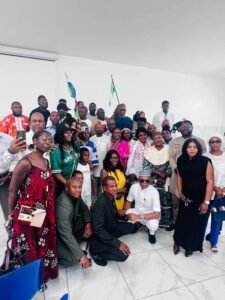
Stakeholders in the transport industry pose for picture after Transport Ministry Retreat

By Amin Kef (Ranger)

The Sierra Leone Civil Aviation Authority (SLCAA) has reaffirmed its critical role in national transport development by actively participating in the Ministry of Transport and Aviation (MTA) Annual Retreat held on 19–21 November 2025 in Bo. Convened under the theme : “Enhancing Quality Service Delivery in the Transport Sector,” the three-day retreat brought together all agencies supervised by the Ministry to harmonize priorities and chart a unified strategy for strengthening Sierra Leone’s transport ecosystem.

The retreat served as a platform for reviewing sector performance, identifying challenges and crafting policy actions aimed at delivering a modern, efficient and integrated transport system. The SLCAA delegation, led by its Director General, Madam Musayeroh Barrie, joined other key institutions in reaffirming their commitment to advancing the national transport agenda.

The opening session featured presentations that shaped the retreat’s discussions and highlighted the interconnectedness of transport development across sectors.

Urban Transport Planner , Ing. Georgette Greene delivered the first presentation on the Connectivity and Agricultural Market Infrastructure Project, emphasizing the importance of improved transport networks in driving agricultural productivity, enhancing market access and stimulating national development. She underscored that efficient transport systems are central to supporting rural communities, boosting trade and fostering inclusive growth.

The second presentation, Planning for Sustainable E-Mobility for All, delivered by the Director of Transport, Hindolo Shiaka. focused on the global shift toward sustainable mobility. He emphasized the need for all transport agencies, including the SLCAA, to integrate e-mobility strategies into their operations to promote environmental sustainability, reduce emissions and align with emerging global standards for green transport.

The retreat also highlighted the significant transformation taking place within Sierra Leone’s civil aviation sector under the dynamic leadership of Madam Musayeroh Barrie, the first female and youngest Director General in the Authority’s history and the youngest worldwide to lead a civil aviation authority.

Appointed in 2023 by His Excellency President Dr. Julius Maada Bio, Madam Musayeroh Barrie’s leadership marked a turning point for the aviation industry. Her appointment fulfilled the President’s pledge to ensure at least 30% female representation in leadership roles and set a new benchmark for youth inclusion and gender empowerment in national governance.

Since assuming office, Madam Musayeroh Barrie has implemented bold reforms aimed at modernizing the aviation sector, strengthening regulatory oversight, improving infrastructure and expanding Sierra Leone’s international aviation footprint. Her accomplishments have earned her recognition both locally and globally.

At the 42nd International Civil Aviation Organization (ICAO) Assembly in Montreal, she was appointed Vice-Chairperson of the Administrative Commission, significantly boosting Sierra Leone’s visibility and credibility within global aviation governance circles.

Under her leadership, the SLCAA has recorded several milestones, including:

  • The launch of the Freetown–London Gatwick direct flight on April 27, 2025; an achievement that restored Sierra Leone’s direct link to the United Kingdom and enhanced trade, tourism and diaspora connectivity.
  • An increase of over 5,000 additional passengers in 2024, reflecting renewed public confidence in aviation services.
  • Strategic collaboration with Overland Airways and Ethiopian Airlines, and accelerated progress in the revival of Air Sierra Leone.
  • The successful management of two consecutive Hajj operations, ensuring safe and efficient pilgrim travel.
  • Near completion of Sierra Leone’s first-ever Air Operator Certificate (AOC) for Air Sierra Leone, which has progressed to phase three of certification.
  • Signing of a landmark Management Services Agreement with ICAO, introducing technical cooperation, structured training and performance-based management systems.

SLCAA’s active participation in the Bo retreat signals its continued commitment to supporting the Ministry of Transport and Aviation, led by Ambassador Fanday Turay, in delivering high-quality, integrated transport services across the country. The Authority’s contributions to sector-wide deliberations demonstrate its resolve to ensure that aviation remains a key pillar of Sierra Leone’s economic growth and global engagement.

Sierra Leone’s ongoing modernization of its transport systems places the SLCAA at the forefront of innovation, safety and international cooperation; proving that under visionary leadership, the aviation industry is not only rising but soaring toward new heights.

UBA Sierra Leone Sets New Standard in Financial Safety With Week-Long Anti-Fraud Awareness Drive

UBA Executives displaying anti-fraud t-shirt

United Bank for Africa (UBA) Sierra Leone has reaffirmed its position as a regional leader in financial security with the official launch of its 2025 Annual Anti-Fraud Awareness Week on Monday, 17th November 2025. The campaign began with a symbolic and inspiring moment when the Country Chief Inspector, Emmanuel Adeloye, formally presented a Fraud Awareness T-shirt to the Managing Director and Chief Executive Officer, Mohamed Alhajie Samoura, signalling the Bank’s firm dedication to combating fraud and cybercrime.

Organized by the Bank’s Internal Audit and Control Departments, the week-long engagement brings together staff from all units and branches to deepen their understanding of current fraud trends, emerging cyber threats, and the need for continuous vigilance in an era of rapidly expanding digital finance.

This year’s theme, “Combating Fraud Risks and Cyber-Theft in Digital Banking,” highlights UBA Sierra Leone’s commitment to protecting the integrity of every financial transaction while safeguarding the trust placed in the Bank by customers across the nation.

MD/CEO Mohamed Alhajie Samoura, speaking at the opening ceremony, emphasized that the Bank’s anti-fraud strategy goes far beyond systems and software.

“At UBA Sierra Leone, we are not simply reinforcing systems; we are actively cultivating a corporate culture rooted in vigilance and integrity. Our foremost commitment is to deliver secure, seamless digital banking for every customer,” he affirmed.

During an interactive staff session, Country Chief Inspector Emmanuel Adeloye commended employees for their exceptional compliance and organizational discipline throughout the year. He proudly announced that UBA Sierra Leone has recorded zero fraud incidents in 2025, a milestone he described as a direct result of collective responsibility and strengthened internal controls.

The Anti-Fraud Awareness Week will feature a series of key activities, including training sessions, sensitization exercises, internal audits, digital security workshops, and compliance reminders—all aimed at building stronger institutional resilience against fraud.

UBA Sierra Leone continues to invest heavily in advanced digital security infrastructure, staff capacity development, and consumer education to maintain a secure financial ecosystem. The Bank underscores that its foremost responsibility remains the safety of its people, the protection of its customers, and the long-term integrity of Sierra Leone’s digital banking future.

By leading this nationwide conversation on fraud prevention, UBA Sierra Leone is not only safeguarding its operations but also helping to shape a stronger, safer, and more trustworthy financial sector for all Sierra Leoneans.

Staff of UBA

Parliament, Responding to Nationwide Outcry, Seeks New User-Friendly Data Bundle from Orange & Africell

Parliamentary Committee on Communication and Technology meets with moblie network operators regarding new user-friendly data bundle

By Amin Kef (Ranger)

Parliament has formally urged Orange Sierra Leone and Africell Sierra Leone to work closely with the National Telecommunications Authority (NatCA) to develop a new affordable, user-friendly data package that will replace the discontinued Le 60 (1MBPS) bundle. The directive followed a high-level public hearing held on Wednesday, 19th November 2025, in Committee Room No. 1, where lawmakers examined public concerns over the withdrawal of the popular data promotion and assessed broader challenges affecting mobile connectivity nationwide.

The session was jointly chaired by Honourable Boston Munda of the Parliamentary Committee on Communication and Technology and Honourable Ambrose Maada Lebby of the Parliamentary Transparency and Accountability Committee. The hearing brought together senior executives from both mobile operators, regulatory officials and civil society representatives for a comprehensive discussion on quality of service, affordability and operator obligations.

Africell Sierra Leone’s Chief Executive Officer, Shadi Gerjawi, delivered a detailed testimony explaining the company’s decision-making process. He stated that Africell has long played a leading role in expanding digital access in Sierra Leone, having pioneered unlimited data offerings and later introduced the Le 60 (1MBPS) promotion to broaden affordability. However, he explained that the promotional bundle generated extremely high usage levels that strained the network and posed sustainability challenges.

Shadi Gerjawi said Africell engaged NatCA for over a year on strategies such as fair-usage policies and revised promotional structures. During this period, the company continued to invest heavily in network upgrades, rural expansion and customer-care improvements. He further stated that, following the end of the promotion, Africell introduced new two-day and three-day Mbps bundles specifically designed to remain affordable for students, researchers and low-income users.

Orange Sierra Leone’s Chief Executive Officer, Sekou Amadou Bah, reiterated that the Le 60 bundle was a temporary promotional offer and not a regulated tariff. He confirmed that Orange remains committed to providing accessible data options but must balance affordability with long-term network stability.  Sekou Amadou Bah disclosed that Orange extensively informed the public about the promotion through 32 press releases and 37 radio stations nationwide, adding that the company would never introduce a tariff change without transparent public communication.

He also highlighted that increasing network usage, particularly following the rollout of new services, had caused congestion on Orange’s system. To address that, the company introduced its “unlimited midnight browsing for NLe5” initiative, designed to shift heavy traffic to off-peak hours and ease daytime congestion.
“We did not increase any tariffs,” Sekou Amadou Bah emphasized, a statement later supported by Honourable Suliaman Murray Conteh, Chairman of the Legislative Committee.

Civil Society representative Alphonso Manley also backed the operators’ explanations, noting that public misunderstanding was largely due to communication gaps rather than any deliberate increase in prices.

Director-General of NatCA, Amara Brewah, assured Parliament that both operators complied with regulatory guidelines and are cooperating with the authority to design an affordable and sustainable replacement package. He emphasized that consumer protection and operator viability must be maintained equally to promote Sierra Leone’s digital growth.

Officials from the Ministry of Communications, Technology and Innovation also commended the operators for continuous engagement with Government and highlighted their substantial investments in mobile penetration, infrastructure expansion and digital transformation nationwide.

Despite these reassurances, Members of Parliament raised concerns regarding persistent gaps in network reliability, service quality and customer support. Honourable Boston Munda said that Parliament would intensify oversight to ensure citizens receive value for money and that telecommunications services contribute effectively to national development, education and security.

Civil Society representative Alphonso Manley added that the telecommunications sector provides thousands of jobs, drives youth empowerment and generates significant tax revenue, making it essential to strike a balance between commercial viability and consumer rights.

At the end of the deliberations, Parliament issued four key resolutions:

  1. Orange and Africell must work directly with NatCA to design a new affordable data bundle to replace the phased-out Le 60 promotion.
  2. The new package must prioritize affordability for students, low-income users and rural populations.
  3. Operators must enhance transparency and communication on service improvements and tariff adjustments.
  4. The final proposal will undergo parliamentary review to ensure compliance with consumer-protection standards.

Parliament concluded by reaffirming its commitment to strengthening the telecommunications sector and expanding digital inclusion across the country. Lawmakers expressed confidence that, with the cooperation of Orange, Africell and NatCA, Sierra Leone is moving toward a more reliable, accessible and consumer-friendly digital future; one where affordability and quality remain central to national connectivity efforts.

As Bio’s Leadership Spotlighted… President Donald Trump Credits Sierra Leone in “Historic” UN Approval of Global Board of Peace

By Amin Kef (Ranger)

Sierra Leone has once again taken centre stage in global diplomacy as President Dr. Julius Maada Bio’s principled leadership on peace and security continues to earn widespread international recognition. Presiding over the United Nations Security Council, President Bio hailed the adoption of Resolution 2803 as a pivotal step toward ending the Gaza conflict and laying the foundation for long-term peace. Against that backdrop, Sierra Leone received prominent acknowledgment from President of the United States, Donald J. Trump, following the United Nations Security Council’s historic vote endorsing a new global Board of Peace, an initiative he will chair.

Adopted on Monday 17th November 2025 with 13 votes in favour and two abstentions from China and Russia, Resolution 2803 authorizes an International Stabilization Force (ISF) in Gaza and establishes a transitional Board of Peace. The plan supports demilitarization, reconstruction and a conditional path to Palestinian statehood, excluding Hamas, while expressly rejecting forced displacement and any long-term Israeli reoccupation.

Speaking at UN Headquarters shortly after the vote, President Bio said Sierra Leone “fully supports” the U.S.-drafted resolution, describing it as “the best path to end the violence and renew hope for a lasting peace.” He stressed that the impartial international force and apolitical governance board will be essential in “stabilizing Gaza, protecting civilians and creating an environment in which meaningful peace can take root.”

President Bio also commended President Donald J. Trump for “spearheading this bold peace initiative,” while praising Egypt, Qatar, and Türkiye for their sustained mediation efforts that secured the ceasefire and recent hostage releases. “Without the tireless efforts by the mediators, together with our collective advocacy in the Security Council, the hard-won ceasefire would not have been possible,” he said.
He urged all Member States to “stand on the side of principles with pragmatism, for peace, security and human dignity for the people of Gaza.”

It must be reiterated that this week, Sierra Leone also received prominent acknowledgment from President of the United States, Donald J. Trump, following the Security Council’s historic vote endorsing a new global Board of Peace, an initiative he will chair.

In a statement on his Truth Social platform on Monday 17 November 2025, President Trump hailed the endorsement as “one of the biggest approvals in the history of the United Nations.” He expressed gratitude to all Security Council members, including China, Russia, France, the United Kingdom, Algeria, Denmark, Greece, Guyana, South Korea, Pakistan, Panama, Sierra Leone, Slovenia and Somalia, for their decisive support.

He further extended appreciation to countries outside the Council that backed the initiative, including Qatar, Egypt, the United Arab Emirates, the Kingdom of Saudi Arabia, Indonesia, Türkiye and Jordan.

Sierra Leone’s inclusion among nations commended by the U.S. President underscores the country’s rising global stature under the leadership of President Bio. As an elected member of the Security Council, Sierra Leone has consistently demonstrated thoughtful, constructive and values-driven engagement on matters of peace, justice and multilateral cooperation.

President Trump’s message singled out Sierra Leone as one of the “distinguished countries” that played a critical role in securing the historic approval. The forthcoming Board of Peace is expected to bring together influential world leaders with a mandate to strengthen global stability and promote peaceful solutions; an agenda strongly aligned with President Bio’s foreign policy vision.

The international spotlight comes just as President Bio delivered one of the most powerful speeches of his presidency at the Security Council during a high-level debate on “Threats to International Peace and Security: Conflict-Related Food Insecurity.”

Addressing the Council for the second time in two years, he declared starvation a “crime” under international law, warning that hunger is increasingly weaponized in conflicts, from Gaza and Sudan to Ukraine, Haiti and the Sahel.

“Starvation is not collateral damage; it is a crime,” President Bio emphasized.
“No child should be starved into submission; no harvest held hostage; no community pushed to violence by hunger.”

He called for stronger enforcement mechanisms, protection of food systems, predictable humanitarian access and accountability for starvation-related war crimes.

President Bio highlighted Sierra Leone’s flagship Feed Salone Initiative as a model for linking food security with peacebuilding, economic resilience and community stability. The initiative’s four pillars, production, resilience, markets and value chains and human capital, are designed to reduce import dependency, strengthen productivity, empower women and youth and promote climate-smart agriculture.

As Chair of the ECOWAS Authority, he reaffirmed Africa’s stance as a solutions-driven continent.

“Africa is not here to be pitied for its challenges but to be partnered for its solutions,” he said.

The Security Council’s adoption of Resolution 2803, its endorsement of President Trump’s proposed Board of Peace and President Bio’s influential speeches collectively mark a defining diplomatic moment for Sierra Leone. The convergence highlights the nation’s rising moral voice and strategic relevance in shaping global peace and security.

As President Trump hinted at “many more exciting announcements” regarding the Board of Peace, Sierra Leone stands firmly positioned as a proactive partner bridging global divides and championing peace, justice and human dignity.

Under President Dr. Julius Maada Bio, Sierra Leone continues its ascent from a post-conflict nation to an international beacon of principled leadership.

NCRA Concludes Final National Validation of Draft Civil Registration and Identification Bill

By Alvin Lansana Kargbo

The National Civil Registration Authority (NCRA) on Monday, 17 November 2025, conducted the final national validation of the draft National Civil Registration and Identification Bill and its accompanying regulations. The event, held at the Sierra Palms Hotel in Aberdeen, followed months of extensive nationwide consultations aimed at modernizing Sierra Leone’s civil registration and identity management framework.

The draft National Civil Registration and Identification Act 2025 seeks to address gaps and conflicts in the 2016 legislation and integrate emerging requirements such as cybersecurity, digital identity, data protection and improved interoperability across Government systems. According to NCRA, the revised legal framework is intended to strengthen the country’s Civil Registration and Vital Statistics (CRVS) systems and ensure the availability of accurate, reliable population data for national planning, service delivery and identity verification.

Director General Mohamed Mubashir Massaquoi described the validation as a culmination of a reform process that began around 2020 and involved over 60 institutions drawn from Government Ministries, Departments and Agencies (MDAs), the private sector, civil society, development partners and parliamentary committees.

He recalled early support from the European Union, UNDP and the Irish Embassy during initial consultations and noted that although the bill and regulations were first validated in 2022, new global concerns, particularly cybersecurity, necessitated further review. UNICEF, he said, supported the second review phase despite global resource constraints.

Mohamed Mubashir Massaquoi emphasized that the NCRA actively sought parliamentary input, particularly from the Internal Affairs Committee and the Legislative Committee, whose detailed reviews helped identify and resolve potential legal and operational conflicts ahead of the bill’s submission to Cabinet and Parliament.

He expressed confidence that the revised bill is now comprehensive, inclusive and reflective of the country’s current and future civil registration and identity management needs. He thanked the Ministry of Internal Affairs, parliamentary committees, the Office of the Auditor General, the Judiciary, MDAs, the Sierra Leone Police, civil society, UNICEF and prior partners for their contributions.

Hon. Mamoud Kamara, representing the Parliamentary Committee on Internal Affairs, said stakeholders’ participation reflected a shared commitment to strengthening national identity management. He stated that the committee had been actively engaged with NCRA throughout the review process and was confident that the proposed legal framework would provide a solid foundation for protecting data integrity and enhancing national identity systems for generations.

He stressed the need for flawless legislation and urged alignment with the Constitution and strict enforceability across all registration offices nationwide. Hon. Mamoud Kamara maintained that the bill and regulations offer clear solutions to long-standing operational challenges and are crucial to preventing identity compromise and fraud.

Chairman of the Parliamentary Legislative Committee, Hon. Abdul S. Murray Conteh, said the revised bill is designed to modernize civil registration and identity management while improving the delivery of social services, national planning and statistical integrity. He highlighted challenges posed by overlapping institutional mandates and noted that the proposed bill focuses on uniformity, data integrity and efficient service delivery.

Hon. Abdul S. Murray Conteh said the validation marked the conclusion of extensive consultations involving experts and stakeholders. While acknowledging that no legislation is perfect, he assured participants that substantial work had been done to address gaps and minimize challenges during parliamentary deliberations.

Speaking on behalf of UNICEF, Child Protection Specialist, Madam Kebbie, emphasized the importance of aligning the legislation with human rights and child rights standards. She described birth registration as a foundational right that enables access to health, education and protection services.

She urged stakeholders to ensure robust inter-sectoral coordination across health, education, social protection and local councils, and stressed the need for a future-ready system capable of supporting digital identity, interoperability and strong data protection. UNICEF, she said, would continue supporting the Government through the drafting, validation and enactment phases.

Deputy Minister of Internal Affairs, David Fortune, who opened the session, said the 2016 Act had become increasingly inconsistent with emerging realities and other legal provisions. He underscored the need for a modern legal framework capable of guiding effective CRVS and identity management while resolving existing legislative conflicts.

David Fortune called for a meticulous validation focused on consistency, clarity and practicality, urging stakeholders to engage collaboratively to ensure a legally sound document ready for Cabinet and parliamentary consideration. He expressed confidence that the outcome would produce a future-proof bill that serves both citizens and non-citizens.

With the final validation now completed, NCRA is expected to incorporate the last set of stakeholder inputs before formally submitting the draft bill and regulations to the Cabinet. Once approved, the document will proceed to Parliament for debate and enactment.

The updated National Civil Registration and Identification framework is anticipated to strengthen Sierra Leone’s identity ecosystem, enhance data accuracy, support national development planning and modernize vital events registration across the country.

AWOL Trains Community Journalists in Masiaka to Strengthen Local Media and Policing

The All ‘Works’ of Life (AWOL) development organization has successfully wrapped up a two-day foundational media training for members of the Concern Koya Chiefdom Media Team and three officers of the Masiaka Police Division. The sessions, held on 15 and 16 November 2025 at the Ahmadiyya Secondary School in Masiaka, were facilitated by AWOL Chairman and Ex-Officio of the Sierra Leone Association of Journalists (SLAJ), Ahmed Sahid Nasralla, who volunteered his expertise under AWOL’s new “Giving Back to Society” initiative.

The training aimed to improve community journalism and strengthen communication between local authorities and residents. Participants received instruction in news writing, ethics, balanced reporting, interviewing techniques, community storytelling, advocacy and the responsible use of digital and social media tools.

Ahmed Sahid Nasralla said empowering grassroots journalists is central to community development.
“As AWOL, we believe development begins with empowered communities. By strengthening the skills of grassroots journalists, we help shine light on real issues in places like Masiaka and Koya Chiefdom. This is part of our commitment to give back; sharing our expertise so communities can tell their stories, hold duty bearers accountable and inspire positive change.”

The initiative was sponsored by Abdul Kabba Kargbo, popularly known as “Super,” Chairman of the Local Policing Partnership Board (LPPB) Masiaka Division and Chairman of Kaduna, AWOL’s highest decision-making body. He said supporting the programme reflects his commitment to youth advancement and community empowerment in Koya Chiefdom.

“Supporting this training is my way of helping the people of Koya Chiefdom,” Abdul Kabba Kargbo noted. “When our local reporters and police officers are better equipped to communicate, the entire community benefits. I am committed to sponsoring more media capacity-building programmes because an informed community is a stronger, safer and more united community.”

The training also provided a platform to discuss key challenges facing the chiefdom, including inadequate electricity supply, limited access to quality education, the absence of a community radio station and rising drug abuse among young people.

At the closing ceremony, participants received certificates of participation. The Local Unit Commander (LUC) of Masiaka Police Division, CSP John B. Koroma, was awarded a Special Certificate of Merit for his leadership in promoting police-community cooperation.

“This training has strengthened the bond between the police and the community we serve,” CSP John B. Koroma said. “Effective communication builds trust and trust enhances security. We appreciate AWOL and Abdul Kabba Kargbo for this support and we look forward to future collaborations that promote peace, accountability and development in Koya Chiefdom.”

Coordinator of the Concern Koya Chiefdom Media Team, Buya Koya Kamara, expressed gratitude to both AWOL and the sponsor.
“This training has equipped us to serve our community better. We are ready to highlight our challenges and work with stakeholders to find solutions. We feel empowered to report more responsibly and amplify the voices of our people.”

AWOL, a national civic and development organization, continues to complement Government’s nation-building efforts through philanthropy, volunteerism, community outreach, awards and capacity-building initiatives that promote unity, service and sustainable development across Sierra Leone.

Studies Reveal “Worrying” Trend of Emerging Viral Infections in Sierra Leone

By Kemo Cham

A series of new scientific studies conducted by a consortium of Sierra Leonean researchers has revealed a troubling rise in viral and infectious diseases across the country, including pathogens previously considered rare or undocumented in Sierra Leone.

The findings, presented during the first dissemination forum of Project 1808 at the Ministry of Health’s Emergency Operations Center, stem from nearly half a dozen studies by scientists from the University of Sierra Leone and the Center for Biomedical and One Health Research (CBOHR) at Koinadugu College, working alongside international partners.

Among the most concerning discoveries is the detection of syphilis in under-five children at the Ola During Children’s Hospital; an abnormal pattern that senior researchers say warrants urgent investigation.

Researchers also reported widespread presence of dengue virus in patients across major hospitals in Freetown and other regions. Despite Sierra Leone not being classified as a high-risk dengue country, samples from Connaught, Cottage, Rokupa and Choithram hospitals tested positive for the mosquito-borne virus.

Prof. Alhaji Umar N’jai, Principal Investigator and Founder of Project 1808, said the emergence of dengue is particularly dangerous because its symptoms can closely resemble Ebola and other haemorrhagic fevers. He warned that inadequate diagnosis increases the likelihood of misidentification.

Another startling discovery was Bacillus anthracis, the bacteria responsible for anthrax, in local samples. Researchers noted that its presence was unexpected, as it emerged during investigations unrelated to anthrax surveillance.

The research focused heavily on Acute Febrile Illness (AFI), a sudden onset fever condition linked to viruses, bacteria and parasites that cause illnesses like Lassa fever, malaria, and typhoid. According to Prof. Alhaji Umar N’jai, Sierra Leone lacks proper AFI diagnostic and mortality surveillance systems, leaving many deaths unreported or misclassified.

“One of the things we miss a lot is mortality surveillance. Some of the Lassa and Crimean-Congo Haemorrhagic Fever deaths, we are missing, even though we know the viruses are circulating,” he said.

Several of the studies were funded through international collaborations, including the Abbott Pandemic Defence Coalition (APDC), a global scientific partnership dedicated to detecting and mitigating pandemic threats. APDC funds three of the presented studies, including AFI mortality surveillance at Connaught Hospital and virus discovery work in tertiary hospitals.

Other studies received support from the West African Health Organization (WAHO), which is funding Hepatitis B genome profiling by PhD researcher Wachen Peters; the first such genomic study in Sierra Leone. Her work also includes investigating Hepatitis D, a co-infection that can worsen patient outcomes.

Another researcher, Esther Koroma, is studying the long-term health and quality-of-life impacts on Ebola survivors a decade after the 2014–2016 outbreak, in collaboration with universities in Tokyo and Wisconsin.

Prof. Alhaji Umar N’jai also presented groundbreaking work on wastewater genomic surveillance for Mpox (formerly Monkeypox), aiming to identify possible spillback transmission from humans to the environment and domestic animals a reverse trend to the typical wildlife-to-human spillover.

He also leads a multi-country study on strengthening genomic research capacity on arboviruses such as dengue, zika, chikungunya and Rift Valley fever, with scientists from Mali, Guinea, Liberia and Côte d’Ivoire.

Despite the scientific breakthroughs, researchers highlighted persistent challenges; including limited laboratory capacity, insufficient funding and infrastructure gaps that force local scientists to send samples abroad for next-generation sequencing.

“We have the potential, but we lack essential capacity,” said Prof. Haja Isata Wurie of COMAHS, urging young scientists to continue building strong research collaborations.

Dr. Gebrekrstos Negash Gebru, Head of AFENET Sierra Leone, emphasized the need to translate findings into clinical practice and public health policies.

Prof. Alhaji Umar N’jai stressed that while international partnerships have helped equip laboratories and support Master’s and PhD training, more domestic commitment is needed to retain emerging scientists.

“I think training this young group of scientists is the future,” he said. “We want them to appreciate research, appreciate science and see that they are part of discovering things around them.”

As Sierra Leone battles recurrent infectious disease threats, the latest findings underscore the urgent need for stronger surveillance, investment in laboratory capacity and evidence-driven policy actions to protect public health.

Justice Sellu-Tucker: “Court Will Not Tolerate Kush” — Offender Sentenced to 15 Years

Hon. Justice Isata Susan Sellu-Tucker

Hon. Justice Isata Susan Sellu-Tucker of the High Court has sentenced 32-year-old driver, Santigie Bangura of No. 48 Kamanda Farm, to fifteen years’ imprisonment for the unlawful possession of 30.5 grams of Kush. The judgment was delivered on Friday, 14th November 2025, at Court No. 5 of the Main Law Courts Building in Freetown.

Santigie Bangura was arraigned on a one-count indictment in violation of Section 8(a) of the National Drugs Control Act No. 10 of 2008. According to the particulars of offence, he was found in possession of the prohibited synthetic drug on 5th June 2024 in Freetown without lawful authority.

Upon his arraignment, the accused pleaded guilty and appealed for leniency, a move which the Court acknowledged as not wasting judicial time. However, Hon. Justice Isata Susan Sellu-Tucker emphasized that the increasing prevalence of Kush, now considered a national health emergency, requires strong deterrent measures.

She noted that the widespread consumption of the synthetic substance is destroying lives, especially among young people and exerting unbearable strain on communities, health facilities and law-enforcement institutions.

“Despite the guilty plea, the Court cannot overlook the serious threat posed by the proliferation of Kush,” Hon. Justice Isata Susan Sellu-Tucker stated before handing down her verdict. She sentenced Santigie Bangura to fifteen years in the Pademba Road Male Correctional Centre and ordered the immediate destruction of the confiscated substance.

Hon. Justice Isata Susan Sellu-Tucker further warned the convict to desist from drug use upon completion of his sentence, reaffirming the Judiciary’s uncompromising resolve to clamp down on the deadly drug trade.

The ruling signals a stronger judicial approach as Sierra Leone intensifies efforts to curb the escalating Kush crisis nationwide.

CSO Consortium Demands Immediate Reinstatement of Justice Momoh Jah Stevens

Hon. Justice Momoh Jah Stevens

By Alvin Lansana Kargbo

The National Consortium of Civil Society Organisations on Public Accountability has issued a strong call for the immediate reinstatement of High Court Judge, Hon. Justice Momoh Jah Stevens, describing the allegations made against him by Ms. Edwina Jamiru as malicious, factually inaccurate and orchestrated.

Justice Momoh Jah Stevens was suspended pending investigations after Ms. Jamiru, mother of his child, accused him of professional misconduct. However, the Consortium’s independent findings reveal significant inconsistencies that cast serious doubt on the credibility of her claims.

According to the Consortium’s report, Ms. Edwina Jamiru’s assertion that Justice Momoh Jah Stevens was her lecturer at Fourah Bay College (FBC) was proven to be false. Evidence gathered indicates that the Judge met her in October 2023, weeks before she commenced a diploma programme at FBC; a course Justice Momoh Jah Stevens has never taught, as he only lectures substantive law courses. The Consortium concluded that no lecturer-student relationship ever existed.

Further investigations unearthed what the report described as a pattern in Ms. Edwina Jamiru’s behaviour, with references to previous unsubstantiated allegations made against other individuals and entities. These past episodes, the Consortium noted, raise serious concerns regarding her credibility and motives.

The NCCPA also found that Justice Momoh Jah Stevens acted responsibly when informed of her pregnancy, requesting a DNA test, complying fully with court directives and maintaining a high level of professionalism. Despite this, Ms. Jamiru continued to make public comments even after being cautioned by the presiding Judge overseeing the matter.

In a separate analysis of her recent statements, the Consortium noted contradictions that directly undermine her narrative. For example, she claimed she was underage during the relationship, yet publicly stated she voted in the 2018 elections; an inconsistency that has further eroded confidence in her claims.

The Consortium suggested the possibility of “shadowy figures” influencing Ms. Edwina Jamiru’s actions, alleging an orchestration aimed at tarnishing the reputation of a respected judicial officer who has served Fourah Bay College for four years with an unblemished record. It warned that the issue appears to have escalated from a private dispute into a deliberate smear campaign.

The NCCPA stressed that no new evidence, no legal basis and no consistent testimony support the allegations against Justice Momoh Jah Stevens. It described the suspension as deeply concerning and called for the restoration of fairness and due process.

Key Demands of the CSO Consortium

  1. Immediate and unconditional reinstatement of Hon. Justice Momoh Jah Stevens.
  2. A public apology from Ms. Edwina Jamiru for what it described as unfounded and defamatory allegations.
  3. A full investigation into parties allegedly coordinating the smear campaign.
  4. A court order restricting Ms. Edwina Jamiru from making further public statements on the matter.
  5. A public statement from the Judiciary affirming Justice Momoh Jah Stevens’ integrity and professional standing.

The Consortium concluded by reaffirming its commitment to protecting the rights, reputations and dignity of individuals unfairly targeted by false allegations, warning that such actions undermine justice and public trust.

With multiple inconsistencies now exposed, the Consortium maintains that the allegations are losing credibility by the day. It insists that it is time to restore the Judge’s dignity and for the Judiciary to act.

Reinstate Justice Momoh Jah Stevens,” the statement concluded.

Why First Lady Fatima Maada Bio Must Be Dame Commander In King Charles I11’s 2026 Honours List?

First Lady Fatima Maada Bio

By Tony Morgan

As the world prepared to observe the inaugural November 18 World Day for the Prevention of and Healing from Child Sexual Exploitation, Abuse and Violence, calls were intensifying for Sierra Leone’s First Lady, Her Excellency Dr. Fatima Maada Bio, to be awarded the prestigious title of Dame Commander of the Order of the British Empire (DBE) in King Charles III’s 2026 New Year Honours List.

Advocates say the proposed honour is not a matter of courtesy, but a recognition of the First Lady’s extraordinary global impact and her unmatched leadership in the fight against child sexual exploitation and gender-based violence.

On 18 November 2022, Dr. Fatima Maada Bio achieved a groundbreaking milestone at the United Nations General Assembly when she authored and introduced Resolution A/RES/77/18, leading to the establishment of November 18 as the World Day for the Prevention of and Healing from Child Sexual Exploitation, Abuse and Violence.

The resolution, reaffirmed in 2024 as A/RES/79/138, marked the first time in history that an African First Lady initiated and secured a dedicated global UN observance. Today, 193 nations commemorate the day annually, making it a permanent international instrument for the protection of children and survivors worldwide.

Observers say this singular achievement alone represents the “exceptional service of the highest order” traditionally associated with DBE recipients.

Beyond the international stage, Dr. Fatima Bio has helped shape a new era of child protection and gender justice in Sierra Leone and across the continent.

Key milestones include:

  • Hands Off Our Girls (2018): A nationwide campaign that helped influence a National Emergency on Rape and Sexual Violence, strengthened legal protections and empowered thousands of girls.
  • UN Education Plus Champion (2021): Advocacy that expanded access to dignity kits, protection and education support for vulnerable schoolgirls.
  • Landmark National Child Marriage Ban (2024): A policy shift hailed by UNICEF as “Africa’s gold standard” in safeguarding girls’ rights.
  • Leadership in OAFLAD: As President of the Organisation of African First Ladies for Development, she unified 54 African First Ladies in coordinated action against gender-based violence.

Her work has earned her global accolades including the AEMA Black Prize (2025), GAB Global Icon Award and honorary doctorates; yet supporters argue that none match the symbolic and imperial stature of the DBE.

The UK’s DBE honour recognizes individuals who have demonstrated sustained, monumental service with global reach. Advocates say Dr. Fatima Bio exemplifies:

  • Global policy influence — drafting a UN resolution now upheld by all member states.
  • Transformational personal leadership — converting lived trauma into a global movement of healing.
  • Commonwealth relevance — projecting Sierra Leone as a global leader in child protection and ethical governance.

They contend that her impact not only rivals but surpasses that of past DBE recipients whose work reshaped society in sports, arts, public service and global advocacy.

As November 18 continues to inspire global reflection and action, campaigners argue that Dr. Fatima Maada Bio’s achievements have elevated her to a distinguished class of world leaders whose contributions merit imperial recognition.

Supporters insist that granting her the title of Dame Commander in 2026 would be a fitting tribute to a woman whose advocacy has protected millions of children and reignited worldwide conversations on justice, healing and survivor dignity.

They envision the moment when she stands at Windsor, honoured not only as Sierra Leone’s First Lady, but as a global guardian of vulnerable children and a moral force across the Commonwealth.

Tony Morgan is the Head of Strategy and Communication in the Office of the First Lady of Sierra Leone.