Home Blog Page 7

Pee Cee & Sons Ltd Issues Public Scam Alert, Disowns Fraudulent Online Promotion

By Amin Kef (Ranger)

Pee Cee & Sons Ltd has on January 19, 2026 issued an official public notice distancing itself from a fraudulent online message circulating on social media platforms, particularly WhatsApp, falsely claiming that individuals can receive money using the company’s name.

In a statement released by its Management on Tuesday, the company categorically denied any involvement in the promotion, describing the circulating message as “false and fraudulent.”

The notice clarified that Pee Cee & Sons Ltd does not conduct promotions, giveaways or financial reward schemes through WhatsApp links or unfamiliar websites. Management warned members of the public to exercise caution and avoid clicking on suspicious links or sharing personal information with unknown sources.

“We do not run promotions or giveaways through WhatsApp links or unknown websites,” the statement emphasized. “Please do not click on any links or share personal information. We urge the public to report the message on WhatsApp and delete it immediately.”

The company further stated that it will not be held liable for any losses incurred as a result of the scam.

The Management’s alert comes amid a rise in online impersonation schemes targeting reputable businesses in Sierra Leone. Cybercriminals often exploit the names and brands of established companies to deceive unsuspecting members of the public into disclosing sensitive personal or financial information.

Pee Cee & Sons Ltd, a longstanding importer, distributor and wholesaler established in 1965, reiterated its commitment to transparency and responsible corporate conduct. The company is encouraging customers and partners to verify any promotional information through its official communication channels.

Authorities have consistently advised the public to remain vigilant against online scams and to report suspicious activities to relevant platforms and law enforcement agencies.

Members of the public are urged to treat unsolicited financial offers with caution and to confirm the authenticity of any promotion directly with the company involved before taking action.

UNICEF, British High Commission Delegation Engages NCRA DG on Identity Verification and Data Access

UNICEF, British High Commission Delegation Engages NCRA DG on Identity Verification

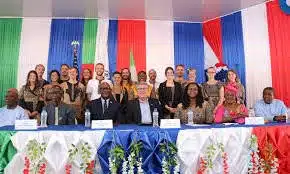
In a strong demonstration of international confidence in Sierra Leone’s civil registration and identity management systems, the Director General of the National Civil Registration Authority (NCRA), Mohamed Mubashir Massaquoi, on Thursday 19th February 2026, hosted two high-level delegations from UNICEF and the British High Commission’s Home Office International Operations.

The back-to-back engagements underscored growing global support for Sierra Leone’s ongoing reforms in Civil Registration and Vital Statistics (CRVS), as well as renewed commitment to ensuring legal identity for all citizens.

The first meeting saw the newly appointed UNICEF Chief Child Protection Officer, Patrick Halton, pay a courtesy visit to the NCRA Director General. Marking his first official assignment in West Africa, Patrick Halton expressed strong enthusiasm for deepening collaboration with the Authority, particularly in accelerating birth registration and strengthening child protection systems through secure legal identity frameworks.

He commended Mohamed Mubashir Massaquoi for his leadership role in advancing CRVS systems across the continent, describing him as a “chief champion” of civil registration reforms in Africa. Patrick Halton reaffirmed UNICEF’s commitment to supporting initiatives that safeguard children’s rights through comprehensive and accessible birth certification processes.

In response, the NCRA Director General acknowledged UNICEF’s longstanding partnership and pivotal contributions to strengthening Sierra Leone’s civil registration systems. He highlighted UNICEF’s support for the recent nationwide birth certificate campaign launched in November and ongoing legislative review efforts aimed at addressing historical overlaps and institutional conflicts among agencies performing related functions.

Discussions between the two sides focused on key priority areas for enhanced cooperation, including sustained resource mobilization, continuation of mass birth registration drives, targeted public awareness campaigns and capacity building within relevant institutions. Both parties agreed that expanding access to birth registration remains essential to protecting children’s rights and ensuring their access to education, healthcare and social protection services.

Later that same day, a delegation from the British High Commission’s Home Office International Operations engaged the NCRA Director General in discussions aimed at strengthening collaboration on identity verification processes.

The talks centred on the secure and responsible verification of birth, marriage and national identity records; processes that are critical for migration management, consular services and broader governance objectives. Both sides explored mechanisms for granting controlled access to NCRA data for authorized applicants, while placing utmost emphasis on safeguarding citizens’ data privacy and protection.

The engagement reflected a shared commitment to building robust and trustworthy identity systems that balance operational efficiency with the highest standards of data security and personal privacy.

Observers note that those high-level visits signal increasing international confidence in Sierra Leone’s civil registration reforms and the NCRA’s central role in delivering reliable legal identity services. The strengthened bilateral and multilateral partnerships are expected to support the country’s drive toward universal birth registration, enhanced child protection and inclusive identity management systems that align with both national development priorities and international best practices.

Welcoming both delegations, Mohamed Mubashir Massaquoi reiterated that reliable civil registration remains foundational to good governance, social protection, economic inclusion and the full realization of citizens’ fundamental rights.

He emphasized that the NCRA remains committed to transparency, institutional collaboration and continuous reform to ensure that every Sierra Leonean is legally recognized and protected under the law.

Award-Winning Journalist Amin Kef Honoured at SLURC’s 10th Anniversary Celebration

By Foday Moriba Conteh

Award-winning investigative journalist and Managing Editor of The Calabash Newspaper, Amin Kef Sesay, popularly known as “Ranger,” has been honoured for his outstanding contribution to public-interest journalism at the 10th anniversary celebration of the Sierra Leone Urban Research Centre (SLURC).

The event, held on Monday, February 16, 2026, at the New Brookfields Hotel in Freetown, brought together Government officials, academic institutions, Civil Society actors, development partners and members of the media under the theme: “A Decade of Urban Knowledge and Transformation.” The ceremony celebrated SLURC’s decade-long commitment to evidence-based research and inclusive urban development across Sierra Leone.

During the recognition segment for Media Partners, Amin Kef Sesay was invited to the stage to receive a plaque in acknowledgement of his role in amplifying research findings and community voices in national discourse. The citation described him as a journalist whose work consistently brings “evidence and community perspectives into the national conversation on inclusive urban development.”

The plaque was presented by SLURC’s Director of Research and Training, Braima Koroma, who underscored the importance of responsible journalism in translating research into public understanding and policy engagement.

As Proprietor and Managing Editor of The Calabash Newspaper, Amin Kef Sesay has built a reputation for balanced, investigative and development-oriented reporting. His editorial focus spans governance, legal reforms, public policy and Sierra Leone’s engagement in international affairs. Through his platform, he has continuously championed issues affecting marginalized communities, ensuring that urban development discussions reflect grassroots realities.

Amin Kef Sesay’s recognition at SLURC’s anniversary adds to his growing list of professional achievements. In July 2025, he was awarded the Outstanding Dedicated Service Award by the Sierra Leone Association of Journalists (SLAJ) for his selfless service to the Association between 2019 and 2025. The honour recognized his commitment to strengthening the media landscape in Sierra Leone.

In addition to his journalistic accomplishments, Amin Kef Sesay has demonstrated exceptional leadership in corporate communications. He was named “Manager of the Year 2025” at Africell Sierra Leone, reflecting his professionalism and strategic media management skills. Earlier in 2026, he participated in an international media exchange programme in India in partnership with SLAJ, where he engaged in discussions on development policy and media practice.

Speaking briefly after receiving the award, Amin Kef Sesay expressed appreciation to SLURC for the recognition and reaffirmed his commitment to journalism that serves the public interest. He emphasized the importance of evidence-based reporting in promoting inclusive urban growth and strengthening democratic accountability.

The SLURC anniversary also honoured community organizations, academic collaborators, Government partners, advisors, staff members and founders who have contributed to the Centre’s growth since its establishment in 2015.

While Sierra Leone navigates rapid urbanization and escalating climate-related challenges, the recognition of Amin Kef Sesay underscores the indispensable role of the media in connecting research, public policy and the lived realities of citizens. His award serves as a powerful testament to the enduring impact of responsible journalism in driving national development and shaping informed public discourse.

RSLAF’s Brig. K.F. Kanu Rises Through the Ranks with Record of Service, Reform and Integrity

Brigadier General K.F. Kanu

Brigadier General K.F. Kanu, the current Assistant Chief of Defence Staff for Training, Doctrine and Education of the Republic of Sierra Leone Armed Forces (RSLAF), has built a career distinguished by professional excellence, steady leadership and resilience in the face of challenges.

From his commissioning as a Second Lieutenant to his elevation to the rank of Brigadier General, K.F. Kanu has served in a range of critical command and staff appointments across the armed forces. One of his early landmark roles was as Commanding Officer of the Military Police Regiment while holding the rank of Captain. His performance in that position earned him successive promotions to Major and later Lieutenant Colonel, culminating in his appointment as Provost Marshal.

He was subsequently deployed to mainstream infantry duties as Commanding Officer of the 2 Infantry Battalion in the Eastern Region, then regarded as a politically sensitive area. During his tenure, he was widely commended for his professionalism and impartial conduct, earning respect from military colleagues and civilian stakeholders alike.

An alumnus of Njala University, Brigadier General K.F. Kanu also contributed to academia during his posting in Kenema. While serving as Commanding Officer, he offered voluntary part-time lectures at the university’s Faculty of International Relations, reflecting a commitment to mentorship and intellectual development within the broader national community.

Following the completion of his battalion command, he undertook an international peacekeeping assignment, where he served with distinction as Senior Military Police Adviser to a United Nations Force Commander and as Sierra Leone’s Senior National Representative in a major mission. His performance abroad further strengthened his professional profile and contributed to his promotion to Colonel.

Upon his return to Sierra Leone, he played a pivotal role in the development of a newly established brigade, serving as Chief of Staff during the 2023 general elections. In that capacity, he was involved in overseeing operational coordination during a critical period for national security.

Brigadier General K.F.Kanu later served as Director of Logistics at the Ministry of Defence and subsequently as Acting Assistant Chief of Defence Staff for Equipment Support. During the initial phase of the Armed Forces’ tri-service transition reforms, he was appointed Training, Education and Doctrine Commander (TRADOC). Under his leadership, the formation secured victory in the RSLAF inter-service drill competition just weeks after his appointment.

At one stage in his career, Brigadier General K.F. Kanu faced serious allegations. The matter was investigated by the military authorities, the Sierra Leone Police and the Office of the Director of Public Prosecutions (DPP). According to official findings, he was cleared of the allegations following the investigations.

Today, as Assistant Chief of Defence Staff for Training, Doctrine and Education, Brigadier General K.F. Kanu continues to focus on strengthening professional standards, operational readiness and institutional development within the Armed Forces.


Observers note that his career trajectory reflects a blend of operational command, strategic leadership and commitment to national service, underscoring the evolving professionalism within Sierra Leone’s military establishment.

Police Debunk Social Media Claims of Fatal Shooting at Songo Toll Gate

The Masiaka Division of the Sierra Leone Police has dismissed reports circulating on social media alleging that personnel of the Republic of Sierra Leone Armed Forces (RSLAF) shot two civilians at the Songo Toll Gate in Makoloh, killing one and leaving another hospitalized.

In a detailed security update, the Local Unit Commander (LUC) of Masiaka Division confirmed that a fact-finding operation was launched following the viral claims. According to police findings, there was no evidence of any gunshot incident resulting in injury or death within the Makoloh community.

Community stakeholders, including the Headman of Makoloh, told investigators that no such incident had been reported in the area. Police further confirmed that no victim or relative had filed any complaint regarding gunshot wounds at the Masiaka Police Station.

Investigations revealed that the misinformation stemmed from an earlier incident involving two youths from Makoloh, identified as Daniel Sesay and Abass Sesay. The pair were invited for questioning on Wednesday, February 11, 2026 and provided statements clarifying the circumstances.

According to their account, in the early hours of Monday, February 9, 2026, between 3:00 a.m. and 4:00 a.m., they were onboard a Howo truck attempting to bypass the Songo Toll Gate by using the old Makoloh road. They stated that the vehicle was confronted by an RSLAF personnel. Upon the vehicle stopping, the two youths panicked, jumped out of the truck and fled.

Police say the youths admitted that contrary to claims circulating online, they were not shot. One of them, Daniel Sesay, sustained a minor injury to his left arm while escaping from the moving vehicle.

The Masiaka Division also referenced previous concerns raised by CRSG Management, the authority responsible for toll gate operations, regarding the unauthorized use of the old Makoloh road as an alternative route. Reports had indicated that some youths were allegedly collecting money from truck drivers for personal benefit. Police engagement with community stakeholders led to the closure of the route, a move that reportedly faced resistance from some youths.

As part of the inquiry, the LUC questioned Staff Sergeant Sankoh, who commands four RSLAF personnel deployed at the Songo Toll Gate. He confirmed that the team is issued three AK-47 rifles with 30 rounds of ammunition each. According to him, a check conducted by military authorities found that no ammunition was missing.

Police have urged members of the public to remain calm and avoid spreading unverified information. Anyone with credible information relating to the matter has been encouraged to contact 078155481 or 030272724.

Investigations into the incident remain ongoing.

Shaping a Human-Centric Future for AI – AI Impact Summit 2026

By Narendra Modi Prime Minister of India

At a defining moment in human history, the world gathered at the AI Impact Summit 2026 in New Delhi. For us in India, it was a moment of immense pride and joy to welcome Heads of State, Heads of Government, delegates and innovators from across the world.

India brings scale and energy to everything it does and this Summit was no exception. Representatives from over 100 nations came together. Innovators showcased cutting-edge AI products and services. Thousands of young people could be seen in the exhibition halls, asking questions and imagining possibilities. Their curiosity made this the largest and most democratized AI summit in the world. I see this as an important moment in India’s development journey, because a mass movement for AI innovation and adoption has truly taken off.

Human history has witnessed many technological shifts that changed the course of civilization. Artificial Intelligence belongs in the same league as fire, writing, electricity and the internet. But with AI, changes that once took decades can unfold within weeks and impact the entire planet.

AI is making machines intelligent, but it is even more a force multiplier for human intent. Making AI human-centric instead of machine-centric is vital. At this Summit, we placed human well-being at the heart of the global AI conversation, with the principle of ‘Sarvajana Hitaya, Sarvajana Sukhaya’ (Welfare for All, Happiness of All).

I have always believed that technology must serve people, not the other way around. Whether it is digital payments through UPI or COVID vaccination, we have ensured that Digital Public Infrastructure reaches everyone, leaving none behind. I could see the same spirit in the Summit, in the work of our innovators in domains like agriculture, security, assistance for Divyangjan and tools for multilingual populations.

There are already examples of the empowering potential of AI in India. Recently, ‘Sarlaben’, an AI powered digital assistant launched by Indian dairy cooperative AMUL, is providing real-time guidance to 3.6 million dairy farmers, mostly women, about cattle health and productivity in their own language. Similarly, an AI-based platform called Bharat VISTAAR gives multilingual inputs to farmers, empowering them with information about everything from weather to market prices.

Humans must never become mere data points or raw material for machines. Instead, AI must become a tool for global good, opening new doors of progress for the Global South. To translate this vision into action, India presented the MANAV framework for human-centric AI governance.

M – Moral and Ethical Systems: AI should be based on ethical guidelines.

A – Accountable Governance: Transparent rules and robust oversight.

N – National Sovereignty: Respect for national rights over data.

A – Accessible and Inclusive: AI should not be a monopoly.

V – Valid and Legitimate: AI must adhere to laws and be verifiable.

MANAV, which means ‘human’, offers principles that anchor AI in human values in the 21stcentury.

Trust is the foundation upon which AI’s future rests. As generative systems flood the world with content, democratic societies face risks from deepfakes and disinformation. Just as food carries nutrition labels, digital content must carry authenticity labels. I urge the global community to come together to create shared standards for watermarking and source verification. India has already taken a step in this direction by legally requiring clear labelling of synthetically generated content.

The welfare of our children is a matter close to our hearts. AI systems must be built with safeguards that encourage responsible, family-guided engagement, reflecting the same care we bring to education systems worldwide.

Technology yields its greatest benefit when shared, rather than guarded as a strategic asset. Open platforms can help millions of youth contribute to making technology safer and more human-centric. This collective intelligence is humanity’s greatest strength. AI must evolve as a global common good.

We are entering an era where humans and intelligent systems will co-create, co-work and co-evolve. Entirely new professions will emerge. When the internet began, no one could imagine the possibilities. It ended up creating a huge number of new opportunities and so will AI.

I am confident that our empowered youth will be the true drivers of the AI age. We are encouraging skilling, reskilling and lifelong learning by running some of the largest and most diverse skilling programmes in the world.

India is home to one of the world’s largest youth populations and technology talent. With our energy capacity and policy clarity, we are uniquely positioned to harness AI’s full potential. At this Summit, I was proud to see Indian companies launch indigenous AI models and applications, reflecting the technological depth of our young innovation community.

To fuel the growth of our AI ecosystem, we are building a robust infrastructure foundation. Under the India AI Mission, we have deployed thousands of GPUs and are set to deploy more soon. By accessing world-class computing power at highly affordable rates, even the smallest startups can become global players. Further, we have established a national AI Repository, democratizing access to datasets and AI models. From semiconductors and data infrastructure to vibrant startups and applied research, we are focusing on the complete value chain.

India’s diversity, democracy and demographic dynamism provide the right atmosphere for inclusive innovation. Solutions that succeed in India can serve humanity everywhere. That is why our invitation to the world is: Design and develop in India. Deliver to the world. Deliver to humanity.

Lydia Amputee Foundation Launched to Promote Dignity, Skills Development and Inclusion for Amputees

Chief Executive Officer Lydia Amputee Foundation , Lydia Gray

By Alvin Lansana Kargbo

Lydia Amputee Foundation was officially launched on Tuesday February 17th, 2026 at the Freetown City Council Hall, marking a new initiative aimed at equipping amputees with skills, resources and psychosocial support to facilitate their reintegration into society and promote independence and dignity

The Foundation’s stated objectives include partnering with medical professionals, educators, clinical directors and disability advocates to advance prosthetics development, serve as a reliable resource for emerging prosthetic technologies and products, and contribute knowledge to prosthetic engineering. It also seeks to mobilize funding, technical expertise and institutional partnerships to improve the livelihoods of amputees across Sierra Leone.

Speaking at the launch, the Chief Executive Officer, Lydia Gray, described the event as the formalization of years of informal support to amputees and a milestone for innovation in disability support services. She said her engagement with amputees began while she was living in the United States, where she provided assistance to individuals on an ad hoc basis. Persistent requests from beneficiaries in Sierra Leone, she noted, prompted her to establish a structured organization to address the growing needs.

Lydia Gray disclosed that between 2020 and 2022 she provided personal financial support to individuals requiring medical treatment, basic necessities and livelihood assistance. Some beneficiaries attended the launch, underscoring the Foundation’s early impact.

The Chief Executive Officer identified common causes of limb loss among target beneficiaries, including road and motorcycle accidents, complications from conditions such as diabetes and sepsis, and injuries linked to past conflicts. She also shared her personal experience of losing her hand in a machine-related workplace accident approximately six years ago, noting that amputation was medically necessary to prevent life-threatening complications. According to her, the post-amputation period often involves psychological trauma, stigma, identity challenges and economic hardship, underscoring the need for comprehensive support systems.

The CEO emphasized that the Foundation’s launch represented the beginning of a long-term process of institutional growth and partnership development. She called for collaboration with Government agencies, private sector actors, development partners and civil society organizations to expand the Foundation’s reach and sustainability. The Chief Executive Officer said the organization aims to restore dignity, provide practical assistance and create economic and educational opportunities for amputees.

She reiterated that the Foundation stands for independence, hope and called on communities to replace stigma with inclusion and respect for persons living with disabilities. She said the Foundation’s programmes would prioritize safety, health, dignity and vulnerable groups, including children. Lydia Gray pledged accountability and transparency in the use of funds and invited public oversight to ensure that resources are directed solely toward programme implementation. She urged stakeholders to contribute to the initiative, emphasizing collective responsibility under the principle of “each one helping one.”

Delivering the keynote address, Albert Manley Mustapha, Public Relations Officer of the Single Leg Amputee Sport Association, criticized what he described as the persistent exclusion of persons with disabilities from decision-making and economic opportunities despite public commitments to inclusivity. He urged authorities and stakeholders to translate policy commitments into tangible participation and access.

Albert Manley Mustapha said persons with disabilities are capable contributors to society and should not be viewed as objects of pity. He called for changes in societal perceptions and encouraged amputees and other persons with disabilities to support one another through skills development, entrepreneurship and education. He stressed that empowerment, rather than charity, is critical to restoring dignity and building resilience.

Albert Manley Mustapha called on families, communities and institutions to provide sustained support and inclusion, arguing that people with disabilities can achieve comparable outcomes when given equal opportunities. He also appealed for financial, material and technical support from the private sector, international partners and Government to ensure the sustainability of the Foundation’s programmes. He noted plans for structured support initiatives designed to improve services and quality of life for amputees and other persons with disabilities.

The event concluded with a call for collective action under the theme: “Validation and Time for Transformation,” emphasizing the need for coordinated efforts to make inclusion a practical reality for people with disabilities in Sierra Leone.

Caritas Freetown Completes Two-Day Training on GBV Prevention in Western Rural Area

Caritas Freetown Completes Two-Day Training on GBV Prevention in Western Rural Area

By Ibrahim Sesay 

Caritas Freetown has completed a two-day training aimed at strengthening efforts to prevent Sexual and Gender-Based Violence (SGBV) in schools and communities across the Western Rural Area.

The training, held on February 16 and 17 at the Twin Hall in Hastings, brought together 100 Advocacy School Club members and 10 focal teachers from 10 schools. The initiative is part of a project sponsored by Manos Unidas and focuses on understanding SGBV, referral pathways, gender laws and sensitization skills.

Providing an overview of the project, Project Lead, Kumba Emmanuella Gando, said the intervention is being implemented in 10 targeted rural communities and 10 schools. She noted that the project seeks to address SGBV issues both in communities and within school environments by promoting behavioral and attitudinal change.

“We are focusing on how to address sexual and gender-based violence issues in communities as well as in schools,” she said. “You will be the ambassadors for your school. That’s why you are called Advocacy School Clubs, advocating to your colleagues.”

Kumba Emmanuella Gando encouraged participants to speak up against abuse and report incidents through the appropriate channels. She stressed that silence makes it difficult for authorities and focal teachers to intervene.

During her presentation, Alice Johnson Bah explained the Sexual Offenses Act and Child Rights Act of Sierra Leone highlighting the various types of sexual offenses and punishments attached.

Concluding her presentation, Alice Johnson Bah urged participants to speak up against sexual abuse and report it.

‎”Know your right. Respect your self. Protect your future by speaking up today of any abuse,” she added.

Participants described the training as impactful and empowering. Hassan Sesay of Pathway Academy Secondary School said the training built on previous knowledge he had gained through child protection programs.

“This training has added to my existing knowledge. With this knowledge, I will serve as an advocate and strengthen behavioral change within my school and community,” he said.

Isatu Kanu of Anthem of Africa Academy said the sessions deepened her understanding of the different forms of SGBV and the relevant laws.

“This training has helped me to learn about the various types of SGBV and the laws,” she said, adding that her parents have always encouraged her to report any incident of abuse.

Also speaking, Mohammed Ali Kanu, Principal of Anthem of Africa Academy, said school authorities conduct preliminary fact-finding whenever SGBV cases are reported to ensure fairness before escalating matters to the relevant authorities for proper investigation.

“One major challenge we encounter in the fight against SGBV, especially in Western Area Rural, is poverty,” he noted. “Victims mostly come from deprived homes and the perpetrators are most times their benefactors. Speaking up becomes a serious challenge.”

He commended Caritas Freetown for the initiative stating that the knowledge gained would help schools develop improved strategies for handling SGBV cases.

The training forms part of broader efforts to promote access to justice and improve the wellbeing of vulnerable women and girls in the Western Area. Participants are expected to conduct awareness-raising activities in their respective schools as peer advocates against SGBV.

President Bio Announces 25% Salary Increase for RSLAF, Launches National Defence Policy and Strategy

President Brigadier (Rtd.) Julius Maada Bio, Commander-in-Chief of the Republic of Sierra Leone Armed Forces (RSLAF)

President Brigadier (Rtd.) Julius Maada Bio, Commander-in-Chief of the Republic of Sierra Leone Armed Forces (RSLAF), has announced a 25 percent salary increase for all ranks of the armed forces, effective April 2026.

The President made the announcement during the 17th Armed Forces Day celebrations, where he also officially launched Sierra Leone’s first home-grown National Defence Policy and Strategy. The new policy framework is aligned with national security priorities, development objectives and the Government’s Big Five Game Changers agenda.

Addressing the ceremony under the theme: “Rebuilding the RSLAF through Strategic Transformation for Enhanced National Security and Development in Sierra Leone,” President Bio said the salary increment reflects Government’s commitment to improving the welfare and morale of military personnel. He commended officers, men and women of the armed forces for their dedication and service to the nation.

In a move aimed at repositioning the military as an active contributor to national development, the President unveiled the establishment of Defence Enterprise Services. The initiative includes an Endowment and Loan Scheme for service personnel and the allocation of 10,000 acres of agricultural land to support production under the Feed Salone agenda.

President Bio also announced the approval for the operationalization of Explosive Management Services to support activities in the mining sector. In addition, he disclosed the creation of an Engineering Corporation within the RSLAF to strengthen national infrastructure delivery.

Among priority projects highlighted were the 52.3-kilometre Mile 91–Rosul Junction feeder road, a 1.5-kilometre paved road at the Armed Forces Training Centre and a 27-kilometre paved road in Kambia District. The President said those projects demonstrate the armed forces’ expanding role in supporting national development beyond traditional security functions.

On gender inclusion, President Bio revealed that female representation in the RSLAF has increased to 14.7 percent, up from single-digit levels at the start of his administration. He praised the progress made and called for sustained recruitment and promotion of women within the ranks to meet the statutory minimum 30 percent quota in line with the Gender Equality and Women’s Empowerment Act of 2022.

Reaffirming his commitment to veterans’ welfare, the President pledged the swift passage of the Military Veterans Bill currently before Parliament and directed that the legislative process be concluded by May 2026.

The ceremony was marked by military tradition, including the presentation of new Presidential and Regimental Colours, regarded as the highest symbols of honour for the Services, Formations and Units of the RSLAF.

President Bio concluded by noting that while the nation’s past lessons have been painful, the present demands responsibility and the future inspires confidence. He expressed optimism that Sierra Leone will remain peaceful, democratic and secure for generations to come.

The event also featured the presentation of honours and awards to distinguished guests and serving officers in recognition of exemplary service.

Vice President Joins President Bio at 17th Armed Forces Day Parade, Launch of National Defence Policy

Vice President of the Republic of Sierra Leone, Dr. Mohamed Juldeh Jalloh, on Wednesday 18 February 2026 joined President Julius Maada Bio at the 17th Armed Forces Day Parade held at the Julius Maada Bio Parade Square in Wilberforce, Freetown.

The ceremony brought together the First Lady, the Chief Minister, senior Government officials, members of the diplomatic corps, serving and retired military personnel, veterans, families of fallen heroes and citizens from across the country to commemorate the annual national event.

Held under the theme : “Rebuilding the RSLAF Through Strategic Transformation for Enhanced National Security and Development in Sierra Leone,” the parade celebrated the courage, discipline and dedication of the men and women of the Republic of Sierra Leone Armed Forces (RSLAF), while reaffirming their role in safeguarding the nation’s peace, stability and democratic order.

Addressing the gathering, President Julius Maada Bio, who is also Minister of Defence and Commander-in-Chief of the Armed Forces, described Armed Forces Day as a solemn moment of honour, reflection and national pride. He paid tribute to officers and enlisted personnel for their bravery and sacrifice, noting that the peace and stability currently enjoyed by the country are secured through their vigilance and loyalty to the Constitution.

Reflecting on Sierra Leone’s civil war history, the President cautioned against any return to instability and firmly rejected unconstitutional changes of Government. He urged the armed forces to remain steadfast in their allegiance to democratic governance and constitutional rule.

A key highlight of the ceremony was the official launch of Sierra Leone’s first homegrown National Defence Policy and Strategy. President Bio said the new policy provides a clear framework for transforming the armed forces into a professional, disciplined and modern institution capable of responding effectively to emerging security challenges.

He outlined ongoing reforms within the military, including expanded peacekeeping commitments and improved welfare measures for personnel. The President announced approved salary increases for all ranks, effective April 2026, and reiterated his commitment to the passage of the long-awaited Veterans Bill.

President Bio also expressed appreciation to ECOWAS, the United Nations, the African Union and other international partners for their continued support in strengthening peace and security in Sierra Leone.

Observed annually on 18 February, Armed Forces Day honours military personnel, dead, retired and serving, who have defended the country, including those who served during the civil war and those currently deployed on peacekeeping and disaster-response missions at home and abroad. The celebration also incorporates the legacy of Myohaung Day, commemorating Sierra Leone’s 1945 victory in the Battle of Myohaung during the Second World War.

The ceremony concluded with the presentation of awards to distinguished officers and personnel for exemplary service. Among those honoured was the Chief of Defence Staff, Lieutenant General Idara Bangura, who was recognized for his leadership and commitment to advancing reforms within the armed forces.

The parade ended on a high note, underscoring the shared commitment of President Bio and Vice President Juldeh Jalloh to building a professional, disciplined and constitutionally loyal armed force dedicated to safeguarding Sierra Leone’s peace, sovereignty and national development.