
Home Blog Page 824

The Sixth Session of the 19th CPC Congress Forebodes a More Prosperous China with More Opportunities for Sierra Leone

19th Central Committee of the Communist Party of China (CPC).jpg

A Commentary By Amin Kef Sesay

It is worthy to note that the 19th Central Committee of the Communist Party of China (CPC) convened its sixth plenary session in Beijing from the 8th to 11th November 2021, a session which was of historical significance.

During the session the CPC reviewed and passed a resolution on the major achievements and historical experience of the CPC’s endeavors in the 100 years of its glorious journey.

His Excellency President Xi Jinping, who doubles as General Secretary of the CPC Central Committee, delivered a work report at the meeting on behalf of the Political Bureau of the CPC Central Committee.

The session summarized the achievements made by CPC, which have enabled China to complete a process of industrialization that took developed countries several centuries in the space of mere decades, lifting over 750 million people out of extreme poverty, and bringing about the two miracles of rapid economic growth and enduring social stability.

The session pointed out that over the past century the Party has made great achievements in different periods of China’s development. Especially, following the Party’s 18th National Congress, the CPC has successfully led the Chinese people to fulfill the First Centenary Goal of building a moderately prosperous society in all respects, and has embarked on the new journey to achieve the Second Centenary Goal of building a strong modernized socialist country in all respects.

The session stressed the significance of upholding President Xi Jinping’s core position in the Party and defining the guiding role of Xi Jinping Thought on Socialism with Chinese Characteristics for a New Era. The session pointed out that by firmly upholding and safeguarding Xi’s core position, the whole CPC has an anchor and China has a backbone and by defining the guiding role of Xi Jinping Thought on Socialism with Chinese Characteristics for a New Era, it ensures that the CPC can keep moving forward in the right direction and lead the Chinese people for a brighter prospect.

The session summarized 10 basic experiences the CPC has accumulated: upholding the Party’s leadership, putting the people first, advancing theoretical innovation, staying independent, following the Chinese path, maintaining a global vision, breaking new ground, standing up for ourselves, promoting the united front, and remaining committed to self-reform. The session stressed that these 10 aspects are the fundamental guarantee for the successes of the cause of the CPC and the Chinese people. Adhering to the 10 basic experiences is essential for making continued successes and contributing to the long-term prosperity and stability of China, the session concluded.

The session mapped out strategies on how to forge ahead both internally and internationally including the enhancement of China’s relationship with other countries.

Going down the annals of history, China and Sierra Leone established ties as way back as the 29th July 1971 when the relationship between the two countries was officially sealed. Since that period, spanning decades, the bilateral relations has grown smoothly encompassing high level exchanges, close cooperation in economic, social and cultural spheres as well as deepening the political trust between the two nations.

It is important to realize that a growing China means more cooperation and investment opportunities for Sierra Leone. Economic assistance, human capacity building, helping to boost the country’s health sector, offering of educational opportunities , more infrastructural supports are expected to flow from the Chinese side. In 2020, the bilateral trade volume reached about 530 million USDs and China has been the largest trading partner for Sierra Leone for ten consecutive years. The accumulated direct investment from China to Sierra Leone reached 3 billion USDs in 2020.

So far, dozens of Chinese enterprises have invested in Sierra Leone, injecting vitality to infrastructure building, transport, telecommunications, tourism, manufacture, fisheries and mining.

Today in Sierra Leone there are landmarks which are testimonies of the fruitful relationship between China and Sierra Leone such as the National Stadium, Youyi Building, China-Sierra Leone Friendship Hospital, the 3.2km Ring Road in Freetown etc.

Sierra Leone is part of the Belt and Road Initiative, which is set to expand further. Sierra Leone will surely benefit more in the years to come.

This country, as part of demonstrating friendliness, has always adhered to One China Policy, rendering support on issues considered to be of core interests to the Chinese people.

2018 was a very significant year in the relationship between the two countries as it was in that year that President Julius Maada Bio visited China and attended the Forum on China-Africa Cooperation (FOCAC). During his visit, President Bio held talks with the Chinese President Xi Jinping on major issues, and signed important agreements of cooperation between the two countries.

Also very important to know is that the Eighth Ministerial Conference of the Forum on China-Africa Cooperation (FOCAC) will be held on November 29 and 30 in Dakar, Senegal, the current African co-chair of FOCAC. The theme of the conference will be: “Deepen China-Africa Partnership and Promote Sustainable Development to Build a China-Africa Community with a Shared Future in the New Era”.

The conference will review and assess the implementation of the outcomes of the 2018 FOCAC Beijing Summit as well as the joint China-Africa response to COVID-19, and chart the course for China-Africa cooperation for the next three years and beyond. The seventh China-Africa Business Conference will take place in parallel with FOCAC in Dakar virtually.

During this conference, China and Africa, including Sierra Leone, will further build consensus, focus on how to deepen cooperation in such key areas as health, industrial production capacity, infrastructure, trade and investment, digital economy, green development, peace and security, and human capital development.

From the aforementioned, it could be safely concluded that China is set to become more prosperous in the years ahead. What this will invariably mean is that Sierra Leone will continue to benefit from a more prosperous and advanced China.

Officer Disregards Court, Police Order   …Says He Doesn’t Give A Damn About the IGP

Inspector General of Police.png

By Amin Kef Sesay

This medium was extremely shocked to learn that the Crime Officer of the Bo East Police Station, one ASP Titus Vandy, blatantly and rudely disregarded directives from his superiors in Freetown during the course of discharging his duties as well as making certain sarcastic remarks.

ASP Vandy said he doesn’t give a damn about the Inspector General of Police. He made that unfortunate statement after failing to heed to an order by a Freetown Magistrate Court over an ongoing investigation related to a matter regarding a stolen vehicle he is handling.

On October 7, journalist, Murtala Mohamed Kamara, reported that his vehicle had been stolen. His driver, who was driving the vehicle,claimed he went to urinate when the vehicle disappeared. The driver was later arrested and charged to court as a suspect.

A few days later, Kamara was informed that his vehicle had been located in Bo. The journalist informed the LUC of Congo Cross Police station, Commissioner J.K Alpha, where the case had been reported.

Commissioner Alpha later called the Crime Officer in Bo in the presence of Kamara. Commissioner Alpha told the Crime Officer that Kamara is the owner of the vehicle and that he would be coming to Bo with the particulars of the car to collect it. The Congo Cross Police Chief asked the officer to help the journalist get his vehicle back.

Kamara travelled to Bo with the life card of his vehicle, which he presented to the Crime Officer and he was asked to make a statement at the station and present photocopies his relevant documents, all which he did.

The Crime Officer later told him that he would not hand over the vehicle  to him on the basis that the guy who abandoned the vehicle in Bo had stolen a motorbike.

Interestingly, though, the Prosecutor for the motorbike case respectfully asked the Crime Officer to hand over the vehicle to the journalist since the latter had recorded a statement and presented documents to the Police  maintaining that there was no reason to hold the vehicle.

Commissioner Alpha of the Congo Cross Police Station later dispatched one of his finest Inspectors to Bo with an order to secure the release of the vehicle. Still, the Crime Officer in Bo refused to hand over the car. The officer said he would not take orders from Commissioner Alpha.

When Kamara contacted him on the phone to find out why he is disregarding orders from the Police, the Crime Officer said if the journalist likes he could go to the Inspector General of Police, not a ‘small’ LUC.

Several efforts to get the vehicle from the Crime Officer have all proven futile.

ASP Vandi said he has packed the car now as evidence for the stolen motorbike and Kamara should now go to court if he wants his vehicle.

So far climaxing this interesting episode is when the Magistrate of Court Number 3 in Freetown, which is dealing with the stolen vehicle case, sent a subpoena to Bo for the vehicle to be released but the Crime Officer is still obdurate in doing.

LAB Executive Director Receives Complimentary Accolades from the Forum on Human Rights

Executive Director of the Legal Aid Board.jpg
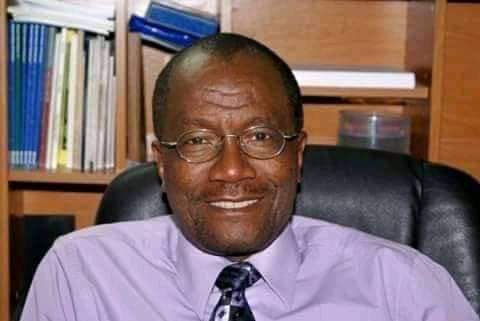
Executive Director of the Legal Aid Board, Ms. Fatmata Claire Carlton-Hanciles

By Theresa Kef Sesay

For her contribution to the third Forum on Human Rights, Democracy and the Rule of Law held on 16-17 November 2021 in Geneva, the Office of the United Nations High Commissioner for Human Rights has recognized the Executive Director of the Legal Aid Board, Ms. Fatmata Claire Carlton-Hanciles.

“The opportunity to hear your presentation and benefit from your expertise during discussions on the issue of “Making Justice Truly Accessible to All” was extremely rewarding. Your intervention was rich and inspiring and provided useful ideas on how to increase access to justice. We received much positive feedback on the event,” the Secretary, Forum on Human Rights, Democracy and the Rule of Law, Hernan Vales, notes.

In her online contribution, Ms. Carlton-Hanciles told the Forum how in a little over six years, the Board has become the largest and most visible legal aid provider by establishing offices in 26 locations around the country including  in all the 16 district headquarter towns. Moreover, the work of the Board has impacted many lives making it the first port of call by people with justice needs and problems in every corner of the country particularly women and children who bring matters relating to inheritance, ownership of property, maintenance and also sexual offences for referral.

“Through the mediation of Child Maintenance matters and the opening of Child Maintenance Accounts, the Board has improved the lives of children who had been abandoned by their fathers and also ensured they do not drop out of school due to lack of money for lunch. We have also ensured that women administer and inherit property of their deceased husbands and monitor the interpretation of customary law by the traditional courts to ensure women are not disadvantaged, denied their rights and exploited,” she told the Forum.

Ms. Carlton-Hanciles recommended the adoption of the same legal aid law around the world which caters for both civil and criminal legal aid. She noted that civil legal aid in the form of Public Interest Ligation and Child Maintenance has made a world of difference in improving access to justice for indigent employees and children of poor background. She argued that it will improve on the Public Defence System which caters for the provision of legal aid in criminal matters only.

She also recommended the employment of full-time Lawyers/Attorneys by Schemes as opposed to the contracting of outside Lawyers being paid at an expensive hourly rate. She argued that unlike Contract Lawyers, full-time lawyers are available round the clock to attend to legal matters at Police Stations, Correctional Centres, Courts and Legal Education Sessions. She furthered that it will make justice more accessible to the poor because it is provided at any time of the day or night.

The Legal Aid Board stands out for running an ambitious scheme with a small budget compared to other schemes. The third Forum did not lose sight of this fact as the letter notes:  “Your intervention was rich and inspiring and provided useful ideas on how to increase access to justice. We received much positive feedback on the event.”

IPAM Management on Sensitization Drive in the Provinces to Introduce Short Courses

Institute of Public Administration and Management (IPAM).jpg

By Alhaji Dauda Bangura

A number of Short Courses will be rolled out in the provinces by the Institute of Public Administration and Management (IPAM). In that light Management of IPAM has commenced an eight days provincial sensitization in the provinces.

This development follows a recent employers’ survey by the World Bank revealing that there is a significant mismatch between the supply of skilled human resources and the demand for skilled human resources in the Sierra Leone labour market.

According to the survey, a significant number of unemployed people are unable to find jobs, while there are vacancies that are difficult to fill. Similarly, employers also stated in the survey that the skills of certain existing employees are weak. Therefore, both private and public employers are struggling to get the most suitable people in their organizations.

The survey noted that this is even worse in locations outside Freetown. However, according to the Management of IPAM, one of the best ways of solving the problem, as done in many other nations, is by introducing Continuous Professional Development (CPD) programmes for existing employees and relevant skills training programmes for those unemployed or seeking jobs.

“The introduction of short courses across the nation could be a vehicle in fulfilling that ambition. The short courses will help to develop and up-skill the current skills of employees, and it will help in providing the basic skills needed to become a professional in any chosen career field,” said Dr. Oludolapo Akinyosoye Gbonda, Coordinator, IPAM Short Course and Consultancy Unit.

Speaking to stakeholders in Bo, Dr. Gbonda  revealed that the  IPAM Short Course and Consultancy Unit is currently  housed in Freetown and offers short courses in Freetown alone furthering that those courses will be introduced to districts outside Freetown. “The courses will be designed and delivered to both public and private organizations and individuals,” she revealed.

She continued that the Institution  will offer continuous professional development opportunities to people staying outside of Freetown and at relatively lower costs and with ease, eliminating the rigours involved in traveling to Freetown from the provinces to attend training programmes.

IPAM, as indicated earlier, has presence in some locations outside of Freetown. These locations will be used as anchor locations to introduce the short courses. Like the Freetown approach, there might be a need for special well-furnished rooms to be created in each of these locations that will be dedicated to the short courses depending on the demand in the district or requested courses can be implemented at the client’s location, which will be the most economical approach for a start and can be very convenient for the client.

Meanwhile, the IPAM team led by Dr. Gbonda, Coordinator, IPAM Short Course and Consultancy Unit is engaging key stakeholders in Kenema, Kailahun, Bo and Pujehun, visiting selected institutions.

IPAM authorities say the first set of the proposed courses will be in the following areas: Entrepreneurship, Project Management, General Management, Procurement Management, Hotel Management & Tourism, Accounting, Corporate Finance and Financial Markets, Taxation, Leadership, Human Resources Management, Marketing & Communications, Public Policy, Statistics, Information Systems and Information Technologies.

In a short interview with the Deputy Vice Chancellor, Professor Nonie, he stated that under his leadership he will ensure that he explores all avenues to take education to the people; the reason why the institution is rolling out short courses for those people who otherwise could not have acquired certificates and other professional qualifications. He called on all interested Sierra Leoneans to make good use of this golden opportunity.

He maintained that access to quality education is key under the current leadership of the University of Sierra Leone.

BAN Critically Analyzes Budget for 2021 Financial Year

Budget Advocacy Network (BAN).jpg

By Amin Kef Sesay

The Budget Advocacy Network (BAN),  which includes, Christian Aid (CA), Campaign for Good Governance (CGG), ActionAid Sierra Leone (AASL), Search for Common Ground (SFCG), Network Movement for Justice (NMJD), Western Area Budget Education Advocacy Network (WABEAN) and Transparency International Sierra Leone, has as a consortium ,on the 23rd November, 2021 issued a statement on the Financial Year 2021 Budget , which according to the institution is based on a quick analysis of the budget highlights of key sectors and issues presented by the Minister of Finance to Parliament on the 19th November 2021.

BAN says it is of the conviction that domestic revenue mobilization at national and local levels and public expenditure are key towards attaining a sustainable economic growth.

Members of BAN are of the opinion that  there is a good improvement in the aspect of the Government having a debt areas clearance strategy and principles, which ,according to them, goes in line with the Government having to obtain public debt under a ceiling beyond which they cannot borrow.

The consortium also pointed out that the issue of social inclusion and empowering women as well as  the marginalized category is gathering pace at last.

BAN continued that at the National Level they acknowledge the strides made by the National Revenue Authority to increase the domestic revenue collection from 12.3% of GDP in 2018 to 13.3% of GDP in 2020.

“The NRA is on course to hit the 2021 revenue target by all indications based on BAN’s monthly revenue analysis of the Ministry of Finance Monthly Fiscal reports,” it was underscored.

BAN says the increase is as a result of several policies and administrative reforms at the NRA which include the setting up of the Integrated Tax Administration System (ITAS), the Electronic Cash Register (ECR), the Electronic Single Window (ESW), the ASYCUDA World to name a few, added to the stricter enforcement of tax laws and rolling out of tax education. The 2022 projections, the institution revealed, show an increase by 2.1% of GDP in 2021 to 1.8% of GDP in 2022.

It was highlighted that despite that success by the NRA, however, achieving the 20% domestic revenue to GDP by 2023 remains a challenge.
“With the country having a projected overall deficit of Le 1.89 trillion (3.7% of GDP) inclusive of grants for the FY2022, the NRA needs to further improve on its domestic revenue collection drive going forward by broadening the tax base without creating extra burden on the citizens, continue with enforcement of the laws and improve on tax education,” BAN recommended.
BAN stressed that at the Local Level they are concerned that the Government is still not doing much towards meeting their commitment to supporting Local Councils to deepen own-source revenue mobilization efforts.

The fiscal watchdog argued that Councils have potentials to generate own-source revenue, but they lack the required policies and systems to maximize revenue, which they could use to provide services at the local level.

To that end, BAN called on Government to implement those provisions set out in the FY 2022 Budget Speech which include: Provision of technical assistance, develop revenue mobilization strategy and manual, automation of property cadastre system and finalize Chiefdom Finance study and develop roadmap for implementation.

Members of BAN applauded the Government’s continuous investment in the human capital development, especially in the area of free quality school education.

The consortium says the investment is in line with the SDG 4, which talks about ensuring inclusive and equitable quality education and promote lifelong learning opportunities for all.

“The 22% of national budget allocated to the free quality education is slightly above the Global Partnership for Education commitment, as it requires Member State to commit 20% of their national budgets to education,” BAN stated.

The organization said, however, there is a challenge in linking the desired outcomes to investment. Giving an  instance, BAN points out that in the 2022 budget speech, it is stated that the Public Expenditure Review (PER) done by the World Bank reveal a weak link between amount of expenditure provided and the expected outcomes in health, education and agriculture.

In other words, BAN stated, the level of Government spending has not translated into the expected improved outcomes as key indicators still trail behind the country’s peers in the sub-region.

The consortium continued that to improve on those, they are calling on the Government to intensify monitoring of those investments and evaluate to ascertain the levels at which the much-needed changes are implemented to impact the interventions or inform a change of strategy to the course.
BAN applauded the Government for its continued effort with the Public Expenditure Tracking Survey (PETS).

“However, we are concerned that result of the 2020 PETS was not published and the 2022 Budget Speech made no mention of publishing the PETS report any time soon,” the organization’s members expressed dismay.

BAN said the Minister of Finance, in 2020, made it clear that PETS will provide valuable insight to policy makers on impediments to improve financial governance and fostering greater transparency and hence be a source of accountability on Government spending.

“We are saying that without the publication of the PETS report, transparency and accountability would be difficult to achieve,” it was maintained.
Members say, furthermore, the Annual Statement of Government Account has not been reporting on the foreign development projects stating that such is a major concern as those projects are part of the budget for the Government. They then called on the Government to include foreign development projects in the Annual Statement of Account.

BAN stated that they are concerned that public debt is on the increase. “As stated in the 2022 budget, it is estimated at US$3.1 billion as at the end of 2021 compared to US$3billion in 2020,” BAN disclosed adding that while they acknowledge that Government debt is a part of fiscal management, they are concerned about the sustainability of rising debt levels and the shift from moderate to high risk of debt distress.

“We urge the Government to disclose the annual debt ceiling beyond which Government cannot borrow to ensure that loans taken on behalf of the People of Sierra Leone are done in a transparent and accountable manner,” BAN stated saying additionally, the debt-servicing burden continue to make it difficult for adequate servicing of the social sectors for the poor and marginalized.

BAN recommended that Government needs to work with other AU States and other partner to lobby for debt relief/cancellation.
It maintains that despite Government’s allocation of 11% to the health sector, Sierra Leone is still below the Abuja Declaration of 15% budgetary allocation.

“We call on Government to increase spending on the health sector,” BAN appealed justifying that emergency situations such as the COVID-19, the Wellington PMB fire disaster and future emergencies require a country to be prepared to respond and be able to save lives of the citizens in time.

The consortium maintained that the need to expand on the current health infrastructure cannot be overemphasized as a quick remedy to the current helpless situation when caught up with emergencies is not defining a developing nation with ambition to advance in medical care and timely response to save much needed lives.

BAN is of the view that the need for the country to have lifesaving medical equipment and motivation for healthcare workers justify the need for Government to up her spending in the health sector.

“It has been long since Sierra Leone signed up to the Abuja Declaration on the 15% health spending and year in year out, we have been reminding the Government to consider this aspect which has not yet been accomplished,” it was said.

Members of the consortium are of the conviction that Government’s response to the needs of the marginalized and persons with disabilities is a good move.

BAN said it is the first time a budget line has been set aside to take care of the needs of those categories of citizens, especially the albinos, which goes a long way to define the social inclusion in line with the ‘leave no one behind’ slogan.

The consortium said it is evident in the National Commission for Social Action (NaCSA) proposal to the delivery of cash transfers to 71,000 households in 2022 and the provision of micro-grants and productive skills for 500 persons with disabilities, including Albinos in communities nationwide.

“It continues to manifest in the empowerment of women in fisheries and establishment of the women empowerment fund,” the members stated adding how in all of what are stated they are calling on the Government to implement the proposals to better the lot.

BAN said it welcomes the openness regarding information put out in the 2022 budget statement regarding the SDRs of $283 million dollars provided to the Government of Sierra Leone in August 2021 to support the Government’s policy and reform efforts aimed at reinforcing the country’s recovery from the pandemic, preserving macroeconomic stability, and sustaining inclusive long-term growth.

Members say in the related next steps, they and their partners look forward to deepening the relationship with the Ministry of Finance on the financing, execution and reporting on the use of SDRs to the citizens.
In its conclusion, BAN said it should be noted that the issue of budget credibility remains a big challenge in Sierra Leone arguing that the spending laid out in the budget is not delivered during the year.

The consortium maintained that whilst debate and analysis of the budget laid before Parliament is important, it is equally important to monitor the actual spending that takes place during the year.

It continued that in particular, there have been continuing weaknesses in expenditure composition (high levels of reallocation between budget lines and a lack of adherence to budget policy).

These changes made to the budget throughout the year, BAN says, are not brought back to Parliament stating that  those are often the result of politically directed spending, which can push out the spending plans of MDAs laid out in the budget.

Another challenge highlighted was that disbursements to MDAs are often late, meaning vital public goods and services are delayed or not delivered at all.

BAN pointed out that whilst they recognize many positive aspects of the budget, they would highlight that implementation is the challenge.

NP Smart Card Simplifies Fuel Transactions with Attendant Advantages

National Petroleum Sierra Leone Limited (NP-SL Ltd).jpg

By Amin Kef Sesay

With the introduction of NP Smart Cards, which has gone viral, the Cards can be credited with money, and the amount of money utilized to buy fuel is debited after every transaction. With the use of NP Smart Cards, customers are saved the hassle of having to always move with physical cash to purchase fuel, and indeed, there are times when one may not have time to rush to the bank to make withdrawals. Customers using this modern chip say the NP Smart Card is doing wonders in their lives.

Meanwhile, the National Petroleum Sierra Leone Limited (NP-SL Ltd), it has been confirmed, is a successful enterprise that is hugely contributing to the socio-economic development of this nation.

This assertion could be justified when cognizance is taken of the company’s serious deepening of the country’s Local Content Policy, as vividly evident in giving exceptional preference to employing indigenes, contrary to bringing in foreign expatriates to execute certain tasks. This laid down policy that is strictly implemented has created room for the employment of Sierra Leoneans who have the requisite qualifications and skills, giving them the opportunity to take care of personal responsibilities.

“I cannot find words to express how delighted I am, as I can proudly say that NP-SL has changed my life completely since the company employed me,” one of the workers at NP Cotton Tree joyfully intimated The Calabash, when this medium went out on a fact finding mission.

“As far as I have assessed in this country, it is only NP-SL Ltd that has such a pragmatic policy of maintaining a policy that gives job preferential treatments to Sierra Leoneans, and I have great respect for the indigenous company,” Raymond Cole, a Social Commentator eulogized.

Customers, who are holders and users of NP Smart Card, are at the vantage position to properly budget, through the amount that is contained in the card, to buy fuel, during a considerable period of time, say a week or a month. Indeed, NP Smart Card has become trending.

In order to ensure that their customers derive value for money, it was thought prudent on the part of Shareholders and Management to make use of the state-of-the-art and highly modernized calibrated pumping machines, which were installed at the company’s different Filling Stations, capable of pumping the exact quantity of fuel, be it petrol or diesel, that a particular customer desires.

This fine move by the company has helped to instill confidence among customers that they are really dealing with a very transparent business entity and getting what they are paying for. This singular business strategy has got many glued to a petroleum company that is considered to be marketing the best of petroleum products, which include petrol, diesel, gas and high grade lubricants, one of which is the most sought out Castrol oil, said to be very good for the proper functioning of engines.

The company also markets NP Gas, which is a cooking device that is manufactured in different cylinder sizes and sold at the company’s Filling Stations across the country. It can be easily refilled with gas, and is said to be non-hazardous to the health of individuals and easy to operate. Its performance has been rated high and many are indeed going for it.

One yardstick that could be used to assess the potency and vibrancy of a company is how well it is entrenched or established. With regards NP-SL Ltd, one can actually see that the company, over the years, has grown by leaps and bounds, as seen in its opening of branches in neighbouring Guinea, Liberia, Ivory Coast and The Gambia. All these NP branches within the sub-region are functioning very efficiently and contributing immensely towards the socio-economic development of those host countries. Through their operations, the company is paying taxes to the various Governments, and indirectly boosting the revenue bases of those countries, to roll out different development programs.

An admirable quality that NP-SL Ltd has been exhibiting throughout the years is the proper implementation of the country’s Local Content Policy. This policy is geared towards giving preferential treatment to indigenes or making use of local ingredients, in the form of human and material resources, instead of depending on those that are acquired through importation.

The company has the laid down policy of giving preferential employment considerations to indigenes instead of relying on expatriates.  As long as Sierra Leoneans have the requisite qualifications and skills; they are first considered for various vacant positions in the company. The greatest advantage is that the policy has made it possible for indigenes to be gainfully employed and live improved standards of living.

From all that have been said so far, it could be argued with all amount of certainty that NP-SL Ltd is indeed a highly successful and very competitive petroleum company that continues to stand tall within the business landscape of this country. And from the look of things it is poised to reach further higher heights.


CoPPP Writes Minister of Justice on Alarming State of the Rule of Law & Bad Governance

Attorney General and Minister of Justice.jpg
Attorney General and Minister of Justice, Anthony Yeihwoe Brewah Esq

By Amin Kef Sesay

In a letter dated 22nd November 2021 and written by  the Consortium of Progressive Political Parties (CoPPP)  addressed to the  Attorney General and Minister of Justice, Anthony Yeihwoe Brewah Esq it was spelt out that CoPPP  is a platform created by thirteen opposition parties in Sierra Leone which have committed themselves to harness their collective strength to defend democracy, oppose, reject and condemn bad governance, all violations of the Rule of Law and of the rights of their fellow citizens by using democratic and lawful means.

Further stated was that as Principal Legal Advisor to the Government of Sierra Leone on issues bordering on constitutionality, legality and serial procedural breaches by the Government and its agents having serious repercussions on the health of the country’s democracy and has eroded the trust and confidence that citizens had in the operability and independence of key institutions of State, including the Judiciary, the National Electoral Commission (NEC), the Sierra Leone Police (SLP) and the Anti-Corruption Commission (ACC).

They stated how discontent with the Government is growing at such an alarming rate among ordinary citizens that they no longer perceive the institutions of State as working for them but they also feel angry and that their basic human rights are not protected.

The CoPPP members say they feel duty-bound, in light of current trends, to officially inform him of their concerns that due to the perceived abuse of legality, Sierra  Leoneans may not only have lost trust in the Government but more worryingly may no longer have confidence in the State.

Highlighted was that the original sin of the current administration was the blatant violation of the wishes of the electorate that had voted for the first time in the history of Sierra Leone for a unique power sharing arrangement by which the Sierra Leone People’s Party (SLPP) won the Presidency and controlled the Executive arm of Government whereas the Legislature was dominated by the opposition led by the All People’s Congress party (APC).

They lamented that unfortunately, it was the choice of the Government to force itself down the throat of history by using its newly-found power to bring nine of their SLPP candidates into Parliament not through the normal bye elections but by order of the courts.

They continued that such was how from the initial stage the integrity of the Judiciary, the Police and the Legislature was compromised and it was this irregular Parliament that quickly voted to impose the Speaker.

Unsurprisingly, this Parliament, emboldened by its weird genesis based on force and circumvention of procedure has turned out to be the most controversial in the history of our land.

According to them, Government has never hesitated to bring obnoxious Bills to Parliament such as the Ministry of Finance’s open-ended non-accountable travelling imprest facility.

“The Parliament therefore is one of the institutions that have been politically captured by the SLPP regime,” an aspect of the letter stated.

CoPPP members say the most recent outrage that has drawn the ire of Sierra Leoneans is the very messy attempt to remove the Auditor General, Mrs. Lara Taylor Pearce and her Deputy, Tamba Momoh, from office.

They stated that Mrs. Taylor Pearce, in particular, has served diligently with two administrations and has always been allowed to do her work even though regularly bringing out results that exposed incompetence and fraud on the part of the Governments in power.

“This Government’s bold move of forcing a tribunal on the Auditor General only a couple of weeks to her publication of the 2020 Audit Report on the finances of Government has been interpreted as intimidation against her so that certain shocking revelations of Government’s misuse of public funds that are apparently contained in that report may not see the light of day,” they alleged adding how such is the perception of the general public saying it indicates once again that the people no longer trust the Government and the way it handles issues of transparency and accountability.

It was mentioned that the State institution that is supposed to be fighting corruption has proved to be highly selective in its approach, high handed when dealing with suspects in the previous administration but gentle and kind with abuses in the current regime.

They maintained that at this time when the Auditors are being dragged to a tribunal to face accusations of malpractices, it will only be fair and just that the ACC Commissioner be also probed for his decision to drop investigations into the disappearance of 49,000 bags of Chinese donated rice within the corridors of power and to establish whether there is possibility of collusion that should justify his removal.

Based on what the members of CoPPP said s much blood has been shed in the short life of this administration that the citizens have every reason to be afraid of the Government and how it uses the law enforcement agencies to handle situations.

“The Judiciary and the Sierra Leone Police Force have become willing partners in eroding the justice system, and by extension fundamental human rights,” they claimed stating how they have both formed a conveyor belt of human rights abuses where one targets and arrests opposition members, many times on bogus legal violations while the other refuses bail and sends them to Pademba Road Prisons.

They stated the cases of Mohamed Kamarainba Mansaray, the Tonko Limba bye election, the killing of protesters at Lunsar and Makeni, the massacre at Pademba Road Correctional Centre stating that the list of these horrible incidents involving State security is stretching and one dangerous motif in all these is that, in the language of the man in the streets these days, “na boff case”, meaning that nothing will ever be done about it.

They say impunity, especially when it concerns actions by influential people close to Government or Government itself, is now being regarded as the norm by a people that feel unprotected and abandoned by those they elected them into office.

They said they believe that as the Government Lawyer, the Attorney General and Minister of Justice must be concerned and should, for the sake of our common good and national security, take necessary action to impress the gravity of the situation on his colleagues rather than tag along with them whenever they come up with decisions that are inconsistent with the Constitution and laws but for which they seek some cosmetic interpretation.

Members stated that more importantly, the country faces a very important test in the next two years, namely local, Parliamentary and Presidential elections.

They said given the current situation, aspects of which they have highlighted above, everybody is concerned, including the international community who have partnered with the country through so many transitions.

According to them ,it is indeed funny that only a few weeks after their passionate “rebuttals” to the EU report, they went ahead and conducted a bye election in Koinadugu that basically vindicated the EU.

According to them, all the usual cocktail of election malpractices, violence, police numbness, interferences and disruptions by State officials were played out yet again, proving just the same things that the EU said were undermining trust in the institutions.

Concluding they made the following observations and conclusions: That the SLPP Government has captured the main State institutions that would normally guarantee the freedoms of individuals and our democratic rights under the Rule of Law.

That they confirm the conclusions of the recent EU mission to Sierra Leone regarding the general erosion of trust in critical institutions that should jointly deliver a free and fair election and urge the Government to engage progressive opposition parties in frank and productive dialogue on how to restore trust.

That they consider the so-called tribunal on the Auditor General and her Deputy to be contrived to intimidate them and to cover up revelations contained in the yet to be released 2020 Audit Report on Government finances. They therefore recommended that the said report be released integrally by the Auditor herself.

That in the event that Government desires to pursue the investigations of the Auditors at a tribunal, they recommend that it will be fortuitous to open investigations also into the action of the Commissioner of the ACC in abandoning the case of the missing 49,000 bags of Chinese donated rice and the reasons thereof.

That Government must take urgent steps to prosecute those responsible and named in the case of the murdered SLPP man, Don Pole..

That if the Government continues to treat the opposition as enemies and whatever they say and do as subversion, the consequences of their actions will not only affect the members of Government but equally the opposition who share with them the identity of political leaders.

They stated that they in COPPP regard themselves as important players, dedicated to the preservation of the democratic ideals of this country for which so many of their brothers and sisters have lost their lives.

“We therefore refuse to be bullied into silence and inaction by any oppressive force,” furthering how they shall oppose repression with peace and restrain their people from all acts of disorderliness and violence for as long as they can.

They particularly requested the Attorney General and Minister of Justice to  convey and discuss the details of the letter with His Excellency the President who they said for some reason has not met them in spite of the several requests they made to seek his audience.

To Popularize ACC’s Impressive MCC Performance… Youth Against Corruption Sierra Leone Concludes Week Long Sensitization

Youth Against Corruption Sierra Leone.jpg

By Esther Wright

An organization known as the Youth Against Corruption Sierra Leone, (YAC-SL), a collaborative partner of the Anti-Corruption Commission, that has been working closely with the Commission in the fight against corruption in Sierra Leone, has engaged in a week long sensitization and education engagement following the Sierra Leone’s passing of the Millennium Challenge Corporation (MCC) Scorecard with 83% pass in the “corruption control indicator”.

With support from the Anti-Corruption Commission, YAC-SL engaged in the week long activity with the aim of orienting members of the public on the importance of Sierra Leone passing the MCC scorecard and the positive effect such a pass would have on the country.

In his statement marking the end of the activities that were undertaken by YAC-S, in popularizing the pass mark of Sierra Leone, and the positive effect such will have on the country, the Executive Director of YAC-SL, Sheku Koroma, explained that the MCC’s competition selection process is a data driven, transparent process for determining where the MCC invests with the objective of reducing poverty through economic growth and that to be considered for an MCC compact, countries the country must pass at least 10 out of the 20 indicators, on the scorecard, including the control of corruption indicator.

He stated that for this year, only 25 of the 78 countries assessed on the scorecard passed and Sierra Leone was among them.

The Executive Director stated that this remarkable result means the country is now eligible for an MCC compact, adding that such is good for the growth and development of the country.

He went on to state that since 2018, the ACC has made steady, persistent and consistent progress not only on the MCC Scorecard but in other highly credible international Corruption Perception Indexes.

“This is a clear reflection of the Commission’s resolve and untiring commitment to the fight against corruption in all its forms,” he maintained, urging the Commission to continue the relentless crusade against corruption.

He extended thanks to President Julius Maada Bio for providing the unwavering political will and Government’s support to the fight against corruption.

He also thanked the ACC commissioner, Francis Ben-Kaifala, for his determination, commitment, dedication and enthusiasm in leading the fight against corruption, without fear or favour, affection or ill-will towards anyone.

“YAC-SL is always ready and committed to collaborate with the Commission at whatever level and to help in whatever way it can, in the arduous fight against corruption in the country,” he assured.

As part of its week long activity YAC-SL engaged secondary schools pupils in the nation’s capital, organized radio and televisions discussion programs via local media outlets, amongst other things.

Bank Governor’s Decision to “Bribe” $68M was Indeed Prudent

Governor of the Bank of Sierra Leone.jpg

By Amin Kef Sesay

The Governor of the Bank of Sierra Leone, Professor Kelfala .M. Kallon was on the 23rd November 2021 responding to the request by Members of Parliament to give a professional justification behind the rationale redenominated the LEONE, the country’s Legal Tender.

During the course of enlightening the Honourable Members of Parliament, the Governor stated that the sum of $68m was used from the reserve to buy the ‘Leone’ from hoarders through the Commercial Banks during the shortage of the “Leone” in the Banking Industry.

To use his actual words:  “We wasted $68 million to bribe people hoarding the Leones”.

In the wake of the parliamentary engagement, specialists in spinning, especially the Political Spin Masters, quickly rushed at the “red meat”, giving all sorts of out-of-the-context interpretations of the Bank Governor’s statement with some even going to the extent of calling the attention of the Commissioner of the Anti-Corruption Commission, Francis Ben Kaifala, to take note and act. Social Media platforms are awash with misinterpretations of what the Governor intimated Parliamentarians to such an extent that some are even adding salt and pepper to it in order to make it more politically appetizing.

However, this should not be surprising in a country where the illiteracy rate is high and everything is highly politicized. Listening carefully to the Bank Governor, this medium discerned that he was referring to the act of salvaging the Leone shortage crisis as “a bribe” simply because the aforementioned amount spent in doing so should have been used to do something developmental.

As a matter of fact the Governor laid bare the need for the redenomination of the Leone when he told parliamentarians that he asked myself, “After working so hard for the past two years to build a reserve for this country, is it sustainable for us to keep bribing people to take Leones, and when we bribe them, they bring the Leones, then they take it back; then we have to bribe them again?”

It was that point that the Bank Governor was hammering home as one of the justifications for the re-denomination of the Leone. Put contextually, the Bank Governor intimated Members of Parliament that the sum of $68m was used from the reserve to buy the ‘Leone’ from hoarders through the Commercial Banks during the shortage of the “Leone” in the Banking Industry.

Many could vividly recall that in the recent past there was a shortage of the Leone which resulted into customers of Commercial Banks having to queue just to conduct banking transactions, especially to make withdrawals. It was such a messy and embarrassing situation or crisis for which the very Bank Governor was scolded and held responsible until it became clear that the country was a victim of the existential COVID-19 pandemic which placed restrictions on the entity that prints the country’s legal tender and even made it extremely difficult for the transportation of consignments of monies printed to be placed in circulation.

Put in other words, what the Bank Governor actually meant was that when the COVID-19 breakout, the Bank of Sierra Leone made an emergency request for the “Leone” to be able to break-even the increased demand for cash and for Government’s day-to-day operations.

According to him those monies arrived but lamentably were hoarded by people.  He furthered that when the Central Bank supplies the market with, say, 1000 Leones, they expect to receive at least 800 Leones in return, but emphatically stated that such an expectation had not been met.

Professor Kallon underscored that with a view and an objective to remedy the situation, for normalcy to prevail, he had to reverse the Bank’s order or decision of not holding the Dollars but rather to sell them to people who were hoarding Leones. The sole purpose, he stated, was for the Leones to be returned to the banking system.

The Bank Governor categorically stated that such a prudent decision cost the Bank of Sierra Leone $68M.

In a nutshell, what the Governor of the Bank of Sierra Leone was explicitly telling Members of Parliament was that the amount in question, $68M, was sold out to people in order to encourage them to take the Leones they have hoarded to the banks.

At this juncture it is important to note that the Bank of Sierra Leone, do from time to time, auction dollars to Commercial Banks like the Sierra Leone Commercial Bank, Rokel Commercial Bank, Union Trust Bank etc.

Literally, that was exactly what the Bank Governor termed or referred to as $68 million was used to bribe or lobby people who were hoarding the Leones.

Some may argue that the choice of words by the Bank Governor was not appropriate. But as far as this medium is concerned it was the effect of COVID-19 pandemic which led to the tampering of the Bank’s reserve in order to auction $68M, which as he rightly stated, could have been otherwise used on a developmental project.

COVID-19 forced the country into such an inevitable situation.

It must be pointed out here that the Bank Governor’s statement to the Parliamentarian is now being deliberately misinterpreted or blown out of proportion in order to mislead the public.

Political spinners are on it right now giving it an interpretations to mean that it was a reckless way of spending public funds when in actual fact all what they are, probably unconsciously doing, is exposing their folly and silliness. However, what is clear is that it is Professor Kallon who has the last laugh and it will be the loudest because he will be the last one to laugh.


Press Release
26th November, 2021.

Misrepresenation Of A Statement Made In Parliament By The Governor Of The Bank Of Sierra Leone

Freetown SL: The attention of the Bank of Sierra Leone (the Bank) has been drawn to a mischaracterisation of a statement the Governor made in Parliament by some newspapers and a video clip circulating on social media, both deliberately and maliciously misconstruing the said statement.

In view of the above, the Bank makes the following clarifications:

1. In his pre-legislation presentation to Parliament on the 22nd November, 2021, relating to the redenomination of the Leone, the Governor, Professor Kelfala M. Kallon, mentioned the massive hoarding of Leones, starting in June 2020, as one of several factors justifying the Bank’s decision to redenominate the currency.

  1. To address the cash shortage that resulted from the aforementioned hoarding, the Bank started spending substantial sums of money on ordering and airlifting replacement notes, which were similarly withdrawn from circulation and hoarded. Consequently, the Bank was compelled to conduct monetary operations wherein United States dollar notes were swapped for Leone notes through the commercial banks.

Customers participating in the swap would deposit Leone notes in their commercial bank accounts, which were swapped at the Bank for US dollar notes, and the US dollars paid to the customers who made the deposits. However, as soon as the deposited Leones were put back into circulation, they were also quickly withdrawn and hoarded, thereby creating a need for another round of dollar-Leone swap. By August 2021, the Bank had spent about 68 million US dollars on this operation.

  1. The Governor figuratively used “bribery” to describe this sequence of hoarders exchanging their Leone notes for US dollar notes and then withdrawing the recirculated Leone notes so that the Bank of Sierra Leone would be compelled to buy them back with US dollars in order to avert catastrophic shortages of cash in the banking system.
  2. In the Question and Answer session following the presentation, two members of Parliament asked the Governor why he used the word “bribe”, given that some journalist in the room would go and twist it in ways that the Governor would regret.
  3.  The Governor responded that, while a professor, he had often used “bribe” in his lectures to explain to students that consumers often “bribe” producers with higher prices as incentives for the latter to increase the supply of commodities in short supply. To clarify what he meant by “bribe” in the instant case, he used the example of the willingness of consumers to pay higher prices for peppers so that farmers would supply more peppers to the market when they are in short supply. It was in this context, he concluded, that he used the verb “bribe” to explain how the Bank of Sierra Leone used 68 million US dollars to bring Leones back into the banking system.
  4. It is unfortunate that in spite of this explanation, some newspapers and persons on social media chose to deliberately mischaraterise the Governor’s nuanced statement as a confession that he had engaged in bribery.
  5. The Bank wishes to make it categorically clear to the public that all its monetary policy operations, including that between June 2020 and August, 2021, are driven by only its duty to maintain the stability and soundness of the financial system, and nothing else.
  6. The Bank further wishes the public to know that it is unflinchingly committed to redenominating the Leone and putting controls in place to prevent its hoarding in the future. In this regard, it further wishes to inform the public that, as soon as the legal instrument that has been laid in Parliament matures, a full-scale nationwide sensitisation of the population will commence.
    END

Response from the Bank Governor;  https://fb.watch/9wRp2l0g1M/

World Toilet Day Commemorated by Action Against Hunger &Water AID 

World Toilet Day.jpg
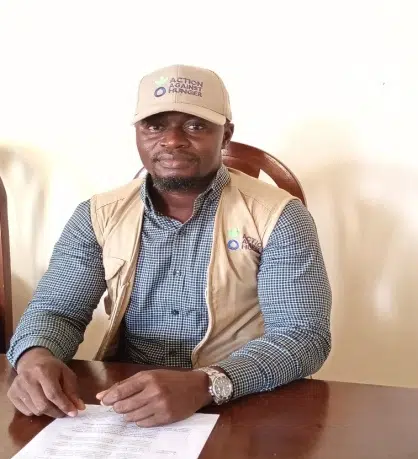
John O Swaray: WASH Programme Manager, Action Against Hunger

By Komba Fillie

A cross-section of journalists from both the print and electronic media were engaged by Action Against Hunger in Sierra Leone and WaterAID-Sierra Leone to commemorate World Toilet Day on the theme: “Valuing Toilet Asking, Who Cares about  Toilets? We do!”

The day is commemorated on the 19th November as a way to create demand and awareness on sanitation. This was made know during a joint press conference organized by Action Against Hunger in Sierra Leone and WaterAid at the WaterAid Country Office at Aberdeen in Freetown.

Delivering a statement, the WASH Programme Manager, Action Against Hunger, John O. Swaray, underscored the importance of the day. He said the World Toilet Day commemoration was planned to remind everyone about the 3.6 billion people who do not have access to hygienic sanitation services.  He stressed on the significance of having toilets in communities, homes, schools and other places of works.  He pointed out that access to sanitation services is recognized by the United Nations as a human right that should enable everyone without discrimination, to have physical and affordable access to sanitation facilities in all spheres of life that are safe, hygienic, secure, socially and culturally acceptable, and provide privacy and dignity.

He called on all partners in the WASH sector to double up in their efforts to achieve Sustainable Development Goal 6 – Water and Sanitation for all by 2030. He cited that Governments must improve and expand service delivery using a human rights-based approach so that no one is left behind.

John O. Swaray,  said that Governments need to ensure equitable access to adequate sanitation and hygiene for all and end open-air defecation with particular attention to the needs of women and girls and people in vulnerable situations.

He recalled that household toilet facilities are often inadequate, only 16 percent of households have an improved toilet facility, which is defined as “a non-shared facility constructed to prevent contact with human waste”.  He noted that the said facilities reduce the spread of diseases such as cholera and typhoid.

Giving an overview of the commemoration, the Communications and Campaigns Manager for WaterAid, Alfred Sinnah underscored the importance of the day.  He said the day is remembered every 19th November to raised awareness on the importance of sanitation and the need for Government to take action in tackling challenges people faced in schools, communities, and other public place in accessing toilet facilities.

Speaking during the press conference, the Senior Policy and Advocacy Manager, Christina Lawrence, underscored the importance of the day.  He noted that as a country there is a need for increased investment to support sanitation workforce and Government to undependably assess the sanitation workforce and set out reforms and plans to improve their working condition. He pointed out that Government needs to critically look at the role of COVID 19 workers in celebrating world toilet Day.

Christina pointed out that during the COVID 19 pandemic, sanitation workers in Sierra Leone and many other countries have been largely forgotten, underpaid, unprotected and left to fend for themselves.  He added that based on research carried out by WaterAid, at the start of the COVID-19 pandemic on the safety and wellbeing of those who clear and dispose of faecal waste, a good number of the sanitation workers are expose to hazardous working conditions, lack of Personal Protective Equipment (PPE), poor training and legal protection, as well as loss of income.

The sanitation workers include people who clean toilets and sewers, empty latrine pits and septic tanks and operate pumping stations and treatment plants as well as those who clear faecal waste manually, sweep rubbish and transport faecal sludge. He cited that the findings of the research include solid waste workers and cleaners.

He stated that despite providing a vital service in ensuring human waste is cleared, stored and disposed safely, sanitation workers are often marginalized, stigmatized and shunned as a result of their job.  He recalled that many have worked on the frontline of the pandemic, throughout national lockdowns, in hospitals and quarantine centres and in the heart of communities with poor access to safe water, decent sanitation and good hygiene facilities.  He furthered that the workforce risk being exposed to a wide variety of health hazards and disease or can often come into direct contact with human waste. He cited objects in pit latrines and poor construction as a major cause of injuries and infection while toxic gases can make workers lose consciousness or even kill them.