Kultumi Minah: Africell Cooperate Sale Manager and Patricia Jangah, Africell’s Human Resource Manager
By Fatmata Jengbe
To observe Breast Cancer Awareness Month, which is October, one of the country’s mobile service providers, Africell Sierra Leone partnered with MEPS Trust Well Woman Clinic with the primary objective of conducting free breast screening for all staff of Africell as part of a move to raise awareness on the negative impact of breast cancer. The screening exercise commenced on the 8th October, 2021.
Commencing last week, the screening exercise will last till the end of the month.
Adijatu Salam, Head Sister at MEPS Trust Well Woman Clinic, dilating on the screening exercise, explained that the aim is to detect the disease early furthering how “early detection saves life”. She revealed that for the past five years they had been working with Africell to raise awareness which, according to her, has saved many lives.
Madam Salam stated that the screening would help staff of Africell to detect if they have lumps in their breasts maintaining that such will help them know their status and how they can take care of their breasts.
The MEPS Trust Well Woman Clinic’s Head Sister continued to explain that many breast cancer symptoms are invisible and not noticeable without a professional screening also intimating how some symptoms can be manifest just by being proactive and encouraged members of the public to visit the Well Woman Clinic to do their screening and get more awareness about breast cancer.
Kultumi Minah, Africell Corporate Sales Manager, said she embraces the screening exercise and thanked Africell for providing the service for all staff including herself. She explained that the experience was good and that she felt safe after knowing her status.
Patricia Jangah, Africell’s Human Resource Manager, disclosed that Africell decided to do the free screening exercise for staff to know their status as such will put them in positions to know what next to do. She stated that Africell cares for its staff which is why they decided to collaborate with Well Woman Clinic to conduct the free screening exercise. Madam Jangah added that not only the female staffers would undergo the screening, but the male staffers will also go through the exercise.
According to the National Breast Cancer Foundation, Breast cancer is a disease in which malignant (cancer) cells form in the tissues of the breast. Breast cancer occurs when malignant tumours develop in the breast. These cells can spread by breaking away from the original tumour and entering blood vessels or lymph vessels, which branch into tissues throughout the body. When cancer cells travel to other parts of the body and begin damaging other tissues and organs, the process is called metastasis.
Breast cancer can be diagnosed through multiple tests, including a mammogram, ultrasound, MRI and biopsy.
In general, there are five treatment options, and most treatment plans include a combination of the following: surgery, radiation, hormone therapy, chemotherapy, and targeted therapies. Some are local, targeting just the area around the tumour. Others are systemic, targeting your whole body with cancer-fighting agents.
The 12th October 2021 will definitely go down the annals of history of a renowned Sierra Leonean in the person of, Kobi Walker, who is the current Chief Executive Officer of the National Petroleum-Sierra Leone Limited, as it was on that very day, that he was prestigiously honoured to lead the EDUCON21, which will be Sierra Leone’s first conference on education, as Goodwill Ambassador for the Implementation of the United Nations Sustainable Development Goal 4 (UNSDG 4) which emphasizes rolling out Quality Education.
In the declaration of the purpose of the meeting, which took place at the National Petroleum –Sierra Leone head office on Siaka Stevens Street in Freetown, Dr.Adikali Bangura, a representative from UNESCO, stated that the importance of education cannot be overemphasized. He added that the country has made significant progress in terms of enhancing education especially with the introduction of the Free Quality Education Initiative.
“We must now all contribute in one way or the other to make the country’s educational system impact meaningfully on overall national development and at this point in time it is important to note that the private sector has key roles to play in order to make education very relevant to development,” he underscored.
Chairman of the event, Professor Dr. M.Y Bangura, maintained that it is important to recognize the good works of people furthering how all are gathered with the objective of witnessing the conferment of an honorary recognition of Kobi Walker for all the meaningful things he had done to ensure that education is given a leap. He briefly dilated on the SDG Goal 4 which focuses on rolling out Quality Education.
The Chairman pointed out that currently, as opposed to the past, the country is witnessing a dramatic increase in school enrolment; more girls are now attending school, including pregnant girls also highlighting other transformations that have taken and still taking place.
He expressed the view that although not all will benefit but said the progress made so far are encouraging adding how COVID-19 has taken its toll on some of the successes achieved so far but maintained that with the likes of Kobi Walker, who are of the conviction that education is a key to success, they still continue to render support whenever such is needed and the resources are available.
The initiator of EDUCON21, Ambassador Dr. Alex Bangura, told those present that he would like to convey a special respect to President Julius Maada Bio for prioritizing education stating how it is significant to push the President’s agenda forward, maintaining that doing so is in the good interest of all Sierra Leoneans. He appealed to all and sundry to assiduously work towards overcoming the challenges that militate against rolling out quality education in the country.
Dr.Alex Bangura stated that to be educated is good but the essence is to positively influence society otherwise it is a misconception. He used the opportunity to extend invitation to all present to attend their forthcoming conference which will be held later in the year. He ended up giving the necessities of education stressing that if as a nation we are able to fulfill all of them then we will see great improvements.
He reiterated that since diamonds were discovered in the country much premium has not been placed on enhancing human capital development. He, however, expressed delight that the narrative is positively changing.
On his part, the Proprietor and Principal of the Washington College of Management and Technology (WANTEC), Dr. James Mathew, said he has never met Kobi Walker but heard about his good works He underscored that the type of education that was in vogue for a considerable period of time did not benefit the nation and so there was the need to depart from it.
Dr. Mathew pointed out that the Free Education program is in place as it makes provision of leaving behind no child but emphasized that the quality aspect is very important to achieve. He maintained that there are challenges with the Free Education program which must be dealt with if we are to achieve quality. He identified inadequate furniture in schools as something to be addressed, going forward to suggest that teachers need recognition, they need to be motivated as well as afforded training opportunities.
He also talked on the need for curriculum planning noting that certain departments of the University of Sierra Leone evaluated their curricula way back in the ‘70s stating that it is significant to be regularly planning and updating the curriculum of educational institutions in order to match up with current trends.
“There are graduates who are completely computer illiterate which in this century is unbelievable,” he lamented adding how much need to be done to take education to another pedestal.
Representing UNESCO, Dr.Adikali Bangura ,said he is happy that the Basic Education Ministry is developing modules for core subjects, a move ,which he said, is a step in the right direction in enhancing education in the country. He informed the audience that UNESCO intends to train a targeted number of teachers in the provinces and such will be done virtually.
Dr.Adikali said quality education focuses on every aspect of a child and prepares the child for life which, he said, is beyond making him or her become literate. He added that the educational system must be inclusive and equitable one. He also recommended that the role that the private sector could play in enhancing the Free Quality Education could be by encouraging innovation, hold private schools accountable for out puts and encouraging diversity, meaning that it must be accessible to all.
Dr.Adikali said they want to ensure that the focus should not only be limited to the number of pupils or students that pass examinations.
In his statement, Kobi Walker pointed out that one week ago (5th October, 2021) President Dr. Julius Maada Bio and development partners celebrated the World Teacher’s Day at the Freetown International Conference Center recognizing teachers and their tremendous efforts in the promotion and advancement of education.
He continued that now he is honored to deliver a keynote address on the theme: “The Role of the Private Sector in Promoting and Advancing the UNSDG 4 in Sierra Leone”.
The erudite Chief Executive Officer of NP-SL stated that Education is a human righ, which countries have the responsibility to ensure but they need not be the sole provider.
He said private involvement can increase financial resources committed to education and supplement State capacity to absorb growing demand while assuring standards.
Kobi Walker stated that while there are various ways in which the private sector can be involved, a strong regulatory framework is vital to ensure high quality and equity, at the same time encouraging investment and competition.
He revealed how the United Nation’s Sustainable Development Goal 4 (SDG 4 or Global Goal 4) is about quality education and is among the 17 Sustainable Development Goals established by the United Nations in September 2015 informing that the full title of SDG 4 is, “Ensure Inclusive and Equitable Quality Education and Promote Lifelong Opportunities for All”.
Kobi Walker highlighted how the private, or non-state sector, in education can include independent, community-based, NGOs, faith-based organizations, trade unions, private companies, small-scale informal providers and individual practitioners.
He intimated that in a developing country like Sierra Leone, prevalence of extreme poverty, insurgency, conflicts, and other factors has significantly reduced the progress of educational development as compared to many other developing countries in the sub-region.
Kobi Walker , however, stated that the good news is that, a lot of transformation had happened in the education sector, of which he said there had been more than a 30% increase in enrolment and about 22% annual budget allocation to strengthen education in the country.
He dilated on how Government has attracted more funding such as the Global Education Summit in London where Sierra Leone is now eligible for a $40 Million grant for the education sector.
In recounting some of the gains made , he said more teachers have been recruited and trained, more school inspectors empowered and more students encouraged to stay in schools and colleges.
He said Post University programs such as the National Youth Service has recruited and placed over 1,800 graduates into various institutions whilst providing national service and attracting employment.
Kobi Walker made an important point by stating that while Governments are and should continue to be, the stewards of education systems, it is important to acknowledge and understand both the potential of the private sector and the reality that the non-state sector is supplying significant education services in many spheres in the country.
“Private involvement in education can help to increase the level of financial resources committed to the sector and supplement the limited capacity of Government institutions to absorb growing demand,” he averred adding how there is also increasing evidence to suggest that the private sector is well equipped to meet the growing differentiated demands of specific groups, for example, religious ones – even when the State provides sufficient places in public schools and universities.
“An education system that acknowledges public and private providers and has accountability mechanisms to strengthen service delivery amongst the various education stakeholders is good,” he informed suggesting that Governments can guarantee access to education through finance and private provision.
Kobi Walker stated how good ideas need to be piloted and subjected to rigorous assessments, the results of which should then be used to adjust programmes accordingly saying successful pilots then scaled up as appropriate.
He said apart from providing corporate support to Government through funding of educational programmes and projects, the private sector has trained more students through internship and mentorship programs, built more schools and universities over the last 2 decades and provided support to at risk and low earning communities.
The NP-SL CEO disclosed that in his current position they, as a company, have built schools for the police, military and has built good toilet facility for the Government Independence Memorial Secondary School.
“As CEO, we have also built squash courts at various schools (St. Edwards, POW, FBC etc..), “ he also revealed adding how in order to understand the role the private sector could play and realize the potential benefits that its involvement could provide, an understanding of how Government is currently engaging with the private sector is required.
He said Government has several options involving different financing and provision solutions such as the establishment of independent private schools, Government-funded private schools and privately managed schools.
“Through my support to various educational institutions and organizations in Sierra Leone, I am a co-chair of a special development committee of the University of Sierra Leone delegated with the responsibility to identify and seek funding for developmental projects and programs,” he also disclosed.
He said private sector engagement in education, nonetheless, requires a strong regulatory framework to ensure high-quality delivery and equity while at the same time encouraging investment and competition.
The charismatic personality said too often, regulation is poorly developed and discouraged private investment without any gain in educational quality. He argued that indeed, enforced standards are key to ensuring the long-term sustainability of the private education sector and its credibility in the market.
“Perceptions of the quality of private education are fundamental and can be easily damaged – bad publicity about private providers offering poor quality can harm the reputation of the whole sector,” he maintained.
Kobi Walker said in a strong regulatory environment, holding providers accountable come both from the Government, as well as parents, students and communities in which the schools operate.
“Empowering parents, students, and communities means that parents are aware of the learning, or the lack of it, taking place in their child’s school,” he said furthering how they should also be able to use their voices to hold the school and Government accountable regardless of their socio-economic background saying because it will have some effects on learning, teacher motivation, student attendance, etc.
Other speakers made salient contributions of how education could be enhanced and its relevance to overall national development.
The highpoint of the occasion was decorating Kobi Walker with the conferment of the Ambassadorial title on Kobi Walker who henceforth will carry the title Ambassador. This was followed by the taking of group photographs.
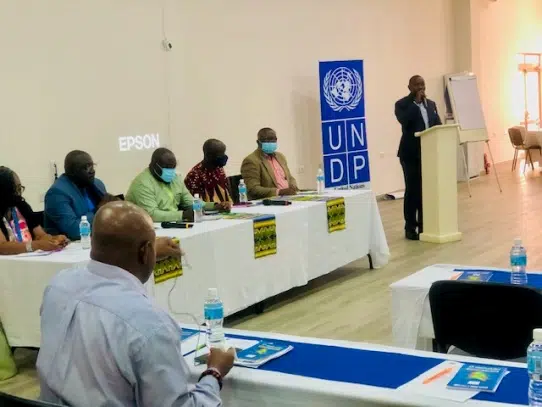
In a bid to give stakeholders the opportunity to peruse the draft documents namely Data Protection Bill, Data Protection Policy and Regulation for their valuable inputs, the National Civil Registration Authority (NCRA) on Monday 11th October, 2021 held a one day Western Area Stakeholders consultative meeting on the draft Data Protection Bill, Data Protection Policy and Regulation at the New Brookfields Hotel in Freetown.
The meeting was graced by Ministers of Government, Heads of MDAs, Development Partners, representatives of Civil Society Organizations and the Forth Estate, the Director General of the National Civil Registration Authority (NCRA) and staff.
Delivering his statement, the National Civil Registration Authority (NCRA), Mohamed Mubashir Massaquoi, described the development of a Data Protection Policy, Bill and Regulation as an interesting one, adding that as they embark on this next step, it is fitting that they take a step back to see how far they have come.
He stated that Sierra Leone, like other countries in Africa, is striving towards instituting a legal mechanism that guarantees the protection of personal data of its people both citizens and foreign residents, furthering that the need for data protection law in Sierra Leone has gained momentum among all sectors of Government and Development Partners as well as foreign residents and Missions whose concern for the privacy and security of their personal data remains strong.
He told those present that President Dr. Julius Maada Bio treats this with serious concern which is why he has made the development of Data Protection Law a priority for his Government.
The Head of NCRA disclosed that with the guidance and leadership of the Ministries of Internal Affairs and Information and Communications, the National Civil Registration Authority (NCRA), a lead Collector and Custodian of huge personal data, has been working with a number of MDAs and Development Partners to have a law that guides and regulates institutions involved in data collection, storage, usage and sharing which is a fundamental right of everyone.
He also revealed how Cabinet at its business sitting in June this year, further noted the sustained global drive to halt cyber related crimes and data protection gaps coupled with increasing international benchmarks for data protection.
Mohamed Mubashir Massaquoi said as a Government, they are aware of very sound data protection laws and Conventions such as the African Union Convention on Cybersecurity and Personal Data Protection known as the Malabo Convention of 2014 that are useful references for the country’s ongoing move to have a law on data protection law in Sierra Leone.
He informed that is why they are working tirelessly to make sure “the absence of specific legal rules that protect consumers, intellectual property rights, and personal data and information systems” is addressed expeditiously.
He talked about the conscious effort which they have made to consult widely Laws and Conventions of other countries and continent with very good Data Protection legislations in place and now have the responsibility to domesticate it to suit the common purpose.
The NCRA boss said as the first of five Regional Consultations, with the other 4 taking place in Bo, Kenema, Makeni and Port Loko over the next few days, it is his prayer and he is sure the prayer of every well-meaning Sierra Leonean and friend of Sierra Leone that the consultations in the regions will be productive.
The Director General also said they will continue to count on the guidance and leadership of young and talented Ministers to make meaningful inputs, a task, he said that constitutes key deliverables of both Ministries of Internal Affairs and Information and Communication and by extension, the NCRA.
Team Leader-Governance Cluster at UNDP, Kadi Jumu Peters, expressed gratitude for making their inputs into the data Protection Bill, Data Protection Policy and Regulation which strives towards instituting a legal mechanism that guarantees the protection of personal data.
She added that Data Protection Policy and Regulation ensure the security of individuals personal data and regulate the guarantee usage, transfer and disclosure of both citizens and foreign residents’ personal data.
She stated that citizens data is used for the intended purposes it is collected, adding that the data should be handled in a very transparent manner in order to avoid polarization.
Giving his keynote address while launching the meeting, the Minister of Internal Affairs, David Panda-Noah, described the meeting as very important to Government which give access to inclusiveness towards the Data Protection Bill, Data Protection Policy and Regulation in the country.
David Panda-Noah said that as data is becoming more valuable so also opportunities for retrieving different types of personal data, involving extremely fast methods, which expose individuals to the unauthorized use of their personal information, furthering that the personal data of individuals are extremely sensitive and in that regard they must be protected of which he said that the Data Protection Policy and Regulation is a move in the right direction towards the protection of individuals personal data in the country.
During a well-attended ceremony held on the 11th October, 2021 at the Bintumani Hotel in Freetown, the United Bank for Africa Foundation, in collaboration with the Ministry of Basic and Senior Secondary School officially launched the second edition of the bank’s National Essay Competition (NEC).
Addressing the gathering, the Managing Director/CEO of UBA Sierra Leone, Usman Isiaka, on behalf of the bank noted that they are very gratified to launch the 2nd Edition of the National Essay Competition for SSS pupils in Senior Secondary Schools across Sierra Leone in conjunction with the Ministry of Basic and Senior Secondary Education (MBSSE).
He stated that the essay competition offers an opportunity for pupils in examination classes to strengthen their critical thinking, civics, and other skills relevant for their growth and that the winners will be given an opportunity to win a scholarship grant for their university education up to the limits of Le 50 million, Le 30 million and Le20 million for the first second and third positions respectively.
Usman Isiaka maintained that NEC is a UBA Foundation Initiative that started in 2011 as part of UBA Group’s drive to improve the access to education for the under-privileged across Africa.
He revealed that in the first edition they received 289 essays from 43 schools across 7 provinces despite the fact that students were already preparing for their examinations during the period. The Managing Director disclosed that the objective of the 2nd edition is to ensure that they receive participants from all secondary schools across all the 12 provinces in the country stating that is the reason why they are starting the program much earlier than previous year.
The Managing Director informed all that participants must submit their hand-written essays not later than 10thNovember, 2021 at 5:00 PM GMT to any of the 16 MBSSE district offices, at UBA Bank headquarters situated on 15 Charlotte Street, Freetown, or at the bank’s branch locations anywhere in the country.
All essays submitted must include the following details of the participants’ Full Names, Ages, Towns and Districts, School Names, Full Names and Telephone numbers of participants’ teachers, Full Names and Telephone numbers of participants’ parents/guardians, participants’ essays and the essays word counts (number of words used in the essays).
He continued that all essays must related to the following topic: “Environment Resilience in Sierra Leone; Identify a Critical Stakeholder and Present their Interventions for Climate Change” with a word count of between 450 and 500 words and all essays must
have a title. The essays will be judged based on their structure, grammar,
illustrations of ideas and their creativity.
Speaking on behalf UBA Sierra Leone Board of Directors, the Chairman, Abdul Sheku Kargbo, described last year’s UBA Foundation National Essay Competition event as a huge success.
He stated that the bank had credited the various accounts of the last three winners with a total sum of Le 100,000,000 ($10,000) grant scholarship for their tertiary education, and the 12 Finalists including the winners were given brand-new laptops meant for their educational research and other academic activities.
“As a Board, we remain committed in supporting the Management of UBA Sierra Leone in actualizing the bank’s Corporate Social Responsibility on the following areas: Education, Environment, Economic Empowerment and Special Projects. I was also privileged
not too long ago to participate in the distribution of books to various secondary schools,” he assured.
Abdul Sheku Kargbo concluded by expressing his sincere appreciation to the Minister and his team at the Ministry of Basic and Senior Secondary Education on the strides the Ministry had been taking to bring to fruition the President’s vision in providing free quality Education for the children in Sierra Leone.
Launching the 2nd Edition of the National Essay Competition, the Minister of Basic and Senior Secondary Education, Dr. David Moinina Sengeh, commended the UBA Foundation for such a laudable initiative.
According to him, the essay competition offers an opportunity for secondary school pupils to strengthen their critical thinking, civics, and other skills relevant for their growth.
The Minister pointed out that as UBA has revealed that the winners will be given an opportunity to win a scholarship grant for their university education up to the limits of Le50 million, Le30 million and Le20 million for the first, second and third positions respectively which he said is a laudable one in complementing the Government’s Free Quality Education Initiative.
The West Africa Road Safety Organization (WARSO) concluded its weekly long 10th General Assembly with the theme; “Mainstreaming Road Safety in West Africa through Regional Integration” from 4th October to 8th October 2021 at the Freetown International Conference Center.
Internal Affairs Minister, David Panda-Noah said that road safety is relevant in maintaining the human capital of any country which plays an important role in the socio-economic development with modern technology.
David Panda-Noah assured WARSO that Government is ready to work with the organization as regional reintegration is essential for the development of the sub-region for safer road.
He stated that some countries that have road safety institutions have civil societies in the road safety and reintegration should not be upward alone but downward as well to help in the dissemination of road safety to road users.
Inspector General of Police, Ambrose Michael Sovula said that the use of machines as various means of transportation especially road transport continue to threaten human lives and properties as road traffic crashes are the leading cause of death for several people in Sierra Leone as it may not be different from other West African countries.
According to IG Ambrose Michael Sovula, Sierra Leone Police records in 2019 showed that 3,691 road crashes with fatally, seriously and slightly injured victims were recorded from the overall number of 75, 725 of the various crimes recorded across the country as road safety is on the agenda of West Africa countries in order to reduce road crashes and the need for the mainstreaming of road safety in West Africa through regional integration totally in place, adding, “in Sierra Leone, the right to life and protection of the lives of people is enshrined in the 1991 Constitution and the Sierra Leone Police has the responsibility among other things.
He stated that the Sierra Leone Road Safety Authority (SLRSA) is complimenting the Police in the actualization of that mandate of managing traffic and ensuring road safety as road crashes can mostly be attributed to some factors include; human, mechanical and infrastructural factors and death and injuries caused by road crashes can be prevented that need high level of political will and leadership to put in place the right policies, laws and institutions, capacitate the enforcement agencies to enforce the laws and regulations accordingly.
Madam Diadji Sacko, WARSO President stated that road safety need multi-agency approach as management is highly needed to redirect attention, expertise, energy and resources to address road safety challenges through collaboration and Africa also to ratify African Charter on Road Safety to improve on the road safety.
WARSO President said that road should not been seen as the business of government alone but a collective responsibility with all hands on deck.
WARSO President commended SLRSA and the country as a whole for their hospitality and explained that International Road Safety Organisation is an umbrella body for road safety agencies with the membership of the organisation cutting across the world.
Madam Diadji Sacko disclosed that the idea of creating regional groups for effective co-ordination was muted in May 1985 at Lisbon Portugal with the creation of African Regional group.
According to WARSO President, the main goal of the organisation is the promotion and reinforcement of road safety activities and practices in West Africa through effective management of road safety and traffic matters with a view to drastically reducing road traffic crashes.
She stated that the organisation also encouraged the harmonization of road traffic regulations and norms within the West Africa Sub-region, creation of road safety bodies where they do not yet exist within the West Africa Sub-region and the creation of road safety organisations similar to WARSO in the other Sub-regions of Africa.
SLRSA Board Chairman, Sheikh Mustapha Bawoh who gave the keynote address explained brief of the formation of WARSO when in 2008 the pioneers of WARSO met in Abuja, Nigeria to create a sub-regional road safety organisation to prevent where possible the wanton destruction of lives and limbs in the sub-region; ameliorate as a matter of necessity the human cost of road crashes – fatalities, injuries and loss of a viable workforce to power the region’s sustainable development goals.
Sheikh Mustapha Bawoh stated that the alarming fatalities caused by road accidents within the sub-region left the World Health Organisation (WHO) and other international organisations with no option but to classify road crashes as a global health issue and poverty particularly in Africa that left with no option but to take practical steps to reduce these fatalities.
He recalled that in 2016, WHO reported that more than 6,000 deaths on the average on roads within the ECOWAS sub-region at the global level, estimates 1.3 million lives perish annually with young people between the ages of 15 – 29 years being the most affected, noting, “amidst the doom and gloom of human costs and consequences of road crashes caused by plethora of factors including not limited to sub-standardised roads and vehicles and drunk driving. Regional integration and encouragement of same is the way to go for a sub-region that has many things that unite rather than divide us with similar cultural background, economic activities, a teeming youth population language among others and mainstreaming road safety in our respective countries affords us an opportunity to save the present and preserve our future in a sub0region where the population is disproportionately high, halving fatalities and injuries caused by road crashes will save the most active current class of workers and prepare others for future leadership”.
According to SLRSA Board Chairman, the authority continued to support road safety education and awareness programs in schools and public lorry parks, enforcement of laws and regulations aimed at preventing road crashes and also the SLRSA is in the process of constructing vehicles fitness centres nationwide to scale-up the number of road worthy vehicles plying on the road, reduce the number of road crashes and save precious lives of road users.
He revealed that the authority has also developed a road user policy aimed at positively impacting behavourial change among stakeholders in the road sector and ensuing compliance with road signs and providing a strategic guideline for management.
James Bio, SLRSA Deputy Executive Director stated that SLRSA will continued activism in optimising road safety awareness in the country as the assembly will strengthening institutional legislative frameworks of road safety in the sub-region in enhancing efforts of safer roads and safer road users, exchanging ideas on post-crash response and emergency service management.
Presentation of award to WARSO Vice President Ing. Mrs. May Obiri-Yeboah and cultural and musical performance climaxed the ceremony as the ceremony was chaired by Dr. Nathaniel King.
In addressing the overarching problem of acute poverty that affects at least 50 percent of the country’s population, especially the vast majority living in the poor rural areas, there is urgent need for the Government, the Ministry of Agriculture, Food Security and Forestry, FAO and the World Bank, within the context of the threats posed by global change to farming, to prioritize the quest for food security, now than later.
The main threats to food security in the country are population growth, increased demand for food, food prices, disappearance of varieties of traditional high yielding agricultural plant species, increase in scarcity of water, limitation of the availability of arable and cultivable land, the food losses and food waste.
We all know what the consequences of food insecurity for the poor are. These include making the poor more likely to become malnourished, increased hunger related deaths and susceptibility to disease, deeper poverty, declines in agricultural productivity, increase in rural-to-urban migration, decline in school attendance, increase in high-risk activity and vulnerability to HIV/AIDS.
Growing food insecurity in the country has to be looked at from a combination of factors that include low agricultural productivity, climate change, aging farmers, massive bee die-offs, genetic engineering, soil erosion and poor land development.
We all know that food insecurity has major impacts on people personally and on the ability of a country to lift itself out of poverty. Some of the impacts of food insecurity include famine, under-nutrition, soil erosion, rising prices and social unrest.
Failing to adequately address the all-important existential issue of food insecurity is a dangerous political liability for any Government because it does not exist in isolation. Low-income families could be affected by multiple overlapping issues such as social isolation, acute and chronic health problems, the lack of affordable housing, low wages, and high medical costs, among others.
It takes an inclusive systems approach to tackle these major issues. Looked at from a technical perspective, improving and increasing food security in the country definitely requires huge financial outlay in sustainable agricultural research projects aimed at improving a robust, resilient, climate-smart food and agricultural system.
Critical issues like food insecurity, drought resilience and response, animal disease prevention, and market disruption requires investments to help meet these challenges. This investment which definitely cannot be made by the Government alone must focus on a broad base of needed research solutions from addressing labor challenges and promoting land stewardship to correcting climate change impacts in agriculture and critical needs in food and nutrition.
Investments in research projects likes those awarded will result in long-term improvements in agricultural practices that will benefit consumers, farmers and the environment.
This is the time for agriculture, forestry, and rural communities to act. Together we can lead the way with investments in science and research and climate-smart solutions that feed and nourish families, improve the profitability and resilience of producers, improve forest health, while creating new income opportunities, and building wealth that stays in rural communities.
University researchers and their partners can research on how to alleviate groundwater over-use and sustain irrigated agriculture.
They can develop innovative education programs and novel extension programming to support sustainable groundwater and irrigated agricultural systems, create models (geophysical, hydrology, biophysical, and socioeconomics), develop climate change adaptation management strategies, and produce decision support tools.
Universities and partners can develop a Children’s Healthy Living Food Systems Model and simulations to identify and test drivers of resiliency in food supply chains for decreasing food waste and increasing food and nutrition security, healthful diets and health among children aimed at preventing chronic disease in households and communities.
They can also research ways to increase economic markets and production sustainability for our major crops and animals.
The project can include developing integrated public outreach programs to enhance milk production, mitigate greenhouse gas emissions and recover nutrients.
In short, to arrest growing food insecurity,it is imperative that we transform our food system with a greater focus on more resilient local and regional food production, ensuring access to healthy and nutritious food in all communities, building new markets and streams of income for farmers and producers using climate smart food and forestry practices, making historic investments in infrastructure and clean energy capabilities in the rural areas.
According to the Assistant Commissioner of Police, Brima Kamara, who happens to be the Head of Media, Public Relations, and Sports for the Sierra Leone Police Force, popularly known as Media 1, it has almost become a in Sierra Leone that each time people are evicted from a particular property, they would blame the Police and most times even accused the Police to have physically evicted them from a property.
He said there is no denying the fact that some of these accusations levied on the Police are borne out of ignorance – people simply do not know the processes involved.
Seeing the Police at the scene, Media 1 said, gives them conviction that it was the Police that forcefully evicted them from the property.
“We also have others in society, who, in spite of the fact that they are familiar with the Court’s processes, they still find pleasure in castigating the Police and accuse them wrongly,” he told The Calabash during an exclusive interview.
He furthered that amidst such a confused state as to whether it was the Police who evicted or not; coupled with the fact that there were recent evictions and more in the offing, he saw the need as the one who is always confronted with the issues, to consult his lecture notes on “Sierra Leone Legal System” and do the needful by shedding some light on the subject matter.
Media 1 intimated how he would like to dilate on the Sheriff’s Office and the processes of the court, especially those that are pertinent to the topic.
In terms of the Sheriff’s Office he said it is provided for by Section 2 of the Sheriff’s Act Cap 10 of the Laws of Sierra Leone 1960. According to him, the Inspector General of Police is the Sheriff of the High Court of Sierra Leone and his Regional Commanders in the provinces are his deputies in the respective regions.
He explained that the judicial officer heading the Sheriff’s Office in the Courts is called the Undersheriff, assisted by Bailiff Superintendents, Senior Bailiffs and Bailiffs.
Media 1 furthered that the principal role of these personnel is the enforcement of mainly civil judgments, orders, and rulings of the Courts continuing how they exert the coercive mandate of the Courts, through execution processes issuing from the Master’s office, in enforcement of court orders and judgments.
He continued that by Order 10 Rule 1(a) of the High Court Rules 2007, they are also the official process servers of all originating processes, pleadings, orders, warrants, and all other processes, documents, or written communications of the court.
With regards Processes of the Courts he explained that there are three types of processes often issued by a court: processes commencing actions in courts; those in aid of proceedings in court; and those authorizing execution of judgments and orders of courts.
He told this medium that a plethora of processes exist by which judgments and orders of courts in civil proceedings can be enforced.
Naming some he mentioned the Writ of Fieri Facias (hereinafter called “a fifa”) – This, he said , deals with the enforcement of a judgment for the payment of money not being paid into court – issuance of a fifa.
It is issued by the Master and Registrar (M&A) and executed by the Undersheriff, he said adding that the process authorizes baliffs, to enter forcibly, if need be, into premises of a judgment debtor and seized his property therein, sell them, to recover the judgment debt due and owing to the judgment creditor and pay over the proceeds to the judgment debtor (Order 46 Rule 1(a) of the High Court Rules 2007.
The other he touched on is the Writ of Possession which he said is a judgment for giving up of land and shall be executed by a process called a writ of possession, issuing from the Master’s office, with the leave of the court that gave the judgment.
According to him such mandates the bailiffs of the Undersheriff’s office, to enter forcefully and evict the judgment debtor from and surrender vacant possession of the property in issue, to the successful litigant (Order 46 Rule 3 subrule 1(a).
Explaining the Writ of Delivery, Media 1 said it is a judgment or Order for the delivery of goods and can by Order 46 Rule 4 subrule 1(a) of the said Rules, be executed by a writ of delivery, also issuing from the M&R and enforced by the Undersheriff.
It mandates bailiffs to forcibly seize the goods in issue and deliver them to the judgment creditor.
Dilating on the Writ of Assistance, the senior Police Officer, pointed out that it is an auxiliary process to the principal execution process. He said it is the writ that mandates the Police to assist bailiffs in the execution of judgments and orders, by providing security cover.
Giving an example, in the recovery of land, he said the Police will do a threat assessment and based on their findings, would advise the Undersheriff whether to proceed with the execution or not.
The Police, he revealed, will only partake in the execution exercise, if there is a writ of assistance from the court, mandating them to provide security.
Based on what he said it is worthy of note that in one application, a judgment creditor can ask for more than one execution process. Again proffering an example, he said on a judgment for the recovery of premises that also award the successful litigants immense profit or arrears of rent and cost, the judgment creditor can apply for writ of possession for the recovery of the premises, writ of fifa for profit or arrears and cost and writ of assistance for Police assistance.
When granted, he continued, the Master will issue a three in one writ of execution.
He concluded by saying that his explanation is not exhaustive but expressed the hope that it would go a long way to enlighten the public about some of the processes of the Courts, and most importantly, understanding the role of the Police when it comes to Writ of Possession.
Members of the Lands Complaints and Dispute Resolution Committee have, on the 7th October 2021, presented its report to the President, Dr Julius Maada Bio, at State House.
The Committee Chairman, Alhaji Mutada Sesay, who was representing the Inter-Religious Council of Sierra Leone, thanked the President for the confidence reposed in him and the 9-man committee to serve the country, emphasizing that land issues were not only common in the Western Area as they are also happening across the country, posing potential security challenges to the peace and community cohesion.
“After the formation of the Committee, we made a number of site visits, where necessary, to add value to our work. I want to assure you that within the timeframe and resources at our disposal, our work has been thorough, fair, just and empathetic,” he said.
The Chairman further stated that the Committee’s work had also resulted in the identification of the several challenges that would inform the Ministry of Lands, Housing and Country Planning to execute a sound and informed understanding of the problems around land ownership. He also noted that if the recommendations are fully implemented the decisions could prevent future problems in the ministry.
Presenting the report to President Julius Maada Bio, Minister of Lands, Housing and Country Planning, Dr Turad Senesie, said he was happy that the findings of the Committee were finally being submitted, adding that just after his appointment, he had the task to restore sanity and calmness to the many issues around land ownership in the country. He added that inasmuch as the report revealed that some members of his Ministry were the cause of the many problems, the public too did not help the situation.
“Your Excellency, most of these problems are because the country lacks a regulatory framework for land management and ownership. This report will attempt to put the issue to rest. It is now my privilege to present the Committee’s report to you,” he concluded.
His Excellency President Julius Maada Bio thanked members of the Committee and staff of the Ministry for what he said was a great task, adding that land disputes had remained a problem to the peace of the nation.
He noted that it was because of the many conflicts around land issues that his Government put the Committee together and tasked its members to find ways to properly manage land administration in communities.
He recalled that the civil war devastated the country, took away lives, destroyed property and reversed development. He, therefore, encouraged citizens not to allow land disputes and related issues to be another source of conflict in the country. He added he already charged the Ministry to institutionalize the system of land acquisition in ways that could put those problems under control.
“I want to thank you all for putting this difficult task together. Cabinet will look at the report and implement the recommendations therein. You have done a great job,” he concluded.
In a Press Statement that was issued by the All People’s Congress (APC) Party on the 8th October, 2021 and signed by Amb. Dr. Alhaji Osman Foday Yansaneh, National Secretary General, the party says it wishes to draw the attention of all to yet another instance of institutionalized electoral malpractice involving staff of the National Electoral Commission (NEC) and the manner in which that institution has conducted the Bye-Elections for the Koinadugu District Council Chairman and Ward 155 held on 2nd October, 2021.
The APC Executive Members continue that they note with great concern that during those elections their polling agents caught staff of NEC directly tampering with results and altering them in favour of the governing Sierra Leone People’s Party (SLPP).
It was further highlighted that during the tally process for the Councillor for Ward 155, the ICT Staff tampered with the results for Station (1), at the MCA Primary School in Fumbakoro in favour of the SLPP.
Also, the Press Statement continued, correct scores which were 049 for SLPP and 083 for APC for that Station, signed by NEC officials, polling agents and observers, were fraudulently entered by a NEC staff as 149 for SLPP, leaving the APC votes the same.
The APC categorically maintained that such was what criminally inflated the SLPP Candidate’s votes by an extra 100 and fraudulently affected the final outcome of the bye election for the Councillorship for Ward 155. It was stated that the Reconciliation and Result Forms (RRF) clearly confirm the facts.
Also contained in the statement is that they produced their copies of the RRF signed by NEC officers and polling agents which carried the same figures as those on the original copy in NEC’s custody, yet the presiding Commissioner, Edmond Alpha from the Southern Region who was sent to oversee elections in the North refused to make the necessary correction before making the provisional announcement of the results.
According to the APC, rather, he asked the party to raise objections with the Commission which they did in a letter addressed to the Chairman of the Commission on 5th October 2021.
Regrettably, the APC lamented, the Chairman ignored the evidence they provided and went ahead on Wednesday, 6th October 2021 to confirm the fake results.
Based on what the statement said, such gaves credence to the spate of institutionalized electoral fraud being perpetrated by a collusion of NEC officers and known SLPP operatives.
The APC said they further noted that on Sunday 3rd October, 2021 during the Tally process for the District Council Chairman election in Kabala, the Assistant Director of Operations – Northern Region, Paul M. Damba was caught tampering with results in favour of the SLPP when he criminally changed the SLPP result from 069 to 169 for Polling Centre Code 06096, MCA Primary School, Alkalia (Station 1).
The APC added that in another instance, at the same Polling Centre and location (Station 3), the NEC Officers swapped the figures. The party stated that instead of recording APC 122 and SLPP 088, they recorded APC 088 and SLPP 122.
Executive Members of the party said the discovery forced Commissioner Edmund Alpha to correct the numbers and Damba, the electoral crime perpetrator be removed from the electoral process pending further investigations.
According to the APC those incidents and a number of others, including electoral disruptions perpetrated by Government Ministers on polling day were also reported by the National Elections Watch (NEW).
The APC maintained that Sierra Leoneans and the International Community have invested so much in trying to nurture and sustain democracy in Sierra Leone furthering how a lot of resources and effort have also gone into reforming NEC to strengthen its capacity to conduct credible elections.
Regrettably, the APC said, what the Commission has demonstrated is the highest degree of electoral fraud that renders the entire electoral process irrelevant if NEC officials can change results with impunity.
It was stated that such will not only undermine confidence in the ability of NEC to conduct credible elections but it will also threaten the peace and stability of this country.
“We therefore demand that an immediate recount of the votes for Ward 155 based on the NEC certified RRFs be conducted with a view to making sure that they reflect the will of the Koinadugu electorate; identify and take appropriate actions against the NEC officials involved in the perpetration of electoral fraud; and getting the National Electoral Commission to respect the law and best international electoral practices,” the APC Executive stated adding how the APC will utilize all legal and reasonable means at its disposal to continue to seek redress.
It was stated that by the Press Statement they hope democratic State institutions, non-state actors, members of the Diplomatic and Consular Corps, development partners, the international community and Sierra Leoneans at home and abroad are alive to yet another sad commission of recklessness, indiscipline and lawlessness by State officials.
The APC said what they have witnessed since the Government came to power is a speedy erosion of the country’s democratic credentials and the bye-elections at Constituency 110 and Tonkoh Limba and several other instances of electoral fraud are but a sad testimony to that fact.
President of the Sierra Leone Association of Journalists (SLAJ), Ahmed Sahid Nasralla
By Amin Kef Sesay
At the Concord Times Summit which was held on the 8th October 2021 at the Bintumani International Conference Center, Aberdeen in one of the participants, the President of the Sierra Leone Association of Journalists (SLAJ), Ahmed Sahid Nasralla, delivered an incisive statement.
He started by saying , “How time flies!” The SLAJ President continued that he can picture himself sitting in the audience at the Miatta Conference Hall, Youyi Building, in Freetown in August 2008, listening to the former Liberian President, Professor Amos Sawyer, delivering his thought-provoking guest lecture on good governance and democracy, marking the maiden edition of the Concord Times Anniversary Lecture.
He said at that time Professor Sawyer was one of the most sought after public speakers in the sub-region and beyond, and it was a delight for Sierra Leoneans to have shared the same hall with him.
Nasralla euphemistically said he sees that it is becoming a Liberian affair, with the honour of having another distinguished former President of Liberia, Her Excellency Madam Ellen Johnson Sirleaf, as keynote speaker for the day’s event.
Jokingly, he admonished that for subsequent events, he is sure the Concord Times team would give opportunity to other distinguished governance personalities beyond Liberia, or the MRU, for different perspectives.
The SLAJ President stated how it’s already a year less than three decades since Concord Times newspaper hit the newsstands saying but it’s just like yesterday. He recalled that it was in 1992, the year of probably the most welcome coup de tat in Africa, ushering the NPRC as the governing body of Sierra Leone a period which also saw the Concord Times hit the ground running with independent and professional journalism.
Ahmed Sahid Nasralla revealed that Concord Times, in a way, revolutionized modern-day journalism in the country adding how they were the first to start desktop publishing, and printing coloured front pages.
Still on memory lane he said Concord Times attracted the young talents in the university and recent graduates to write for the paper explaining that as an institution, Concord Times, has produced a lot of good professionals who are creating positive impact in the various spheres of life they have moved on naming some like Kinglsey Lington, Sulaiman Momodu, Osman Ben Sankoh, Atomic Pen, Talib Jalloh, all working with the United Nations.
He said others like Shekito, Lans Gberie, Jonathan Leigh, Rachael Horner, Mohamed Massaquoi, Joseph Margai, etc have served in Government and some are currently serving.
The SLAJ President stated how Moses A. Kargbo served as a distinguished Secretary General of SLAJ and now works with the World Bank in Sierra Leone. He said Fajah Barrie, the Newspaper’s Sports Editor, reports for BBC Sports.
Others, he said, including the Tam Baryohs, have made their mark in journalism.
He informed that audience that it has not been all rosy as there have been difficult times, like losing James Oguoguo, an Editor of the paper, to the murderous hands of rebels in the infamous January 1999 invasion of the capital Freetown.
All of these speak, he continued, to the professionalism and determination of those men and women who have passed through Concord Times to contribute to the development of the media and national development.
“However, may I sadly note that journalism, the media is not thriving nowadays,” he said and asked: What can we all do to augment the image of the profession?
The dynamic and charismatic SLAJ President lamented that the capture of the media by politicians and big businesses is a looming threat to the independent media. He said more than ever before countries need independent, professional and strong media to protect their democracies, to protect fundamental human rights and freedoms, expose corruption, hold elected leaders to account, foster peace and cohesion among diverse people, and above all provide the right information to keep people informed and knowledgeable to be able to make the right decisions.
He said that is exactly what summits like Concord Times Summit can do. “The media taking the leading role in setting the agenda for national discourse, providing the platform for the exchange of ideas and perspectives to solving the numerous challenges facing our nation, and educating the people in the process is the right step to take,” he underscored.
Nasralla concluded by thanking Concord Times for the initiative, and to all the personalities participating in the summit wishing that may we not wait for another 13 years or so to have another summit.
He used the opportunity to present a SLAJ Golden Jubilee Recognition Award to the former Editor of Concord Times newspaper, Kingsley Lington Ighobor for his contribution to the development of SLAJ.
The SLAJ President intimated that Kingsley served as Editor of Concord Times in a period when SLAJ was struggling and he played his part in holding the Association together.
He said he could remember attending meetings of SLAJ as Acting Editor of For Di People newspaper, during which he served as mediator, trying to broker peace among senior colleagues.
“Mr. Kingsley we have not forgotten your meaningful contribution to the development of SLAJ and the media in Sierra Leone. It is my honour, on behalf of the National Executive and members of SLAJ to present this award to you,” Nasralla made the complimentary remarks while bestowing the award.