Home Blog Page 863

Chinese Embassy Donates 200,000 COVID-19 Vaccines & Testing Kits to Sierra Leone

By Foday Moriba Conteh

As part of their continuous support towards combating COVID-19 in the country, the People’s Republic of China through the Chinese Embassy in Sierra Leone has on Wednesday 18th August, 2021 handed over 200,000 vial of COVID-19 vaccine manufactured by Sino-pharm, 201,600 pieces of syringes, 40,000 Novel Coronavirus Nucleic Acid Diagnostic Kits and 50,000 Novel Coronavirus Antigen Detection Kits to the Government of Sierra Leone. The official handing over ceremony took place at the Ministry of Health and Sanitation at Youyi Building in Freetown.

In his address, the Chinese Ambassador to Sierra Leone, H.E Hu Zhangliang expressed satisfaction forhanding over another batch of COVID-19 vaccine and testing kits donated by the Chinese Government to the Government of Sierra Leone.

He said the donation is meant as further support to enhance Sierra Leone’s fight against the COVID-19 pandemic and it is one of China’s concrete actions in implementing the solemn commitments made by H.E. President Xi Jinping.

The Ambassador maintained that since last year, the Chinese Government and People have provided at least 13 rounds of donation to Sierra Leone for COVID-19 response which he said vividly demonstrates the solid friendship between the two countries. He pointed out that the donated Chinese vaccine has been included into the WHO emergency use list, adding that in China, over 1.9 billion doses of Chinese vaccine have been administered and that the safety and efficacy of the Chinese vaccine has been proven by scientific data.

He added that last month, China and Sierra Leone celebrated the 50th anniversary of diplomatic relations furthering that over the past 50 years, China and Sierra Leone have always been reliable friends and good partners.

On his part, the Minister of Health and Sanitation, Austin Demby, on behalf of H.E. President Maada Bio, thanked China for the kind donation adding that China is the most responsive country when Sierra Leone needs help and the vaccines provided by China are safe and efficacious.

He assured all that the Government of Sierra Leone is very impressed with the support they have been receiving from China over the years. He further assured the Government of China that the donated items will be used judiciously.

The Chairman of NaCOVERC, Dr. Sheku F. Bangura who was also in attendance commended the Chinese Government for the laudable venture towards the fight against the COVID-19 in the country.

Climaxing the event was the official handing over ceremony of the donated 200,000 vials of COVID-19 Vaccine& Testing Kits by the Chinese Ambassador to Sierra Leone, H.E Hu Zhangliang to the Minister of Health and Sanitation, Austin Demby.

Within the Legal Profession… New Law Schools in the North & South Will Reinforce Regional & Ethnic Tensions

By Amin Kef Sesay

In a letter dated 17th August 2021, written by the Executive Director of Legal Link, Barrister Rashid Dumbuya Lawyer and addressed to the Chief Justice and Chairman of the Council of Legal Education, he raised the issue of worrying concerns over a Bill entitled, “The Council of Legal Education Amendment Act 2021” and the continued imposition of illegal entrance requirements at the Sierra Leone Law School.

He furthered that the Christian Lawyers Centre referred to as LEGAL LINK has received a number of complaints from legal practitioners, law students, law graduates and members of the general public over a proposed Bill widely circulated on social media, purporting to introduce two new law schools as well as the continued illegal imposition of entrance requirements on law graduates applying at the Sierra Leone Law School that is not supported by law.

Before delving into the facts and merits of the complaints, Barrister Rashid seized the opportunity to openly commend the leadership of the Chief Justice over the plethora of reforms and innovations currently being introduced within the Judiciary of the Republic Sierra Leone.

“We note in particular the separation of the inferior courts from the Superior Courts of Judicature, the infrastructural facelift, establishment of specialized courts, beautification of the court environment, restoration of sanity around the precincts of the courts, employment of more magistrates, judges and staff as well as improving access to justice in remote areas of the country,” he stated adding that while the task of reforming the judiciary may still be far from being accomplished, he is ,however,  bold to say that those key reforms introduced are not only timely but are certainly making significant impacts within the justice system in the republic of Sierra Leone.

He said he wants to urgently bring to his attention the twin issues mentioned above for the kind intervention of the Council of Legal Education.

Barrister Rashid Dumbuya Lawyer pointed out that by virtue of the Council of Legal Education Act 1989, the Council of Legal Education serves as the highest decision-making organ of the Sierra Leone Law School saying it is against such a backdrop that they have considered it fit and appropriate to address those concerns for the attention of Council.

He maintained that regarding the issue of the proposed draft bill that has been widely circulated on social media, they note how the Bill seeks to amend the Council of Legal Education Act 1989 to provide, amongst other things, for “representation of Njala University and the University of Makeni in the Council of Legal Education, and to provide for the establishment of Njala University Law School and the University of Makeni Law School”.

Barrister Rashid Dumbuya Lawyer said as an organization that promotes human rights, the rule of law, accountability and due process in Sierra Leone, they are motivated to ask some fundamental questions:

Was this proposed Bill an endorsement of the Council of Legal Education? To what extent was the legal community in Sierra Leone consulted before the drafting and circulation of the proposed Bill? What is the true rationale and compelling justification for proposing such a Bill that seeks to regionalize Law schools in the country?

He continued by stating that the arguments of LEGAL LINK against the proposed bill are premised on the above rhetorical questions.

Barrister Rashid Dumbuya Lawyer argued that first they are strongly of the opinion that such a Bill was never an endorsement of the Council of Legal Education in the first place. He noted that the governing and highest decision-making body of the Sierra Leone Law school is Council adding that without the expressed approval of that Bill by that Council, it will be a travesty to proceed with such amendment to say the least.

Secondly, it is now clear as crystal, he said, that the legal community was never consulted over this proposed Bill that is to be enacted as the Public Notice of the Sierra Leone Bar Association dated 16th August 2021 clearly revealed that.

According to him such a nocturnal act in itself underscores the insincerity and unaccountability surrounding the proposed Bill.

He said they submit that members of the Sierra Leone Bar Association have a moral and legal justification to be consulted on such an issue which has to do particularly with their profession and survival.

“It is inconceivable and preposterous therefore to learn that they were left out on such an important matter,” he lamented adding how the Bill must therefore be strongly resisted and disdained in our society.

He continued that thirdly and most important of all, they are of the strongest conviction that creating new law schools in the South and the North of the country will inadvertently embolden regional and ethnocentric tensions in the legal profession in Sierra Leone.

Barrister Rashid said the Chief Justice will certainly agree with them that regionalism and ethnic divide have been major factors responsible for the backwardness of the nation.

“We don’t want such to be institutionalized in the legal profession and continue to fester in the future unabated,” he stated furthering how it is highly likely that if the South and North are allowed to have distinct law schools, the East and North-West will also be justified to call for theirs in the future. He said that situation will certainly not be good for the noble legal profession in the country!

He said it is important to further emphasize that Sierra Leone is not a federal State but a unitary one and it is for good reasons why Parliament passed the 1989 Council of Legal Education Act to create for a unified SIERRA LEONE LAW SCHOOL.

He argues that amongst other things, it wanted to suppress regionalization, parochial and ethnocentric institutionalization within the Legal profession in Sierra Leone noting that usually, the creation of plurality of law schools is more akin to federal systems of Government than unitary ones.

“In place of this draconian bill, we strongly recommend to the Council of Legal Education for either an introduction of new Sierra Leone Law school campuses in the provinces where practicable; or embark on a two shift system at the Sierra Leone Law School in Freetown so as to cater for the growing number of law students graduating every year from within and outside of Sierra Leone applying into the Sierra Leone Law school,” he recommended.

He said that step, they strongly believe, would be a more measured response in relation to addressing the influx problem at the Sierra Leone Law School rather than creating new Law schools in the provinces, further entrenching regional stereotypes.

The Executive Director of Legal Link said in another development, they noted also that the Sierra Leone Law School has introduced new additional subject requirements to form part of its entrance requirements into the Sierra Leone Law School.

Listing the additional subject requirements he mentioned Equity & Trusts, Law of Contract, Law of Tort, Criminal Law, Constitutional Law and Land Law.

He disclosed that for a student to now be admitted, he or she must be a holder of at least a third-class honours degree in law from a recognized university approved by the Council of Legal Education and must have passed the above additional subjects.

Strikingly, he said, a cursory look at the Council of Legal Education Act 1989 which governs the Law school reveals that no subject requirement is provided for admission into the Sierra Leone Law School.

Barrister Rashid said the question that comes to mind is: Why should Sierra Leone Law School amend the Council of Legal Education Act without reference to Parliament? Why should new subject requirements be added without Parliamentary approval? Why should the administrators of the Law School continue to deprive students from access to legal education using illegally imposed requirements?

He maintained that rightly so, the administration of the Sierra Leone Law School tried twice to seek an amendment of the Council of Legal Education Act 1989 through Statutory Instruments for additional subject requirements to be approved by Parliament but that proved unsuccessful as Parliament refused such statutory instruments for want of procedure and irregularities.

“With the two attempts to amend the law proving unsuccessful, the administration of Law School decided to now take the law into their own hands by going ahead with the implementation of the additional subject requirements notwithstanding,” he revealed adding how such a behaviour is clearly unacceptable in a democratic society that prides on the rule of law and due process.

He stated that it is Parliament that has the sole responsibility to amend the laws of the land as they were the maker of such laws in the first place.

But in this exceptional instance, he argues, it may appear as though the administrators of the Sierra Leone Law School have transformed themselves into a law making entity, usurping the authority of Parliament.

“We therefore call on your urgent intervention to stop this Parliamentary usurpation and ensure that a statutory instrument be laid correctly by the Council before Parliament seeking the approval of the additional subject requirements to form part of the admission requirements into the Sierra Leone Law School,” he appealed.

He said continued denial of students right to access legal education by the administrators of the Sierra Leone Law School through illegally imposed requirements that are not supported by law amounts to a blatant violation of the right to education as enshrined under many of the international and regional treaties that Sierra Leone has Signed and ratified.

United States Supports Sierra Leone with $1 Million to Combat COVID-19

By Amin Kef Sesay

In a Release issued by the United States Embassy in Sierra Leone dated the 19the August, 2021 it was stated that the United States, through the United States Agency for International Development (USAID), has announced  the sum of $1 million in urgent COVID-19 assistance for Sierra Leone.

It was further stated that equitable global access to safe and effective vaccines is essential to ending the pandemic adding that to stop the spread of COVID-19 and its variants, people must be vaccinated.

Also highlighted was that the assistance will support the Government of Sierra Leone in implementing its National Vaccine Deployment Plan and ensuring that all vaccines made available to the country through the COVAX mechanism are administered safely, effectively and efficiently, with zero wastage.

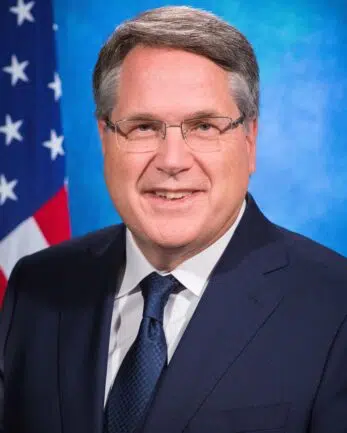
In announcing the new funding U.S. Ambassador to Sierra Leone, David Reimer, noted that

“The impact from this assistance will be felt across the country, as communities in all 16 districts will be engaged to educate people on the importance of getting vaccinated and work to ensure that the most vulnerable amongst us are protected.”

Theassistance, said to be from the historic American Rescue Plan, builds on more than $7.2 million in direct COVID-19 assistance to Sierra Leone from the United States since the pandemic first began.

That assistance, it was indicated, has been in the form of food security and livelihood support, emergency response activities, preventive hygiene promotion, and vaccine support.

In addition, it was mentioned that to end the spread of COVID-19 and prevent dangerous variants, the United States, through USAID, is contributing $4 billion to support COVAX — a global effort to provide safe and effective vaccines for 92 low- and middle-income countries.

These efforts, the releasestated, build on decades of life-saving work and U.S. leadership in tackling global health crises adding that over the past 60 years, USAID has saved millions of lives from diseases such as Ebola, HIV/AIDS, tuberculosis, malaria, and now COVID-19.

Stated also was that diseases know no borders and the U.S. is committed to partnering with Sierra Leone to end the COVID-19 pandemic, mitigate its devastating social and economic impacts and build back a world that is even better prepared for future outbreaks.

Formalizing Local Court System… A Step in the Right Direction by the Judiciary

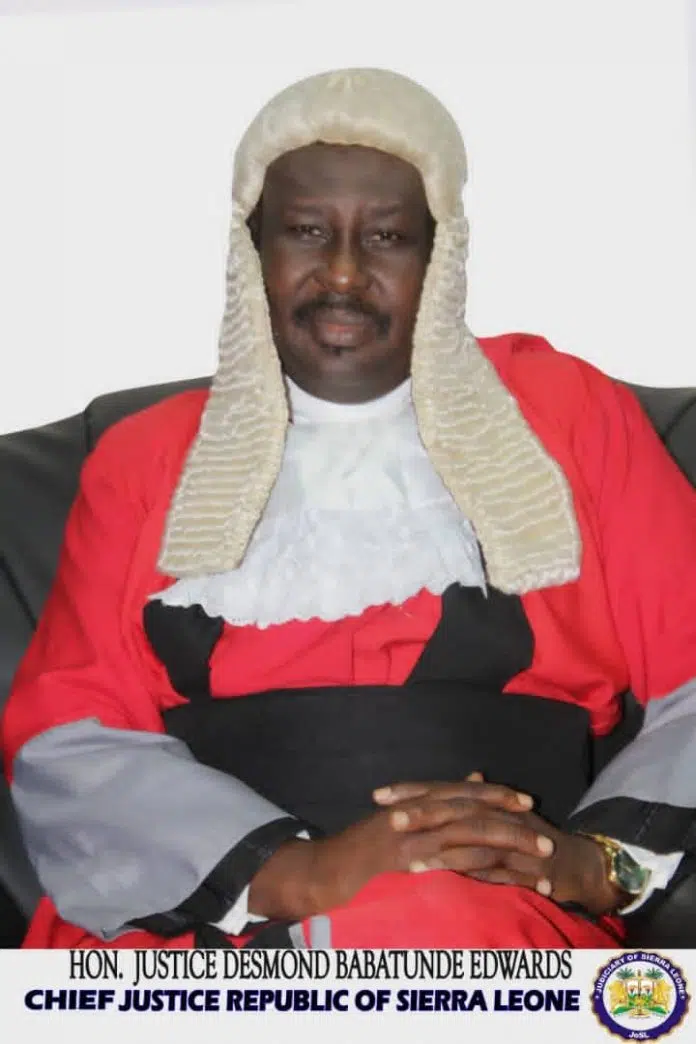
Honourable Chief Justice, His Lordship Justice Desmond Babatunde Edwards

By Amin Kef Sesay

The Justice for All report highlights the need to create better justice journeys by empowering people and communities, providing access to people-centered justice services and ensuring fair outcomes.

However, because of the severe shortage of Magistrate Courts in the provinces, large swathes of rural areas remain largely underserved by the formal justice system.

In this light, the vast majority of Sierra Leone’s rural communities depend on the services of local courts when seeking justice. Over 90% depend on local courts for the resolution of matters such as child and spousal support, property, tenancy and land disputes. However, the services of local courts are neither affordable nor fair and usually tend to favor the rich and powerful in the delivery of justice.

Three main factors affect delivery of justice in local courts: financial extortion, flawed judicial processes and gender discrimination.

The Local Court Act makes provision for the imposition of fines not exceeding SLL 50,000. However, many local courts are known to impose ridiculous fines and punishments, far in excess of what is allowed in law, partly due to the lack of clarity among service users as to the maximum fines the courts can impose on them.

Local Courts can impose fines up to 20 times higher than that which is allowed by law. There have been instances where they have fined people as high as Le2.5 million or $250. In addition to fines, service users are asked to pay for a number of other unauthorized expenses such as transportation for the courts’ Police to serve summons or warrants, and for paper and pens to record proceedings.

Research shows that the financial extortion perpetuated by Local Court officials, is in many ways a consequence of the lack of funding for their operations, the lackluster supervision from the Judiciary, and communities’ lack of understanding of how the courts are supposed to operate.

While the Local Court Act disrobed Paramount Chiefs of powers over the courts, they and other powerful actors wield control over them, including the appointment of court Chairpersons. This means that Local Courts seldom deliver adverse decisions against Chiefs, their relatives, and powerful personalities.

By the Act, Local Courts adjudicate civil and criminal matters under customary and the general law. They are supposed to be easily accessible for the majority of citizens constituting an entry point into the formal justice system, with the observance of due process, including rights of appeal.

In reality, principles of due process and non-discrimination are absent due to a lack of political will to follow through reform process initiated by the 2011 law. Also, the lack of meaningful supervision or practical and functional separation from chiefdom administration, has led to perverse results in the system.

While there is a right of appeal against a Local Court’s decision to the District Appeal Court made up of a Magistrate and two assessors, such appeals tend to be cumbersome and could be stymied by a parallel process in the law.

Rather than build on the reforms initiated under the 2011 Local Court Act to improve on processes and outcomes, the past Government tried to push for the courts to be returned to the MLGRD, a move that could to further undermine their legitimacy and functionality.

These findings illustrate the need for the Judiciary to fully implement reforms that would align Local Courts within the main judicial hierarchy, ensuring effective supervision and independence from the control of chiefs.

Over 40 Years of Unblemished Service… No Need for NP-SL to be Jittery over APP

By Amin Kef Sesay

In another article published on the 19th August 2021 by one of the most loathsome and discredited local tabloids in Sierra Leone titled, “Why is NP Jittery over APP?” the author once more succeeded in not only exposing his gross folly, ignorance of what constitutes the petroleum dynamics, landscape in the country, the tasks that key players are performing but also his burning intention, as an hired operative, to smear the impeccable image and good reputations of viable and respectable business entities in the country.

What convincing facts can the author, who seems to be suffering from a warped mentality, put forward to justify his erroneous and baseless assertions he highlighted in the said article:  The National Petroleum Sierra Leone (NP-SL), whose operation within the oil industry is only limited to buying of petroleum products from importing companies is jittery over the arrival of All Petroleum Products (APP), known to be another company that has what it takes to liberalize the oil industry.

Before the arrival of APP, NP-SL and Leone oil , who are the two major companies in Sierra Leone, have never imported any petroleum products, other than buying from Petroleum Importing companies. It is understood that the arrival of APP, which is known to be credible, serious and vibrant oil company, has worried both NP-SL and Leone Oil, as Sierra Leone oil industry will now be open for more players.”

The sweeping claims he made could only be best described as mere bunkum as they indeed make no sense. It is an open secret that the National Petroleum –Sierra Leone Limited (NP-SL Ltd) is a seasoned company that is mainly engaged in the importation and marketing of petroleum products such as petrol, diesel, kerosene, gas, lubricants such as the widely used Castrol Oil plus gas cookers known as NP Gas. NP-SL Ltd has been doing such for quite a considerable period of time now, spanning forty years, to such an extent that the business entity has now become a household name.

To put the records straight, the petroleum importing and marketing entity, out of the selflessness of its founders, shareholders and through the injection of sound managerial policies, succeeded in opening branches in Guinea, Liberia, Ivory Coast and The Gambia where it is marketing the aforementioned petroleum products and rendering related services to its numerous and esteemed customers.

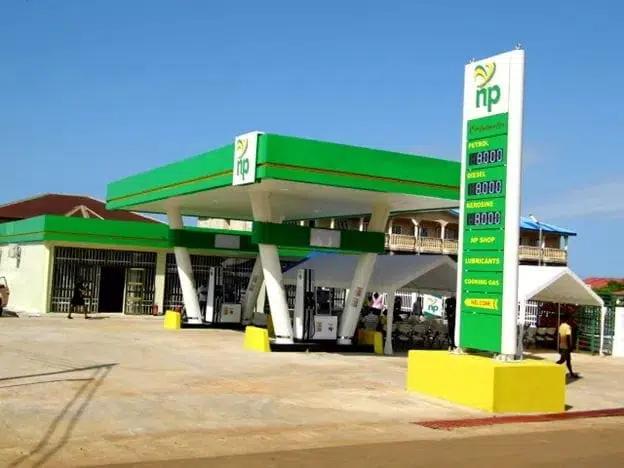
Besides, because it is a credible business entity certain savvy individuals decided to partner with NP-SL Ltd to open Filling Stations in different parts of the country with the latest one commissioned in Kenema last week Saturday. Today one can find NP Filling Stations strategically located everywhere in the country and the process continues.

The company has provided jobs to many Sierra Leoneans as well as it continuesto pay huge taxes which goes into the Consolidated Revenue Funds to be used by the Governments in the countries where it has its presence to fund different development projects.

It must be underscored that NP-SL Ltd, over the years, has weathered so many storms that could have sent it off track but the doggedness and resilience of both the shareholders and Management kept it surmounting those odds and keep it intact. Put into proper perspective, for over 40 years now the company has offered unblemished services to the country vis-à-vis other international companies like Mobil, Texaco, Shell etc that folded up as they could not endure external pressures.

The rhetorical question that one may tend to ask is: Why should NP-SL Ltd be jittery over the All Petroleum Products (APP) Company which is considered to be owned by 419ners?

For the attention of the author of the thrash cum article: How can NP-SL Ltd ,a company with such a high pedigree be jittery over ‘cowboys and gangsters’ parading themselves as investors?Indeed, one could only conclude that it is only myopic minds and useless idiots that will compare cheese and chalk.

NP-SL Ltd is indeed not averse to any form of competition whatsoever as it views such as significant for overall national development. However, if such a competition is healthy then it is good and fine for the nation but otherwise it must be discouraged.

The coming of another investor, in the guise of APP, is good and welcoming but the manner in which this new company wants to enter the petroleum landscape is something that is uncouth and totally not in tune with best practice.

However, based on thorough investigation mounted by this medium it was understood that there is some behind the scene manipulation allegedly being masterminded by senior officials within the Ministry of Trade and Industry and other public officials who are bent on undermining a credible indigenous petroleum importing and marketing entity, the National Petroleum Sierra Leone Limited in favour of a wheeler-dealer company or flight by night investor simply for personal aggrandisement. For some, greed could lead them to slaughter the nation on the altar of personal aggrandizement. What a shame!

What again is beating the imagination of many is that the regulatory agency for all petroleum marketing entities, the Petroleum Regulatory Agency(PRA) has so far done nothing tangible to prevent the impasse between NP-SL Ltd, Leonoil on the one hand and the APP on the other hand which manifests the gross incompetence of the man at the helm of affairs at PRA in the person of the Executive Chairman, Dr. Brima Baluwa Koroma. Sheer astuteness and sound leadership intervention could have been used by him to put a rest to the impasse but failing to do so speak volumes of something clandestine.

Let it be noted that no amount of threats or intimidation will cower NP-SL Limited as the company will continue to conduct its normal operations in the best interest of all and sundry as well as for the overall development of the nation. May Common Sense Prevail!

For Maltreating Presidential Aspirant … MMTU Administration Bans all Student Union Activities on Campus

By Fatmata Jengbe

All Students’ Union activities, including the closure of canteens, social clubs, fraternities, cultism, gatherings and other activities have been suspended on the Milton Margai Technical University (MMTU) campus by University’s administration.

The suspension was triggered by the stripping of a female presidential candidate naked. Currently, the administration has mounted an investigation maintain that the perpetrators would be brought to book.

The ban was announced in the wake of the letter written by some students to the Chief Minister, Jacob Jusu Saffa and copied to the Minister of Technical and Higher Education and other senior Government officials accusing the Principal, Dr. Philip John Kanu and administration of interfering into Students Union politics and wanting to lure them to his own club.

Dr. Philip John Kanu, on Monday 16th August 2021 stated at the Great Hall of the Goderich Campus in Freetown, that he would never be intimidated. He disclosed how he received a complaint letter from one of the candidates for the Students’ Union presidential election scheduled for the 20th August 2021 that she was invited to a meeting by a group of students and other unknown people who stripped her naked and took her photographs and threatened to post them on the Social Media in an effort to frighten her to stepdown for the other three male candidates.

The Principal stated that, “students’ business should be students’ business. Government has gained a lot of recognition internationally for protecting women and the girl-child in addition to enacting the Gender Bill. Therefore, it is a shame for students to treat a female student in such a dastardly and unacceptable manner. I take my students as my own children for which I always admonish them regularly to be studious and disciplined. I will never go down low to meddle in students’ politics. I do not want Government to stop the Technical University process that is our main goal. We are only waiting to receive our certificate by October this year and therefore do not want any disruption of this process.”

According to Dr. Kanu, in the letter to the Chief Minister, the students accused the administration of interfering in their elections, threatened to protest and burn down the institution but that he warned them not to allow people to mislead them underscoring that he is disappointed that the students could not conduct a simple election for themselves and informed them that unlike in the past he would never tolerate them again in his office that was accessible to them or on campus.

Milton Margai has set the pace in the past for the conduct of peaceful and credible elections to the admiration of all.

The family of the lady candidate in question has also reported the matter to the Police.

Dr. Kanu went on to disclose that all the Students Union elections conducted since he assumed office three years ago have been peaceful, free from violence and transparent to the applause and admiration of not only other colleges and universities but the entire country intimating that he invited the four presidential candidates to a meeting where he assured them that his administration would not interfere in the elections and would support the winner.

A Students’ Representative Council, made-up of four of the most brilliant students with the highest grade points (males and females), headed by a Coordinator, will be appointed to represent the welfare of students with a Coordinator liaising between the administration and the students for which the college administration has appointed a committee to oversee the election of the Students’ Representative Council. The Students’ Union constitution will also be reviewed to meet the new University Status.

The MMTU Principal further informed that his focus is the new Technical University status that would commence this October, that his administration would investigate cases of mass student failures, accused some students of not attending classes regularly but want to pass and that people appeal to him to pass some of them when they fail asserting that any decision he takes is for the good of the institution and the country.

The administration has beefed up security on the three campuses of the Technical University including the installation of CCTV cameras in classrooms and on campus.

Earlier in his welcome statement, the Vice Principal of MMTU, Dr. Mohamed Alie Jalloh reiterated the importance of the meeting for the students, staff and lecturers, which takes place from time to time underscoring that many developments have taken place in the college recently.

He stressed that the administration is not trampling on the rights and freedoms of students underlining that rights and freedoms go with responsibilities and reminded the students about the rights of others, stressed that the college is at a crossroad and an important time in its history affirming that its gets darkest before dawn and assured that everything done at the college is for the welfare and security of students.

The Police representative warned the students that defaulters would be reprimanded, that with immediate effect they would patrol the campus, appealed to them to be law-abiding and embrace change and development.

Sources at the college intimated this medium that one of the prime suspects and one of the presidential candidates in the stripping of the female candidate and taking of her naked pictures, Santigie Conteh, may be expelled from the college after the conclusion of investigations.

Parliament & CSOs Engage in Two Day Workshop

By Esther Wright

A two-day discussion with representatives from Civil Society Organizations and Parliament of Sierra Leone, supported by UNDP, commenced on the 17th August 2021 at the New Brookfields Hotel in Freetown.

It will end on the 18th August, 2021 with the signing of a communique between Parliament and CSOs with the view of building a healthy and mutually supportive relationship between Parliament and CSOs.

The workshop is themed: “Building a Healthy and Mutually Supportive Relationship Between Parliament and Civil Society Organizations in Sierra Leone”.

Speaking on behalf of UNDP, Hon. Rosaline J.K Smith said the importance of the workshop between Parliament and CSOs could not be overemphasized. She recalled how UNDP had supported Parliament in areas of capacity building including research and budget scrutiny. She also said that CSOs have a role to play by promoting public education on the roles and responsibilities of Parliament, and the need for having a CSO Desk in Parliament.

On behalf of WFD, Idrissa Cole, National Programmes Coordinator recalled the Parliament Open Day in 2019 aimed at promoting public participation and understanding about the operations and functions of Parliament. Submitting on the efforts made by Parliament regarding open Government partnership, he spoke on the need for visibility and the need for CSOs to work with Parliament to promote transparency and accountability in governance.

On behalf of the EU, Hon. Helen Kuyembeh spoke on the importance of the workshop and called for open and frank discussions aimed at improving the relationship between Parliament and CSOs.

Leader of Government Business, Hon. Mathew Sahr Nyuma said he was happy for the platform created for Parliament and CSOs to understand and explain their different roles in the governance landscape of Sierra Leone. He referred to it as their different path ways to building the democratic blocks of Sierra Leone, adding such dialogue will help to shape and enhance democracy in the country. He recalled how he had procedurally withdrawn a Bill relating to the repeal of part 5 of the Public Order Act of 1965, but was unfortunately lambasted by CSOs and was later vindicated for doing what was procedurally right. He also recalled the role played by CSOs during the interregnum for the restoration of democracy in the country.

Speaking on behalf of CSOs, Abu Brima said it is a realization that CSOs exist and that they exist for Parliament. On the importance of the workshop, he noted that CSOs have not ceased and they are always working with sectoral committees in Parliament, and spoke about the need for formalizing the relationship between Parliament and CSOs for the development of the country.

He also said that CSOs exist as a bridge between Parliament, Government and the people by holding them to account for effective democratic governance in the country. Speaking on the role of CSOs to promote public participation and understanding about the roles of Parliament, he said CSOs would not compromise their mandate to the people for any reason whatsoever.

Delivering his keynote address, Deputy Speaker of Parliament, Hon. Segepoh Solomon Thomas said the engagement between Parliament and CSOs could not have come at a better time than now, hence the need for collaboration between Parliament and CSOs to strengthen democracy in Sierra Leone. Speaking on similarity of roles, he said Parliament is an elected embodiment that holds the government to account, whereas CSOs are influencers who hold Parliament and Government to account on behalf of the people.

He also said that CSOs are there to fill the gaps left behind by Parliament. He also said that CSOs are there to prepare the people to participate in governance, and also help in building and strengthening democracy, justice and development in the country. He also said that CSOs should not be seen as an opposition to Parliament, but rather they should collaborate and partner for the development of the country. He ended by referring to Parliament as a repository of legislative actions and CSOs as an informative platform for development.

Indian High Commissioner & FCC Plant 150 Trees at Kissy Upper Catchment Area

By Edward Vamboi

To continue to commemorate India’s 75 Independence Day in the country, the Indian High Commissioner to Sierra Leone, His Excellency Rakesh K. Arora in collaboration with the Freetown City Council (FCC) has on the 17th August, 2021 planted 75 trees at the Kissy Upper Catchment Area on the edge of the Western Peninsula Forest Reserve in the East End of Freetown. The FCC, while facilitating the planting of the 75 trees by the Indian Mission, also contributed by planting an additional 75 trees bringing it to a total of  150 trees planted. This made India to become impact owner of 150 trees.

This medium further learnt that the Freetown City Council will integrate those trees into the architecture of #Freetown TheTree TownCampaign geared towards the planting, growing and digitally track one million trees in Freetown and the Western Area Peninsula by 2022.

This innovative Campaign harnesses digital and disruptive technology to create employment opportunities for local youth and women during the COVID-19 pandemic; it also helps establish long-term climate resilience for the community.

The campaign comes with ecosystem benefits that include reducing heat stress, improving air and water quality and reducing flooding and landslide risks.

Speaking during the ceremony, the Indian High Commissioner to Freetown, Rakesh K. Arora expressed gratitude to the Mayor of the Freetown City Council,  Yvonne Aki Sawyerr OBE, to let the Indian Mission join FCC’s wonderful tree-planting campaign, stating that they all know that afforestation is necessary to combat the issues of global warming, soil erosion, pollution, and the maintenance of biodiversity and ecological balances and that green surroundings or forest areas improve air and water quality and lowers the risk of flooding of which , he said, such campaigns are important for providing  qualitative life to its citizens.

Making mention of India’s environment policy, the High Commissioner said that India has pledged to keep a third of its total land area under forest and tree cover, adding that in a campaign last month, 250 million saplings were planted on a single day in India.

He disclosed that India is commemorating 75 years of progressive India and the glorious history of its people, culture and achievements, as Azadi Ka Amrut Mahotsav (Grand Independence Festival: India@75) furthering that India celebrated its 75th Independence Day on the 15 August and the commemoration will continue throughout the year until the anniversary celebration in 2022.

According to the Founder and Executive Director of Youth Action for Relentless Development Organization-Sierra Leone, Ahmid C. Jalloh YARDO is a Non-Governmental Organization (NGO) working alongside the Freetown City Council (FCC) to fight against climate change. He also extended his heartfelt gratitude to the India delegation for their effort in joining them fight against climate change.

He concluded by saying over the years they have been planting trees  making many of them feel happy to be part of the process. He said the trees they planted are digitally tracked which will help to ensure their survival and growth rate.

The Councilor of Ward 416 in Constituency 119 within the Kissy Upper Catchment Area, Sheku Nbompa Turay, extended his sincere gratitude to the Indian High Commission and the Mayor of Freetown Yvonne Aki Sawyerr for choosing his area where the trees will be planted.

He disclosed that the event is going to be marked as a remarkable day more especially as India is celebrating its 75th Independence Day further stating that residents of the Kissy community really appreciate the participation of the Indian Commission for making a symbolic gesture towards his community adding how the relationship between residents of Kissy Community and the Indian Commission will continue to be strengthened.

He underscored that the tress they have planted will become a symbol of unity between the residents of Kissy and the Indian High Commission.

The Councilor informed how the Indian Government had been helping Sierra Leone in diverse ways disclosing how for the past years there had been a good relationship between the two countries in terms of Economic Trade, Industrial Service, Employment, Health and Security.

Sheku Turay concluded point out some of the constraints residents of the community have been deprived in terms of Road Maintenance, Water Facility, Electricity, Medical Facility, Schools.

Victor John, the Community Chairman of the Kissy Upper Catchment Area said they are appealing to the India Commission to support them in the areas of improved electricity, road infrastructure and so many things they lack as a community.

He said as a community heads they will ensure that the trees they have planted will be secured.

He ended by saying that they are very happy to see the India Commission through the Freetown City Council (FCC)  planting trees in their community which will help them in the near future against deforestation, erosion, and other climate change that will destroy their community in the future.

Bar Association Raises Concerns Over Council of Legal Education (Amendment) Act 2021

By Foday Moriba Conteh

In a Public Notice dated 16th August, 2021, signed by the President of the Sierra Leone Bar Association, Eddinia Michaela Swallow, and the Secretary General, Abdul Karim Korma, the Sierra Leone Bar Association (hereinafter referred to SLBA) has raised concerns over the Council of Legal Education (Amendment) Act, 2021 which seeks to amend the Council of Legal Education Act of 1989 to provide, among other things, for representation of Njala University and University of Makeni in the Council of Legal Education and to provide for the establishment and maintenance of Njala University Law School and the University of Makeni Law School.

The notice further stated that the SLBA notes the many concerns of members of the legal profession and some sections of the public, adding that the Association further notes with grave concern that their views or contributions were not solicited in the drafting of the said bill and no consultations were done with the General Legal Council (GLC), the statutory body responsible for the regulation of the legal profession in Sierra Leone adding that they believe a wider consultation on the subject matter would have benefited from a deeper brainstorming of the challenges sought to be remedied by the proposed Bill.

It was also noted that the Association holds the view that the heightened protest against the Bill, is as a result of the absence of wider consultation with members of the legal community while the idea to restructure Legal Education in Sierra Leone is much needed, the process of such restructuring ought to be consultative and extensive.

Following a perusal of the said Bill including the “Memorandum of Objects and Reasons”, the Bar Association wishes to inform the general membership of the Bar Association and the Public of the following:

Firstly that the Council of Legal Education is facing serious challenges in providing oversight of the Sierra Leone Law School hence, by proposing for the Council of Legal Education to further establish and maintain new law schools, will compound the challenges and affect the quality of the professional legal training. Secondly, that while we recognize that both Njala University and University of Makeni offer a degree in Law, we are concerned that they may not at this material time have the capacity to provide the required and/or adequate professional legal training and supervision of same: as such this may have the tendency to undermine the academic standards required to provide professional legal training in Sierra Leone.

Thirdly, that the current Sierra Leone Law School is constrained by inadequate subvention from Government and inadequate infrastructure. Hence, any desire to increase access to professional legal training must start by addressing those two constraints faced by the Sierra Leone Law School.

Fourthly, that what is proposed in the amendment is not in tandem with other jurisdictions in the sub region, where such universities turn out even more law graduates than Sierra Leone. The practice is to establish and maintain one Law School and several campuses. For instance, the Federal Republic of Nigeria has one Law School called the Nigerian Law School which has six (6) campuses and finally that the proposal to include Njala University and University of Makeni in the Council of Legal Education is an unnecessary expansion of the composition of the Council of Legal Education which is currently facing an infrastructure constraint.

The Bar Association noted that they do not believe that it is the best practice for every university which offers a degree in law to be included in the Council of Legal Education of which the Association has serious concerns and/or reservations with respect to the said Bill in its entirety and call on the Attorney-General and Minister of Justice to engage with key stakeholders in addressing the existing challenges which the Council already faces whilst attempting to increase access to professional legal training in Sierra Leone without a recourse to the establishment and maintenance of new law schools in Sierra Leone.

“In this vein, SLBA intends to engage the Office of the Attorney General and Minister of Justice to request wider consultation on the way forward for improving legal education in Sierra Leone. The membership of SLBA and the general public will be duly updated on the outcome of the engagement with the Office of the Attorney General and Minister of Justice on this issue,” the Notice concluded.

Redenomination Backed by Sustained Economic Growth would Work

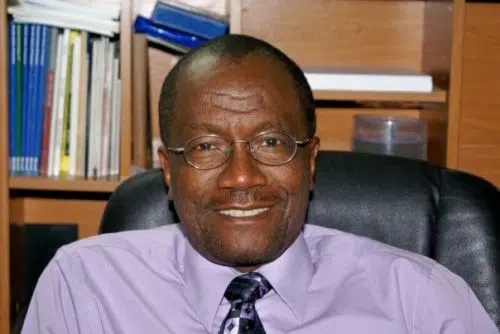
Governor of the Bank of Sierra Leone, Professor Kelfaila Kallon

By Amin Kef Sesay

No doubt, despite the development progress made so far by the previous Government and this one, Sierra Leone’s economic growth remains fragile, standards of living are still very low, and poverty is widespread. Health and education indicators continue to be poor, job opportunities have not kept pace with the growth of the labour force. The country depends heavily on external concessional assistance.

As such, faster sustainable growth is essential for improving living standards and reducing poverty. Given the low level of per capita income in the country, redenomination alone would barely dent the problem of poverty.

To lift the country out of the economic doldrums that has been exacerbated by the economic ravages of COVID-19, what the monetary and development authorities should be busy at, looking to the post COVID 19 rebuilding period, is how to sow the seeds of an economic renaissance to achieve faster growth and less poverty within the short to medium term.

Given that the gap between imports and exports remains very wide, and productivity very low, making the country unable to break away from paths of low or negative per capita income growth, high inflation, and balance of payments difficulties, the vision of the economic renaissance should be to put in place sound macroeconomic policies and better management of the economy to address the daunting economic and social challenges; as well as better terms of trade. According to the IMF, where these policies have been sustained, they have raised growth and reduced poverty.

In addition to the need to maintain the focus on macroeconomic stability – through appropriate fiscal, monetary, and exchange rate policies – and on structural reforms to improve the efficiency of markets, there are fundamental challenges in three key areas.

One is to design and implement comprehensive policy strategies that promote faster growth and poverty reduction and at the same time have the broad public support needed to ensure their sustainability. These objectives require greater participation by civil society in consultation on program design, and more efficient use of public sector resources for poverty reduction.

Second is to improve governance, promote the rule of law, encourage openness and transparent governance, reduce opportunities for corruption, and create a more favorable environment for private sector investment and production. All these will enhance productivity and competitiveness and help to secure the full benefits from the ongoing globalization of the world economy.

Third is to strengthen external payments positions. Debt relief in support of poverty-reducing policy programs has an important role here.

Within the above context, macroeconomic factors that should be on the Government’s radar screen include gross domestic product, the rate of employment, the phases of the business cycle, the rate of inflation, the money supply, the level of Government debt, and the short-term and long-term effects of trends and changes in these measures.

Two types of policy interventions need strengthening: “work support” programs, which reduce poverty, provide positive work incentives that boost work activity, improved employment outcomes for low-wage workers; and investments in early education and skills and job training programs.

Overall, a combination of sound, prudently and robustly implemented fiscal, monetary and exchange rate policies, the IMF says, can help promote stable and sustainable non-inflationary growth characterized by low inflation, low unemployment, equilibrium in balance of payments and fair distribution of income.