The Human Rights Commission of Sierra Leone (HRCSL), with funds from UNDP and Irish Aid on Friday 16th July, concluded a round trip to Port Loko, Koinadugu and Kono districts for the establishment and training of school club members and teacher coordinators. This adds to the existing Human Rights & Peace Clubs in the Western area (urban/rural), Kenema, Bo and Bombali districts.
HRCSL’s vision to extend human rights outreach campaign to schools anchors within the ‘catch them young’ phrase, to imbibe human rights awareness in pupils and make them ambassadors for human rights in their schools, homes and communities.
The Vice Chairman of HRCSL, Victor I. Lansana, in his address to the pupils said, the Commission’s key mandate is to protect and promote human rights of all in Sierra Leone, adding that this task is done through “public education, advise to government on human rights issues, monitoring and to inquire into human rights complaints. He added that school pupils also have a role to play in ensuring that human rights are enjoyed by all; he therefore informed them of their responsibilities to make the right to education, as promoted under the Free Quality Education Program, a success for them all.
He encouraged the pupils and their teachers, who served as coordinators, to keep the clubs alive by embarking on activities in their schools and communities that will promote human rights among their peers and the country as a whole.
A copy of the Commission’s Guidelines for Human Rights and Peace Clubs in Secondary Schools in Sierra Leone was presented to each school to guide the activities of the clubs.
The pupils were trained on the history of human rights, misconceptions of human rights, peace and conflict, guidelines to establishing the peace clubs among others.
The pupils and their teachers/coordinators were quite excited about the training and promised to be great ambassadors of human rights and individual responsibilities in their schools and communities going forward.
Launched in 2014, the Mandela Washington Fellowship for Young African Leaders is the flagship program of the Young African Leaders Initiative (YALI) and embodies the U.S. commitment to invest in the future of Africa. YALI was created in 2010 and supports young Africans as they spur economic growth and prosperity, strengthen democratic governance, and enhance peace and security across Africa. Since 2014, nearly 4,400 young leaders from every country in Sub-Saharan Africa have participated in the Mandela Washington Fellowship.
Due to the global COVID-19 pandemic and with the health, safety, and well-being of Fellows and Partners as the highest priority, the U.S. Department of State is planning a virtual Fellowship for 2021. While remaining in their home countries, Fellows are participating in virtual Leadership Institutes between June 21 and July 30, which will include leadership training, mentoring, and professional development.
U.S. Embassy Freetown is proud to announce that the following leaders will participate in the 2021 Mandela Washington Fellowship: Abubakarr Kikin Shequ Kun Daoh, Ibrahim Barrie, Josephine Kamara, Lois Simche Lebbie, Mariatu Kabba, Phebean Mesi-Musu Judith Jan Swill, Seinya Amie Bakarr, Tamba Sangbah.
United States Ambassador David Reimer stated, “These remarkable young leaders represent some of the very best Africa and Sierra Leone has to offer. They are talented, educated, and passionate about the future of their country. I wish them the very best as they take part in this prestigious program.”
After their Leadership Institutes, Fellows will participate in a virtual Summit. Additionally, up to 100 competitively selected Fellows will virtually engage in professional development with U.S. organizations in the public, private, or non-profit sector. Fellows can participate in Alumni Programming after their Fellowships to further build their professional skills and networks.
The Mandela Washington Fellowship is a program of the U.S. Department of State with funding provided by the U.S. Government and administered by IREX. For more information about the Mandela Washington Fellowship, visit mandelawashingtonfellowship.org.
Rtd. Brig. Julius Maada Bio together with his wife, the First Lady of the Republic, Fatima Bio over the weekend took time out of their busy schedules to visit the Tacugama Chimpanzee Sanctuary in Freetown.
Located along the Regent/Bathurst mountain road, the Chimps Sanctuary was established in 1995 by conservationists, Bala Amarasekaran and his wife Sharmila to rescue orphaned and captured chimps. The Sanctuary offers daily schedule visits as well as six eco-lodges for overnight stays.
The move by the first family to visit Tacugama speaks volume of President Bio’s commitment to promoting tourism and showcasing premier tourist’s attraction sites in Sierra Leone.
Renowned as a perfect place for those wishing to escape the heat and hustle of Freetown and enjoy fragrant forest breeze in the company of some extraordinary creatures, the first family of Sierra Leone enjoyed their visit to the sanctuary, as they felt the unravel hospitality of the site.
The United Nations Population Fund- UNFPA, continues to work with the Government of Sierra Leone in providing maternal and newborn health services, including Emergency Obstetric and Newborn Care, family planning services for women and girls, and other sexual and reproductive health services.
In building a strong team of healthcare workers, the agency has donated to the Ministry of Health and Sanitation medical equipment critical to supporting emergency obstetric and new-born care (EmONC service provision) and in the screening and management of cervical cancer. The equipment donated includes cryotherapy apparatus, carbon dioxide gas cylinders, fetal dopplers, hemocue, sterilizers, vaginal speculums- different types and sizes, forceps- different types and sizes, instrument trays, and gynecological models.
The donation was made possible with funding from the People’s Republic of China under the South-South Cooperation Assistance Fund (SSCAF), through which China in 2019, committed $2 million to reduce maternal deaths and prevent and treat cervical cancer in Sierra Leone. In 2020, UNFPA in collaboration with the Ministry of Health and Sanitation initiated the China South-South Cooperation project aimed at improving women’s health and reaching vulnerable and those at high risk of maternal mortality and cervical cancer. The project led to the development of a National Policy on Cervical Cancer, a Strategic Plan, and Clinical Guidelines for the management of cervical cancer.
Handing over of the equipment on behalf of UNFPA, Dr. Stephen Mupeta, Technical Specialist on Maternal Health and Family Planning, applauded the excellent and longstanding ties of partnership that both the ministry and UNFPA have enjoyed. “The items we are donating are needed to look after women when they are pregnant and when giving birth and some to be used in training healthcare providers. In addition, some will be used for screening and treatment of cervical cancer”, Dr. Mupeta explained.
Receiving the donation, Dr. Francis Moses, Reproductive Health and Family Planning Programme Manager said, the equipment is lifesaving ones that they have been trying to obtain as a ministry. “We are thankful to UNFPA for the support. We are also thankful to the People’s Republic of China as donors for providing the resources that we have been using in providing cervical cancer training and for providing the equipment to ensure the services are delivered in facilities across the country”, Dr. Moses said.
UNFPA, with funding support from China, is supporting nine healthcare facilities with the establishment of cervical cancer screening and treatment services and in equipping Reproductive Health Centres to provide comprehensive reproductive health services. The support to EmONC service provision will help reduce avoidable morbidity and mortality related to childbirth. It also will contribute to the reduction of the country’s maternal mortality ratio, which is among the highest in the world at 717 per 100,000 live births.
Sallay Carew, a Senior Public Health Sister attached to the Reproductive Health and Family Planning programme, expressed appreciation to UNFPA for donating the equipment and for establishing cervical cancer screening and treatment services in public health facilities. “The donation by the People’s Republic of China through UNFPA is critical for our health sector. The equipment will help us put into practice lessons learnt from the training on cervical cancer screening and management. The facilities across the country will also help in addressing issues of maternal deaths, especially those related to cervical cancer”, she emphasised.
Cervical Cancer is preventable and treatable if diagnosed early. In Sierra Leone, 512 women are diagnosed with cervical cancer and 372 die from the disease every year, with the country ranking 22 in the world with age-adjusted death rate of 22.47 per 100,000. The support by UNFPA to the Ministry of Health and Sanitation to establish cervical cancer screening and treatment services in public health facilities will make these services accessible to women and help prevent avoidable deaths from cervical cancer.
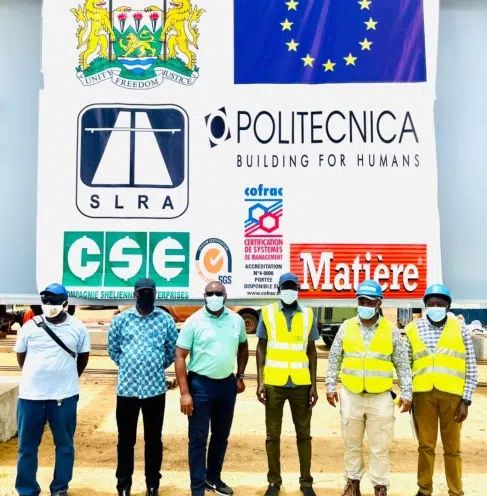
The Director of the National Authorizing Office (NAO) in the Ministry of Planning and Economic Development, Ambrose James, has said that the Mabang bridge, when completed will contribute significantly to social and economic growth of people in that part of the country, which at the moment is hugely challenged. Furthermore, poverty will be reduced and livelihood activities as well as local economy stimulation will be boosted.
He made this statement at the launch of the 1st phase of the Mabang bridge steel girders with a length of 163 meters, at Mabang which is a major link of the Songo-Moyamba road, connecting the southern part of the country. The bridge which boundary’s Koya Chiefdom in Port Loko and Ribbi Chiefdom in Moyamba District, has been a major infrastructural challenge, since it collapsed in February 2013.
According to Mr. James the bridge costs slightly over €9 million Euros. He said it is expected to enhance trade and commerce along the communities and would no longer endanger the lives of residents, but will considerably improve travel time. Currently, dug-out canoes are the means of crossing and access to other towns and villages in that part of the country.
“So far we have utilized about 75 percent of the finances to build the Mabang bridge, but for us, we are building bridges to connect communities and to ensure that goods and services are accessible to remote areas in communities. This would mean a lot for the local people in this part of the country”, Mr. James said.
He noted that the completion of the bridge will fulfil President Julius Maada Bio’s Infrastructural, Human Capital Development, Economic diversification and other promises.
Engineer Vandi French, Director of Planning, Policy and Research, SLRA, said the project so far was in its advanced stage and that they were impressed with the quality of work being done at the site. He said this was a critical milestone to the development of the country.
The Project Manager from CSE, Abdoulie Mbow, said that on completion, the bridge will last for over 100 years. He said the 2nd phase would be very short, which would include 7 beams, welding, testing before finalizing the launching. He said the decks would be prepared after the launching, which would take two and half months to complete, and then in February, the final completion of the bridge.
Alusine Koroma, Chairman of the Driver’s Union at Mabang, said people in that part of the country are engaged in various commercial activities, and the bridge was an essential infrastructure for their daily survival. He thanked the President Bio-led government for bringing such development to the people of the Mabang community.
“I buy most of my goods from the capital city, Freetown— and bring them to trade in villages, across the Ribbi river. We have suffered and have been cut off for so long. But with this bridge, our livelihoods will be back. President Bio is a Champion”, says Zainab Koroma, a local business woman.
The Mabang Bridge is part of Lot 2 of the global European Union funded project, which costs €40.7 million Euros. It provides for the rehabilitation of 33km of road between Moyamba and Moyamba Junction, and four bridges. These include one over Gbangbama River, another over Yambatui River in Moyamba town and the construction of two-lane bridges over the Rokel River (Magbele Bridge) and the Ribi River (Mabang Bridge).
NaCOVERC’s attention has been drawn to a BBC report suggesting that nine (9) African countries including Sierra Leone have destroyed a total of 450,000 COVID-19 vaccines.
That report emanates from a briefing done by Dr Richard Mihigo (the WHO Africa Regional Office Program Area Manager for Immunization and Vaccine Development). Dr Mihigo was essentially stating the consequence of delays in vaccine shipment. If by the time vaccines are shipped, they are very close to expiration, there is a strong likelihood some of them will not be used.
Sierra Leone received 42,000 doses of Oxford-Astrazeneca vaccine from the AU on 20th March 2021, to expire on 13th April. The shelf-life was less than a month. As a Response, we were able to operationalize the roll-out immediately; and once we knew that the expiration period had kicked in the following month, the decision was made not to administer the remaining 13,000. Let it be made clear that Sierra Leone does not destroy vaccines just like that.
The public would further recall that we received a donation of 96,000 doses of Oxford-Astrazeneca from the COVAX scheme. We successfully utilized those 96,000 doses before their expiry on 16th July.
As WHO, Africa CDC and other well-meaning institutions and individuals continue to make a clarion call for equity in vaccine distribution, we join those compelling voices in our passionate appeal for greater and quicker access to WHO-approved vaccines.
NaCOVERC and Ministry of Health and Sanitation continue to work assiduously to make sure that our people have those life-saving jabs in their arms; and will not walk the senseless path of destroying vaccines, which are meant to save lives and break the chain between infections and hospitalization.
As part of its celebration of Nelson Mandela International Day and in fulfilment of its mandate to seek the welfare of, and defend the rights of vulnerable groups in Sierra Leone, Christian Lawyers Centre also known as LEGAL LINK, made donations to the Female Correctional Centre, the Milton Margai School for the Blind and the disability community, particularly those begging within the Central Business District of Freetown.
The Nelson Mandela International Day was launched by the UN General Assembly on 18th July 2009. It was done in honour of Mandela’s legacy and contribution to the culture of peace and freedom around the world, as well as his devotion to the services of vulnerable groups, human rights, love and reconciliation.
Even though he has passed away, the 18th of July (which happens to be Mandela’s birthday) is celebrated every year across the world to inspire hope, change, peace, love and a culture of selflessness in the human race.
This year’s Mandela Day celebrations took the form of donations to vulnerable groups. The donations made by LEGAL LINK were inclusive of bags of rice, onions, bundles of water sachets, sanitary pads, gallons of oil and cubes of Maggie.
The donation at the Female Correctional Centre was received by the warden, who appreciated the gesture and thanked LEGAL LINK for always giving hope to inmates at the correctional facility.
The Head of the Milton Margai School for the Blind, Sallieu Turay, received the donation on behalf of the school and called on Dorian Samu, one of the blind students, to give a speech of gratitude. Samu lauded the efforts of LEGAL LINK over the years to ensure protection for vulnerable groups in every corner of the country.
The Chairman of the disability community at Pademba Road, Mr Gborie, also expressed similar sentiments about LEGAL LINK and called for other organizations to emulate the good example of LEGAL LINK.
The Disability community at Cotton Tree, Siaka Stevens Street and Lamina Sankoh Street also benefitted from the donations that were made.
At all of the places visited, the Executive Director of LEGAL LINK, Rashid Dumbuya Esq, gave a speech on the history behind Nelson Mandela International Day celebration, and encouraged the beneficiaries to have hope in the midst of the coronavirus pandemic; and never forget to extend love and support to one another, as that was how Nelson Mandela lived his life here on earth.
He pledged his organization’s unflinching commitment to continue supporting the welfare of, and defending the rights of vulnerable groups in Sierra Leone.
Key personalities that joined the distribution exercise were the Board Chair of LEGAL LINK, Pastor Paul Ken Bockarie, Barrister Michael Dumbuya and other interns and volunteers of LEGAL LINK.
The Sierra Leone Police is committed to giving security support to institutions and individuals in Sierra Leone. In order to create conducive environment for foreign direct investment in the country, the Inspector General of Police – Dr. Ambrose Michael Sovula – has intensified efforts to support investors with adequate security when they travel into the country to begin business. Over the years, the management of the police had shown great concern over the security issues faced by business people, and had been strategizing lasting remedies to those isolated incidences.
On Friday 16th July, 2021, the Inspector General of Police (IGP) and some members of his Executive Management Board together with the Deputy Minister of Information and Communication – Solomon Jamiru Esq. – met with the management of Odhav Multi Industries (SL) Limited in the office of the IGP at Police Headquarters, George Street, Freetown, to discuss issues of security for the company, as they are about to fully commence their operations.
In his engagement with the IGP, the Managing Director of Odhav Multi Industries (SL) Limited – Nikhil Chandra – requested for some police personnel to protect his Chief Executive Officer and the operation site. The IGP, in his response, recognized that since their operation in Sierra Leone was legal, he would have no problem in giving the company adequate security.
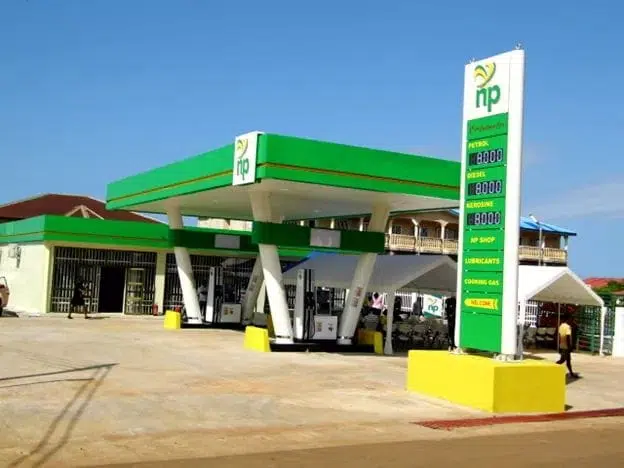
Unlike some business entities operating in the country, the National Petroleum-Sierra Leone Limited (NP-SL Ltd) provides a shining example of true patriotism and should be emulated by other local investors and businesses. The formation of the company is part of the overwhelming desire of the 35 retired Sierra Leonean workers from the British Petroleum Company to serve the country and build a business that can stand the test of time, and this driving force has seen the expansion of the company to other West African countries. Today NP-SL is the pride of Sierra Leone.
Without any gainsaying, there are many useful lessons that can be learnt from NP-SL Ltd that could inspire aspiring entrepreneurs as a roadmap to navigate through the business landscape to crystallize their dreams into reality.
The company was founded decades ago by thirty-five Sierra Leoneans who were erstwhile employees of the British Petroleum Company which decided to fold up and sell its shares to the Government of Sierra Leone.
Based on technical advice, the Government also decided to sell its shares and the 35 former workers bought those shares to set up what became known as the National Petroleum-SL Ltd. It must be highlighted that the company is a private-owned business entity and the Government has no hands in it, does not decide how it is operated and grapples with challenges.
One of the underlying factors for the meteoric rise of the company is the selflessness of its shareholders. These ambitious Sierra Leoneans were so dedicated to the cause of catapulting their “baby” to higher height, that they put their best initiatives into play that culminated into the company becoming a formidable force to reckon with.
These fine business initiatives were well implemented to the letter which led to the realization of fruitful dividends. Selflessness, in this context, could mean putting aside ego, working with a collective sense of purpose, brushing aside deceit, greed and ready to give as well as take. This could be the first lesson.
The next lesson borders on enhancing customer care with the avowed objective of giving optimum satisfaction. The Shareholders and various Management teams harnessed this well to the extent that they have succeeded in broadening their customer base.
As far as they are concerned, it is the interest of customers which are paramount and therefore everything must be done to ensure that those interests are given due consideration whenever decisions are taken to push the company forward.
It is in this regard that the shareholders decided to go in for modern calibrated pumping machines which are capable of churning out the right quantity of fuel that a buyer puts in for as well as displaying the price. These machines make fuel transactions become very transparent, thereby giving customers’ satisfaction and confidence that they are deriving their monies worth.
Within that realm, the Shareholders also thought it prudent to introduce NP Smart Card which is now in vogue. This Smart Card can be used to purchase fuel, petrol and diesel, with ease avoiding the hassle of having to be rushing to the banks to re intermittently withdrawing monies for the purpose of purchasing fuel. The card could be credited with a certain amount of money and whenever transaction transpires the amount utilized is debited. Its greatest advantage is that it avails the holder of the Smart Card the opportunity to programme or budget him or herself to purchase fuel on a periodic basis.
NP Gas is now going like hot cakes on the market. It is a cooker which has been proven to be very effective in terms of performance. Manufactured in different cylinder sizes it has been attested to be environmentally friendly in terms of less gaseous emissions that could pose health risks. NP Gas can be secured at all the leading Filing Stations of the company and its authorized dealers.
With all these attractive offers, there is a lesson that enhancing customer care is very key to the growth of any business enterprise. Aspiring entrepreneurs could learn from this.
What also has been identified as a good business initiative which the company has mastered so effectively has to do with promoting the country’s Local Content Policy. The intent of this policy is geared towards ensuring that we make proper use of our local resources, human as well as material, in the production chain. It is against such a backdrop that the company limits employment opportunities to qualified Sierra Leoneans instead of bringing over expatriates to perform tasks that could be better done by indigenes. Knowing that they are employed by an indigenous company such gives the employees the sense of ownership and the extra motivation to give their best to the company.
Another Lesson: Make use of local resources which could be cost effective instead of spending much to use expatriates just for the sake of showing off. Besides, monies, in the forms of salaries and end of service benefits are retained and not taken out of the country. It gives any company operating with such a policy a nationalistic flavour.
To give back to society, in the form of Corporate Social Responsibility, brings with it respectability and integrity. It is very important to be in a position to always assist residents in communities where a business entity operates or to the country as a whole.
From all what have been said so far, it could be seen that NP-SL Ltd has valuable lessons which aspiring entrepreneurs could imbibe and infuse in their activities if fruitful dividends must be realized. Indeed, NP-SL Ltd is really a source of inspiration and a reservoir of good business initiatives.
There are many hot spots of social and political marginalization in post-conflict Sierra Leone, but over the years, the most notorious one has been Kenema city, as successive governments constantly deprived them of desperately needed infrastructural developments that they even deserved more than many other communities.
When taken into consideration, the strategic nature of the city, geopolitically and socioeconomically, Kenema is a hub of both macro and microeconomic activities, as the city serves as the administrative headquarter of the eastern region, which includes the diamondiferous district of Kono and the fertile cacao-farmland of Kailahun, which places the country’s flag among diamond and cacao exporting countries in the world.
The marginalization began with late President Kabbah’s led SLPP, which took Kenema district for granted, as a diehard stronghold, where he could take a free ride at any time during electioneering process. Of course, few chiefdoms across the district benefited from the then post-war reconstruction, rehabilitation, and resettlement projects, which constructed some primary schools and Peripheral Health Units (PHUs) without beds, mattresses, and adequate medical supplies. APC’s emergence as winner of the 2007 run-off even added salt to the wound, as former President Koroma’s administration completely swept the district under the carpet in terms of development.
If I’m to count few legacies of APC in Kenema, I would start from the plaza project, which cannot be entirely disassociated from SLPP; street solar lights, which was distributed according to the number of red votes in a particular area (Please check at the late Resident Minister, Juana Smith’s compound, if you don’t believe me); and the bumpy Blama-Hangha road spoiled (sorry), constructed by First Stricon. The rest remained unfulfilled promises.
With the emergence of President Bio’s SLPP administration, the table seemed to be gradually turning around, as the central government has embarked on few development projects in the region, which encompasses Kenema city. Road infrastructural development, which had been neglected for decades, seemed to be top on the list. And to say the least, every genuine citizen of Kenema now embrace the ongoing road construction projects.
Meanwhile, in as much as everybody is happy and clapping about the project, the contractors need to implement it humanely to maintain the positive impact associated with it. Yes, some things are not right about it, and authorities need to correct them as quickly as possible for the greater good of Kenema.
A few days ago, I had a gentlemanly conversation on two occasions with Mr. Achmed Rogers, Administrative Manager of Pavi Fort Al Associates (SL) Ltd, the main contractor for the ongoing road construction exercise in the city. I called Mr. Rogers when his engineers attempted to cut entrances to the headquarters of Youths in Action for Development (YAD) and the Regional Office of NASSIT, all of which are situated at Maxwell Khobe Street in Kenema. I called Mr. Rogers, not to stop the ongoing infrastructural development project, but to request his audience to discuss how he could do his job without hampering the functionality of important institutions that are located along Maxwell Khobe Street.
YAD, for example, is currently accommodating more than 100 commuters per day, including staff and students of Youth Resource Academy, a newly established technical and vocation institute that is offering free education to underprivileged youths in the city. Furthermore, the organization is currently implementing multibillion Leones community development projects that are strictly time-bounding. NASSIT, as every reader may know, is receiving hundreds of pensioners per day, mainly older people. The purpose of calling Mr. Rogers’ attention therefore, was to suggest an alternative path in the form of a metal or wooden bridge, which YAD and NASSIT could use while the construction progresses.
A similar problem is affecting many older people, especially women, who do not have the energy to climb and jump over the newly constructed gutters. They are falling from the thin wooden paths provided by Pavi Fort around Fishery. Some areas do not even have one. Unfortunately, most of them are forced to go to Fishery every day, in order to place dinner on the table.
During my short discussions with him, Rogers asked me to suggest a solution to the prevailing situation, even though I was expecting him, being the construction engineer, to have a better alternative before cutting off YAD and NASSIT offices from the general public. Unfortunately, Mr. Rogers didn’t show up until both offices have been cut off completely, and their operations have been halted without any contingency plan. I don’t think this is what we have been yarning for. Though I’m a qualified journalist, I’m writing here as a youth activist, development professional, and conflict scholar, who has the interest of the poor in the topmost column of all that I do. My opinions about community development are totally humanitarian and unpolitical.
This piece is therefore dedicated to Mr. Rogers and the leadership of Pavi Fort so that together we can find a solution to the prevailing stalemate at Maxwell Khobe Street. It will entail a brief introduction of Pavi Fort (for those who do not know), how the average Kenema citizen view Pavi Fort (including myself), how is Pavi Fort doing in Kenema generally, human interaction with key personalities, Public Relations/Information sharing, and suggestions/solution.
Who is Pavi-Fort
PAVI FORT – AL ASSOCIATES (SL) LTD is a Civil Engineering & Construction firm formally incorporated in Sierra Leone in the year 2015. The company has a direct tie with its Spanish counterpart, PAVI-FORT (SPAIN). Its main areas of expertise are Road, Building, Bridge and Dam construction. Pavi Fort may have constructed roads in other parts of the country, but since the erstwhile administration intentionally side-lined Kenema, this is its first contract in this part of the country. Pavi Fort is well equipped to execute construction contracts in Kenema and beyond. The company is headed by the Chief Executive Officer, Alhaji Alimu Sanu Barrie.
How Does the Average Kenema Citizen View Pavi Fort
When Pavi Fort stormed Kenema on 19th December last year, residents of the city welcomed them with a rousing jubilation, as they viewed their arrival as the sign of light at the end of the dark tunnel, after decades of infrastructural marginalization. At the jubilant ceremony, the Chief Executive Officer, Alhaji Alimu Sanu Barrie was crowned honorary chief of Kenema and was dressed in a traditional regalia that portrayed a senior citizenship status in the city. Perhaps the blue lagoon welcoming ceremony wasn’t only because Pavi Fort’s arrival was timely, but the city also recognized them as messengers of hope sent by the SLPP government, which has a very deep root in the city. Some of us applauded the motion because, unlike other road construction companies, Pavi Fort carries the suffix (SL), which signifies absolute Sierra Leonean ownership, though with some Spanish DNA.
As one of the development professionals and senior citizens of the region who have been, and still are, complementing efforts of the central government in our own little ways through socioeconomic development projects, I would like to, on behalf of other development volunteers and senior citizens of the region, seize this moment to thank President Bio and every member of his administration, who in one way or the other, may have contributed to the ongoing road infrastructural development projects in Kenema city.
Is Pavi Fort Doing it Better
From my own point of view, I could judge from Maada Bio Street to Reservation road that Pavi Fort is using rich materials; ranging from concrete, iron rod to granites. The gutters are also deep enough to accommodate the expected gravity of water and waste during the rains. Even though those areas have not yet been tared, but I could still drive along the unfinished roads without any concern of safety for my jeep or much thought about future sustainability. The roads are flat and smooth without any bumpy traps like other roads such as Blama, Dama and Hangha roads.
What about Human Relation with Kenema Citizens?
When talking about human relationships in development term, we don’t necessarily refer to the one that prevails between a contractor like Pavi Fort and politicians or local authorities. Rather, we refer to the interaction with ordinary voters, who have less to do with decision-making.
We do understand the fact that Pavi Fort has been sub-contracting its works to local contractors, over whom the main administration might have no direct control. However, whatever such contractors might do or say would be blamed on Pavi Fort, who contracted them. This is why capacity building and vivid sensitization should be part of the contract. I must therefore state here categorically that most Pavi Fort workers I have interfaced with, lack etiquette and moral manners of approach. They speak to everyone almost in the same tone: “wuna for appreciate we because we cam make wuna roads. Bra, watin de happen?You borbordem dae ya oo…” Whenever I ignored them, they would say: “Kenema people nor get adjo; den nor de even ge we cold water”.
Pavi Fort needs to make it known to its staff or sub-contractors that the ongoing road construction project is not a boyfriend/girlfriend gift to the Kenema people; they deserve it! We do also know that the objective of every investment is to maximize profit. Pavi Fort must have included its marginal profit in the bid documents submitted to the central government for this project. The relationship between Pavi Fort and Kenema residents, therefore, is not a beneficiary/benefactor one. While we do appreciate the development, we also retain our right and respects as citizens of the city. We give our money, food and water to those who respect us.
Pavi Fort’s Public Relations (PR) and Information Sharing
In developed countries, all residents and property owners with property abutting a road project will receive an informational letter from the contractors several weeks before construction begins. If pavement has to be replaced that will affect a resident’s driveway access (such as YAD and NISSIT’s), they will be notified 72 hours in advance and an alternative exit would be arranged first. If a resident’s water has to be shut-off for any duration, they will be notified 24 hours in advance via a door hanger. Weekly project updates are posted on the project page as well as sent out in a weekly blast, radio and TV.
In addition, clearly readable and visible road signs are always displayed days ahead to show detours and alternative routes to pedestrians, bike riders and motor drivers. We know that Sierra Leone is a developing country, but we can also try our best to imitate good practices of developed countries.
Unfortunately, just like all other road contractors in the region, Pavi Fort does not prioritize information sharing with ordinary citizens. PR in community development does not only refer to claiming self-aggrandizement in radio, newspaper and social media. PR means taking the right information to the right people at the right time so as to gain confidence, respect and appreciation of the intended people. Pavi Fort contractors are misguidedly cutting culverts, underground pipes, entrance ways into compounds and important offices, block overcrowded markets such as Fishery etc. without informing any of those it affects. While we really appreciate the road infrastructural development, we think it is insensitive and barbaric for Pavi Fort to cut water pipelines into a residential area and entrance path into an office without informing those it will affect. Alternative remedies should be discussed first before going into action.
Now that Pavi Fort has become a major role player in the development of Kenema city, we expect its management to establish a complaint/information desk, where vital issues affecting the ordinary people can be discussed. This could be a toll-free telephone line or a real information desk with someone manning it 24/7.
Conclusions/Suggestions: What about a Corporate Social Responsibility (CSR)?
In this paragraph, I will discuss the importance of Maxwell Khobe Street in Kenema and how a responsible business outfit like Pavi Fort could help the central government and people of Kenema in the form of Corporate Social Responsibility (CSR) at this very crucial moment in the city’s history. CSR does not only refer to charitable ventures that go directly to poor people in slums. It also means direct assistance from business conglomerates to communal institutions, especially in areas that the central government cannot duly afford. Helping the government simply means helping the people. By practicing corporate social responsibility, also called corporate citizenship, a company can be conscious of its impact on all aspects of society, including economic, social, and environmental. Being a relatively new company, we don’t expect Pavi Fort to allot billions of its resources to charitable ventures, but it can simply extend common gestures to citizens of Kenema at this very crucial time.
The leadership of Pavi Fort may know that Sierra Leone is counted among the poorest in the world, with majority of its citizens living below the global poverty line. Ranked 182 out of 189 countries in UNDP’s world development index, Sierra Leone is constantly donor-driven at all levels. This tells us that a responsible investor should not shy away from helping the government in any form or shape. This does not affect in any way their existing contract with the government.
Does the leadership of Pavi Fort know that Maxwell Khobe Street is the most crucial street in the entire eastern region? Does Pavi Fort know that cutting Maxwell Khobe Street could directly affect the whole of the provincial administration of the eastern region? A good CSR contribution at the moment should be the creation of an alternative route that can make all government offices that depend on Maxwell Khobe Street reachable. This includes the offices of the Resident Minister, Provincial Secretary, Senior District Officer, Judge, Magistrate, High Court, Correctional Centre, NASSIT, Anticorruption Commission, Ministry of Agriculture, Ministry of Mineral Resources, Regional Environmental Health and Sanitation, SALWACO, and Civil Registration Authority.
Youth in Action for Development (YAD), the leader of all local NGOs in Kenema district and the only youth-serving agency that offers free Technical and Vocational Training for underprivileged youth in the city is also situated at Maxwell Khobe Street.
What form of CSR can be more appreciable and laudable to the people of Kenema than paving the Dorwaila/Show field route at the back of ACC office, so that all those important offices can have a free access to the city? The distance is just about a kilometer. Incidentally or ironically, this road is also helpful for Pavi Fort itself, since all its construction gadgets/materials are stationed at the show field, and its leadership is currently constructing a temporal home on the same route.
With the above piece, I hope I could provide some meaningful insights and ideas to the Pavi Fort’s Administrative Manager, Achmed Rogers, who asked me on the phone to do so.
About the author, Othman Sheriff
Born and raised in Kenema district, eastern Sierra Leone, Othman Sheriff is a youth activist, development professional and peacemaker. He is deeply involved in community development projects. Over the years, Sheriff has formulated and implemented billions of Leones worth of development projects with funds from Europe and USA. He is chiefly focused on community infrastructural development and economic resuscitation projects, fostering interethnic, interreligious and sociocultural cohesion among the young population in Kenema district. Sheriff is the Project Coordinator and co-founder of Fambul Tik which is based in Berlin, Germany. Fambul Tik is the main donor and mentor of Youth in Action for Development (YAD) which is very active in the eastern district of Kenema.
Sheriff is a member of many diplomatic and international peacebuilding initiatives including the United Religious Initiative (URI), International Association of Educators for World Peace (IAEWP), Intercultural Leaders Network and Youth Solidary Fund program of the United Nations Alliance of Civilization (UNAOC). Sheriff holds a Bachelor’s degree in Mass-Media and Communication and Master in Conflict Mediation, Mitigation and Human Security.
You can contact him at othmaqs@yahoo.co.uk