Home Blog Page 904

Africell-SL Unveils  4G+

By Amin Kef Sesay

On the 27thMay 2021 Africell Telecommunications Company launched the 4G+ during a short but very auspicious event which took place at one of its state of the art branches on Siaka Stevens Street, which was the former Odeon Cinema. Present during the launch were journalists drawn from both the print and electronic media in the country, some subscribers of the company and a cross section of Africell members of staff.

Four female members of staff of Africell-Sierra Leone namely

Nancy L. Joseph – Assistant Media Manager, Kultumi Minah- Corporate Sales Manager, Patricia Jangah -Human Resource Manager, Hajaratu Sudee Turay- Legal and Compliance Manager, break out the news and unveiled the 4G+ to members of the Press and by extension the public.

Before officially launching the 4G+, Nancy L Joseph revealed that Africell started operations in 2005 further stating that it was in 2011 that they launched 3G, which according to her, exposed their subscribers to various platforms worldwide underscoring that they were the first to introduce it in the country and many were gratified when using it because of its speed at that material time.

Patricia Jangah, on her part, disclosed to the audience that as a company they always endeavour to match up with the latest technology in the world with the primary objective of giving their esteemed customers the best in terms of quality. She said it was against such a backdrop that Africell, in May 2016 launched the 3G++.

“This was double the speed that the 3G used to provide and made it possible for faster internet browsing, clearer pictures as well as improved voice quality,” she stated. She said it was very useful to pupils and students because they used it to conduct researches and helped them to pass exams.

She continued that in January 2018 the 4G was launched which, she said, availed their customers the opportunity to gain access to the beauty of the internet.  Patricia furthered that the 4G was launched alongside other promotions like the router, Mi Fi as well as internet bundles underscoring that from the inception of the company it has been an amazing journey so far.

“In 2019 the E-Sim was introduced and is one that is embedded in the phone and it was only Africell that came with it in the country,” she proudly stated.

She further informed that after months of assiduous work by their engineers they are now proud to announce that they are now launching the 4G+.

This message, it was stated, should be circulated widely once more stating that so far they are again proud to inform that Africell is the first telecommunications company in the country to launch the 4G+ which, according to her, has a faster speed like lightening.

A question and answer session climaxed the launching ceremony.

Orange Sierra Leone set to launch 4G+ Tonight

By Foday Moriba Conteh

One of the leading telecommunications companies in Sierra Leone, Orange is now set to launch 4G+ this on the 28th May 2021 which is a significant upgrade to an already fast and reliable 4G broadband service.

The launch which will be done at the Bintumani Conference Center in Freetown will make Orange the first mobile company in the country to launch the technology.

Orange is also one of the leading mobile internet providers with its wide reaching 4G network which has contributed to deepen the digital penetration in the country. The company’s transition from 3G to 4G in 2017 was smooth, mostly because of its wide-ranging network infrastructure across the country.

The company has more than enough capacity to roll out 4G+ as the company has up to 445 network sites across the country, more than any other mobile service provider in the country.

The launch of 4G+ will mean customers will now have access to super high speed internet service which will also be highly reliable. For people who use Whatsapp to make calls, it will mean much higher quality of voice and video calls. For students who rely on Orange’s internet network for studies, it will mean faster download of contents online that will save time and cost.

“Customers should know that 4G+ is almost double the quality experience that they are already getting from 4G. It means clear and smooth calls, it means faster internet speed and it also means more reliability,”

“The world is now moving to 5G and 4G+ takes us a step closer to that,” the Marketing and Communications Department at Orange said.

Tonight’s launch will also attract telecommunication industry stakeholders and top Government officials who will all attend an event that is been curated to depict talent and Sierra Leonean inventiveness.

The launch will also showcase some of the best innovative minds in the country with an exhibition of their innovations on the sidelines of the massive launch.

Leveraging the power of youth for a better peace  

By Under-Secretary-General for Peace Operations, Jean-Pierre Lacroix

Over the past year, to be a United Nations peacekeeper in the field has meant adopting new levels of flexibility and resilience in the face of evolving challenges. A hard job has become even harder.

As this global pandemic wreaks havoc, tens of thousands of women and men serving in the 12 peacekeeping missions deployed around the world have adapted to the new reality, taking every precaution to stay safe themselves and prevent the spread of the virus, while continuing to support national and local responses and deliver on lifesaving work. Despite the unprecedented challenge of Covid-19, the work of UN peacekeeping continues.

In the context of our various missions, we have witnessed a remarkable partnership between peacekeepers — military, police and civilians — and the local communities they serve, including and, in particular, when it comes to collaboration with the youth.

In many of our host countries, young people are uniting as a positive force to respond to emerging challenges.

As we mark the International Day of UN Peacekeepers on 29 May, we are placing our focus on the power of youth. The writing on the wall is clear: for youth to actively contribute to building peace, their needs must be addressed, their participation encouraged, their voices amplified, and their engagement advanced.

UN Peacekeeping has long recognized the value of collaborating with youth as an essential demographic in host countries. In conflict areas, they possess invaluable knowledge about their communities and are often agents of change.

Peacekeepers across our operations help young people acquire skills and tools to participate in decision-making processes by extending training and other forms of support, and by sensitizing authorities on the importance of engaging youth meaningfully and comprehensively.

In places like Cyprus, we are supporting intercommunal cooperation among youth as well as empowering them to implement their own environmental campaigns.

In the Central African Republic and in Mali, our missions have established mechanisms that enable young people to contribute to the development of security strategies. Efforts have also focused on working closely with youth representatives to increase voter turnout in recent elections in both countries.

In South Sudan, the inclusion of youth groups in peace processes has helped strengthen relations between subnational and national actors. The UN peacekeeping mission in the country, UNMISS, works closely with the government and other partners to facilitate peace forums that provide youth with opportunities to participate in political and peace processes.

In the midst of persistent conflict in eastern DRC, the UN mission, MONUSCO, is working with youth vulnerable to recruitment by armed groups, helping to provide them with viable and sustainable alternatives to violence.

At the same time, peacekeepers are addressing disinformation campaigns susceptible to political manipulation, that seek to exploit youth in nefarious ways, and to the detriment of those invested in building a brighter future.  This may not be the traditional work of a peacekeeping mission, but we have found that it is an investment that pays for itself many times over.

This progress simply could not be achieved without a majority of our extraordinary workforce: young UN peacekeepers. They inject energy and enthusiasm into their work. They innovate, help lift overall performance, and serve as role models to other young people. In fact, promoting the participation of youth, both, as the core of peacekeeping and within the societies in which they serve, is a key aspect of our overall approach.

Our young peacekeepers are inspired to serve under the blue flag for many reasons, and are recruited as civilian personnel from our UN’s careers website or join our ranks as uniformed personnel through their own national armed forces or police forces. Some want new experiences and life lessons, while others are motivated by the potential they see in the UN to help promote peace and security.

Peacekeeping is made up of these remarkable young people. People like Nanah Kamara from Sierra Leone — a country that once hosted one of the world’s largest peacekeeping missions — who serves in South Sudan as a UN Police officer and contributes to strengthening rule of law by training national police officers. Or 28-year-old Lieutenant Eric Manzi, a Rwandan mechanized troop officer, who helps maintain armored vehicles in the Central African Republic, so that peacekeepers can safely conduct protection of civilians patrols. Both peacekeepers saw the effects of horrific conflict in their own countries and decided to focus their careers on supporting other nations on the long and sometimes arduous road to peace.

Our young civilian personnel, including those serving as United Nations Volunteers, also make remarkable contributions in many areas, and ultimately play a pivotal role in integrating the Youth, Peace and Security agenda into the work of peace operations.

Kamara and Manzi and tens of thousands of other peacekeepers – the young and the not-so-young – work tirelessly in some of the world’s most difficult places to build a better and more durable peace. They deserve our appreciation and they need our unwavering support. It is simply the least we can do.

END 


Open Letter to the President of Sierra Leone Dr (Rtd) Brigadier General Julius Maada Bio

Murtala Mohamed Kamara is the founder and CEO of SaloneJamboree, Sierra Leone’s Arts and entertainment newspaper. He also works as a freelance reporter for German International broadcaster, Deutsche Welle.


The Creative Arts could turn around Sierra Leone’s economy if giving the right support

Dear Mr President,

In your 2019 State Opening of Parliament statement, you stated that developing the creative industry was among your Government’s priority.

In that speech, you said: “Mr Speaker, Honorable Members, we also remain committed to promoting music and performing Arts given the jobs it creates for our youth and the rebranding of our image as a nation. My Government will review and enforce policies and laws governing the sector, seek support to establish a National Arts Gallery and Theatre for Performing Arts using the Private Public Partnership model and re-establish and develop cultural village.”

It is based on this that I decided to write this letter to remind you and encourage you to fulfill these promises.

The creative industry is one of the fastest-growing sectors for economies around the world. This sector can be a driver for a country’s economy if given the right policies and adequate investment. Unfortunately for Sierra Leone, we haven’t positioned ourselves properly to harness the immense opportunity that this sector has to offer. I’ve argued many times that we can never make a breakthrough without the right policies, capacity building, infrastructure and adequate investment.

NIGERIA

Governments across Africa are now turning to the creative industry to address the many unemployment challenges in their countries. They are not only developing their youths’ skills but are also providing investments, policies, and infrastructure to address some of these challenges. Let’s take Nigeria for instance, Africa’s most populated country. It has exploited the creative industry for the benefit of its people. The film industry alone employs over one million Nigerians with annual profit of almost 600 million dollars, producing an average of 1,500 movies per year, making it the second-largest producer after Bollywood (India). In terms of revenues, Nollywood is the third largest film industry after Hollywood (US) and Bollywood.

A Nigeria movie Director once told me in Washington D.C during the premiere of ‘Dr Bello’, a Nollywood-Hollywood collaboration, that after crude oil, the entertainment industry is the second highest income earner for his country. The Nigerian Government took some key steps to promote the creative industry to get to that point.

In 2011, a loan scheme of about 200 million dollars was approved. The Nigerian Government further gave grants of several million dollars between 2013 and 2017. These grants were given under the “Project Act Nollywood”, an investment aiming to ensure better production, distribution network and capacity building.

The Nigerian Government further created the Creative Industry Financing Initiative (CIFI). The CIFI is part of efforts to address youth unemployment. The loan scheme has four pillars; Fashion, Music, Movies and Information technology. Movie production businesses can get a loan of up to $72,000 whilst movie distribution companies can get as much as $1 million. The repayment is flexible over a period of 3 to 10 years, with a single-digit rate of 9% per annum. The loan scheme also comes with a minimum of 24 months moratorium.

GHANA

Learning from the Nigerian success story, Ghana’s President, Nana Akufo-Addo, last month launched a $25 million Dollar ‘Presidential Film Pitch’ to the local film industry. The initiative aims to provide jobs for 6000 Ghanaians and create opportunities to market Ghanaian films abroad. The project will engage investors, broadcasters, distributors, sponsors, and platforms worldwide for potential collaborations, sponsorship, investment, sales, and advertising opportunities.

President Akufo-Addo said that he has also given assent to the Creative Industry Act passed by Parliament. He said the Act would help create the enabling environment for the Ghanaian film sector and the creative Arts, in general, contribute to Ghana’s growth.

A Creative Arts Agency will lead to the setting up of the Creative Arts Fund to help address the challenges of funding in the sector. The Ghanaian President said he has allocated Euro 45 million to NAFTI to retool into a world-class training institution teaching specialized courses in scriptwriting and other film business-related programs.

MAURITIUS

Mauritius is a renowned destination for movie making. The small Indian Ocean Island introduced the Film Rebate Scheme cashbackincentives for audio-visual productions. The scheme gives a rebate of 30% to 40% for high-end Feature films and TV series shot in Mauritius. The scheme is to encourage A-lists films to be shot on the island. The tiny Indian Ocean Island nation has positioned itself as a FILM AND TV powerhouse in the region. Apart from having some of the most beautiful beaches in the world, forests, waterfall and national parks, it has all the post-production studio facilities to make blockbuster films. No wonder it has attracted many A-list Hollywood and Bollywood films including ‘Serenity’ staring Mathew McConaughey and ‘KuchKuchHotaHai’, starring Shah Rukh Khan. Mauritius has no minerals but through tourism, the country makes millions of dollars in return, annually.

NETFLIX

Netflix, the streaming giant, is looking for African stories. Netflix Head of Africa Originals, Dorothy Ghettuba, said in a CNN interview: “We truly believe in the talents in Africa. We are speaking to writers, looking at scripts, looking at stories and finding the best stories out there.”

Nollywood and other African filmmakers are taking advantage of the ‘Netflix opportunity’. According to reports, Netflix bought the global License right for Genevieve Nnaji ‘Lion Heart’ for $3.8 million. ‘Lion Heart’ was Genevieve’s directorial debut. The streaming platform is paying millions of Dollars to African filmmakers just to broadcast their films.

A Cameroonian actor and movie producer recently had a Netflix breakthrough with ‘The Fisherman’s Diary’, a Netflix original film starring Kang Quintus, who was in Sierra Leone on a visit not too long ago. The Cameroonian film industry has had a Netflix breakthrough with several other films.

Sierra Leone has all it takes to be a movie giant in Africa. I’ve seen better movie locations in Sierra Leone than some of the locations I saw in Mauritius and South Africa. I’ve seen far better talents than some of the actors in Nollywood. What we lack is the right infrastructures, we have failed to add value to that location. We have failed to create the right policies, we have failed to invest in this sector.Therefore Sierra Leone is losing out. ‘Blood Diamond’, a film about Sierra Leone’s conflict Diamond, which cost over $100 million to make, was shot in Mozambique and South Africa.

Mr President, the creative arts industry has the potential to transform Sierra Leone’s economy if given the required attention. Sierra Leone can do it. We could learn from the others highlighted above.

About the author:

Murtala Mohamed Kamara is the founder and CEO of SaloneJamboree, Sierra Leone’s Arts and entertainment newspaper. He also works as a freelance reporter for German International broadcaster, Deutsche Welle.


Freetown City Council Reveals Plans to Relocate Bomeh Dumping Site

By Mary Kabay

At the invitation of MD, Bertrand Kerguelen, Mayor Aki-Sawyerr, Councillors of Wards 422, 423 and 408, the FCC Valuation Officer and Valuation Department staff paid a courtesy visit to Bollore on the 21st May 2021.

The rationale behind the visit was to get a better understanding of the company’s operations and local challenges, including the impact on port activities of waste flowing into the sea from Kissy Bomeh. The FCC team was able to provide Bollore with an update on the World Bank funded new sanitary landfill which will be located in Hastings, allowing the closure of Kissy Bomeh within the next couple of years.

The relocation of the Kissy Bomeh was also the main subject of a community engagement meeting held  by the FCC Sanitation Team with residents in the Kissy Bomeh environs.  FCC is committed to the closure of the Kissy Bomeh dumpsite having commissioned a comprehensive study on this in 2019. The next step is finalization of the purchase by the Ministry of Finance of the new sanitary landfill site in Hastings. Scoping work by the World Bank sanitation engineer will then follow.

In the meantime, FCC is seeking to introduce measures to continuously improve the dumpsite management including regular water hosing to prevent the smoke rising and spreading in the nearby communities. All of these critical measures require funding so the FCC continues to remind residents to pay your property rates.

Isha Johansen Reveals Four New Artificial Turf Projects across Sierra Leone

By Esther wright

Madam Isha Johansen, the Sierra Leone Football Association President has on the 22nd May 2021 at a press conference held at the Bintumani Hall, Aberdeen Freetown, officially announced four (4) new FIFA Approved Artificial Turf Projects to be carried out across the country simultaneously.

The 4 venues to be given a face lift under the said projects are; SLFA Academy (Kingtom), Approved School (Western Area), Lungi Central Field and the Coronation Field (Bo).

The FIFA Council Member further announced the decision of the SLFA Executive Committee to transform the Port Loko Town Field into a state of the art (26,000 capacity) playing facility which will eventually be the country’s Football Federation Stadium.

Additionally, maintenance work has also been approved to soon commence at the Kono Artificial turf pitch as the installation of floodlights and construction of the outside perimeter fence at the Kenema Town Field are underway.

Chinese Ambassador Denounces Bias Reporting on Black Johnson & Assures of Undiluted Support

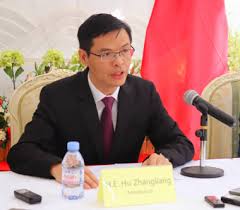
H.E. Hu Zhangliang, the Chinese Ambassador to Sierra Leone

By Foday Moriba Conteh

The Chinese Ambassador in Sierra Leone Hu Zhangliang has appealed to the media to be fair and neutral in their reporting on the fish harbour and the Black Johnson site.

Talking to this medium, the Ambassador said since the report came out about the fish harbour that is to be built at Black Johnson the Chinese have been at the center of the report branding them all kinds of names and accusing them of wanting to destroy the country.

“I want to appeal to all please to put aside geopolitics and western sentiments and the bias that some of you in the media have against China and look at the whole saga critically before blaming China. China has never asked the Government for a piece of land to build a fish meal of a fish harbour at any time. We have enough fish harbour in China and we cannot come to Sierra Leone to build such for ourselves.”

Ambassador Hu said the fish harbour will be just like all the other projects that they have aided Sierra Leone with but nobody has ever complained. He said the Sierra Leonean Government wants a fish harbour and all what China did was to put the funds together and then ask the Government to provide the land where it should be built.

“Since 1971 when China started supporting Sierra Leone, at no point in time has the Chinese Government told the Sierra Leone Government what they want or where the project will be built. We first built the stadium. The then Government showed where they want it and we built it there. Presently, we are building a military accommodation and the Diplomatic Academy. Both grants are just the same for the fish harbour.”

The Ambassador said the land spaces for them were chosen by the Government and the military and they accepted and currently the projects are on. He said there is no complain or scepticism of substandard work being done by the Chinese, when they did not choose the site for these projects.

Amb. Hu Zhangliang said it is the same way that the Government choose the Black Johnson parcel of land for them to build the fish harbour that the report is being slanted that China wants to destroy the area.

“Please it would be nice for my friends in the media to investigate and ask the appropriate authorities why they choose Black Johnson for the project and whether the project belongs to China. We are just providing the facility for the Government as we have been doing for 50 years without complaints. The Youyi building, the Ministry of Foreign Affairs, the Jui hospital, Jui lab, and many more were all built by China as grants and the parcel of land were marked by the Government and we came in and built the structures. So what is the difference today that we are being accused of wanting to destroy Black Johnson for our personal gains?” he asked rhetorically

He called on all to direct their grievances towards the Government rather than the Chinese that are merely helping and supporting Sierra Leone. He called on all to stop vilifying China for merely supporting development in Sierra Leone and also made it very clear that all the projects they have done in Sierra Leone are of the same standard in China.

Ambassador Hu averred that the stadium and Youyi building, the Mange Bridge that were built decades ago are still in full operations and there has never been any building default for them to be demolished.

“I do hope my friends in the media will look at China for what we are than using geopolitics and Chinese bias because of the West to judge us because we are genuine friends to Sierra Leone and Africa,” the Ambassador concluded.

Kingho President Promises to Optimise Tonkolili Iron Ore to Globally Competitive Grade

President of Kingho Energy Group, Colin Ding

By Abdul Malik Bangura

President of Kingho Energy Group, Colin Ding has, on Sunday 23rd May 2021 at Bumbuna Town, Tonkolili District promised to optimise the Tonkolili Iron Ore grade from 52% to more than 65% so that the company’s product will be globally competitive.

He made that statement during a community engagement ceremony held in Bumbuna Town, Dasogoia Chiefdom- one of the mining chiefdoms in the Tonkolili District of Sierra Leone. Whilst dilating on the issue, the Kingho head said, “our visit this time is to reveal the Phase II of our project for the Tonkolili Iron Mine,” adding that this phase of the project is going to involve designing and building an optimization plant that will increase the grade and value of the Tonkolili Iron Ore from 52% to more than 65% Iron.

Colin Ding added that the designing and building of an optimization plant will be the first time in the history of the Tonkolili Mine and  that the Iron Ore mined will leave the mine with such a globally competitive grade. He said “Kingho is not here just to mine what we meet but we are also going to add value to what we mine right here in Sierra Leone.”

In addition, the Kingho President assured that once that phase starts, the products the company will be exporting will have higher value and there will be more revenue coming to the Government of Sierra Leone and the 1% amount paid to the communities will also increase.

Against that backdrop, the Kingho President used the opportunity to thank the stakeholders for their patience during the challenges the company is going through. He said “your support has provided comfort for us and increase our confidence to invest more and do more in terms of business development in the communities and increase our community development projects.”

On his side, CEO of Kingho Investment Company, Gilbert Zhao whilst delivering his remarks assured that all of what Kingho has started doing in its operational communities are just the beginning. He said that Kingho’s ambition is to grow stronger with the communities. He added that, “the developments we will bring into your communities will benefit the youths, women and children as our community development support plans covers agriculture, health, education, water and sanitation.”

Meanwhile, earlier on in the programme, Director of Community Affairs of the  Kingho Investment Company, Madam Judith Kosseh whilst stating the purpose of the meeting said the company has done much in its three (3) mining chiefdoms of Dasogoia, Simiria and Sambaia and that they are gathered to showcase the various things Kingho has succeeded in bringing to the people of Tonkolili District.

Paramount Chief of Dasogoia Chiefdom who chaired the meeting and spoke on behalf of the people of the mining communities emphasized on the importance of the meeting with the mining communities. He said the decision of the Kingho President to come from China and deliberate with them shows that the interest of the people is at the heartbeat of Kingho’s development programmes.

Biankay Bangura, one of the land owners from Simiria Chiefdom said  they are very optimistic that the model of community engagement Kingho has used will bring more people on board including creating more job opportunities and empowering the people. He said he is hopeful such will benefit them as the land owners. He said he is hopeful that Kingho will show difference unlike previous companies.

Sierra Leone Police Local Unit Commander Tonkolili District, Alphonso A Fambulleh called on the people to always seek redress with the appropriate authorities. He called on residents to never do or take things by themselves. However, he called on the company to go strictly by the mining industry regulations.

Several other stakeholders from all the three mining communities and the Tonkolili District spoke at the auspicious programme, which was accompanied by the symbolic handing over of a rehabilitated school at Kegbema Community to the Deputy Director of Education Tonkolili District and also the launch of the Women in Agriculture Project in all three mining chiefdoms. The programme was climaxed with traditional performances by residents who warmly welcomed the Kingho staff.

Note:

Kingho Mining Company Limited is a subsidiary company of Kingho Investment Company Limited. Kingho Mining is undertaking mining at the New Tonkolili Iron Ore Mines in Sambaia, Dasogoia and Simiria chiefdoms of Tonkolili District, Northern Province of Sierra Leone. It was the Government of Sierra Leone which officially handed over the New Tonkolili Iron Ore Mining site to Kingho Mining Co Ltd on 23rd September 2020.

Logistics Base in Port Loko Handed Over to National Disaster Management Agency by WFP

By Theresa Kef Sesay

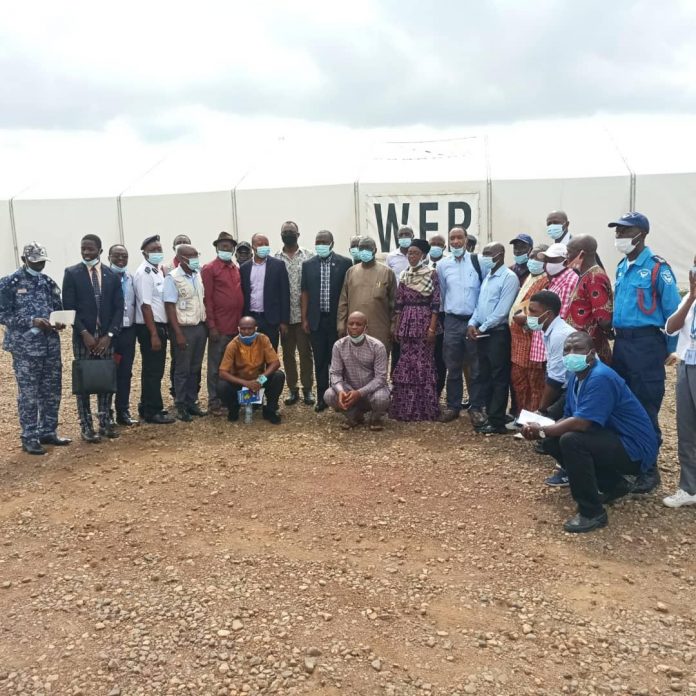
The United Nations World Food Programme on the 24 May 2021 officially handed over the main logistics base in Port Loko to the National Disaster Management Agency (NDMA). Established in late 2014, the logistics base was part of the humanitarian response to Ebola Viral Disease (EVD) under the Logistics Pillar and is one of several forward logistics bases with others at strategic locations in Makeni and Kenema.

The logistics base is intended to serve and support all humanitarian partners in Sierra Leone on the coordination, management, movement and handling of supplies including those received through Lungi Airport. The base has also been used by UN Agencies and NGOs to store items.

.The base has 37 mobile storage units (MSU) that provide over 18,800 square meters of secure covered storage. It also has a fully equipped training/conference room and is strategically placed as it can be easily accessed from Lungi International Airport and emergency response items can be delivered from there to most parts of the country within 24 hours.

Speaking at the ceremony, the Country Representative and Director, Steve Nsubuga thanked the Paramount Chief of Bakeloko chiefdom for generously providing the land and acknowledged the cooperation of the various local stakeholders over the 6 years that the logistics base has been operational.

Over the period, the logistics base was able to effectively offer a host of services including equipment handling, storage services, telecommunications support, security assessment, site services, rapid response training and facility management training

WFP is handing over the facility the NDMA as part of its transition strategy, ensuring that capacity to prepare for and respond to various emergencies is vested in the national Institution.

“WFP hopes and expects that the same level of support and collaboration will be extended to NDMA by all stakeholders,” said Steve.

In his response on behalf of the NDMA, The Director General, Lt. Gen. (Rtd) Brima Sesay said that the handover of the facility marks a milestone in the collaboration between WFP and the Agency noting that it will enhance its capacity to prepare for and respond to localized disasters.

“We are grateful to WFP for financing the administrative costs of running the facility for the period of 3 months up to end July 2021,” he said.

The United Nations Resident Coordinator in Sierra Leone, Babatunde Ahonsi in an interview said that the handover of this logistics base to the NDMA was a statement of the seriousness of the UN in supporting the Government‘s emergency preparedness and response coordination capacity.

“Given that Sierra Leone is a disaster-prone country vulnerable to natural disasters, health emergencies and the effects of climate change. This infrastructure will strengthen NDMA’s capacity to respond effectively and promptly to emergencies,” he said.

The Ceremony ended with a tour of the facility and a handover of a pickup truck by WFP to the District Corona virus Emergency response center (DICOVERC) Port Loko to support the fight against the ongoing pandemic.

As ‘Stagflation’ Bites… Need To Rethink Macroeconomic Policies to Induce Growth

President of the Republic of Sierra Leone Dr. Julius Maada Bio

By Amin Kef Sesay

With COVID-19 having reduced the annual growth rate to below 3%, with unemployment at a record high, with export earnings down, and with inflation at an unacceptable 10.5%, the Central Bank Governor has rightly said that the country’s economy is in stagflation mode.

He and other Central Government macroeconomists, however, predict that the downturn is cyclical, that the economy will bounce back once COVID-19 is behind us. The question is: how soon would that be?

FY 2020 to 2021 will go down as terrible years in the country’s economic trajectory – just as the Ebola years of 2014 to 2015 were. The drop in growth during these two periods was so swift and widespread that they both severely affected national income and expenditure, resulting in increased borrowing and debt.

Sierra Leone now growing at below 5% and with inflation reaching close to 11% is in danger of prolonged economic slowdown if macroeconomic policies are not recalibrated to stimulate growth.

The economy because of COVID-19 has seen a decline in growth. Investment remains down. With declining savings, it leaves very little financial savings for investment. People dipped into their savings to maintain consumption but that could not last for too long without investment and job creation.

The agricultural sector is also not doing well and rural wages are not rising as rapidly as earlier – therefore rural demand remains depressed.  This is the first time all indicators are pointing down wards – usually you get a mixed picture.

Given the country’s needs and aspirations and a very rapidly growing young population – anything below 7% GDP growth is unacceptable and at least 9% is needed to reach the goal of at least Le10 trillion by 2025, with NRA raking in about Le6 trillion as at now.

The Government is under huge pressure to boost demand by breaching the fiscal deficit. The stagflation scenario of low growth and high inflation has caused the Government huge credibility.

More important than a fiscal boost is to re-orient Government expenditures towards a more developmental growth-oriented outcome i.e. lower the recurrent expenditures and increase capital expenditures and try to attract longer-term finance to maintain infrastructure investment.

Lower borrowing costs, cuts in subsidies (by rationalizing them) could provide some space for this improvement in the quality of expenditures.

Recovery in investment is key to recovery of the economy.  This suggests that the Government needs to do aggressive reforms in paying of taxes – as well as labour and financial sector reforms. These should be accompanied by corporate tax cuts to boost investment.

Small tweaks and fixes will no longer be enough. In the next budget, given the limited space for short -term fiscal policy and having reached the limits of monetary policy, it is best to shift attention to structural and sectoral factors that will help drive the economy over the medium term.

Government should review its economic policy to boost exports and curtail unnecessary imports; as well as inverted duty structures.

The Government, through the commercial banks, could select 8-10 strategic light industries to promote in boosting the import substitution-manufacturing segment of the economy.

It can be easy and cost-effective to add trade promotion offices to our embassies abroad and consider how best to establish a strategic trade office. Government can also address the real exchange rate appreciation – which taxes exports and subsidizes imports. This is more effective than import tariffs.

For now, with COVID-19 having restricted international travel, we cannot talk about tourism and related mobility services as a huge source of job creation.