Home Blog Page 916

FBC Job Fair Attracts Hundreds of Young People Seeking for Jobs

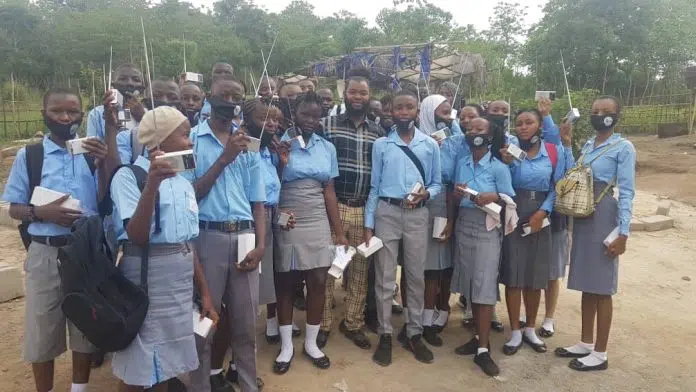
Students at the job fair last Saturday at FBC

By Foday Moriba Conteh

On the 1st May 2021 hundreds of students turned out to seek for jobs at the Fourah Bay College Amphitheatre during a job fair organized by the Academic and Career Advisory and Counselling Services (ACACS) and Confucius Institute.

The Director of Confucius Institute, Professor Shuping, said attending a job fair gives students an edge. Students who attended the fair in the past were successful in getting better jobs as most companies want to hire students that they can mould to meet the institution’s demand, it was highlighted.

The event was a success as it attracted hundreds of students from various Universities in Sierra Leone. Both the local and international companies present were overwhelmed by the outpour of job seekers and promised to always be in attendance whenever such events are being organized.

The Chinese Economic and Commercial Counsellor who was also present made a statement on the significance of providing jobs for young graduates, as this will help to develop the economy of Sierra Leone.

He said this is the norm in China as many graduates attending job fairs have succeeded in landing better jobs. So as it is organized in Sierra Leone he hopes that it will be the trend as these young graduates will succeed.

Professor Shuping said he was happy that so many companies took part and expressed delight that the Chinese companies were present as many of them took part as they really want to make sure they employ more Sierra Leoneans.

“I want to thank ACACS for putting together this job fair and it has been a success since it started three years ago. This year has been the biggest and I hope that next year will be better as more and more students have taken it very seriously because they have seen their colleagues that have benefitted in the past.”

Some of the officials at the Confucius Institute said participating in the event always provides employers with opportunities to recruit from hundreds of eager and qualified candidates, add to diversity recruitment strategies and increase or maintain visibility.

Officials of ACACS that were present were happy that the job fair is improving every year as more and more students are participating as well as companies in the country.

They called on students that this is a way of getting jobs and those that are not successful should understand that not all of them will be successful.

Furthermore, they called on the companies to continue to participate and hope that next year many more companies will take part to help the students get jobs so that the economy will continue to grow.

The Ministry of Youth, Ministry of Labor, the Director of Confucius Institute and Director of ACACS were all present and they made brief statements during the opening of the event.

ACC Commissioner Allays the Fears of Political Parties

By Amin Kef Sesay

On the 4th May 2021 the Commissioner of the Anti-Corruption Commission (ACC) Francis Ben Kaifala Esq. responded to concerns raised by political parties relating to the fight against corruption in Sierra Leone.

Organised by the Political Parties Registration Commission (PPRC) and the National Democratic Institute (NDI), in collaboration with the ACC, the event took place at the Cathedral Hall, 3 Gloucester Street, Freetown.

The engagement was a follow-up meeting with the ACC on emerging issues relating to corruption and public accountability from the initial round of the Inter-party meetings and was attended by the leadership of the registered political parties in Sierra Leone.

The Chairman of the PPRC, Abdulai Masiyambay Bangurah Esq., who also served as the chairman of the meeting, said two of the main issues raised by the political parties were that the ACC focuses more on past Government officials and pays less focus on current Government officials in the fight against corruption; and that there is need to improve public accountability for the effective management of public funds and resources.

In response to the claims, the Commissioner of the ACC, Francis Ben Kaifala Esq. started off by saying that consultation and conversation with two or more people is central to accountability.

“I am willing to engage in any form of dialogue as long as it is for the fight against corruption and the betterment of Sierra Leoneans,” the ACC boss maintained.

He furthered that was why he and his team at the Commission have been traversing the length and breadth of the country-from Mongo Bendugu to Kamakwie, from Kambia to Kono, from Kailahun to Bonthe, Sherbro Island, to engage with the people of Sierra Leone to tell them about his stewardship and get feedback in regard to the fight against corruption.

The ACC Commissioner described the ACC as an independent institution that operates without any political influence, adding that the Commission does not pay attention to a person’s political, tribal or regional affiliation. “Corruption is corruption; we look at the evidence and facts to get a correct conclusion,” he said.

Ben Kaifala stated that political parties will find issues because they do not come to the ACC to discuss matters related to the fight against corruption or to get first-hand information about the activities of the Commission. He added that the issue of the ACC focusing only on past Government is one of the most common misconceptions held by the public and most times propagated by political parties.

Commissioner Kaifala highlighted a number of cases the ACC has investigated and prosecuted since he came into office in June 2018. The cases involved individuals from both the past and current administrations, with majority of them being cases involving officials of the current administration.

“These are facts and they represent the true picture of cases we have investigated since I came into office,” he averred.

The ACC Commissioner added that the fight against corruption is by no means perfect but it is at its best level ever since the establishment of the Commission. He said respected and independent local and international bodies –like the Millennium Challenge Corporation, Transparency International, Afro-Barometer etc- have recognized the country’s current efforts, which is why the country continues to get impressive ratings in transparency indexes.

He therefore urged the political parties to be engaging with the ACC to get information on corruption issues instead of relying on fictitious, non-factual, incorrect and misleading information.

Earlier, the Resident Program Director of NDI, Mohamed Ibrahim Konneh, said his institution works to establish engagements with political parties to promote good governance and accountability in the country. He thanked the political parties for attending previous meetings which have helped in enhancing political dialogue in the country.

Present at the meeting were, the Secretary General of the All Peoples Congress, Ambassador Foday Osman Yansaneh, the Chairman of the National Grand Coalition, Dr. Denis Bright, the Chairperson of the Unity Party, Femi Claudius Cole, among others.

The programme climaxed with questions from representatives of the political parties which were responded to by the ACC Commissioner.

AATF & Pikin Bizness Donate 30 Radio Sets to Unique International Academy in Kono

By Amin Kef Sesay

The One Student One Radio Campaign continues as the Adonis Abboud Trust Fund (AATF) and Pikin Bizness targeted the Unique International Academy in Kono district where the distribution was spearheaded by Miss Sia Christiana Johnson, 1st runner up for the Miss Sierra Leone 2019.

The aforementioned school has an outstanding history of training their pupils in terms of news reading, debate and presentation through a union called the Literary and Debating Society (L&DS).

Against such a backdrop, the school administration was amazingly delighted as the gift was totally unexpected and thinking of how those radios will benefit the pupils, they were indeed thankful and grateful.

However, the Principal took it upon himself to orchestrate and organize the deserving 30 pupils that should be eligible to receive the radios from JSS 1 to SSS 3.

His exact words were: “We are not going to give out the radios to the 30 students that will be receiving them by looking at whether their parents can afford them or not, but we are going to give them because they deserve them.”

The students, likewise, were delighted and quoting from the speech that Dr. Adonis Abboud presented, the Head Girl, in her vote of thanks, admitted the vitality of owning a radio despite the fact that they haven’t been paying much attention to listening to radios.

She further expressed her gratitude, on behalf of the administration and her fellow pupils, to the PIKIN BIZNESS & Adonis Abboud Trust Fund (AATF) for being so considerate.

In an interview granted to newsmen that were present, the pupils promised to make good use of the Radios and by that they mean, listening to news and sharing what they have learnt with colleagues that were less fortunate.

Indeed, seeing the lights in their eyes was a sight to behold.

 Chairman of Pikin Bizness and Adonis Abboud Trust Fund, Dr. Adonis Abboud, said that the move by the organization is a way of complementing Government’s Free Quality Education initiative and the provision of the 700 Radios to various schools is geared towards allowing pupils to stay abreast with national as well as international events and other news, which will eventually boost their general knowledge.

More selected schools nationwide have so far benefitted from the gesture, adding that their ultimate goal is for all pupils to own such useful communication gadgets, furthering that he is of the conviction that other donors will emulate their gesture and help reach more pupils.

It is on record that some of them were unable to benefit from the Government Radio Teaching program, which was instituted by the Government with technical support from UNFPA as a direct response to the COVID-19 outbreak, which led to the closure of schools, because of the unavailability of radios, but the donated radios will help them greatly.

NP-SL Ltd Expansionist Drive is a Testament of Astute Managerial Initiatives  

By Amin Kef Sesay

The leading indigenous oriented petroleum marketing company in the country and beyond, the National Petroleum Sierra Leone Limited (NP-SL Ltd) is progressively expanding its operations as evident in the recent commissioning of new Filling Stations in different parts of the country.

Being a dependable business entity that has over the years demonstrated shrewdness and efficiency in the importation and marketing of various petroleum products among which we have diesel, petrol, gas, lubricants like Castrol Oil as well as other products, NP-SL Ltd has become a household name and many have reposed confidence in it for its timeliness and orderliness.

It is against such a backdrop that, on a frequent basis, certain savvy business individuals do not hesitate to partner or collaborate with NP-SL Ltd to open up Filling Stations in different parts of the country, places where hitherto it was extremely difficult to access those petroleum products. Such collaborations are bordered on mutual trust and the objective of not only maximizing profits but to meaningfully contribute to overall national development.

When cognisance is taken of the fact that the opening of new Filling Stations provides employment opportunities for the jobless then one comes to the realization that NP-SL Ltd is indeed making a meaningful contribution in the reduction of unemployment.

Looking at it from the perspective that youth unemployment is a real social malaise that most times leads to high crime rates then the fantastic moves made by the company in the area of creating job opportunities are indeed worthy to be celebrated. To take it a little bit further, creating job opportunities is another way of reducing poverty in the country.

One way in which the Government derives revenue is through internal mobilization of funds and one channel is via the imposition of various forms of tax. Business entities are bound by law to pay taxes to the National Revenue Authority (NRA). Filling Stations fall within that bracket and by extension they are large tax payers. Those taxes paid are in return utilized by Government to provide basic amenities for the populace and fund other development projects.

NP-SL Ltd has etched its name in the sands of time as a company which does not compromise customer care and it is in that regard, long time ago, the company bagged the prestigious accolade of being 1st for Customer Care.

Management of the company is of the firm conviction that giving utmost satisfaction to its numerous customers right across the country is very imperative. The company has in all its Filling Stations calibrated pumping machines which pump the exact amount of fuel requested for and display the price at the same time.

It is on record that the company markets cookers which are known as NP Gas, manufactured in different cylinder sizes. They are environmentally friendly, easy to refill with gas that can be secured at the company’s Filling Stations where NP Gas could also be accessed.

To simplify transactions, the company introduced the NP Smart Card which could be used to purchase fuel without using physical cash. As long as the NP Smart Card has credit in it such could be used to buy fuel at certain Filling Stations. It is a quick, safe and a secured way of conducting transactions which many have lauded the company for.

NP-SL Ltd is one company that long ago made it a laid down policy of predominantly employing indigenes everywhere it is operating. This policy is in sync with the country’s Local Content Policy which the company continues to uphold.

Note that the company is also operating in neighbouring Guinea, Liberia, Ivory Coast and The Gambia.

It can be safely anchored that indeed NP-SL Ltd’s expansionist drive is largely driven by competent and efficient Management initiatives. One thing which is indisputably incontestable  is the fact that the company is making steady progress within the media landscape of the country.

Sierra Leone is the Hidden Gem of African Destinations

By Amin Kef Sesay

Sierra Leone is home to the best beaches in West Africa. Sierra Leone is a forgotten paradise with its white sandy beaches and crystal clear waters.

For many of us, when we think of Sierra Leone, we think of the civil war, blood diamonds and conflict. But this destination deserves another look. It has one of the most beautiful coastlines in West Africa and incredible wildlife including over 11 species of primates and the rare pygmy hippopotamus.

In the 1980s Sierra Leone’s Freetown Peninsula was a high-end holiday destination that welcomed thousands of holidaymakers every week. Over 100,000 tourists from France alone visited the resort each year.

When the civil war broke out in 1991 Sierra Leone disappeared from travel brochures, the tourists stopped coming and now only a few ruins of the old pre-war holiday resorts remain.

The civil war ravaged the country for over 10 years and finally ended in 2002. At the end of the conflict it was estimated that almost two-thirds of Sierra Leone’s population were displaced and thousands of children needed rehabilitation and care before they could return home.

But in the last 20 years Sierra Leone has made enormous efforts to rebuild but luck was not on its side and from 2014 – 2016 Sierra Leone was hit hard by the Ebola epidemic and so tourists continued to stay away.

It’s now almost 20 years since the civil war ended and 5 years since the country was declared free of the Ebola virus. Though Sierra Leone has made great progress in becoming safe for visitors it has yet to entice tourists back in the same numbers as before.

The UK foreign office states that “Sierra Leone has taken significant strides following 4 democratic elections since the end of its civil war in 2002 and the political situation is stable.”

The travel advice given by the UK FCDO is now similar to many holiday destinations, advising tourists to be careful of pick pocketing and overt displays of wealth.

Sierra Leone is on the south-west coast of West Africa, between Guinea and Liberia. It’s a 8 hour flight from Western Europe.

Its capital, Freetown, is on a peninsula in the west of the country. As the city you’re most likely to fly into, it’s lucky that the peninsula offers long stretches of quiet sandy beaches and the average temperature year-round is 28C.

A female visitor to the resort says, “You can’t see many beaches like this in the world. We’ve travelled a lot and we really, really like it here.”

All of the hotels along the resort are new and purpose built and hope to attract visitors from across West Africa and Europe.

Vinod Kumar Bahuguna, Director of The Place Resort, Tokeh Beach says the numbers of tourists have been growing steadily. He says, “We thought we would make profits in 2020, but unfortunately, COVID happened. But without the COVID-19, we would have had very good profits.”

Though the beaches are quiet now, Sierra Leone is slowly regaining its popularity and so this hidden gem may not be hidden for much longer.

Namibia & Niger Reviewed by Sierra Leone at UN Human Rights Council

By Esther Wright

In Geneva, Switzerland, on the 4th May 2021at the ongoing 38th Session of the Universal Periodic Review held using a combination of in-person and remote participation, Sierra Leone’s Ambassador to Switzerland and Permanent Representative to the United Nations and other International Organizations in Geneva, Switzerland, Dr Lansana Gberie, addressed the Human Rights Council during the UPR Review of Namibia and Niger.

Ambassador Gberie thanked Namibia and Niger for their comprehensive national reports and wished them a successful UPR outcome.

He commended Namibia for repealing outdated and discriminatory laws, enacting the Domestic Violence Act, the Child Care and Protection Act, and enhancing access to justice through the provision of legal aid at the district level.

Ambassador Gberie further added that Sierra Leone welcomes the enactment of the Judiciary Act to strengthen the independence of the Judiciary in Namibia.

The Ambassador recommended the Government of Namibia to review laws and conventions relating to rights of children to harmonise them with international human rights standards, and to consider ratifying the International Convention on the Protection of the Rights of all migrant workers and their family members.

Ambassador Gberie commended Niger for developing a national framework to promote human rights, including the National Human Rights Commission and the national mechanism for the prevention of torture. He further recommended that Niger strengthens the capabilities of the National Human Rights Commission by allocating the necessary financial, human, and material resources.

Sierra Leone’s human rights record will be examined by the United Nations Human Rights Council’s Universal Periodic Review (UPR) Working Group for the third time on Wednesday, 12 May 2021 in a meeting that will be webcast live.

Sierra Leone is one of the 14 States to be reviewed by the UPR Working Group during the 38th session taking place from 3 to 14 May. Sierra Leone’s first and second UPR reviews took place in May 2011 and January 2016, respectively.

The documents on which the reviews are based are national report – information provided by the State under review, information contained in the reports of independent human rights experts and groups, known as the Special Procedures, human rights treaty bodies, and other UN entities, information provided by other stakeholders including national human rights institutions, regional organizations, and civil society groups.

Seawright Mining Pays Le800M Surface Rent To Gbense, Tankoro & Kamara Chiefdoms

By Joenal  

Seawright Mining Company (SMC) on the 29th April, 2021 paid the sum of eight hundred million Leones (Le800, 000,000) as surface rent to Gbense, Tankoro and Kamara Chiefdoms.

Chiefdom authorities, the Environmental Protection Agency (EPA), National Minerals Agency (NMA), Anti-Corruption Commission, Civil Society, LUC Tankoro Division, ONS, Youth and Women’s leaders and the Press witnessed the payment which took place at the newly renovated Chiefdom Council Building in Koidu City.

The payment was for the Company’s Boroma Concession on which the Seawright Mining Company will be undertaking a large scale diamond mining project in the Gbense Chiefdom which hosts 80% of the concession with a slight concession spilling to Tankoro and Kamara Chiefdom in the Eastern Region of Kono.

Payment came after the Company had an overwhelmed support from the Paramount Chiefs and their subjects to operate in their chiefdoms during a two-day public consultation and disclosure of the Environmental and Social Impact Assessment (ESIA) on the 26th and 27th March, 2021 as a standard requirement of the Environmental Protection Agency Act of 2008.

SMC Chief Operating Officer (COO), Jabulani Mkoko, described the occasion as a momentous one for them to fulfil another part of the legal requirements for operating large scale mining which is the payment of the surface rent.

“We feel honoured by cementing our relationship with the community,” he stated.

He furthered it is good for the environment to be conducive for business to thrive because when business thrives, it will benefit the company, the community and the nation at large.

The Chief Operating Officer thanked all the stakeholders including the Government of Sierra Leone for their support and promised that they will abide by all the terms and conditions agreed upon as they are a law-abiding company.

“The community can expect the best out of us, we are a very good corporate citizen. We are going to exercise good corporate citizenship in everything we do. The community can also expect to benefit from this arrangement that we have made once we start generating revenue,” he assured.

SMC has renovated the Chiefdom Council Building and installed 10KV solar power, and equipped it with computers among other office equipment.

Giving an analysis of the surface rent, SMC Finance Officer, Adama Jalloh disclosed at the jam parked hall that the Le 800 Million was paid to the three chiefdoms.

That Gbense Chiefdom which hosts 80% of the concession got 80% which is equivalent to Le 640 Million while Tankoro and Kamara Chiefdoms got each 10% which is Le 80 Million respectively.

The various stakeholders got 50% which is equivalent to Le 640 Million that was divided between the landowners, Paramount Chiefs 15%, the Council 15%, Constituency Development 10% and the Chiefdom Administration 10%.

Gbense Chiefdom Hon. PC Sahr Fengai Korgbende Kaimachiande the 3rd thanked the Government and SMC for considering them at this time.

He described the day as very historic as it is the first time in the history of Gbense Chiefdom for them to receive surface rent in such a large scale.

“This is the first time for us also to have a good company in a large scale in our chiefdom of which we are very much grateful,” he affirmed.

He described the payment process as very transparent as their respect has been restored.

The Chiefdom Administration Clerk for Gbense Chiefdom, B.M Daramy, said that they are happy for the renovation of the building.

EPA Admin/Finance Officer, Alusine Bangura educated the audience on why surface rent was set up by the Government adding that EPA is concerned about development in the mining community.

He also informed them of what is expected of the community people and their roles and that of the company. Alusine disclosed that Kono District now has and can boast of four large scale mining companies which depicts that development will begin to take place.

NMA Regional Manager, Kai Lebbie explained their functions and quoted Section 34 of the NMA Act which made SMC to pay the surface rent.

He emphasized that after the payment, all other activities by other parties are illegal because the company now has full right over the land.

In addition, he explained how the rent should be distributed by percentages. “If the company has done what the law says it is also mandatory on the authority to do all it takes to protect and allow the company to operate freely,” he maintained.

National Action Plan for the UN Decade of Family Farming 2019-2028 Adopted & Validated

By Theresa Kef Sesay

On the 28th April 2021, after thorough examination, stakeholders unanimously adopted and validated the National Action Plan for United Nations Decade of Family Farming in Sierra Leone at the Mandela Hall of the Dohas Hotel, Towama in Bo, Southern Sierra Leone.

On behalf of the Government of Sierra Leone, the Deputy Acting Director of Extension in the Ministry of Agriculture and Forestry, Michael Kalainkay officially announced the validation of the document amidst thunderous applause from the 80 participants, drawn nationwide from the academia, NGOs, CBOs, the Human Rights Commission of Sierra Leone and the media.

The seven pillars of the United Nations Decade of Family Farming (UNDFF) are to develop an enabling policy environment to strengthen family farming, support youths and ensure the generational sustainability of family farming, promote gender equity in family farming and the leadership role of rural women, strengthen family farmer organizations and their capacities to generate knowledge, represent farmers’ concerns and provide inclusive services in rural areas.

Other pillars are to improve socio-economic inclusion, resilience and well-being of family farmers, rural households and communities, promote sustainability of family farming for climate-resilient food systems and strengthen the multi-dimensionality of family farming to promote social innovations contributing to territorial development and food systems that safeguard biodiversity, the environment and culture.

In his statement, the Assistant Representative of the Food and Agricultural Organisation (FAO) of the United Nations in Charge of Programs, Mr. Harding Wuyango reaffirmed the commitment of FAO in support of the UNDFF National Action Plan (NAP) for Sierra Leone and its implementation and encouraged all stakeholders to give their maximum expertise to ensure an inclusive and quality UNDFF (NAP) for the benefit of family farmers.

The plan is conceived for 10 years, in correspondence with the UNDFF 2019-2028, the result of an extensive process of discussion in a two-day’ workshop among agricultural sector institutions, civil society, especially FBOs, local government, academia and international cooperation agencies.

Harding Wuyango also revealed that on the 29th May 2019, the United Nations Decade of Family Farming (UNDFF) Global Action Plan (GAP) was officially launched by the FAO and the International Fund for Agricultural Development (IFAD) in Rome, Italy adding that the GAP is a tool to implement strategies, policies, and investment at global, regional, national and local levels, with an integrated approach.

He enlightened that the UNDFF GAP officially approved in Rome recommends that Governments, public entities and agencies develop National Action Plans (NAPs) in an inclusive manner, involving family farmers and other key stakeholders including the National Committees for Family Farming, continued that the NAPs can serve as consolidated frameworks of action at national level for the support of Family Farming articulating that NAPs include context and country-specific actions, thus providing a roadmap for countries and regions to progress with the implementation of the UNDFF, allowing for the building of accurate interlinkages to the broader SDG process and giving value to the multi-dimensional contribution provided by family farming.

According to the Assistant FAO Representative, building on existing national strategies, activities and processes and exploring new instruments and mechanisms, the NAPs can promote policy coherence, multi-actor and inter-institutional cooperation, with the aim of mainstreaming and integrating family farming-related issues into the wider food and agricultural policies and strategies, as well as in the broader social and environmental policies.

“The NAPs provide an inclusive umbrella for all relevant national stakeholders to consolidate, align and reinforce their actions and define policy interventions in support of family farming across different sectors at the national level. Actions should be build based on an agenda and a strategic vision that intertwines national priorities with the general objectives of the UNDFF. Furthermore, NAPs can include specific commitments based on the jointly identified needs and priorities and translate them into public policies, programs, regulations and investment. Actions can be aligned to the indicative actions proposed in the seven pillars of the GAP and are to be tailored and adopted to national and local conditions,” Harding Wuyango underscored.

He further recommended that the process to develop a NAP should be inclusive, supportive and enhancing the participation of all actors including family farmers and appealed to all stakeholders for policy dialogue aimed at coordinating and complementing actions in support of family farming to identify key partners in the identification, design, implementation and monitoring phases stressing that this process guarantees that all actors provide their complementary contributions according to their specific roles and responsibilities, promoting multi-actor collaboration in order to mobilize key players, convert identified needs into concrete actions, ensure empowerment and agency that leads to efficient processes, effective results and sustainable impact.

He went on to state that the NAPs comprise practical mechanisms for advancing sustainable food production, creating rural development, fighting rural poverty, safeguarding biodiversity, maintaining culture and thereby ensuring the future for sustainable food production for humanity for a holistic standpoint disclosing that the plan aims to strengthen family farming by the development of an enabling environment for its sustainable development, the improvement of family farmers’ livelihood and the promotion of territorial governance.

In his powerpoint presentation, the national consultant, Mr. Frank Webber observed that a lot of work has been done to validate the document that would be adopted and later launched by government to stand the test of time and urged all to improve the lives of family farmers in the country underscoring that the laudable venture would also help promote agriculture in the country.

Some of the recommendations highlighted by participants include sustainability of family farming, that 10% of the national budget be allocated to agriculture by 2023, that the Ministry of Agriculture is the highest decision-making body in terms of agriculture in the country, that collaboration with donors and resource mobilization are key for sustainability of the project as well as communication with the media.

Other stakeholders who made salient statements at the ceremony included the Acting Chief Agriculture Officer in the Ministry of Agriculture, Dr. Mohamed A. Sheriff who disclosed that youth farms would be established in all chiefdoms nationwide as well as rehabilitation of roads to link production centers to the markets.

He also informed that the economy would be diversified with the cultivation of various crops including animal husbandry, improvements made on land management and research and that after 40 years, a National Soil Survey is currently ongoing to know the types of soils in the country, their locations and the types of plants/crops to be planted.

Highlights of the workshop were the group work and presentations, general discussions on the entry points and implementation actions while the objectives of the workshop and introduction of the agenda were done by Mr. Ibrahim Bangura of FAO.


SLAJ & MRCG Observe World Press Freedom Day

By Amin Kef Sesay

In a program held at SLAJ’s headquarters on the 3rd May 2021 to celebrate World Press Freedom day, the Media Reform Coordinating Group (MRCG) joined the Sierra Leone Association of Journalists (SLAJ) to commemorate world press freedom day; a day set aside for the recognition of journalism across the word.

This year’s event was centered on opening the book of reflections on the repealed Part 5 of the Public Order Act of 1965. The reflections were done by journalists who suffered in the era of Part 5 of the Public Order Act of 1965 as they shared their bitter experiences with the then law.

In his remarks, Dr. Francis Sowa, National Coordinator for MRCG appreciated SLAJ and all other stakeholders for standing through all the struggles to see the repeal of Part 5 of the Public Order Act of 1965. He appreciated the National Endowment for Democracy (NED) for their continued support to MRCG for press freedom and other reforms in the media of Sierra Leone.

“As we celebrate today, let us also know that there are still inconclusive matters on the arrest and detention of journalists. At the MRCG, we have consistently followed cases of assaults and intimidation of journalists across the country and some matters are neither progressing nor discharged,” Dr. Sowa mentioned.

Dr. Sowa additionally stated that the MFWA recently did a study with the help of MRCG on the safety and security of journalists in Sierra Leone and discovered that there are issues of safety and security concerns which are to be addressed by authorities concerned.

The President of SLAJ, Ahmed Sahid Nasralla, appreciated partners and donors for supporting Sierra Leone’s media organizations in achieving press freedom and freedom of speech. He made reference to the Cybercrime bill which he said should be scrutinised before enactment into law. He also called on journalists to be professional in the discharge of their duties.

The IMC Chairman, Mr. George Khoyarma, commended the government for the bold step it took to repeal the criminal libel law. He called on SLAJ and all media practitioners to work together in the interest of the profession.

The Information Minister, Hon. Mohamed Rahman Swaray reiterated Government’s commitment to promoting press freedom. He promised to work with MRCG and SLAJ to address inconclusive matters dealing with journalists.

Choithram Hospital Installs Latest Fibre Optic Bronchoscope Machine

By Amin Kef Sesay

The Choithram Memorial Hospital, situated at Hill Station, West End of Freetown, is well known for providing highly specialized medical services to people from different backgrounds. Since it started operations years back, Management of the hospital has been working assiduously to ensure that the medical facility is brought up to international standards.

It is against this background that the Choithram hospital has, for the first time in the country, introduced the Fibre Optic Bronchoscope Machine, which is used for examining the lungs, the Bronco tree, especially in relation to looking for foreign bodies and things that might affect the chest and lungs.

When this medium caught up with Dr. John A. Songo-Williams, Consultant Surgeon at the Choithram Memorial Hospital, in order to know about the Fibre Optic Bronchoscope Machine that has been installed at the hospital and what does this mean for the health sector in the country, he was quick to intimate that the Fibre Optic Bronchoscope Machine has definitely given a face lift to the health sector in the country.

He underscored that Management of the hospital decided to embark on these latest developments in order to ensure that the hospital is put on a sound footing, like any other hospital in a developed country. “We are very much passionate about offering the best in terms of qualitative medical treatments with the main objective to save lives,” he stated.

Dr. John A. Songo-Williams revealed that the Fibre Optic Bronchoscope is a diagnostic examination of the major air passages to the lungs, and that this equipment enables the physician to examine the inside of the main windpipe (trachea) and other major air passages, (bronchi) and that it is a safe diagnostic procedure that carries little risk to the patient.

He added that the machine is flexible and can be used to examine all the areas in the lungs, which helps the Doctors to take a good look and if necessary take some biopsy of lesions, adding that sometimes they have to clear some paths from the lungs maintaining that indeed the machine came in quite handy.

The Consultant Surgeon added that the instrument consists of the scope, fiber optic bioscope with a provision for suction and for the injection of fluids into the lungs as the case may be.

He disclosed further  that the hospital made use of  the Fibre Optic Bronchoscope Machine to remove a foreign body from the right main bronchus of a nine month old baby, which was done free of cost.

Dr. John A. Songo-Williams said that this is a big impact to not only the Choithram hospital but the country as a whole, adding that before now they had only rigid instruments which they were using stating that these rigid instruments don’t negotiate the curves and the corners inside the lungs.

The doctor intimated that before this time, when the hospital was not having such a facility, patients had to travel to countries like Ghana, Nigeria or wherever they can, to access such facilities or its equivalent to handle such situations.