
Home Blog Page 928

In a Town Hall Meeting… Bio Expresses Hope in His Policies to Deliver Amidst Perennial Governance Challenges  

President Dr Julius Maada Bio
President Dr Julius Maada Bio has addressed the first ever presidential town hall meeting at Bintumani Hotel in Freetown on Friday 9 April 2021, where journalist Umaru Fofana moderated questions on what his New Direction government has done in the last three years in power.
In an opening statement of the event organised by Sierra Eye Magazine, Mr Fofana said the president came with his vision to address some of the perennial problems that had beset the nation before and since independence on 27 April 1961.
“They include the setbacks in ensuring law and order, governance deficit, increased poverty occasioned by a sliding economy and official theft, the steady erosion of the country’s human capital development, protecting the homogeneity within the diversity of our cohesiveness as a nation, and accountability – especially in the fight against corruption,” he declared.
“But how much has President Bio done in the last 36 months to mitigate these harsh realities?” asked the BBC ace reporter, who also runs an independent newspaper in Freetown.
“As you rightly stated, you cannot run any country or any organisation with a battered economy. So, we knew we were going to meet with a very difficult situation, and we were equally prepared. We had planned for victory, so when we got the victory I selected Jacob Jusu Saffa [the Finance Minister] to lead my team of economists for economic recovery.
“Have they done a commendable job? Yes, I would say. And that’s why they are still there, if not they will not be there. We have a lot of resources, but we have not managed them properly. And, therefore, we have been dependent on the support of donor partners to a very large extent,” he said.
He recalled that donors had left the country before 2018 because the former leadership was never listening to them and there was poor economic management. He added that his government, therefore, had to work very hard to win back the confidence of development partners like the International Monetary Fund and the World Bank.
The moderator also raised the concern of government expenditure and asked what was responsible for that increasing every year since 2018, President responded that it was the wage bill.
“If we are not doing exactly what we are supposed to do as a nation, we will never move forward. Development will never be realised in this country. In fact, as I speak to you, we still need more nurses and more teachers. We have taken in about 5,000 teachers and 4,000 nurses and that is still woefully inadequate.
“How do you want to be taken care of if you went to the hospital today and effective and efficient nurses are not there? A lot of them have been trained and they were not on the payroll. They were volunteering for the most part. And when you do that, you don’t expect a lot from them. We are talking about education and how do you want that to be provided without the teachers?” he said.
On the issue of national cohesion, the President was forthright when he said: “Truly speaking, we have been a divided nation, mostly along political lines. We need to make more efforts. I can, as a leader, make my own effort to try to unite this nation, but I am just an individual. The government is doing what it can to actually keep us together.
“If we are serious about development, we cannot undertake that very difficult process if we are divided as a nation. Which means it is imperative for us to be together. When we came in, we drew up a Medium-Term National Plan. Of course, we sought the input of other stakeholders, right across the opposition.
“For me I say human capital development, I say education for development. We need to continue that path for a long time for us to realise something. So, we need unity. We need to get the buy-in of the APC, C4C and others for this to work. That is where the unity is. Former President Koroma is a senior statesman, and I treat him like that. He is a senior Sierra Leonean and should be treated with respect,” President Bio said.

CARITAS & German Embassy Collaborate to Expand feeding for Fire Victims

By Edward Vamboi

In the wake of the Susan’s Bay fire disaster that left about Seven Thousand and Ninety Three (7,093) people homeless and vulnerable, Caritas, as an organization,  in its response started serving the affected victims lunch on a daily basis.

On the 8th April 2021 the Deputy Ambassador of the Federal Republic of Germany, Patrick Dzierzon and his wife together with the wife of the Ambassador, Horst Gruner,  visited the Susan’s Bay community to commence the serving of breakfast in the ongoing feeding exercise that is been done by Caritas to the vulnerable victims as a way of showing their solidarity, cooperation and compassionate support.

According to Patrick Dzierzon, Deputy Head of Mission of the German Embassy, they received a request from Caritas to come to the aid of the victims stating that the first major priority was to feed the affected victims before other help would come in order to enable the victims to continue to survive.

He told journalists that the Embassy has been working with Caritas for quite a considerable period of time now further acknowledging that the latter has been a reliable partner.

The Deputy Head of Mission said they are catering for all categories of people no matter the age or gender also underscoring how they don’t have sufficient funds to cater for all of them saying at least they are catering for half of the people that were affected by the disaster with the help of Caritas.

He disclosed that the feeding program will be lasting for the next fifteen days and they will see for the meantime other supports that are coming from other donors and see if there will be a possibility to give the victims  basic things like cooking pots, constructing fire places so that the people can use to start preparing their own food.

Patrick Dzierzon said such will be sustainable as the victims will cook their own food and not be fed by other people stating that it is their aim to enable them to empower themselves.

Ishmael Alfred Charles ,Programs Manager of Caritas told journalists that an estimated 45% of victims are still sleeping outside on the floor while an estimated  25% are in the tents constructed with the support of Red Cross and IOM.

He disclosed that the others are mostly squeezing in the areas that were not affected, the rest are living and staying with their families out of the community.

Ishmael said since the disaster occurred, Caritas as part of a consortium called Partnering to Serve Humanity has been providing hot meal for over Three Thousand Five Hundred (3,500) individuals and that number keeps increasing daily.

He disclosed that the request made to the Embassy of the Federal Republic of Germany was meant to augment the feeding that Caritas had been offering adding that the hot meal feeding program only caters for one meal a day leaving the gap of not having breakfast and dinner.

According to him, the hot meal is served mostly around 3:30 to 4 PM and  the victims manage to get dinner, but it is harder to manage for breakfast.

He reiterated that it was against such a backdrop that Caritas Freetown approached the Embassy of the Federal Republic of Germany in Freetown to help them provide breakfast support for the over Three Thousand people to access hot tea in the morning for 15 days, before they reach the recovery stage in the response when an exit strategy will be determined.

Ishmael Charles concluded that the Embassy’s swift response materialized after contacting the German  Ministry of Foreign Affairs and they got speedy approval, after which they gave the green light to Caritas Management to proceed on the following day with the breakfast.

According to Father Peter Conteh, Executive Director  of Caritas  they are happy because they were able to mitigate the occurrence of flooding in the country by sensitizing the  communities  and putting other measures in place which saw limited flooding taking place, when suddenly they heard about the fire catastrophe at the Susan Bay Community.

He said every year they do respond to fire disasters in the country but said the incident that occurred at Susan’s Bay was of an highest magnitude.

The Father stated that their philosophy is to intervene after a disaster and later leave because they want to give the victims dignified lifestyles than they used to live before.

He disclosed that they will continue to e by the side of the suffering people until they find a better solution to their problem.

Father Peter Conteh commended the National Response Team for coordinating the various responses well disclosing that organizations were placed into pillars depending on their strength stating that they were placed under the pillar that provides meal for the victims.

He finally mentioned the provision of clothing and blankets when they noticed that some people were sleeping on the bare floor although such does not fall under their pillar.

“We are worried because children are sleeping in the open field and if it rains the victims will suffer,” he bemoaned.

Chinese People’s Liberation Army Donates 40,000 COVID-19 Vaccines to RSLAF

By Foday Moriba Conteh

As part of their continued support towards combating  COVID-19 in the country, the Chinese People’s Liberation Army has on Thursday 8th April, 2021 donated a consignment of  40,000 doses of  COVID-19 vaccine to the Republic of Sierra Leone Armed Forces (RSLAF). The handing over ceremony took place at the Ministry of Defence Conference Hall at Tower Hill in Freetown.

In his declaration of purpose, Commanding Officer-JMU RSLAF, Colonel Dr. Stephen Sevalie extended appreciation to the People’s Liberation Army and the People of China for the donation of the COVID-19 vaccines to the Republic of Sierra Leone Army Forces (RSLAF) which he described as a demonstration of a geniune friendship.

He informed all that the donation of the consignment of vaccine to RSLAF will definitely contribute immensely towards the fight against the COVID-19 in the country.

In his address, the Chinese Ambassador of China to Sierra Leone, H.E Hu Zhangliang, disclosed that it is a great pleasure for him to be present to formally hand over the 40,000 doses of COVID-19 vaccine along with 41,600 syringes donated by the People’s Liberation Army of China (PLA) to the Republic of Sierra Leone Armed Forces (RSLAF) at a time when COVID-19 vaccines are in great demand, however, underscoring that the supply will not suffice.

He said the delivery of the vaccine from China to Sierra Leone demonstrates the profound traditional friendship between the two countries and the two armies, adding that it is also one of the concrete actions of the Chinese side in honoring H.E. President Xi Jinping’s solemn pledge of making China’s COVID-19 vaccine a global public good and contribute to the realization of the availability and affordability of COVID-19 vaccines in developing countries.

Hu Zhangliang expressed deep appreciation to the Minister of Defence, Kellie Conteh, the Deputy Minister of Defence, Muana Massaquoi and other friends in cooperating closely with the Chinese side for the successful delivery of the donation stating that he is with the strong conviction that the donation came at the right time and will go a long way in assisting the RSLAF combating the pandemic.

“In the face of the COVID-19 pandemic, China and Sierra Leone have been fighting together.

“The Chinese Government and the PLA have provided to the Sierra Leonean side several rounds of much- needed medical supplies and the Chinese Military Medical Group has been working with their RSLAF colleagues day and night in pandemic prevention and control. And of course China received political and moral support from Sierra Leone when China was in the difficult time of the fight. This cooperation explicitly explains the meaning of friendship,” he pointed out.

Hu Zhangliang said in the fight against COVID-19, the Sierra Leonean Government and people have displayed tenacity and perseverance and achieved notable results maintaining that the RSLAF has been at the frontline combating the pandemic in Sierra Leone and it plays an indispensable role in NACOVERC furthering that the officers and soldiers have faithfully conducted their duties and made substantial contribution to the country.

He revealed that the consignment of vaccine donated by the Chinese PLA will help build another shield for the entire RSLAF men and women against the virus and enable them to better perform their lofty duties.

“The safety and efficacy of the donated vaccine has been scientifically proven and I am convinced that the vaccine will be taken good care of and put into good use by the RSLAF,” he stated.

“I firmly believe that the Sierra Leonean Government and people, including the RSLAF, will continue to uphold high the banner of China-Sierra Leone friendship. I wish the Sierra Leonean Government, people and armed forces an early complete victory in combating the pandemic and greater success in achieving national development,” the Ambassador ended.

Receiving the gesture, Hon. Minister of Defence and Interim National Coordinator of NaCOVERC, Brig. (Rtd.) Kellie Conteh, extended gratitude to the Chinese People’s Liberation Army for the kind gesture which he described as a timely intervention in the fight against COVID-19 in the country

He noted that it could be recalled that in 2014/2015 when the Ebola break out in the country China was the first country that doesn’t only sent equipment but also sent their experts in order to support the fight against Ebola in the country, adding that one singular thing that came out of that efforts was that they thought that the country lacks the capacity to prepare for such an outbreak in the future of which they set up a laboratory which the country is enjoying as a nation.

Brig. (Rtd.) Kellie Conteh further revealed that when the country recorded its first positive COVID-19 index case in March last year it was the facility that the Chinese built that became the centre of excellence for the entire nation.

He said the country is very proud for the bilateral relationship between the two countries which has existed for decades

He assured them that the donated 40,000 doses of COVID-19 Vaccine to the Republic of Sierra Leone Armed Forces (RSLAF) will be used for its intended purpose towards the fight against COVID-19 in the country.

The event was climaxed by the signing of the delivery note by the Chinese Ambassador of China to Sierra Leone, H.E Hu Zhangliang and Hon. Minister of Defence and Interim National Coordinator of NaCOVERC, Brig. (Rtd.) Kellie Conteh, followed by an official handing over ceremony of the donated COVID-19 Vaccines.

LEONOIL Commissions Newly Renovated Filling Station

By Foday Moriba Conteh

To make their products accessible to all in the country, Leonoil Xpress company Limited has on Thursday 8th March, 2021 commissioned a newly renovated Filling Station at Shell New Road in the East End of Freetown.

In his statement, a member of Leonoil Board, Sidi Bakarr, expressed appreciation to the entire Management and its valued customers for their continuous support towards achieving the company’s vision furthering that the opening of the newly renovated Filling Station resonates hard work, forward thinking and dedication.

Giving a background of the company, he said, Leonoil started with the coming together of Sierra Leoneans who had a vision to build a business that not only supports the development of the nation but to also create a brand of international standard.

He furthered that from a room in a shared building 30 plus years ago, through decades of ups and downs, Leonoil now stands among the top 3 Oil marketing companies in the country with a State-of-the-Art terminal, renovated stations revealing that there plans afoot to expand to all the regions of the country underscoring that the dream of the shareholders is alive and kicking.

Sidi Bakarr added that as the company continues to grow, the Board and Management remain committed to the people of Sierra Leone through its responses to natural disasters, the current pandemic and fulfilment of other Corporate Social Responsibilities.

“Leonoil continues to be part of the community it serves,” he stated.

He maintained that the opening of the new Filling Station is yet another little step along the way to greater success saying they will carry the people of Sierra Leone with them as their motto states, “Here to Serve”.

“With the help of the Minister and the Deputy Minister of Trade, the Petroleum Regulatory Agency, the Sierra Leone Standards Bureau, our community, the Board, Management and Staff of Leonoil we will continue to serve our community with the utmost diligence,” he pledged.

Sidi Bakarr ended by graciously thanking the Government headed by President Bio, Ministries, Departments and Agencies for all the support they have given to Leonoil to successfully serve the people of Sierra Leone.

On his part, the Minister of Trade and Industry, Dr. Hinga Sandi expressed appreciation to the Management of Leonoil for their tireless and steadfast contributions towards the development of the petroleum industry in the country.

He added that Leonoil has been doing very good with regards service delivery furthering that Leonoil is an indigenous company of which was established by Sierra Leoneans and is contributing towards nation building.

The Minister commended the company for their quality products that they do import in the country, of which he said is a testament of the fact that they are very committed towards quality service delivery.

He noted that he has been using their products and services even before coming into the political arena.

Dr. Hinga Sandi assured them of the support from the Government of Sierra Leone towards the development of the petroleum industry in the country.

Managing Director of Leonoil Company, Ibrahim Cole, also noted that the commissioning of the Filling Station is also a testament of their hard work as a company with the sole aim to ensure that petroleum products are available at all times.

He noted that the company is very committed in ensuring that they seek the interests of their valued customers across the country, adding that they have been getting support from the Government, PRA assuring that they will ensure that they operate according to their mandate as a company.

The event was climaxed by the cutting of tape by the Minister of Trade and Industry Dr. Hinga Sandi and a member of Leonoil Board, Sidi Bakarr.

Indian High Commissioner leads Team to Donate to Susan’s Bay Fire Victims

By Amin Kef Sesay

The High Commissioner of India to Sierra Leone, Rakesh K. Arora, has on the 7th April 2021 led a team of some members of the Indian Community in the country to donate food and non-food items to victims of the 24th March 2021 fire disaster that gutted 254 houses at the Susan’s Bay Community in the East End of Freetown, leaving the affected persons destitute.

Rakesh K. Arora was accompanied by Devraj Budhwani, the Ex-Chairman of the Indian Community in Sierra Leone, Harish Agnani, the Indian Consul, Rohit Banuami, the Indian Community General Secretary, Jatin Hiranandani and Rajesh Hemnani ,both members of the Community.

Sinneh Mansaray, who is the Incident Manager at the National Disaster Management Agency (NDMA), acted as Chairman of the short occasion. He started by introducing his boss, Rtd  Lieutenant General Brima Sesay ,who was the immediate erstwhile Chief of Defence Staff and other members of his team as well as Major Prince Sesay who is deployed at the community as Logistics Officer.

He continued that in the aftermath of the fire disaster various organizations and individuals have come and made donations, as a way of sympathizing with them, the affected persons, further disclosing that as of now it is the Indian Community that has come to offer food and non-food items to them, the victims.

Councillor Madianatu Kamara of Ward 427, where the disaster occurred, expressed heartfelt appreciation to the Indian Community for thinking of extending a kind gesture to the affected persons. She underscored that it is not the first time that the Indian Community has extended humanitarian assistance to affected persons in that community as they did so in the past by offering them essential materials to improve the lives of residents. She then welcomed them on behalf of the Community Chief, who was unavoidably absent, and the residents.

The Indian Ambassador, in his statement, said it was very disturbing and disheartening to hear about the accident, when the devastating fire, occurred leaving thousands homeless.

“We understand that this must be an incredible difficult time for you,” the Ambassador expressed sympathy further stating that he is confident that the Government, under the leadership of President Bio, is trying to provide all the support needed by them as affected persons.

“I understand that the Government is not only considering relocating you but also putting in place mechanisms to ensure that such accidents do not reoccur,” he pointed out stating that he is with them to let them know that the Indian Community is deeply saddened by the incident and with them in this hour of need.

He said the Indian Community would like to supplement the efforts of the Government and they are there to hand over certain items of urgent need to the authorities.

“We pray for the early rehabilitation and settlement of those affected,” Ambassador Rakesh K. Arora concluded.

The Director General of the National Disaster Management Agency, Rtd Lieutenant General Brima Sesay, on his part said the day is special further highlighting that the Indian Community in Sierra Leone is a very important entity. He said from what he understood members of the Community were so touched when the news break out of the disaster.

“They thought it fit that it is their responsibility to help the Government in mitigating the effects of the disaster which is why they are here today,” he told the community residents expressing hope that the next time that the Indians would decide to render assistance to the community it should not in time of disaster but one that would meaningfully contribute to national development.

The items that were donated include: 6,000 of MGL-162 Deep Plate , 6000 of MGL-819 Water Mugs, MGL- 603 Soup Bowls 6000, MGL-630 Rice Bowls 6000, DP-58 Bucket 20Liter 840, MGL-450 Wash Basin (50-liter) 840, Power plus Medicated Soap 125gms X 48 pcs 2400, Padi Multipurpose Soap 150gms x 60 pcs 3000, Glucose Biscuits 100Crt, Rice 25kgs 50bags, Mario fish Sardines 50Crt, Used Cloth bale ( mixed cloth )  5 bale, Used Cloth bale ( Towels ) 5 bale, Used Cloth bale ( bedsheets ) 2 bale, Mats 5 x 50 pcs 250, Corrugated I sheets Zinc 250 bundles and Roofing Nails- 80 Boxes.

The handing over of the donated items to the requisite authorities formed the highpoint of the donation programme.

According to a cross section of community residents, since organizations and individuals started donating this has been the second biggest donation so far, after the President’s donation, amounting to millions and millions of Leones.


Sierra Leone Successfully Closes MCC Threshold Chapter

By Foday Moriba Conteh

President Julius Maada Bio during a ceremony at State House extended his “profound appreciation to the leadership of the Millennium Challenge Corporation (MCC) in the United States and in Sierra Leone,” for the fruitful collaboration over the length of the five-year Millennium Challenge Corporation (MCC) Threshold program which focused on development of the energy and water sectors.

The ceremony featured remarks from President Bio as well as U.S. Ambassador David Reimer, MCC Resident Threshold Director, Matt Langhenry, Vice President Mohammed Juldeh Jalloh who served as Chairman of the MCCU Board of Directors, and CEO of the Millennium Challenge Coordinating Unit (MCCU), Ndeye Koroma.

“The twin challenges of reliable access to energy and clean water services have constrained progress and opportunities for Freetown and the nation,” noted Ambassador Reimer.

“Through the $44 million-dollar MCC threshold agreement, we have made tangible progress in confronting these challenges in Freetown.  The Threshold program improved access to safe water in Aberdeen and Kingtom, building kiosks in areas that hadn’t had easy access to water in more than a decade.  The program also improved the operational and planning capacities of utilities in the power sector and laid the groundwork to increase access to power throughout Freetown and Sierra Leone.”

The threshold program drove institutional reforms and invested in critical infrastructure to improve the water and electricity sectors and encourage sustainable economic growth in Freetown and the nation.

In addition to building 10 water kiosks, the threshold program mapped Freetown’s water network and installed new water pipes to improve sanitation and hygiene services.  The nation’s first-ever national water sector roadmap was also established as part of the program, providing a blueprint to extend water, sanitation and hygiene services in cities and district headquarter towns by 2023 and with the goal of reaching all urban areas by 2030.

In the electricity sector, a new enterprise geographic information system (GIS) created the first customer database and map of network assets to improve the commercial and technical operations of the electricity distribution utility.

And a new electricity sector roadmap, integrated resource plan and private investment policy will allow the Government to plan more effectively for the country’s long-term energy needs and encourage private sector investment.

MCC Acting CEO Mahmoud Bah, speaking via video message, told the audience: “I want to congratulate the people of Sierra Leone for the successful completion of the MCC – Sierra Leone threshold program.  I want to thank President Julius Maada Bio and Vice President Dr. Mohammed Juldeh Jalloh for your leadership and support.  Your commitment to this program has been critical for its success….  I am very excited that in December of 2020 MCC’s Board of Directors selected Sierra Leone for a larger grant, called a compact.  I look forward to the day we sign this compact for the people of Sierra Leone.”

Kingho Reaffirms Commitment to Enhance Railway Safety

By Amin Kef Sesay

As part of its strides towards heightening its sensitisation drive geared towards raising awareness among community residents relating to the movement of train and to prevent train derailment, Kingho Investment Company Limited has on Wednesday 7th March, 2021 during a Press Conference held at its Head Office on Signal Hill, in Freetown, reaffirmed its commitment towards enhancing railway safety in villages and in local communities where they conduct their mining activities.

In his statement, Salim Sillah, Director CEO Office, noted that Kingho Investment Company Limited is the parent body of Kingho Mining Company Limited and Kingho Railway and Port Company Limited and they are currently undertaking mining  activities at the New Tonkolili Iron Ore Mines in Sambaia, Dasogoia and Simiria chiefdoms of Tonkolili District, whlist Kingho Railway and Port Company Limited operates the 192-kilometre railway leading from the New Tonkolili Iron Ore Mines to the port town of Pepel, in Kamasondo Chiefdom, Port Loko District.

He maintained that as a group, they are truly aware of the challenges in a country like Sierra Leone where railway operation is an extreme novelty to many of its inhabitants, adding that apart from their company, the country has no single commercial train facility which he said  is why they are passionate to see that sensitization and education of communities in their rail corridor are prioritized and that they believe that both  are very useful to prevent accidents with vehicles, motor bikes and pedestrians on level crossings furthering that the sensitisation strides also serve as a means to alert communities to be aware of train movement and to prevent train derailment.

He pointed out that they are aware of the fact that prior to the start of full-scale train operation on the 6th March 2021 the rails had not been used for over 3 years.

According to him, that was why even before they started using the facility, they undertook an awakening exercise to sensitize the various communities noting that they also did community sensitization on railway safety in villages and on local community radio stations along their operational areas and that these radio sensitizations were done in all local languages spoken at the various localities.

He revealed that they also erected safety signs and posts along  the railway line from Pepel to Tonkolili and oversaw the recruitment, deployment and safety training of flagmen and security guards from villages along the railway corridor prior to commencing their railway operation adding that they ensured maintenance on the railway track by replacing stolen rail clips and other ancillary equipment to the best internationally accepted standard.

“In fact, the consequent of these challenges is why we are saddened that our train which departed from the New Tonkolili Mines on Saturday 20st March 2021 around 18:50 GMT hit a 3 yrs old girl at CM 3, Kilometre 66 near Yonkro Village, Maforki Chiefdom, Port Loko District,” he disclosed.

He noted that according to report collected from the company’s train operators, the 3 years old girl was on the rail track alone and without any adult guidance or protection when the bucket of the moving train hit her right foot and she was unconscious when she was rushed to the Port Loko Government Hospital, adding that the company immediately paid visit to the family and the hospital furthering that the company also immediately organised an emergency movement of the child from the Port Loko Government Hospital to the Emergency Hospital in Freetown where she is currently in a stable condition and have undergone surgery.

The official used the opportunity to confirm to all that the girl is alive, and she is doing very well. However, the Police in Port Loko City are still helping with further investigation on that matter.

Kingho has a character of resilience, patience and steadfastness. In the face of all these safety challenges, the company has re-strategized and weighed in more efforts to boost safety education and sensitization for the people in rail corridor communities.

In order to mitigate future occurrences, the official said they will continue the daily community sensitization in villages along the railway corridor, sensitize school pupils through power point presentations, deploy additional flagmen at legal level crossings to control traffic for motorist and pedestrians while the train is running, and they will erect more safety signs along strategic areas.

“We will conduct regular safety trainings for our flagmen and security guards on rail safety and also ensure a 24/7 security patrol along the rail to identify and prevent theft of rail clips on the railway track and also to prevent community people walking inside the rail,” he stated adding how they are also ensuring that the rail maintenance team continues its daily railway maintenance to identify any abnormalities or sabotage and fix them immediately in order to prevent accidents and the derailment of train.

“We will however continue taking suspects removing rail clips to the law enforcement officers for prosecution,” he stated.

He said all those robust measures are indications of Kingho Management’s commitment on the importance of the short-term and long-term safety of their direct impact on communities along the rail line corridor.

Journalist Calls for thorough Investigation into Dumping of Garbage at Connaught

By Foday Moriba Conteh

A journalist, Mariama Khai Fornah, has made a strong condemnation of the dumping of huge piles of garbage in strategic locations around the main referral hospital in the country, the Government Connaught Hospital in Freetown.

She began by saying that just recently all saw the piles of trash in key areas at the Connaught Hospital on social media.

According to her, the images were shocking and made her cry revealing how the hospital was opened in 1912 by the Duke of Connaught, Prince Arthur and it has a long, proud history.

Mariama said for several months, she has been a regular visitor to the hospital to be with a friend who is seriously ill.

She pointed out that the security personnel at the main entrance are very strict and always ask visitors to mask up, and wash their hands at the tap just by the gate before they are allowed to proceed to the wards while the nurses and porters are busy with their duties.

“I’ve seen the trashcans positioned in main points around the Hospital,” she intimated narrating how her eldest son takes food to her friend early in the morning and has never reported seeing piles of garbage like those portrayed on social media.

Mariama stated how she had been at the hospital at all hours, sometimes till 10:30pm, and have never seen anything close to what was shown on social media.

“To me, from the display of the garbage, you can clearly see that it was well orchestrated, designed and placed for optimum effect,” she lamented adding that it looks like someone emptied the trashcans to paint the hospital in an indecent light.

She called for thorough investigation to be mounted saying it is time for the Hospital Management to prove to Freetown and the world that the hospital is a decent place and to also expose the garbage-dumping culprit.

“Perhaps it’s time for the Ministry of Health and Sanitation to put cameras around the Hospital grounds,” she recommended furthering that Sierra Leoneans should enter the country’s anniversary with a positive mind and confess positive things to rebrand the country and protect her good image.

As We Approach 60 Years Of Independence… A Word With Our Political Class

By Amin Kef Sesay

Sierra Leone is at a crossroads. Our leaders since independence continue to operate in an environment constrained by colonial legacies and instability, ‘clientelism’, the use of State resources for selfish ends and the centralization of power.

Needed to move forward rapidly is a new generation of political and institutional leaders who are capable of facing up to a number of challenges such as fragmentation of the society, relaying the foundations of the State, promotion of democracy and human rights and the implementation of new conditions for peace and freedom, the gauge of sustainable development.

The ways in which these various challenges are tackled are crucial, as political leaders are the primary holders, controllers and distributors of power and resources in a particular institution and/or territory.

The question of leadership includes three categories of players: politicians, business leaders and the intellectual elite. The role of each of these players has been a deciding factor in the management of the State and society.

Weak opposition parties, a focus on loyalty rather than issues, constrained civil society and media, violence remain issues of concern.

Elites have largely entrenched their own interests with control of the State and its resources becoming the primary purpose of political contestation:

If we are to make further progress towards more stable, accountable and open political systems, leaders must embrace the challenge of change.

It is imperative that political and social conflicts are resolved and that post-conflict reconstruction takes place. In this regard, leadership is of critical importance.

A key task of all our institutional leaders is to develop their societies and State institutions.

Civil Society Organizations are caught between an entrenched elite and non-state/informal political actors. This sphere of political agendas and activities needs to be opened.

The underlying causes of underdevelopment caused by lack of proper leadership should be addressed.

The political responsibility of new generations of leaders should be based on the relationship between power and freedom, in particular the freedom of citizens. This new generation is confronted with the following questions:

What will the configuration and nature of the different political, religious, economic and intellectual powers be in the bid to unite and develop the country?

What possibility will there be for citizens to control these powers and ensure their balance so as to defend the fundamental rights of people to life, education and health, indeed to spiritual and material happiness in dignity?

Relaying the foundations of the State must enable the new challenges to be met: globalization, the fight against poverty and the crises that result from democratic Government. These developmental objectives are costly and require new resources that can only come from the creation of new wealth.

The wealth referred to in this case is not simply monetary. What this entails is working to make the country prosperous by acting on the main factors that determine this wealth, such as the reinforcement of productive, technological and innovative abilities. These abilities are indispensable to reverse the current trends of creation of wealth which favors the few with access to the factors of production. This notion can be summarized in a few points:

  1. Promotion of natural wealth, made up of rich natural resources;
  2. Production assets, made up of machines and infrastructure, as well as the land and urban areas developed to house the population;
  3. Intangible capital, non-physical in nature. Made up of human capital and the quality of institutions, this is the most important element in the wealth of nations. Even though this intangible capital is not capitalized anywhere, it is made up in part by the fruits of the training, education and know-how of the nation’s population;
  4. The confidence that reigns between the various components of the nation must also be considered, along with the ability to work together in a coordinated manner in order to create wealth;
  5. Governance that stimulates the overall productivity of the economy.

Without these different elements, it will be difficult to put an effective, efficient and operational participation-based system of governance into place.

Also, without the avant-garde elites, well-trained and ready to commit themselves to decisive reforms that will have a positive impact on State institutions, nothing will be possible.

Minister of Tourism Addresses International Tourism & Investment Conference

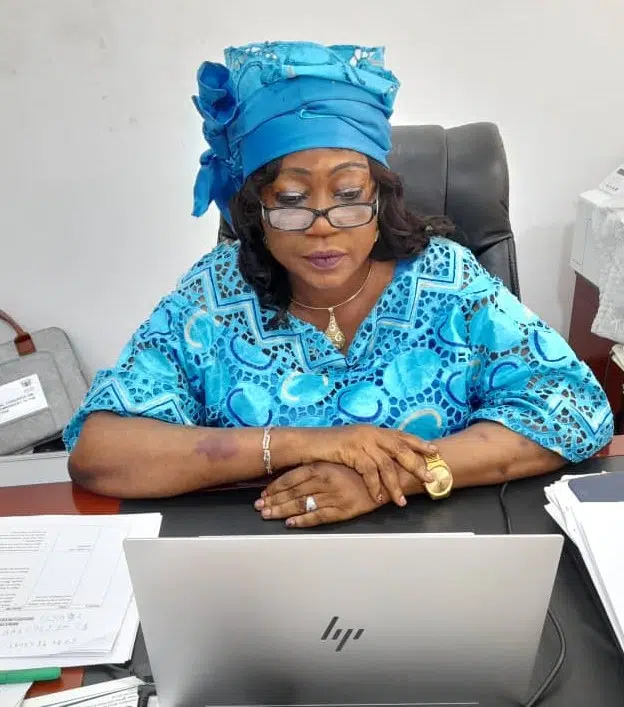
Dr. Memunatu Pratt, Minister of Tourism and Cultural Affairs

By Amin Kef Sesay

Dr. Memunatu Pratt, Minister of Tourism and Cultural Affairs, on the 7th April 2021 joined international decision makers, tourism leaders and investors in this year’s summit of International Tourism and Investment Conference which was done virtually.

The theme for 2021 is: “Invest, Rebuild and Restart the African Travel and Tourism Sector”.

The two-day virtual summit which was the aftermath of the restraining effects of the worldwide vaccination campaigns against COVID-19 aimed at uniting the broad spectrum of stakeholders of African and global tourism industries in order to tackle the key challenges that are cropping up in global tourism. There was special focus on investment opportunities in the African continent.

Giving her contribution, Dr. Memunatu Pratt pointed out that because of the experience Sierra Leone gained during the Ebola outbreak, the country has been able to contain the COVID pandemic and that Sierra Leone was the last country in West Africa to register a positive case of the corona virus.

She stated that the Government was able to support the tourism sector by providing safety net of three months’ salary to a number of hotels further mentioning that the Government is taking COVID restrictions very seriously, noting that the Ministry is doing a number of reforms that have to do with hospitality standards.

The Minister maintained that in the midst of COVID, the Tourism Ministry has been able to increase its domestic tourism revenue and that people are now visiting tourist sites more than ever before, with particular reference to the Tobanda Beach in the South which has just been commissioned by President Bio.

She said that a lot of work needs to be done at the African Union (AU) and ECOWAS levels to bring tourism to the forefront, while maintaining that there are a lot of barriers that prevent regional tourism, connectivity and coordination. Dr. Pratt maintained that such barriers call for an urgent address.