
Home Blog Page 989

At Mama Salone Clinic… Dr. Mohamed El-Zayat & Team Offer Professional Medical Treatments

By Amin Kef Sesay

The Egyptian medical doctor, Dr. Mohamed Abdel Aziz Abdel Moneim El-Zayat and team of the Mama Salone Clinic which is situate at 179 Wilkinson Road, Freetown, Opposite Freetown Supermarket, have just completed the conduction of free medical examination and scan that  started on November 2nd and ended on November 13th, 2020. The team at the clinic was helping women in Sierra Leone with free medical check-up.

In Bo on the 14th and 15th November 2020the team also conducted free check-ups and scan.

Dr. Mohamed Abdel Aziz Abdel Moneim El-Zayat is an Egyptian obstetrician, gynecologist, public health physician and medical researcher.

According to El-Zayat his aim is to help Sierra Leoneans take of care their health further beseeching Allah to bless their efforts disclosing that  the Salone Clinic is doing safe and successful deliveries for pregnant women.

During the free medical service there was joy and happiness as Dr. Mohamed Elzayat performed a safe delivery for one of their patients who in turn happily narrated  her beautiful experience while consulting with the Clinic.

“I encourage every other woman pregnant or not to take advantage of our professional services and stand a great chance to live a very healthy Life,” he entreated.

He said all that the patients need  to do is to visit the Mama Salone Clinic on 179 Wilkinson Road, Freetown, Opposite Freetown Supermarket from Monday to Saturday at 10:00am – 6:00pm and on Sundays from 8:00am – 12:00pm where the consultation fee is Le100,000 and scanning fee is Le200,000.

From an in-depth investigation conducted it came out clearly that the clinic is the heart of women’s health care in Sierra Leone as they cater for all, young as well as old.

“Every woman deserves to be treated with utmost respect, love, and care. Mama Salone Clinic is indeed number one when it comes to promoting the physical wellbeing of women in Sierra Leone,” Dr. Mohamed Elzayat maintained during an exclusive interview stating that the free healthcare check-up went on quite well highlighting how their first-time visitors were impressed with their service delivery.

From what was observed the clinic’s environment is very ideal for the treatment of various illnesses and complications experienced by women.

The Mama Salone Clinic health obstetrics and gynaecology team provides top-notch care that is tailored to each patient’s needs and wishes.

They treat the full spectrum of women’s health concerns; from routine gynaecology and pregnancy care to highly specialized services for incontinence, fibroids, endometriosis, sexual health, high-risk pregnancy, and many more.

The clinic treats cases like: menstruation problem, chronic stomach pain, abnormal menstruation, itchy private part, lump in breast and vagina, constant vagina discharge and Infertility in women. They also do surgeries to tighten a women’s vagina.

One critical case that the clinic recently treated had to do with one successful normal delivery. It was a case that was serious with cord around the neck of the child after an operation carried out by Dr. Mohamed Elzayat the mother delivered a baby boy safely.

Dr. Mohamed Abdel Aziz Abdel Moneim El-Zayat  is the Founder of Mama Salone Clinic and was born on the first of February 1988 in Egypt.

He said he decided to establish the Mama Salone Clinic because of his love for Sierra Leone and its citizens. He continued by saying that Sierra Leoneans are people who are full of gratitude.

Services provided by the Clinic relating to women’s health include:

Treatment of infertility and delayed childbearing, IUI and IVFF, follow-up of pregnancy and treatment of high risk pregnancies, detection with the latest ultrasound devices and determining the sex of the fetus in the first months of pregnancy, Cervical cerclage operations to prevent recurrent miscarriage, treatment of menstrual disorder and private part itching infections and genital infection,treatment of polycystic ovarian syndrome as well as functional cysts and their complications :Myomectomy and Fibroid treatment, HysterectomymLaparoscopy, Tubal ligation,Swelling of the breast and vagina,treatment of male infertility and impotence,treatment of Chronic Pelvic pain.

They also provide assistance in diagnosing and treating public health problems.

Mama Clinic Salone also the following facilities: Obstetrics and Gynecology Examination clinic, Scan Room with The Latest Ultrasound equipment, a complete, integrated and updated operating room for normal delivery and caesarean section, the latest incubators for infants and new-borns, a Pharmacy, a laboratory equipped with the latest international laboratory equipment, patient admission rooms at the highest level to support cases after operation.

For more information, you can contact these numbers: 075-878-666 / 033-878-666 or follow the Mama Salone Clinic Facebook page by clicking on this link: https://www.facebook.com/Mama.salone.

China Focus Adhere to People-Centered Philosophy and Pursue High-Quality Development for a Better Future

H.E. Hu Zhangliang (Ambassador Extraordinary and Plenipotentiary of the People's Republic of China to the Republic of Sierra Leone

H.E. Hu Zhangliang (Ambassador Extraordinary and Plenipotentiary of the People’s Republic of China to the Republic of Sierra Leone)

Putting people first and foremost has always been a core ideal of the Communist Party of China (CPC)’s governance philosophy. The people-centered philosophy and high-quality development were the basic considerations in drafting The CPC Central Committee’s Proposals for formulating the 14th Five-Year Plan (2021-2025) for National Economic and Social Development and the Long-Range Objectives Through the Year 2035 (hereinafter referred to as “The Proposal”).

During China’s 13th Five Year Plan period, from 2016 to 2020, China has made great progress with stable economic growth and better economic structure, and people’s living standards have been significantly improved. At the same time, China’s development is still inadequate and unbalanced. The reform tasks in key areas are arduous, the innovation ability needs to be enhanced, the gap between urban and rural areas needs to be narrowed, the basic role of the agricultural sector needs to be consolidated, environmental protection has a long way to go and people aspire for better lives. There’s strong call in China for high-quality development. And high-quality development is a way to properly tackle the relevant issues.

In order to further ensure the fundamental interests of all Chinese people, the CPC remains committed to the people-centered philosophy of development, and strives to further improve the quality of people’s lives through pursuing high-quality development. High-quality development means innovative, coordinated, green, open, and shared development. According to The Proposal, a series of measures will be implemented, including increasing people’s income, strengthening the policy of giving priority to employment, building a high-quality education system, improving the multi-level social security system, comprehensively promoting the building of a healthy China, implementing the national strategy for actively responding to the aging population, strengthening and innovating social governance etc.

China will step up supply-side structural reform, work hard for better quality, higher efficiency, and more robust drivers of economic growth through reform. Chinese people will receive greater and more equitable benefits from reform and development, and enjoy more substantial, assured, and lasting feelings of fulfillment, happiness and security as China makes constant strides toward the goal of common prosperity.

China aims to foster, over time, a new development paradigm with domestic circulation as the mainstay and domestic and international circulations reinforcing each other. This will create more space for China’s economic development and add impetus to global economic recovery and growth. China will continue to advance an open world economy and support economic globalization. China will continue to promote with other countries the high-quality development of the Belt and Road, from which the world will benefit.

China has a population of 1.4 billion and a middle-income group that exceeds 400 million. The vastly huge Chinese market is the most promising in the world. Total import into China is estimated to top 22 trillion US dollars in the coming decade. There’s huge potential for China-Sierra Leone trade and economic cooperation in the coming years. China is always ready to share development opportunities with Sierra Leone and bring more benefit to our two peoples.

At Matotoka, Makeni, Kono and Kenema… Dr.Manal Ghazzawi & Team Screen More than 500 on World Diabetes Day

By Amin Kef Sesay

According to the latest facts and figures on Diabetes, globally, 63 million adults (1-in-11) were living with diabetes in 2019 and the number of people living with diabetes is expected rise to 578 million by 2030.

Also, 1 in 2 adults with diabetes remain undiagnosed (232 million). The majority have type 2 diabetes.

Furthermore, more than 3 in 4 people with diabetes live in low and middle-income countries (LMICs) with Diabetes causing 4.2 million deaths in 2019.

There are many reasons as to why diabetes is claiming lives and is a global health concern. Factors like obesity due to adoption of unhealthy and sedentary lifestyle play a big role, not to forget about stress, depression, smoking and alcohol intake.

In Sierra Leone, a national data on the prevalence of diabetes does not exist, however it is a health concern that we should all be aware of. A recent cross-sectional study in Sierra Leone highlights a high prevalence to cardiovascular risk factors (CVRF) in older people and access to care is poor, hence the emergent need of strengthening our health system.

CVRS include increased lipid in our body, obesity, family history of diabetes, hypertension and smoking etc. As individuals, recognising and avoiding these risk factors can prevent early onset of diabetes or any cardiovascular event that could lead to complications. The need for health check-ups at least every year, adoption of healthy lifestyle cannot be over emphasized. We need to help ourselves in order to have a healthier community for a better Sierra Leone. In as much as the health system is fragile, we can help in reducing the burden of our health care system and Government expenditure on health.

World Diabetes Day (WDD) fell on November 14th and was a day the whole world recognised to create an awareness and draw attention to relevant issues related to diabetes, which keep the public informed and policy makers to take action.

WDD is the largest health campaign in the world which reaches a global audience of up to 1 billion in more than 160 countries.

This year, the well-known Dr.Manal Ghazzawi and Team, commemorated the day in Sierra Leone at Matotoka, which happens to be her grandma’s hometown.

They screened more than 500 people at Matotoka, Makeni, Kono and Kenema in which 34 people were newly found to be most likely diabetic, having high blood glucose levels above normal, upon fasting.

Based on what the team intimated they said during their campaign, they were able to distribute 100 glucometers to those suspected of being diabetic and those already diagnosed with diabetes.

Dr. Dr.Manal Ghazzawi extended thanks to all their partners for making such become a reality further expressing the wish that by next year they will be able to do a bigger campaign in the fight against diabetes by targeting more vulnerable groups in  hard to reach areas.

“I plead to all prospective partners to help us accomplish our purpose in the fight against diabetes in Sierra Leone,” she appealed.

The theme for this year for the WDD 2020 was “Nurses and Diabetes”. It was geared towards gearing raise awareness on the important role nurses play in supporting people living with diabetes.

In 2018, the World Health Organization (WHO) stated that global shortage of nurses in 2018 was 5.9 million and 89% of that shortage is concentrated in low- and middle-income countries.

The Ministry of Health and Sanitation (MOHS) significantly needs to invest in capacity building of its health workforce. Nurses and other supporting health care staffs can help in the following: Diagnosing diabetes early to ensure prompt treatment, providing self-management training and psychological support for people with diabetes to help prevent complications, tackling the risk factors for type 2 diabetes to help prevent the condition.

One major complication of the most prevalent non-communicable diseases like diabetes and hypertension is kidney failure, despite all the advancement in health care globally, the poor in Sierra Leone end up dying, due to lack of funds to pay for a dialysis session. There is only one dialysis facility in Freetown, with a session alone costing as much as $100. It is our basic human right to have a robust health system that caters for our health needs.

Dr.Manal Ghazzawi said such is why they are advocating for better health systems and using the WDD as an advocacy avenue to improve health care in Sierra Leone, focusing on diabetes and also other illnesses, saying people are indeed tired of spending thousands of dollars to cater for their health care needs from neighbouring African countries or others.

She highlighted that on behalf of people living with and affected by diabetes, they are advocating that the national Government recognises and advance the role of nurses and other health care professionals in diabetes care.

“We call on Government to strengthen access to preventive services, easy access to care, readily available and affordable health care and management,” she furthered.

UBA Deepens Retail Products, Services through Digital Channels across Africa

By Amin Kef Sesay

It will be welcoming to many that the Pan African financial services institution, United Bank for Africa (UBA) Plc has deepened its retail products and services with an aim to delivering services aimed at meeting the needs of its customers across Africa.

These services and product offerings, targeting at all classes of customers have been specifically tailored to meet the unique needs of individual customers of the bank, in line with the Customer First policy of the bank.

UBA’s Head of Retail Liabilities, Ogechi Altraide, who spoke in a virtual international media parley with a diverse group of journalists and publishers from all over Africa,  pointed out that UBA was well prepared ahead of the COVID-19 pandemic and had rolled-out a number of products that enabled customers to carry out their daily transactions with ease from the comfort of their homes.

She said, “At UBA, we have developed very deep and customer-centric solutions that have given us number one ranking over time. Our retail footprint cuts across 20 African countries, where we serve over 20 million customers through well researched platforms including over 20,000 POS as well as 3,000 ATMs deployed across the continent. We have well over 10 million active cards, while our very active and highly applauded Mobile App and USSD platforms serve several millions of subscribers every second.”

Continuing, Altraide said, “Our retail banking platforms cater to all ages and classes with the Kiddies and Teens Account – where parents can earn rewards and bonuses for saving for their kids, while also enjoying support in terms of scholarships and health insurance; Next Gen Account – which caters for young adults; Mass Marketing segment – made up of low to mid income earners; Affluent Banking for the premium banking experience as well as SME banking, which caters to meeting the needs of a niche industry essential for the growth of any economy.”

Throwing more light on the bank’s increasing support for the MSMEs, she explained that the bank offers both financial and non-financial services to this all-important sector as well as access to loans, adding that: “At UBA, we recognise that SMEs are important to economic growth, therefore our various offerings for MSMEs is positioned to support them in this regard.”

Altraide noted that other retail propositions the bank has developed to promote financial inclusion are Diaspora Banking where customers can enjoy the same quality of services in all locations around the world through UBA Connect and Africash; and Agency Banking, which makes use of digital channels that allow customers to access UBA banking services right in their neighbourhoods from their dedicated Agents.

Apart from UBA mobile banking, USSD, internet banking and LEO – UBA’s virtual assistant other innovative platforms that drive the bank’s retail business include UBA’s Click Credit – a much loved and accepted facility that makes instant cash available to customers with salary accounts within minutes.

Altraide added that already, over 50,000 people have benefited from the facility, adding that customers can access up to N5m in a matter of seconds.

United Bank for Africa Plc is a leading Pan-African financial institution, offering banking services to more than twenty million customers, across over 1,000 business offices and customer touch points, in 20 African countries.

With presence in the United States of America, the United Kingdom and France, UBA is connecting people and businesses across Africa through retail; commercial and corporate banking; innovative cross-border payments and remittances; trade finance and ancillary banking services.

Ways And Means Through Which Peace And National Cohesion Can Be Achieved…

By Amin Kef Sesay

Achieving peace and national cohesion in Sierra Leone depends primarily on the sincerity of purpose of the Government of the day to create a wide open space for all the tenets of democratic accountability to flourish as the first major step towards engendering trust and confidence in the people that the Government is truly serving their best interests; not that of those holding the power and their associates.

Socially, there has to be durable peace building networks at national, regional district, chiefdom and community levels that constantly inform the people in their own languages of the need to see each other as one people working towards the common good.

State institutions should be able to connect instruments and interventions designed to deliver peace, security, justice, development, human rights and humanitarian assistance to the most vulnerable members of society in all four corners of the country indiscriminately and without partiality.

The meaningful inclusion of marginalized sections of the population is a very critical element of peacebuilding.

This involves inclusion of specific demographic, economic, political and geographic groups into the national decision making framework. It also includes inclusion of actors from different sectors – i.e. Government, Civil Society, non-state actors, the private sector, local, national, regional and international stakeholders.

From conflicts in Africa and the developing world, it is clearly seen that growing income disparity and increasing polarization provide ample space for grievances and violence within the State.

In which context, we cannot underplay the all-important role of the country’s political parties in preaching peace and tolerance to their supporters.

As a big segment of the population, the importance of women’s inclusion in peace and development processes from a rights perspective and with regard to the effectiveness of recent women-led conflict prevention, conflict resolution and transitional justice initiatives cannot be missing from the building peace and cohesion building blocks.

In this light, the achievement of peace and national cohesion depends heavily on the mobilization of traditional and religious leaders as message carriers, as well as mobilization of civil society, especially youth and women’s groups as community animators on discussions of peace and cohesion issues.

Non-state actors (NSAs) are potent peace and cohesion stakeholders that have been excluded from peace-building processes.

NSAs driven by a sense of alienation could be given political space to engage, but often are not.

Some non-state actors, such as tribal chiefs, deliver services to their constituencies where State services are absent or inaccessible and should be included in security sector reform (SSR) and good governance initiatives.

Furthermore, corruption and abuses of power undermine the effectiveness of State security and justice sector institutions and their legitimacy in the eyes of the public, while the arbitrary actions of State security actors can be drivers of violent extremism.

Likewise, transparency in defence and security arrangements with stakeholders can reduce perceptions of corruption and abuse.

The knock-on effects of trust building are seen in the provision of community safety, which has been shown to contribute to public trust in Police. Community policing programmes are examples of where trust built between local communities and security forces increased the legitimacy of a country’s reform initiatives.

Artists, musicians, film makers and cultural agents in combination with traditional peace-building techniques can go a very long way in sensitizing the public on the need for peace and cohesion and its benefits to the nation.

Finally, despite recognition among peace-builders that young people and their perspectives should be incorporated into peace and development processes, few concrete examples of how to do so effectively are not seen in the governance structures at both national and local council levels.

Looking ahead, the structure and work of the coming Peace Commission should provide specific insights into what works for integrating youth and youth perspectives into peacebuilding.

Inclusion matters in building durable peace and cohesion. People should not only vote and be abandoned until the next elections. At all levels, their voices must be heard by the handlers of State power in designing and implementation of policies, programs and projects.

Meaningful inclusion geared towards reinforcing the pillars of unity and cohesion must therefore overcome structural inequalities, so that all stakeholders are afforded sufficient authority to influence decision making or otherwise effect change.

UN Deputy Secretary General & First Lady Discuss Burning Issues

By Amin Kef Sesay

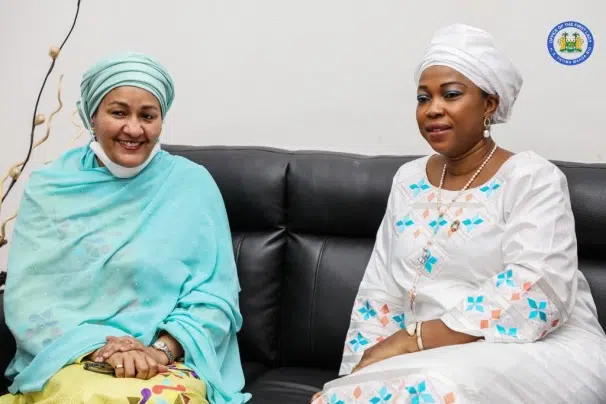
On Sunday 15th November 2020, the Deputy Secretary-General of the United Nations, Ms. Amina J. Mohammed and the First Lady, Madam Fatima Maada Bio met at State House where they discussed pertinent issues.

Welcoming the Deputy Secretary-General, the First Lady said she admired her work and passion. She furthered that she has been working with other First Ladies in order to accelerate and spread the awareness far and wide about the significance of accelerating gender equity.
She informed the Deputy Secretary General that Sierra Leone has managed to set up a Special Court to deal with matters relating to rape and other sexual based violence which, she said, will be replicated in other parts of the country. The results, since the inception of the Special Court have been encouraging, according to the First Lady.

The First Lady mentioned how she personally engaged local leaders in various communities countrywide to champion the Hands Off Our Girls Campaign and also reasoned out with people to see the need for girls to be in school.

She also went on to talk about how the Police and Military were also brought on board  a Task Force set up to combat SGBV alongside the women doctors in Sierra Leone, adding that the President sits as Chairman of the Task Force which meets once a month.

“We want positive change not just for Sierra Leone but for Africa as a whole,” the First Lady asserted.

On her part, the Deputy Secretary-General of the United Nations, Ms. Amina J. Mohammed, said she is pleased to be in Sierra Leone adding that indeed the First Lady is doing a great job by using her Office to address some of the issues that matter most in Sierra Leone.

She pointed out that their initial objective for undertaking the visit is to show solidarity during this COVID-19 period and more especially to show that there is still global leadership, global attention and how they can bring all the necessary responses to help deal with the current economic crisis caused by the COVID-19 pandemic.

The Deputy Secretary General said they are on a working visit to five countries, Nigeria, Niger, Mali, Sierra Leone, and Ghana saying these countries have different issues, which is why they are demonstrating that they are in solidarity with the Governments and the people they serve. She said Sierra Leone is a post-conflict country highlighting that sustaining peace takes time.
She added that when they landed in Sierra Leone they talked to different stakeholders and discussed issues they care about and which they consider they will support the Government on  to implement. She said Sexual and Gender-Based Violence falls among the issues to be tackled.

She said “Hands Off Our Girls” is an amazing slogan as it is simple and effective and it is about changing mindset and taking the responsibility for creating a space for girls to have a right to participate and not to have fear, adding also that the setting up of the Special Court for rape is a signal that the Government is very serious in tackling the thorny issue of Sexual and Gender Based Violence.

She went on to state that they are happy to support the project with their spotlight program, and will like to bring Sierra Leone into that project and also work with the First Lady to manufacture sanitary pads.

Repealed Criminal Libel Law Exonerates Sylvia Blyden & Others

Dr. Sylvia Olayinka Blyden

By Amin Kef Sesay

In order to translate what has so far transpired in terms of repealing of the criminal libel law, Anthony Brewah, the Attorney General and Minister of Justice on the 16th November 2020 applied to Magistrate Hannah Bonnie to Nolle Prosequi (drop all charges) of Seditious and Criminal Libel against Dr. Sylvia Olayinka Blyden which was ongoing at Magistrate Court Number 1 presided over by Magistrate Hannah Bonnie. Other cases were also asked to be dropped.

Addressing the media, the Attorney General stated that he is acting on instructions from His Excellency the President Rtd. Brigadier Julius Maada Bio to discontinue the legal actions as the Seditious Libel Law has been repealed and is no more in the country’s law books.

The Minister underscored that Government was not forced to repeal the bad law, also highlighting that it was done based on the manifesto promise made by the President during his campaign.

“It is out of the President’s magnanimity that I was given the instruction to discontinue this matter and all other matters that have to do with seditious Libel in the country; as of today the Government has not only entered nolle prosequi in this matter involving Sylvia Olayinka Blyden, we have also entered nolle prosequi in another matter at the High Court involving one Ibrahim Jalloh which was in front of Justice Ami Wright,” he told the Press.

The Attorney General revealed that they had a lot of evidence against the accused persons in question but they have to follow the instructions of the President and nolle all cases bordering on seditious and criminal libel law.

Discharging the matter, Magistrate Hannah Bonnie directed that the first and second accused, Sylvia Olayinka Blyden and Hussain Muckson Sesay, respectively be discharged of all charges against them, all conditions lodged before the court for fulfilment of bail be released, all records be discharged, and all exhibit touching and concerning the first and second accused be returned to them.

Speaking to the President of the Sierra Leone Association of Journalists (SLAJ), Ahmed Sahid Nasralla, he said Government had heeded their call and it happened that Dr. Sylvia Olayinka Blyden became the first beneficiary of the repeal, as the AG declared the libel case against her nolle prosequi; meaning she was acquitted and discharged.

“To us it is a victory for free speech and our growing democracy, we say thanks to President Bio for listening and taking action, and thank you to the Minister of Information and Communications Mohamed Rahman Swaray”.

ECOWAS Parliament Discusses ICT to Promote Distance Learning in COVID 19 Era

By Abdul Malik Bangura

As he continues to step up efforts to address fundamental issues bordering on the welfare of residents within the Economic Community of West Africa States (ECOWAS) region, the Speaker of the regional ECOWAS Parliament, His Excellency Sidie Mohamed Tunis, on Saturday 14th November 2020, landed in the city of Lome, Capital of the Republic of Togo to attend the third (3rd) delocalized meeting of the ECOWAS Parliament Joint Committee.

Participants of the meeting, which is ongoing in Togo, starting from the 17th November to end on the 21st November 2020, comprise regional Members of Parliament (MPs) who are discussing the most important theme of: “ECOWAS in the Era of COVID 19 and Beyond: Focusing on Information and Communications Technology (ICT) to Promote Distance Education and Training in the ECOWAS Member States”.

Upon his arrival around midday at the Étienne Eyadéma Gnassingbé International Airport in Lome, HE Tunis ,during a brief press meeting, said his delegation is in Togo to chart the way forward on how ICT can be used during this coronavirus pandemic to sustain the educational sector in the ECOWAS region.

He said the ECOWAS Parliament during the coming days will bring together experts in ICT to develop meaningful recommendations that will help the region in the future in the event of any pandemic.

“As representatives of the people of the Community, we will ensure that the outcomes of this session are fully implemented,” the ECOWAS Parliament Speaker assured.

Meanwhile, the 3rd Committee meeting follows two (2) other Committee meetings which were all held in this month of November 2020.

It could be recalled that earlier, the ECOWAS Parliament under the direct leadership of the Speaker ,HE Sidie Mohamed Tunis, from 3rd to 7th November held a Joint Committee meeting in Cotonou, Benin to discuss: “Africa Continental Free Trade Area, How feasible in the Face of Cross-Border Threats: Terrorism and Insecurity, Pandemics, Protectionism”.

Furthermore, the meeting in Cotonou was followed by another Joint Committee meeting in Bissau, Republic of Guinea Bissau, also under the direct supervision of the ECOWAS Parliament Speaker with the theme “ECOWAS Food Security; Agricultural Production and the Fight Against COVID 19”.

The 3rd Meeting which is holding in Lome is focusing on ICT to promote distance learning in the era of COVID 19. The importance of this discussion by regional MPs cannot be over emphasised for an ECOWAS Region where the educational sector has been seriously affected by the global COVID 19 pandemic since all Member States had to close schools and colleges in order to observe social distancing as one of the precautionary measures set up to curb the spread of the deadly virus.

As a result, several educational institutions turned to the modern ICT platform in the form of videoconference to enhance dissemination of vital information and also organised teaching programs without physical contacts.

According to Save the Children, there is fear for the future of millions of children, as more than 120,000,000 (one hundred and twenty thousand) children and students are currently out of school in West and Central Africa. Almost all countries had introduced nationwide school and university closures to contain the Covid-19 virus.

While the focus of the COVID 19 response is mainly on health systems, the pandemic is already having a devastating impact on children beyond that. In an attempt to maintain the COVID 19 pandemic, Governments are closing schools across the world.

This situation could further worsen the vulnerabilities of marginalized children within West and Central Africa and especially in the Sahel, says Save the Children.

US Embassy Issues Invitation to Attend College Fair

By Amin Kef Sesay

In a Press Release issued by the United States of America, it was stated that demonstrating the strong people-to-people and educational ties between the United States and Sierra Leone, the number of Sierra Leoneans studying in the United States continue to hold steady in the 2019-2020 academic year.

It added that the Institute for International Education (IEE) releases their Open Doors report annually during International Education Week, celebrated this year from November 16-20.

The 2020 report, according to the Release, shows that 199 Sierra Leonean students pursued higher education in the United States during the 2019-2020 academic year, an increase from the total of 188 Sierra Leonean students in 2018-2019.

From what the 2020 Open Doors Report stated, the United States hosted over 1 million international students for the fifth consecutive year.  Sub-Saharan Africa continues to represent an area of growth, with 41,697 students in 2019-2020, marking a 3.5% increase over the prior year.  It highlighted that amidst declining numbers of international study in other regions, sub-Saharan Africa stands out for its percentage of growth.

Worldwide, more than half of all international students pursued majors in the STEM fields, while other popular fields of study include business and management, social sciences, health professions, and foreign language and international studies.  For additional information on the 2020 Open Doors Report, please visit https://www.iie.org/Research-and-Insights/Open-Doors.

The Release said in the 2019-2020 academic year, Sierra Leonean students enrolled in more than 125 institutions in 36 U.S. States.  The five most popular U.S. States for Sierra Leonean students were Maryland, Ohio, Massachusetts, New York, and Virginia.

An invitation was extended to  Sierra Leoneans  to attend a sub-Saharan Africa virtual college fair hosted by EducationUSA which will take place  on November 18 (undergraduate session) and November 19 (graduate session) from 12:00pm – 4:00pm.

To register, please visit https://educationusa.state.gov/events/sub-saharan-africa-virtual-fair or follow the EducationUSA Africa Connection Facebook page @EducationUSAAfricaConnection for additional information.


Limkokwing Students Call on Pres. Bio to Intervene

By Amin Kef Sesay

Students on Government Scholarship at the Limkokwing University of Creative Technology -Sierra Leone have spent good fifteen (15) months without attending classes due to the endless impasse between the Government of Sierra Leone and the Limkokwing University.

The situation is one that has affected the educational pursuits of the affected students, about over 1000 of them, whom some say are now in total hopelessness.

From what this medium gathered, all efforts made by the affected students including engaging the relevant authorities have so far proven futile.
It was stated further that the unfortunate situation has caused severe problems for female students who are said to be the most vulnerable victims of circumstance.
From what these frustrated and desperate female students intimated ,when the converged in front of the Presidential Lodge on Wednesday, 4th & 12th November, 2020, they were there with the objective of appealing to the President and the First Lady, Fatima Bio, to show what they have been going  one of which is going through a lot of provocation from colleagues in other universities.

They furthered that they are now in limbo not knowing what will be the way forward.
The students also expressed optimism that they believe that seeing the President will certainly set the stage to get out of the quagmire.

They also used the opportunity to appeal to  Civil Society Organisations, 50-50 group, the Inter Religious Council, Humanitarian Organisations, Women Organisations , the Media and the People of Sierra Leone to come to their plight saying  they are really hopeless and disgruntled over their gridlock as they want to return back to campus.