Home Blog Page 99

NP (SL) — A Trailblazer in Fuel Technology and Indigenous Enterprise

NP Energy Pass Card

By Amin Kef (Ranger)

NP (SL) Limited, one of the nation’s most successful and proudly indigenous companies, continues to redefine innovation and customer satisfaction with operationalizing the NP Energy Pass Card, a digital, cashless payment solution designed to transform fuel purchasing across Sierra Leone.

The Energy Pass Card, a cutting-edge convenience initiative, is reshaping how both individuals and institutions buy fuel. It offers speed, transparency and security, marking a major leap toward modernizing the petroleum retail experience. Customers can now purchase fuel with a simple card swipe, eliminating the challenges of cash handling, theft and shortages.

For corporate clients, especially fleet operators, the system provides real-time tracking of fuel consumption, empowering companies to monitor and manage operational costs more effectively.

Over the years, NP (SL) has built an enviable reputation as a trusted and consistent distributor of petroleum products nationwide. Its extensive network of Filling Stations ensures nationwide accessibility to petrol, diesel, lubricants and cooking gas. The introduction of the Energy Pass Card has now elevated this commitment to an entirely new level, aligning the company with global digital trends and the Government’s digital economy agenda.

Through the Energy Pass Card, NP (SL) ensures full accountability in every transaction. Users receive instant SMS alerts and detailed digital statements, helping them monitor usage conveniently. Corporate clients can easily set consumption limits for drivers or staff, thus enhancing efficiency and reducing misuse.

NP (SL)’s success stems from its indigenous ownership and management, a point of pride for Sierra Leone. It remains a 100% Sierra Leonean-owned enterprise, demonstrating that local companies can compete with multinational giants through integrity, innovation and strategic leadership.

The company’s triple ISO certification, ISO 9001 (Quality Management), ISO 14001 (Environmental Management) and ISO 45001 (Occupational Health and Safety), is testament to its dedication to global standards of safety, quality and environmental responsibility.

Beyond fuel, NP (SL) promotes clean energy solutions through its NP Gas product, providing eco-friendly cooking alternatives that reduce reliance on firewood and charcoal. This effort directly contributes to the fight against deforestation and climate change.

As one of Sierra Leone’s largest private sector employers and taxpayers, NP (SL) continues to play a central role in national development. Its workforce, comprising pump attendants, technicians and senior professionals, is predominantly Sierra Leonean, trained to uphold the company’s values of professionalism, discipline and customer care.

Through its Corporate Social Responsibility (CSR) initiatives, NP (SL) has supported projects in education, health and environmental sustainability, affirming its reputation as a socially responsible corporate citizen.

The Energy Pass Card joins a suite of NP (SL)’s innovative tools, including the NP Smart Card, which enables secure, cashless transactions across its stations nationwide, from Cotton Tree and Campbell Street to Aberdeen, Regent and Brookfields. Both cards allow instant recharge and recovery via OTP authentication, ensuring uninterrupted service for users.

NP (SL)’s expansion beyond Sierra Leone, into Guinea, Liberia, Ivory Coast and The Gambia, demonstrates its growing influence as a regional petroleum powerhouse. Each subsidiary upholds the same operational standards and customer-centric approach that define the NP brand.

With continuous investments in technology, logistics and infrastructure, such as the modernization of the Kissy Terminal, NP (SL) has enhanced its storage and distribution efficiency, guaranteeing reliable fuel availability nationwide. The company’s Integrated Management System (IMS), built on six strategic pillars, reinforces environmental protection, regulatory compliance and operational excellence.

Guided by its timeless slogan, “NP- Your Partner for Life,” NP (SL) remains steadfast in fueling Sierra Leone’s economic growth, empowering its people and setting new standards for indigenous enterprise across West Africa.

The NP Energy Pass Card is more than a payment solution; it is a symbol of how innovation, integrity and patriotism can converge to power a nation’s progress.

Lǒr Restaurant Redefines Fine Dining in Sierra Leone with Global Culinary Excellence

Lǒr Restaurant

By Foday Moriba Conteh

Freetown’s culinary landscape has taken a remarkable leap forward with the emergence of Lǒr Restaurant, a fine-dining destination that masterfully blends Sierra Leonean authenticity with international sophistication. Nestled along the scenic Peninsular Highway in Juba, the restaurant has quickly become one of the most sought-after venues for both locals and visitors, setting a new benchmark for taste, style and service.

At Lǒr Restaurant, dining transcends the ordinary; it becomes an experience. The menu is a global journey that takes guests from the delicate artistry of Japanese sushi and Italian pasta to the rich aromas of Lebanese and Indian cuisine, all while celebrating Sierra Leone’s own vibrant culinary heritage. Each dish is a carefully curated masterpiece, prepared by a team of internationally trained chefs who combine creativity, precision and passion to satisfy even the most discerning palates.

The restaurant’s modern and elegant design complements its culinary excellence. With floor-to-ceiling glass panels, ambient lighting and breathtaking ocean views, Lǒr creates an atmosphere that is both intimate and sophisticated; ideal for romantic dinners, business meetings, or family celebrations. Its rooftop terrace overlooking the Atlantic Ocean has become a favorite spot for sunset diners and photo enthusiasts alike, offering one of Freetown’s most picturesque dining experiences.

Beyond its menu, Lǒr stands out for its exceptional service standards. The staff is professionally trained to provide attentive yet unobtrusive service, ensuring every guest feels valued. From table service to private dining, guests are treated with warmth and respect that reflect the establishment’s commitment to world-class hospitality.

Adding to the convenience, Lǒr accepts both digital and card payments, including Visa and Mastercard, alongside cash, a rarity among local restaurants. It also offers ample parking and valet services, underscoring its focus on guest comfort and accessibility.

Open daily from 9:00 AM to 11:00 PM on weekdays and until 12:15 AM on weekends, Lǒr caters to both early breakfast enthusiasts and late-night diners who seek a refined meal in an ambient setting.

Whether for breakfast, brunch, dinner or a celebratory evening, Lǒr Restaurant continues to redefine what fine dining means in Sierra Leone. Its seamless blend of local flavor and international standard, combined with its luxurious setting and outstanding service, makes it more than a restaurant; it’s a lifestyle statement and a symbol of Freetown’s growing cosmopolitan identity.

📍 Address: Peninsular Highway, Juba, Freetown
📞 Phone: +232 90 002000
💳 Payment Options: Cash, Visa, Mastercard
🍽️ Cuisine: Italian, Japanese, Lebanese, Indian, International
🕘 Hours: 9:00 AM – 11:00 PM (Weekdays), until 12:15 AM (Weekends)

Lǒr Restaurant – Where Fine Dining Meets the Atlantic Horizon.

Pee Cee and Sons Supports Cultural Exhibition Celebrating Sierra Leone–Germany Partnership

By Amin Kef (Ranger)

Pee Cee and Sons, one of Sierra Leone’s leading indigenous companies, has once again demonstrated its commitment to national development and cultural preservation through its sponsorship of a landmark exhibition: “Rediscovering Cultural Cooperation: Sierra Leone and Germany in the 1960s and Beyond.” Officially opened on November 7, 2025, at the Sierra Leone National Museum in Freetown, the event drew Government officials, diplomats, historians and cultural enthusiasts eager to explore Sierra Leone’s post-independence cultural diplomacy.

As part of its Corporate Social Responsibility (CSR) initiatives, Pee Cee and Sons made a major financial contribution toward the exhibition’s budget, underscoring its consistent support for education, heritage and the arts. The company’s involvement reflects its belief that sustainable development must include preserving the nation’s cultural identity while advancing economic growth.

The exhibition, organized in collaboration with the Embassy of the Federal Republic of Germany in Freetown, the Monuments and Relics Commission (MRC) and the National Museum, showcases rare documents, artifacts and photographs that chronicle decades of collaboration between Sierra Leone and Germany. Many of those materials are being displayed publicly for the first time, offering insight into how cultural exchange shaped Sierra Leone’s educational and artistic sectors during the 1960s and 1970s.

Speaking at the opening ,Chief Minister, Dr. David Moinina Sengeh, commended Pee Cee and Sons for linking business success with national heritage promotion. He emphasized that such public-private partnerships are vital to advancing the Government’s agenda of strengthening tourism, creativity and education as drivers of national development.

Under the leadership of its Acting Curator and Director, Ms. Josephine Kargbo, the National Museum, managed by the Monuments and Relics Commission, continues to preserve Sierra Leone’s historical legacy. Ms. Josephine Kargbo praised Pee Cee and Sons for its patriotic support, calling the sponsorship a “model of corporate collaboration that safeguards culture while driving economic growth.” She explained that the exhibition aligns with ongoing efforts to use culture and tourism as tools for education, unity and sustainable progress.

Officials from the German Embassy also commended Pee Cee and Sons for its contribution, noting that private sector engagement is essential in promoting cultural diplomacy and fostering mutual understanding between nations.

For decades, Pee Cee and Sons has remained a pillar of entrepreneurship, employment creation and community development in Sierra Leone. Through initiatives such as this sponsorship, the company continues to affirm its role as a socially responsible corporate leader dedicated to preserving the nation’s heritage and promoting pride in its cultural identity.

That evening, the exhibition transformed the National Museum into a vibrant hub of history and partnership; a reminder that national progress thrives when business, Government and citizens unite to protect and celebrate Sierra Leone’s story.

Mobile Network Operators Introduce Faster Data Connectivity Options

By Amin Kef (Ranger)

A recent investigation by this medium has shed new light on the much-debated changes in data bundle plans introduced by Sierra Leone’s two leading telecommunications giants, Africell and Orange. Contrary to widespread public speculation that the companies have quietly increased tariffs, credible findings reveal that the move is purely promotional and not a reflection of any approved tariff adjustment.

Sources within the telecommunications sector confirmed that a genuine tariff change involves a complex regulatory process governed by what is known as the floor and ceiling price system. This mechanism sets the minimum (floor) and maximum (ceiling) limits within which all operators must operate. Any modification to those prices requires prior consultation and approval by the relevant regulatory authorities. The current adjustments made by Africell and Orange, however, fall outside that category. They are instead described as promotional packages; temporary offers designed to address pressing network challenges and enhance customer experience.

According to technical experts who spoke to this medium, the move was prompted by a critical network congestion problem caused by the overuse of the 1mbps data plan. It was discovered that more than 70 percent of subscribers were connected to this single data access point, leading to severe network slowdowns across the country. This situation created frustration among users, many of whom wrongly attributed the poor network quality to operator inefficiency.

In response, Africell and Orange opted for a strategic intervention; introducing new promotional bundles that redistribute user traffic more evenly across their systems. The redesigned packages give customers greater flexibility, such as the option to subscribe for five days instead of a full week at a cost of eighty Leones. A subscriber can still access the 1 mbps plan daily but now has alternative offers to reduce pressure on the overloaded channel. The ultimate goal, company insiders disclosed, is to enhance network efficiency and overall user satisfaction without increasing the cost of access.

Industry observers have compared the situation to a market vendor selling groundnuts using different cup sizes. Each cup represents a pricing option, the larger the cup, the more it contains and the smaller the cup, the less it holds. In this analogy, customers are simply being given a wider range of purchasing choices. The introduction of the 2 Mbps option, for example, provides higher data speed and reliability, especially for users with multiple devices connected simultaneously.

The investigation also revealed that while Africell and Orange have taken the lead in recalibrating their data promotions, Qcell still maintains its existing package structure, which has remained popular among a section of subscribers. This diversity in package options ensures that consumers retain freedom of choice within a competitive telecommunications market. Those who prefer the traditional model can continue with Qcell, while others seeking improved speed and service quality can explore the new promotional bundles from Africell and Orange.

Experts believe that the new approach will likely yield positive results. By redirecting subscribers across different data streams, the two companies expect a significant improvement in service delivery and network stability. It is also expected to reduce customer complaints about poor connectivity and slow internet speeds, issues that have plagued the industry for months.

While the public continues to assess the benefits of the new data offers, the broader lesson emerging from this episode is that consumers must understand the difference between a tariff adjustment and a promotional campaign. The former requires regulatory oversight and impacts national pricing structures, while the latter is a flexible marketing strategy designed to improve user experience and manage network resources efficiently.

Ultimately, Africell and Orange’s latest initiatives may represent a turning point for the telecommunications sector in Sierra Leone; a sector that continues to evolve amid growing digital demands, rapid smartphone penetration and an increasingly tech-savvy population. Whether viewed as innovation or adaptation, the companies’ promotional adjustments signal a commitment to balancing business efficiency with customer satisfaction in a market where connectivity is now a vital lifeline.

CGG and Partners Conclude National Young Women’s Conference in Freetown

By Foday Moriba Conteh

The Campaign for Good Governance (CGG), in collaboration with the Young Women in Democracy Forum (YWDF) and with support from the African Women’s Development Fund (AWDF), successfully concluded its National Young Women’s Conference on Wednesday, 5th November 2025, at the Vinilla Complex, Aberdeen in Freetown. The two-day event, held under the theme: “From the Margins to the Stage: Reimagining Young Women’s Political Leadership in Sierra Leone,” brought together young women leaders, activists, policymakers and Civil Society representatives from across the country and the African continent, including Ghana, Kenya and South Africa.

In her opening address, Marcella Samba-Sesay, Executive Director of CGG, called on young women to rise above marginalization, assert their voices and take leadership roles across society. Emphasizing the “power of voice” as a critical tool, she urged participants to discover their unique strengths, develop confidence and challenge societal stereotypes that limit women’s potential. She highlighted that empowerment goes beyond appearance, stressing the importance of education, intellectual development and self-confidence. “We want women who, when they walk into a room are not only beautiful but also brilliant and bold. Empowerment without knowledge is meaningless,” she said.

Marcella Samba-Sesay further encouraged young women to tell their own stories, emphasizing that failing to do so allow others to define their narratives. She commended CGG and YWDF for creating a transformative space for dialogue, mentorship and reflection, and welcomed participants from across Sierra Leone and beyond to use the conference as an opportunity to network, learn and commit to advancing women’s leadership.

Badriatu Turay, National Coordinator of the YWDF, reflected on her organization’s mission to empower young women to actively participate in governance, policy-making and advocacy since its establishment in 2022. She highlighted the network’s role in mentorship and leadership development, emphasizing that young women who once doubted their voices are now challenging stereotypes, influencing decisions and driving societal change. “When young women are empowered and given space to lead, the nation grows stronger and more inclusive,” she stated.

Isata Sowa, Gender, Youth and Disability Focal Person at the Political Parties Regulation Commission (PPRC) acknowledged Sierra Leone’s progress in strengthening democratic institutions while noting that young women remain underrepresented in political decision-making spaces. She emphasized that structural, social and cultural barriers, rather than a lack of ability or ambition, often limit young women’s participation. She highlighted the importance of the Gender Equality and Women’s Empowerment (GEWE) Act 2022 in addressing those challenges and emphasized the PPRC’s commitment to promoting fair play, inclusivity and accountability within political parties. Isata Sowa called on participants to view young women as partners and leaders, rather than mere beneficiaries, in shaping Sierra Leone’s democratic future.

Mariama Jusu-Koiyia, Program Specialist at UN Women, noted the unique challenges young women face in leadership, particularly in politics, where social and cultural barriers often impede participation. She stressed that young women are neither too young nor too fragile to lead, urging them to break barriers and assume leadership roles boldly. She highlighted the value of intergenerational dialogue, encouraging young women to learn from experienced leaders while building their own capacities. Mariama Jusu-Koiyia pointed to UN Women’s efforts in providing training, mentorship and strategic support to over 570 female candidates in past elections, which has contributed to a surge in young women holding leadership positions at local and national levels. She encouraged participants to embrace opportunities to lead across all sectors, not just politics.

In her keynote address, delivered on behalf of the Minister of Gender & Children’s Affairs, Hannah A. Lahai, Deputy Director of the Ministry, reinforced the conference theme, describing it as a rallying cry for young women whose voices have long been sidelined in politics and public life. She acknowledged that despite progress under President Julius Maada Bio, including the enactment of the GEWE Act, systemic barriers such as cultural norms, political gatekeeping and lack of confidence continue to restrict women’s participation.

Hannah A.Lahai emphasized that young women are not merely the leaders of tomorrow but leaders of today, whose resilience and lived experiences are invaluable assets. She outlined a three-pronged approach to empowerment: broadening political participation beyond parliamentary ambitions to include community leadership and civic engagement, creating a pipeline of leadership through mentorship, funding, skills training and fostering a supportive ecosystem of allies, families and communities.

She encouraged participants to build alliances, support one another and view challenges as proof of their collective strength.

The conference provided a platform for dialogue, mentorship and advocacy aimed at strengthening young women’s political and social engagement. It brought together leaders from Civil Society, Government institutions and development partners to discuss strategies for enhancing women’s participation in governance and political leadership. Participants engaged in sessions that emphasized the importance of self-discovery, confidence-building and intellectual development as key drivers for leadership.

Throughout the two-day event, panel discussions and speakers consistently emphasized that structural and cultural barriers should not deter young women from assuming leadership roles. Participants were encouraged to actively engage in political and civic spaces, claim their narratives, leverage mentorship and intergenerational dialogue to strengthen their capacity to lead. The conference also highlighted the role of young women in shaping Sierra Leone’s democratic institutions and promoting inclusivity, equality and accountability across political and social spheres.

Protecting Mothers, Saving Lives: A Shared Responsibility

Minister of Health, Dr Austin Demby

Op-ed by the Minister of Health, Republic of Sierra Leone

Fifteen years ago, giving birth in Sierra Leone was one of the most dangerous things a woman could do. One in every hundred women faced the risk of dying during childbirth. Today, that figure has fallen by nearly seventy percent, from 1,165 to 354 deaths per 100,000 live births.

These numbers represent mothers and children who are alive today because of deliberate investments in skilled midwives, better-equipped facilities, solar power, ambulance services, oxygen and medicines. They are still not the numbers we want but they are real, hard-won gains. This progress has been possible because Sierra Leone made a clear commitment: that maternal and child health is both a moral and national priority.

This week, Human Rights Watch released a report alleging widespread ‘obstetric violence’ in our health facilities. We have reviewed this report carefully. Some of the experiences described are painful to read and even harder to imagine. Where any woman has been neglected, disrespected or made to pay unofficial fees, that is unacceptable. It betrays the spirit of the Free Health Care Initiative and the principles of service that guide this Ministry, which guarantee that cost should never determine who lives or dies.

The experiences captured in the report deserve to be heard and examined. But they reflect only a narrow snapshot of a complex and evolving health system; one serving millions of mothers and children across 16 districts, every day, under real-world constraints. To understand Sierra Leone’s health system is to see both the struggle and the progress, side by side.

That fuller story includes the steady expansion of skilled birth attendance from 60 to 87 percent, recruitment of over 4,000 health workers in the last three years, with more being added to the payroll, the construction and rehabilitation of over 1,600 primary health units, and the establishment of 12 oxygen plants and more than 300 solar installations to keep facilities powered. It also includes the commissioning of the Maternal and Child Health Centre of Excellence in Kono, a state-of-the-art facility providing high-quality care to mothers and newborns in the eastern region and serving as a model for equitable access across the country.

At the same time, Sierra Leone is investing in digital innovations that make care more efficient and responsive. The PReSTrack system, developed with the Directorate of Science, Technology and Innovation, is registering and tracking over 400,000 pregnancies nationwide, flagging high-risk cases and linking women to care earlier. Alongside the quiet revolution of logistics systems like Supply, which tracks medicines from the warehouse to the ward and the NEMS ambulance network, which transports hundreds of women every month to emergency care, these investments demonstrate a health system in transition, one determined to do better, not deny its challenges.

We also recognize that the process by which this report was produced raises legitimate concerns. Any research or investigation that involves interviewing patients or accessing health facilities must go through the National Ethics and Scientific Review Committee and receive the Ministry’s authorization. This is a global standard, designed not to stifle inquiry but to ensure that data collection respects privacy, accuracy and the dignity of participants. It also protects the credibility of the findings.

Unfortunately, in this case, the Ministry was not informed nor did it grant permission for the research to be conducted in our facilities. Human Rights Watch wrote to the Ministry in July, after the research had already been conducted, requesting a meeting. In hindsight, we should have engaged them more proactively. That opportunity for dialogue was missed. We have since set in motion plans to reopen communication, because we believe in engagement, not silence. But we also expect all partners, whether researchers, NGOs or media, to operate within the national frameworks that govern ethical research and public reporting. Accountability must work both ways.

Our approach going forward remains clear and consistent: we welcome scrutiny, but we insist on fairness. We will continue to expand respectful maternity care training, ensure that patient complaints are addressed promptly and strengthen facility supervision. We will deepen our maternal death review process, expand community monitoring and ensure that Free Health Care remains truly free.

Our health reform journey is guided by what we call the Four A’s – our compact with citizens and partners: Accountability to one another and to the people we serve; Alignment with national priorities; Acceleration, because the health of our people cannot wait; and Accompaniment, walking together through every challenge. These form the foundation of our partnership approach and the principles by which we ask to be measured.

The progress of that journey reflects a coalition: the dedication of nurses, midwives, doctors and community health workers; the trust of families and community leaders; and the collaboration of partners whose support we channel through a single national plan. We invite all who share this mission, including those who critique us, to work within that plan. Bring evidence. Follow the rules that protect patients. Help us fix what is broken and scale what works.

Our path to universal health coverage is not perfect, but it is real and our destination remains the same. Our goal is not only survival, but dignity. We will continue to listen, learn, ac, and strengthen our systems. Sierra Leone’s mothers deserve nothing less and that is the standard to which we hold ourselves.

Deputy Minister I of Energy Outlines Ministry’s Initiatives and Solar Power Partnerships

Deputy Minister Engineer Edmond Benjamin Nonie

By Foday Moriba Conteh

In an exclusive interview with the Press, Engineer Edmond Benjamin Nonie, Deputy Minister I at the Ministry of Energy, provided updates on the Ministry’s ongoing initiatives to improve energy availability and infrastructure across Sierra Leone.

Deputy Minister Engineer Edmond Benjamin Nonie explained that the Ministry has been working closely with donor partners to reform the energy sector and enhance electricity distribution for both institutions and households. “We are continuously assessing the system to identify areas that need improvement and collaborating with Management to achieve these goals,” he stated.

He emphasized that Sierra Leone before was not making use of the CLSG power line but said now Sierra Leone is receiving electricity through the CLSG power line, which connects the country to Cote d’Ivoire and Guinea, as well as generating the bulk of electricity domestically. However, the Ministry is actively working to expand domestic generation. “By January next year, we plan to add at least 60 megawatts of additional electricity from ongoing projects, including new solar installations and generator upgrades,” Engineer Edmond Benjamin Nonie revealed.

Speaking on international partnerships, the Deputy Minister detailed a recent visit to the United Arab Emirates (UAE), where he met with officials from Global South Utilities (GSU), a company that works on solar projects in Africa. The discussions focused on enhancing existing solar power initiatives, particularly the 6-megawatt Newton solar plant initiated in 2019. GSU has committed to supplying additional battery storage to complement the solar capacity, aiming to ensure more reliable energy supply.

“GSU has offered batteries that will enhance the efficiency of our solar projects. For instance, for the Newton and Lungi solar plants, we are receiving supplementary batteries to achieve the full intended capacity, which will allow us to maximize solar energy utilization,” he explained.

Engineer Edmond Benjamin Nonie also clarified the operational aspects of solar energy. He noted that solar systems generate electricity during daylight hours and battery storage is essential for providing power when sunlight is unavailable. “With these batteries, we can store energy during the day and use it when needed, ensuring a more stable power supply,” he said.

The Deputy Minister further discussed the Ministry’s strategy for project implementation. Following the signing of Memoranda of Understanding (MOUs) with GSU in November, technical studies and system designs will commence immediately. He highlighted the efficiency of GSU’s projects in the UAE, where they can deploy up to 50 megawatts per day, suggesting a rapid implementation timeline for Sierra Leone. “If we move fast with these projects, we expect substantial improvements in energy availability by early next year,” Engineer Edmond Benjamin Nonie said.

Addressing the financial and operational framework, he explained that the partnership involves GSU providing battery systems, which are then sold to the national utility, EDSA, at low tariffs. EDSA subsequently distributes electricity to consumers, ensuring affordability while supporting sustainable energy expansion.

Deputy Minister Engineer Edmond Benjamin Nonie also provided updates on other critical infrastructure projects, including upgrades at Kingtom and Black Hall Road, the installation of transformers and rehabilitation of transmission lines to ensure reliable electricity distribution. “We are systematically prioritizing projects to improve generation, transmission and distribution across key areas,” he noted.

The interview underscored the Ministry’s commitment to expanding access to electricity, leveraging renewable energy solutions and strengthening partnerships with international firms to address Sierra Leone’s energy challenges. Deputy Minister Engineer Edmond Benjamin Nonie reaffirmed that those initiatives are part of a broader strategy to ensure sustainable and reliable power supply for both urban and rural communities.

Shri Gurudwara Sahib Distributes 6,000 Meals Across Freetown to Mark Guru Nanak’s 556th Birth Anniversary

By Amin Kef (Ranger)

The Shri Gurudwara Sahib Sierra Leone Limited on Wednesday, 5th November, 2025 joined millions of Sikhs around the world in commemorating the 556th birth anniversary of Shri Guru Nanak Dev Ji, the revered founder of Sikhism, with acts of compassion, devotion and service to humanity.

As part of the celebration, 6,000 takeaway meals accompanied by soft drinks and water were distributed across multiple locations in Freetown; including Texaco, Portee Junction, Jui Junction, Waterloo, Baw-Baw, ECOWAS Street, Kroo Town Road, Adonkia and Lumley, symbolizing Guru Nanak’s enduring message of equality and selfless service.

The auspicious event, held at Shri Gurudwara Sahib Lumley, drew dozens of devotees, volunteers and community members from across the country. It centered on honoring Guru Nanak’s teachings of unity, humility and compassion; values that continue to resonate globally.

In his keynote address, Mohinder Bir Singh Sachdeva, affectionately known as Pa Jetty, Head of Shri Gurudwara Sahib Sierra Leone Limited and Chief Executive Officer of Jeety Trading Co., described Guru Nanak Dev Ji as a “timeless beacon of universal truth” whose life and teachings guide humanity toward peace, justice and harmony.

“Guru Nanak was no ordinary child. From an early age, he questioned meaningless rituals and sought the divine in every soul,” Pa Jetty said. “He traveled across India, Sri Lanka, Tibet, Mecca and beyond, spreading a message that transcended borders, religions and eras.”

He emphasized the three core principles of Sikhism, Naam Japo (meditation on God’s name), Kirat Karo (earning an honest living) and Vand Chhako (sharing with others); as timeless values essential to building a more compassionate world.

“Guru Nanak taught us that there is only One God, Ik Onkar; the Creator of all, formless, eternal and accessible to everyone, regardless of faith, gender or status,” he added.

Highlighting Guru Nanak’s stance on gender equality and inclusivity, Pa Jetty quoted the Guru’s profound words: “No one is Hindu, no one is Muslim; all are children of the same Creator.” He urged the congregation to practice Sarbat da Bhala, the well-being of all humanity, through daily acts of kindness and selfless service.

“In a divided world, Guru Nanak’s call for unity, humility and service reminds us that true spirituality lies in our actions; in feeding the hungry, standing against injustice and seeing God in every face,” Pa Jetty remarked.

The Gurudwara, known for its long-standing community service, reaffirmed its commitment to humanitarian work. During the COVID-19 pandemic, the organization provided relief to vulnerable groups and continues to support community-driven initiatives such as the Sick Pikin Marathon and the Baba Guru Nanak Scholarship, which sponsors more than 150 children annually.

The Langar Sewa (community kitchen) tradition, first established by Guru Nanak , also remains a central practice at Shri Gurudwara Sahib. Every Saturday, volunteers prepare and serve meals to over 1,200 people, embodying the Sikh principle of Wand Chhako (sharing with others).

The celebration also featured devotional prayers and cultural programs held on the evenings of November 14th and 15th at the Gurudwara premises on 18B Freetown Road, Lumley. Participants from various faith backgrounds attended, reaffirming Sikhism’s message of inclusivity and oneness.

A key message shared during the ceremony was the verse:

“Awal Allah Noor Upaya Kudrat Ke Sab Bande” meaning “We are all created by the One who is formless, colorless and shapeless.”

The event concluded with a collective call to action for peace, compassion and selflessness.

“Let us honor Guru Nanak’s legacy by building bridges, not walls; by working with integrity and by sharing our blessings with others. May his light guide us toward a more compassionate tomorrow,” Pa Jetty said.

Through service, devotion and unity, the Sikh community in Sierra Leone continues to preserve and spread the timeless values of Guru Nanak Dev Ji values that remain as relevant today as they were over five centuries ago.

Choithrams Opens New Supermarket in Adonkia, Expanding Access to Quality Goods and Services

Choithrams staff pose for picture after opening of new supermarket at Adonkia

By Amin Kef (Ranger)

In a move that underscores its commitment to business expansion and community development, Choithrams Sierra Leone has officially opened a new supermarket branch in Adonkia, marking its fifth outlet in the country.

Speaking during the opening ceremony on Wednesday November 5, 2025, Harish Agnani, Head of Operations at Choithrams Sierra Leone, expressed enthusiasm about the company’s continued growth and its mission to bring quality and affordable goods closer to customers across the country.

“This new branch represents another major step in our expansion drive,” Harish Agnani said. “We have been searching for a suitable location for months and we’re delighted to have found this spot. We encourage our loyal customers, friends and community members to visit and see what we have done here.”

According to Harish Agnani, the decision to establish the new branch in Adonkia was influenced by the absence of a Choithrams outlet in the Western Area Rural. “We already have four supermarkets two in the central area, one in the east and another at Kenema. It became necessary to extend our services to this part of town to make shopping more convenient for residents,” he explained.

Addressing concerns about pricing, Harish Agnani assured customers that Choithrams remains committed to fair and competitive pricing across all its outlets. “Our prices are among the most reasonable in town. We encourage customers to compare them with any other supermarket. If there are any concerns, our Managers are always available to address them,” he stated.

Beyond providing consumer convenience, Harish Agnani highlighted the company’s contribution to the national economy through job creation and tax revenue. “Each new branch creates employment opportunities for locals. This supermarket alone employs about 15 to 20 people directly and many others indirectly including drivers, watchmen and security personnel,” he said.

He added that the company’s continued growth supports Government revenue generation. “The more we sell the more GST and taxes we pay. It’s a win-win for both business and the country,” he emphasized.

Harish Agnani concluded by reaffirming Choithrams’ commitment to continuous expansion and community service. “We are always looking for opportunities to grow, empower local communities and enhance customer satisfaction. We thank our customers for their continued trust and support,” he said.

On his part, Mukesh Jaswani, General Manager of the Choithram Supermarket Adonkia branch, said the establishment of the new outlet was in direct response to growing customer demand and the absence of modern shopping facilities in the area.

“For a long time, residents have been asking when Choithrams will open a supermarket in this part of town,” Mukesh Jaswani explained. “There was no major supermarket here, so we decided to expand and bring our products and services closer to customers living in and around Adonkia.”

He emphasized that the new supermarket will provide a wide range of products, from groceries to household essentials, at affordable prices. “This community will now enjoy access to good products, good prices and excellent service,” Mukesh Jaswani said.

Highlighting the supermarket’s commitment to customer satisfaction, Mukesh Jaswani noted that the Adonkia branch is staffed with a well-trained and dedicated team focused on delivering top-quality service. “We have a strong and professional team committed to providing the best shopping experience to our customers,” he added.

The supermarket, according to Mukesh Jaswani, will operate Monday to Saturday from 9:30 a.m. to 9:00 p.m and Sundays from 10:30 a.m. to 5:00 p.m., ensuring that residents have convenient access to their shopping needs throughout the week.

He extended an open invitation to the public to visit the new branch and experience the difference. “We warmly welcome everyone to our new supermarket. Come and see our wide range of quality products and enjoy great service at Choithrams Adonkia,” he said.

Isatu Kamara, a resident of Adonkia said she is truly excited about the opening of the new Choithrams Supermarket in Adonkia, adding that for years, they’ve had to travel long distances just to access quality goods and groceries. “Having a supermarket of this standard right here means a lot, it saves us time, transportation costs and makes shopping much more convenient. This is a big development for Adonkia and we really appreciate Choithrams for bringing this service closer to us.”

“I’ve been a loyal Choithrams customer for many years, but I used to travel all the way to the Central branch in Freetown just to shop. It was stressful, especially during busy hours. Now that Choithrams has opened a branch in Adonkia, it feels like a huge relief. I can get the same quality products and friendly service without going far. This new branch really shows that Choithrams listens to its customers’ needs.”

The opening of the new Choithrams Supermarket branch in Adonkia marks a significant milestone in the company’s expansion strategy to strengthen its retail presence across Sierra Leone while fostering local employment and economic growth. The event, attended by company executives, staff and community members, was warmly welcomed as a positive boost to local commerce and a demonstration of Choithrams’ continued commitment to serving communities nationwide.

SLAPA Engages Waterloo Stakeholders on National Alcohol Policy Implementation

By Ibrahim John Sesay

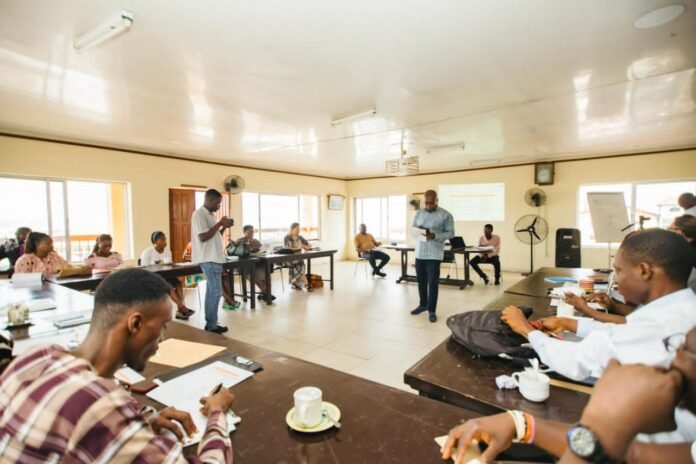
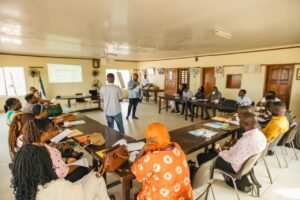
The Sierra Leone Alcohol Policy Alliance (SLAPA) on Thursday, 30th October 2025, hosted a one-day community workshop in Waterloo to enhance understanding and implementation of the National Alcohol Policy of Sierra Leone. The event, held at Frandy Hall, brought together diverse community stakeholders, including religious leaders, market women, youth representatives, civil society groups, school authorities and the media.

The sensitization session formed part of SLAPA’s ongoing efforts to promote responsible alcohol consumption and strengthen the national response to alcohol and drug abuse. The policy aims to minimize alcohol-related harm and guide regulatory actions across the country.

Speaking to The Calabash Newspaper, the National Chairman of SLAPA, Habib T. Kamara, said the engagement was vital for helping community members understand the growing challenge of drug misuse. He noted that substance abuse, particularly among youths, has become a major public health and social concern. He commended President Julius Maada Bio for his leadership in addressing the issue, citing the President’s visit to the Hastings Rehabilitation Centre as a demonstration of Government commitment.

Habib T. Kamara urged youths to stay away from Kush and other dangerous substances and called on communities to expose those involved in the supply and sale of illicit drugs that continue to destroy young lives.

In her remarks, the Chairperson of SLAPA Waterloo, Madam Marion Cole, applauded the participants for their strong turnout and expressed gratitude to the Government and development partners for supporting the National Alcohol Policy. She emphasized that the policy serves as a national framework for regulating the production, sale and consumption of alcohol, ensuring it is done safely and responsibly.

“We have been visiting schools and marketplaces to sensitize our people about the dangers of drugs,” she said, adding that the session also deepened participants’ understanding of mental health. “Our communities must come together to fight against Kush and tramadol; our children and youth are dying.”

Ambassador Marie Bangura, Chairperson of the Western Area Rural District Youth Council, said her organization has been actively engaging drug addicts through counselling and support initiatives. “We provide counselling and food services to addicts, many of whom are skilled workers, drivers and students,” she explained. “Peer pressure remains one of the key factors pushing young people into drug use.”

She urged young people to act as ambassadors in their communities, stressing that the fight against drug abuse is a collective responsibility. “If one person goes astray, it affects us all. Let us be our brother’s keeper,” she added.

Youth representative and Director of Programs and Projects at the Glittering Foundation, Alusine Jalal Kamara, highlighted his organization’s recent campaign, ‘Di Kush Norto Food Work’, which toured rural communities to raise awareness about the dangers of drug use. He encouraged young people to protect their future, warning that continued indulgence in harmful substances threatens the progress of future generations.

Religious leaders at the event reaffirmed that both Islam and Christianity condemn excessive drinking and drug use, urging faith communities to promote healthy lifestyles. Similarly, the Chairlady of the Waterloo Market Women’s Association commended SLAPA for including grassroots voices in the fight against drug and alcohol abuse. She cited the link between substance abuse and rising domestic conflicts and called for stricter enforcement against selling Kush to minors.

During an interactive session, participants proposed community-led monitoring and advocacy initiatives to strengthen local enforcement and awareness. Media representatives pledged to continue supporting public education campaigns through radio, print and social media.

At the end of the event, participants expressed appreciation to SLAPA for organizing the forum and committed to sharing the lessons learned within their communities to help curb drug and alcohol misuse in Sierra Leone.