

By Amin Kef Sesay
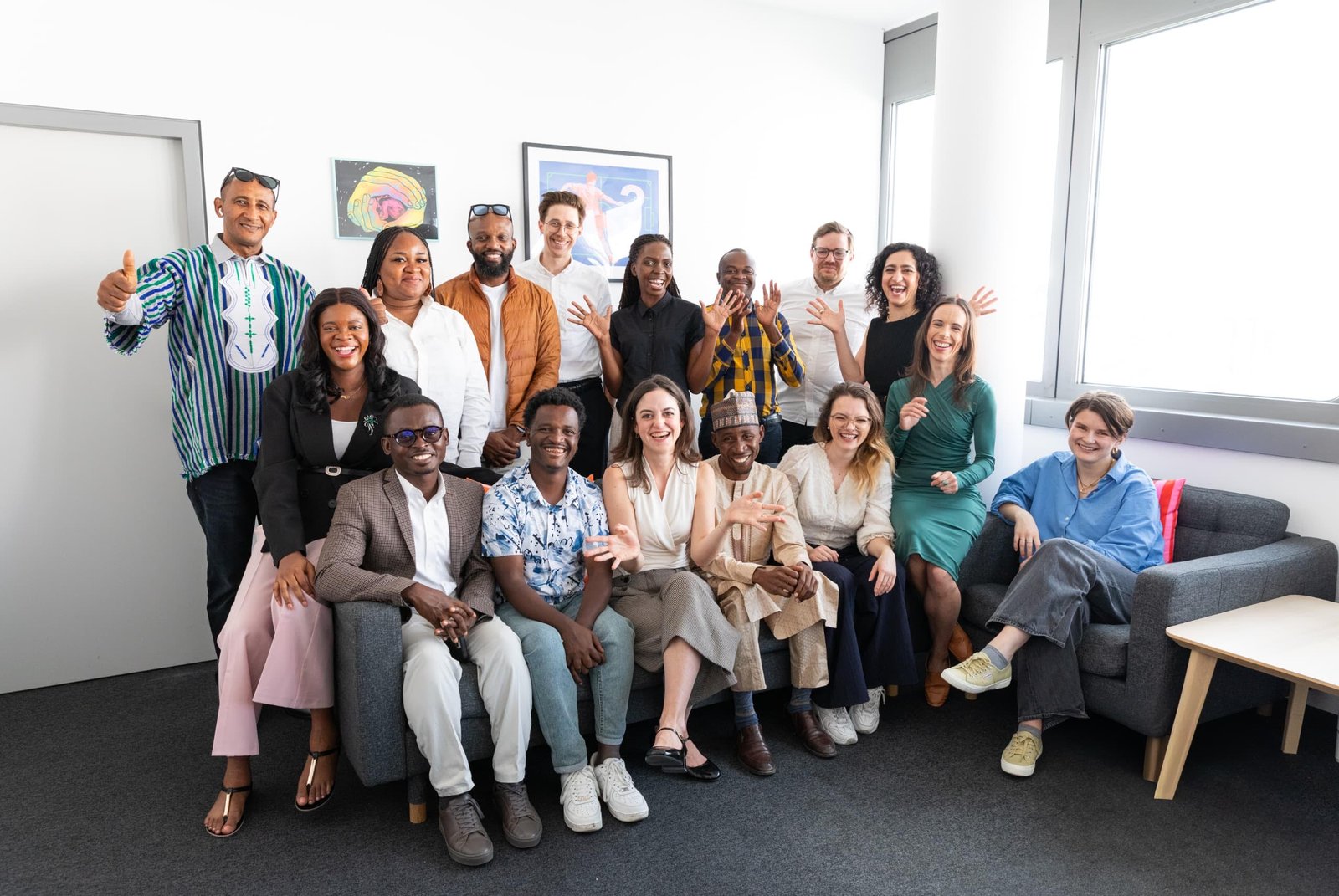
Under the framework of the Austria-Africa Media Fellowship Programme in Vienna, Austria, ten African journalists participating in the fellowship engaged with officials of Wiener Zeitung (WZ), one of Austria’s oldest and most respected media institutions, gaining deeper insight into the organization’s transformation, public-service journalism model, media innovation strategies, and commitment to shaping the future of journalism in the digital era.
The engagement, held on Tuesday, 19 May 2026, formed part of a broader effort aimed at strengthening cross-cultural media exchange, professional collaboration, and knowledge-sharing between African and Austrian journalists. The session also provided the visiting journalists with a unique opportunity to better understand Austria’s evolving media landscape, digital transformation strategies, and the growing importance of innovation, transparency, and media literacy in modern journalism.
The Austria-Africa Media Fellowship Programme has brought together ten accomplished journalists from different African countries for professional exchanges, institutional engagements, and policy discussions in Vienna. The participating journalists represented diverse media institutions across the African continent, including Favour Ulebor-Emmanuel of Vanguard Newspaper in Nigeria, Alhassan Bala, Founder and Editor of Alkalanci (The Arbiter) in Nigeria, Albert Oppong-Ansah, Editor and Desk Head for Environment, Science and Energy at the Ghana News Agency, Amin Kef Sesay, Managing Editor of The Calabash Newspaper in Sierra Leone, Miriam Angil of Swahilipot Hub Foundation in Kenya, Clement Manyathela, host of The Clement Manyathela Show on Radio 702 in South Africa, Erin Marisa Bates, Anchor and Presenter at Carte Blanche in South Africa, Eyasu Zekarias Tadesse, Reporter and Fact Checker with Capital Ethiopia/FM 97.7, Ernestina Serwaa Asante of GhanaWeb, and Farai Shawn Matiashe, an international journalist from Zimbabwe.
During the engagement, officials of Wiener Zeitung delivered extensive presentations on the institution’s transformation into a public-service media organization and the innovative approaches it is adopting to remain relevant in a rapidly evolving digital environment. Officials explained that since July 1, 2023, Wiener Zeitung has operated as a publicly funded media institution supported through taxation while maintaining its editorial independence and commitment to quality journalism.
Founded in 1703, Wiener Zeitung remains one of the oldest newspapers in the world. Officials noted that although the institution historically operated as a traditional daily newspaper, it has now transitioned into an almost fully digital media platform in response to changing audience behavior and evolving media consumption patterns. Despite this transformation, the organization continues to publish a quarterly print magazine, reflecting what officials described as a hybrid model of journalism and information dissemination.
Officials further disclosed that Wiener Zeitung currently operates with a newsroom and strategy team comprising 26 professionals who continuously explore innovative storytelling methods and audience engagement strategies. According to the institution, innovation is viewed as an ongoing process rather than a fixed achievement, emphasizing that modern journalism requires constant experimentation, adaptation, and creativity.
Particular emphasis was placed on the institution’s focus on younger audiences between the ages of 16 and 29, identified as Wiener Zeitung’s primary target group. Officials explained that the organization develops content and engagement strategies specifically designed to resonate with younger generations navigating increasingly complex digital information environments.
The visiting journalists also gained insight into Wiener Zeitung’s editorial philosophy, which officials described as audience-first and platform-driven journalism. Rather than focusing heavily on conventional breaking news coverage, the institution prioritizes information considered meaningful, useful, and impactful to its target audience.
Officials highlighted investigative journalism, data analysis, transparency, reliability, editorial independence, and quality reporting as central pillars guiding the institution’s newsroom operations. They also emphasized the importance of what they described as “slow journalism,” a model that prioritizes depth, context, analysis, and meaningful storytelling over speed, sensationalism, and superficial reporting.
Transparency, according to the officials, remains one of Wiener Zeitung’s strongest unique selling points. They explained that the institution openly communicates editorial processes, sources of information, and decision-making procedures in order to strengthen audience trust and institutional credibility. Officials noted that in an era increasingly characterized by misinformation, disinformation, and declining public trust in media institutions, transparency has become essential for sustaining journalistic legitimacy.
One of the major initiatives presented during the engagement was “Algokind,” a media literacy project aimed at educating young people about the influence of algorithms on digital platforms, social media feeds, and news consumption patterns. Officials explained that the initiative primarily operates through platforms such as Instagram and TikTok, using accessible and engaging digital content to help audiences understand how algorithms shape information exposure, public perception, and online behavior.
The project also encourages responsible and conscious media consumption among younger audiences. To maximize outreach and engagement, Wiener Zeitung adopts a multi-channel communication strategy incorporating podcasts, radio programming, influencers, and community spaces.
The African journalists were additionally introduced to Wiener Zeitung’s broader institutional ecosystem, which includes several programmes and initiatives supporting journalism, digital innovation, professional development, and public education. These initiatives include the Media Innovation Lab, the Centre for Media Knowledge, re:think Media, MediaHub Austria, and the 360-degree Journalism Traineeship Programme.
Officials explained that through the re:think Media initiative, Wiener Zeitung seeks to create collaborative spaces where emerging journalists, media startups, and established media institutions can interact and work together as equals. The programme particularly targets young media professionals, with officials revealing that more than 70 percent of participants are between the ages of 18 and 34, while over 60 percent are women and nearly half are students.
According to the officials, participation in the programme has grown significantly, with ticket sales reportedly increasing by 500 percent between 2025 and 2026. The initiative has attracted hundreds of participants and dozens of speakers, demonstrating growing interest in media innovation and collaboration within Austria’s journalism sector.
The Media Innovation Lab presentation focused extensively on the major challenges confronting journalism globally, particularly in the context of digital disruption. Officials identified audience fragmentation, platform dominance, shrinking revenues, declining trust, and inadequate digital capacity as some of the most pressing obstacles facing media organizations today.
They explained that social media platforms and digital technologies continue to fragment audiences and reduce the reach and sustainability of traditional media institutions. Economic pressures, they noted, are increasingly threatening media diversity, newsroom sustainability, and long-term journalistic viability.
To address these challenges, Wiener Zeitung has developed innovation-driven solutions centered on experimentation, collaboration, and entrepreneurship. Officials highlighted fellowship and incubator programmes designed to support media innovators in developing sustainable ideas and business models.
The fellowship programme reportedly runs for nine months and provides funding support of up to €40,000 alongside coaching, workshops, mentorship, and practical support aimed at bringing innovative media ideas to market readiness. The incubator programme, which spans three months, enables participants to validate concepts, prototype solutions, and embrace trial-and-error approaches to innovation development.
An alumni network has also been established to promote continuous collaboration, peer learning, networking, and strategic partnerships among participants.
Looking ahead, Wiener Zeitung officials outlined long-term goals focused on accelerating digital transformation, developing new business models, promoting modern and diverse journalism, and strengthening cooperation among media practitioners. They stressed that innovation and collaboration will remain critical to ensuring the sustainability, resilience, and relevance of journalism in rapidly changing global media environments.
The participating African journalists also received presentations on the Centre for Media Knowledge and Kontext Club initiatives, both of which provide concept development, design support, workshops, studies, research opportunities, and professional networking spaces for media practitioners.
Additionally, officials briefed the journalists on the 360-degree Journalism Traineeship Programme, an initiative created to address declining numbers of journalists and the underrepresentation of young people within Austria’s media industry. The programme offers participants placements across multiple organizations over a 12-month period, combined with workshops, mentorship opportunities, professional exposure, fair compensation, and extensive networking opportunities.
The engagement ultimately provided the African journalists with valuable insight into Austria’s evolving media ecosystem and demonstrated how innovation, transparency, media literacy, and audience-centered reporting continue to shape the future of journalism in an increasingly digital and interconnected world.