
By Amin Kef Sesay, Managing Editor, The Calabash Newspaper, Sierra Leone
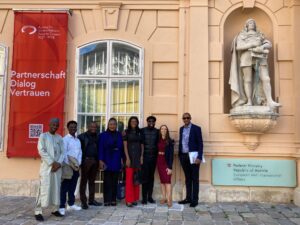
Austria has reaffirmed its commitment to diplomacy, dialogue, international cooperation and democratic trust-building as senior officials from the Austrian Federal Ministry for European and International Affairs engaged African journalists participating in the Austrian-African Media Fellowship Programme in Vienna.
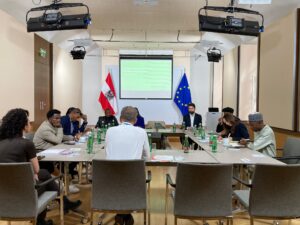
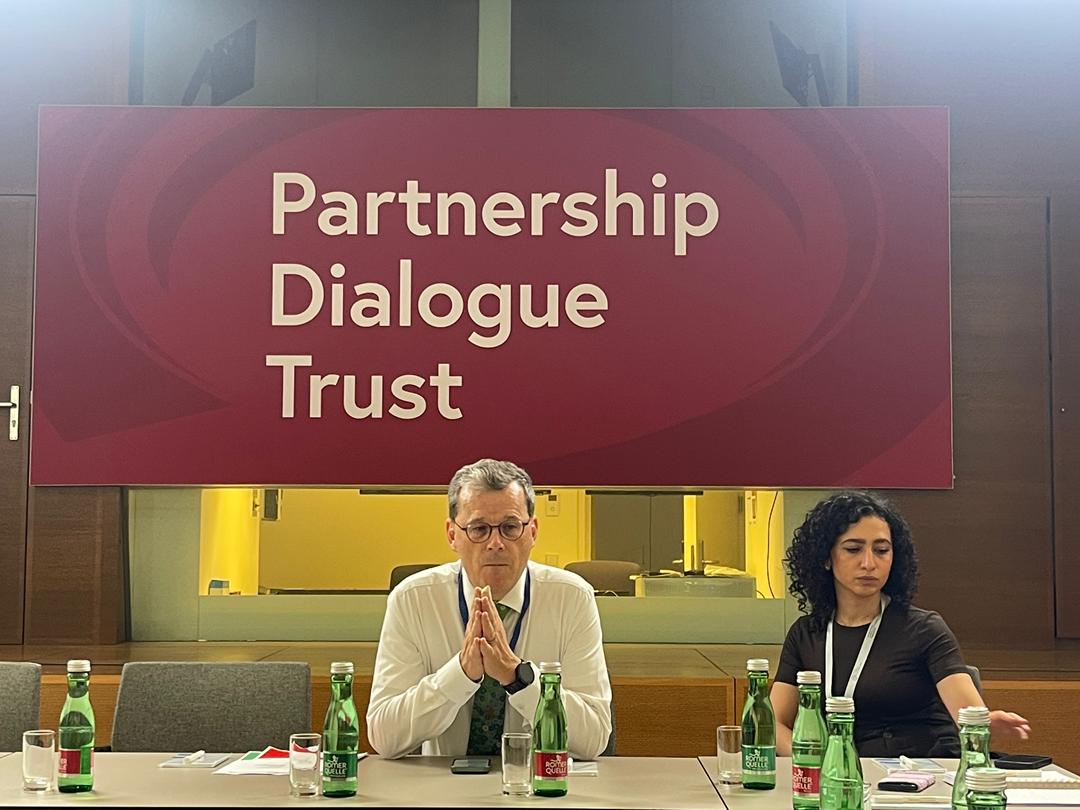
During a high-level briefing held at the Austrian Foreign Ministry on Monday, 18 May 2026, Foreign Ministry officials outlined Austria’s communication philosophy, diplomatic priorities and campaign for election to the United Nations Security Council for the 2027–2028 term.
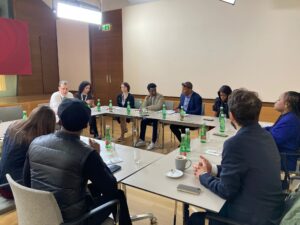
Addressing participants drawn from several African countries, Foreign Ministry officials welcomed the visiting journalists and described the Austrian-African Media Fellowship Programme as an important platform for strengthening media cooperation and fostering deeper understanding of Austria’s governance, diplomacy and international relations.
Officials noted that the programme had been carefully designed to expose African journalists to key Austrian institutions, international organizations and policymakers, enabling them to gain firsthand knowledge of Austria’s role in global affairs.
According to Foreign Ministry officials, Austria’s Ministry of Foreign Affairs has adopted a dual communication strategy aimed at effectively engaging both domestic and international audiences.
Officials explained that the Ministry utilizes two communication frameworks—one tailored specifically for Austrians and another designed for international audiences.
According to Foreign Ministry officials, Austria’s international communication strategy is strongly centered on trust, dialogue and openness, reflecting the country’s longstanding commitment to diplomacy and international cooperation.
Officials noted that Austria views diplomacy as a process of opening spaces for constructive engagement, cooperation and problem-solving among nations.
According to Foreign Ministry officials, Austria’s communication strategy aligns closely with the country’s foreign policy values, particularly its commitment to peaceful engagement, multilateral diplomacy and stronger international partnerships.
Austria is currently seeking election to a non-permanent seat on the United Nations Security Council for the 2027–2028 term alongside Germany and Portugal, with voting expected to take place in June at the United Nations headquarters in New York.
Foreign Ministry officials emphasized that Austria’s candidature reflects the country’s commitment to strengthening peace, diplomacy and international stability through active participation in global decision-making.
Officials further highlighted Vienna’s global diplomatic significance, describing the Austrian capital as one of the world’s most important international diplomatic centers.
According to Foreign Ministry officials, Vienna serves as one of the four principal headquarters of the United Nations globally, alongside New York, Geneva and Nairobi.
Officials disclosed that Vienna hosts more than forty international organizations, making it an important center for diplomacy, scientific cooperation, humanitarian work and global policymaking.
Among the institutions highlighted was the International Atomic Energy Agency (IAEA), headquartered in Vienna, which plays a significant role in international nuclear oversight and global peace and security.
Foreign Ministry officials encouraged participants to maximize opportunities during their stay in Austria by identifying compelling stories and areas of interest for deeper reporting.
Officials assured journalists that the Ministry remained committed to supporting media work through access to interviews, background information and engagement with relevant institutions and experts.
According to Foreign Ministry officials, journalists participating in the fellowship would engage senior Austrian leaders, including top government representatives, to discuss diplomacy, economic cooperation, scientific partnerships, bureaucracy and Austria’s broader engagement with Africa.
Officials noted that Austria increasingly seeks to deepen collaboration with African countries, particularly in trade, education, science, innovation and international development.
Providing insight into Austria’s communication philosophy, Foreign Ministry officials stressed that Austria seeks to project itself not only as a country recognized for its rich cultural heritage and history but also as a modern, innovative and globally connected nation.
Officials emphasized that Vienna’s global identity extends beyond tourism and culture, positioning itself as an important international center for diplomacy, dialogue, sustainability and multilateral cooperation.
According to Foreign Ministry officials, diplomacy in today’s increasingly polarized world requires stronger networks, meaningful cooperation and sustained partnerships among nations.
Officials maintained that Austria seeks to facilitate practical engagement and collaboration capable of addressing global challenges through peaceful dialogue and mutual understanding.
For Austrian citizens, Foreign Ministry officials explained that the Ministry’s communication strategy places strong emphasis on demonstrating the practical benefits of diplomacy and foreign engagement.
Officials acknowledged that many citizens often question the value of international meetings and diplomatic activities, but maintained that diplomacy produces tangible outcomes through stronger partnerships and international representation.
According to Foreign Ministry officials, one of the clearest examples of diplomacy’s practical value lies in Austria’s consular support services for citizens abroad.
Officials described Austria’s consular assistance system as one of the country’s strongest diplomatic achievements, particularly during emergencies, crises and evacuations.
Foreign Ministry officials disclosed that Austria regularly mobilizes emergency support mechanisms for citizens abroad during periods of instability and humanitarian crises.
Although public expectations can sometimes be challenging during emergencies, officials stressed that Austria remains committed to supporting and protecting its nationals worldwide.
Turning to broader global concerns, Foreign Ministry officials expressed growing concern over misinformation, disinformation and deliberate attempts aimed at weakening trust in democratic institutions.
Officials warned that democratic societies increasingly face efforts intended to undermine public confidence and create distrust in public institutions.
According to Foreign Ministry officials, rebuilding trust remains one of the greatest communication challenges confronting governments and democratic systems worldwide.
Officials stressed that Austria continues to work alongside European partners to strengthen resilience against misinformation while promoting accountability, transparency and factual communication.
On Austria’s candidature for the United Nations Security Council, Foreign Ministry officials reiterated the country’s commitment to dialogue, peaceful conflict resolution, international law and cooperative global governance.
Officials explained that Austria’s longstanding neutrality and diplomatic experience place the country in a unique position to contribute meaningfully to international peace and security efforts.
According to Foreign Ministry officials, Austria’s role as host to major international organizations provides valuable experience in facilitating dialogue, diplomacy and peaceful solutions to international disputes.
The briefing formed part of opening engagements under the Austrian-African Media Fellowship Programme, which seeks to provide African journalists with firsthand exposure to Austria’s diplomatic institutions, governance systems and international organizations.
The programme is also expected to strengthen media cooperation and deepen professional exchanges between Austria and participating African countries, while promoting greater understanding of diplomacy, international relations and global governance.