
By Amin Kef Sesay, Managing Editor, The Calabash Newspaper, Sierra Leone
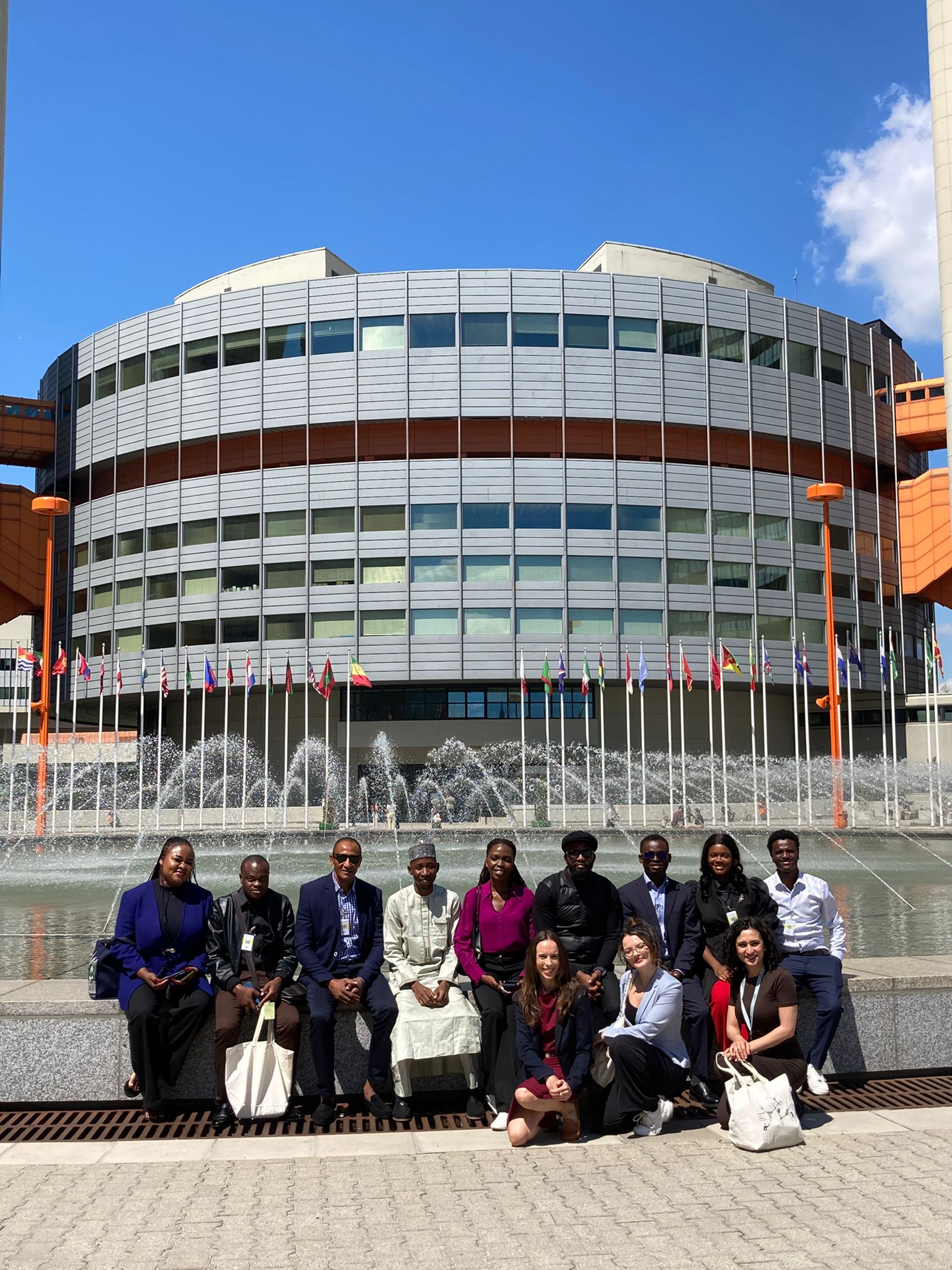
Ten journalists from different African countries participating in the Austria-Africa Media Fellowship Programme on Monday, 18 May 2026, visited the headquarters of the International Atomic Energy Agency (IAEA) at the Vienna International Centre in Vienna, Austria, where they received comprehensive briefings on the agency’s global mission, technical cooperation programmes, and peaceful nuclear applications aimed at advancing sustainable development.
The visit formed part of activities under the fellowship programme and provided participants with firsthand insight into the operations of the IAEA, globally recognized as the world’s “Atoms for Peace and Development” organization. Established in 1957, the agency operates as an autonomous body within the United Nations system and is mandated to promote the peaceful use of nuclear science and technology while ensuring such technologies are not diverted for military purposes.
The IAEA headquarters, located at the Vienna International Centre in Vienna’s 22nd district of Donaustadt, serves as the nerve centre of the agency’s international activities. The institution plays a critical role in advancing nuclear safeguards, safety, technical cooperation, and scientific research across its member states.
During the visit, the journalists received a briefing from Sinéad Harvey, Press and Public Information Officer in the Office of Public Information and Communication, who provided an overview of the agency’s work and global engagement efforts. She highlighted the importance of public awareness and accurate reporting on nuclear science, particularly regarding its peaceful applications in development, healthcare, food security, environmental protection, and energy planning.
Participants later attended an in-depth lecture delivered by Michel Warnau, Section Head in the Division for Africa under the Department of Technical Cooperation, who explained the agency’s organizational structure and technical cooperation mechanisms aimed at supporting member states.
According to Michel Warnau, the IAEA operates through six departments, including four major technical divisions focusing on nuclear energy, nuclear sciences and applications, safety and security, alongside departments responsible for management and technical cooperation.
He explained that the agency’s Technical Cooperation Programme serves as the primary mechanism for transferring nuclear knowledge, expertise, and technology to member states, particularly in areas where nuclear applications offer advantages over conventional methods.
“The Technical Cooperation Programme is entirely member state-driven,” Michel Warnau stated, adding that countries identify their own national priorities, which the agency then supports through carefully designed projects aligned with development goals.
He noted that technical cooperation interventions are structured around a biennial cycle beginning with requests from member states based on national priorities and strategic development plans. Once priorities are identified, projects are developed jointly between national authorities and IAEA technical experts.
Michel Warnau further explained that every member state appoints a National Liaison Officer who acts as the focal point for coordinating technical cooperation with the agency. Following project design and approval, implementation involves the dispatch of technical experts, delivery of equipment, and extensive human resource development initiatives.
He disclosed that the agency strongly emphasizes capacity building through fellowships, scientific visits, training programmes, workshops, conferences, and technical exchanges aimed at strengthening local expertise.
The African region remains a major beneficiary of the IAEA’s Technical Cooperation Programme. According to Michel Warnau, about 47 African member states received support under the programme last year, while the number has now risen to approximately 50 countries.
He disclosed that countries including Guinea, Somalia, and The Gambia have recently joined the programme after completing necessary accession processes.
He further explained that the agency works under a regional cooperative arrangement known as the African Regional Cooperative Agreement for Research, Development and Training Related to Nuclear Science and Technology (AFRA), established in 1990 to coordinate regional technical cooperation efforts across Africa.
According to him, the agency recorded about 197 active national and regional projects in Africa by the end of last year, spanning areas such as health, food and agriculture, water management, industrial applications, radiation safety, nuclear knowledge management, and environmental sustainability.
Providing figures for 2025, Michel Warnau revealed that the IAEA organized 32 regional training courses across Africa, deployed 563 experts and lecturers for technical missions and training, while over 800 fellows and scientific visitors received overseas training opportunities to enhance specialized knowledge.
He also disclosed that approximately 1,400 participants took part in training activities, with women accounting for nearly 1,000 participants, underscoring efforts to promote female participation in science and technical fields.
The briefing further highlighted several flagship IAEA initiatives benefiting Africa, including the Rays of Hope programme, launched in 2022 to improve cancer diagnosis and radiotherapy services across the continent.
Michel Warnau emphasized that nearly 70 percent of Africans currently lack access to radiotherapy treatment despite the growing cancer burden, making the initiative essential in expanding cancer care infrastructure and strengthening medical expertise.
The agency is also supporting the establishment of radiotherapy centres, radiopharmacy networks, and training hubs in countries including South Africa, Algeria, and Morocco, which now serve as regional centres of excellence.
Another major initiative discussed was Atoms4Food, launched to address food insecurity and agricultural challenges through nuclear science applications in crop improvement, animal health, pest control, food safety, and water management.
The programme seeks to improve food productivity and resilience, especially in African countries where millions continue to face hunger and climate-related agricultural challenges.
Michel Warnau also highlighted the NUTEC Plastics initiative, which focuses on tackling marine and terrestrial plastic pollution using nuclear techniques to monitor plastic waste and develop innovative recycling technologies.
He warned that plastic pollution poses a growing global threat, noting that current estimates suggest there is now one ton of plastic for every three tons of fish in the ocean, a figure expected to worsen significantly by 2050.
The final flagship programme discussed was ZODIAC, launched during the COVID-19 pandemic to strengthen countries’ capacities to detect, monitor, and respond to zoonotic diseases.
The initiative supports diagnostic laboratories, biosafety systems, genome sequencing, and disease surveillance mechanisms across member states to improve preparedness for future health emergencies.
The visit concluded with an interactive engagement between the journalists and IAEA officials, providing participants with a broader understanding of how nuclear science and technology are contributing to healthcare, food security, environmental protection, and sustainable development across Africa and the wider world.