
By Amin Kef Sesay
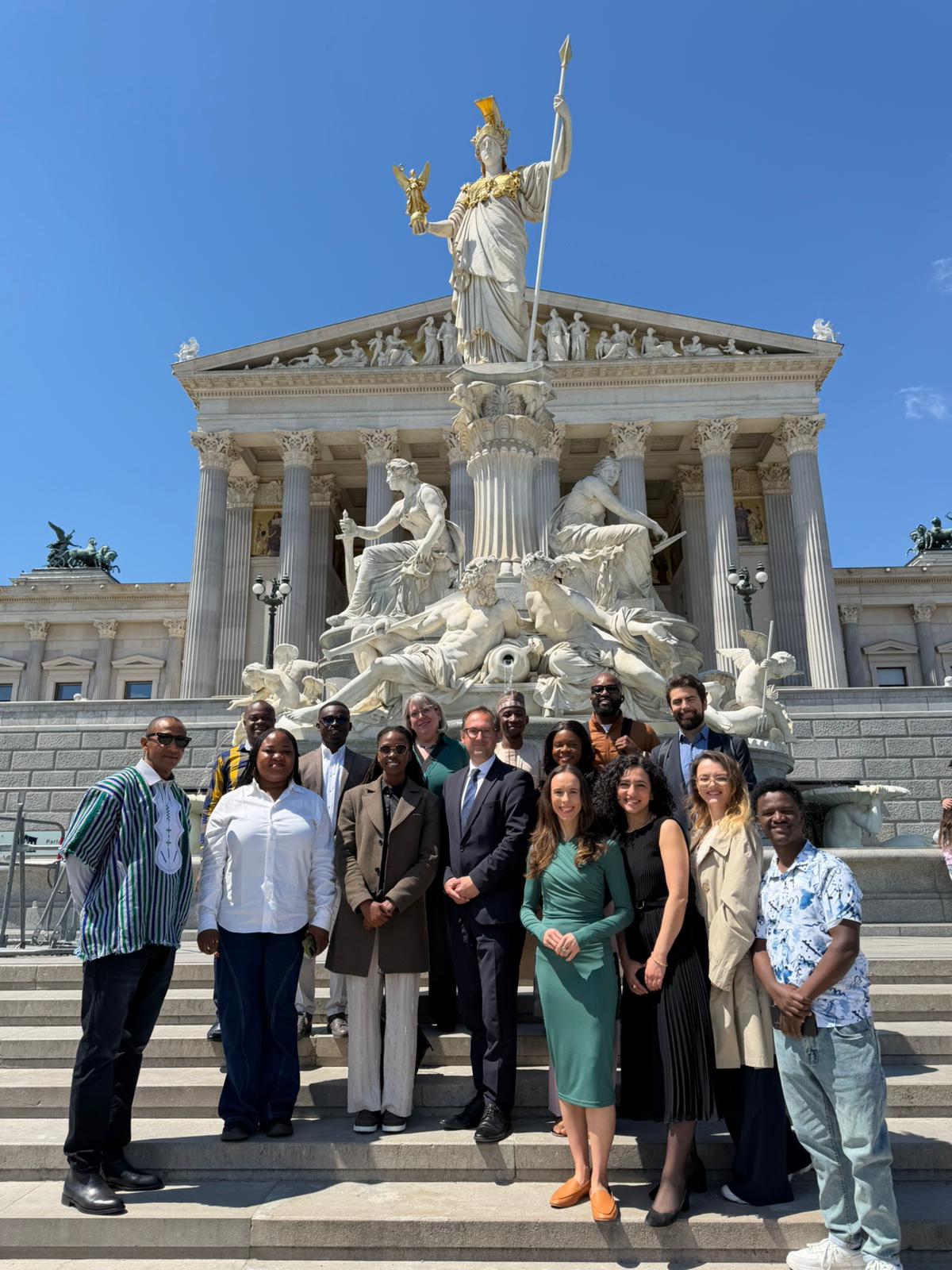
Ten journalists from different African countries participating in the Austria-Africa Media Fellowship Programme 2026 in Vienna, Austria, on Tuesday, 19 May 2026, engaged Austria’s State Secretary at the Federal Ministry for European and International Affairs, Sepp Schellhorn, in an extensive and insightful discussion centered on democracy, Austria–Africa relations, media literacy, cultural diplomacy, tourism, investment opportunities, and the growing global threat posed by misinformation and fake news.
The high-level engagement formed part of activities under the Austria-Africa Media Fellowship Programme, which has brought together ten accomplished journalists from across Africa for professional exchanges and policy engagements in Vienna. The session provided participants with a rare opportunity to directly interact with a senior Austrian government official and gain deeper insight into Austria’s foreign policy priorities, international partnerships, democratic values, and engagement strategy with African nations.
The participating journalists represented a broad spectrum of African media institutions and countries, including Favour Ulebor-Emmanuel of Vanguard Newspaper in Nigeria, Alhassan Bala, Founder and Editor of Alkalanci (The Arbiter) in Nigeria, Albert Oppong-Ansah, Editor and Desk Head for Environment, Science and Energy at the Ghana News Agency, Amin Kef Sesay, Managing Editor of The Calabash Newspaper in Sierra Leone, Miriam Angil of Swahilipot Hub Foundation in Kenya, Clement Manyathela, host of The Clement Manyathela Show on Radio 702 in South Africa, Erin Marisa Bates, Anchor and Presenter at Carte Blanche in South Africa, Eyasu Zekarias Tadesse, Reporter and Fact Checker with Capital Ethiopia/FM 97.7, Ernestina Serwaa Asante of GhanaWeb, and Farai Shawn Matiashe, an international journalist from Zimbabwe.
Welcoming the journalists to the Foreign Ministry, Sepp Schellhorn expressed delight in meeting the delegation and acknowledged the intensive schedule already undertaken by the fellows, which included engagements at the Austrian Parliament and the United Nations headquarters in Vienna.
Introducing himself, Sepp Schellhorn disclosed that he oversees several portfolios, including deregulation, simplification of administrative systems, European affairs, arts, culture, and aspects of Austria’s foreign engagement. He stressed that arts and culture remain close to his heart, describing cultural diplomacy as one of the most effective and peaceful mechanisms for building bridges among nations and peoples.
According to Sepp Schellhorn, Austria strongly believes in the power of culture as a diplomatic instrument capable of fostering mutual understanding, strengthening dialogue, and reducing misunderstandings among nations.
“We believe arts and culture are among the easiest ways of building bridges between nations and people,” Sepp Schellhorn said, noting that Austria continues to prioritize cultural engagement as part of its broader foreign policy approach toward Africa and other regions.
He revealed that Austria had opened a cultural forum in Accra, Ghana, in February, underscoring the country’s growing commitment to engagement with Africa through culture and creative exchanges. He further disclosed that Austria’s Africa strategy is built around four key pillars: education, business and economic cooperation, culture, and migration.
Speaking during the exchange, Sepp Schellhorn explained that Austria sees education as a critical area of partnership with Africa, citing scholarship opportunities and exchange programmes as pathways for strengthening people-to-people relations and building long-term cooperation. He also highlighted Austria’s expertise in areas such as hydro-energy transformation, business innovation, and institutional cooperation.
The State Secretary emphasized that Austria, despite being a relatively small European nation, remains committed to fostering partnerships with African countries through diplomacy, cultural engagement, and multilateral cooperation. He noted that Austria’s status as a neutral country places it in a strategic position to facilitate dialogue and cooperation at the global level.
Responding to questions from journalists regarding Austria’s international standing and partnerships with Africa, Sepp Schellhorn said Austria’s neutrality remains central to its foreign policy, particularly as the country seeks a non-permanent seat on the United Nations Security Council for the 2027–2028 term.
He explained that smaller and neutral countries such as Austria play an essential role in promoting inclusive global dialogue and ensuring that the voices of less powerful states are represented in international decision-making processes.
As discussions progressed, journalists raised critical questions surrounding tourism, investment, misinformation, democracy, governance, and cultural preservation.
Amin Kef Sesay, Managing Editor of The Calabash Newspaper in Sierra Leone, used the opportunity to inquire about Austria’s diplomatic and development cooperation with African countries, particularly Sierra Leone.
Amin Kef Sesay sought clarity on how Austria’s foreign policy and international cooperation framework could create meaningful opportunities for African countries in areas such as education, trade, youth empowerment, governance, peacebuilding, institutional development, and sustainable economic growth.
Among the questions posed by Amin Kef Sesay were how Austria intends to strengthen diplomatic and development cooperation with African nations, the specific initiatives available to support education and climate resilience, and how countries like Sierra Leone can benefit from Austrian scholarships, investments, technical support, and international partnerships.
Responding to concerns over misinformation and digital manipulation, Sepp Schellhorn acknowledged that fake news, misinformation, and disinformation remain growing global challenges affecting democracies across the world, including Austria.
He maintained that misinformation does not only threaten political systems in Europe but increasingly influences elections and public opinion globally, making the protection of independent journalism more important than ever.
According to Sepp Schellhorn, combating misinformation requires a collective effort involving governments, media institutions, and society as a whole, while emphasizing the importance of protecting free and responsible journalism.
“This is not just a problem between Austria and African countries; it is a global issue,” he remarked, warning that digital platforms and social media have significantly increased the spread of false narratives and manipulative information.
The discussion also examined tourism and cultural preservation, with journalists seeking lessons from Austria’s globally admired tourism industry and heritage conservation systems.
Sepp Schellhorn explained that Austria’s tourism success has been built over decades through deliberate investment in preserving cultural heritage, historical landmarks, museums, and public infrastructure. He emphasized that Vienna’s attractiveness as a tourism destination lies not only in its architecture and history but also in the country’s commitment to maintaining heritage sites for future generations.
He encouraged African countries to identify and strengthen their unique tourism identities while protecting cultural and historical assets that can attract international visitors.
The session climaxed with an engaging question-and-answer segment in which journalists from Ghana, South Africa, Kenya, Nigeria, Ethiopia, Zimbabwe, and Sierra Leone explored issues relating to investment risks, democratic governance, corruption, migration, tourism recovery after COVID-19, and opportunities for stronger Austria–Africa cooperation.
At the close of the meeting, participants expressed appreciation for the frank and interactive engagement, describing the dialogue as insightful and beneficial to understanding Austria’s governance model, foreign relations priorities, and growing partnership ambitions with Africa.
For many of the African journalists, the engagement represented not only a diplomatic exchange but also an opportunity to reflect on how strengthened Austria–Africa relations could contribute to sustainable development, democratic governance, media advancement, and stronger people-to-people cooperation across continents.