
By Foday Moriba Conteh
Sierra Leone’s Minister of Health, Dr. Austin Demby, alongside Sierra Leone’s Ambassador and Permanent Representative to the United Nations and other International Organizations in Geneva, Lansana Gberie, on Monday, 18 May 2026 participated in the opening of the 79th World Health Assembly (WHA79) in Geneva, Switzerland, where global leaders gathered to deliberate on pressing health priorities and reforms shaping the future of healthcare delivery worldwide.
The annual Assembly, convened by the World Health Organization, serves as the supreme decision-making body of the organization, bringing together Member States to discuss and adopt policies aimed at strengthening global health systems and responding to emerging public health challenges. This year’s gathering, held under the theme, “Reshaping Global Health: A Shared Responsibility,” underscoring the importance of collective international action in addressing complex health issues.
The opening ceremony featured remarks from key international figures, including Heads of State, health leaders and special guests such as John Dramani Mahama and United Nations Secretary-General António Guterres. The event also witnessed the presentation of the WHO Director-General’s Health Awards to four distinguished recipients recognized for outstanding contributions to global healthcare.
Addressing delegates during the Assembly, WHO Director-General, Tedros Adhanom Ghebreyesus, emphasized key priorities for the organization, including strengthening global health governance, advancing negotiations on a pandemic treaty and tackling urgent financing challenges confronting healthcare systems worldwide. He urged Member States to work collectively toward ensuring equitable access to medical countermeasures while finalizing multilateral agreements critical to building resilient and peaceful societies.
Sierra Leone’s participation at the Assembly highlighted the country’s increasing role in shaping international health discourse, particularly in promoting Universal Health Coverage (UHC). Through its National Health Sector Strategic Plan (2026–2030), Sierra Leone continues to prioritize health security, evidence-based interventions and equitable access to healthcare services aimed at reducing maternal and child mortality, HIV prevalence, malnutrition, and communicable diseases.
The country has also earned international commendation for its resilience and leadership in navigating major public health crises, including the Ebola outbreak, the COVID-19 pandemic and other emergency responses that tested the strength of national health systems.
In a significant development during the Assembly, Sierra Leone was elected as a member of the General Committee of the World Health Assembly, the steering body responsible for guiding and coordinating the proceedings and work of WHO Member States throughout the Assembly period. The election marks another milestone in Sierra Leone’s growing influence within global health governance structures.
President Julius Maada Bio’s health sector reforms continue to place emphasis on equitable access to quality healthcare for all Sierra Leoneans, regardless of geographical location or socio-economic background, while strengthening systems designed to improve service delivery nationwide.
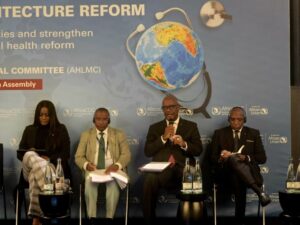
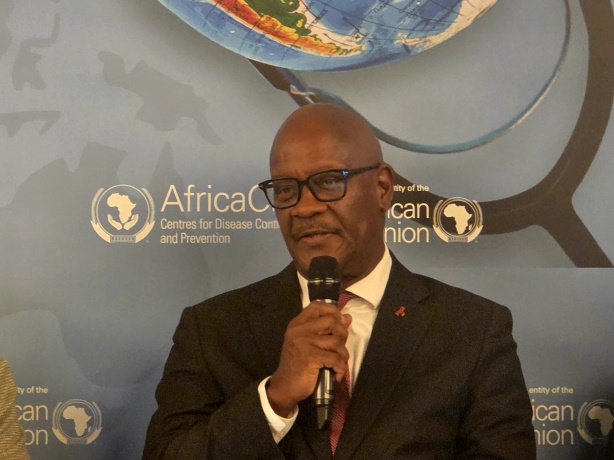
Meanwhile, on the sidelines of the 79th World Health Assembly on Sunday, 17 May 2026, Dr. Austin Demby also spotlighted Sierra Leone’s landmark health governance reforms during a high-level panel discussion involving African Health Ministers and global development partners focused on sustainable health financing.
Speaking on efforts toward achieving Universal Health Coverage and building resilient healthcare systems, the Health Minister highlighted Sierra Leone’s launch of the National Health Compact in December 2025 in Tokyo, describing it as a unified governance framework based on one national plan, one budget and one reporting structure jointly managed by the Ministries of Health and Finance and supported by development partners.
According to Dr. Austin Demby, the framework represents an operational system rather than a theoretical model, stressing that the country has moved from policy discussions to implementation.
The Minister further underscored Government investments in digital health innovation, including a real-time pregnancy tracking system, which he credited with significantly reducing maternal deaths. He noted that on 1 March 2026, President Julius Maada Bio launched the 300 Days of Activism for Triple Zeros, an accountability campaign aimed at monitoring maternal deaths, child mortality and unvaccinated children in real time across districts.
Dr. Austin Demby disclosed that early indicators from the initiative show maternal deaths running significantly below the 2025 baseline, which he described as evidence of accelerated progress within the country’s healthcare system.
On domestic health financing, the Minister explained that Sierra Leone is pursuing a multi-pronged strategy anchored on the Abuja Declaration’s commitment of allocating 15 percent of national budgets to healthcare. He disclosed plans involving debt swaps for health investment, taxes on tobacco, alcohol, sugar-sweetened beverages and unhealthy packaged foods, while advancing the Sierra Leone Social Health Insurance Scheme (SLeSHI) to ensure sustainable and equitable domestic health financing.
Concluding his intervention, Dr. Austin Demby encouraged partner countries to learn from Sierra Leone’s experiences, emphasizing the importance of political will, accountability and openness in implementing health reforms while acknowledging existing challenges and the country’s commitment to continuous improvement.