

By Baisnab Charan Pradhan, High Commissioner of India to Sierra Leone
The decision of India to host the First International Big Cat Alliance (IBCA) Summit in New Delhi on 1–2 June 2026 marks a historic moment in global conservation diplomacy. Conceived under the visionary leadership of Prime Minister Narendra Modi, the International Big Cat Alliance reflects the growing realization that the conservation of wildlife is inseparable from the future of humanity, ecological security and sustainable development.
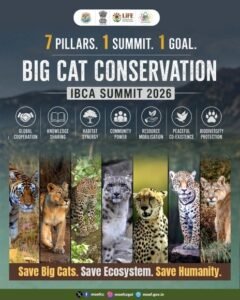
The Summit, themed: “Save Big Cats, Save Humanity, Save Ecosystem,” will bring together Heads of State and Government, Ministers, scientists, conservation experts, financial institutions and community representatives from across the world. It is expected to culminate in the adoption of the landmark “Delhi Declaration” on big cat conservation, setting out a common global vision for the protection of these iconic species and their habitats.
India’s conservation journey offers an inspiring example of what determined political commitment and public participation can achieve. Fifty years ago, the tiger population in India had declined alarmingly. Through initiatives such as Project Tiger, scientific wildlife management, strong legal frameworks and community engagement, India today hosts nearly 75 percent of the world’s wild tigers. India has also made significant advances in the conservation of lions, leopards, snow leopards and cheetahs. This demonstrates that economic growth and environmental stewardship can proceed together.
The International Big Cat Alliance, headquartered in New Delhi, is the first intergovernmental platform dedicated to the conservation of seven major big cat species; lion, tiger, leopard, snow leopard, cheetah, jaguar and puma. Beyond protecting these magnificent animals, the Alliance seeks to preserve biodiversity, strengthen ecosystems, address climate vulnerabilities and improve livelihoods for communities dependent on forests and natural resources.
For countries such as Sierra Leone, participation in such global environmental initiatives carries special significance. Sierra Leone is endowed with remarkable biodiversity and rich forest ecosystems that are vital not only for wildlife but also for water security, agriculture, climate resilience and sustainable livelihoods. The country has consistently demonstrated its commitment to environmental protection and climate action through national conservation policies and international cooperation.
Although Sierra Leone is not traditionally identified as a big cat range country, the broader objectives of IBCA resonate strongly with its environmental priorities. Conservation today cannot be viewed through narrow geographical or species-specific lenses. The degradation of ecosystems anywhere affects ecological balance everywhere. Deforestation, illegal wildlife trafficking, climate change and biodiversity loss are global challenges requiring collective responses.
Participation in the IBCA framework would provide Sierra Leone valuable opportunities for international cooperation, capacity-building, technical exchanges and access to best practices in biodiversity conservation. It would also strengthen South-South cooperation; an area where India and African nations have long enjoyed productive partnerships based on mutual respect and shared development aspirations.
Importantly, IBCA is not merely a conservation initiative. It is also a platform for sustainable development. Healthy ecosystems support tourism, agriculture, water management and rural livelihoods. Across Africa, wildlife conservation has increasingly contributed to economic diversification and community empowerment. The experience of many countries demonstrates that conservation can become an important pillar of green growth.
India and Sierra Leone already enjoy warm and friendly bilateral relations rooted in historical ties, development cooperation and people-to-people connections. Environmental cooperation can become another promising dimension of that partnership. India remains committed to sharing its expertise in wildlife management, biodiversity conservation, digital monitoring systems, afforestation and sustainable ecosystem management with partner countries in Africa.
The upcoming IBCA Summit therefore offers an important opportunity for Sierra Leone to engage with a broad coalition of nations committed to preserving the natural heritage of our planet. The participation of Sierra Leone would symbolize Africa’s continued leadership in global environmental stewardship and reinforce the principle that the protection of nature is a shared international responsibility.
At a time when the world confronts unprecedented ecological challenges, the message of the IBCA Summit is both timely and universal: conservation is not a luxury; it is essential for the survival, prosperity and well-being of future generations. By working together across borders and continents, nations can ensure that humanity and nature thrive in harmony.
The First IBCA Summit in India will not only focus on saving big cats. It will help shape a global movement