
The Economic Community of West African States (ECOWAS) has recorded remarkable achievements over the past 51 years, establishing itself as one of Africa’s most influential regional organizations in promoting integration, peace, development and cooperation across West Africa.
That was the message delivered by ECOWAS Country Representative in Sierra Leone, Ambassador John Azunah, during a special ceremony held in the Well of Parliament to commemorate ECOWAS Day and the organization’s 51st anniversary under the theme: “Building the ECOWAS of the Future Today.”
The occasion also featured the formal presentation of the 2025 Annual Report of Sierra Leone’s National Early Warning and Response Mechanism Centre by the Minister of Planning and Economic Development, Madam Kenyeh Barlay.
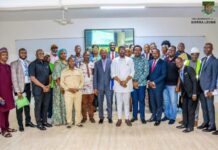
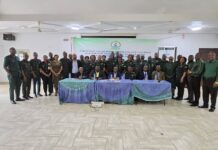
The event attracted senior Government officials, Members of Parliament, representatives of development partners, ECOWAS institutions and stakeholders from governance, security and development sectors. Discussions focused on ECOWAS’ achievements over five decades and the importance of strengthening preventive governance systems capable of identifying and addressing emerging risks before they escalate into crises.
Addressing the gathering, Ambassador John Azunah reflected on the evolution of ECOWAS since its establishment in 1975, noting that the organization has become a pillar of regional cooperation and collective progress in West Africa.
He described the 51st anniversary as a significant milestone, emphasizing that despite numerous challenges facing the region, ECOWAS has consistently delivered tangible benefits to its citizens.
“Fifty-one years is not a mean achievement,” Ambassador John Azunah stated. “Despite the many challenges confronting our region, ECOWAS has continued to deliver meaningful benefits to its citizens.”
He highlighted major accomplishments of the regional bloc, including the promotion of regional integration, facilitation of trade and economic cooperation, support for humanitarian interventions, investment in social development projects and initiatives aimed at empowering women and youth across member states.
According to Ambassador John Azunah, ECOWAS has also made significant contributions to improving the livelihoods of citizens through community-based projects and development programmes. He cited the sanitary pad production centre in Kono District as one example of the organization’s commitment to addressing social needs while creating economic opportunities for local communities.
The ECOWAS representative further praised the organization’s role in promoting democratic governance, peacebuilding, conflict prevention and regional security cooperation. He noted that over the years, ECOWAS has evolved beyond its original economic mandate to become a comprehensive institution capable of responding to security, humanitarian, social and developmental challenges facing the sub-region.
While acknowledging persistent challenges such as food insecurity, economic pressures, governance concerns, climate vulnerabilities and security threats, Ambassador John Azunah stressed that such issues make regional solidarity more important than ever.
“The challenges are real but we must confront them if we are to build a brighter future for our people,” he said. “We must appreciate the resilience of our Governments and citizens and continue working together toward sustainable solutions.”
He also commended the Government of Sierra Leone and the Ministry of Planning and Economic Development for their commitment to advancing the objectives of the ECOWAS Early Warning and Response Mechanism. In particular, he praised Minister Kenyeh Barlay for her leadership in supporting initiatives that strengthen preventive governance and contribute to regional stability.
Presenting the 2025 Annual Report of the National Early Warning and Response Mechanism Centre, Minister Kenyeh Barlay reaffirmed Sierra Leone’s commitment to proactive governance and conflict prevention through the ECOWAS Early Warning and Response Network.
She described the Centre as a critical institution responsible for monitoring emerging risks and providing timely information that enables authorities to take preventive action before situations deteriorate.
Minister Kenyeh Barlay noted that the presentation of the report on ECOWAS Day carried special significance, particularly as President Dr. Julius Maada Bio currently serves as Chairman of the ECOWAS Authority of Heads of State and Government.
“Exactly one year ago, I stood before this Honourable House to lay the report of the National Early Warning and Response Mechanism Centre,” she stated. “Today, I am once again fulfilling my statutory responsibility by presenting the 2025 Annual Report, which captures the Centre’s activities, achievements and contributions toward safeguarding our nation and supporting regional stability.”
She disclosed that during the reporting period, the Centre produced 52 reports, including alerts, situation reports, joint assessment reports and monthly monitoring reports covering issues related to national security, social cohesion, economic stability and community resilience.
According to the Minister, the information generated by the Centre has become an important tool for evidence-based policymaking and institutional preparedness. She emphasized that the mechanism has transformed Sierra Leone’s approach to risk management from a reactive system to a proactive one.
“The mechanism is a game changer,” Minister Kenyeh Barlay said. “Its approach allows us to identify potential threats before they become crises. This proactive system is a vital step in protecting the citizens of Sierra Leone and ensuring that Government interventions are timely and effective.”
She further stressed that the success of the early warning system depends on the willingness of institutions to act on the information provided.
“Data and insights are only valuable if we act on them,” she told lawmakers. “All institutions must recognize the importance of the warnings generated by the Centre and respond appropriately. Early action can prevent conflict, mitigate risks and save lives.”
Also speaking at the ceremony, the Executive Director of the National Early Warning Secretariat commended both Ambassador John Azunah and Minister Kenyeh Barlay for their continued support to the institution. She reaffirmed the Secretariat’s commitment to strengthening collaboration with stakeholders and promoting a culture of prevention through timely interventions.
“We want to see a culture where actions are taken to prevent situations before they escalate,” she said.
Chairing the event, Ambrose James, Development Secretary at the Ministry of Planning and Economic Development, underscored the importance of preventive governance as a foundation for peace, security and sustainable development.
The tabling of the 2025 Annual Report marks another significant milestone in Sierra Leone’s efforts to strengthen its early warning architecture and contribute meaningfully to regional peace and security initiatives.
As ECOWAS enters its sixth decade, speakers at the event emphasized that the future of West Africa depends on stronger cooperation, resilient institutions, timely interventions and evidence-based policymaking. Through initiatives such as the National Early Warning and Response Mechanism Centre and sustained support from ECOWAS, Sierra Leone continues to position itself as a key contributor to a more peaceful, secure and prosperous West African region.
The celebration of ECOWAS at 51 therefore served not only as an opportunity to reflect on past achievements but also as a renewed commitment to building a stronger and more responsive ECOWAS for future generations; one founded on unity, prevention, development and shared prosperity for all.