
By Amin Kef (Ranger)
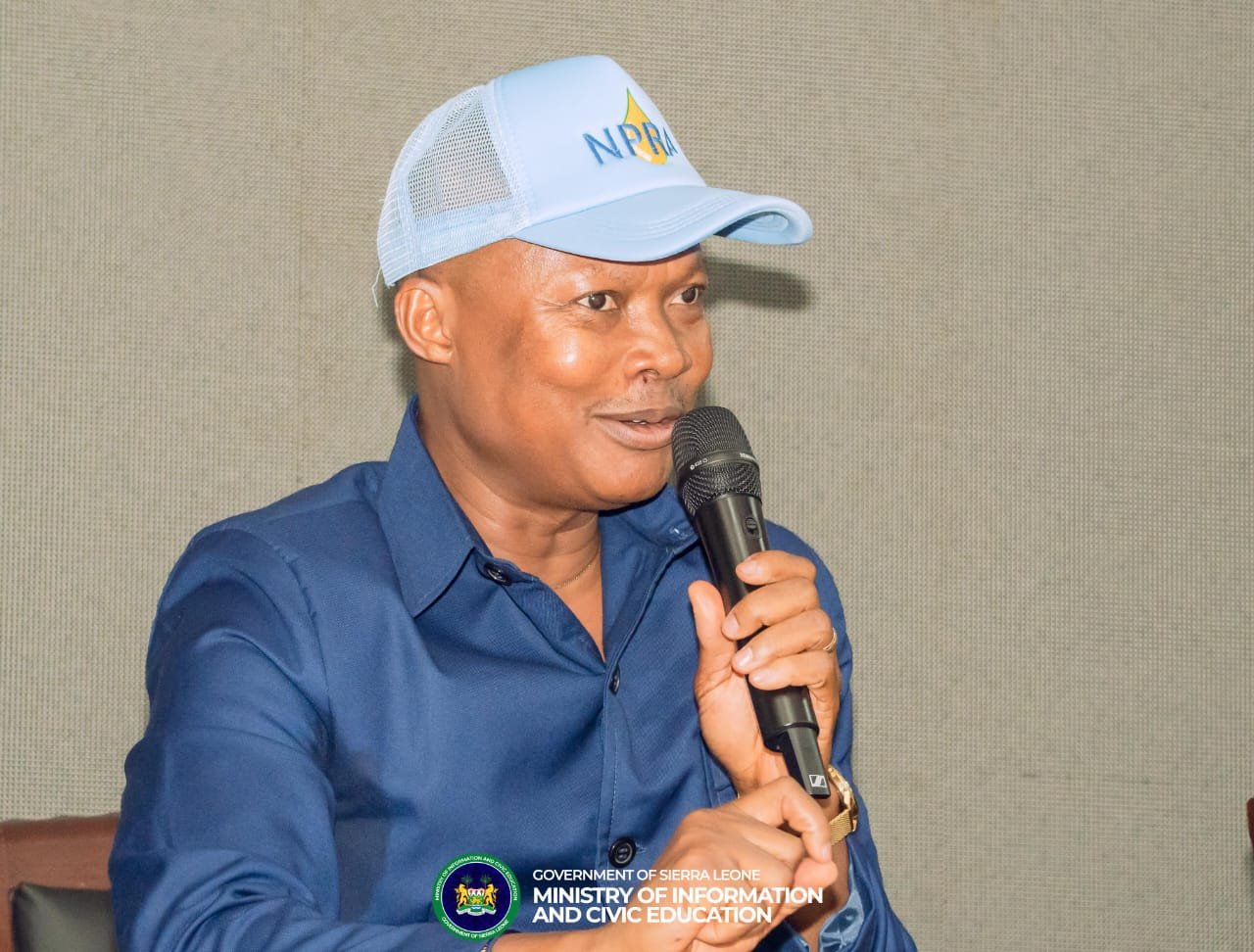
The Director General of the National Petroleum Regulatory Authority (NPRA), Brima Baluwa Koroma, has assured the public of adequate fuel availability across the country, confirming that Sierra Leone currently holds 45 days of petrol and 58 days of diesel in stock.
Speaking during a briefing on Tuesday May 5, 2026 at the Miatta Conference Centre, Brima Baluwa Koroma moved to calm growing public concerns over potential shortages, emphasizing that there is no immediate threat to domestic supply despite mounting global uncertainties.
“There is no shortage. Fuel is available across the country,” Brima Baluwa Koroma stated, reaffirming that the existing reserves provide a buffer against short-term disruptions in international supply chains.
His assurance comes at a time when global oil markets are experiencing heightened volatility, largely driven by geopolitical tensions in the Middle East, particularly around the Strait of Hormuz ; a critical corridor through which nearly 20 percent of the world’s oil supply passes. Disruptions along that route have contributed to a surge in crude oil prices, now trading above $110 per barrel.
Brima Baluwa Koroma acknowledged that Sierra Leone, which depends entirely on imported refined petroleum products, remains vulnerable to external shocks. He disclosed that global price increases have significantly impacted the domestic market, with petrol prices rising by 78.9 percent, diesel by 100.72 percent and jet fuel by 102 percent.
To mitigate the impact on consumers, the Government of Sierra Leone is currently providing a monthly subsidy of $2.6 million. According to Brima Baluwa Koroma, this intervention is aimed at cushioning the burden on citizens and preventing the full transfer of international price hikes to the local market.
He further revealed that the NPRA is actively engaging fuel importers and key stakeholders to maintain price stability as much as possible, noting that sustained dialogue is crucial in managing the evolving situation.
In addition, the NPRA is expected to hold discussions with the Ministry of Finance to assess the broader economic implications of the global fuel crisis. Brima Baluwa Koroma warned that the ongoing developments pose “serious challenges for small economies,” underscoring the need for strategic planning and resilience.
International bodies, including the United Nations, have already raised concerns about potential threats to global energy security, while regional actors such as ECOWAS continue to monitor fuel supply dynamics and explore coordinated response measures.
Despite the global turbulence, Brima Baluwa Koroma maintained that Sierra Leone’s domestic fuel supply remains stable for now. However, he cautioned that local pump prices are likely to rise in the coming weeks as the country continues to absorb the effects of increasing international costs.
The NPRA’s reassurance provides short-term confidence, but the situation highlights the broader vulnerability of import-dependent economies to global energy shocks; reinforcing calls for long-term strategies to strengthen energy security and reduce exposure to external market fluctuations.