
Home Blog Page 105

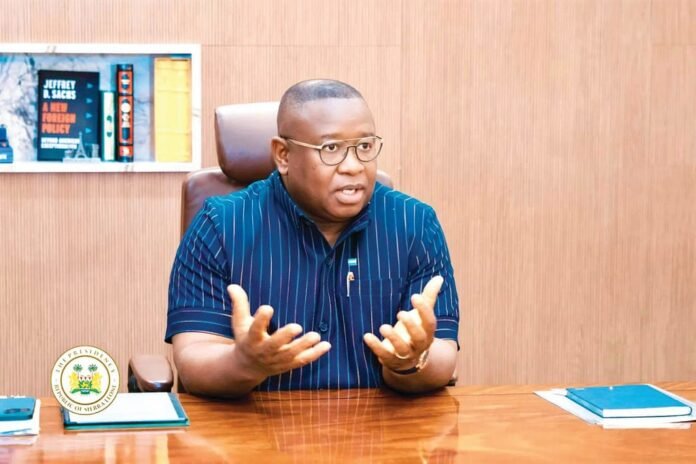
President Bio Describes Kush Epidemic as a National Emergency, Urges Collective Action for Recovery

President Bio inspecting Harmful Drug Rehabilitation Facility

By Amin Kef (Ranger)

President Dr. Julius Maada Bio on Thursday, 30th October 2025, paid an emotional visit to the Government’s Harmful Drug Rehabilitation Facility at the Peace Mission Training Centre (PMTC) Barracks in Hastings, where he assured recovering victims of his administration’s unwavering commitment to ending the harmful drug pandemic devastating Sierra Leone’s youth.

Addressing the patients and staff, President Bio expressed deep concern over the growing abuse of kush and other synthetic substances, describing it as a national emergency that threatens the very future of the country. He reminded the young people that their recovery is vital to Sierra Leone’s development, urging them to take advantage of the Government’s rehabilitation efforts.

“If you destroy your future now, there will be no one to develop Sierra Leone,” he said passionately. “I see a very bright future in all of you. We want you to become better citizens than us and that is why we are breaking the chain of supply of these harmful drugs.”

The President condemned individuals involved in the production and sale of kush, calling their actions a grave betrayal of national trust. He expressed particular disappointment at reports that some parents were profiting from the illegal trade, stressing that such conduct undermines the moral fabric of society. “It saddens me to learn that some parents are selling kush. I urge them to stop immediately and find a decent way to earn a living,” he said firmly.

Highlighting the Government’s nationwide response, President Bio revealed that rehabilitation centres have been established in Hastings, Gondama (Bo) and Daru (Kailahun), with plans to open another in Teko (Makeni). He also directed the Police and Judiciary to intensify efforts in dismantling drug networks and ensuring that those involved in trafficking face the full force of the law.

The President became visibly moved as he listened to heart-wrenching testimonies from victims and their families. He expressed outrage after hearing from a mother who had been wrongfully imprisoned for eight months because her son, a kush addict, had stolen Le17,000 from a drug dealer. “That woman suffered double jeopardy,” he said. “She was punished for her son’s addiction and for her poverty. That was wrong.”

Parents shared stories of pain, endurance and eventual hope. Hawa Gborie, a single mother, recounted how her son’s addiction led to her incarceration but later expressed gratitude for his successful rehabilitation at the free Government facility. Another mother, Elizabeth Ansumana, spoke about her son, a trained lawyer, who lost his career to addiction before being restored through the Government’s programme after the family could not afford private treatment.

Among the rehabilitated victims was Margaret Jawara, now an anti-drug ambassador, who narrated how peer pressure drove her into addiction during university. She credited the Hastings rehabilitation centre and the Ministry of Social Welfare for helping her recover and return to school, now using her experience to inspire others.

Minister of Social Welfare, Melrose Karminty, praised President Bio for his personal involvement and leadership, noting that the presence of military personnel at the Hastings facility has significantly reduced escape incidents. She revealed that the Ministry is actively engaged in family tracing and reintegration efforts to reconnect recovered victims with their loved ones, many of whom have successfully returned home.

President Bio concluded his visit by reaffirming his Government’s resolve to fight the kush menace through a balanced approach combining prevention, rehabilitation and law enforcement. He called on all Sierra Leoneans to take collective responsibility in safeguarding the nation’s youth.

“The fight against kush is not just a Government effort; it is a national duty,” he said. “We must save our young people because they are the future of Sierra Leone.”


Minister of Health Unveils Modernized Mortuary Unit at Connaught Hospital

Minister fo Health unveiling the newly renovated Connaught mortuary

By Ibrahim Sesay 

The Minister of Health, Dr. Austin Demby, has officially commissioned the newly renovated Mortuary Unit at Connaught Hospital, signaling a major step in the efforts to improve healthcare infrastructure and restore dignity in the management of the dead.

The commissioning ceremony, which was held on Thursday 30th October, 2025 at the hospital grounds in Freetown, brought together senior officials from the Ministry of Health, Hospital Management and staff who described the project as a “transformation from despair to dignity”.

In his welcome address, Dr. I. M. Kapuwa, the Hospital Care Manager at Connaught Hospital, said the renovation represents a new era for the hospital and the nation.

“For over two decades, the Connaught Hospital mortuary had not undergone any major upgrade. The building was dilapidated, the cold rooms worn out and far beyond their lifespan,” Dr. I.M Kapuwa said.

“Today, that story has changed. The mortuary has been transformed into a modern facility that meets international standards with new equipment, lighting and spaces for teaching and training.”

He added that three new cold rooms, each with individual compartments, have been installed to ensure that every deceased person is treated with respect and individuality. The upgraded mortuary also features CCTV for security, improved water supply and enhanced working conditions for staff, who have undergone specialized training in customer care and professionalism.

Dr. I.M. Kapuwa expressed deep appreciation to the Minister of Health, the Chief Medical Officer and his deputy, Dr. Mustapha Kabba for their leadership and commitment.

Delivering the opening remarks, Dr. Mustapha Kabba, Deputy Chief Medical Officer at the Ministry of Health, said the project forms part of a broader three-phase strategy to improve healthcare service delivery at Connaught Hospital.

“We began by restoring basic services such as water, electricity and cleanliness,” Dr. Mustapha Kabba said.

“Phase two, where we are now, focuses on specialized care, upgrading the mortuary, improving pathology and radiology services and renovating key departments like the ICU and surgical theatres. Ultimately, our goal is to make Connaught a centre of excellence in healthcare delivery.”

In his keynote statement, Minister of Health, Dr. Austin Demby, reflected on the hospital’s transformation over the past few years.

“Four or five years ago, Connaught was in crisis; staff were unhappy, patients were uncomfortable and the environment was chaotic,” he recalled. “Today, we are witnessing a new chapter, not only in infrastructure but in professionalism and public confidence.”

Dr. Austin Demby further highlighted that the Ministry has strengthened laboratory services, introduced advanced imaging and CT scan facilities, and is also constructing a state-of-the-art burns unit.

He added energy costs have been reduced through the installation of solar panels with storage capacity equivalent to a 1,200 KVA generator.

The Minister emphasized that the Connaught mortuary upgrade is part of a nationwide effort to improve healthcare infrastructure.

“This commissioning is not a single event but a national effort,” he said. “We aim to establish similar modern mortuary facilities across the country.” He urged the staff to maintain professionalism so that the public can build trust and confidence in the services provided.

The newly commissioned mortuary is expected to serve as a model for similar facilities nationwide, underscoring the Government’s commitment to ensuring dignity in death and better healthcare delivery.

AP Business Venture SL Ltd Showcases Bluemoon Ice Cream at Made in Sierra Leone Exhibition

By Alvin Lansana Kargbo

AP Business Venture SL Ltd, the producer of Bluemoon Ice Cream, has showcased its products and innovations at the First Sierra Leone Manufacturers Roundtable and Made in Sierra Leone Exhibition, a two-day event organized by the Ministry of Trade and Industry. The exhibition, which occurred on 29th and 30th, October 2025, at the Freetown International Conference Centre in Aberdeen, brought together local manufacturers, policymakers and business leaders to promote the growth of homegrown industries.

The company’s participation highlighted its role as one of Sierra Leone’s leading food manufacturers and its commitment to producing world-class ice cream and dairy products locally.

Speaking in an interview, a representative of AP Business Venture SL Ltd said the company was proud to be part of an initiative that celebrates local production and encourages Sierra Leoneans to support domestically made goods.

“We are here to show that Sierra Leone can produce at international standards,” he said. “Our ice cream and yogurt products are made locally under strict hygiene and quality controls. Unlike others who mainly import we manufacture and that’s something we take great pride in.”

He explained that the company currently employs about 200 Sierra Leoneans and operates in key cities including Freetown, Bo and Kenema, while also supplying major supermarkets and retail outlets nationwide. He added that AP Business Venture has begun exporting to neighboring West African countries, further expanding the company’s reach and helping to promote Sierra Leonean products beyond its borders.

Under its flagship brand, Bluemoon Ice Cream, the company produces more than 5,000 litres of dairy and ice cream daily, with a product range that includes over 50 different flavors of ice cream and 15 varieties of dairy and yogurt products, including both milk-based and water-based options.

He said the company’s participation in the roundtable was an opportunity to interact directly with consumers and demonstrate the quality and diversity of Sierra Leone’s manufacturing sector.

“Events like this allow us to connect with the public, share our story and show that Sierra Leone can make products that meet global standards,” he said. “We want people to take pride in buying local because our products are made for Sierra Leoneans, by Sierra Leoneans.”

The First Sierra Leone Manufacturers Roundtable and Made in Sierra Leone Exhibition served as a platform for local producers to display their products, discuss industry challenges and explore ways to strengthen the manufacturing sector. It also underscored the Government’s commitment to promoting industrial growth, job creation and economic self-reliance.

As one of the most prominent exhibitors, AP Business Venture SL Ltd drew attention not only for its variety of products but also for its impact on local employment and skills development. The company has been recognized as the largest ice cream factory in Sierra Leone, playing a key role in the country’s growing dairy and frozen dessert industry.

The representative reaffirmed the company’s dedication to supporting national development through sustainable production and workforce empowerment.

“Every scoop of Bluemoon Ice Cream represents local effort, creativity and progress,” he said. “We will continue to invest in innovation and in our people, to ensure Sierra Leone remains proud of what we make.”

Through its display at the exhibition, AP Business Venture SL Ltd reaffirmed that Sierra Leone’s manufacturing potential is growing steadily, driven by companies that are not only creating jobs but also building brands capable of competing on regional and international stages.

Bluemoon Ice Cream

Pee Cee & Sons Champions Local Manufacturing at First Manufacturers Roundtable & Made in Sierra Leone Exhibition

President Bio at Pee Cee & Son Exhibition

By Alvin Lansana Kargbo

Pee Cee & Sons (PC Holdings) has reaffirmed its commitment to Sierra Leone’s industrial growth and economic transformation through its active participation in the first Sierra Leone Manufacturers Roundtable and Made in Sierra Leone Exhibition, held on October 29–30, 2025, at the Freetown International Conference Centre in Aberdeen.

The two-day event, organized by the Ministry of Trade and Industry, brought together leading local producers, entrepreneurs, investors and policymakers to explore ways of strengthening domestic manufacturing and promoting the “Made in Sierra Leone” brand. It served as a key platform for showcasing locally produced goods and encouraging partnerships that support import substitution, job creation and sustainable industrialization.

One of the highlights of the exhibition was the visit of His Excellency President Julius Maada Bio to the Pee Cee & Sons (PC Holdings) booth. The President was warmly received by the company’s Management team, as they guided him through an impressive display of locally manufactured and packaged products. The delegation presented a range of Pee Cee & Sons’ in-house brands, including cooking oil, rice, seasoning, flour and other household essentials that have become staples across the country.

President Bio, after viewing the exhibits, commended the company for its dedication to local manufacturing, innovation and contribution to national development. He praised the Management for investing in production capacity, creating jobs and ensuring that Sierra Leoneans have access to quality, affordable goods made within the country. The visit attracted widespread attention from media representatives and fellow exhibitors, symbolizing the Government’s growing recognition of companies leading the drive toward industrial self-sufficiency.

Speaking to The Calabash Newspaper, shortly after the President’s visit, Pee Cee & Sons Finance Director, Mohamed Sowe, expressed pride in the company’s participation and appreciation for the President’s words of encouragement. He said the company’s presence at the exhibition reflected its belief in the future of Sierra Leone’s manufacturing industry and its readiness to support the Government’s development agenda.

“We are proud to participate and showcase our role in local manufacturing,” Mohamed Sowe said. “PC Holdings currently employs about 1,560 people and we believe that manufacturing is crucial for creating jobs and ensuring the availability of high-quality, affordable household essentials for every Sierra Leonean.”

Mohamed Sowe explained that PC Holdings operates several large-scale manufacturing businesses alongside agricultural projects that grow and process key commodities. He emphasized that the company’s strategy focuses on reducing import dependency, stabilizing the supply of consumer goods and supporting the country’s economic growth through innovation and investment.

According to him, the group’s retail model is built on a one-stop-shop concept, providing customers with a wide range of essential goods including rice, cooking oil, sugar, flour, dry goods, frozen chicken and fish, seasoning, milk, tea and cocoa, many produced under their own in-house brands. This, he added, has enabled the company to maintain competitive prices while ensuring quality and consistency across its outlets nationwide.

“We have 26 distribution outlets with a presence in every major town,” Mohamed Sowe said. “Over the years, we have invested heavily in storage, logistics and distribution capacity, including modern warehouses in key districts. Our goal is to make essential goods available and affordable to Sierra Leoneans wherever they are.”

He credited the company’s success and long-term vision to its Chief Executive Officer, Mahesh Ndwani, a Sierra Leonean-born entrepreneur dedicated to the principles of “making in Sierra Leone” and “growing in Sierra Leone.” Mohamed Sowe added that the company continues to expand its agricultural initiatives, including onion and maize cultivation, to promote food security and value addition within the country.

“Our CEO’s vision has always been about leaving a legacy of local empowerment through manufacturing and farming,” Mohamed Sowe noted. “We want to ensure that PC Holdings remains a truly homegrown enterprise that supports national development.”

The two-day Manufacturers Roundtable and Made in Sierra Leone Exhibition marked a major milestone in Sierra Leone’s journey toward industrialization, with participants calling for stronger collaboration between the public and private sectors. Industry observers commended PC Holdings for its continued investment in local production and its leadership in retail distribution. The company’s interaction with President Bio, they noted, was a strong indication of the important role it plays in the national economy.

With over five decades of operation, Pee Cee & Sons, now part of PC Holdings, has evolved from a trading and distribution enterprise into a diversified conglomerate involved in manufacturing, retail and agro-processing. The company’s efforts align with national priorities to boost industrialization, promote local enterprise and create sustainable employment for Sierra Leoneans.

Op-ed: Why Sierra Leone Needs A National Railway System

Ing. Dr. Albert Forde

Written by: Ing. Dr. Albert Forde

Director-General, Sierra Leone Railways Development and Regulatory Authority (SLRDRA)

In my previous article, I provided a background on the development and subsequent closure of the colonial era railway network. This article presents the strategic relevance and urgency, and the benefits of reintroducing a national railway system to transport both passengers and goods (freight/cargo). It is no secret that Sierra Leone has abundant natural resources, a diverse geography and an economy that is expanding.  However, these advantages are undermined by an inadequate transport infrastructure that hampers economic development as well as national integration. The existing transportation system largely depends on road networks, which are usually insufficient and not well maintained. The current reliance on road network results in high transportation costs, inefficiencies and limited connectivity particularly for the movement of bulk commodities like minerals and agricultural products. This situation worsens regional disparities, limits market access and stifles the country’s overall development potential. Furthermore, the lack of alternative transportation modes contributes to increased road congestion, environmental degradation and safety risks. A national railway system would not only move people, it would enhance tourism experience, open access to new destinations, support sustainability and help local economies grow. Fundamentally, a national railway system is required to improve the efficiency and productive capacities of companies be it mining, manufacturing or agriculture.

Building a national railroad network could transform our economic landscape through providing reliable and cost-effective means of moving goods and people across the country and the ECOWAS sub-region. This would improve both domestic and international trade by enhancing accessibility to ports and neighboring countries. It would also develop an overall infrastructure by attracting local and foreign investors into business environment. Railways are an important mode of transportation. They are the cheapest and most effective and efficient over medium distances for mass transit. A standard railway can transport more people or cargo in one movement than 15 buses or 150 trucks, respectively. They are the cheapest for bulk carriage over land and the most environmentally friendly transport mode for heavy cargo. An efficient national railway system would boost the nation`s economic growth by facilitating trade, reducing transportation costs and connecting markets. A national railway transportation also would be a strategic element in connecting mining and agricultural sector development in Sierra Leone, both in terms of benefits to the country and investors and would-be investors in the two industries.

In launching his flagship “Feed Salone” program in October 2023, His Excellency the President remarked that “Feed Salone is more than just a development Programme. It is a Generational Movement to propel Sierra Leone into an era of agricultural self-reliance, where every man, woman and child is a witness to and a participant in a flourishing economy marked by food security, job creation and overall economic prosperity”. A key objective of the Feed Salone strategy is to boost agricultural production of staple crops such as rice, poultry, onions and cassava flour to reduce reliance on food imports and to ensure food availability. A national railway system would support the implementation of the “Feed Salone” strategy, through the efficient and reliable transport of agricultural products from farm to domestic and international markets. It would make it easy to move perishable goods quickly from farms to markets, leading to less spoilage and wastage. It also would provide an opportunity for farmers in remote or rural areas to reach urban markets, which would not force them to sell locally at lower prices or leaving them unable to sell at all. A national railway system would reduce the cost of moving agricultural goods, and in turn, increase farmers` profit margins and reduce food prices for consumers. Furthermore, a railway system would facilitate the movement of agricultural inputs such as, fertilizers, seeds and machinery. It would ensure that farmers get these inputs on time, which would increase productivity.

In addition to supporting the agriculture sector, a national railway system would support the mining industry. Currently, there is only one functional rail track with limited capacity and port infrastructure. To accommodate increased production in the mining sector and subsequently to ensure cheaper transportation of minerals to seaports for exportation, the railway industry needs to be up-scaled and regulated. For instance, the existing railway line between the Port of Pepel and the Iron Ore Site at Ferengbeya would need to be upgraded to a double-track to accommodate the projected increase iron ore extraction by Kingho Mining. Furthermore, a railway line may be required to connect the proposed iron ore mining site at Kasafoni to the existing railway line at Ferengbeya or a separate line could be constructed from the proposed mining site to a new port. In addition, the existing port at Nitti has a relatively small capacity because it does not have adequate draft to accommodate bigger vessels. This limits the volume of minerals that is exported by mining companies. Given that the mineral extraction in the South is projected to increase exponentially, a railway line could be constructed to connect mining sites in the South to a proposed deep sea port in the South. This is important because a railway line would reduce export lead time.

Another strategic relevance and urgency of a national railway system is to address urban mobility issues in Freetown.  These issues are a result of our inability to keep pace with the growing demand, mismanagement of road space and decades of neglect. It will take many years to solve the underlying problems in a sustained manner. The way forward will focus on testing and scaling up pilot solutions and build capacity to ensure sustainable results.  The city’s road network has for long been experiencing a very rapid growth in vehicular traffic well beyond its capacity, leading to severe traffic congestion on most of the road links and junctions, especially during peak hours. The current rate of increase in traffic volume and the fast rate of urbanisation require an adequate, efficient and sustainable transportation system, including Light Rail Transit (LRT). For instance, a Light Rail Transit line could be implemented along the Peninsular to connect Waterloo to River No. 2, where a bus transit terminal is to be constructed under the World Bank Funded Connectivity and Agricultural Market Infrastructure Project (CAMIP). The connection of these two transport infrastructure would form a reliable and efficient intermodal transport system. Furthermore, a national railway system would provide intercity railway transport to connect Freetown to provincial cities. This would serve as a key part of our nation’s transportation infrastructure, providing an efficient, reliable and often environmentally friendly alternative to traveling by road.

In addition to railway, the maritime sector is vital for global trade. Ports are increasingly becoming multimodal hubs through which the railway sector can increase its market share. Ports and rail systems are critical components of global supply chains. They facilitate the movement of goods by connecting shipping routes to inland transportation networks. In the not-too-distant future, the competitiveness of ports will increasingly be judged by their railway connectivity. Therefore, most ports are investing to increase their rail capacity and rail modal share through the development of railway infrastructure. Improving the modal share of rail depends on a multitude of factors, but one key element is the link between ports and rail.  Studies have shown that the main goods transported by rail are metal products, which represent 43% of the goods transported, followed by raw materials (29%), chemicals (14%), agricultural products and forestry (8%) and food and drinks (6%). It is one of the reasons why most ports have plans to improve their rail modal share. In this regard, an efficient national railway system that is interconnected with our ports would enhance our ports` competitiveness and would support economic growth.

In conclusion, despite our rich natural resources and strategic geographic location, our economic and social progress is impeded by the aforementioned transportation inefficiencies. The existing infrastructure is unable to support the country’s growth ambitions, leading to missed opportunities for trade, investment and regional integration. Therefore, there is pressing need for a modern, efficient and sustainable national railway transportation solution to address those challenges and unlock the country’s full potential. The benefits of a national and regional railway network system will include, but are not limited to Creation of numerous jobs in construction, maintenance and operation of the railway sector. Developing a national railroad network could transform the economic landscape through providing reliable and cost-effective means of moving goods and people across the country and the sub-region (West Africa). This would improve both domestic and international trade by enhancing accessibility to ports and neighboring countries. There would be increased investor confidence in the industry. A national railway system would reduce the cost of moving agricultural goods and reduce food prices for consumers. It would reduce the average cost transporting minerals to seaports for exportation. Another strategic relevance and urgency of a national railway system is to address urban mobility issues in Freetown. In view of the foregoing, there is certainly a need to develop a national railway system. In my next article, I will highlight the ECOWAS Railway masterplan and its goal of connecting capital cities in the ECOWAS sub-region by rail. Also, I will explain how our proposed national railway masterplan will align with the ECOWAS railway masterplan.

US, German & Indian Investors Eye Sierra Leone for Major Investments Under GO-FOR-GOLD Initiative

By Amin Kef (Ranger)

The Rt. Hon. Speaker of Parliament, Segepoh Solomon Thomas, on October 27, 2025, hosted a delegation of foreign investors led by Stephen Barnes, architect of the GO-FOR-GOLD Program, at his office in Freetown. The investors, representing the United States, Germany and India, expressed strong interest in exploring business opportunities in Sierra Leone, praising the nation’s open-door policy and welcoming citizens.

During the engagement, Stephen Barnes stated that the visit aimed to promote direct foreign investment and deepen collaboration with the Government of Sierra Leone. He appealed to Speaker Segepoh Solomon Thomas to facilitate the ratification of key investment agreements through Parliament, assuring that the group’s vision aligns with President Julius Maada Bio’s agenda of attracting sustainable foreign investment for national development.
In his response, the Speaker warmly welcomed the investors and commended their interest in Sierra Leone. He reaffirmed Parliament’s commitment to creating a conducive legal environment for both local and international investors, emphasizing that the Sixth Parliament of the Second Republic is dedicated to enacting progressive laws that ensure mutual protection and economic prosperity.

He further assured the delegation that Parliament stands ready to support and ratify agreements that contribute to job creation, economic diversification and national growth.

The meeting highlighted the growing global confidence in Sierra Leone’s economic potential, underscoring the country’s strategic location, youthful labor force and attractive incentives for investors. With continued partnerships of this kind, Sierra Leone is poised to strengthen its position as a destination for credible and impactful foreign investments.

CDS Concludes Maiden Provincial Tour, Prioritizes Soldiers’ Welfare and Development

By Amin Kef (Ranger)

The Chief of Defence Staff (CDS) of the Republic of Sierra Leone Armed Forces (RSLAF), Lieutenant General Amara Idara Bangura, has completed his maiden tour of military formations across the country; a move aimed at strengthening morale, improving welfare and deepening engagement with troops. The tour, which concluded on 27th October, 2025, covered Lungi, Kabala, Kono, Makeni, Bo, Pujehun, Jendema, Zimmi, Kenema and Daru.

During his engagements, Lieutenant General Amara Idara Bangura briefed soldiers on key welfare reforms undertaken with the support of His Excellency President Dr. Julius Maada Bio, the Commander-in-Chief. He highlighted initiatives such as the implementation of the Tri-service Plan, ongoing road construction projects using RSLAF’s engineering equipment and increases in the Funeral Purse, Marriage Assistance, Ration Cash Allowance (RCA) and Monthly Running Cost (MRC). The CDS also announced the allocation of 10% of fuel quotas to senior non-commissioned officers, borehole construction in several barracks and the introduction of town service buses for Western Area troops.

On peacekeeping readiness, Lieutenant General Amara Idara Bangura disclosed that a UN Assessment and Advisory Team had recently evaluated the RSLAF’s preparedness for international missions, noting that 75% of the required peacekeeping equipment had already been secured through the President’s international engagements. He reaffirmed the Armed Forces’ commitment to supporting global peace operations.

The CDS also discussed ongoing agricultural ventures, revealing that RSLAF is cultivating cashew, rice and fish farms to enhance food security. A 550-acre cashew plantation in Port Loko District and a 250-acre fish farm in Bo District are already operational, while rice production is expected to yield over 10,000 bags by 2026 to feed personnel nationwide.

In the health sector, Lieutenant General Amara Idara Bangura said the 34 Military Hospital is being upgraded into a sub-regional medical facility, commending First Lady Dr. Fatima Maada Bio for her leading role in its transformation. He also announced a partnership with a Nigerian garment company to establish a local military uniform factory and plans to construct affordable housing units for troops.

Throughout the tour, the CDS made numerous donations to address the immediate needs of the troops, including cement, solar lights, generators, television sets, sewing machines and other materials to improve living and working conditions in various barracks. He also renamed the 15 Infantry Battalion in Lungi to 3 Infantry Battalion and pledged continued infrastructural support.

Soldiers expressed deep appreciation for the visit, describing it as historic. “We want the CDS to visit us every month. He truly understands our welfare and is committed to addressing our challenges,” they chanted enthusiastically. The tour was widely regarded as a strong demonstration of leadership and commitment to troop welfare and institutional growth.

Pressure Mounts on Parliament to Release Findings on Controversial Angola Town Demolition

The demolition of houses in Angola Town in March 2024 continues to draw public outrage as affected landowners demand justice and accountability from the Sierra Leone Parliament. Nearly twenty months after the incident, the victims say they remain in the dark, with no explanation or compensation forthcoming despite Parliament’s promise to investigate the matter.

According to the aggrieved landowners, the Ministry of Lands did not issue any formal notice prior to the demolition nor was there a court order authorizing the operation. Residents allege that they were neither consulted nor given the opportunity to present documents proving their ownership before their houses were torn down. This lack of due process, they argue, raises serious questions about the legality and transparency of the Ministry’s actions.

After the incident, several victims reportedly presented their land documents to the Ministry as evidence of legitimate ownership but they claim no clear justification was ever provided to explain why their properties were destroyed. Dissatisfied with the Ministry’s silence, the landowners took their case to the Parliamentary Committee on Lands, Country Planning and the Environment, chaired by Hon. Quinton Salia Konneh. The Committee promised to investigate the demolitions and make its findings public.

However, despite the passage of several months, the Committee’s report has not been released. The delay, according to many affected residents, has deepened frustration and created a perception of neglect and abandonment by the very institutions meant to protect citizens’ rights.

While the victims have praised Hon. Quinton Salia Konneh for his consistent engagement and empathy, they remain puzzled by the long delay in publishing the investigative report. Unconfirmed sources within Parliament allege that a senior member of the Executive may be influencing the process to protect a foreign company reportedly linked to the disputed land; an allegation that, if true, casts serious doubt on the integrity of the process.

The affected landowners have since issued a public appeal to the leadership of Parliament to ensure that the report is released without further delay. They believe that transparency and swift action are vital to restoring public confidence in governance and ensuring that justice is served.

President Julius Maada Bio has consistently emphasized his Government’s commitment to protecting the land rights of Sierra Leoneans, particularly in the Western Area. His administration has introduced legal and institutional reforms aimed at ensuring fair land ownership, community participation and equitable compensation for affected citizens.

However, the unresolved Angola Town case remains a pressing test of that commitment. The victims are now appealing directly to President Bio to intervene and ensure that justice is not only done but seen to be done.

The outcome of this matter will determine whether Parliament and the Government can uphold the principles of fairness, transparency and accountability that form the foundation of Sierra Leone’s democracy. The call from Angola Town residents is clear: justice delayed is justice denied.

President Bio Unveils State-of-the-Art Maternal Center of Excellence in Kono

President Dr. Julius Maada Bio has officially commissioned the Kono Maternal Center of Excellence in Koidu City, describing the project as a historic milestone in Sierra Leone’s journey toward improved healthcare delivery. The inauguration, held on Saturday, October 25, 2025, marks a major partnership between the Government of Sierra Leone and Partners In Health (PIH) to enhance maternal and child health services across the country.

The new state-of-the-art facility transforms the former Koidu Government Hospital, expanding its capacity from 48 to 120 beds, increasing operating theatres from one to three and introducing the country’s first rural-based Neonatal Intensive Care Unit (NICU). The Center is expected to serve as both a treatment and training hub for healthcare professionals, offering advanced care to mothers and newborns in one of Sierra Leone’s most underserved districts.

In his keynote address, President Bio hailed the new facility as a “foundation for life itself,” underscoring its significance in his Government’s Human Capital Development Agenda; one of the Big Five Game Changers. “Every generation is remembered for the foundation it lays. Today, here in Kono, we lay a foundation for life itself,” he said. “This Centre is a symbol of our belief that every mother deserves safety, every child deserves a chance and every Sierra Leonean deserves to live in health and dignity.”

He noted that while Kono is widely known for its diamonds, the district is now becoming known for something even more precious; “the sparkle of life, health and hope.” The President highlighted that maternal deaths have dropped by more than 70 percent over the past two decades, adding that Sierra Leone’s immunization coverage now ranks among the highest in West Africa.

“Quality healthcare should not depend on geography but on vision and commitment,” he emphasized, reaffirming his Government’s resolve to make healthcare accessible to all. He further explained that the new Centre will double Koidu Hospital’s service capacity and train hundreds of health workers to meet growing national demand.

President Bio expressed deep appreciation to Partners In Health for their enduring collaboration and paid tribute to the late Dr. Paul Farmer, PIH co-founder, whose belief that “health care is a human right” continues to inspire global action. “Opening this Centre on his birthday makes this moment particularly meaningful; a living tribute to his compassion, courage and humanity,” he said.

He also commended Build Health International and the Vlogbrothers community, led by John and Hank Green, for their investment in Sierra Leone’s health system. “Your investment has built more than a hospital; you have built hope and possibility,” he remarked.

Highlighting national progress, President Bio disclosed that maternal mortality has declined from 717 deaths per 100,000 live births in 2019 to 354 today, with a target to reduce it below 70 by 2030. “This progress proves that even nations once defined by fragility can become beacons of resilience and reform,” he concluded.

The ceremony was attended by the Minister of Health, representatives from Partners In Health, Build Health International, traditional leaders and local authorities; all reaffirming their shared commitment to advancing maternal and child health in Sierra Leone.

President Dr. Julius Maada Bio

Former Sierra Leone Ambassador to Guinea Cleared in Embassy Vehicle Drug Case

Former Ambassador to Guinea

By Amin Kef (Ranger)

The Minister of Information and Civic Education, Chernor Bah, has provided an important update on ongoing drug-related investigations during the Ministry’s weekly Press Conference held on Tuesday, October 21, 2025. The briefing addressed developments surrounding the recent incident involving a Sierra Leone Embassy vehicle in Guinea found with suspected illicit substances.

The Minister confirmed that Guinean authorities have completed their investigation into the matter and have officially charged those arrested in connection with the case to court. He, however, emphasized that the investigation found no evidence implicating the then Sierra Leone Ambassador to Guinea.

“The Guinean authorities have cleared the former Ambassador of any criminal involvement. His recall by President Julius Maada Bio was purely a matter of discretion and not a disciplinary measure,” Chernor Bah explained.

It could be recalled that earlier this year, Guinean authorities impounded a vehicle belonging to Sierra Leone’s Embassy after discovering seven suitcases containing suspected cocaine. Two occupants of the vehicle were immediately detained for questioning.

Following the discovery, Sierra Leone’s Minister of Foreign Affairs and International Cooperation, Alhaji Musa Timothy Kabba, announced the urgent recall of Ambassador Alimamy Bangura to Freetown to provide a full account of the incident. The Foreign Affairs Minister clarified that the envoy was not in the vehicle at the time of the arrest and was never placed under detention.

He further disclosed that approximately $2,000 (about £1,600) in cash was found with the suitcases, though the exact weight of the suspected drugs had not been determined. Alhaji Musa Timothy Kabba assured that both Sierra Leone and Guinea were fully cooperating in a transparent investigation to ensure justice is served.

“Anyone found guilty of violating Sierra Leonean or international drug trafficking laws will face the full force of justice,” the Minister emphasized.

The case came amid growing regional concerns over the trafficking of cocaine through West Africa, which has become a major transit route between Latin America and Europe.

Meanwhile, Sierra Leone continues to battle the local scourge of Kush—a dangerous psychoactive drug that has caused widespread social and health problems. In response, President Julius Maada Bio earlier declared drug abuse a national emergency, urging stronger law enforcement and community support to curb the menace.

Minister Chernor Bah reiterated the Government’s commitment to transparency, accountability and collaboration with international partners to ensure that Sierra Leone remains steadfast in the global fight against drug trafficking and substance abuse.