
By Zainab Sunkary Koroma
Every girl carries a story one of resilience, ambition, and limitless potential. Across Sierra Leone and beyond, girls are rising above challenges to lead change in their communities, breaking barriers and redefining what it means to be a leader. This year’s International Day of the Girl Child, themed “The Girl I Am, The Change We Lead,” celebrates not just the dreams of girls but their power to transform societies.
The day serves as a reminder of the United Nations General Assembly’s Resolution 66/170, adopted on December 19, 2011, which officially declared October 11 as the International Day of the Girl Child. The aim is to recognize girls’ rights and the unique struggles they face worldwide, while highlighting their role in building a better future.
From top-level leadership to community-based advocacy, Sierra Leonean women continue to inspire a new generation of girls to dream and lead.
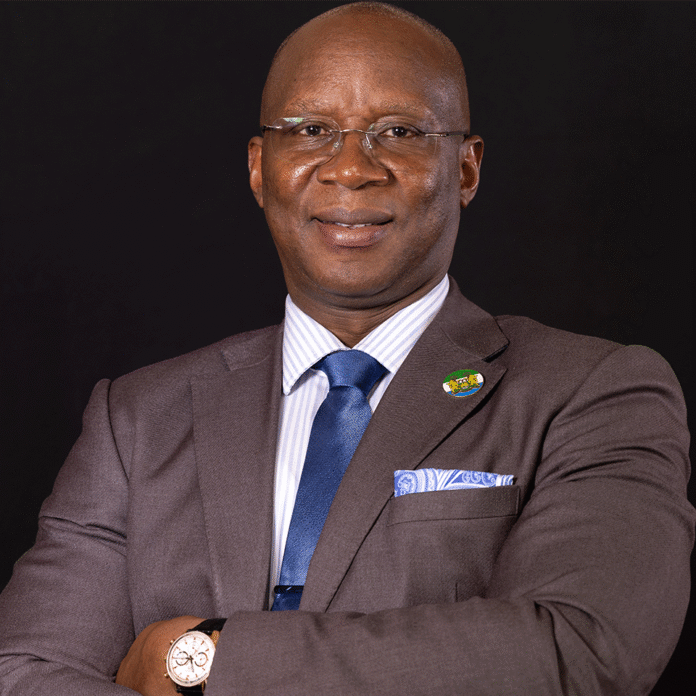
At the forefront is Jeneba Kpaka Bangura, Commissioner-General of the National Revenue Authority (NRA) a woman whose career reflects dedication, courage, and vision. With over 25 years of experience in financial policy and administration, Jeneba recently became the first Sierra Leonean woman appointed to the United Nations Committee of Experts on International Cooperation in Tax Matters (2025–2029).
Jeneba recalls her humble beginnings: “I grew up surrounded by strong women, and I knew education was my greatest weapon. Wherever I find myself, I make sure I’m capable and confident enough to lead.” She believes that every challenge in leadership should be viewed as an opportunity for growth, urging young girls to “develop confidence, build capability, and never limit themselves because of fear.”
Marian Tina Conteh, a project officer at BBC Media Action and Secretary General of Women in the Media Sierra Leone, uses her platform to amplify the voices of women and girls through her radio show “Wae Gyal Pikin Tinap.” Her advocacy stems from personal experience growing up as a girl in a society where opportunities were limited.
“Had I received the guidance I now offer others, my story would have been different,” Tina shared. “But I have no regrets I’m proud to mentor young girls and show them that their voices matter.”
Similarly, Adama Bai Conteh Esq., lawyer and founder of The Media Initiative for Women and Girls Empowerment (MIWGEM), has trained and mentored over 100 girls since 2017. As the first female student union president at Fourah Bay College, she embodies leadership and determination. Her advice to girls is clear: “Be focused, disciplined, and be determined. Break glass ceilings and lead with courage.”
Among the youngest changemakers is Philipa Cride Cole, President of the Children’s Forum Network under the Ministry of Gender and Children’s Affairs. Passionate about child rights advocacy, Philipa has dedicated her voice to fighting child marriage and abuse. “People often respect the position, not the person,” she said. “But I believe in myself and will continue to use my platform to protect children.”
She acknowledges progress through the enactment of the Child Marriage Act, but insists that “implementation remains weak,” emphasizing that awareness and community engagement are essential for real change.
Organizations like SEND Sierra Leone and The Initiative for Peace and Women’s Rights in Africa (IPWRA) are making strides in women’s empowerment.
SEND-SL Country Director Joseph Ayamga highlighted the organization’s work with over 36,000 women across the country, promoting leadership, education, and economic empowerment.
‘I am proud of what Send Sierra Leone has been able to achieve for women and girls in the country’, looking at the number women in politics, the enactment of the Gender Equality and Women’s Act of 2022 and the initiative of the young women governance network across the 16 districts in the country, which has now transition to an NGO that would help them to seek and raise resources to support their advocacy activities. Another was creating opportunity for young girls to learn through the Nyapui Secondary School for Excellence and the Nyapui Radio Station that focuses on supporting girls find their voices. And finally, the economic empowerment for women’s group with credit unions that provide financial service for women in the rural area.
He concluded that leadership is an act of service to the people, it involves sacrifice and commitment. Empowerment is something we need to paid attention to. ‘I believe that the 30% of the GEWE Act is a good start and girls do not need preferential treatment but needs to realized that they have the skills, talent and ability to get the position and not to be question in their effort to contributed to society. “The world will only be better when women and men are equal partners in development,” he said.
Meanwhile, IPWRA’s continental project, themed “My Role in My Community,” spotlights young women leading grassroots change. The Initiative for Peace and Women’s Rights in Africa (IPWRA) is a pan-African organization dedicated to advancing women’s rights, peacebuilding, and inclusive development. Through advocacy, mentorship, and grassroots initiatives, IPWRA empowers women and girls to play active roles in shaping Africa’s future.
Earlier this year the organization launched project invited girls aged 15–20 to present projects addressing local needs while advancing the Sustainable Development Goals (SDGs). Applications poured in from across the continent, showcasing how young women are leading practical, community-driven solutions, with the theme “My Role in My Community” in celebrating the International Day of the Girl Child.
Out of 15 countries and 35 applications received, Susie Hannah Bangura from Makeni is one of the top nine finalists, with her project “Awakening the Girl Within” that provides mentorship, sexual health education, and life skills to girls. “When you awaken the mind of a girl, you change the future of a whole community,” she said passionately.
A Call to Believe, Lead, and Inspire
The stories of these remarkable women and girls symbolize strength, courage, and transformation. They remind us that empowerment begins with belief, belief in oneself and in the collective potential of girls everywhere.
As we celebrate this year’s International Day of the Girl Child, one message echoes through every story: Girls are not just the leaders of tomorrow; they are leading today.
Together, they represent the power within her, a generation of girls determined to shape a world where equality is not a dream, but a shared reality.

Commentary: President Bio’s Scientific Leap for Food Security — A New Dawn for Sierra Leone’s Agriculture
By Amin Kef (Ranger)
The recent release of 30 improved varieties of maize, rice and cassava by His Excellency President Dr. Julius Maada Bio at the Rokupr Research Centre in Kambia District marks a defining moment in Sierra Leone’s agricultural history. It represents not merely a scientific breakthrough, but the crystallization of a national vision; Feed Salone , that seeks to transform agriculture from subsistence to science, from survival to sustainability.
This milestone underscores a fundamental truth: food security begins with innovation. By prioritizing research and empowering local scientists, the Bio administration has made clear that national self-sufficiency will be built not on rhetoric, but on results.
President Bio’s statement that “agriculture is a science” reflects a bold, pragmatic philosophy. It acknowledges that lasting progress in the sector depends on data, research and technology; not guesswork or outdated practices. The release of high-yielding, climate-resilient and pest-tolerant seed varieties is therefore a strategic investment in resilience.
In a country where average rice yields remain at 2–3 tons per hectare, the introduction of new rice strains capable of producing 7–8 tons per hectare is transformative. These seeds will not only raise productivity and farmer incomes but also reduce dependence on costly food imports; a key factor in stabilizing the national economy.
The success of the Sierra Leone Agricultural Research Institute (SLARI), once on the verge of collapse, is a testament to the Government’s renewed commitment to institutional rebuilding. Under the leadership of Dr. Abdulai Conteh and with the support of international partners like FSRP and SLARiS, the institute has regained its place as a hub of innovation and applied research.
This revival aligns seamlessly with the Feed Salone Programme’s Pillar Two, which focuses on strengthening seed and input systems. As explained by the Minister of Agriculture and Food Security, Dr. Henry Musa Kpaka, these improved seed varieties are the backbone of a new agricultural ecosystem; one that connects research institutions, private sector partners and farmers in a shared pursuit of national food sovereignty.
Among the 30 newly released varieties, the decision to name one “Maada Cassava” carries symbolic weight. It is both a tribute and a statement; a recognition of leadership that places science, innovation and farmers at the centre of national development. In doing so, it reminds citizens that food security is not a distant dream but a deliberate policy choice driven by vision and commitment.
What unfolded at Rokupr was not merely a ceremonial launch but a turning point in governance; one where political will and scientific capacity converged. The Bio administration has demonstrated that agricultural transformation is achievable when research is adequately funded, scientists are empowered and policies are grounded in evidence.
The challenge now lies in implementation. Ensuring that these improved seeds reach farmers across the country will be critical. Extension services, distribution networks and access to finance must all be strengthened to turn this scientific triumph into tangible impact on the ground.
The release of these new varieties signals a broader shift; from dependency to self-reliance, from import vulnerability to production confidence. It shows that Sierra Leone’s agricultural potential can be unlocked through local expertise, institutional reform and strategic investment.
As President Bio toured the demonstration plots, surrounded by farmers and researchers, the moment captured a vision taking root; that Sierra Leone’s future prosperity will grow from its own soil.
This initiative is more than an agricultural success story; it is a model of governance anchored in science, leadership and national pride. If sustained, it could mark the beginning of a genuine revolution in food systems; one that secures not just the nation’s plates, but its future.