India Consul-General to Sierra Leone Harish Agnani
By Amin Kef Sesay
The people of Sierra Leone have been informed by Choithram Hospital at Hill Station that contrary to rumours that the hospital is a money-making machine, yet it is still a charity entity founded and established as a memorial. But better of all is that the hospital still serves the poor people of Sierra Leone. This was disclosed by India Consul-General to Sierra Leone Harish Agnani. He was speaking at a news conference on Wednesday 23rd October, 2019 at Hill Station.
It would be recalled that a statement by the visiting Honourable Vice President of India, Shri Venkaiah Naidu mid this month was misconstrued and went virile on Social Media that Choithram Hospital is a charitable health service provider but is allegedly making exorbitant money from the public. Other allegations were that the hospital was not giving access to poor people due to its services. This, coupled with the VP’s statement sent shivers in the public and exploited by social media.
The situation has however been calmed down by the Management of Choithram Hospital which told media reporters that Choithram Hospital was not a charitable establishment rather it was registered as a Memorial to the founder, late Thakurdas Choithram Pagarani.
Mr. Agnani further told newsmen that Choithram carries a lot of corporate social responsibilities and philanthropy in terms of medical services for people that cannot afford to pay; as well as annually bringing in specialist medical teams from India, UK and Germany to perform surgeries and other medical procedures that are not widely available in the country and very expensive to perform overseas.
He justified that the hospital has to charge patients for its services which are affordable comparative to other facilities in the country. Since taking over the dilapidated facilities after the end of the civil conflict, it built about twenty new structures, brought in state-of-the-art medical equipment worth millions of dollars, as well as having a staff of about 250 that receive salaries monthly.
In underscoring his stance, Harish maintained that certain customers pay normal costs to aid the running cost since they have to take care of staff, upkeep the facilities and as well maintain various machinery especially the vital and expensive equipment to keep them up and running at all time.
Seth Shri Thakurdas Choithram Pagarani came to Sierra Leone in 1938 and started his own business in 1944 under the name T. Choithram & Sons in a small way that now operates in 27 countries. Speaking about the founder, Mr. Agnani praised Choithram as a great philanthropist who believed in returning a large portion of his earnings to the society through education and medical facilities. He said that his desire was to provide an ultramodern hospital in Freetown to serve the local populace as an affordable referral Hospital.
In order to fulfill his desire, his sons later started commencement of construction work of the Choithram Memorial Hospital (CMH) in 1994, but had to break off in 1997 due to political instability up to 1999. After the cessation of hostilities, the hospital was completed in 2000 and handed over to United Nations Peace Keeping Forces (UNPKF), free of charge, on the condition that medical facilities shall be provided to local population as well. Both the UN and CMH doctors worked together until 2005.
In January 2006, Choithram took over the entire control of the hospital and has since been operating very successfully with a team of Medical Experts drawn from various nations like Sierra Leone, India, Pakistan, Egypt, Lebanon, Nigeria, etc.
A growing concern over wildlife in Sierra Leone, by James Fallah-Williams, has been debunked and put into proper perspective by the Ministry of Tourism and Culture, Dr. Memunatu Pratt. Ever since the new administration came to office, promoting tourism has been a key focus of the Ministry.
In trying to make a point, James stated how quite recently two leopards were killed by hunters in Kabala, Koinadugu District in the North of Sierra Leone saying it is the first-time leopards have been seen in the region for almost 100 years. One of the dead leopards that was photographed appeared to have been pregnant, even raising concerns amongst rights activists.
Showing grave concern, the act was totally condemned by the Minister, Dr. Memunatu Pratt, who is poised to apply measures that will help to save wild life and nature’s reserves of the country. Further, she is currently securing European and Asian investments that will educate the people about biodiversity. Meanwhile media critics say that despite her European and Asian tours seeking for investors yet they have not yielded fruits and opined that she needs to launch a national campaign that highlights the urgent need to preserve and protect the wildlife of the country.
Instead of mentioning the National Protected Area Authority (NPPA) to be the statutory institution responsible for protecting the wildlife, James erroneously ascribed that responsibility to the Ministry of Tourism which as a matter of fact has been collaborating with the former to enhance tourism in the country.
Just returning from a trip abroad, she told this medium that the International and French Tourism Market (IFTM) Top Resa Exhibition in Porte de Versailles, Paris, France, gave her added knowledge on how to improve marketing tourism as an investment opportunity, especially wildlife.
Asked what her impressions were of the Paris exhibition, the Minister responded: “It looks interesting … We are promoting tourism, but we also need investments. We want investments to support the tourism sector”.
Further, some sections in the media were carrying misleading and subjective articles that attack her work. But the steadfast Minister said that the Ministry of Tourism is not responsible for the protection of forest and wildlife, rather the National Protected Area Authority, and there is a weak link between tourism and wild life in terms of policy. For the Ministry, she added that the policy order has only been developed to warrant direct interventions of protection.
She warned against hunting wildlife because investors go for them to see their natural habitat. “You cannot promote tourism with dead leopards. No foreign investor or country would invest their nationals’ pension funds in a failing system that overlooks annihilation of the very attractions that bring foreign visitors into the country”.
It should be noted that Sierra Leone has some of the rarest fauna and flora, with new discoveries made every few years, but these are being systemically destroyed to an extent beyond comprehension.
The pygmy hippopotamus for example, is found in the Gola Forests of Sierra Leone. It is now classed as critically endangered in the country after the bushmeat trade and deforestation have dangerously depleted its numbers.
In Sierra Leone, people (especially those living in larger towns and cities) pay a premium price for bushmeat. This serves as fuel for the continued and relentless exploitation of wildlife. City criminals have also taken advantage of the situation and have started selling dog meat disguised as bushmeat on the streets.
Those who travel on the highway to provincial towns are often greeted by village hunters selling dead animals and birds – endangered species – by the roadside. The reason the Government has turned a blind eye to this practice is that they do not want to upset their supporters. This is absolute madness, to say the least.
A further contributing factor to the fast-disappearing wildlife of Sierra Leone is state-sponsored logging, which has destabilised wildlife habitats and decimated their populations. On one of our field visits to Eastern Sierra Leone, we came across a 45ft-truck full of red ironwood and other valuable timber heading towards the Guinea border.
This practice has caused habitat loss for rare white-necked rockfowls which are now classed as vulnerable. Picathartes are regarded as some of Africa’s most prized birds, and they have become flagbearers for eco-tourism wherever they are found. They could bring much-needed income to impoverished communities – if only the Government had the political conviction to educate people about their preservation.
The money received from logging is a pittance, and it is incomparable to the damage caused not only to the environment but also to the lives of people. The 2017 landslide that killed over a thousand people on Sugar Loaf Mountain in Freetown is a direct result of logging and land degradation.
Further along the coast from Sugar Loaf Mountain is the No. 2 River, a place where coveted seawater crocodiles are found. The mangrove is also home to green monkeys that have come under sustained exploitation by bushmeat hunters. The river leads to a rocky foot of the mountain beneath Guma Valley, where it abruptly stops and swallows a rushing spring from the hills.
New plant species from the Podostemaceae family are often found in such places in the country. Even here, land clearance, illegal logging and charcoal production have brutally subdued the habitat.
According to an environmentalist, one will be lucky to see any saltwater crocodiles or green monkeys saying such an irresponsible encroachment is killing the whole environment.
As informed Sierra Leoneans, led by the Minister for Tourism, part of our responsibility is to educate the people about the value of preserving the environment. For example, in places such as Turtle Island, sea turtles that used to breed there no longer come; they are hunted for their meat and eggs. Even stranded whales on the sandy beaches of Freetown are killed for their meat by locals and fishermen. This has to stop.
The Sierra Leone authorities have always spoken about modelling their national tourism industry on that of The Gambia. But what they fail to realise is that the government of The Gambia educated its people way back in the 1980s. Killing a bird in The Gambia is a criminal offence punishable by imprisonment. The explosive birdlife you see today in The Gambia is the result of that sensitisation – today. The Gambia has a diversity of birds unrivalled by any other West African Country. This draws a large number of European tourists to the country. The Gambia also has a wonderfully protected angling haven, which draws thousands of eco-tourists to the country. Well over 70,000 tourists from the UK alone, visit The Gambia every year. But even larger numbers of tourists to The Gambia come from Scandinavian countries.
In The Gambia, historic buildings and sites are also maintained and protected, whereas in Sierra Leone, historic buildings such as the house that was used as the birthplace of the oldest modern university in Africa stands in ruin in central Freetown.
The Parliamentary Chairman of the Tourism Committee, Mohamed Sheriff Rahman Coker MP, recently said that the country can only attract tourists when the government creates an enabling environment and passes appropriate laws.
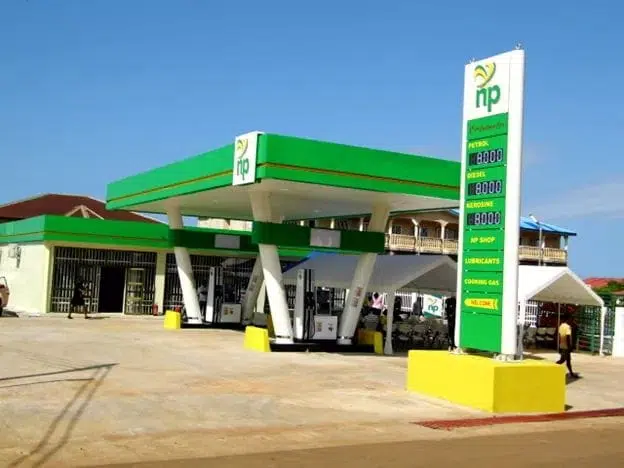
Coming from its strong position at present, the National Petroleum Company is poised to continue doing business in petroleum products in Sierra Leone. The shareholders and management of the company have long ago decided to give the people of the country accessible and quality petroleum products and services to enhance a standardized environment within the petroleum industry.
This company has gained local and international recognition for its rise to higher heights with effective service delivery. The company always ensures that the general public has easy access to qualitative petroleum products. Customers as well as service providers would attest that the company is one of the most successful privately owned business entities in Sierra Leone and today, it can boast of controlling internal and external shocks.
The 100% indigenously owned and operated company has successfully stretched in the West African Sub-region such as Guinea, Liberia, Ivory Coast and The Gambia with reports saying that it is doing extremely well in service delivery, Corporate Social Responsibility, job creation, new products amongst a host of others.
Customers formed part of a key arm of the NP-SL story as management has made it a priority to become the No. 1 for customer care. It is also open to a receptive behavior that encourages new initiatives, ideas, and suggestions that help to shape the policies of the company.
In order to give maximum satisfaction to customers, NP-SL operates in tandem with international standards and best practices in service delivery, customer care and value for money. The company’s filling stations are now the state of the art structures in the modern petroleum industry. They have brought a sense of competition in the industry that others are marvelling at and compelled to change their brands. Attendants at the stations are well trained and mannered on KYC and ready to assist customers whenever available. The stations have tire repairing sections, shopping marts and relaxation points to spend time.
“I always carry my NP Smart Card with me just in case my car’s fuel gauge will show red and I may not exactly have the required amount of money to refill or even if I have it such could be for another purpose. With my card I can just breeze into any NP Filling Station and by using my card the attendant will pump the quantity of petrol I need,” Amadu Bangura, an engineer said when asked about the card service which has unique security features that could not be easily falsified. “When I first heard of ‘Your fuel on Smart Card’ I thought it was a joke but only realized its efficacy when I started making use of it,” he further said. Customers say that they really find it very convenient in doing business these days with NP because the card makes it easy access to buy fuel rather than going to the bank.
Another important product is NP Gas. It has become talk of town as it is very suitable for cooking purposes and does not pose any health risks. It is manufactured in different cylinder sizes and marketed at all filling stations by authorized dealers at affordable prices; it can also be refilled for use.
On Corporate Social Responsibility, NP-SL Ltd is rated high for its contributions in improving lives and communities. The company has been supporting entities like the National Fire Force by facilitating the construction of a water facility at the Force’s Kissy Branch to provide accessible water supply for sharp responses to fire disasters in Freetown.
These interventions are worth millions of Leones going back to society, with the lives of the people being improved in education, health and other social amenities. Human resource is key in driving change and development at NP. In this way, the company can be far argued to be the only one that has fully implemented the Local Content Policy in enhancing entrepreneurship, employment and poverty reduction. Its employment policy towards indigenous people is replicated everywhere from Sierra Leone, Guinea, Liberia, etc.
Apparently, the premier oil marketing company is poised to continue improving on its business strategies.
Chief Executive Officer of Orange Sierra Leone, Aminata Kane Ndiaye and the Minister of Information and Communications, Mohamed Rado Swarray
By Fatmata Jengbe
Orange Sierra Leone in partnership with the Ministry of Information and Communications has on Thursday 24th October, 2019 commissioned the newly rehabilitated Sierra Leone News Agency building (SLENA) on Wallace Johnson Street in Freetown.
In his address to the audience, Minister of Information and Communications, Mohamed Rado Swarray said that when he took over as Minister the Sierra Leone News Agency building (SLENA) building was in a dilapidated state and as a Minister he was very concerned.
He further revealed how he was able to approach Orange for their partnership in order to make the building habitable hammering that Government is committed to ensuring that they empower the media and also create an enabling working environment for journalists.
He applauded Orange for its support in making this dream become a reality. Admonishing the Management and Staff of SLENA he entreated them to always ensure that their work is professionally done within the realm of informing the populace on current happenings.
Chief Executive Officer of Orange Sierra Leone, Aminata Kane Ndiaye, praised the Ministry of Information and Communications for celebrating with them the commissioning of the newly rehabilitated SLENA building for media practitioners, noting that this is part of their commitment in contributing towards nation building.
In another development Orange Sierra Leone has on Wednesday 23rd October, 2019 donated 200 sanitary pads to the Government Technical and Vine Memorial Secondary Schools in Freetown in fulfilment its USD 1.5 million commitment in supporting the Free Quality Education initiative.
Head of CSR of Orange Sierra Leone, Desmond Spaine, while distributing the items, noted that in August, 2018 while President Bio was lunching the Free Quality Education scheme, Orange Sierra Leone made a commitment of boosting the scheme with USD 1.5 million dollars in terms of material supports within a five year period.
According to him, Orange Sierra Leone and the Ministry of Basic and Senior Secondary School Education have designed five projects in line with the pledged USD 1.5 million dollars highlighting that the distribution of the menstrual hygiene pads is just one of the five projects. He noted that they at Orange are hugely concerned about the menstrual hygiene of girls in schools and hence they contracted the service of Girl Child Network Sierra Leone who have produced the pads and are also delivering sensitization talks to schools on the direct relationship between menstrual hygiene and teenage pregnancy.
Madam Anita Koroma, Chief Executive Officer and Founder of Girls Child Network- Sierra Leone, commended Orange and emphasized that the issue of menstrual hygiene management had been very poor towards addressing teenage pregnancy and other related issues. She urged the girls to responsibly use the hygiene pads for their intended purposes and according to her, the issue of menstruation was inter alia a no-go- area for the girls and boys. She called on boys to support girls during their menstrual period noting that the issue of menstruation was keeping girls out of schools for a whole week. At the Vine Memorial Secondary School, members of the Female Parliamentary Caucus witnessed the ceremony to lend their support to Orange Sierra Leone for coming to the aid of girls going through their menstruation period.
Haffie Haffner, Head of Legal Affairs, Orange Sierra Leone in her keynote statement, said they are in collaboration with the Ministry of Basic Primary and Senior Secondary Education to design projects that will see them expand the 1.5 million dollars in support of the free quality education agenda within a period of five years. She also noted that the provision of two thousand (2,000) hygiene pads to twenty schools in the Western Area for 2019, is the start of a project which will see the distribution of 10,000 hygiene for a period of five years is just one out of five projects Orange Sierra Leone will be rolling out.
Haffie Haffner spoke of the other projects which, according to her include super coding for schools; open Classroom for over one thousand teachers, provision of one thousand solar packs for one thousand village schools and the building of five laboratories for schools that will win the inter secondary debating and quiz competition. All of the projects, she noted, will be implemented. She concluded by noting that all over the world Governments cannot do it alone. The private sector, she maintained, is pivotal to support the Government project and this, according to her, is what Orange Sierra Leone is now demonstrating.
Veronica Kadi Sesay, President of the Parliamentary Female Caucus, encouraged the girls to keep away from sex and concentrate on their studies. She noted that they as female Parliamentarians are ready to support their continued growth and empowerment.
The climax of the ceremony was the presentation of the hygiene pads to the Principal of the Government Technical Secondary School and Vine Memorial Senior Secondary School respectively. Both Principals lauded the efforts of Orange Sierra Leone and assured them that they will do all within their power to ensure that they support the Girl Child while they are going through their menstrual period in schools.
Orange said they are targeting eighteen (18) schools in the next one week and it is expected that a total of 1,800 hygiene menstrual pads will be distributed.
Following the recent outbreak of suspected African Swine Fever in four Communities in Freetown, the Ministry of Health and Sanitation has cautioned the public to stay away from eating dead pigs, as the cause of death of these pigs is yet unknown, but however stated that the disease does not pose any public health threat, as it cannot transfer to humans. This was made known at a press briefing on Monday 22nd October at the Conference Hall of the Emergency Operation Centre on Wilkinson Road in Freetown.
While addressing journalists, Director at the Directorate of Health Security and Emergencies in the Ministry of Health and Sanitation, Dr. Mohamed Vandi has said that the Ministry of Health and Sanitations is concerned on the sporadic occurrence of suspected swine fever in four communities in Freetown (Moa Wharf, Kanikay, Kroo Bay and the Kissy Dump Site (Bomeh) as the country is moving towards One Health, as it seeks the health of both humans and animals; thereby preventing and respond to any disease that affects both humans and animals and of public health concern.
Dr. Vandi cautioned that there is no cause for concern as there has not been any prove as to whether the suspected African swine fever can cause illness in humans, but however warned that. He reiterated that there has not been any instance in which the African swine flew has transferred from pigs to humans, even in countries with confirmed cases of African swine fever.
“African swine fever affects pigs and it cannot transfer to the human population because it is not classified as a zoonotic disease”, Stated Dr. Vandi. He observed that pig farmers now fast-kill pigs that have already shown signs and symptoms of the suspected African swine fever, which he noted is a bad practice and thus puts the health of other pigs at risk.
Dr. Vandi continued that the Ministry of Health and Sanitation together with the Ministry of Agriculture and Forestry have heightened surveillance in the affected communities and samples shipped out of the country to ascertained as to whether the disease calming the lives of pigs as a result of the suspected swine fever or otherwise, adding that they were going to embark on a training exercise for the MoHS Community Health Workers and the MAF Community Animal Health Workers to jointly engage these affected communities. “As it stands we are yet to now if the affected pigs are from free range pig firming or those that are in pug pen, all of that we need to know to further plan and protect the lives of other pigs”, Fumed Dr. Vandi.
He stressed that the disease is of no public health threat to human, as the disease is not a zoonotic disease, but however warned the general public to refrain from eating dead pigs or even pigs from the market for now as one can’t ascertain the one the poke that is healthy or not.
Foundation for Gender and Development Initiative (FGDI-SL) and SAVE Sierra Leone
By Foday Moriba Conteh
On the 17th October 2019, the Foundation for Gender and Development Initiative (FGDI-SL) and SAVE Sierra Leone collaborated with other Civil Societies in the East End of Freetown at the FGDI-SL office 51 Bai Bureh Roads Kissy, Freetown to form a Coalition.
The meeting was geared towards getting the views from other CSO’s as to the need for an umbrella organization that will be regulating and coordinating the activities of CSO’s in that part of the country. It is to enhance better relationship amongst CSO’s in terms of their visibility, credibility and acceptability. A total number of 33 attendees from various CSO’s showed solidarity and support for the unprecedented idea of having a coalition for all civil society organizations in the East of Freetown.
When established, the coalition aims to provide capacity for CSO’s in implementing projects and producing standard results, Fostering sustainable relationship with line ministries for easy execution of their work, Provide capacity building, partnership and other necessary support for its membership and proffer the much needed solution to the burning issues faced in the different communities.
It is evident that Eastern Freetown is densely populated and thus faced with enormous challenges which include but not limited to sexual and reproductive health issue amongst women and girls, poor health and water facility, barriers with women due to gender disparity, economic crises, high rate of violence and crime rate, drug and substance abuse etc… It is against this backdrop that the thematic focus was to discuss the establishment of a consortium for all civil society organizations in the East End for addressing issues like:
Empowerment of women and girls to break barriers of gender disparity through support of women and girls in their involvement in economic, political and social activities in Sierra Leone, addressing issues of sexual and reproductive health and right which is in line with the SDG 3, 5 and 10, Addressing issues of drug and substance abuse, violence and high crime rate in Eastern Freetown and by extension Sierra Leone.
The meeting ended up with a move to set up a memorandum of understanding (MOU) between FGDI-SL which is the lead organization and other CSO’s in the coalition. Other intending member Organizations must produce all legal documentations as to its legitimacy of operation at the second meeting of the coalition in order to be considered for it membership.
It has been established that the Freetown Terminal, a subsidiary of Bollore Transport and Logistics Company in Sierra Leone over the past few days has supported First Lady Fatima Bio’s Hands of Our Girls campaign with a little over fifty million Leones, through the printing of T-shirts, Banners and other priority items needed in the campaign.
The company on October 11th 12th 18th & 19th travelled with the First Lady in Makeni, Kono Moyamba and Pujehun in a bid to help Madam Bio achieve her fight against men who are in the habit of going after young girls in the country.
Gassimu Fofana, Public Relations Officer of Freetown Terminal said the company decided to join the First Lady’s campaign trail because the company believes the Hands of Our Girls campaign is a genuine cause, and that rape, child abuse and early marriage remains high in Sierra Leone.
“We want to join the First Lady in altering the narratives for the better when it comes to rape and child marriage moving forward,” he pointed out.
While delivering her statements across the country, First Lady Fatima Bio emphasized that girls should be girls and not mothers or sexual slaves.
Madam Bio added that many girls have went through lots of constraints due to what she described as “abnormal behavior” of men that lead to the unfortunate deaths of young girls across the country.
“Our girls are dying every day and it’s no secret, Sierra Leone is a nation with a very high mortality rate not just in Africa, but the world at large”, she averred.
Madam Fatima Bio further stated that the aforementioned has been happening due to negligence on the side of some parents and community stakeholders, and that the same wrong doings are repeatedly occurring in various communities across the country in which young girls are impregnated and later die while in labor.
“For far too long our girls have been used and abused by our inconsiderable men and it’s about time we fight together and put this menace to rest,” she mentioned.
Many have been questioning the defined role of the Chief Minister since that position came to light when the SLPP Government assumed State Governance. The British High Commissioner to Sierra Leone, Mr. Simon Mustard and the Head of DfID Serra Leone, Ms Kobi Bentley, on Monday, 14th October, held talks with Sierra Leone’s Government Chief Minister – Professor David Francis at Statehouse in Freetown, where they discussed the role and office of the Chief Minister, which many in Sierra Leone believe is superfluous to requirements and a waste of public funds.
British High Commissioner, Mr. Simon Mustard, said that the purpose of the talks was to discuss and exchange ideas on how to achieve the objectives of the Office of the Chief Minister and the New Direction Government.
Since the creation of the Office of Chief Minister last year by President Bio, there are accusations of policy and role ambiguity, confusion and duplication of efforts, especially when set against the office and functions of the Vice President.
If there is confusion among many Sierra Leoneans about the roles and functions of these two senior government officials, there is little surprise therefore that the international community and development partners are unclear about the work of the Office of Chief Minister, which is costing the country hundreds of thousands of dollars to maintain, against other key priorities of the Government, such as healthcare and education.
British High Commissioner, Mr. Simon Mustard, said that he and the Head of DfID are in Sierra Leone to work with the Government and people of the country to help promote and support the delivery of effective governance.
Head of DfID, Kobi Bentley acknowledged the government’s efforts in addressing the economic challenges facing the country, and said that the British Government is committed to continuing its support for Sierra Leone.
Speaking about the Government’s priorities, the Chief Minister said that the President has compressed his thirty two manifesto promises into eight key priority areas, ranging from education, health, agriculture, and corruption.
He said that the President’s vision is to transform Sierra Leone through human capital development, and that the Government will continue to work with development partners to achieve this vision.
Speaking about the massive $2.5 Billion Government debt, which is growing alarmingly to over 60% of the country’s Gross Domestic Product (GDP), the Chief Minister said that the Government is currently spending 85% of its revenue on servicing the country’s debt. Why is the Government set on continuing to take on more debt?
Addressing the British High Commissioner and Head of DfID, the Chief Minister said that his Office is a delivery unit that deals with strategic planning and policy leadership, adding further to the current ambiguity, confusion and duplication that many in Sierra Leone are seriously concerned about.
He said that his office is positioned in a way that supports both the Presidency and the ministries.
“My role as the Chief Minister is an ensurer role, and I am also supervised by the Honourable Vice President,” he said.
But ironically, many of his roles and functions are in conflict with those of the Vice President.
The cost of running the Office of Chief Minister in Sierra Leone is costing the taxpayer hundreds of thousands of dollars a year, and a key question that must be answered by the President is this: What added value is the Office of Chief Minister bringing to his government and the running of the country, over and above that which the Office of the Vice President is achieving?
The recently published government ministerial performance report did not include the Office of Chief Minister, even though it is led by a cabinet minister and a major vote controller of the public purse.
Is the Office of Chief Minister above public scrutiny and accountability?
Minister of Finance, Jacob Jusu Saffa has on Saturday, 19 October 2019, signed an Education Support Project financing agreement of 20 million dollars with the Director General, of OPEC, Dr Abdulhamid Alkhalifa. The signing of the Agreement is part of the 68 million dollars project, which are jointly funded by the Arab Bank for Economic Development in Africa of $20.0 million, Saudi Fund; $25.0 million and Government counterpart fund of $3.0 million.
The project will cover the rehabilitation, expansion and equipment of the Bunumbu Teachers College and Milton Margai College including Tourism College in Goderich, construction of new school blocks, rehabilitation and expansion and equipment including furniture for Bo and EBK Magburaka Boys Schools, Kenema Secondary school and Prince of Wales.
During the signing ceremony, the DG OPEC said that President Bio’s Government has taken the bold steps to prioritize education as its flagship program. Sierra Leone is recognized as one of the global champions of Human Capital Development and therefore OFID is committed to supporting the Government to achieve its aspirations.
On his part, the erudite Minister of Finance, Hon Jacob Jusu Saffa, said, it was no mistake that President Bio made his manifesto commitment to implement Free Quality Education in Sierra Leone. Reflecting on the famous words of President Bio, “If you want to destroy a nation, don’t use guns but destroy the education system”. This is exactly what has happened to Sierra Leone. Sierra Leone that was once known as the ‘Athens of Africa’ is today at the bottom of the education ladder.
Therefore, as a demonstration of Government’s commitment, as articulated in the SLPP Government People’s Manifesto promise, 20% of the Budget in 2018-2019 was allocated to the education sector and this trend will continue in 2020 and beyond. It should be noted that the government education agenda is non-discriminatory; it caters for all, starting from early childhood learning (pre-primary) to primary and secondary schools as wells as technical vocational and tertiary levels. He concluded by saying that the project is not only timely, but “it is in line with our Human Capital Development and the project overall is targeting 6 major institutions of historical importance to Sierra Leone; two teacher training colleges and 4 secondary schools; two of which happens to be schools of noble sierra Leoneans, Magburaka Boys school of former President Ernest Bail Koroma that has remained in ruins for over 12 years, and Bo School of President Julius Maada Bio.
The Minister said, you cannot improve on the quality of education, if you do not improve on the education value chain. The selection of two teacher training institutions is part of the critical element of the education value chain. He re-assured the OPEC Director General that the project administration will not be business as usual, but utilization of project funds will be closely monitored by Government and the community people-that advance procurement has already started.
Immediately following the historic signing ceremony, the Minister of Finance had fruitful engagements and project negotiations with the delegation of the Arab Bank for Economic Development (BADEA) at the wings of the ongoing IMF/World Bank Annual Meetings in Washington DC. The Director General of BADEA extended special invitations to Hon Jacob Jusu Saffa to visit their headquarters in November next month to sign a $20.0 million co-financing for the same project. This will be followed by the signature of Saudi Fund’s component of $25.0 million.
At the Launch of the Free Quality Education in 2018, His Excellency, President Bio said “When I staked my presidential campaign on “human capital development” as one of my national priorities, a few, (very few) opposition politicians thought that I was clueless, too daring, and too brave. When I proposed giving every Sierra Leonean child access to free quality education, they pilloried and laughed at the idea. But the majority of Sierra Leoneans believed in my vision and voted me President. This free quality education programme is for every Sierra Leonean.
It is not for one region, one tribe, one political party; it is for every Sierra Leonean who wants an education.” The distribution of the education support projects to schools and tertiary institutions across the country is a true reflection of a President who says and stands on his commitment!
In trying to deepen socio-economic transformation, President Julius Maada Bio on Thursday 17th October 2019,officially opened the King Harman Maternal and Child Hospital. The hospital is a comprehensive emergency obstetric and newborn care health facility constructed by UNFPA, funded by the UK Government, and supported by the Ministry of Health and Sanitation.
Speaking at the commissioning ceremony, His Excellency the President of the Republic of Sierra Leone, Julius Maada Bio said “The importance of investments in quality care and patient safety is portrayed by Government’s commitment to improving the status of our hospitals across the country. We have invested in and will continue to invest in constructing and equipping new hospitals across the country. One of such is this King Harman Hospital, which provides secondary level care to the people of this community and its environs,”
The hospital will make a vital contribution to reducing maternal deaths in the country, where one in 17 women bear a lifetime risk of dying during pregnancy and childbirth. Sierra Leone has one of the highest maternal mortality rates in the world, and also very high child, infant, and neonatal mortality rates. The hospital will seek to improve this by providing a full range of maternal and newborn care health services, including much-needed, quality comprehensive emergency obstetric and newborn care.
Speaking at the commissioning ceremony, British High Commissioner, Mr. Simon Mustard said,
“I am delighted that our partnership with the Ministry of Health and Sanitation, and with UNFPA, has led us here today to open the King Harman Maternity and Child Hospital. Every day this hospital will protect and save the lives of mothers and their children, providing the vital expertise and equipment needed.”
The UK Department for International Development’s (DfID) Saving Lives Programme, which works in collaboration with the Ministry of Health and Sanitation, has provided £6.5 million to UNFPA to construct, refurbish, and equip eight facilities across Sierra Leone. These facilities, including King Harman Road and Rokupa hospitals, now provide emergency obstetric and newborn care to international standards. The Saving Lives Programme is also supporting the training of midwives in all three midwifery schools in the country.
UNFPA Sierra Leone Country Representative, Dr. Kim Eva Dickson remarked at the event, “UNFPA will continue to provide technical, financial and logistical support to the Ministry of Health and Sanitation to improve access to quality sexual and reproductive health services in the country as part of the quest for Universal Health Care.” She added, “I strongly believe that the King Harman maternal and Child Hospital will contribute significantly to improving maternal, newborn and child health outcomes in Sierra Leone.”
Work on King Harman Maternal and Child Hospital is now complete with new consulting rooms, emergency, labour and delivery, postnatal, and surgical wards, and a special baby care unit. Surgical procedures including caesarian sections will take place in the new operating theatre, which is expected to support pregnant women in the hospital’s catchment area and beyond.
UNFPA, with the support of DFID, procured and delivered equipment and supplies including maternity ward and delivery beds, ultrasound machines, and theatre equipment, to ensure good quality maternal, neonatal and child health services.