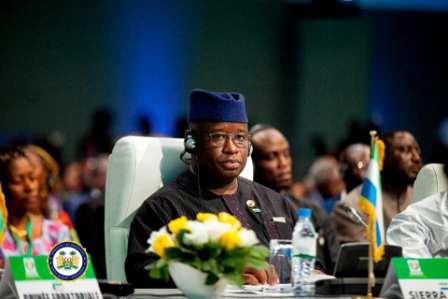
High Commissioner of India to the Republic of Sierra Leone, Birender Singh Yadav and Excellency President Dr Julius Maada Bio
By Thaimu Thullah
High Commissioner of India to the Republic of Sierra Leone, Birender Singh Yadav, has met His Excellency President Dr Julius Maada Bio to discuss possible means of strengthening bilateral relations between the two countries.
“I am thankful for the opportunity to meet your Excellency President Julius Maada Bio. I hope to further discuss ways of deepening and widening more areas of cooperation for the benefit of the two countries,” he said.
In his response, the President said that it was a pleasure to meet the Indian Ambassador and to discuss the state of the relationship between the two countries. He said that it had been years of the good relationship between the two countries and assured that he would further work to strengthen it.
Ambassadors of Ireland, Russia, Saudi Arabia, Kingdom of Spain, Kingdom of Sweden and the High Commissioner of the United Kingdom have presented their letters of credence to His Excellency Dr Julius Maada Bio at State House.
The Ambassadors included Lesley Ni Bhriain Ochowiak from the Republic of Ireland, Vadim RAZUMOVSKIY from the Russian Federation, Dr. Hussain Nasser Aldakalallah from the Kingdom of Saudi Arabia, José Leandro Consarnau Guardiola from the Kingdom of Spain, Maria Lessner from the Kingdom of Sweden and Simon Mustard, High Commissioner from the United Kingdom.
In his presentation, the new UK High Commissioner said that Sierra Leone and the UK have had years of great partnership dating back several areas. He said that in the spirit of partnership the two countries had stayed together, adding that the UK was very proud of its relationship with the West African nation. He also assured of UK’s commitment to further strengthening that relationship for the benefit of both countries.
President Dr. Julius Maada Bio will depart Sierra Leone, today, to attend the seventy-fourth session of the United Nations General Assembly (UNGA) to be held in New York City scheduled for the 17 – 30 September 2019.
The first day of the high level General Debate of the 74th Session will start on Tuesday, 24th September 2019 and the theme for this year’s session, as decided by the new UNGA President, Tijjani Muhammad-Bande, is: “Galvanising multilateral efforts for poverty eradication, quality education, climate action and inclusion.” During the High Level Week (HLW), several high level events will be held on climate change, sustainable development, financing for development, elimination of nuclear weapons and progress made in addressing the priorities of small island developing States.
On the margins of the 74th Session, His Excellency, President Dr. Julius Maada Bio is expected to deliver speeches and participate in several high level events such as the Universal Health Coverage Meeting, Secretary General’s Climate Action Summit, Sustainable Development Summit and Financing for Development Dialogue. On Tuesday, 24th September 2019, His Excellency, President Dr. Julius Maada Bio will also be hosted at the Yale University where he will deliver a lecture on “Human Capital Development and Innovation: Pillars for Sierra Leone’s Transformation”. The First Lady, Her Excellency Fatima Bio is also expected to participate in several events on the margins focusing on early marriage, rape and eliminating violence against women and girls.
His Excellency, President Dr. Julius Maada Bio will address the United Nations General Assembly on Thursday, 26th September 2019. Whilst in the United States of America, His Excellency, President. Dr. Julius Maada Bio will also engage Sierra Leoneans on the progress made so far by his New Direction Administration in consolidating peace and national cohesion, the fight against corruption, investment in human capital development, efforts in diversifying the economy and transforming the investment climate.
You need not fear the storm, or the earthquake shock,
You’re safe for evermore if you build on the Rock.
This famous chorus by H. Ernest Nichol contains an apt recommendation for our education sector in Sierra Leone which is facing storms of “Bahamian” proportions, threatening to mess up our human development and productivity aspirations for generations. Nichol used this metaphor of building on the rock as he had begun a study program in Civil Engineering but decided to study music at Oxford University instead.
I am not going to pretend that everything was ok with education in “our days”- like an Uncle who claimed he was so clever at school that when he came first, there would be no second or third but the next in line would be given fourth position! But honestly it is true that in “our days”, teachers were given respect and parents and students valued education at whatever level. I recall that even people who went up to University and fell by the way side, not completing their courses valued the partial degrees they gave themselves. Someone would claim to have a “BA Inter” or a “BSc Inter”-and these were good teachers-TWWWs. For you, young ones TXWWW is “Teacher wova wova wova wa”. Don’t ask me what this means- ask any Mende man.
Anyway in “our days”, I recall we were in awe of our teachers and our quest for knowledge was beyond compare. My friend, a classmate who had joined us in Form 3 at CKC from a village school was on the first day of class so mesmerized by trigonometry which we had started mastering in Form 2 that when Father Curran did a revision in class, he quietly listened without understanding. After class he ran after him shouting-“Please Father, this sin” (as in sinner)! I don’t understand your sin! It was only after further questioning that Father Curran knew he was referring to “sin” (as in sine, cosine, tangent) and not to any sin, the good Reverend Father may have committed. Truth be told, he turned out later to be a top student and is now a to Engineer in this country.
Now to our recent examination results. To many people the recent bad results, especially in the WASCE examinations did not come as a surprise. For years we have known that cheating was prevalent in all nearly examinations. Those who run credible institutions have known this, because of the poor standards of many who come to seek admission and the attitude of invigilators at examination centers. I know of a school proprietress who even tests some prospective teachers on the very test papers meant for their potential students!-some do fail! Those who run tertiary institutions or teach there know very well the standards of the students leaves a lot to be desired. They also often join in the cheating themselves and we end up producing poor quality graduates in most fields. We who employ them know it is pot luck to get those who are likely to perform and, frankly many employers already have it in their minds that most qualifications are not worth the paper they are written on and require other stringent means of testing applicants before gradually taking the “best of the worst”. The fact that foreign employers have little regard for our educational qualifications is the worst kept secret.
Many people have analysed the WASCE results which indicated that 95% of the students did not meet the University intake requirements. The results are terrible and much worse than in previous years in which we still did not perform well. Yusuf Bangura recently stated in an article that “In a comparative analysis of student performance in Sierra Leone, Nigeria and Gambia covering the period 2008-10 (See www.natinpassadvantage.com), Nigeria outperformed Sierra Leone by extraordinarily wide margins (mostly more than 10 fold margins) in all 15 subjects listed.”. Clearly standards have collapsed and we cannot hold a candle to Nigeria and Ghana – not even to lowly Gambia. Oh how the Athens of West Africa has fallen!
Many reasons have been proffered for the drop in standards from the collapse of standards or quality at all levels, large number of teachers are not qualified to teach, overcrowded classrooms, teaching methods, out of date and poor quality control measures.
Even examination preparation is poor. We heard the other day about bar codes on examination sheets being inadvertently torn off by invigilators who did not know about their significance and about the use of poor quality HB pencils whose shading may not be captured in the automatic marking.
The sad reality is also that cheating has become so pervasive that it has become a thriving industry at official examination centres, “house centres” set up and involving teachers and multiple stakeholders. Students have taken this as a “right to cheat” as a basic human right and parents sometimes get in on the act. Honesty is eschewed and during the recent monitoring of centers some honest invigilators were chased out by others, Even the Police, not to be left out of anything are said to have got in on the act. The cheating attitude is pervasive.
Kudos however to the President Bio and his government for making it clear that they are bent on stamping this out. Despite his recent snafu, the ACC boss is to be commended for his no-nonsense attitude towards this blot on our country.
The sad part of all of all of this is that we are creating a nation of people who are not fit for the tasks they may have at hand for the future in the workplace and meritocracy has been thrown out the window. Providing high-quality university education is central to the task of national development. Failing to do so will hamper economic growth, weaken democracy and good governance, and leave a generation without the opportunity to pursue their ambitions for a better future.
Many will in any case inevitably end up being unemployed and join their colleagues in the long employment queue. A major challenge in Sierra Leone is creating enough jobs for its growing population. I don’t know what the figures for Sierra Leone, but a recent World Bank report estimates that as many as 11 million young people in Sub-Saharan Africa will be joining the job market every year for the next decade. Too few graduates gain the skills they need to find work. Employers across the region complain of a lack of basic, technical and transferable skills. The issue of employability is certainly a problem. It could take years for a graduate to even secure a job. Employers are concerned about the work readiness of graduates. There are significant gaps in their IT skills, personal qualities (e.g. reliability) and transferable skills (e.g. team working and problem solving). This is not surprising as in many cases, lecturers lack adequate qualifications and preparation themselves, and transmission-based pedagogy and rote learning are commonplace. Universities have also suffered a severe lack of physical resources, including buildings, laboratories and libraries.
Many have blamed the government for rushing through the free education programme and suggest it should have been phased, ensuring that with limited funds and problems of organizing a sector that has been moribund for decades, only a gradualist approach would help solve the problems. All of this may be true, but this is all now water under the bridge. The situation is so serious that “Monday morning quarterbacking” will be of no use. The Free Quality Education is upon us and we have to swim. To the government’s credit, the two Ministers of Education are amongst the most sober Cabinet Ministers. They are knowledgeable, have a passion for their work and are consultative, reaching across the aisle and working with multifarious stakeholders. Alpha Timbo’s Teachers’ Union experience and Labour experience are being brought to bear positively on a Ministry that needs the collaboration of various stakeholders. The recent rapproachment with the FCC under a Mayor that also understands the issues and has made education one of her flagship programmes is good. Together with the Mayor, they have involved all stakeholders including the private schools.
Professor Gbakima and his team have also been shaping up the TVET programme and recently unveiled a new TVET policy that will eventually improve employability. The TVET team at the Ministry has been considerably revamped and there is greater liaison with the private sector. The role played by the DSTI in the education data hub is commendable. David Sengeh’s DSTI’s role in obtaining and analyzing all kinds of information on the education sector will enhance planning for the sector and result in better utilization of scarce resources.
The current fiasco in the education sector, with bad results and cheating galore and several other challenges facing the education sector are all too apparent, The fact that the Ministry and associated Institutions like WAEC and others have realized the scale of the examination cheating problem and are taking active steps to stamp out these practices should be commended. Whatever the results now, it is at least commendable that we know where we are and recognize the need to rise from the ashes.
One hopes that going forward the government will accentuate the “quality” part of the Free Quality Education. Luckily there are people at the helm of both Ministries that are devoted, knowledgeable and consultative and it behooves all stakeholders to collaborate with Ministry officials, especially when they have indicated they are ready to reach out. The Ministers must be given support and the government should certainly not politicize the issue but be open t ideas and stared the credit. I have been very impressed with Mayor Aki-Sawyer’s cooperation with Minister Timbo and his team. Come to think of it, the FCC is in charge of 25% of the schools in the country. Other Local Councils should also be in the avant garde of this revamping process.
It is good to see that both Ministries realise the yeoman’s role to be played by teachers in revamping our educational system, no matter what the current trials are. The strengthening of the Teacher Service Commission and improving the lot of teachers is core to improving our educational system. In “our days”, our teachers were proud of their work and well regarded in our communities. I can’t end if I don’t tell you about my teaching days. In “our days”, many used to teach for a year after sixth form before going to University. I did my stint at St. Andrews Secondary School, Bo (before the time of students like J.J.Saffa and Professor David Francis but after Dr. Samura Kamara). Hon. I.B Kargbo was my Vice Principal and Mr. D.S. Bindi. of blessed memory my Principal. I relished the staff meetings. Mr. Bindi had gone to Aberdeen, Scotland on a three-month bursary and had some new ideas he wanted us on the staff to inculcate. He insisted on starting staff meetings with Scottish music and would start by saying to us- “Let us invoke the Aberdeen spirit before the meeting.” I thought to myself-It is good he only went for three months! What a proud Principal and what proud teachers we were!
For now, things have got to get worse before they get better. Let all stakeholders collaborate with the Ministry to “build our educational system on a rock”. It has been far too long on the sands. This is the only way we can stand the earthquake shock that will bode well for the future of our children.
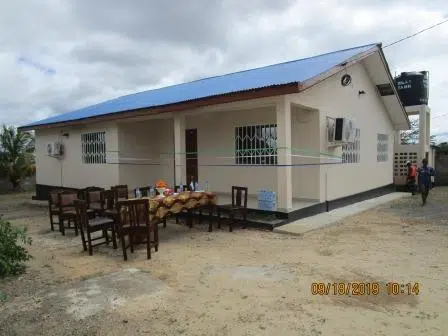
Koidu Limited has donated a two bedroom self-contained, VIP accommodation, fitted with not only furniture, but also beddings, bedroom freezer, water heater as well as a generator room and a public toilet, at the Tankoro Police Divisional headquarters in Kono.
The ceremony attracted high ranking security personnel from all over the country including AIGs from Kenema and Freetown, the Local Unit Commander of Motema, Mr. Ronald Turay, the new Office of National Security boss and Inspector General of Police Dr. Richard Moigbe himself who made the keynote address, cut the tape and declared the house open.
In his keynote address, the IG did not mince his words in showering praises on Koidu Limited, adding that Koidu’s unflinching support to the security sector of Sierra Leone as a whole has been remarkable, citing instances like the Motema Police Station, the Kimbadu Police Station etc. He told all present that Koidu Limited is not only complying with the local content policy, but has stood the test of time in all the challenges Sierra Leone has gone through.
Present at the ceremony were Mr. S B Gando, the Tankoro Chiefdom Speaker, who represented P.C. Saquee V and the Local Unit Commander of Tankoro, Mr. Gbow.
As the most representative inter-governmental organization of the world today, the United Nations’ role in world affairs is irreplaceable by any other international or regional organization.
The United Nations has made enormous positive contributions in maintaining international peace and security, promoting cooperation among states and international development.
Today, people of the world still face the two major issues of peace and development. Only by international cooperation can mankind meet the challenges of the global and regional issues. The United Nations plays a pivotal and positive role in this regard.
Strengthening the role of the United Nations in the new century and promoting the establishment of a just and reasonable international political and economic order goes along with the trend of history and is in the interest of all nations.
In order to strengthen the role of the United Nations, efforts should be made to uphold the purposes and principles of the Charter of the United Nations. The authority of the Security Council in maintaining international peace and security must be preserved and role of the United Nations in development area should be strengthened.
To strengthen the role of the United Nations, it is essential to ensure to all Member States of the United Nations the right to equal participation in international affairs and the rights and interests of the developing countries should be safeguarded.
In this regard, On Security Council reform, China maintains that there is a common recognition that the Council needs to reflect the realities of the 21st century to better serve the interests of peace and security.
In China’s view, the Security Council does need appropriate and necessary reforms in order to adapt to these changes and the needs of the times, and to fulfill more effectively its responsibility for maintaining international peace and security in accordance with the purposes and principles of the UN Charter.
The most notable change in this Organization itself in the past more than half a century has been the growth of its membership from 51 at the time of its establishment to nearly 200 now, most of which are developing countries, making the United Nations truly the most representative inter-governmental international organization in the world.
Therefore, the overriding priority in the reform of the Council is to correct the imbalance of its composition and increase the representation of developing countries in accordance with the principle of equitable geographical distribution so that the composition of the Council will reflect the reality of the membership of the United Nations. Only by doing so can the reform be of significance and relevance and conform to the common aspirations and interests of all Member States.
The Millennium Summit of the United Nations adopted the United Nations Millennium Declaration which states, inter alia, that “we resolve to intensify our efforts to achieve a comprehensive reform of the Security Council in all its aspects”. It is a solemn commitment made by leaders of all Member States on the Security Council reform but breakthrough is yet to be made in other aspects.
This demonstrates once again that the reform of the Security Council has to do with the interests of all countries and, therefore, there are different views, positions and concerns when it comes to issues of importance and principle.
In China’s opinion, in order to materialize the will of the leaders of Member States, there should be full, careful and in-depth discussions and communications among Member States, and any solutions should be sought only on the basis of a consensus. It is impossible to impose a specific premeditated timetable.
China believes that failure by the UN Security Council Working Group to achieve any breakthrough in its work cannot be explained simply by the lack of a political will, as the Millennium Declaration embodied the political will at the highest possible level of each and every country.
So what is holding back the UN Security Council reform, which Africa, like China champions, with Africa asking for a permanent seat on it?
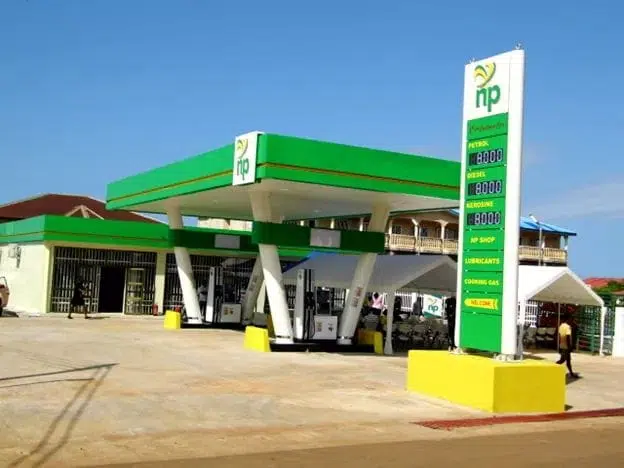
Sierra Leone’s leading and longest serving oil marketing company, the National Petroleum (NP) SL Limited remains the undisputed petroleum company in the country as it endeavours to give optimum satisfaction to millions of customers across the country.
Recent research done by various media houses indicates that based on viability and sustainability tests on oil marketing companies in Sierra Leone, it was found that the operations of the National Petroleum – Sierra Leone makes it the most viable and sustainable oil marketing company in the country; apart from it being an internationally approved service deliverer.
It is on record that NP is a company worth its salt and the company has received many awards; the latest being: “Best Company of the Year” that was received on 6th July 2019 during the National Business Award 2018/2019 held at the prestigious Bintumani Hotel.
The research included tests on the standard and quality of the National Petroleum-SL products which customers say they have never had cause to grumble about.
It should be noted that customer care is one key element to the success of the National Petroleum Sierra Leone (NP-SL).
Another most important feature of NP-SL is its smart cards which customers can use to make transactions very easily and conveniently.
The public’s recognition of the invaluable contributions of NP both to its numerous customers across the country and to national development has seen it bag meritorious awards from different national and international organisations.
NP-SL is well anchored in neighbouring Liberia, Guinea, Ivory Coast and The Gambia where it operates as a truly multinational Sierra Leone company.
Since its establishment, NP has been meaningfully contributing to economic growth through payment of taxes and rolling out meaningful interventions in the discharge of Corporate Social Responsibility that are transforming lives and improving communities.
The company always ensured that petroleum products are always available, thereby preventing shortages that could create shocks in many quarters. The level of confidence which overseas business partners have reposed in the company has made it possible for it to enter into payment agreements thereby keeping the demand and supply chain open and running.
NP-SL by giving preference to employing Sierra Leoneans is a clear indication that it adheres to the country’s Local Content Policy. Utilizing local talents make it possible for indigenes to acquire useful knowledge and skills through training courses that could be applicable in other places.
In addition, the company sells the best cooking gas that is available in hundreds of outlets across the country, thereby contributing to creating cleaner environments, thus aiding the work of EPA.
In this digital age, moving away from the traditional way of transacting business has now become the norm.
It should also be mentioned that NP-SL is on record for being the only indigenous company which is paying very dividends to government thereby making the NP-SL one of the best privately-owned companies in Sierra Leone worth its salt.
In a bid to enhance financial inclusion by reaching the unbanked, Sierra Leone’s leading GSM mobile operator Africell has signed a Memorandum of Understanding with the Sierra Leone Commercial Motor Bike Riders Union (SALCOMBRU).
Addressing SALCOMBRU on Friday 20th September 2019 at the Wilberforce Playing Field, Chief Corporate Affairs Officer Africell, Joe Abass Bangura, disclosed that Africell is pleased to welcome participants to this significant event to witness the signing ceremony of a memorandum of Understanding between Africell and the Sierra Leone commercial Bike Riders Union.
He said that the MOU will officially make the Union’s Africell Money Agents help in penetrating hard to reach areas of communities around the country with much needed mobile financial services.
He said that the move taken by Africell to signed the MOU is a direct response to the government and the Bank of Sierra Leone’s call to fulfil the aspirations of the National Financial Inclusion Strategy; on the need to “Widen Financial Inclusion; through Reaching the Unbanked”. He said that studies have proved that there is a direct correlation between growth in financial inclusion and growth in GDP.
Joe Abass Bangura revealed that studies have confirmed that 80% of adult Sierra Leoneans are financially excluded; they do not have access to formal financial services adding that the cost of providing formal financial banking services in some places in the country is very high and therefore unsustainable and the most effective means of reaching these areas is through mobile financial services.
Underscoring the agreement in the MOU, Joe Abass Bangura disclosed that Africell will provide the union with 5,000 Africell Life Insurance policies worth le 250,000,000 (Two Hundred and Fifty Million Leones) to be equitably distributed across their nationwide membership.
He noted that the union will be given a seed capital of 30,000,000 (Thirty Million Leones) to support the union’s upcoming constitutional review process and to set up structures that will enable them to implement the MOU.
Mr Bangura furthered that members of the Union in return, will be Africell Money Agents to penetrate hard to reach areas, which he said will positively impact on their businesses by widening their revenue stream beyond the daily passenger or organizational hire.
He emphasize that the union will identify and provide reliable members from across the country to serve as agents, they will also identify and provide members to be used on the marketing collaterals related to the agreement, at no additional cost.
He said that the union collectively also, through press statements, and all other available media outlets including but not limited to Radio, Television and social media platforms, accord Africell endorsements for and advertisement of the Africell Money Service.
Africell’s Life Insurance Products and Service Manager, Victoria Mammah, said that Africell Mobile Life Insurance by Activa will give a life insurance plan to all subscribers for as low as 50,000 that will last for a year.
She said the policyholder is the person that will insure them and the beneficiary at the end will claim $1,000
He noted that for you to join the policy you must have an Africell Money Account with a minimum off 50,000 Leones and you must be between the ages of 18 to 45 years.
Victoria Mammah on behalf of Africell Mobile Life Insurance by Activa and Afri Mobile Money presented a gift voucher where they supported the union with 5000 free policies for one year which she said is worth about 250,000,000 Leones.
President of the Sierra Leone Commercial Motor Bike Riders Union, thanked Africell for believing in them as he said many people consider them less important in society. He said that the signing of the MOU with Africell would definitely redefine the perception of society about Bike Riders.
Umaru Tally Bah assured Africell on behalf of the union that they will ensure that they implement the agreement in the Memorandum of Understanding. He noted that as a union they have the man power to widen financial inclusion by reaching the unbanked as they are all over the 16 districts in the country.
Pikin Bizness, an organization established to support children by providing health related assistance, economic and educational support to child survivors of post-conflict Sierra Leone has informed that five children would be travelling abroad for open heart surgeries.
Speaking to this medium on Friday 20th September 2019 at their head office on Wilkinson Road Freetown, Fredrick Tarawallie, Media and Communication Officer of the organization disclosed that the five children would be travelling to different countries for their surgical treatments.
He said that Isatu Dumbuya and Emmanuel George would be going to Dubai, Kaday Conteh and Alusine Leigh would be going to Aswan Egypt and Hawa Marrah would be going to Bangalore India also informing that the five kids would be travelling with their parents.
Fredrick Tarawallie said the organization was established in January 2001, by three people who came together; Dr Adonis Abboud, Shellac Sonny Davies and Barbara Bangura, culminating into its launching as a Charitable Organization called Pikin Bizness.
He said four years later, in 2005, having spotted a campaign, launched by the Exclusive Daily Newspaper, advertising and appealing for help on behalf of one Abu Bakarr Jalloh, a six year old with a hole in his heart, Pikin Bizness embarked on a larger campaign targeting mainly children with heart deficiencies, especially children with holes in their hearts and other related diseases.
Tarawallie revealed that since November 2005 to date, more than 23 children have been flown for cardiac treatment and 2 waiting to be flown to Dubai which has cost the organization more than ten thousand euros per child adding that the organization has also helped other children suffering from other diseases.
He stressed that they are flying those kids who have congenital heart problems to seek medical procedures abroad through their partners Chain of Hope, RCPCH and Chaine De L’Espoir.
newly appointed World Bank Country Director for Sierra Leone, Liberia and Ghana – Pierre Frank Laporte
By Amin Kef Sesay
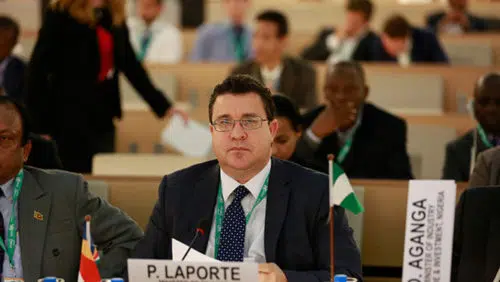
On Tuesday, 17 September 2019, the newly appointed World Bank Country Director for Sierra Leone, Liberia and Ghana – Pierre Frank Laporte, who took up office in July this year, met with President Julius Maada Bio at State House.
Presenting the new World Bank Chief, Finance Minister Jacob Jusu Saffa said that Mr. Laporte has served in various positions at the international level. He said the World Bank boss is in State House to discuss a wide range of issues relating to the development of Sierra Leone.
In his presentation, Mr. Laporte said he is pleased to meet with the President and assured that he would use his experience and expertise to bring the right support to the Government of Sierra Leone.
Before joining the Bank, Laporte, a Seychelles national, was the Minister for Finance, Trade, and Investment of the Republic of Seychelles and he served as Governor of the Central Bank of Seychelles. During that time, Laporte was a leading member of the Seychelles Government team that implemented the country’s successful macro-economic reform program that was launched in 2008 with international support.
Prior to joining the World Bank, Laporte was a regular speaker for the Bank and the International Monetary Fund (IMF) on experiences on debt and growth challenges facing island economies.
Laporte previously served as an economist with the IMF, as well as the Resident Representative in Niger from 2005-2008. Laporte has private sector experience having served as the CEO of the Sacos Insurance Group in Seychelles. His professional accomplishments also include leading Seychelles’ accession into the World Trade Organization as Trade Minister.
Mr. Laporte holds a Master’s degree in Economics (with Distinction) from the University of Sheffield (UK) and a Bachelor’s degree in Business Economics with Computing from the University of Surrey (UK). He is also a holder of several awards; in 1998 he received the Midland Bank Award for Outstanding Performer in the Economics, Money, Banking and Finance programs of the University of Sheffield (1998). He received the 2013 Southern African Finance Minister of the Year award by the African Leadership Magazine and a Special Commendation Award for Outstanding Contribution and Service to Humanity by the Georgia Legislative Black Caucus in 2014.
He said he arrives in Sierra Leone at a time when the country is making progress. He reaffirmed his support, adding that he would work together with the Government to find solutions to the many challenges facing the country.
In his response, President Bio said: “Let me welcome you to Sierra Leone and to let you know that you have good partners in development. We want to get on with the process of development and we will work with you so that we can surmount the challenges”.
So what are these challenges?
Falling export revenue
Low investments in key economic sectors
Depreciating value of the Leone
High and rising youth unemployment
Rising government borrowing
Low taxation base
Weak governance and corruption
Poor investment in water and electricity sectors
This is the latest World Bank’s overview of the situation in Sierra Leone:
Sierra Leone’s economy grew by 7.8% on average during 2003-2014 but contracted by 21% in 2015 following the Ebola outbreak and a decline in the price of iron ore, the main export product. Although the country was declared Ebola free in March 2016, the economic recovery has been volatile.
Growth rebounded to 6.4% in 2016 only to decelerate to 3.8% in 2017 and remaining roughly stagnant at 3.7% in 2018. Adding to the challenge of recovery, a large landslide hit Freetown in August 2017, further disrupting economic activity and slowing the pace of the recovery.
The current growth patterns have slightly reversed the gains in poverty reduction: per capita income, estimated at US$506 in 2018, remains below its pre-Ebola level ($660) compounded by a population growth of about 2%.
The 2018 Sierra Leone Integrated Household Survey provisionally puts the overall poverty headcount at 56.7% compared to 53.8 in 2011. The poverty rate remains higher in rural areas (72.2%) than urban towns (18.4% in Freetown).
Broad macroeconomic stability is yet to be assured. Inflationary pressure has persisted due to the depreciation of the exchange rate, food supply constraints early in 2018 and the adverse impact of the liberalization of fuel prices in July 2018.
The Bank of Sierra Leone increased the policy rate (MPR) by 200 basis points to 16.5% in December 2018 in a bid to reduce the high inflation.
The Leone depreciated by 12.0% year-on-year, underpinned by the widening of the current account deficit to 14.0% of GDP (from 11.7% in 2017), following the sharp drop in exports earnings.
The overall fiscal deficit is estimated at 6.6% of GDP in 2018, a considerable reduction from the 8.6% of GDP in 2017.
Total domestic revenue increased to 17.2% of GDP in 2018 (from 14.9% in the previous year) due mainly to elimination of fuel subsidies, reduction of excessive duty and tax waivers and introduction of a treasury single account (TSA).
Total public debt reached 66.3% of GDP in 2018 (from 64.6% of GDP a year earlier), reflecting depreciation of the exchange rate as well as the increase in domestic debt.
The recent World Bank and IMF Debt Sustainability Analysis assessed the country to be at a “high risk” of debt distress for both external public debt and overall public debt.
Growth is expected to improve to 5.4% in 2019 and stabilize at 5.2% by 2021, largely reflecting the recovery in mining sector but also improvements in agriculture and services.
Political Context
Sierra Leone held general elections on March 7, 2018 to elect a new president, members of Parliament and local councils in the fourth cycle of elections since the civil war in 2002. Opposition Sierra Leone People’s Party (SLPP) candidate, Rtd. Brig. Julius Maada Bio won in a run-off after the first round failed to produce an outright winner.
The losing All People’s Congress (APC) won majority in Parliament with 68 seats to the SLPP’s 49. Two new parties – the Coalition for Change (C4C) and the National Grand Coalition (NGC) – won eight and four seats respectively. Three independent candidates were elected. This is the first time a winning party has failed to have majority in Parliament.
The new administration on January 29, 2019 launched three Commissions of Inquiry (COIs) to probe into the governance activities of the past administration covering 2007 to 2018. Persons of Interest include former president, vice presidents, ministers, deputies, and other civil and public servants.
The judge-led Commissions are expected to hold proceedings for six months though there is provision for an extension should the need arise.
The main opposition party filed a case in the Supreme Court seeking clarifications on some constitutional provisions, which they allege had been breached by the government in setting up the Commissions.
The Sierra Leone Parliament on February 22, 2019 ratified a State of Public Emergency proclamation made by the President on rape and other forms of sexual violence against women and girls, but the main opposition insists the debate was inconclusive and that “a Public State of Emergency does not exist.”
Political tension between the ruling party and the opposition came to a head following a local council by-election in the Kambia District, which was won by the ruling party candidate. The two opposition parties (APC and NCG), which contested in the election, rejected the results.
Development Challenges
Until the outbreak of Ebola in May 2014, Sierra Leone was seeking to attain middle-income status by 2035, but the country still carries its post-conflict attributes of high youth unemployment, corruption and weak governance.
The country continues to face the daunting challenge of enhancing transparency in managing its natural resources and creating fiscal space for development. Problems of poor infrastructure and widespread rural and urban impoverishment persist despite remarkable strides and reforms.