


By Ibrahim Sesay
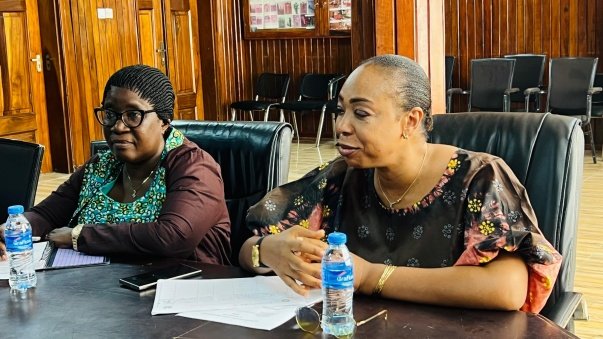
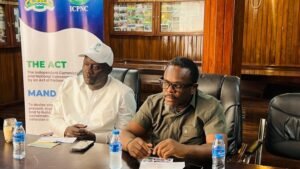
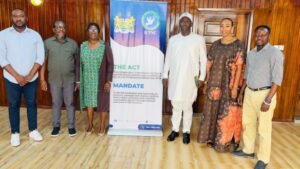
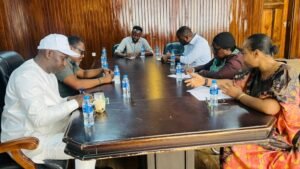
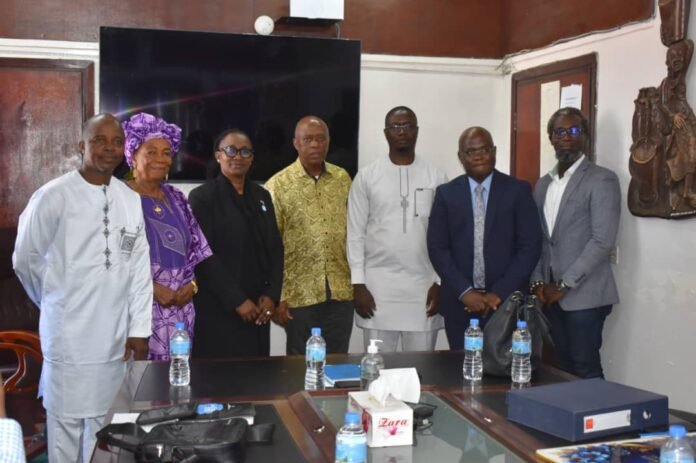
The Electoral Commission for Sierra Leone (ECSL) on Thursday, 13th November 2025, held a validation session for its Electoral Inclusion Policy; a milestone initiative aimed at ensuring that all citizens, including Persons with Disabilities (PWDs), enjoy full and unhindered participation in the country’s democratic processes. The event brought together key stakeholders, including the National Commission for Persons with Disability (NCPD), the Ministry of Youth Affairs and the International Institute for Democracy and Electoral Assistance (International IDEA).
Chairman of the NCPD, Brima Abdulai Sheriff, in his keynote remarks, urged ECSL to go beyond symbolic gestures and create an environment that truly enables PWDs to exercise their franchise freely. He emphasized that accessibility in politics extends beyond physical structures like ramps and braille to include “open minds, inclusive systems and leadership opportunities.”
“Inclusion is not about asking for favors; it is about ensuring justice, equality, and good governance. Policies that exclude PWDs are not merely incomplete but unjust,” Brima Abdulai Sheriff asserted. He further noted that “true inclusion begins when policies see ability before disability and potential before limitation,” adding that “the true measure of a nation’s strength is not how it treats the powerful but how it empowers the excluded.”
He explained that the NCPD operates under its PRIDE Strategy, Policy, Resilience, Inclusion, Innovation, Dignity and Empowerment, to effectively deliver its mandate. Brima Abdulai Sheriff called on ECSL to ensure that the Electoral Inclusion Policy becomes a “living promise” translated into action through accessible voter education, barrier-free polling centers and equitable political representation. He pledged NCPD’s technical support to ECSL and commended International IDEA for its partnership in developing the policy.
ECSL’s Western Region Commissioner, Zainab Humu Moseray, stated that the validation exercise marked a critical step toward making Sierra Leone’s electoral processes more inclusive and equitable. “The purpose of this policy is to promote equal participation, representation and accessibility for all citizens, regardless of disability status,” she said.
Commissioner Zainab Humu Moseray reiterated ECSL’s commitment to guaranteeing equal rights and opportunities for women, youth, the elderly and persons with disabilities. “At ECSL, we believe inclusion is not just a principle; it is a promise; a promise that every voice counts, every vote matters and every citizen deserves an equal opportunity to shape our nation’s future,” she emphasized.
She highlighted that the policy aims to make elections more accessible through voter education in inclusive formats, improved polling station designs and assistive technologies. “Inclusion for PWDs strengthens our democracy and ensures that no one is left behind,” she concluded.
Minister of Youth Affairs, Ibrahim Sannoh, lauded ECSL and International IDEA for spearheading a transformative policy that prioritizes both youth and PWDs. “Young people constitute the largest segment of Sierra Leone’s population and their involvement in our democratic processes is essential and undeniable,” he said.
He acknowledged ongoing frustrations among youth regarding their perceived limited political participation but encouraged continuous dialogue to bridge the gap. “We must open honest and sustained dialogue with young people to shift attitudes away from violence toward peaceful participation,” Ibrahim Sannoh advised.
Drawing an analogy, the Minister urged youths to approach elections like football matches: “If your team doesn’t win, support the winning team and work together for the nation’s development,” he concluded.
The validation of ECSL’s Electoral Inclusion Policy represents a significant stride toward ensuring that every Sierra Leonean, regardless of physical ability, age or gender, has an equal opportunity to participate meaningfully in the democratic process.








COMMENTARY “A New Mineral Future”: Mines Minister Urges Sierra Leone to Embrace Simandou-Inspired Reforms
A Commentary By Amin Kef (Ranger)
The launch of Simandou 2040 in neighbouring Guinea has sent a strong signal across the West African sub-region: Africa’s mineral future is entering a new era; one defined not by dependency and extraction alone, but by sovereignty, value addition and long-term national wealth creation. Among the leaders most attuned to the weight of this moment is Sierra Leone’s Minister of Mines and Mineral Resources, Julius Daniel Mattai, whose reflections upon returning from the ceremony offer a powerful blueprint for Sierra Leone’s next steps in mineral governance and economic transformation.
For Minister Julius Daniel Mattai, the Simandou event was far more than a mining milestone. It was, as he described, “the rebirth of a continental vision”, a demonstration that African nations can build institutional strength, negotiate equitable partnerships and chart a future in which mineral wealth underpins national prosperity. Representing President Julius Maada Bio as part of a high-level delegation led by Chief Minister Dr. David Moinina Sengeh, Julius Daniel Mattai witnessed firsthand the scale and ambition of Guinea’s approach. That experience, he insists, should serve as a catalyst for Sierra Leone’s long-overdue mineral sector transformation.
Minister Julius Daniel Mattai’s admiration for the Simandou 2040 model is rooted in its deliberate planning and structural reforms. Guinea has not simply opened another mine; it has integrated Simandou into a national development architecture that includes:
Julius Daniel Mattai considers this a powerful demonstration of what African resource governance can achieve when leadership, vision and policy discipline converge. It is this alignment, he argues, that Sierra Leone must now replicate.
The Minister uses the Simandou launch as a mirror, forcing Sierra Leone to confront its own limitations and opportunities. He insists that the country cannot continue operating as a supplier of unprocessed, low-value minerals. Instead, Sierra Leone must pursue a new development philosophy anchored on beneficiation, value addition, infrastructure alignment and institutional reform.
He identifies several critical areas where Sierra Leone can learn from Guinea’s example:
Guinea’s 15% equity stake in the Simandou joint venture ensures national benefit far beyond taxes and royalties. Julius Daniel Mattai argues that Sierra Leone must begin negotiating similar arrangements to become a genuine co-owner in major extractive projects.
Simandou is governed by modern legal frameworks that align local interests with global standards. Sierra Leone, he notes, must review and strengthen its mining laws, regulatory systems and oversight mechanisms.
Guinea’s 640 km heavy-haul railway and new deep-water port reflect a long-term vision that integrates mining with national economic development. Sierra Leone, Julius Daniel Mattai insists, must think beyond rehabilitated rail lines and adopt infrastructure that supports scale, efficiency and multi-user access.
With Tonkolili’s iron ore averaging 30–35% Fe, Sierra Leone must invest in beneficiation technologies to create higher-value products capable of competing in global markets, especially now that Simandou’s 65–67% Fe ore is entering the market.
Minister Julius Daniel Mattai does not shy away from comparing Tonkolili and Simandou. He highlights that:
This level of clarity, he believes, is necessary if Sierra Leone is to avoid being left behind.
Beyond policy, the Minister calls for a national shift in mindset. He argues that Sierra Leone must adopt a modern, globally responsive mineral policy shaped by the realities of green energy transitions, critical mineral demand and transparent resource governance.
“Let us refine our mindsets, reform our mining laws and realign our national mineral policy,” he urges, a statement that doubles as both warning and encouragement.
Ultimately, Minister Julius Daniel Mattai’s reflections are not simply technical analyses; they are an expression of belief in Sierra Leone’s capacity to transform its mineral wealth into national prosperity. His concluding message captures that optimism: “Let the lessons from Simandou 2040 inspire us to build a stronger, self-reliant mineral economy; one that turns our natural wealth into lasting national prosperity.”
For Sierra Leone, the message is unmistakable: the future will favour nations that prepare, reform and innovate. Under Minister Julius Daniel Mattai’s guidance, Sierra Leone has both the insight and the urgency required to seize this defining moment.