
Home Blog Page 136

‘One Girl’ Scholarship Programme Supports 100 Girls to Stay and Succeed in School

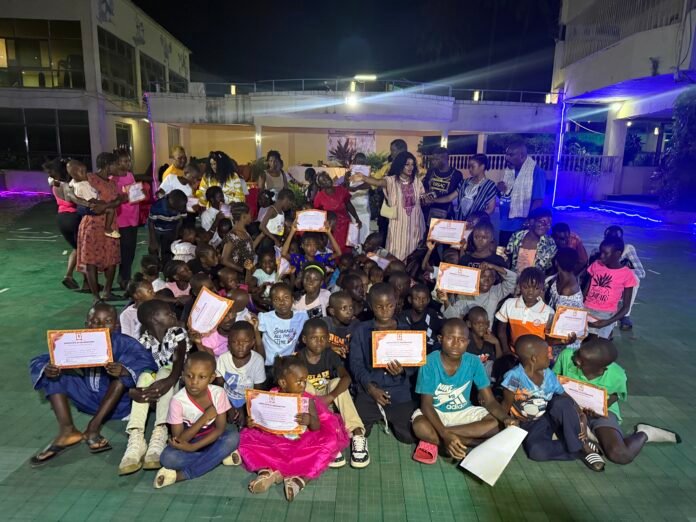
The Australian-based Non-Governmental Organization, One Girl, on Thursday, 11th September, 2025 donated a wide range of school supplies to 100 girls currently enrolled in its scholarship scheme in Sierra Leone. The initiative forms part of the organization’s wider commitment to complement Government efforts to expand access to education for girls, particularly those from disadvantaged and underserved communities.

The donation ceremony, which took place in Freetown, brought together parents, guardians, beneficiaries and women leaders advocating for female empowerment. Speaking at the event, Sia Lajaku-Williams, Programs and Partnerships Director of One Girl, explained that the NGO is currently operating exclusively in Sierra Leone. She revealed that for the 2025 academic year, 100 girls are benefiting from its flagship Girls-in-School Programme, with 45 students based in Freetown and 55 in Mile 91, Tonkolili District.

According to Sia Lajaku-Williams, the Girls-in-School Programme provides full sponsorship for both Junior Secondary School (JSS) and Senior Secondary School (SSS) pupils. The packages distributed included two sets of regular school uniforms, one ceremonial uniform, a school t-shirt, six subject textbooks (English, Mathematics, Integrated Science, Social Studies, Home Economics and Agriculture), a scientific calculator, geometry set, two pairs of school shoes, two school belts, a felt hat and beret, eight exercise books, socks for both daily and ceremonial use, a box of pens and a three-month supply of sanitary pads.

She added that the program also covers a monthly lunch stipend, pays for extra lessons and ensures continued provision of sanitary pads during monthly scholar meetings. Lajaku-Williams further clarified that to be eligible, applicants must be girls enrolled in public secondary schools within the Western Area or Tonkolili District, classified as vulnerable and at risk of dropping out and not already benefiting from another scholarship initiative.

Beyond material and financial support, One Girl also organizes monthly mentoring and counseling sessions to promote retention and academic success.

Two scholarship beneficiaries spoke during the ceremony, expressing heartfelt appreciation. Isatu Esther Kaine praised One Girl’s intervention, explaining that without the organization’s assistance, she might have been forced to leave school. She encouraged fellow recipients to take full advantage of the opportunity and remain steadfast in their studies.

Alice N. Turay, who has benefited from One Girl’s support for the past five years, shared her personal experience. She explained that after losing her mother, she encountered serious financial obstacles that nearly derailed her education. However, thanks to sustained assistance from the organization, she has been able to remain in school and pursue her academic ambitions.

The scholarship drive, according to observers, reaffirms One Girl’s enduring commitment to strengthening girls’ education in Sierra Leone and underscores its role as a vital partner in bridging gender gaps in access to learning.

China, Sierra Leone Inaugurate On-site First Aid Training Center on World Heart Day

By Mary Kabay

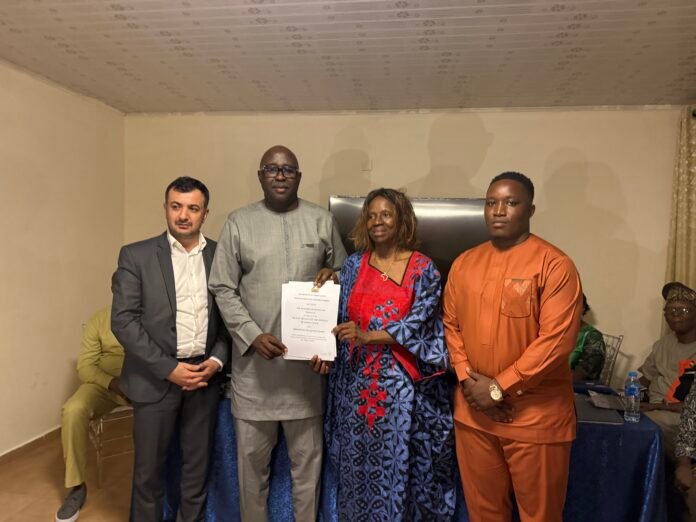
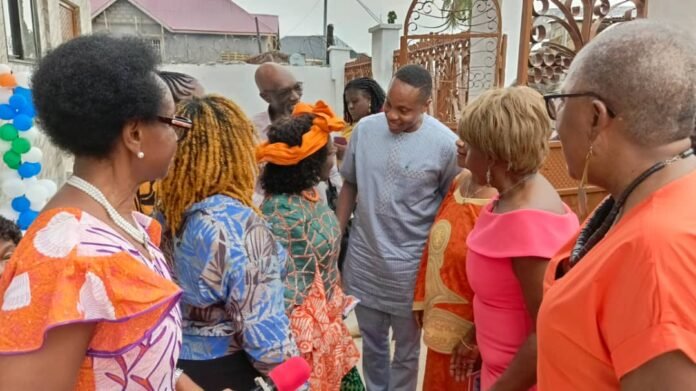
Sierra Leone’s Ministry of Health, in collaboration with the Embassy of the People’s Republic of China, has on September 10, 2025 officially inaugurated the On-site First Aid Training Center at the China Sierra Leone Friendship Hospital in Jui. The landmark event, held in commemoration of World Heart Day, also featured a free health clinic and a public awareness campaign focused on cardiovascular health and community preparedness.

The ceremony drew distinguished officials from both nations. Representing the Ministry of Health were Andrew L. Sorie, Permanent Secretary; Dr. Sartie Kenneh, Chief Medical Officer and Dr. Augustine Tarawally, Medical Superintendent of Jui Hospital. On the Chinese side, participants included H.E.Wang Qing, Chinese Ambassador to Sierra Leone; Chang Shi, Deputy Commissioner of the Hunan Health Commission; Dr. Liu Long Fei, Captain of the 26th Chinese Medical Team; alongside senior officials from the Chinese Embassy in Freetown.

The event opened with a welcome address from Dr. Liu Long Fei, followed by remarks from Andrew L. Sorie, Ambassador Wang Qing, and Chang Shi. Each speaker highlighted the deepening friendship and cooperation between Sierra Leone and China particularly in the field of healthcare.

Key moments of the ceremony included:

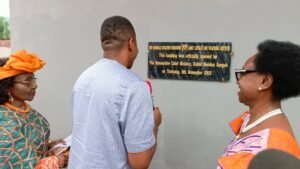
  • Unveiling of a commemorative plaque marking the opening of the center.
  • Donation of vital medical supplies and equipment to strengthen healthcare delivery.
  • Live demonstrations by trainees, showcasing newly acquired first aid skills.
  • Awarding of certificates to participants who successfully completed the training.

Ambassador Wang Qing described the launch as “a manifestation of the deep friendship between our two peoples,” reaffirming China’s commitment to Sierra Leone’s health sector. Permanent Secretary Andrew L. Sorie emphasized that the new facility will “equip Sierra Leoneans with lifesaving skills and reduce reliance on overseas treatment.”

The First Aid Training Center is the latest milestone in a series of joint healthcare initiatives. Earlier this year, Sierra Leone and China established the Traditional Chinese Medicine Center and a Telemedicine Center, both designed to expand medical expertise and access. Officials also revealed plans to upgrade the China–Sierra Leone Friendship Hospital into a Center of Excellence, equipped to handle complex and critical medical cases.

In his closing remarks, Dr. Augustine Tarawally expressed gratitude for the continuous support of the Chinese Medical Teams during his tenure as Medical Superintendent, praising their role in strengthening the hospital’s capacity.

Beyond the launch of a new facility, officials underscored the symbolic value of the initiative. The center represents a strategic health partnership that has endured through Ebola, COVID-19 and other health crises and it reaffirms both countries’ commitment to building a healthier, more resilient future.

The ceremony concluded with a vote of thanks and a group photo session, capturing a moment of renewed solidarity between Sierra Leone and China.

Is India a ‘Tariff King’? Not Really | Opinion

By Mohan Kuma, Former Indian Ambassador and Director General of Jadeja Motwani Institute for American Studies

There is a widespread but fallacious perception that India’s tariffs are inordinately high. There are subjective factors when it comes to a country like livability, public courtesy or even how foreigners are welcomed. But tariffs are quantifiable and there should really be no place for subjectivity. So, let us consider the facts in the case.

Before we do that, however, it might be useful for the average reader to know as to what function tariffs perform in a low-income developing country like India, as opposed to say, a high-income developed country like the United States of America. Traditionally, low-income developing countries use tariffs for two reasons: one, to protect their domestic industry and two to gain revenue from it. Protection of domestic industry is an accepted argument by economists all over the world, especially if the industry is an infant one and the country needs to develop an industrial base. Then, there is the revenue gaining function, which is illustrative of a country’s duties on alcohol or luxury motorcycles, for instance.

India’s tariffs, which were high in the 1980s, were brought down significantly since the 1991 reforms were initiated and during the negotiations related to the Uruguay Round, which led to the establishment of the World Trade Organization (WTO). Since then, the secular trend in India has been one of gradual reduction of the applicable tariffs year after year.

From a technical point of view, there are two kinds of tariffs that countries have. One is applied tariffs, which as the name indicates is the actual tariff (normally ad valorem) imposed at the border when a foreign good enters a country.

The other one is bound tariffs, which is the maximum tariff that a country can impose on a foreign good from a legal obligation arising from its most-favored-nation (MFN) commitments to the WTO.

It goes without saying that the tariff war initiated by the U.S. is in violation of its commitments under the WTO agreements. But then, the WTO itself has been moribund for a while. It is also worth noting that tariffs cannot be the same for all countries. It is a truism that low-income developing countries will have higher tariffs (for reasons mentioned above) compared to G7 countries.

So, where does India figure in all of this? When India is judged on tariffs, there are two parameters which are used. One is simple average tariffs and the other is trade-weighted tariffs. If you use the former metric, India’s tariff does seem high (15.98 percent). But this is in many ways academic because for most of the goods that come into the Indian market, it is the trade-weighted applied tariff that matters. And the trade-weighted tariff that India maintains is a very respectable 4.6 percent. This level of tariff gives the lie to claims that India is somehow a tariff king. Simple averages distort the picture since they treat all products alike regardless of the trade volumes. So, why is there such a big difference between India’s simple average tariff and its trade-weighted tariff?

India does maintain relatively high tariffs in agriculture and automobiles. In both these cases, the main purpose of the tariffs is to protect domestic industry. Agriculture in India is sui generis and like no other major country in the world. Around 50 percent of India’s mammoth population directly or indirectly depends on agriculture. Besides, agriculture in India is not mechanized and land holdings are so small that farming is about survival and not about commerce. Asking India to open its farm sector to imports is akin to asking it to commit suicide, which no elected Government in India would agree to. This demand is especially egregious since Western farmers are beneficiaries of direct and indirect subsidies.

Given all of this, India does maintain relatively high tariffs for agriculture products, average rates of around 33 percent on meat, dairy, fruits and cereals. But this is not surprising if you consider the fact that the European Union’s average rate is 37.5 percent on dairy products going up to 205 percent and up to 261 percent on fruits and vegetables. Compare this with Japan whose rate is 61.3 percent on dairy products, going up to 298 percent and up to 258 percent on cereals and 160 percent on meat and vegetables. Or South Korea, whose average is 54 percent on agricultural goods with 800 percent on vegetables and 300 percent on fruits. Who is the tariff king in agriculture, you might ask? As for automobiles, this sector creates mass employment and is crucial for that reason.

Even India’s simple average tariff levels at 15.98 percent is in line with global norms for developing economies. Bangladesh (14.1 percent), Argentina (13.4 percent) and Türkiye (16.2 percent), which are all countries with comparable or higher GDP per capita, maintain similar or higher tariffs.

On the U.S. saying their exports of non-agricultural products face tariff barriers in India, it is worth noting that U.S. exporters often face equal or lower tariffs in India compared to many Asian peers. In electronics and technology for instance, India has 0 percent tariff on most IT hardware, semiconductors, computers and associated parts, with average tariffs of 10.9 percent on electronics and 8.3 percent on computing machinery.

In comparison, Vietnam has a tariff of 8.5 percent on electronic equipment, going up to 35 percent. China has a tariff rate of 5.4 percent going up to 20 percent on electronics and up to 25 percent on computing machinery. And Indonesia has a tariff rate of 6.3 percent on electronic equipment, going up to 20 percent, and up to 30 percent on computing machinery.

It is true that India maintains justifiable tariff protection for its agricultural, dairy and auto markets for valid reasons. But its trade-weighted applied tariff in other sectors does not justify it being called a “tariff king” at all.

Dr. Mohan Kumar is a former Indian ambassador and is Director General of the newly established Jadeja Motwani Institute for American Studies at the OP Jindal Global University.

The views expressed in this article are the writer’s own.

China’s Global Governance Initiative: A New Dawn for Africa’s Global Voice

China’s Global Governance Initiative (GGI)

By: James Kamara-Manneh  

The year 2025 marks 80 years since the founding of the United Nations. Yet, despite decades of promises, Africa still struggles with underrepresentation in the very institutions that make global decisions shaping its destiny. From the Security Council to the international financial architecture, Africa’s voice has too often been side-lined.

It is against this backdrop that China’s Global Governance Initiative (GGI) emerges not as another lofty slogan, but as a clear roadmap to reform the global system and make it more just, inclusive, and effective. For Africa, the GGI could not come at a better time.

At the core of the GGI is the principle of sovereign equality. This simple yet powerful idea that all nations, regardless of size or wealth, must have an equal say is precisely what Africa has been advocating for in global forums. The push for Security Council reform, calls for fairer trade terms, and demands for climate justice are all grounded in this principle. If realized, the GGI would give Africa the recognition it deserves in shaping the rules of the game.

The GGI also champions the international rule of law, rejecting the misuse of unilateral sanctions and the selective application of international rules. For many African countries that have borne the brunt of such practices, this stance resonates deeply. A world where the law applies equally to all where no nation can bend the rules at will; would provide a fairer platform for Africa’s growth and sovereignty.

Africa’s strength has always been in collective action, embodied by the African Union and regional economic communities. The GGI’s insistence on multilateralism with the United Nations at its core aligns seamlessly with Africa’s aspirations. By rejecting exclusive blocs and discriminatory arrangements, the initiative creates space for Africa to act as a united voice in global governance rather than a fragmented set of players.

Perhaps the most compelling aspect of the GGI is its people-centered approach. Africa’s development challenges from poverty and unemployment to climate change and digital inequality cannot be solved by rhetoric alone. The GGI emphasizes tangible results: green technology for climate resilience, digital infrastructure to bridge the connectivity gap, health cooperation to strengthen public systems, and reforms to the international financial system that ease Africa’s debt burden. These are real, measurable outcomes that could transform lives across the continent.

The GGI is not about overturning the existing order but about making it work better for all especially developing nations. For Africa, this represents a rare window of opportunity. By embracing China’s initiative, Africa can amplify its role in shaping new governance frameworks on artificial intelligence, cyberspace, outer space, and other emerging frontiers.

The world is changing fast. Power is shifting, technologies are evolving, and crises from climate shocks to pandemics are demanding collective solutions. Africa cannot afford to remain a passive observer. The Global Governance Initiative offers the continent a platform to shape, not just receive, the benefits of global reform.

China’s Global Governance Initiative is more than a diplomatic proposal it is an invitation. An invitation for Africa to seize its rightful place in the global order. An invitation to move from the margins to the centre of decision-making. And an invitation to work alongside China and other partners in building a fairer, more inclusive, and more sustainable future.

For Africa, the choice is clear. The time has come to engage boldly, speak collectively, and ensure that the GGI delivers not just promises but progress.

(Note: This writer is an all-rounder journalist who have worked as a former Newspaper Editor, a Digital News Editor for Sierra loaded and presently working as Radio producer) (jkmanneh2020@gmail.com)


WFP Report: Global School Meal Programmes Expand to Reach 80 Million More Children

Sierra Leone School Feeding Program in Kambia District

A new flagship report from the United Nations World Food Programme (WFP) has revealed a sweeping expansion in school feeding initiatives worldwide, with nearly 80 million additional children now receiving meals in schools compared to 2020. The 20 percent surge brings the global total of children supported by government-led school feeding programmes to at least 466 million, marking one of the most significant advances in child welfare and education in recent years.

The State of School Feeding Worldwide 2025 report finds that progress has been most pronounced in low-income countries, where the number of children benefiting from school meals has increased by 60 percent in just two years. Africa has emerged as a leader in this expansion, with 20 million more children now fed through national programmes. Countries such as Kenya, Madagascar, Ethiopia, and Rwanda are cited as making remarkable strides.

This achievement is hailed as a rare success story in global development, driven largely by governments themselves. Strong evidence shows that domestic school meal initiatives not only safeguard children’s well-being but also support smallholder farmers, generate local employment, promote sustainable diets, and reduce carbon emissions.

WFP Executive Director Cindy McCain underscored the far-reaching benefits of the programmes: “School meals are so much more than just a plate of nutritious food – important as that is. For vulnerable children, they are a pathway out of poverty and into a new world of learning and opportunity. They are proven to be one of the smartest, most cost-effective investments any nation can make to improve the long-term health, education and economic prosperity of future generations.”

The report notes that global investment in school feeding has more than doubled in four years, rising from US$43 billion in 2020 to US$84 billion in 2024. Notably, 99 percent of this funding now comes from national budgets rather than international donors, reflecting a fundamental shift toward national ownership. Yet, WFP warns that in low-income countries — where the need is greatest — limited domestic resources threaten sustainability.

Much of this progress is linked to the School Meals Coalition, a global alliance of over 100 governments, six regional bodies, and more than 140 partners, hosted by WFP. Two-thirds of the children newly reached with meals live in Coalition member states. Since its inception, the number of countries with formal school meal policies has nearly doubled, jumping from 56 in 2020 to 107 in 2024.

Carmen Burbano, WFP’s Director of School Meals and Social Protection, described the coalition as a model of modern multilateralism:

“The surge in nationally funded school meal programmes is a powerful sign of what’s possible, even in challenging times. But in low-income countries, where needs are greatest, progress remains at risk as global aid shifts and domestic resources fall short.”

The release of the report comes just days ahead of the Second Global School Meals Coalition Summit in Brazil (18–19 September), where governments and partners will review progress and mobilize new commitments.

For the first time, the WFP report highlights strong evidence that school meals not only boost enrollment and retention but also improve learning outcomes. Studies show measurable gains in literacy and mathematics, with school feeding often outperforming traditional education interventions such as teacher training or digital technology inputs.

This finding positions school meals as a critical tool in addressing what experts have described as today’s “global learning crisis,” where millions of children are in school but not acquiring foundational skills.

The report stresses that school feeding programmes extend well beyond the classroom:

  • They form the largest social safety net in the world, shielding children from the impacts of conflict, pandemics, and climate shocks.
  • For every US$1 invested, school meal programmes generate between US$7 and US$35 in economic returns across education, health, agriculture, and social protection sectors.
  • Feeding 466 million children creates an estimated 7.4 million cooking jobs worldwide, alongside employment in logistics, farming, and supply chains.
  • Home-grown school feeding models promote healthier, climate-friendly diets and stimulate locally rooted food systems.
  • Girls and women benefit disproportionately: girls see stronger educational and health outcomes, while women are empowered through employment as cooks, suppliers, and community workers.

The report also highlights WFP’s ongoing leadership. Currently, the agency supports governments to reach 139 million children and directly delivers meals to 21 million. In countries such as Armenia, Benin, and Iraq, WFP has successfully guided transitions from UN-delivered programmes to full national ownership.

By combining emergency response capacity with long-term system-building, WFP demonstrates how school meals can move beyond humanitarian aid to become a pillar of sustainable national development.

As the world prepares for the School Meals Coalition summit in Brazil, the report underscores both the successes achieved and the challenges ahead. The growing recognition of school meals as a public policy priority signals momentum — but sustaining progress, particularly in the poorest nations, will require renewed international solidarity and domestic commitment.

With 466 million children already benefiting, WFP and its partners argue that the goal of reaching every child with a healthy, nutritious meal in school by 2030 is ambitious, but achievable.

School Meals

Mines Minister Warns Against Misuse of Data, Calls for Collective Leadership

Julius Daniel Mattai

By Amin Kef (Ranger)

Minister of Mines and Mineral Resources, Julius Daniel Mattai, has called on Government institutions, policymakers and stakeholders to embrace unity, discipline and evidence-driven decision-making in the governance of the country’s mineral sector. Delivering a strong message on the collective responsibility of leadership, the Minister underscored that the proper stewardship of minerals, one of Sierra Leone’s most valuable national assets demands collaboration across all sectors of governance.

In statement on September 8, 2025, Minister Julius Daniel Mattai emphasized that governance should not be viewed as the performance of a single individual but rather as a shared responsibility guided by collective wisdom. He explained that when leaders speak with one voice, guided by facts and discipline, the nation benefits from clarity, conviction and consistency.

“Our people do not look to us for competing narratives,” he underscored. “They look to us for clarity, conviction and consistency.” He noted that unity among Ministries and Government Agencies is essential to inspire public confidence and to ensure that policies are grounded in facts rather than fragmented opinions.

The Minister stressed that the mining industry in Sierra Leone is not confined to geology alone but cuts across multiple domains. He pointed out that minerals intersect with economics, environment, security, diplomacy and livelihoods. For this reason, no single Ministry or Agency can claim full authority over the sector without the input of others.

“Minerals are not just about rocks in the ground,” he said. “They affect our economy, our international relations, our environment and the daily survival of Sierra Leoneans. Only by weaving together the expertise of every relevant Ministry can we create a coherent policy framework.”

Julius Daniel Mattai also raised concerns about the improper handling of data in public communication. He explained that when officials present figures to the public, they are not merely quoting statistics but shaping national dialogue and influencing public perception. Any misrepresentation, he warned, could have serious consequences for public trust and investor confidence.

“A figure casually misused or prematurely shared does not simply distort a paper; it distorts perception and perception dictates public action,” he cautioned. He urged Ministries and Agencies to coordinate and cross-check their information before releasing it to the public, noting that accuracy builds credibility while dissonance creates mistrust.

The Minister used a vivid metaphor to describe how Government should operate, likening governance to a symphony in which every instrument must play in harmony. He explained that true leadership is not about who speaks the loudest but about ensuring that each voice contributes to a coherent whole.

“Governance is not a solo performance; it is a symphony,” Julius Daniel Mattai said. “Each instrument, each Ministry, Directorate and Agency contributes to the whole. True leadership is the orchestra leader who ensures every sound is in tune.”

Sierra Leone is one of Africa’s richest nations in terms of mineral deposits, with diamonds, bauxite, iron ore, rutile and gold contributing significantly to national revenue. The international community, including global investors and development partners, continues to watch Sierra Leone’s mineral sector closely. Julius Daniel Mattai acknowledged that attention and warned that any lack of coordination within Government could project weakness and inconsistency to the world.

“In our stewardship of Sierra Leone’s mineral wealth, the world is listening keenly,” he noted. “If we do not harmonize among ourselves first we risk projecting dissonance to the world.”

The Minister also reflected on the role of facts in governance. He explained that while opinions, perceptions and perspectives may vary, facts remain constant and must be the guiding principle in policymaking.

“Facts are truths that remain constant, opinions are what we think at a moment, perceptions are what others believe they see and perspectives are shaped by where we stand,” he said. “In governance and especially in the stewardship of our God-given minerals, it is our solemn duty to ensure that facts guide opinions, that facts correct perceptions and that facts broaden perspectives.”

The Minister concluded his statement with an African proverb: “When the drumbeat changes, the dance must also change.” He used this adage to highlight the need for adaptability in governance, reminding colleagues that policies must evolve with emerging realities.

“So too must our governance adapt; anchored not in fragmented voices, but in the steady drumbeat of unity, truth and evidence,” he concluded.

Political analysts and industry observers have noted that Julius Daniel Mattai’s remarks come at a critical time when Sierra Leone is seeking to increase investor confidence in its mineral sector while balancing environmental sustainability and local community development. His call for unity and discipline is seen as a direct appeal to colleagues across Government to align their messaging and strategies.

For Sierra Leoneans, particularly those in mining communities, the message offers reassurance that the Government intends to manage mineral resources with greater transparency and coordination. However, it also places responsibility on leaders to deliver on the promises of harmonization and evidence-based governance.

As Sierra Leone continues to rebuild its reputation in the global mining industry, the success of this approach will likely determine the level of international investment, the fairness of revenue distribution and the sustainability of the country’s mineral wealth for future generations.

NCPD, DSTI Ink Historic MoU to Empower Persons with Disabilities in Digital Space

The National Commission for Persons with Disability (NCPD) and the Directorate of Science, Technology and Innovation (DSTI) on Monday September 8, 2025 signed a Memorandum of Understanding (MoU) at State House in Freetown to advance digital inclusion and ensure that persons with disabilities (PWDs) are fully part of Sierra Leone’s digital transformation drive.

The signing ceremony was held in the DSTI Conference Room and was described as a historic step towards breaking barriers and providing equal opportunities for all citizens in the digital age.

Speaking during the event, DSTI’s Policy Manager, Abubakarr Kallon Esq., expressed joy at the partnership and reaffirmed the Government’s commitment to leaving no one behind in its technological advancement. He emphasized that the inclusivity agenda of President Julius Maada Bio is evident in the process, adding that the agreement would change the narrative for PWDs in the country’s digital space.

DSTI Technical Director, Ibrahim Rashid Bayoh, explained that the agreement marks the beginning of a long journey aimed at producing fruitful results. He disclosed that the partnership will introduce a Radical Inclusive Digital Skills Master Class, starting with 80 PWDs and later expanding to train 1,000 PWDs across four digital hubs equipped with assistive technologies. He further noted that digital platforms, including Le We Tok, will be adapted with accessibility features to enhance participation, stressing that the initiative will ensure inclusivity and co-creation at every stage of design and implementation.

Chairman of the NCPD, Brima Abdulai Sheriff, expressed gratitude to the leadership of DSTI for the inclusive vision and commitment to empowering PWDs. He described the MoU as timely, pointing out that it directly addresses the Commission’s work and strengthens its alignment with the Ministry of Social Welfare to fulfil the provisions of the 2011 Persons with Disability Act. He assured that the Commission would fully contribute to the success of the partnership and deliver on its responsibilities.

The MoU is expected to open opportunities for PWDs to access digital training, employment and innovation spaces, reinforcing Sierra Leone’s commitment to inclusive development.

Ministry of Health Unveils Digital Recruitment Portal for 3,000 Health Workers

By Foday Moriba Conteh

In a bold move to modernize the health-sector hiring process, the Ministry of Health has officially launched a new online application portal for recruiting 3,000 health workers across all cadres. The portal, at www.recruitment.mohs.gov.sl was unveiled on Monday, 8 September 2025 during a Press Conference at the Ministry’s Conference Hall in Youyi Building, is now live and will remain open for applications from 9 to 29 September 2025.

Permanent Senior Secretary, Andrew L. Sorie, emphasized the need for transparency and merit in the recruitment process, noting that the Ministry, as a life-saving institution, must attract and select only the most qualified candidates. He warned against fraudulent intermediaries and made it clear that the application process is free of charge.

The official portal, accessible at www.recruitment.mohs.gov.sl, will serve as the sole platform for applications. He clarified that any applications submitted via the previous staging or test portal will not be considered; all interested applicants must reapply through the new, official link.

A preliminary testing phase saw over 1,600 applications processed successfully, affirming the platform’s reliability for large-scale use.

Deputy Minister of Health II, Dr. Jelikatu Mustapha, hailed the launch as a watershed moment for the health sector. She contrasted the new digital system with the outdated, paper-based process, which previously required candidates to travel to Freetown, often resulting in confusion and delays. “The new online portal allows applicants to apply from the comfort of their homes,” she remarked, underscoring the convenience and efficiency of the digital system.

Dr. Jelikatu Mustapha also praised Health Minister, Dr. Austin Demby, for spearheading the initiative and acknowledged President Bio’s commitment to human capital development. She further noted that the system accommodates district-specific quotas and gives priority to former volunteers, ensuring equity in distribution across the country.

She called the launch an “exceptional day,” reaffirming the Ministry’s dedication to fairness and transparency in recruitment. The Deputy Minister II urged applicants to use www.recruitment.mohs.gov.sl for their submissions.

IT Director, Ministry of Health, Capri Lonko Koroma emphasized the portal’s user-focused design and its role in solving logistical challenges inherent in the outdated paper-based system.

“What we decided to do is basically to address one major problem… handling thousands of paper forms was chaotic and often excluded applicants from remote regions so we removed those boundaries by going digital,” she explained.

The digital platform now accessible at www.recruitment.mohs.gov.sl, allows candidates to sign up, build a personal profile, upload documents, and track their application status in real-time. Capri Lonko Koroma outlined how:

  • Users first browse available roles even before signing up.
  • Profiles require essential details like full names, unique ID number, date of birth (to verify applicants are 18+), gender, nationality and a profile picture.
  • Login credentials are secured via email verification and an OTP (One-Time Password).


Once logged in, applicants can manage multiple applications, receive notifications on shortlisting outcomes, interview dates and result, making the system both dynamic and transparent. Capri Lonko Koroma proudly noted the portal’s security features: “Once submitted, even administrative staff cannot tamper with data, ensuring both integrity and confidentiality.”

He said the job vacancies for the recruitment of 3,000 health care workers span multiple cadres, including:

  • Nursing
  • Laboratory Services
  • Oral Health
  • Medical Equipment
  • Administration / Human Resources for Health (HRH)
  • Pharmacy
  • Nutrition, including the role of Assistant Nutritionist
  • Health Education
  • Medical Records
  • Community Health, including roles such as Community Health Assistant
  • Environmental Health
  • Rehabilitation

The rollout of the digital platform marks a critical milestone in streamlining recruitment, enhancing transparency and strengthening the Ministry’s delivery of equitable healthcare while highlighting its continuing commitment to innovation across the health system.

Dr. Ibrahim Seaga Shaw Urges Collective Efforts to Safeguard Information Integrity in Digital Era

Dr. Ibrahim Seaga Shaw

Chairman and Information Commissioner of the Right to Access Information Commission (RAIC) of Sierra Leone, Dr. Ibrahim Seaga Shaw, has underscored the need for sustained collective efforts to promote access to information and safeguard information integrity across West Africa and the Sahel.

Speaking at the UNESCO Regional Conference on Information Integrity, held on September 8, 2025 in Praia, Cape Verde from September 3rd to 5th, Dr. Ibrahim Seaga Shaw emphasized that inclusive access to information and proactive disclosure are critical to combating disinformation and reinforcing public trust. He contributed to one of the conference’s high-level panels alongside experts from Nigeria, Ghana and Cape Verde.

Dr. Ibrahim Seaga Shaw highlighted Sierra Leone’s progress in establishing a robust legal foundation through the Right to Access Information Act 2013 and the 2022 Regulations, which empower RAIC as an autonomous body to enforce compliance. He noted that the Commission has authority to impose fines and issue enforcement orders, while also pointing out that ongoing legal reviews aim to strengthen enforcement mechanisms.

According to him, demand for information in Sierra Leone has grown significantly, with recorded requests rising from 13,016 in 2022 to 19,391 in 2023, before settling at 15,000 in 2024. He stressed that more than 90 percent of requests were successfully processed each year; an achievement that places Sierra Leone among leading countries globally on access to information.

While progress has been made, Dr. Ibrahim Seaga Shaw warned of serious challenges posed by rapid advances in digital technologies. He cited growing threats such as media illiteracy, deepfakes, AI-generated disinformation and the misuse of social media, all of which fuel misinformation, panic and conflict.

He argued that secrecy, delayed responses or outright inaccessibility of official information create fertile ground for fake news. “Where there is a vacuum, misinformation fills it,” he stated.

To counter those threats, Dr. Ibrahim Seaga Shaw proposed that Governments, oversight bodies, civil society and the media must work together to make public-interest data accessible, usable and impactful. He showcased Sierra Leone’s digital transition, where request, acknowledgment, response and complaint forms, once paper-based, are now fully digitized and integrated into RAIC’s website, making information accessible at the click of a button.

He also called for investment in robust, inclusive fact-checking platforms and the promotion of multilingual access, ensuring that citizens can request information in languages they are most comfortable with, including local dialects.

Highlighting Sierra Leone’s obligations, Dr. Ibrahim Seaga Shaw noted that public authorities are legally mandated to proactively disclose at least 22 classes of information. These include organograms, contracts, projects, minutes of meetings and employee directories. He stressed that proactive disclosure is crucial to dispelling fake news before it takes root.

“Authorities must make one of two choices either proactively disclose information or allow the public to create their own, which may not be true,” he remarked.

The conference concluded with the adoption of a policy framework and action plan to promote transparent and accountable information governance across West Africa and the Sahel. It also served as a precursor to the 17th International Conference of Information Commissioners, which Sierra Leone will host in Freetown in September 2026, under the theme Information Integrity in the Digital Age.

Other members of the Sierra Leone delegation included Emmanuel Abubakarr Turay, Acting Director of Government Information Services, and Millicent Kargbo, President of the Sierra Leone Association of Women in Journalism.

Hungary Awards Scholarships to 33 Deserving Sierra Leonean Students

The Ministry of Technical and Higher Education (MTHE) has officially sent off 33 Sierra Leonean students who have been awarded the prestigious Stipendium Hungaricum Scholarship to pursue undergraduate, Master’s and Doctoral studies in Hungary. The farewell ceremony was held on September 5, 2025, at the Ministry’s Conference Room, Sababu Building, New England Ville and brought together senior Ministry officials, parents and the beneficiaries.

Student Secretary, George A. Dambo, disclosed that 50 candidates were nominated but only 33 were successfully awarded the scholarship after a rigorous process. He explained that the package covers tuition fees and includes monthly allowances to ease living expenses, while urging the students to budget prudently.

In her statement, the Director of Science and Technology, Madam Fatmata Kaiwa congratulated the scholars for excelling in a highly competitive process. She reminded them that they were travelling abroad as ambassadors of Sierra Leone and advised them to avoid political involvement or any conduct that could jeopardize their academic sojourn.

Similarly, the Director of Higher Education, Emmanuel J. Momoh Esq., emphasized the rarity of such an opportunity, noting that only 33 out of more than 50 nominees were selected. He encouraged the students to remain focused on their studies, conduct themselves with dignity and make their families, the Ministry and Sierra Leone proud.

Representing the Minister of Technical and Higher Education, the Chief Technical and Higher Education Officer, Dr. Josephus Brimah, cautioned the students about the cultural and academic challenges they might face in Hungary. He advised them to respect the laws of their host country, uphold academic integrity, shun plagiarism and support one another throughout their studies.

Speaking on behalf of his colleagues, one of the recipients, Samuel Flo Mokuwa, who is set to pursue a Master’s in Pharmacy at the University of Pécs, expressed deep gratitude for the opportunity. He revealed that nearly 800 applications were submitted, but only 33 students were chosen, describing the achievement as life-changing. Samuel Flo Mokuwa pledged that they would not only raise the country’s flag high but also acquire world-class knowledge to contribute to Sierra Leone’s development, particularly in strengthening healthcare and pharmaceutical services.

The event ended on a note of optimism, with both parents and Ministry officials expressing confidence that the students will excel academically and return home to make meaningful contributions to national growth.