
Home Blog Page 137

Chinese Embassy Commemorates WWII Victory with Screening of The Sinking of the Lisbon Maru

Wang Qing

By Alvin Lansana Kargbo

The Embassy of the People’s Republic of China in Sierra Leone on Thursday, 4th September 2025, commemorated the 80th anniversary of the victory of the Chinese People’s War of Resistance against Japanese Aggression and the World Anti-Fascist War with a solemn and inspiring film screening at the Golden Beach Hotel on Lumley Beach Road in Freetown.

The event, which was attended by representatives of the Sierra Leone Government, students and friendly organisations, featured the documentary film “The Sinking of the Lisbon Maru”, produced and directed by Fang Li and co-directed by Ming Fan and Lily Gong. The film, which draws from the book of the same title by British historian Tony Banham, revisits one of the most tragic yet heroic episodes of World War II.

The Lisbon Maru was a freight vessel converted into an armed troop carrier by the Japanese Army. In October 1942, it transported more than 1,800 British prisoners of war from Hong Kong to Japan when it was torpedoed by the US Navy. The vessel sank off the Zhoushan Islands in East China’s Zhejiang Province, leading to the deaths of over 800 British soldiers. More than 300 others were rescued by local Chinese fishermen, whose bravery is a focal point of the film.

The documentary features firsthand accounts and contributions from Dennis Morley, William Beningfield, Lin Agen, Brian Finch, Tony Banham and family members of the victims. It sheds light not only on the sinking itself but also on the aftermath, the survivors’ experiences and the sacrifices of those who perished.

Speaking at the ceremony, the Chinese Ambassador to Sierra Leone, His Excellency, Wang Qing, reflected on the profound historical significance of World War II and China’s sacrifices in the global fight against fascism. He noted that China, as one of the major battlegrounds on the eastern front, endured more than 35 million military and civilian casualties but remained steadfast in its resistance.

“China’s role in the anti-fascist war was not only about defending its territory but also about contributing to the global victory against tyranny,” Ambassador Wang Qing said. “The courage, solidarity and sacrifices of the past remind us of the hard-won nature of peace and the responsibility we all share in safeguarding it.”

The Ambassador further recalled China’s recent commemoration of Anti-Fascist Victory Day, which included a grand gathering and military parade to honor fallen heroes. He emphasized that such commemorations are not merely ceremonial but are intended to inspire future generations to value peace, stability and cooperation.

In a poignant moment, Ambassador Wang Qing expressed gratitude to Sierra Leone for its historic role during the war. He acknowledged that Sierra Leone sent soldiers to fight alongside the Chinese Expeditionary Force in Myanmar, an act of solidarity that continues to symbolize the enduring friendship between the two nations.

“The lessons of history remain relevant today,” the Ambassador added, noting that the current global landscape is threatened by Cold War mentalities, hegemonism and conflict. He stressed the need for strengthening multilateral cooperation, reforming global governance and building a community with a shared future for humanity.

The screening of The Sinking of the Lisbon Maru served not only as a commemoration of the past but also as a reminder of the enduring need for peace, solidarity and global cooperation in facing shared challenges.

The event ended with a renewed call for unity, as the Chinese Embassy reaffirmed its commitment to deepening China-Sierra Leone relations and promoting peace, development and mutual understanding.

#image_title

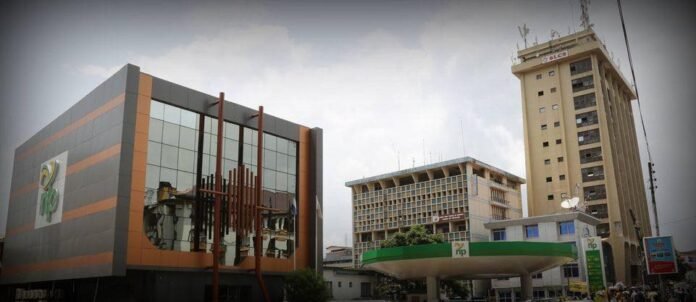
NP (SL) Champions Education and Development with Major School Refurbishments

By Amin Kef (Ranger)

NP Sierra Leone Limited, widely known as NP (SL), has steadily grown into a household name in the country’s petroleum sector. From modest beginnings decades ago, the company has evolved into one of the most trusted indigenous enterprises in Sierra Leone, combining innovation, resilience and a deep commitment to community development. Today, NP (SL) is not only the leading petroleum marketer in the nation but also a strong regional player with operations in Guinea, Liberia, Ivory Coast and The Gambia.

The company’s rise has been built on its ability to adapt to changing market conditions without losing sight of its mission to provide reliable and safe energy services. Unlike many foreign-owned competitors, NP (SL) has consistently invested in innovations that respond to local realities. One of its landmark achievements is the introduction of the Energy Pass Card, a cashless system that allows motorists to purchase fuel conveniently with instant transaction records. This initiative has transformed customer service and promoted financial discipline among users. Similarly, the company’s NP Gas product has become a popular household solution, providing a cleaner, safer and more environmentally friendly alternative to charcoal and firewood.

Operating in an industry prone to risks, NP (SL) has made safety a cornerstone of its operations. Its facilities meet and often exceed national standards, while the company has extended its support to institutions such as the Sierra Leone National Fire Force through the provision of boreholes and standby generators. Those efforts reflect its broader commitment to safeguarding communities.

At the heart of NP (SL)’s growth is its dedication to empowering Sierra Leoneans. The company employs citizens across all levels of management and operations, providing skills development and career opportunities. Its procurement policies prioritize local suppliers, while Filling Station attendants are trained to serve customers with professionalism and courtesy; values that have become the company’s hallmark.

Beyond business, NP (SL) has built a strong legacy of Corporate Social Responsibility. Over the years, it has invested significantly in education, healthcare and sports. Notable contributions include the establishment of a burns unit at Connaught Hospital, sponsorship of school sporting competitions and infrastructural support to educational institutions. A particularly celebrated project was the refurbishment of the Kingtom Police Primary School in Freetown, where the company constructed a modern classroom block, installed a water tower and provided desks and chairs.

Most recently, on 5th September 2025, NP (SL) handed over newly refurbished facilities to the Government Independence Memorial Secondary School in Kissy, Freetown. The project included a solar-powered borehole for sustainable water supply, improved classrooms, refurbished administrative offices, modern sanitation facilities with provisions for children with disabilities and the donation of 200 desks and chairs. School authorities described the intervention as transformative, with Principal Madam Fatoma expressing heartfelt gratitude for an initiative that restored dignity and comfort to both teachers and pupils. A representative from the Ministry of Basic and Senior Secondary Education commended NP (SL) for setting a benchmark in private sector support to education.

In his keynote address, Chief Executive Officer Dr. Mohamed S. Kanu reaffirmed NP (SL)’s commitment to education and national progress. He emphasized that the project was part of the company’s broader Corporate Social Responsibility strategy aimed at creating a safe and conducive learning environment for Sierra Leonean children. “This handover is not an end but a step forward in our mission to enhance education in Sierra Leone,” Dr. Mohamed S. Kanu remarked, urging pupils to work hard and seize the opportunities provided.

The ceremony ended with widespread praise from Government representatives, school authorities and community members who lauded NP (SL) for demonstrating how corporate institutions can meaningfully contribute to national development.

NP (SL)’s story is ultimately about more than fuel. It is about resilience in a challenging industry, creating jobs for citizens, modernizing energy use and building a corporate culture that places people first. Its steady expansion across the sub-region is proof that indigenous companies, when guided by vision and discipline can compete to international standards.

Sierra Leone’s journey toward sustainable growth is being reinforced by NP (SL), which stands tall as a symbol of national pride, a trusted brand and a shining example of how local ingenuity can power both the present and the future.

Stats SL Commences Nationwide Training for 2026 Population and Housing Census

By Alvin Lansana Kargbo

Statistics Sierra Leone (Stats SL) has officially commenced its Regional Cartographic Mapping Training for Trainers, marking a major step in preparations for the 2026 Population and Housing Census.

The week-long program, which began on Monday, 8th September 2025, is taking place simultaneously in the five regional headquarter towns: Bo, Kenema, Makeni, Port Loko and Freetown (Western Area).

Speaking in an interview at the Western Area Training at Hotel 5-10 in Freetown, Statistician General and Chief Census Officer, Andrew Bob Johnny, explained that the exercise is designed as a Training of Trainers programme. The participants will later train district-level staff who will conduct the cartographic mapping, the first and most critical phase of the census. The mapping process is expected to last about seven months, following a 10-day training for district staff before they are deployed to the field.

He stressed that credible data collection is vital for national development, beginning with trainers and field teams understanding their roles and upholding strict ethical standards. The Statistician General and Chief Census Officer urged field staff to remain transparent, fair and respectful when engaging citizens as the data collected will be crucial for effective planning and policymaking.

He highlighted the importance of census data across multiple sectors, including health, agriculture and education. The mapping exercise, he said, will capture geo-coordinates of schools, health facilities and other community resources, while also gathering related indicators such as school enrollments, infrastructure availability and agricultural activities. That information will guide Government and development partners in allocating resources where they are most needed.

Looking ahead, he said the mapping outputs will produce enumeration area maps, which will help ensure comprehensive coverage by guiding enumerators to specific locations. Once data is collected, detailed reports will be shared with Government, NGOs and development partners to support decision-making.

He also noted that Stats SL has fully transitioned to digital data collection moving away from paper-based processes. With support from Government and partners, the institution has invested in servers, applications such as ESRI and geo apps and Android tablets to modernize statistical operations.

He concluded by appealing to citizens to cooperate with field staff, expected to be deployed from September to October, to ensure a successful census.

Also speaking, Abdulai Salia Brima, Director of Census System, Geographic Information System Statistics and National Census Coordinator, described the training as a crucial pre-census activity. He explained that the program is aimed at dividing the country into manageable enumeration areas to ease logistics planning and determine enumerators’ workloads.

Abdulai Salia Brima revealed that around 218 trainees are participating nationwide including about 44 master trainers in the Western Area. He noted that the program spans 17 days, with the first seven days dedicated to intensive modules covering cartographic techniques, technology use, monitoring and evaluation and data quality management.

He added that selection for the training was competitive, with daily assessments to ensure only the best candidates progress to district-level training. The  Director of Census System stressed the importance of discipline and punctuality, particularly given the challenges posed by the rainy season.

He assured the public that Government has invested heavily in the process and Stats SL is determined to deliver a credible census that will stand as a foundation for Sierra Leone’s development planning.

The commencement of the Regional Cartographic Mapping Training marks a decisive step in Sierra Leone’s journey toward the 2026 Population and Housing Census. By equipping trainers with the necessary skills and tools, Statistics Sierra Leone is laying the foundation for credible, transparent and technology-driven data collection.

SLCAA DG Nominated Vice-Chairperson of ICAO Administrative Commission

Ms. Musayeroh Barrie

By Amin Kef (Ranger)

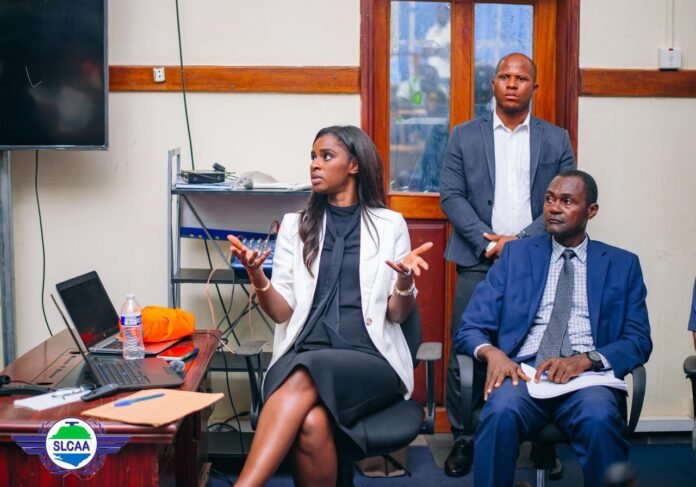
The Sierra Leone Civil Aviation Authority (SLCAA) has proudly announced that its Director General, Ms. Musayeroh Barrie, has been nominated by Sierra Leone to serve as Vice-Chairperson of the Administrative Commission at the 42nd General Assembly of the International Civil Aviation Organization (ICAO).

The nomination of Ms. Musayeroh Barrie is historic. It marks the first time in Sierra Leone’s aviation history that the country has put forward a candidate for such a high-profile leadership position within ICAO, the United Nations’ specialized agency responsible for global civil aviation. For Sierra Leone, this nomination is not merely a personal milestone for Ms. Musayeroh Barrie but a collective national achievement that highlights the country’s growing credibility in international aviation governance.

Sierra Leone’s aviation sector has long faced challenges, from limited infrastructure to outdated regulatory systems. For decades, these constraints placed the country on the margins of global recognition. The establishment of the SLCAA sought to address those challenges, though the Authority itself had to contend with limited resources, training gaps and insufficient funding. Over recent years, however, reforms under the leadership of Ms. Musayeroh Barrie have transformed Sierra Leone’s aviation profile, laying the foundation for this nomination.

The nomination of Ms. Musayeroh Barrie by Sierra Leone reflects international acknowledgment of this progress. Aviation experts have described her nomination as proof that Sierra Leone is no longer lagging behind but is now prepared to help shape global aviation policies and administrative frameworks. The Vice-Chairperson role in ICAO’s Administrative Commission is a strategic position with direct influence over financial and governance matters and Sierra Leone’s decision to nominate Ms. Musayeroh Barrie represents a clear signal of the nation’s determination to contribute meaningfully to the international aviation agenda.

Responding to her nomination, Ms. Musayeroh Barrie said the recognition was both humbling and inspiring.
“This nomination is not just a personal honour but a victory for our nation. It proves that with dedication, transparency and commitment to international standards, Sierra Leone can lead on the global stage. I am humbled by this opportunity and ready to represent Sierra Leone with diligence, integrity and excellence,” Ms. Musayeroh Barrie stated.

Since assuming her role as Director General of the SLCAA, Ms. Musayeroh Barrie has championed reforms aimed at aligning Sierra Leone’s aviation sector with ICAO standards. She has prioritized safety oversight, regulatory compliance, institutional strengthening and youth training opportunities. Her results-driven approach and commitment to modernization have restored credibility to the Authority, both locally and internationally.

Sierra Leone’s nomination of Ms. Musayeroh Barrie is being hailed as a breakthrough by Government officials, aviation stakeholders and industry observers. They argue that the nomination demonstrates not only recognition of Sierra Leone’s reforms but also the country’s readiness to provide solutions to global aviation challenges. International analysts note that smaller nations like Sierra Leone rarely achieve such visibility in ICAO leadership, making this nomination a source of pride and inspiration for other developing countries.

The benefits of Sierra Leone’s nomination are expected to be significant. As Vice-Chairperson, Ms. Musayeroh Barrie will be in a position to influence policies, strengthen bilateral and multilateral cooperation and expand opportunities for capacity building. Her nomination gives Sierra Leone a louder voice in global aviation while boosting the nation’s prestige and credibility.

For the SLCAA, the nomination validates its ongoing reforms and modernization efforts. It is anticipated that Sierra Leone will leverage this recognition to build new partnerships, expand training programs and attract investment into the aviation sector.

The nomination of Ms. Musayeroh Barrie as Vice-Chairperson of ICAO’s Administrative Commission is a landmark in Sierra Leone’s aviation history. It symbolizes resilience, reform and the determination of a nation to rise above past limitations and claim its place in global decision-making. For Sierra Leoneans, the nomination is a source of immense national pride and a reminder that with perseverance and visionary leadership the country can continue to shape its destiny on the international stage.

RCBank Positions Itself as Regional Financial Player at IATF2025 in Algeria

Rokel Commercial Bank (RCBank) is making waves at the Intra-African Trade Fair (IATF2025) in Algiers, where it is positioning itself as a leading facilitator of cross-border trade, investment and digital financial innovation.

The IATF, Africa’s premier trade and investment marketplace, has drawn more than 35,000 visitors, 2,000 exhibitors and participants from over 130 countries. The platform offers vast opportunities for businesses and financial institutions to strengthen ties and expand their reach across the continent.

RCBank’s delegation has been actively engaging in high-level discussions with key partners, including Afrexim Bank and Oakwood Green Africa. The talks focused on strengthening collaborations across diverse business lines while exploring opportunities through the Africa Trade Gateway (ATG) platform, a hub designed to connect African markets.

Speaking at the Bank’s exhibition booth, RCBank’s Deputy Managing Director stressed the institution’s ambition to extend its influence beyond Sierra Leone, aiming to establish itself as a credible regional financial player that can support intra-African trade and investment flows.

The Bank’s team also held engagements with Sierra Leone’s Minister of Trade and Industry and the country’s Ambassador to Algeria, underscoring the alignment of its efforts with Sierra Leone’s broader national trade and investment agenda.

In a significant development, Afrexim Bank has invited RCBank to participate in its forthcoming Trade Finance Seminars in Nigeria. This opportunity is expected to enhance the Bank’s expertise and strengthen its partnerships in the vital area of trade financing.

Through its active participation in IATF2025, RCBank is showcasing its readiness to play a transformative role in Africa’s financial integration. By leveraging its innovative digital banking solutions, SME-focused services and strong institutional partnerships, the Bank is demonstrating its commitment to empowering entrepreneurs, supporting small and medium-sized enterprises and connecting large-scale businesses with new opportunities across the continent.

Kids Advocacy Network Seals Partnership with UADF Ahead of NaGEF 2025

By Ibrahim Sesay 

Kids Advocacy Network (KAN) has announced preparations for the upcoming National Girls Empowerment Forum (NaGEF) while also sealing a new partnership with the Universal Access Development Fund (UADF) at a Press Conference held on 9th September 2025 at the AYV Media Empire.

Edmond Fornah, Executive Director of Kids Advocacy Network, explained that the Forum has become a flagship platform that brings together girls from across Sierra Leone to interact with inspirational women leaders who mentor and motivate them. He stated that the 2025 edition, which is the 10th edition of the Forum, will take place from October 10 to 14 to coincide with the International Day of the Girl Child. This year’s discussions will focus on digitalization and girls’ empowerment.

He further highlighted that the Forum will host influential figures such as former Vice President of Liberia, Jewel Taylor, the First Lady of Sierra Leone and the youngest Youth Minister in the world from Botswana. Edmond Fornah also disclosed that sessions will cover leadership, self-confidence, health and technology, with strong support from the United Nations Population Fund (UNFPA).

Speaking on the new partnership, the Executive Director revealed that the Universal Access Development Fund has pledged to provide mobile phones for girls in deprived communities and to offer financial support to ensure the success of the Forum.

Abu Bakarr Sesay, who signed the Memorandum of Understanding on behalf of the Universal Access Development Fund, said the agreement is part of their mandate to expand access to information and communication technology in Sierra Leone. He stressed that the organization is working to close the digital divide by providing ICT services, building community digital centers and expanding mobile connectivity, adding that collaboration with Kids Advocacy Network will enhance efforts to empower women and girls through technology.

Also addressing the event, Dr. Ezekiel Duramany Lakkoh, Board Chairman of Kids Advocacy Network, welcomed the partnership and noted that combining women’s empowerment with technological advancement is crucial in today’s world. He emphasized that the initiative will help bring girls closer to technology and reaffirmed the Board’s commitment to supporting the vision of the organization.

Edmond Fornah further highlighted that in addition to the National Girls Empowerment Forum, Kids Advocacy Network will host the Africa Young Leaders Summit in collaboration with the Commonwealth Youth Council from November 24 to 28 at the Bintumani Conference Centre. The summit will bring together young leaders from across Africa for dialogue and engagement.

The Press Conference concluded with the official signing of the Memorandum of Understanding between Kids Advocacy Network and the Universal Access Development Fund, followed by a photo session that sealed the historic partnership.

AWOL Global Leader Crowns Mohamed Majid Kamara as New Chairman of AWOL-USA

The Global Leader and Godfather of All Works of Life (AWOL), Ambassador Anthony Navo Jr., has officially decorated and crowned the newly elected Chairman of AWOL United States of America (AWOL-USA), Mohamed Majid Kamara. The ceremony took place during the 10th AWOL America Achievement Awards and Appreciation event on September 6, 2025, at the Waterford Event Center in Springfield, Virginia.

In his keynote address, Ambassador Anthony Navo Jr. congratulated Mohamed Majid Kamara, describing his appointment as a step forward in strengthening AWOL’s mission of societal development. He highlighted that the organization continues to make a difference in the lives of Sierra Leoneans through initiatives in healthcare, education, sustainable development and poverty alleviation.

The Global Leader and Godfather also extended appreciation to the outgoing Chairman, Mohamed Killo Banya, for his outstanding service in elevating AWOL-USA to greater heights.

Ambassador Anthony Navo Jr. underscored AWOL’s global presence, with headquarters in Sierra Leone and active branches in the United Kingdom, Australia, The Gambia and the United States of America. He stressed that AWOL remains apolitical, working to complement successive Governments in their nation-building efforts. As part of its impact, AWOL Global has undertaken major projects, including the construction of a modern primary school in Sierra Leone.

The event, which brought together distinguished guests from across the diaspora, also showcased AWOL’s tradition of celebrating excellence and inspiring unity among Sierra Leoneans. The annual awards honor individuals and communities who have excelled in areas such as philanthropy, business and the arts. Prestigious categories include the Moseray Fadika Humanitarian Award, Sierra Leone Thriving Local Business of the Year and Sierra Leonean Actor/Actress of the Year.

This year’s ceremony served as a platform to not only recognize hard work but also to share stories of perseverance and collective achievement. It reinforced AWOL’s commitment to unity, excellence and service while inspiring Sierra Leoneans at home and abroad to continue contributing meaningfully to national development.

Is India a ‘Tariff King’? Not Really | Opinion

By Mohan Kuma, Former Indian Ambassador and Director General of Jadeja Motwani Institute for American Studies

There is a widespread but fallacious perception that India’s tariffs are inordinately high. There are subjective factors when it comes to a country like livability, public courtesy or even how foreigners are welcomed. But tariffs are quantifiable and there should really be no place for subjectivity. So, let us consider the facts in the case.

Before we do that, however, it might be useful for the average reader to know as to what function tariffs perform in a low-income developing country like India, as opposed to say, a high-income developed country like the United States of America. Traditionally, low-income developing countries use tariffs for two reasons: one, to protect their domestic industry and two, to gain revenue from it. Protection of domestic industry is an accepted argument by economists all over the world, especially if the industry is an infant one and the country needs to develop an industrial base. Then, there is the revenue gaining function, which is illustrative of a country’s duties on alcohol or luxury motorcycles, for instance.

India’s tariffs, which were high in the 1980s, were brought down significantly since the 1991 reforms were initiated and during the negotiations related to the Uruguay Round, which led to the establishment of the World Trade Organization (WTO). Since then, the secular trend in India has been one of gradual reduction of the applicable tariffs year after year.

From a technical point of view, there are two kinds of tariffs that countries have. One is applied tariffs, which as the name indicates is the actual tariff (normally ad valorem) imposed at the border when a foreign good enters a country.

The other one is bound tariffs, which is the maximum tariff that a country can impose on a foreign good from a legal obligation arising from its most-favored-nation (MFN) commitments to the WTO.

It goes without saying that the tariff war initiated by the U.S. is in violation of its commitments under the WTO agreements. But then, the WTO itself has been moribund for a while. It is also worth noting that tariffs cannot be the same for all countries. It is a truism that low-income developing countries will have higher tariffs (for reasons mentioned above) compared to G7 countries.

So, where does India figure in all of this? When India is judged on tariffs, there are two parameters which are used. One is simple average tariffs and the other is trade-weighted tariffs. If you use the former metric, India’s tariff does seem high (15.98 percent). But this is in many ways academic because for most of the goods that come into the Indian market, it is the trade-weighted applied tariff that matters. And the trade-weighted tariff that India maintains is a very respectable 4.6 percent. This level of tariff gives the lie to claims that India is somehow a tariff king. Simple averages distort the picture since they treat all products alike regardless of the trade volumes. So, why is there such a big difference between India’s simple average tariff and its trade-weighted tariff?

India does maintain relatively high tariffs in agriculture and automobiles. In both these cases, the main purpose of the tariffs is to protect domestic industry. Agriculture in India is sui generis and like no other major country in the world. Around 50 percent of India’s mammoth population directly or indirectly depends on agriculture. Besides, agriculture in India is not mechanized and land holdings are so small that farming is about survival and not about commerce. Asking India to open its farm sector to imports is akin to asking it to commit suicide, which no elected Government in India would agree to. This demand is especially egregious since Western farmers are beneficiaries of direct and indirect subsidies.

Given all of this, India does maintain relatively high tariffs for agriculture products, average rates of around 33 percent on meat, dairy, fruits and cereals. But this is not surprising if you consider the fact that the European Union‘s average rate is 37.5 percent on dairy products going up to 205 percent and up to 261 percent on fruits and vegetables. Compare this with Japan whose rate is 61.3 percent on dairy products, going up to 298 percent and up to 258 percent on cereals and 160 percent on meat and vegetables. Or South Korea, whose average is 54 percent on agricultural goods with 800 percent on vegetables and 300 percent on fruits. Who is the tariff king in agriculture, you might ask? As for automobiles, this sector creates mass employment and is crucial for that reason.

Even India’s simple average tariff levels at 15.98 percent is in line with global norms for developing economies. Bangladesh (14.1 percent), Argentina (13.4 percent) and Türkiye (16.2 percent), which are all countries with comparable or higher GDP per capita, maintain similar or higher tariffs.

On the U.S. saying their exports of non-agricultural products face tariff barriers in India, it is worth noting that U.S. exporters often face equal or lower tariffs in India compared to many Asian peers. In electronics and technology for instance, India has 0 percent tariff on most IT hardware, semiconductors, computers and associated parts, with average tariffs of 10.9 percent on electronics and 8.3 percent on computing machinery.

In comparison, Vietnam has a tariff of 8.5 percent on electronic equipment, going up to 35 percent. China has a tariff rate of 5.4 percent going up to 20 percent on electronics and up to 25 percent on computing machinery. And Indonesia has a tariff rate of 6.3 percent on electronic equipment, going up to 20 percent, and up to 30 percent on computing machinery.

It is true that India maintains justifiable tariff protection for its agricultural, dairy and auto markets for valid reasons. But its trade-weighted applied tariff in other sectors does not justify it being called a “tariff king” at all.

Dr. Mohan Kumar is a former Indian ambassador and is Director General of the newly established Jadeja Motwani Institute for American Studies at the OP Jindal Global University.

 The views expressed in this article are the writer’s own.

Njala University Launches Online MBA Program: A Leap Towards Digital Education and Regional Impact

Online Master of Business Administration (MBA) program

Press Release

Njala, Sierra Leone – September 8, 2025

Njala University is pleased to announce the successful launch of its Online Master of Business Administration (MBA) program, which officially started in June 2025. This program has been developed in partnership with eLearnLXD and reflects Njala University’s commitment to enhancing access to high-quality education. It is designed to contribute to the socio-economic development of Sierra Leone and the surrounding region.

Digital Education for Empowerment and Practical Impact

In his address at the recent Academic Leadership Summit, Professor Bashiru Koroma highlighted the importance of leveraging digital education to close access gaps and equip learners with essential skills for today’s dynamic economy. The Online MBA program at Njala University reflects this vision by offering a flexible curriculum designed to tackle the challenges of modern business through courses in finance, strategic management, and entrepreneurship. Each module focuses on real-world applications, preparing graduates to drive change within their communities and industries.

Utilizing a state-of-the-art online learning platform, the program provides a seamless and engaging educational experience incorporating video lectures, interactive discussions, and real-time assessments. This approach enables students to achieve academic excellence while balancing their professional and personal commitments.

A Strategic Partnership with eLearnLXD

The partnership between Njala University and eLearnLXD represents a significant advancement in the provision of scalable and relevant education that aligns with local needs. By leveraging eLearnLXD’s digital learning design and content engagement expertise, this program offers personalized learning paths, culturally relevant materials, and enhanced multimedia tools that facilitate deep learning experiences.

Professor Bashiru Koroma, Vice-Chancellor of Njala University, stated: “Collaborating with eLearnLXD enables us to provide Sierra Leonean professionals with an MBA program that is both accessible and tailored to the region’s economic priorities. This initiative reflects our commitment to ensuring that higher education remains adaptable and meaningful.”

Enrollment Now Open

With the program already underway since June 2025, enrollment is now open for new applicants. The Online MBA program offers a flexible and progressive academic experience, making it an excellent choice for professionals seeking to advance their careers without leaving their jobs.

If you wish to apply please send your email to Mrs. Sophie @ sophiea@elearnafricalms.com

Learn more: https://app.njala.edu.sl/online-mba

About Njala University

Njala University
Njala University

Njala University (or simply Njala, as it is fondly called) has had a rich history since its establishment in 1964 as a university college based on the model of the American Land Grant University. Since then, it has developed into one of the leading universities in the country, preparing undergraduate and postgraduate students for careers in a wide variety of specializations including Education, Agricultural Sciences, Environmental and Community Health Sciences, Social Sciences and Law, Natural Resources Management, and Information Technology, among others. Njala University is a multi-disciplinary University with three campuses – the Njala campus in the Moyamba District, the Bo campus in the Bo District, and the newly established Bonthe campus in the Bonthe District. It also operates a location in Freetown.

About eLearnLXD

eLearnLXD
eLearnLXD

eLearnLXD, an eLearnAfricaLMS company, specializes in crafting dynamic online learning experiences through innovative instructional design solutions. In 2016, eLearnAfrica entered a partnership agreement with the Association of African Universities (AAU); one that would expand online learning opportunities for students enrolled in the AAU’s over 400 member institutions and other universities not yet under the umbrella of the prestigious AAU. The target was to make educational opportunities available to about 10 million African students. In pursuing this agenda, the AAU-eLearnAfricaLMS was launched by the two partners at the 15th Quadrennial General Conference of African University Leaders, on 7th July 2021.

Media Contact

ibrahim.munu@njala.edu.sl

sophiea@elearnafricalms.com


Program Highlights

  • 100% Online Master of Business Administration (MBA)
  • Flexible learning model designed for working professionals
  • Focus areas: Finance, Strategic Management, Entrepreneurship, Innovation
  • Delivered on a state-of-the-art platform with video lectures, interactive discussions, and real-time assessments
  • Accessible globally, with local relevance for Sierra Leone and Africa

Why the Njala Online MBA?

  • Stay Employed, Study Anywhere: professionals can pursue an MBA without quitting their jobs
  • Career Growth: graduates gain leadership skills for senior roles in business, government, and NGOs
  • Entrepreneurship:equips innovators with tools to launch and scale ventures
  • Global & Local Balance: international business perspectives aligned with Sierra Leone’s priorities
  • Networking: connect with peers, faculty, and industry leaders across Africa and the diaspora

Student Outcomes

  • Leadership readiness for executive positions
  • Entrepreneurial mindset and practical business skills
  • Enhanced career mobility and earning potential
  • Immediate workplace application of MBA learnings

Enrollment

Open Now – new students can apply immediately

Flexible start for professionals in Sierra Leone and the diaspora

Apply here: (link )

Learn more: (links)

Media Contact

ibrahim.munu@njala.edu.sl

fbakarr@njala.edu.sl

tsongu@njala.edu.sl

admin@eleafrica.com


QNET Launches Harmoniq Brand with Vivid & Soothe: Bio-Signaling Patches for Focus and Pain Relief — Anytime, Anywhere, Without Pills

A new line of wearable wellness patches

FOR IMMEDIATE RELEASE

QNET, a global lifestyle and wellness company, has launched Harmoniq, a new line of wearable wellness patches that use gentle signals to “remind” the body how to function at its best. This bio-signaling technology works by tapping into the body’s natural communication system, helping restore balance without the need for drugs or invasive methods. The debut products — Harmoniq Vivid, which supports sharper focus, and Harmoniq Soothe, which provides lasting pain relief — are designed for people on the move who want safe, convenient solutions.

Why does this matter? In today’s fast-paced, hyperconnected world, people are not only struggling to stay mentally sharp amid digital distractions, fatigue, and stress, but also dealing with the physical toll of chronic pain, which affects nearly one in three adults worldwide. The global wellness economy, now valued at US$5.6 trillion is expanding rapidly as consumers look for safe, natural solutions that support both mind and body.  Harmoniq meets these needs with easy-to-use, wearable patches that work in harmony with the body to deliver focus and relief — anytime, anywhere.

Beyond personal wellness, Harmoniq also reflects QNET’s commitment to responsible innovation. The patches are packaged in recyclable FSC® paper instead of plastic, cutting waste and reducing carbon emissions through lighter, more efficient logistics. Partnering with sustainable manufacturers also helps lower water and energy use in production.

Trevor Kuna, Chief Marketing Officer of QNET, explained:

“Harmoniq represents the future of wellness. It brings together science and nature to help people think clearer, feel better, and perform at their best — all without relying on drugs or invasive methods. And we’ve designed it with sustainability in mind, from recyclable packaging to eco-conscious production practices, so our innovation supports not just healthier lives but also a healthier planet.”

What does Harmoniq Vivid do?
Harmoniq Vivid is designed to help you stay sharp and focused throughout the day. It works by carrying the natural energy “blueprints” of well-known ingredients like ginseng, ginkgo, omega-3, and ashwagandha. These key ingredients are commonly linked with clearer thinking, better memory, and reduced stress. Instead of consuming them, the patch delivers their signals directly to your body, giving you a safe, natural way to stay alert and attentive.

What about Harmoniq Soothe? This patch provides targeted, long-lasting relief using the frequencies of natural anti-inflammatories like Turmeric and Ginger, known for easing discomfort and supporting mobility. It delivers up to 48 hours of consistent relief without chemicals or gastric irritation. Unlike prescription painkillers, Harmoniq Soothe avoids risks such as dependency, drowsiness, or stomach upset — a safe alternative at a time when 60 million people worldwide misuse opioids annually.

Both Vivid and Soothe are water-resistant, discreet, and comfortable, safe for ages 6 and above, and informed by ongoing bio-signaling research. Recent advances such as protein-based patches that modulate cell signaling and bioelectrical studies in cellular systems highlight the promise of this science.

Harmoniq Vivid and Harmoniq Soothe are now available worldwide through QNET. To learn more, visit www.qnet.net.

####

Harmoniq Brand with Vivid & Soothe

ABOUT QNET

QNET, a global lifestyle and wellness company, uses a direct selling business model to promote unique products that enable people to take charge of their health, well-being, and lifestyle. Since 1998, QNET’s innovative products and e-commerce-driven business model have helped build a global community of satisfied customers and microentrepreneurs, who are driven by the mission of RYTHM – Raise Yourself To Help Mankind. Popular product brands offered by QNET include the Bernhard H. Mayer range of luxury watches and jewelry, HomePure range of home care products, the Amezcua wellness range, Physio Radiance personal care range, and QVI branded holiday packages.

QNET proudly exemplifies high industry standards and is a member of numerous Direct Selling Associations worldwide. Its active engagement in several global sports sponsorships including in its role as the official direct selling partner of the Manchester City Football Club (MCFC) and the Confederation of African Football (CAF), highlights the company’s commitment to excellence.

Discover a world of new possibilities with QNET by visiting www.qnet.net