Home Blog Page 172

Hajj Fawaz Sets the Record Straight on False Social Media Claims Over Land Dispute

By Amin Kef Ranger

Hajj Fawaz, owner of Fawaz Building Material (FBM) and a well-known philanthropist, has set the record straight over a disputed land matter in the East End of Freetown, dismissing allegations made against him on social media as baseless, misleading, and unfair to his years of investment in Sierra Leone. He clarified that the land in question is Government-owned and stressed that he has not encroached on any school property as was falsely claimed. Hajj Fawaz explained that the original parcel measures about 4.5 to 5 acres, but after a 19-meter setback from the school field and an additional 19 by 80 meters reserved for children’s activities, the remaining space amounts to about 2.9 acres.

Out of an abundance of caution and to prevent further misunderstandings, he said he has halted all building and construction activities on the land until the matter is fully resolved.

He also highlighted the “cultural village” project at Six Mile, which he executed after winning a competitive bid. That project features 42 self-contained houses, community halls, recreational facilities and other amenities, with a total investment estimated at over $3.3 million. He further noted his support to vulnerable groups, including catering for the cripple and emphasized that his philanthropic vision continues to be anchored in faith and community service rather than personal gain.

Addressing misinformation about the mosque, Hajj Fawaz categorically refuted claims that it had been destroyed. On the contrary, he explained that the mosque is intact and has benefitted from major upgrades he personally financed. These improvements, he said, include replacing roofing sheets, installing aluminum windows, construction of a mortuary, laying tiles and upgrading toilets.

He placed the estimated cost of the projects he is undertaking at about $80,000, stressing that the expenditure was made out of devotion to his faith and commitment to the community. Importantly, he assured that his pledge to complete the mosque stands firm, regardless of whether or not he retains the disputed land. “This mosque is a project of faith and service and I remain committed to finishing it for the benefit of worshippers and the community,” he affirmed.

Looking at the bigger picture, Hajj Fawaz reminded the public that his record speaks volumes. From constructing homes and halls, to providing a mortuary, to funding ferry facilities that serve thousands, his projects have consistently reflected a desire to ease suffering and improve living standards. He made it clear that even in the face of unfounded accusations, his focus remains on service and peace. He also indicated openness to any solution that authorities may propose, including the possibility of receiving an alternative parcel of land to avoid further dispute.

In his closing remarks, he appealed to the public to rise above misinformation and view the matter through the lens of facts and truth. “I do not seek conflict. I have invested personal resources, time and energy to uplift people’s lives. All I ask is for the truth to be told so that my intentions and contributions can be properly understood,” he stated.

By halting construction, maintaining transparency and continuing to fund life-changing projects, Hajj Fawaz has shown that his mission is rooted in compassion, service and faith. He remains determined to build a legacy of generosity and development, reminding Sierra Leoneans that his work has always been about strengthening communities and promoting peace.

Hawawa Model Management Unveils Sierra Leone’s Representative for Miss Teen Africa 2025

By Alvin Lansana Kargbo

Hawawa Model Management & Image Consultancy has officially unveiled Sorian Sudatu Sesay as Sierra Leone’s representative to the Miss Teen Africa 2025 pageant, slated to be held in South Africa this December. The unveiling ceremony took place on Saturday 20th September, 2025 at the Agency’s headquarters on Pademba Road in Freetown, where CEO Hawa Turay described the moment as a proud milestone for both her Agency and the country.

The CEO said it was an honour to present Sorian as Sierra Leone’s candidate, describing the 14-year-old as “remarkably bright, disciplined, and gifted, with an exceptional talent in modeling.” She explained that Sorian Sudatu Sesay’s journey reflects years of consistent mentorship, values-based training and personal dedication within the Hawawa Model Management system.

She stressed that beauty pageants like Miss Teen Africa are not merely about physical appearance but serve as platforms for cultural exchange, leadership development and community impact. “We are intentional about aligning beauty with substance. Our contestants are taught to build a personal brand rooted in education, ethics and service. Sorian  Sudatu Sesay embodies those values and is prepared to use her voice to advocate for meaningful causes that matter to young people in Sierra Leone and across Africa,” she stated.

She recalled that Sorian Sudatu Sesay joined the Hawawa family and quickly distinguished herself through punctuality, professionalism and an eagerness to grow. According to the CEO, the young model has embraced training in public speaking, talent development and etiquette, making her the most deserving choice to represent Sierra Leone on the continental stage.

Appealing for national support, the CEO reminded the public that when a young Sierra Leonean stands on an international platform, she carries the pride of the nation. “We call on creatives, parents and well-wishers to rally behind Sorian Sudatu Sesay so Sierra Leone’s story can be told positively and clearly,” she urged.

Speaking also at the event, the Sierra Leone representative, Sorian Sudatu Sesay, currently a SSS2 student at the International School in Freetown, said she feels honoured to represent her country. “This is not just a personal milestone but a chance to showcase the green, white and blue. I want to inspire other young girls to dream boldly and believe in themselves,” she said.

Balancing academics with preparation, Sorian Sudatu Sesay explained that she often completes homework before late-night rehearsals, practices her walk after study sessions and spends weekends refining her public speaking. She added that her family, mentors and faith keep her grounded, while the guidance of Hawawa Model Management ensures that every step of her journey is structured and purposeful.

Miss Teen Africa is known for promoting cultural identity, education and advocacy among teenagers across Africa. For Sierra Leone, Sorian Sudatu Sesay’s participation, under the leadership of Hawa Turay and the Hawawa Model Management team, represents an opportunity not only to shine on the continental stage but also to inspire the next generation of young Sierra Leonean girls.

With the December pageant drawing near, Hawawa Turay affirmed her confidence: “Our roadmap is clear. The goal is not only to compete but to exemplify excellence. With Sorian, Sierra Leone will be well represented.”

Africa CDC Rallies Support for Swift Passage of Sierra Leone’s Mental Health Bill

By Kemo Cham

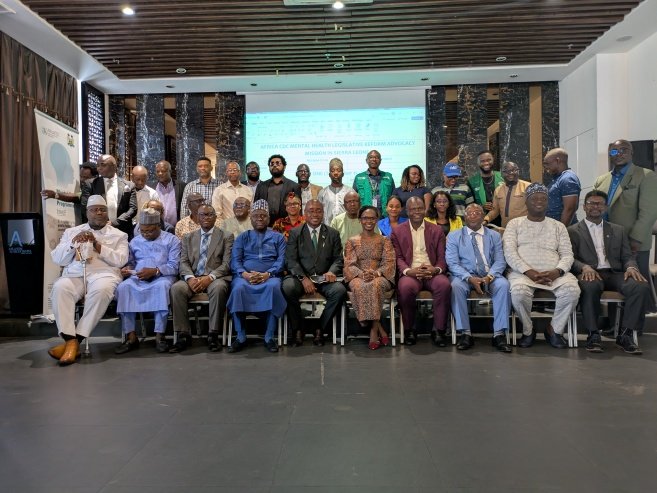
The Africa Centres for Disease Control and Prevention (Africa CDC) has intensified advocacy efforts in Sierra Leone with a high-level stakeholders’ meeting on Monday, September 15, 2025 in Freetown, calling for urgent action to pass the long-delayed Mental Health Bill. The initiative is designed to replace the country’s colonial-era Lunacy Act of 1902 with a modern legal framework aligned with international human rights standards and best practices in mental health care.

Sierra Leone’s draft Mental Health Bill has been under development since 2011, spearheaded by the Ministry of Health (MoH) with support from the Mental Health Coalition of Sierra Leone and other advocacy groups. For more than 15 years, campaigners and policymakers have debated the legislation, but progress has been slow. The bill now sits before Parliament, awaiting deliberation.

Experts and stakeholders argue that passing the bill is critical to transforming mental health services in Sierra Leone, a country where stigma, cultural beliefs and outdated laws continue to limit access to care. The Lunacy Act, inherited from the British colonial administration, uses derogatory language and provisions that allow the confinement of patients in asylums without proper safeguards.

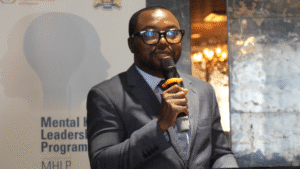
“This law is over a century old and no longer fit for purpose,” said Joshua Abioseh Duncan, Country Director of the Mental Health Coalition of Sierra Leone. “We cannot continue to treat our citizens under a law that denies their dignity and human rights. This engagement is an opportunity to finally move forward.”

The stakeholders’ meeting was convened as part of a three-day mission by the African Union’s High-Level Committee on Mental Health. The delegation was led by Dr. Mohammed Abdulaziz, Head of the Division of Disease Control and Prevention at Africa CDC, who underscored the importance of legal reform as a foundation for building resilient health systems across the continent.

Dr. Mohammed Abdulaziz told participants that modernizing mental health laws is central to achieving the African Union’s Agenda 2063, the continental development blueprint.

“It is the hope of the Africa CDC that all outdated laws in the space of mental health are updated,” he said. “African Union Agenda 2063 cannot be attained without modern laws. Mental health must receive the same attention as other public health issues if we are to reduce the burden of disease and disability on the continent.”

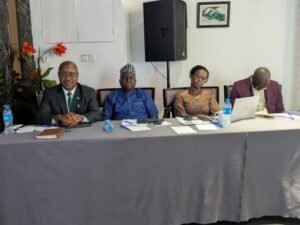
The engagement in Freetown took place at the Atlantic Lumley Hotel in Aberdeen and brought together officials from the Ministry of Health, Members of Parliament, advocacy groups, international experts and representatives from neighboring countries such as The Gambia, who were invited to observe and learn from the reform process.

One of the highlights of the meeting was the sharing of experiences from other African countries that have enacted modern mental health legislation. Nigeria, Kenya and Zimbabwe were represented by lawmakers and mental health experts who have played key roles in their national reform processes.

Professor Taiwo Lateef Sheikh, a Nigerian psychiatrist and member of the Africa CDC Advisory Board on Non-Communicable Diseases, warned of the dangers of retaining outdated legislation.

“Many of these colonial laws were already outdated when they were transplanted into Africa,” he explained. “They use degrading terms like ‘lunacy’ and make it legal for patients to be locked away and forgotten. This has fueled decades of neglect and underfunding for mental health services.”

Prof. Taiwo Lateef Sheikh noted that while mental health accounts for around 5% of the disease burden in Africa, it is responsible for 19% of disabilities, making it one of the most pressing but overlooked health challenges. Yet, in most countries, 95% of people needing mental health services do not receive them.

“There is no vaccine for mental health, so nobody is immune,” he cautioned.

Lawmakers from Kenya and Zimbabwe shared stories of overcoming political resistance, stigma and legislative bottlenecks to secure the passage of their mental health bills. These case studies, according to Sierra Leonean campaigners, provide valuable lessons for navigating similar obstacles at home.

Recognizing the pivotal role of Parliament, the Africa CDC ensured that Sierra Leonean lawmakers were at the heart of the discussions. The meeting was attended by Hon. Abdul Kargbo, Minority Leader, and Hon. Kekura Vandi, representing the majority leadership and Parliamentary Committee on Energy. Both pledged their commitment to ensuring the bill’s swift passage and securing greater budget allocations for mental health services.

 Hon Abdul Kargbo stressed that failure to reform Sierra Leone’s mental health laws could have dangerous consequences.

“Without reform, Sierra Leone risks repeating the mistakes of the past, including mental health-related issues that contributed to our civil war,” he said.

Hon. Kekura Vandi added that mental health is an issue that affects every family in Sierra Leone.

“Passing this bill should be straightforward, because every Sierra Leonean is either directly or indirectly affected by mental health challenges,” he said.

The Ministry of Health has been leading the process through its Directorate of Mental Health and Non-Communicable Diseases, headed by Dr. Abdul Jalloh, an African Union Global Health Leadership Fellow. Dr. Abdul Jalloh explained that the new bill will not only modernize Sierra Leone’s legal framework but also bring it into alignment with World Health Organization (WHO) recommendations.

“The draft legislation, when passed, will protect the rights of patients, standardize care in facilities and end degrading treatment,” Dr. Abdul Jalloh said.

He pointed to recent progress at the Sierra Leone Psychiatric Teaching Hospital, the country’s only specialized mental health facility, which has undergone major reforms under his leadership. Once described as a “torture chamber,” the hospital is now transitioning into a facility focused on modern, humane care.

The event was also attended by Deputy Chief Medical Officer for Public Health, Dr. Alie Wurie and Deputy Minister of Health, Dr. Charles Senesie. Dr. Senesie reaffirmed the Government’s commitment to passing the bill and placing mental health at the top of the health agenda.

“We have faced war, Ebola, Covid-19 and now Mpox – all of which left deep mental scars,” he said. “This Government is firmly committed to ensuring that the Mental Health Bill becomes law.”

Beyond legal reform, stakeholders emphasized the importance of combating stigma and changing cultural attitudes. Mental health remains a highly stigmatized issue in Sierra Leone, with patients often hidden from public view or treated with traditional practices rather than medical care.

Campaigners believe that a modern law, backed by political will and adequate resources, will help break this cycle. They argue that updating the legal framework is not just a matter of health policy but also of human rights and social justice.

For many in attendance, the Africa CDC’s involvement marked a turning point. By aligning Sierra Leone’s efforts with the African Union’s broader mental health strategy, campaigners hope the country can finally overcome years of delay.

The next steps include continued engagement with Parliament, public awareness campaigns and sustained technical support from Africa CDC and other international partners.

As Prof. Sheikh reminded participants, the stakes could not be higher:

“Mental health is everyone’s business. If we fail to act, the consequences will be felt in every family, every community and across the nation.”

With momentum building, Sierra Leone has an opportunity to move beyond its colonial past and embrace a modern, rights-based approach to mental health; one that places dignity, access and care at the center of public health policy.

Sunbird Bioenergy Empowers Staff Through Digital Excellence Training

By Augustine Koroma

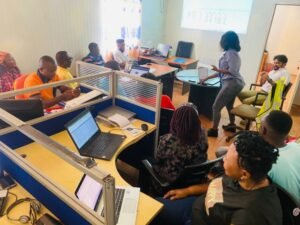
Sunbird Bioenergy Sierra Leone has launched a companywide digital training programme designed to strengthen staff capacity, improve efficiency and align the business with international best practices. The initiative, which focuses on practical Excel skills, is already making a visible impact across multiple departments.

The training sessions, held weekly at the company’s offices, are directed by Human Resources Manager, Ibrahim Jah Sesay and delivered by Budekah Gunathila, Audit Manager and digital solutions specialist from Selenkay. By targeting employees in Finance, Audit, Agriculture, IT and the Weighbridge, the programme is broad in scope, reaching both frontline staff and Managerial teams.

According to Ibrahim Jah Sesay, the initiative is a deliberate move to position Sunbird Bioenergy as a modern, efficient and globally competitive business. He explained that the programme goes far beyond computer literacy.

“Our people remain the most important investment we can make. This is not just about learning Excel. It is about giving our staff the confidence to use technology to solve problems, make accurate decisions and work more efficiently. By empowering our team, we are ensuring the sustainability of Sunbird Bioenergy in the global energy marketplace,” he said.

Budekah Gunathila, who is leading the training sessions, described the programme as a culture-shaping exercise.

“Digital excellence is a discipline. The more we integrate technology into our daily tasks, the more accuracy, efficiency and accountability become part of our work culture. These are qualities that strengthen a company and prepare it for growth,” he noted.

Even though the programme is still in its early stages, staff across different departments say they are already reaping benefits.

From the Agriculture Department, junior executive Ms. Fatmata Kamara said the training has simplified data recording and analysis. She explained that what previously took hours to calculate can now be completed in minutes, with greater accuracy.

In the Finance Department, Ms. Janet B. Young, Acting Finance Manager, highlighted the role of Excel in improving precision.

“In finance, accuracy and time management are critical. The new skills we are acquiring make it easier to process large volumes of financial data with reliability and speed. This helps us deliver better results for the company,” she stated.

In Audit, supervisors have welcomed the training as a turning point in strengthening compliance. Mr. Bala S. Kamara described it as “an eye-opener” that enhances the ability to analyze data effectively and improve reporting standards. His colleague, Eshaka S. Kanu, said the training is transforming audit processes by boosting efficiency and aligning the department with international compliance benchmarks.

Beyond internal efficiency, Sunbird Bioenergy believes its staff development programmes contribute to Sierra Leone’s wider economic and social progress. Mr. Sesay reaffirmed the company’s commitment to supporting government efforts to build a digitally skilled workforce.

“Sunbird Bioenergy is proud to stand as a partner in Sierra Leone’s growth story. By providing our employees with modern skills, we are not only strengthening our operations but also contributing to national goals of digital transformation, job creation and sustainable development,” he remarked.

The programme also signals Sunbird’s readiness to embrace innovation and its recognition that technology plays a decisive role in driving competitiveness in the energy sector.

Observers say the company’s initiative could serve as a model for other large businesses in Sierra Leone, many of which still face challenges in staff training and digital transformation. By investing consistently in capacity building, Sunbird Bioenergy is showing how private companies can combine business growth with national development.

From farms to finance offices, the impact of the digital training is beginning to change how staff approach their work. With each session, employees are not only acquiring new skills but also gaining confidence in applying them to deliver faster, more reliable and more transparent outcomes.

For Sunbird Bioenergy, this represents more than a short-term project. It reflects the company’s long-term vision: building skills, empowering people and driving productivity for both corporate success and national progress.

Agriculture Minister Lauds Bombali’s Role in Sierra Leone’s Food Self-Sufficiency Drive

Dr. Henry Musa Kpaka

By Claudia Redwood-Sawyerr

The Minister of Agriculture and Food Security, Dr. Henry Musa Kpaka, has praised Bombali District for its remarkable contribution to President Julius Maada Bio’s flagship Feed Salone initiative.

Speaking during the Civic Day Series held at the University of Makeni campus on Tuesday, 16th September 2025, Dr. Henry Musa Kpaka underscored the importance of agricultural self-sufficiency to Sierra Leone’s independence.

“When President Bio declared Feed Salone, he wanted to ensure we are food self-sufficient. Without food self-sufficiency we are not independent as a people,” he emphasized.

The Minister highlighted Bombali District’s central role in advancing the initiative. “Makeni hosts the only premier rice milling facility in the country. Bombali has the only commercial hatchery in Sierra Leone and is the second-highest producer of eggs nationwide,” Dr. Henry Musa Kpaka stated.

According to him, the district has cultivated more than 5,000 hectares of rice in the past two years and currently produces at least 5,000 eggs daily, sold at prices lower than in other parts of the country. He attributed those successes to Government-backed policies that encourage both farmers and private sector players to invest in agriculture.

Dr. Henry Musa Kpaka revealed that the Government has introduced a flexible credit line of up to $10 million, accessible to farmers and agri-preneurs at very low interest rates. Farmers in Bombali, he noted, have seized the opportunity, producing enough to sell directly to the World Food Programme for the national school feeding programme.

While acknowledging challenges in the sector, Dr. Henry Musa Kpaka assured farmers and entrepreneurs that the Government would continue to provide additional support to further boost production and strengthen Sierra Leone’s agricultural economy.

Japan Grants $1.3M to Boost School Feeding for 27,000 Children in Pujehun

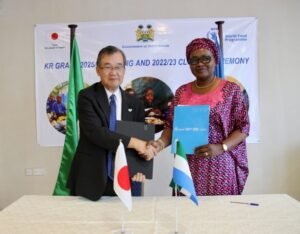
The World Food Programme (WFP) and the Government of Japan have renewed their partnership to support education and food security in Sierra Leone through the signing of the 2025 Kennedy Round (KR) Food Assistance Grant. The agreement, sealed at a ceremony held at Country Lodge Hotel in Freetown, commits JPY 200 million (approximately USD 1.3 million) over two years for a comprehensive school feeding initiative in Pujehun District.

The new programme, “Improving Educational Outcomes and Food Systems Resilience through School Feeding in Pujehun,” is expected to benefit more than 27,000 primary and pre-primary pupils across the district’s most food-insecure communities. The initiative will fund the procurement and delivery of nutritious school meals, prioritizing locally sourced rice and strengthen food system resilience in the region.

Speaking at the event, Aminata Tall, WFP Representative and Country Director, hailed Japan’s continued commitment. She described the grant as “a powerful act of solidarity with Sierra Leone’s children,” emphasizing that school meals are increasingly central to boosting learning outcomes, supporting household incomes and advancing the Government’s Feed Salone strategy.

Japan’s Ambassador to Sierra Leone, H.E. Yoshimoto Hiroshi, reaffirmed his country’s dedication to inclusive education. He noted that the grant reflects Japan’s belief in empowering countries to lead their own development. “This support ensures that children not only have access to education but also receive timely and adequate nutritious meals essential to their growth and retention in school,” he said.

Japan has been a longstanding partner in Sierra Leone’s school feeding sector. In 2024, a similar KR grant reached nearly 28,800 pupils in Pujehun and over the past decade, Japan has contributed more than USD 37 million to WFP’s programmes in the country, making it the single largest donor to Sierra Leone’s school meals portfolio.

Conrad Sackey, Minister of Basic Senior and Secondary Education, welcomed the grant as a crucial step toward ensuring no child in Pujehun has to “choose between hunger and hope.” He added that the initiative aligns directly with the Government’s Big Five Game Changers, particularly its focus on human capital development.

The ceremony also marked the closure of a previous USD 1.61 million project, which provided meals to schoolchildren in Kambia and Pujehun districts during the 2022/23 academic year.

This latest commitment by Japan and WFP signals a renewed effort to strengthen education, improve food systems and safeguard the welfare of Sierra Leone’s most vulnerable children.

Njala University Partners with Key Ministries to Strengthen Maritime Education and Civil-Military Ties

#image_title

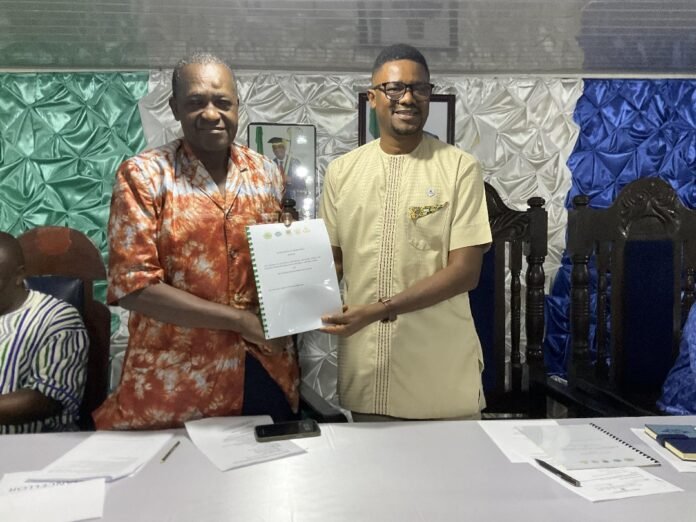
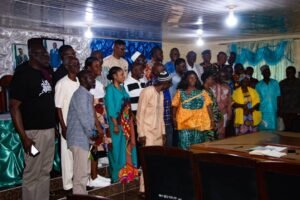
Njala University, on Friday, 19th September 2025, signed a historic Memorandum of Understanding (MoU) with three key ministries, the Ministry of Technical and Higher Education (MTHE), the Ministry of Defense (MOD) and the Ministry of Transport and Aviation, marking a new phase of collaboration in education, research and civil-military cooperation. The signing ceremony took place in the Senate Room of the University Secretariat at the Njala Campus.

The agreement sets out a framework to strengthen Sierra Leone’s capacity in maritime education, security and research while fostering civil-military cooperation. It outlines joint academic and research programs in marine sciences, environmental studies, cadet training and security-related disciplines, with Bonthe District as a focal area.

Director of Higher Education at the Ministry of Technical and Higher Education, Emmanuel J. Momoh Esq., described the agreement as a milestone in capacity-building. “This agreement strengthens our work in national security, maritime research, cadet training, environmental stewardship and institutional development, with Bonthe District as a central focus,” he explained. He emphasized that the MoU would enable knowledge exchange, collaborative training and shared use of infrastructure.

Each institution has been assigned a distinct role. The MTHE will provide policy guidance, accreditation and ensure alignment with national education strategies. Njala University, through its Bonthe Campus, will develop and deliver academic programs in partnership with the Navy. The Ministry of Defense will coordinate Navy involvement and enforce security compliance, while the Republic of Sierra Leone Armed Forces (RSLAF) Navy Detachment in Bonthe will provide technical expertise and logistical support for sea-based training. The Ministry of Transport and Aviation will contribute through maritime logistics, safety oversight and facilitating port access.

To ensure accountability, the parties agreed to establish a Joint Coordination Committee (JCC) to monitor progress, address challenges and oversee implementation. The MoU is set to remain in force for five years.

Deputy Minister of Technical and Higher Education commended Njala University for its foresight. “We are compelled to respond to the urgency of Njala University in its transformation to become a leading institution ready to contribute to nation-building,” he said, describing the MoU as a symbol of renewed commitment to partnership and education reform.

Chancellor of Njala University, Professor Sahr Moses Gevao, hailed the signing as a landmark moment. “I take great pride in witnessing Njala University taking bold steps towards relevance, resilience and responsiveness to Sierra Leone’s development needs. This agreement is not just a formality; it is a shared commitment to nation-building, expanding opportunity and fostering innovation,” he remarked.

Vice-Chancellor and Principal of Njala University, Professor Bashiru Mohamed Koroma, reaffirmed the institution’s vision for its Bonthe Campus. “At Njala University, we remain committed to serving as a hub for transformative research, inclusive education and public service. With this partnership, we aim to position Bonthe Campus as a model for specialized tertiary education in maritime studies, eco-tourism, coastal conservation and management, in line with national and global standards,” he stated.

The MoU, described as both strategic and forward-looking, is expected to create opportunities for students, researchers and the wider community, while strengthening Sierra Leone’s role in maritime education and civil-military collaboration.

CHRDI Condemns Suspension of Supreme Court Judge, Raises Alarm Over Judicial Independence

By Amin Kef-Ranger

The Campaign for Human Rights and Development International (CHRDI) has on18 September 2025 strongly criticized the suspension of Supreme Court Judge A.B. Halloway (JSC), describing it as a grave threat to judicial independence, human rights and the rule of law in Sierra Leone.

According to CHRDI, Justice A. B. Halloway was suspended shortly after he raised serious allegations of human rights violations, abuse of office and maladministration within the Judiciary. He had also questioned the Chief Justice’s alleged disregard for the rule of law. Despite sending three letters outlining those concerns, CHRDI noted that instead of a response to the issues raised, the judge received only a suspension letter.

“This suspension is unjust and blatantly disregards his fundamental rights and dignity,” CHRDI said in its statement, stressing that Justice J. B Halloway had requested the establishment of an Ethics Committee to investigate the conduct of the Chief Justice, a request that remains unaddressed.

CHRDI argued that the Government’s action undermines procedural integrity, calling on the State to immediately revoke the suspension under Section 137(6) of the Constitution. The organization further urged authorities to thoroughly investigate Justice Halloway’s complaints and uphold constitutional provisions to ensure fairness and accountability.

“The role of administrative law is to hold Government accountable,” the statement emphasized. “Human rights and fundamental freedoms establish crucial safeguards against an overreaching judiciary. Suspending a judge without addressing his grievances is unjust and threatens these protections.”

The human rights body also warned that the suspension sets a dangerous precedent, eroding public trust in the judiciary. It pointed to Section 137(8) of the 1991 Constitution, which requires that allegations against judges, including the Chief Justice, be properly and transparently investigated.

CHRDI further cited international standards, including the International Covenant on Civil and Political Rights (ICCPR), which guarantees every individual the right to address grievances before an impartial tribunal. The group highlighted past concerns expressed by the United Nations over similar suspensions of judges in other countries, stressing that Sierra Leone must adhere to global principles of judicial independence.

Concluding its statement, CHRDI called on the Government of Sierra Leone to “reconsider Justice Halloway’s suspension, investigate his concerns against the Chief Justice’s Office and safeguard the integrity of the judiciary for the sake of justice and the rule of law.”

NP (SL) Redefines Petroleum Marketing with Innovation and Community Impact

By Amin Kef (Ranger)

From humble beginnings as a small indigenous venture, NP Sierra Leone Limited has risen to become the country’s leading oil marketing company and a respected regional competitor, with operations extending to Guinea, Liberia, Ivory Coast and The Gambia. Its growth is rooted not only in expansion but also in groundbreaking innovation, robust safety measures and a strong commitment to national development.

At the forefront of this transformation is the Energy Pass Card, a pioneering digital payment system that has revolutionized fuel purchases in Sierra Leone. Launched at a time when cash transactions dominated, the card allows motorists to buy fuel seamlessly without physical cash, while generating instant receipts and detailed transaction records. Businesses and individual motorists have widely embraced the initiative for its transparency and efficiency. For companies managing fleets, the system has become a crucial tool to monitor fuel use and reduce wasteful spending, raising accountability standards in the sector.

Equally transformative is NP Gas, the company’s liquefied petroleum gas (LPG) product. Designed to provide Sierra Leoneans with a safer, cleaner and affordable alternative to traditional fuels like charcoal and firewood, NP Gas has improved household safety, reduced indoor air pollution and contributed to the fight against deforestation. Available in different cylinder sizes, the product has made modern cooking solutions accessible to a wider population.

NP (SL) has also demonstrated leadership in safety and national resilience. Recognizing the hazards of petroleum marketing, the company has invested in infrastructure that goes beyond national safety regulations. Additionally, it has supported the Sierra Leone National Fire Force with boreholes and standby generators to boost emergency preparedness, reflecting its broader responsibility to protect lives and property.

Unlike foreign-owned competitors, NP (SL) employs a workforce that is overwhelmingly Sierra Leonean, from frontline staff to senior Management. Its emphasis on local recruitment and procurement has empowered Sierra Leonean businesses and workers, reinforcing the company’s role in driving local content and economic inclusion.

Beyond business, NP (SL) continues to make its mark through Corporate Social Responsibility (CSR). Its contributions range from health to education and sports, including the establishment of a burns unit at Connaught Hospital and the renovation of Kingtom Police Primary School. Most recently, on September 5, 2025, the company handed over refurbished facilities to the Government Independence Memorial Secondary School in Kissy, Freetown. The project featured a solar-powered borehole, modern classrooms, disability-friendly sanitation facilities and 200 new desks and chairs. Education officials hailed the initiative as a landmark in private sector support for learning.

NP-Sierra Leone’s success story demonstrates how a homegrown enterprise can combine regional competitiveness with deep national roots. By introducing innovative solutions such as digital payments and LPG products, while championing community development, NP (SL) has proven that Sierra Leonean companies can lead with resilience, ingenuity and social responsibility.

More than an oil marketer, NP (SL) stands today as a symbol of national pride; fueling not just vehicles and industries, but also progress, opportunity and hope for Sierra Leone.

KADAT Food and Beverages Defends Integrity, Denies Allegations of Expired Products

By Amin Kef (Ranger)

The Management of KADAT Food and Beverages, headquartered in Grafton, has strongly refuted recent social media allegations that the company is selling expired drinks, describing the claims as baseless. The company further cautioned business entities that purchase its products not to keep beverages in stock for prolonged periods until they expire, emphasizing that it will not be held responsible should such situations arise.

In a statement issued to the Press, KADAT described the reports as deliberately misleading and harmful to the image of a company that has consistently complied with Sierra Leone’s business and consumer protection regulations.

“Our customers are the heart of our business and their safety will never be compromised. The suggestion that we would ever put expired drinks on the market is not only false but also a direct attack on the integrity of our brand,” the Management said.

According to KADAT, no expired products have been identified in its factory or across its distribution outlets. The company further criticized the originators of the story for failing to verify their claims or to seek clarification from Management before publishing damaging content.

Independent observers have also questioned the credibility of the accusations noting that the supposed evidence cited by detractors was never found within KADAT’s premises.

KADAT underscored its contributions to national development, pointing out that the company not only pays significant taxes to the Government of Sierra Leone but has also created thousands of jobs for young people. Many staff members, the Management said, continue to benefit from steady employment, salaries and benefits that support their families.

Beyond employment, the company has built a reputation for strong Corporate Social Responsibility (CSR), regularly providing support to local communities, assisting the underprivileged and maintaining a culture of respect and fairness with both employees and customers.

The Management expressed disappointment that instead of celebrating the achievements of a homegrown company, certain individuals are attempting to smear its name for selfish purposes.

“We cannot stand by and allow falsehoods to damage the trust we have built with Sierra Leoneans over the years. If this smear campaign continues we will have no option but to pursue legal action,” the Management warned.

KADAT reaffirmed its commitment to continue producing and distributing only safe, high-quality food and beverage products that meet all national and international standards. The company assured its loyal customers that their health and satisfaction remain its highest priorities.

Concluding the statement, the Management declared: “KADAT is a Sierra Leonean success story built on trust, quality and service. We will continue to stand tall as a brand that values every single customer, contributes to the nation’s progress and upholds the highest standards in everything we do.”