Home Blog Page 175

Justice Browne Marke Takes Helm of District Lodge

Brother Nicholas Colin Browne Marke

The District Grand Lodge of Sierra Leone and The Gambia, under the Scottish Constitution, is poised to host one of the most majestic Masonic gatherings ever witnessed on the African continent. The occasion marks the formal installation of Brother Nicholas Colin Browne Marke as the Right Worshipful District Grand Master, a role steeped in tradition and divine approbation, the District Grand Lodge of Sierra Leone and The Gambia said in a statement on Tuesday.

This landmark event not only signals a transition in leadership but celebrates a fraternity where good men are refined into better ones. A jurist of towering stature, a devout Anglican and decorated Scout official, Nicholas Colin Browne Marke brings a remarkable pedigree to the office. With an illustrious past as Depute District Grand Master and Substitute District Grand Master, his ascension reflects Freemasonry’s unshakable trust in earned merit and enduring service.

A Depute of Distinction

In keeping with Masonic tradition, one of the earliest acts of a newly appointed District Grand Master is the naming of a Depute. The position has been entrusted to Bro Canon Centus O.P.K. Macauley, a seasoned lawyer and respected Past Master. Formerly the District Grand Director of Ceremonies and Honourary Substitute District Grand Master, Bro Canon Centus O.P.K. Macauley’s reputation for patience, courtesy and unwavering support makes him ideally suited to the role. Though daughter lodges have no formal say in the appointment, murmurs from across the jurisdiction suggest widespread approval and pride in the selection.

An International Masonic Showcase

The week-long celebration, commencing on Wednesday, July 23, 2025, promises a dazzling display of pageantry, fellowship and cultural exchange. Distinguished foreign delegations will descend on Freetown, starting with a welcome dinner at Home Suites Hotel. The arrival of the Grand Master Mason of Scotland, Brother William Ramsay McGhee CstJ, D.L., will set the tone for the proceedings, heralding a series of courtesy calls on national dignitaries including President Julius Maada Bio, the British High Commissioner and the Mayor of Freetown.

At the Georgacland Masonic Temple, a commemorative plaque will be unveiled on July 23, followed by an evening reception hosted by the District Grand Master. A guided tour of Freetown’s historic landmarks and a cultural extravaganza titled: “A Taste of Salone Culture” will showcase Sierra Leone’s vibrant heritage.

Ceremonies with Symbolism

On Friday, July 25, the Grand Master Mason and visiting dignitaries will make a charitable stop at Connaught Hospital, emphasizing Freemasonry’s commitment to humanity. That afternoon, the Installation Ceremony of M.E. Comp. Magnus C.M. Coker at the Georgacland Masonic Temple will precede a banquet at Freemasons’ Hall, Tower Hill.

The pinnacle of celebrations unfolds on Saturday, July 26, with the formal installation of Bro Nicholas Browne Marke. The grand procession will be orchestrated with military precision, featuring Masonic leaders from across the Mano River and ECOWAS regions.

Feasting and Fellowship

Post-ceremony festivities include cocktails and banquets at the scenic T-Resort on York Peninsula. Sunday offers a moment of spiritual reflection with a thanksgiving service, followed by luncheon and a beach fiesta at Mozza Resort. The grand finale on Monday features a heritage excursion to York Village before dignitaries bid farewell.

A Legacy of Leadership

As the mantle of leadership passes into the capable hands of Brother Nicholas Colin Browne Marke, Freemasonry looks to the horizon with renewed purpose. Guided by the Great Architect of the Universe and supported by an elite cadre of brethren, the District Grand Lodge of Sierra Leone and The Gambia stands as a beacon of enlightenment, brotherhood and progressive tradition.

With solemn pride and joyous celebration, the Masonic community invites brethren, fair ladies and guests to honour the newest steward of this ancient institution.

During Launch of Housemates Salone Season 4… First Lady and Mayor Aki-Sawyerr Set Example of Political Tolerance

By Amin Kef (Ranger)

A powerful show of political tolerance and national cohesion unfolded over the weekend as prominent figures from both the ruling Sierra Leone People’s Party (SLPP) and the main opposition All People’s Congress (APC) displayed a notable sense of camaraderie at the official launch of Housemates Salone Season 4. Hosted at the distinguished Chapter One Night Club & Restaurant, the event has been widely praised as a defining moment that illustrated how cultural platforms can bridge political divides.

The highlight of the evening was the public appearance of First Lady, Dr. Fatima Maada Bio and Her Worship Yvonne Aki-Sawyerr, the Mayor of Freetown. Their shared presence and warm interactions were celebrated as a symbolic gesture of unity sending a strong message that peaceful coexistence among political actors is both possible and necessary for national progress.

Housemates Salone is a national Reality Television Show. Our Mayor here is APC and I am SLPP. So whether you are APC or SLPP, this is our event,” First Lady Fatima Maada Bio declared to thunderous applause, reinforcing the show’s non-partisan appeal. Mayor Aki-Sawyerr stood beside her with similar poise, exemplifying how political differences can be set aside in favor of national pride and shared cultural experiences.

Chief Minister, Dr. Moinina David Sengeh, added his voice, highlighting the shared values that unite those in public service. “Respect. Laughter. Service. Passion. Commitment to President Julius Maada Bio; these are just a few of the values the First Lady and I share. That’s our story to tell. #RadicalInclusion Together #WeWillDeliver,” he remarked, emphasizing unity through mutual respect and service.

The event drew a cross-section of distinguished guests, including the Inspector General of Police William Fayia Sellu and his wife, Matilda Doris Sellu, who serves as President of the Police Wives Association, as well as high-level representatives from both public and private institutions. Their presence further reinforced the notion that national development and cultural celebration transcend political boundaries.

Observers and analysts alike have hailed the occasion as a model of political maturity. In an environment where partisan rhetoric often dominates, such demonstrations of goodwill between opposing figures stand out as inspiring examples of what unity can look like. The message to citizens, particularly the youth, was clear: tolerance, dialogue and collaboration are essential pillars for building a stronger Sierra Leone.

In addition to its symbolic political significance, the launch revealed major highlights of the upcoming Housemates Salone Season 4, one of the country’s most-watched television shows. Executive Producers Ambassador Anthony Navo Jr. (CEO of AYV Media Empire) and Shadi Gerjawi (CEO of Africell) unveiled a grand prize of One Billion Old Leones (One Million New Leones) and an all-expenses-paid round trip to Dubai.

This year’s theme: “Clean Game,” marks a bold commitment by the producers to raise the standards of reality television in Sierra Leone. With a renewed focus on integrity, discipline and cultural relevance, the show promises to steer away from past controversies and embrace content that upholds national values and decency. Organizers pledged to root out indecent behavior, foul language and corruption during the season.

Applications for Housemates Salone 2025 officially opened on Monday, July 21st, 2025. Interested applicants can apply online at www.africell.sl/housemates, with a non-refundable Le1, 000 application fee payable exclusively through Afrimoney.

The launch event’s display of political camaraderie stands as a timely reminder of what is possible when national interest takes precedence over partisanship, both on-screen and beyond, as the country prepares for another exciting season of Housemates Salone.

Afrimoney is Your Ticket In — Apply Now for Housemates Salone 2025

Housemates Salone 2025

By Amin Kef (Ranger)

Sierra Leone’s biggest and most anticipated reality television show, Housemates Salone, is officially back for its fourth season — and this year promises to be bigger, better, and cleaner than ever before.

Applications for Season 4 open today, Monday, July 21, 2025, exclusively online at www.africell.sl/housemates. Aspiring contestants are encouraged to act quickly to secure their chance at fame, glory, and a life-changing prize.

How to Apply:

  1. Visit the official website.
  2. Fill out the online application form.
  3. Pay the non-refundable application fee of NLe1,000 (One Thousand New Leones) using Afrimoney ONLY.

Applicants are advised that no other payment methods will be accepted, and must ensure their Afrimoney accounts are active before submitting.

Grand Prize & Theme

At the official launch ceremony held over the weekend, the show’s Executive Co-Producers — Amb. Anthony Navo Jr., CEO of Africa Young Voices (AYV), and Shadi Gerjawi, CEO of Africell Sierra Leone — jointly revealed the grand prize for Housemates Salone Season 4:
One Billion Old Leones (equivalent to One Million New Leones) and an all-expenses-paid round-trip to Dubai.

In a groundbreaking move, the producers also announced this season’s theme: “Clean Game”. The message is clear — this season is focused on restoring integrity, respect, and decency to reality TV in Sierra Leone. The organisers aim to eliminate nudity, vulgar language, corruption, and other controversial conduct that has plagued similar shows in recent years.

Bigger, Bolder, Cleaner

This season, we are raising the stakes not just with a bigger prize but with a better standard of play,” said Amb. Navo Jr. during the launch. “We are calling on bold, smart, and unforgettable Sierra Leoneans to take on the challenge and show the nation what a real Clean Game looks like.

Housemates Salone remains one of the most-watched and culturally significant reality shows in the country, drawing nationwide viewership and sparking powerful conversations. The show brings together contestants from diverse backgrounds to live together under one roof, compete in weekly tasks, and face eliminations — all while navigating strategy, social dynamics, and public voting.

Season 4 is being launched in partnership with Chapter One, promising a more elevated and entertaining experience for audiences both at home and abroad.

Don’t Miss Your Moment

Think you have what it takes to win? Then this is your moment. Apply now and get ready for the opportunity of a lifetime — fame, fun, and a shot at a NLe1,000,000 grand prize and trip to Dubai.

For more updates, follow AYV, Africell, and Housemates Salone on all major social media platforms.

Rural Voices Say TRC’s Decentralisation Dream Is Fading

Truth and Reconciliation Commission (TRC)

By Alvin Lansana Kargbo

Twenty years after the Truth and Reconciliation Commission (TRC) of Sierra Leone recommended decentralisation as a key mechanism for peacebuilding and national reconciliation, many rural-based organisations argue that the country is yet to see the full benefits of this reform.

Although local councils were reintroduced in 2004 with the enactment of the Local Government Act, critics say that the devolution of power remains largely cosmetic. Provincial-based civil society organisations report that decision-making and financial control continue to be concentrated in Freetown, undermining efforts to empower communities and promote inclusive governance.

Sahr Kamanda, Programme Coordinator of the Kailahun District Development Network, believes decentralisation has not gone beyond the surface level in eastern Sierra Leone.

“What we have is a structure that looks like decentralisation, but in reality, councils have little say. They depend on central government transfers, which are often delayed or insufficient. The communities feel neglected when basic services are either stalled or politicised.”

Kamanda noted that ward committees, which are supposed to serve as community-level advisory bodies, remain largely inactive due to lack of resources, unclear mandates, and low public engagement. He stressed that rural communities like Pendembu, Buedu, and Koindu still struggle with access to clean water, poor feeder roads, and weak healthcare systems, issues that decentralised governance was meant to solve.

“We fought for change after the war, and the TRC laid a roadmap. But we are still waiting for that promise to reach the people on the ground.”

In the southern region, Hannah Bendu Kallon, Chairperson of the Bo Civil Society Forum, painted a similar picture.

“We commend the effort to reintroduce local governance, but decentralisation without resources and autonomy is an empty gesture. The local councils can’t recruit the staff they need, can’t design local policies effectively, and often have to get clearance from the central government before doing anything significant.”

She added that budget transparency at the local level is another issue, with many citizens unaware of how funds are allocated or spent. Public participation in council meetings is low, she said, partly due to lack of information dissemination and partly due to frustration.

“When people feel their voices don’t lead to action, they eventually stop engaging. This widens the gap between local authorities and the citizens they are meant to serve.”

The Truth and Reconciliation Commission, established in the aftermath of the country’s brutal civil war (1991–2002), identified poor governance, marginalisation, and lack of political inclusion as major root causes of the conflict. Its final report in 2004 called for the decentralisation of state power to promote citizen participation, equitable development, and national reconciliation.

The TRC warned that unless rural communities were empowered through meaningful governance structures, the conditions that led to the war could resurface in new forms—through corruption, unrest, and youth disenfranchisement.

The Local Government Act of 2004 was therefore a critical response to the TRC’s recommendations. It laid the foundation for the establishment of district and city councils across Sierra Leone, granting them responsibilities in areas such as primary education, health services, solid waste management, and local economic development.

However, according to both local observers and civil society groups, the transfer of responsibilities has not been matched by a transfer of authority or adequate financial resources.

In response to the criticisms, a senior official at the Ministry of Local Government and Rural Development, Thomas Benson, acknowledged the gaps but defended the government’s progress.

“We’ve made major strides in reviving local governance. Councils now exist in every district, and we have devolved key functions like health, education, and agriculture. However, decentralisation is a long-term process. It requires capacity-building, legislative clarity, and sustainable funding.”

The official pointed to ongoing reviews of the Local Government Act and national decentralisation policy as evidence of government commitment.

“We are working with partners to streamline the roles of traditional authorities, improve fiscal decentralisation, and ensure that councils are more accountable and responsive to citizens.”

Nonetheless, the official admitted that delays in disbursement of funds from the central government and the politicisation of local councils remain significant barriers.

Independent assessments back the claims of limited decentralisation:

A 2023 audit report by the Ministry of Finance showed that only a small fraction—less than 20%—of public expenditure is managed through local councils. Most financial and development decisions still pass through Freetown.

Many district councils are unable to collect local taxes efficiently due to weak administrative systems, outdated property valuation mechanisms, and low public trust.

Traditional authorities, including paramount chiefs, often operate parallel to elected councils, causing duplication of roles and confusion over leadership and accountability.
Ward committees—designed to be the link between communities and local councils—are mostly inactive or operate with no budget, training, or regular supervision.

These findings suggest that while decentralisation exists in structure, it lacks depth in practice.

Civil society leaders warn that failure to deliver on decentralisation threatens national cohesion and undermines the very essence of transitional justice.

“You can’t build peace without fairness. And fairness means that a farmer in Kailahun or Bo has the same access to opportunity as someone in Freetown,” said Kallon.

“The longer we delay meaningful decentralisation, the more we weaken the TRC’s vision and the hopes of those who suffered during the war.”

As Sierra Leone continues to push toward inclusive development under its Medium-Term National Development Plan (2019–2023) and Vision 2030 goals, decentralisation must move beyond paperwork and into communities.

For many in the provinces, true justice will only come when the structures of governance genuinely reflect the needs, voices, and dreams of the people they are meant to serve.

This story is brought to you with support from the Africa Transitional Justice Legacy Fund (ATJLF) through the Media Reform Coordinating Group (MRCG), under the project: ‘Engaging Media and Communities to Change the Narrative on Transitional Justice Issues in Sierra Leone.’


Judiciary Expands Rural Justice Access with Six Motorcycles from Chinese Embassy

As part of efforts to enhance access to justice in hard-to-reach areas across Sierra Leone, the Honourable Chief Justice, His Lordship Komba Kamanda, has secured a donation of six motorcycles from the Chinese Ambassador to Sierra Leone, His Excellency Wang Qing.

The official handing-over ceremony took place on July 17, 2025 at the Law Courts Building on Siaka Stevens Street in Freetown where Ambassador Wang Qing congratulated Chief Justice Kamanda on his recent appointment as Chairman of the Judicial Council of the Economic Community of West African States (ECOWAS). The ambassador commended the Chief Justice’s commitment to judicial reform and capacity building, expressing hope that the donation would contribute meaningfully to efforts aimed at improving access to justice in remote communities.

“This donation is the result of a series of meetings centered around judicial capacity building,” Ambassador Wang stated. “We hope these motorcycles will be used effectively to expand the reach of justice and facilitate legal service delivery in places where access has been traditionally limited. The Chinese Embassy remains committed to supporting the Judiciary in its development programmes.”

Chief Justice Kamanda, in response, expressed heartfelt appreciation to the Chinese Government and its Embassy in Sierra Leone for their continued support to the country’s judicial sector. He emphasized that the motorcycles would be deployed to the Bailiffs Department to ease the transportation challenges faced in serving legal documents in rural and inaccessible areas.

“These motorcycles will play a pivotal role in ensuring that justice reaches every corner of Sierra Leone,” the Chief Justice noted. “Under my leadership, we have expanded our judicial presence to areas where previously there were no Magistrates. These cycles will aid our Bailiffs in their duties and strengthen the efficiency of justice delivery in remote locations.”

He further reiterated that access to justice remains a central pillar of his judicial reform agenda and assured that the newly acquired motorcycles would be utilized strictly for official judicial functions.

Recounting the bilateral discussions that led to the donation, Chief Justice Komba Kamanda revealed that multiple meetings were held with the Chinese Ambassador during which a range of developmental support initiatives were discussed, including the provision of motorcycles and buses for judiciary staff.

As he officially received the keys and documentation for the motorcycles, Chief Justice Komba Kamanda expressed confidence that the long-standing partnership between Sierra Leone and the People’s Republic of China would continue to yield positive outcomes for the advancement of the country’s judiciary and national development.

The donation marks yet another step in the Judiciary’s ongoing efforts to reform and decentralize justice delivery, making it more accessible, timely and equitable for all Sierra Leoneans.

Civil Society Favors First-Past-The-Post Electoral System in National Dialogue

By Foday Moriba Conteh

A broad coalition of Civil Society Organizations (CSOs), including community-based groups, trade unions, the Inter-Religious Council, professional bodies and the media, has presented a unified position following a two-day national dialogue on Sierra Leone’s preferred electoral system.

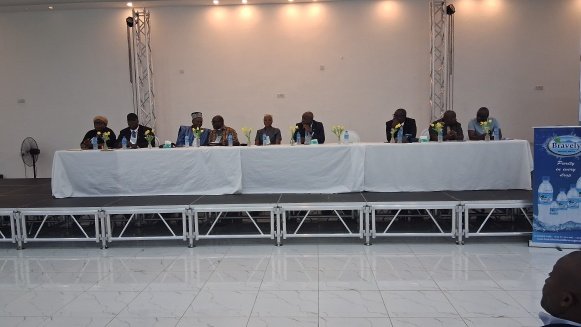
Held on the 11th and 12th of June 2025 at the Bank of Sierra Leone Complex in Freetown, the dialogue was convened to deliberate on Recommendation 78 of the Tripartite Committee Report, which calls for a national conversation on the appropriate electoral system between the district-based Proportional Representation (PR) and the First-Past-The-Post (FPTP) for both Parliamentary and Local Council elections. The recommendation further calls for ensuring a minimum of 30% female representation in line with the Gender Equality and Women’s Empowerment (GEWE) Act and adequate representation of youth and persons with disabilities.

The dialogue attracted a wide range of civil society stakeholders and electoral experts who expressed mixed views on which system would best serve Sierra Leone’s democratic growth. Many participants argued that systemic issues such as lack of transparency, limited public understanding and political exclusivity were more significant obstacles to fair elections than the choice of electoral system itself.

However, after deliberations and presentations, the majority of CSO representatives expressed a clear preference for the First-Past-The-Post (FPTP) system, with 57.9% voting in favor. A mixed method combining elements of both FPTP and PR received 31.6% support while the Proportional Representation system garnered only 10.5%.

Supporters of FPTP highlighted its simplicity and familiarity to voters, noting that it allows citizens to directly choose their representatives. They also emphasized the transparency of the process, which allows constituents to verify results and hold specific individuals accountable.

Many participants criticized the PR system implemented in the 2023 elections as confusing and inaccessible. Concerns included:

  • A high threshold that limited participation by smaller parties and independent candidates.
  • Lack of clarity on how candidates were selected and seats allocated.
  • The over-concentration of power among political party leaders.
  • Weak connections between elected officials and the communities they serve.

In addition, the breakdown of ward committees post-2023 elections was cited as evidence that PR had failed to strengthen grassroots governance and accountability.

Participants who supported PR acknowledged that it could work if adapted appropriately. They recommended a constituency-based open-list PR system with a lower or no threshold to encourage broader inclusion. They argued that this could promote diversity and ensure marginalized groups such as women, youth and persons with disabilities are well represented.

Supporters of a mixed electoral model proposed a hybrid approach: FPTP for electing Presidents, Mayors/Chairpersons and Councilors, and PR for Members of Parliament. They argued that such a system would balance local accountability with broader representation and enhance inclusion.

Civil Society concluded that any electoral system must:

  • Be easily understood by the general population.
  • Guarantee citizen-led selection of leaders, not just decisions by party elites.
  • Ensure 30% women’s representation in accordance with the GEWE Act.
  • Uphold transparency and accountability in both process and outcomes.
  • Create a level playing field for all political parties, especially smaller ones and independents.
  • Include mechanisms to verify and accept results across the board.

Civil society further urged the Office of the Attorney General and Minister of Justice to incorporate those findings when drafting any future electoral framework. Importantly, they emphasized that no electoral system can function effectively in isolation; broader reforms in governance, civic education and electoral integrity are crucial to ensuring credible, peaceful and inclusive elections in Sierra Leone.

IMC Holds Stakeholder Consultation to Review IMC Act 2020 in Line with Tripartite Recommendation 76

By Brima Sannoh

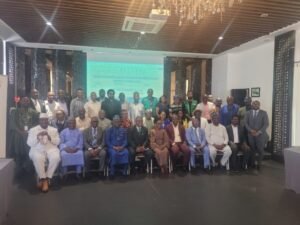
The Independent Media Commission (IMC), with support from the International Institute for Democracy and Electoral Assistance (International IDEA) and the European Union, convened a high-level stakeholder consultation at the New Brookfields Hotel in Freetown, on 18 July 2025, to review the IMC Act 2020. This engagement was part of a wider national consultation process aimed at ensuring that Sierra Leone’s media legal framework aligns with the current realities and supports a free, independent and responsible media landscape. The exercise was in direct response to Recommendation 76 of the Tripartite Committee Report, which called for key reforms to enhance the IMC’s regulatory capacity and independence.

Delivering a powerful statement, Chairman of the Independent Media Commission, Joseph Egbenda Kapuwa, Esq., underscored the importance of the review process in deepening media freedom, strengthening accountability and ensuring the IMC remains responsive to the evolving media landscape. He emphasized that the review of the IMC Act 2020 is crucial for aligning the Commission’s mandate with the dynamic realities brought about by digital media, particularly social media, and the rise of non-traditional news platforms. Joseph Egbenda Kapuwa, Esq. called on stakeholders to meaningfully engage in the review and to bring forward practical recommendations that would result in a robust regulatory framework capable of upholding journalistic standards, ensuring accountability and fostering public trust.

The day’s proceedings were moderated by the Executive Secretary of the IMC, Khalil Kallon, who guided participants through the various sessions and ensured focused, inclusive and productive dialogue. Media practitioners from print and electronic outlets, lecturers from journalism and media institutions, representatives from the Sierra Leone Police media unit, the Political Parties Registration Commission (PPRC), civil society, and development partners participated actively in the discussions.

In a keynote address, Mawusi Durenu, Programme Officer for Elections at International IDEA, welcomed attendees and praised their commitment to strengthening Sierra Leone’s democratic institutions. He highlighted International IDEA’s 30-year global experience in supporting democratic governance and its extensive work in Sierra Leone, particularly in pre-election engagements and electoral risk management. Mawusi Durenu noted that International IDEA had been working closely with the IMC on media monitoring initiatives and that the acquisition of a media monitoring system would significantly enhance the Commission’s capacity to regulate content, protect against misinformation and build public trust in the media. He concluded by encouraging stakeholders to offer meaningful feedback during the review process, describing the initiative as a timely and necessary intervention to strengthen democracy and media governance.

Speaking on behalf of the Sierra Leone Association of Journalists (SLAJ), President Alhaji Manika Kamara lauded the initiative, describing the review as an important step towards media professionalism and accountability. He commended the International IDEA for securing the media monitoring equipment and highlighted how it would improve regulatory effectiveness. Alhaji Manika Kamara called for more proactive engagement from the Commission, especially in resolving disputes involving journalists. He stressed the need for revisions that reflect the challenges posed by social media and digital media outlets, which are not adequately addressed in the current IMC Act. He emphasized that all reforms must align with the 1991 Constitution and called on all stakeholders to fully engage in the process to ensure a progressive outcome.

Nancy Koroma, speaking on behalf of the Honorable Minister of Information and Civic Education, expressed the Ministry’s full support for the consultation and the objectives of Recommendation 76. She noted that the review was essential for improving the transparency of the IMC Chair appointment process, empowering the Commission to enforce the Media Code of Conduct and updating regulations to tackle hate speech and misinformation, particularly on social media during election periods. She called on participants to share their expertise and collaborate in shaping a strong, forward-looking legal framework that promotes responsible journalism and democratic resilience.

Facilitating the technical session, Dr. Francis Sowa led discussions on key areas including the appointment process for the IMC Chair, strengthening the Commission’s regulatory powers, reviewing current sanctions and addressing the role of social media in fueling hate speech during elections. Participants were later divided into thematic working groups to deliberate on those issues and provide recommendations. The outcomes of the group discussions were presented to the plenary by group leaders and will feed into the ongoing review process.

This stakeholder consultation forms part of broader nationwide engagements aimed at ensuring the IMC Act reflects the media’s evolving realities and incorporates lessons from the 2023 electoral cycle. Recommendation 76 of the Tripartite Committee Report, which emerged from post-election consensus between political parties, called for significant amendments to the IMC Act. These include improving the transparency of appointments, enhancing the IMC’s enforcement powers, updating the media code and ensuring proper training for journalists in political and electoral coverage.

With broad-based participation and commitment, the consultation marked a significant step towards strengthening the institutional framework that supports Sierra Leone’s media sector and democratic governance.

Stakeholders Engage in National Dialogue on Sierra Leone’s Future Electoral System

By Millicent Senava Mannah

Key stakeholders from across Sierra Leone gathered in Freetown on Thursday, 17th July 2025, for a landmark National Dialogue on the country’s preferred electoral system, in line with Recommendation 78 of the Tripartite Committee’s reform proposals. The high-level consultation, held at the Freetown International Conference Hall in Aberdeen, was jointly organized by the Tripartite Steering Committee and the Office of the Attorney General and Minister of Justice, with financial support from the European Union (EU) through the International Institute for Democracy and Electoral Assistance (International IDEA).

The event drew participation from Government officials, political party representatives, Civil Society Organizations, traditional leaders, international development partners and citizens from all walks of life. Deliberations focused on the choice of an electoral model best suited to Sierra Leone’s democratic future, with options including the first-past-the-post (FPTP) system, proportional representation (PR) and a hybrid arrangement combining elements of both.

UN Resident Coordinator Seraphine Wakana commended the Government of Sierra Leone, including the Chief Minister, the Attorney General and the Tripartite Steering Committee, for their leadership and commitment to electoral and legislative reforms. She emphasized the critical importance of inclusive national consultations in shaping laws that reflect the aspirations of the people while aligning with international democratic standards. “The Government’s willingness to accelerate implementation of the reform recommendations and engage citizens in meaningful dialogue is commendable,” she stated, reaffirming the UN’s readiness to continue providing technical support throughout the reform process.

Echoing similar sentiments, EU Ambassador Manuel Müller reiterated the European Union’s steadfast support for democratic governance in Sierra Leone. He highlighted the EU’s contributions in the form of funding, technical expertise and legal advisory support to aid the ongoing reform efforts. Ambassador Manuel Müller encouraged all Sierra Leoneans to embrace constructive dialogue and make choices that will serve the nation well into the future.

International IDEA’s Head of Mission, Dr. Idrissa Mamoud Tarawallie, shared reflections on the institution’s work in Sierra Leone since 2020. He noted that International IDEA has collaborated closely with the Attorney General’s Office, Parliament and civil society to build capacity for sustainable reform. He revealed that approximately 2,000 citizens have participated in consultations to date and emphasized the profound implications of the decisions under review, particularly for rural communities.

A representative from the Electoral Commission for Sierra Leone (ECSL) described the Tripartite Agreement not merely as a procedural requirement but as a cornerstone for national peace and development. He underscored the significant progress made in implementing over 80 reform recommendations and called for continued international collaboration. The ECSL official also stressed the need for an electoral system that both safeguards minority representation and advances national development. He urged political parties to serve as true channels for expressing the people’s will.

The National Dialogue marked a critical step in Sierra Leone’s ongoing efforts to consolidate democratic gains and enhance electoral integrity as stakeholders collectively chart a path toward a more inclusive and representative political system.

Petroleum Regulator Receives SLAJ Award for Six Years of Quality Service

By Alvin Lansana Kargbo

The Sierra Leone Association of Journalists (SLAJ) has awarded the National Petroleum Regulatory Authority (NPRA) for its exceptional and consistent service delivery over the past six years in the downstream petroleum sector. The recognition was presented during SLAJ’s official handover ceremony held at the Bintumani Conference Hall in Freetown.

During the event, the outgoing SLAJ President, Ahmed Sahid Nasralla, commended NPRA’s Director General, Brima Baluwa Koroma and his team for their unwavering transparency and responsiveness to public and media concerns. He particularly highlighted the Authority’s quarterly press briefings, which have been instrumental in engaging journalists, bloggers and Civil Society Organizations (CSOs) on matters relating to petroleum regulation.

“Brima Baluwa Koroma’s openness to objective and constructive dialogue with the media has greatly contributed to fostering ethical and development journalism in Sierra Leone,” Ahmed Sahid Nasralla stated.

Presenting the award on behalf of the new SLAJ leadership, veteran journalist Abu Bakar Kargbo, also known as Fadda Bakish, praised the NPRA for implementing critical reforms in a sector often marked by volatility and complexity. He emphasized the need for continued collaboration between the media and public institutions such as the NPRA to enhance transparency and improve public service delivery.

Receiving the award, Director General Brima Baluwa Koroma expressed gratitude for the recognition and emphasized the importance of the accolade as both a motivation and validation of the Authority’s ongoing efforts under its new mandate, established by the NPRA Act of 2025.

“This Excellence in Service Delivery Award is a testament to the hard work and dedication of the entire NPRA team,” Brima Baluwa Koroma said. “It is also a reflection of the people-centered policies championed by His Excellency, Retired Brigadier Julius Maada Bio, whose leadership continues to shape a responsive and results-driven public service sector.”

Brima Baluwa Koroma added that the NPRA will remain committed to stabilizing the downstream petroleum industry and addressing persistent challenges through reforms and strong regulatory oversight. He extended appreciation to journalists, CSOs and bloggers for their support during the transition from the former Petroleum Regulatory Agency (PRA) to the new NPRA structure.

“I call on every journalist across the country to champion Development Journalism, which is crucial for national progress,” he concluded.

The recognition of NPRA by SLAJ underscores the growing importance of transparency, accountability and partnership between the media and regulatory bodies in ensuring effective governance and public trust.

NP (SL) Welcomes Dr. Mohamed S. Kanu as CEO, Hails Saidu Mansaray’s Legacy

Dr. Mohamed S. Kanu, Chief Executive Officer (CEO) of NP Sierra Leone

By Amin Kef (Ranger)

The Board of Directors of NP (SL) Limited has made a major leadership announcement by appointing Dr. Mohamed S. Kanu as the company’s new Chief Executive Officer (CEO), effective August 1, 2025. This appointment comes after the resignation of Saidu Mansaray, who is widely credited with guiding the company through a successful period of expansion, innovation and excellent customer service.

Dr. Mohamed S. Kanu assumes the top position with a strong background in petroleum management and business leadership. He was the CEO of NP Côte d’Ivoire, where he made a notable impact by strengthening the company’s market presence, increasing operational efficiency and fostering regional partnerships. His experience within the NP Group is expected to ensure a seamless transition and continued progress for the company.

In a press statement, the Board described Dr. Mohamed S. Kanu as “a seasoned Executive with a strategic mindset and deep knowledge of the NP brand.” The statement continued, “His leadership is expected to drive the company forward with a renewed focus on customer satisfaction, sustainability and digital transformation.”

Dr. Mohamed S. Kanu is known for his forward-thinking leadership and commitment to corporate responsibility. His appointment is seen as a move to maintain momentum and further position NP (SL) as Sierra Leone’s leading petroleum marketing company.

Under the outgoing CEO, Saidu Mansaray, NP (SL) expanded its national footprint, improved infrastructure and enhanced service delivery. The Board expressed deep appreciation for his leadership, noting that he leaves behind a legacy of progress and professionalism.

It was during his tenure that NP Energy Pass Card was launched; a digital payment solution that allows customers to purchase fuel with ease and security. The card is designed to reduce cash transactions at Filling Stations, offering users real-time SMS notifications for every purchase and allowing simple top-ups at any NP station or the company’s Head Office.

Customers who experience issues with the card, such as incorrect password attempts, are quickly supported with a One-Time Password (OTP) feature, ensuring that service is uninterrupted. The Energy Pass Card has become a key symbol of NP’s commitment to improving the customer experience.

Also, as the then Chief Executive Officer NP (SL) made significant progress in improving fuel accessibility and service quality across Sierra Leone by deploying innovative Mobile Fuel Tanks. Specifically, a Mobile Fuel Tank was installed at the Parliament of Sierra Leone to guarantee uninterrupted fuel for operations.

Additionally, NP (SL) Ltd provided a Mobile Fuel Tank to the Sierra Leone Police Force, boosting their operational readiness for patrols and emergency responses. That initiative highlighted the company’s commitment to flexible, dependable energy solutions supporting vital state functions and public safety.

NP (SL)’s investment in technology is matched by its dedication to safety and reliability. Regular emergency drills are conducted at Filling Stations and modern calibrated pumps are installed nationwide to ensure accurate fuel delivery, eliminating customer doubts.

As a fully indigenous company with a 100% Sierra Leonean workforce, NP (SL) plays a critical role in national development, supporting local jobs and businesses.

The company’s product line also includes NP Gas, an affordable and clean cooking gas solution available in various cylinder sizes to suit different household needs.

From fueling cars to powering kitchens, NP (SL) continues to lead through innovation, safety and service excellence. With Dr. Mohamed S. Kanu now at the helm, the company will continue to achieve greater milestones both locally and across West Africa.