Home Blog Page 177

Government Kicks Off Public Consultations on Sierra Leone’s First Data Protection Bill

By Alvin Lansana Kargbo

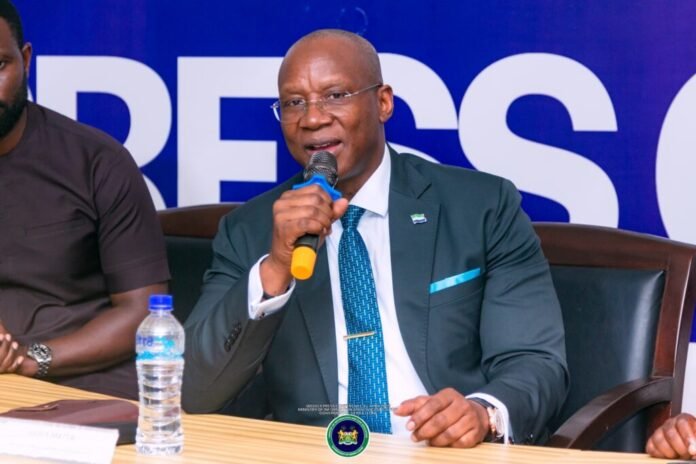
Sierra Leone has taken a major step toward strengthening digital rights and safeguarding personal information with the launch of nationwide consultations on its first-ever data protection legislation.

The consultations, unveiled at the Miatta Conference Centre in Freetown, focus on the draft Right to Access Information and Data Protection Regulatory Commission Bill. The process is being driven by the Ministry of Information and Civic Education together with the Ministry of Communication, Technology and Innovation, with funding and technical support from Irish Aid through UNDP.

According to officials, the bill is modeled on global best practices, drawing from the European Union’s General Data Protection Regulation (GDPR) and the African Union’s Malabo Convention. Once passed, it will position Sierra Leone among countries with modern frameworks for digital security, while boosting investor confidence and international cooperation.

Minister of Information and Civic Education, Chernor Bah, described the legislation as “a pioneering reform that places Sierra Leone at the forefront of data governance in West Africa.” He said it will not only ensure stronger privacy protections for citizens but also address key gaps in intelligence sharing and economic development.

Minister of Communication, Technology and Innovation, Salima Bah, underlined the importance of protecting vulnerable groups from the dangers of data exploitation. She pledged her Ministry’s technical support for rolling out the new regulatory system.

The opening event brought together representatives from Government agencies, Civil Society, international partners, including UNDP, SLAJ, RAIC, CHRDI and the NCRA. Over two days, stakeholders reviewed the draft provisions and discussed implementation strategies.

Officials confirmed that consultations will now be extended across all regions of the country to ensure broad-based input before the bill proceeds to its final validation stage.

Observers say the process marks a historic milestone in Sierra Leone’s digital transformation, setting the foundation for a safer more transparent and accountable information ecosystem.

From Fuel to Education: NP (SL) Champions Innovation and Corporate Social Responsibility

By Ibrahim Sesay

NP Sierra Leone Limited (NP-SL Ltd) has steadily risen from a small local initiative to the country’s leading oil marketing company and a strong player in the West African region, with active operations in Guinea, Liberia, Ivory Coast and The Gambia. Over the years, the company has distinguished itself not only through growth but by consistently introducing practical solutions that improve the experience of its customers and contribute to national development.

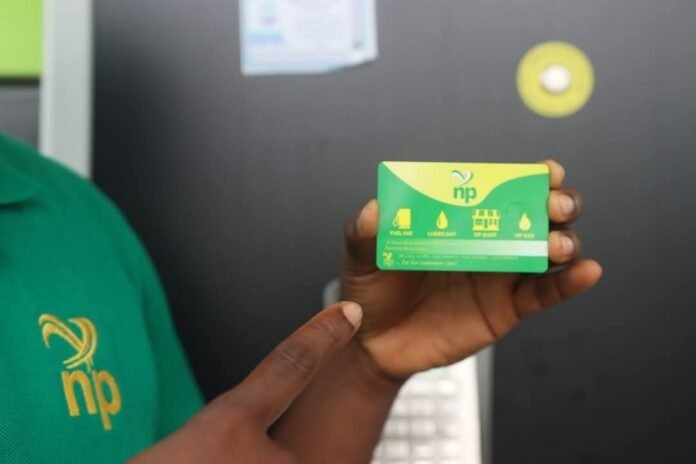
A major step in that direction was the introduction of the Energy Pass Card, a cashless payment option that has modernized fuel purchasing across Sierra Leone. The card allows motorists to buy fuel with ease while receiving instant receipts and accurate records of their transactions. Customers have embraced the system for the security and convenience it brings, while companies with large fleets are using it as a reliable way to track fuel usage and reduce wastage. By introducing this simple yet effective innovation NP-SL set a new standard in customer service and financial accountability.

Another of the company’s milestones is NP Gas, which offers liquefied petroleum gas as a cleaner and safer alternative to wood and charcoal. Available in different cylinder sizes, it has helped families and businesses move towards safer cooking methods, while at the same time reducing deforestation and improving public health by lowering exposure to smoke and indoor pollution. NP Gas has become a popular choice, showing how the company responds to the everyday needs of its customers with affordable and practical energy solutions.

Safety has remained at the center of NP-SL’s operations. Beyond building facilities that go above the required safety standards, the company has also extended support to national institutions such as the Sierra Leone National Fire Force, helping them with boreholes and backup generators to strengthen their emergency response. For NP-SL, customer service is not only about fuel at the pump but also about protecting lives and supporting communities.

Unlike many foreign competitors in the industry, NP-SL has built its strength on Sierra Leonean talent. Its workforce is largely local, from pump attendants to senior management and the company continues to invest in training and development for its staff. Local suppliers are also prioritized in procurement, ensuring that the company’s growth feeds directly into the national economy.

The company’s role in society extends well beyond its business operations. Through wide-ranging social investment programs, NP-SL has supported health, education and sports initiatives that benefit thousands of Sierra Leoneans. It established a burns unit at Connaught Hospital, renovated the Kingtom Police Primary School and has been active in supporting youth sports. Most recently, on September 5, 2025, NP-SL handed over renovated facilities to the Government Independence Memorial Secondary School in Kissy, Freetown. The project included a solar-powered borehole, modern classrooms and offices, disability-friendly toilets, and 200 new desks and chairs.

At the ceremony, Chief Executive Officer Dr. Mohamed S. Kanu explained that the initiative was part of the company’s broader mission to create safe and supportive spaces for learning, while encouraging pupils to take full advantage of the opportunities made available.

The story of NP Sierra Leone today reflects the strength of homegrown enterprise. By introducing innovations such as cashless fuel payments and clean cooking energy, while also investing in community development, the company has proven that Sierra Leonean businesses can compete at regional level while remaining true to their roots. NP-SL has become more than a supplier of petroleum products; it is a trusted partner in progress, balancing innovation with responsibility and customer satisfaction with national pride.

Orange Foundation, Mama-Pikin Foundation Partner to Boost Maternal & Neonatal Health

A strategic partnership between Orange Foundation Sierra Leone and Mama-Pikin Foundation is delivering lifesaving healthcare support to vulnerable mothers and newborns across Sierra Leone. The initiative, launched in December 2020 with technical input from CAP at Columbia University and the Ministry of Health and Sanitation, seeks to address the country’s maternal and neonatal mortality rates.

According to Government data, Sierra Leone recorded 717 maternal deaths per 100,000 live births in 2019. By 2023 that figure had fallen to 354 per 100,000, a notable improvement though still among the highest in the world. Health experts stress that most of those deaths are preventable, often caused by inadequate access to skilled care, weak infrastructure and high rates of home deliveries.

The initiative began in Kossoh Town under the “Safeguarding Maternal Health Project,” which emphasized holistic care during pregnancy, childbirth and postnatal recovery. Key interventions included health education, infection prevention, women’s care linkage and the distribution of safe delivery kits. Within one year, maternal deaths in the community declined significantly, prompting a nationwide rollout of the program in March 2024.

Between 2020 and 2024, the project:

  • Reached more than 12 communities across Sierra Leone
  • Supported over 20,000 mothers with safe delivery kits
  • Strengthened referral pathways and boosted facility capacities
  • Introduced incentives to encourage women to deliver at health facilities instead of at home

Alongside those efforts, the Mama-Pikin Foundation scaled up its Delivery Bucket Program, which provides pregnant women with hygiene and baby care essentials when they deliver at health facilities. Since its expansion in early 2024, more than 20,000 buckets have been distributed across communities including Makeni, Kono, Kenema, York Village, Grafton, Kossoh Town, Kailahun, Legbogbor and Kondembaia.

Health workers in York Village recently lauded the program, noting that it has restored community trust in hospitals and motivated more women to seek professional care during childbirth.

The initiative demonstrates the value of public-private collaboration in strengthening Sierra Leone’s health system. Orange SL Foundation reaffirmed its commitment to supporting national development priorities, while the Ministry of Health and Sanitation pledged continued backing to ensure sustainability.

“This partnership shows that when the private sector, Government and community organizations work together, we can save lives and secure healthier futures for women and children,” a statement from Orange SL Foundation underscored.

From Celebration to Fear: Alleged Same-Sex Marriage Ceremony in Waterloo Sparked Raids, Arrests and a Manhunt

Massah Mansaray and Jannet

By Alvin Lansana Kargbo

What reportedly began quietly on the evening of Friday, 12 September 2025, in the normally calm Bango Farm community of Waterloo, would within hours spiral into a wave of fear, controversy and police action that rippled across Waterloo and Freetown in the Western Area.

According to our sources, the gathering appeared festive. Music played softly, and guests arrived in small groups. At the centre of the event were two women, Massah Mansaray and Jannet, both apparently dressed in wedding attire. To onlookers, the symbolism was unmistakable. Word quickly spread through the neighbourhood that a lesbian marriage ceremony was taking place.

Community members, mindful of Sierra Leone’s strong cultural, religious and legal rejection of same-sex unions, alerted the police. Officers later arrived and escorted Massah Mansaray and Jannet to the Corner Kick Police Post, where they were questioned as investigations commenced into the nature of the gathering and whether any laws had been breached.

As news of the incident spread beyond Bango Farm, attention shifted from the couple to individuals alleged to have attended the gathering as special guests. Among them was an Imam, yet to be formally identified by authorities, who reportedly officiated the ceremony, and Salmata Bah of Wellington, widely described by sources as a godparent to one of the women.

Their reported presence transformed the incident from a local disturbance into a national controversy. What began as a single event quickly evolved into a broader security concern. Police sources confirmed that raids were conducted at several locations, targeting individuals suspected of facilitating or supporting the gathering. Some arrests were reportedly made, although police have yet to publicly release names or details.

With public anger escalating and threats mounting, those alleged to be connected to the ceremony reportedly disappeared from public view. Salmata Bah and the alleged officiating Imam are said to have fled their homes and gone into hiding, fearing for their lives.

A close relative disclosed that Salmata Bah is deeply afraid of returning to her community, citing hostility and safety concerns. “She wants peace,” the family member said, “but she fears what may happen if she comes back.”

According to local sources, police have launched a manhunt for persons believed to have played key roles in the incident. At the same time, reports emerged of angry civilians attempting to track down those accused, raising fears of mob justice.

The alleged involvement of an Imam intensified the backlash, with many citizens describing it as a violation of religious doctrine. Threats—both spoken and implied—continued to circulate, forcing those at the centre of the controversy to remain in concealment.

Beyond the raids and arrests, the unfolding drama has raised serious human rights concerns. While same-sex marriage is not recognised under Sierra Leone’s civil, customary or religious laws, human rights advocates have warned against harassment, violence and punishment without due process.

Observers say the ordeal surrounding Massah Mansaray, Jannet, Salmata Bah, and the alleged officiating Imam reflects deep societal divisions in Sierra Leone, where law, faith and personal safety often collide.

As investigations continue, the events of 12 September 2025 remain etched in public memory—a moment when a private gathering in Waterloo transformed into a national flashpoint, leaving fear, flight and unanswered questions in its wake.

Same-Sex Marriage
Same-Sex Marriage


Sierra Leone’s Mining Sector Creates 2,748 New Jobs, Employs Over 17,000 Citizens

By Amin Kef (Ranger)

Sierra Leone’s mining industry, one of the country’s largest employers and revenue earners, has recorded a steady rise in employment opportunities for Sierra Leoneans, according to the latest statistics released by the Ministry of Mines and Mineral Resources (MMMR) and the National Minerals Agency (NMA). The data, drawn from verified monthly production reports submitted by mining companies, shows that both direct and indirect jobs in the sector are expanding, bringing renewed optimism about the industry’s contribution to the nation’s economy.

The report indicates that as of the first half of 2025, a total of 17,448 Sierra Leoneans were employed in the industrial mining sector, an increase of 567 jobs compared to the previous year. This figure excludes artisanal mining, which operates outside formal employment structures but nonetheless sustains thousands of livelihoods.

In 2024, employment stood at 14,700 workers and by June 2025, the figure had risen to 17,448, representing a significant net growth of 2,748 jobs. Officials highlight this as evidence of renewed investor confidence and improved stability within Sierra Leone’s mining sector, which has long been a driver of national development.

The data further breaks down employment gains across various segments of the industry.

  • Large-scale mining companies directly increased their workforce by 952 employees, demonstrating expansion in core mining operations.
  • Contractors for large-scale mines, who provide essential technical and logistical services, saw the most significant growth with 1,706 new jobs, reflecting increased outsourcing and partnerships within the sector.
  • Small-scale mines also contributed modestly, employing 90 additional workers, underscoring the sector’s gradual formalization.

Together, these categories account for a combined increase of more than 2,700 jobs, cementing mining’s role as a cornerstone of Sierra Leone’s employment landscape.

The statistics also reveal how jobs are distributed across employment categories. In 2025, the majority of workers, 14,948 employees, occupied roles below the supervisory level, reflecting the labor-intensive nature of mining. Supervisory roles increased slightly to 2,104, while senior management positions stood at 396 employees, down from 432 in 2024.

This structure demonstrates the dominance of lower-tier jobs within the sector while also raising questions about pathways for professional advancement and skills development. Analysts believe that strengthening technical training and educational opportunities could help Sierra Leoneans move into more supervisory and managerial roles in the future.

Another positive trend highlighted in the report is the balance between Sierra Leonean and expatriate workers. With over 17,000 locals employed directly or indirectly, the dominance of Sierra Leonean participation reflects the success of Government-led policies on local content.

Expatriate employment, which has historically filled gaps in specialized technical and managerial positions, remains comparatively low. This indicates that more Sierra Leoneans are taking up skilled positions within the industry, an achievement that aligns with the Government’s vision of maximizing the country’s human resource potential.

Employment in the mining sector goes beyond job creation; it provides a ripple effect that stimulates other areas of Sierra Leone’s economy. Salaries earned by mine workers support local businesses, education, healthcare and housing. The expansion of contractors within the sector also creates new opportunities for local suppliers and service providers, deepening the value chain within Sierra Leone.

Furthermore, the sector’s contribution to national revenue through taxes, royalties and community development agreements ensures that employment gains translate into broader socio-economic impact. With over 17,000 households directly dependent on mining wages, the sector is playing a key role in poverty reduction and sustainable development.

The Ministry of Mines and Mineral Resources (MMMR) and the National Minerals Agency (NMA) have welcomed the rising employment figures, noting that they reflect the ongoing reforms designed to attract investment, enforce transparency and ensure that Sierra Leoneans benefit meaningfully from the country’s mineral wealth.

In a statement, officials emphasized that the statistics reaffirm the sector’s resilience and potential. “The increase in employment demonstrates that Sierra Leone’s mining industry is on a growth trajectory. It shows investor confidence and highlights the role of local content in shaping sustainable development,” the release noted.

Despite those gains, the mining sector continues to face challenges, including global commodity price fluctuations, the need for greater environmental safeguards and the necessity of balancing foreign investment with national interest.

Analysts argue that while job creation is encouraging, more attention must be given to skill development and capacity building to ensure Sierra Leoneans can take up senior technical and managerial positions that are often dominated by expatriates. Expanding vocational training programs and aligning them with industry needs will be crucial for the long-term sustainability of employment growth.

Looking ahead, the sector’s outlook remains positive. With ongoing reforms, new investments and improved infrastructure, Sierra Leone is well-positioned to expand its mining industry further. The continued emphasis on local employment ensures that Sierra Leoneans remain at the heart of this growth story.

The latest employment statistics underscore the mining sector’s role as a vital driver of Sierra Leone’s economy. With employment rising by 2,748 jobs since 2024 and more than 17,000 Sierra Leoneans engaged across various roles, the sector is delivering on its promise of job creation, economic empowerment and local participation.

Government and mining companies are continuing to work hand in hand, with the focus placed on ensuring that aforementioned gains translate into long-term national benefits; not only through employment but also through sustainable development, skills transfer and inclusive growth.


Chief Justice Calls on Human Rights Commission to Strengthen Climate Advocacy

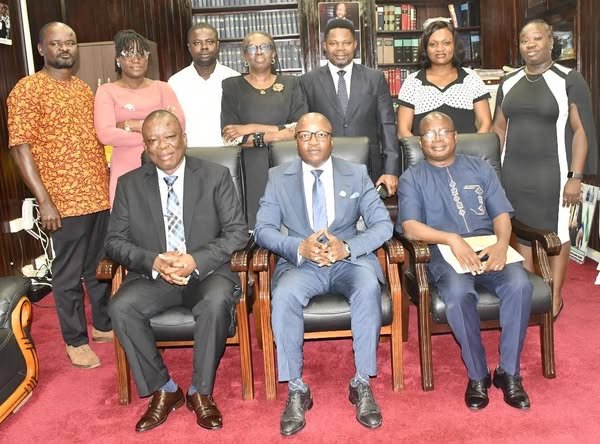
Chief Justice, Hon. Justice Komba Kamanda, has on September 9, 2025 urged the Human Rights Commission of Sierra Leone (HRCSL) to strengthen its advocacy on climate change, describing the issue as one of the most pressing challenges facing the nation today.

The Chief Justice noted that Sierra Leone remains highly exposed to the devastating effects of climate change, such as rising sea levels, recurring floods, extreme heat and coastal erosion. These, he stressed, continue to disrupt food production and endanger communities across the country.

“If climate change is not taken seriously, the survival of our environment and our people will be at stake,” Justice Komba Kamanda remarked. He pledged that the Judiciary would stand behind efforts to raise awareness and push for stronger national responses, adding, “My door is always open and you have our full support.”

The call came during a courtesy visit by Abu Bakar Kamara, Director of Climate Change and Information Services at HRCSL and his team. In their discussions, the Chief Justice also committed to supporting the National Conference on Climate Change and Human Rights, slated for October 28–29, 2025.

According to Director Abu Bakarr Kamara, the conference aims to bring together Government institutions, Civil Society Organizations, community representatives and international experts to deliberate on how climate change impacts the enjoyment of basic human rights. He explained that the forum will serve as a platform for forging stronger partnerships among Ministries and stakeholders to confront the crisis more effectively.

Abu Bakarr Kamara expressed gratitude to Justice  Komba Kamanda for his encouragement and support, noting that the Judiciary’s commitment provides added weight to national efforts linking climate justice with human rights.

Pharmacy Board, Police Sign Agreement to Crack Down on Counterfeit Medicines

By Ibrahim Sesay

A new front has been opened in Sierra Leone’s fight against illegal drug sales and medicine-related crimes, following the signing of a Memorandum of Understanding (MoU) between the Sierra Leone Police (SLP) and the Pharmacy Board of Sierra Leone (PBSL).

The formal signing took place on Wednesday September 10, 2025 at the Senior Police Officers’ Mess, Kingtom. Inspector General of Police, William Fayia Sellu and the Registrar of the Pharmacy Board, Dr. James Komeh, jointly endorsed the agreement in the presence of senior officials from both institutions.

Inspector General William Fayia Sellu hailed the partnership as a strategic move that will strengthen law enforcement’s ability to respond to drug-related offenses. He disclosed that the police’s legal department had carefully examined the document before approval, ensuring it aligns with national security priorities.

“This partnership will not remain on paper. We intend to roll it out at all levels of policing, from headquarters to regional divisions so that whenever the Pharmacy Board calls for assistance, the police will be ready to act,” William Fayia Sellu affirmed.

For the Pharmacy Board, the MoU represents the fulfillment of a longstanding aspiration. Dr. James Komeh thanked the police leadership for finally cementing the collaboration, stressing that raising awareness among provincial commanders would be key to success.

“This is a turning point. We have knocked on doors before, but today, under the guidance of IGP William Fayia Sellu, we have achieved what we have long sought,” Dr. James Komeh stated.

Board Chairman and Chief Pharmacist, Dr. Moses Batema, underscored the urgency of the initiative. He noted that drug peddling, counterfeit medicines and regulatory violations continue to compromise Sierra Leone’s health sector.

“This MoU is more than an agreement; it is a shield to protect the public from harmful practices. Together, we can dismantle networks that threaten lives and undermine confidence in healthcare,” Dr. Moses Batema emphasized.

The one-year renewable pact outlines:

  • Joint operations targeting drug peddlers and violators.
  • Shared training programs to build enforcement and regulatory capacity.
  • Coordinated strategies to ensure compliance with pharmaceutical standards.

According to its preamble, the MoU seeks to address the growing prevalence of fake medicines, unlawful drug sales and the dangers these pose to citizens and the health system.

This marks the first time the SLP and PBSL have formalized their cooperation. Officials at the ceremony described the initiative as a milestone in national efforts to reinforce pharmaceutical regulation, protect consumers and ensure a healthier Sierra Leone.

University of Makeni Withdraws Degrees After Scholarship Fraud Scandal

By Alvin Lansana Kargbo

The University of Makeni (UniMak) has revoked the academic degrees of two former students after investigations confirmed they engaged in academic fraud by presenting falsified transcripts in a foreign scholarship application.

In a resolution passed on July 6, 2025, the University Senate unanimously agreed to withdraw the certificates of Ms. Fatmata R. Sesay of the Department of Human Resource (awarded March 19, 2022) and Abdul Karim S. Kanu of the Department of Law (awarded March 20, 2021).

The disciplinary action followed a formal complaint from the Embassy of the People’s Republic of China in Sierra Leone, which reported that both individuals had submitted fraudulent documents to secure a scholarship meant for Sierra Leonean students.

A Senate Investigation Committee was immediately established to probe the matter. The inquiry confirmed the documents were falsified and during the proceedings, both individuals admitted to the misconduct.

Speaking on the decision, Rev. Fr. Dr. George P. Ernest Gbamanja, Director of Academic Affairs, said the move, though painful, was essential to preserve the credibility of the University’s academic standards.

“The credibility of our awards is at the heart of UniMak’s mission. Any act that undermines this not only tarnishes our reputation but also threatens the future of students who work hard for their qualifications. The Senate had no option but to act firmly,” he stated.

Registrar, Foday Augustine Bangura, stressed that the revocation is final and binding. He confirmed that the decision has been communicated to the Ministry of Technical and Higher Education, the Tertiary Education Commission, the Chinese Embassy, accrediting bodies and relevant professional institutions.

This marks one of the rare instances in Sierra Leone’s higher education history where degrees have been formally withdrawn due to academic misconduct. Education analysts say the development underscores UniMak’s determination to uphold honesty, accountability and professionalism.

The University reaffirmed its zero-tolerance policy on academic fraud and reassured the public and international partners of its commitment to protecting the integrity of its qualifications.

NP (SL)’s Energy Pass Card Brings Cashless Convenience to Fuel Customers

By Ibrahim Sesay

For decades, NP Sierra Leone Limited (NP-SL Ltd) has been more than just a petroleum company. It has been a story of resilience, innovation and the triumph of indigenous enterprise in a sector long dominated by foreign-owned competitors. From its humble beginnings, NP (SL) has grown into the country’s leading oil marketing company and is today a regional force with operations in Guinea, Liberia, Ivory Coast and The Gambia.

But what sets NP (SL) apart is not only its ability to supply fuel across borders. It is its bold embrace of innovation; technology, systems and strategies designed to meet the unique needs of Sierra Leoneans while modernizing the energy sector.

Among NP (SL)’s most celebrated innovations is the Energy Pass Card, a digital payment system that has revolutionized the way customers purchase fuel. Introduced at a time when cash transactions dominated the sector, the Energy Pass Card provides motorists with a seamless, cashless experience. Customers can load money onto the card and use it at Filling Stations across the country, enjoying instant receipts and accurate transaction records.

For many, the card has provided financial discipline, transparency and convenience, eliminating the risks of carrying large sums of cash. Businesses in particular have embraced it as a tool for monitoring fuel expenditure and managing fleet costs. In an industry often accused of inefficiencies, the Energy Pass Card has placed NP (SL) ahead of the curve, proving that homegrown solutions can drive international best practices.

Another milestone innovation is NP Gas, a liquefied petroleum gas (LPG) product that has steadily gained popularity in Sierra Leonean households. Traditionally, many families relied on firewood or charcoal for cooking; a practice that is both hazardous to health and harmful to the environment.

NP Gas provides a cleaner, safer and more environmentally friendly option. With cylinders available in different sizes, NP Gas has made modern cooking solutions accessible to both urban and rural communities. Beyond convenience, this innovation supports Sierra Leone’s environmental agenda by reducing deforestation and curbing indoor pollution linked to traditional cooking methods.

Innovation at NP (SL) has not only been about products; it extends to safety practices and operational excellence. In a sector prone to fire hazards and accidents, NP (SL) has invested heavily in state-of-the-art infrastructure that meets and often exceeds national safety requirements.

The company’s commitment to safety is also evident in its support to national institutions. It has provided the Sierra Leone National Fire Force with boreholes and standby generators, strengthening emergency response capacity. For NP (SL), innovation is not only about profit but also about protecting lives and safeguarding communities.

At the heart of NP (SL)’s innovation story is its commitment to empowering Sierra Leoneans. Unlike many foreign-owned petroleum companies that rely heavily on expatriate staff, NP (SL)’s workforce is almost entirely local. From pump attendants to senior management, Sierra Leoneans are given opportunities to build careers, develop skills and lead.

Its procurement policies further demonstrate innovation in economic inclusion, with deliberate prioritization of local suppliers. By ensuring that its supply chain strengthens Sierra Leonean businesses, NP (SL) has transformed itself into a growth engine for the wider economy.

NP (SL)’s innovations extend beyond its fuel stations. The company has consistently invested in Corporate Social Responsibility (CSR), with landmark projects in education, healthcare and sports.

It has established a burns unit at Connaught Hospital, sponsored school sporting competitions and refurbished educational facilities across the country. One of its standout contributions was the rehabilitation of the Kingtom Police Primary School, where the company built modern classrooms, installed a water tower and supplied desks and chairs.

Most recently, on 5th September 2025, NP (SL) handed over newly refurbished facilities to the Government Independence Memorial Secondary School in Kissy, Freetown. The intervention included a solar-powered borehole, upgraded classrooms, improved administrative offices, sanitation facilities tailored for children with disabilities and the donation of 200 desks and chairs.

The initiative was hailed by both school authorities and the Ministry of Basic and Senior Secondary Education as a benchmark in private sector support for education.

Speaking at the Kissy school handover, Chief Executive Officer Dr. Mohamed S. Kanu reaffirmed NP (SL)’s mission to link innovation with national development. “This handover is not an end but a step forward in our broader Corporate Social Responsibility strategy. We are committed to creating safe and conducive learning environments for Sierra Leone’s children,” he said, urging pupils to seize the opportunities provided.

Dr. Mohamed Kanu’s words reflect the company’s philosophy: innovation is only meaningful when it changes lives and uplifts communities.

NP (SL)’s steady rise across West Africa proves that innovation does not have to come from abroad. Sierra Leone’s own petroleum giant has shown that with vision, discipline and commitment, indigenous companies can compete with international players while remaining rooted in national realities.

Its story is ultimately about more than fuel. It is about reimagining how a petroleum company can operate: digitizing payments, promoting clean energy, prioritizing safety, empowering citizens and supporting national development.

Sierra Leone looks to the future with NP (SL) standing tall as a symbol of national pride, a trusted brand and a living example of how innovation can fuel progress.

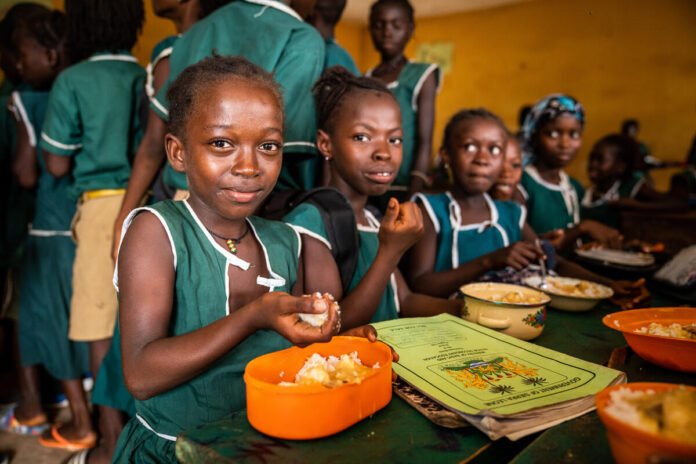
WFP Report: Global School Meal Programmes Expand to Reach 80 Million More Children

A new flagship report from the United Nations World Food Programme (WFP) has revealed a sweeping expansion in school feeding initiatives worldwide, with nearly 80 million additional children now receiving meals in schools compared to 2020. The 20 percent surge brings the global total of children supported by Government-led school feeding programmes to at least 466 million, marking one of the most significant advances in child welfare and education in recent years.

The State of School Feeding Worldwide 2025 report finds that progress has been most pronounced in low-income countries, where the number of children benefiting from school meals has increased by 60 percent in just two years. Africa has emerged as a leader in this expansion, with 20 million more children now fed through national programmes. Countries such as Kenya, Madagascar, Ethiopia and Rwanda are cited as making remarkable strides.

This achievement is hailed as a rare success story in global development, driven largely by Governments themselves. Strong evidence shows that domestic school meal initiatives not only safeguard children’s well-being but also support smallholder farmers, generate local employment, promote sustainable diets and reduce carbon emissions.

WFP Executive Director, Cindy McCain, underscored the far-reaching benefits of the programmes: “School meals are so much more than just a plate of nutritious food; important as that is. For vulnerable children, they are a pathway out of poverty and into a new world of learning and opportunity. They are proven to be one of the smartest, most cost-effective investments any nation can make to improve the long-term health, education and economic prosperity of future generations.”

The report notes that global investment in school feeding has more than doubled in four years, rising from US$43 billion in 2020 to US$84 billion in 2024. Notably, 99 percent of this funding now comes from national budgets rather than international donors, reflecting a fundamental shift toward national ownership. Yet, WFP warns that in low-income countries, where the need is greatest, limited domestic resources threaten sustainability.

Much of this progress is linked to the School Meals Coalition, a global alliance of over 100 Governments, six regional bodies and more than 140 partners, hosted by WFP. Two-thirds of the children newly reached with meals live in Coalition member states. Since its inception, the number of countries with formal school meal policies has nearly doubled, jumping from 56 in 2020 to 107 in 2024.

Carmen Burbano, WFP’s Director of School Meals and Social Protection, described the coalition as a model of modern multilateralism:

“The surge in nationally funded school meal programmes is a powerful sign of what’s possible, even in challenging times. But in low-income countries, where needs are greatest, progress remains at risk as global aid shifts and domestic resources fall short.”

The release of the report comes just days ahead of the Second Global School Meals Coalition Summit in Brazil (18–19 September), where Governments and partners will review progress and mobilize new commitments.

For the first time, the WFP report highlights strong evidence that school meals not only boost enrollment and retention but also improve learning outcomes. Studies show measurable gains in literacy and mathematics, with school feeding often outperforming traditional education interventions such as teacher training or digital technology inputs.

This finding positions school meals as a critical tool in addressing what experts have described as today’s “global learning crisis,” where millions of children are in school but not acquiring foundational skills.

The report stresses that school feeding programmes extend well beyond the classroom:

  • They form the largest social safety net in the world, shielding children from the impacts of conflict, pandemics and climate shocks.
  • For every US$1 invested, school meal programmes generate between US$7 and US$35 in economic returns across education, health, agriculture, and social protection sectors.
  • Feeding 466 million children creates an estimated 7.4 million cooking jobs worldwide, alongside employment in logistics, farming and supply chains.
  • Home-grown school feeding models promote healthier, climate-friendly diets and stimulate locally rooted food systems.
  • Girls and women benefit disproportionately: girls see stronger educational and health outcomes, while women are empowered through employment as cooks, suppliers and community workers.

The report also highlights WFP’s ongoing leadership. Currently, the agency supports Governments to reach 139 million children and directly delivers meals to 21 million. In countries such as Armenia, Benin and Iraq, WFP has successfully guided transitions from UN-delivered programmes to full national ownership.

By combining emergency response capacity with long-term system-building, WFP demonstrates how school meals can move beyond humanitarian aid to become a pillar of sustainable national development.

As the world prepares for the School Meals Coalition summit in Brazil, the report underscores both the successes achieved and the challenges ahead. The growing recognition of school meals as a public policy priority signals momentum but sustaining progress, particularly in the poorest nations, will require renewed international solidarity and domestic commitment.

With 466 million children already benefiting, WFP and its partners argue that the goal of reaching every child with a healthy, nutritious meal in school by 2030 is ambitious but achievable.