
Home Blog Page 183

Mattru-Senehun Bridge Commissioned: President Bio Applauds World Bank’s Continued Support

Marking a significant milestone in Sierra Leone’s ongoing infrastructure transformation, His Excellency President Dr. Julius Maada Bio officially commissioned the newly constructed Mattru-Senehun Bridge in Jong Chiefdom, Bonthe District. Designed to replace a decades-old manual ferry crossing, the bridge is expected to benefit more than 20,000 residents by enhancing transportation, ensuring safer travel and boosting economic activities in the region.

The 160-metre bridge, which spans the Jong River and connects Mattru Jong, the mainland of Bonthe District, with surrounding districts, is expected to significantly reduce travel times and eliminate the risks posed by outdated ferry services. The area was one of 13 colonial-era ferry crossings identified by President Bio for replacement with permanent structures under his government’s rural development and infrastructure expansion agenda.

“This is more than a bridge,” President Bio declared in his keynote speech. “It is a fulfilled promise, a statement of commitment and a symbol of progress for our people. From the hills of Koinadugu to the riverbanks of Bonthe, we are building the infrastructure of hope.”

Describing the bridge as both a personal and national achievement, the President reflected on the challenges faced by local communities in the past, limited ferry operations during daylight, dangerous river crossings during the rainy season and restricted access to markets, health centres and schools. He emphasized that the commissioning was not merely ceremonial but a practical step toward enhancing the daily lives of rural Sierra Leoneans.

The bridge was constructed as part of the Smallholder Commercialization and Agribusiness Development Project (SCADeP), funded through a US$30 million grant from the World Bank. Managed under the Ministry of Agriculture and Food Security, the project also includes the construction of three other bridges located in Gendema (Kenema District), Manowa (Kailahun District) and Tomparie (Karene District).

“This bridge connects people to possibilities,” President Bio added. “Mothers can now reach health facilities on time, children can get to school safely and farmers can move their goods without delay or damage. This is what inclusive development looks like.”

The President extended heartfelt appreciation to all stakeholders who contributed to the project’s success, including the Ministry of Agriculture, the SCADeP team, the Sierra Leone Roads Authority, traditional leaders, local government councils and Parliamentarians. He paid special tribute to the World Bank for its consistent partnership in driving transformative development across the country.

Representing the World Bank, Country Manager Dr. Abdu Muwonge congratulated the Government and community leaders for their strong collaboration. He remarked that the bridge was not only a physical structure but a legacy of connectivity and inclusion. “This is a life-changing project for farmers, students, women and the elderly,” he said. “And it’s just the beginning. We are proud to walk this path with Sierra Leone.”

Dr. Muwonge also praised President Bio for his leadership in advocating for Sierra Leone at the World Bank’s headquarters, which has resulted in additional funding being secured for further infrastructure investments.

Minister of Agriculture and Food Security, Dr. Henry Musa Kpaka, described the bridge as a flagship success under President Bio’s Big Five Game Changers development agenda. He noted that rural farmers now have greater incentive to produce more, thanks to improved access to markets and the potential for better income and storage systems.

The Mattru-Senehun Bridge stands as a powerful testament to what can be achieved through visionary leadership, strong partnerships and a people-centered approach to governance. It reflects the Bio administration’s dedication to closing the rural-urban divide and ensuring that development reaches even the most remote communities in Sierra Leone.

With the bridge now open to the public, residents of Bonthe and beyond can look forward to a future defined not by barriers, but by opportunities; driven by connectivity, inclusion and shared progress.

In Maryland-USA… New Carolton Mayor, Confers City Proclamation on First Lady for Excellence & Hard Work Across the Globe

By PEL Koroma, Embassy of Sierra Leone-Washington, DC.

The First Lady of the Republic of Sierra Leone and President of the Organization of African First Ladies for Development (OAFLAD), Her Excellency Dr. Fatima Maada Bio, has been honoured with a prestigious City Proclamation from the Mayor of New Carrollton, Maryland, in recognition of her outstanding contributions to humanity and global advocacy for women and girls.

The proclamation was presented by Mayor Phelecia Nembhard during a ceremony held in the United States on July 4, 2025. In her tribute, Mayor Phelecia Nembhard hailed Dr. Fatima Maada Bio for her tireless fight against gender-based violence and her trailblazing “Hands Off Our Girls” campaign. “The Hands Off Our Girls program is a transformative movement that has become a beacon of hope for women and girls everywhere. Your leadership in promoting Pan-African progress is inspiring a generation,” the Mayor noted.

The appreciation event, dubbed the Night of Appreciation, was organized by the JMBNA Group of the ruling Sierra Leone People’s Party (SLPP) and brought together dignitaries, scholars and supporters from across the U.S. and Sierra Leone. One of the evening’s keynote speakers, Columbia University Professor Dr. Judy Kuriansky, praised the First Lady as “the most amazing and powerful woman in Sierra Leone.”

“Dr. Fatima Maada Bio is not just a First Lady. She is a fearless activist, a defender of human rights and a visionary leader,” Prof. Judy Kuriansky stated. She commended Dr. Fatima Bio’s alignment with key United Nations Sustainable Development Goals (SDGs), particularly her advocacy for gender equality, access to justice and her firm stance against child abuse.

Highlighting the tangible impact of Dr. Fatima Bio’s initiatives, Professor Judy Kuriansky noted the national ban on child marriage in Sierra Leone, driven by the First Lady’s Hands Off Our Girls campaign, as well as the distribution of free sanitary pads to schoolgirls and shoes to schoolboys across the country. “Her commitment to improving health services and safeguarding children’s futures is a legacy in the making,” she added.

Sierra Leone’s Ambassador to the United States, His Excellency Amara Sowa, presented an honorary award to Dr. Fatima Bio on behalf of the JMBNA Group, praising her unwavering dedication to transforming lives both at home and abroad.

Accepting the honour, Her Excellency Dr. Fatima Maada Bio expressed gratitude to the people of Sierra Leone and members of the SLPP. “This honour belongs to the mothers of our nation, to the children whose dreams we are fighting to protect and to every Sierra Leonean striving for peace and progress,” she said.

Reaffirming her commitment to the values of the SLPP, Dr. Fatima Bio described the party as a defender of justice, education and national unity. “SLPP has always been the voice of the people; the party that stands for dignity and equality. No region is greater than the other; we are one nation with one future,” she affirmed.

In her call to action, the First Lady urged women to rise and protect their rights, reminding them of their influence and strength in everyday life. “We are the champions in the markets and in our homes. It is time to protect our bodies and our voices. Let the youth find courage and live with wisdom,” she declared.

Dr. Fatima Bio emphasized that the SLPP is a party of peace and resilience, focused on building the nation through improved education, healthcare and infrastructure. She ended her speech with heartfelt thanks to the JMBNA Group, acknowledging their generous financial support to the SLPP during the 2023 elections. “Your trust and love for the SLPP will never be forgotten. Together, we will continue to build a stronger Sierra Leone,” she concluded.


NDMA Advances Plans with Indian High Commissioner to Build Robust Early Warning System

The National Disaster Management Agency (NDMA) has held a high-level engagement with the Indian High Commissioner to Sierra Leone, His Excellency B. C. Pradhan, to discuss the establishment of a modern Early Warning System (EWS) that aims to significantly enhance Sierra Leone’s disaster preparedness and response capabilities.

The strategic meeting took place at the Indian High Commission on Wilkinson Road, Freetown and followed a formal proposal submitted by the Indian Government two weeks prior, expressing its intent to support NDMA with technical expertise and institutional capacity-building in disaster risk management.

During the meeting, High Commissioner B. C. Pradhan praised the NDMA’s leadership in handling disaster-related issues across the country and highlighted the critical role of early warning systems in mitigating disaster impact. “Coming from a disaster-prone country like India, I know firsthand how vital a robust early warning system is in saving lives and property,” he said. “The Government of India is committed to assisting Sierra Leone in establishing a model system that could become a benchmark within the region.”

In his remarks, NDMA Director General, Lieutenant General (Rtd) Brima Sesay, expressed sincere appreciation for India’s offer of support and reiterated the Agency’s commitment to building a stronger disaster response framework. He noted that since its inception in 2020, the NDMA has made significant strides, including the creation of regional, district and chiefdom-level disaster management committees and offices in Bo, Kenema, Makeni, Port Loko and Freetown.

The Director General also revealed that the Agency has provided relief to more than 50,000 disaster victims and implemented numerous risk reduction initiatives, despite facing challenges such as limited early warning infrastructure, inadequate relief item storage and a shortage of operational vehicles. “India’s support comes at a crucial time and aligns perfectly with our ongoing efforts to strengthen our institutional capacity,” he said.

High Commissioner B. C. Pradhan further disclosed that the Indian Government has already identified a specialized company to implement the EWS project. Planned next steps include the selection of key Government stakeholders to support the initiative, a virtual coordination meeting with the Indian service provider, the signing of a Memorandum of Understanding (MoU) and the full rollout of the system alongside a comprehensive capacity-building phase that will include training NDMA personnel both in Sierra Leone and India.

The entire project is expected to be completed within a period of seven to fifteen months following the signing of the MoU.

Hon. Chericoco Restores Lifeline as Mabanta Ferry Reconnects Over 150 Villages

By Alpha Sesay

After months of suffering, isolation and restricted movement of goods and people, the people of Sanda Magbolonthor Chiefdom have finally witnessed the return of the vital Mabanta Ferry. The ferry’s breakdown had crippled transportation, halted trade and left over 150 villages across four chiefdoms cut off from the rest of the country, leading to deep economic hardship.

In a swift and timely intervention, Hon. Chericoco provided the much-needed support to restore full operations of the Mabanta Ferry, which had been out of service for weeks due to major mechanical failures. His action not only revived a crucial transportation link but also restored hope and confidence in responsive leadership.

On 2nd June 2025, the ferry’s worn-out towing rope snapped under the weight of heavy goods and vehicles, cutting off the only access point to Sanda Magbolonthor Chiefdom. Farmers were unable to take their produce to the market, businesses came to a halt and transportation was entirely blocked making life unbearable for locals, with no clear sign of Government assistance.

Hon. Chericoco was informed of the situation by an indigene of the chiefdom, King Komrabai Dumbuya. As a compassionate and action-oriented leader, Hon. Chericoco quickly stepped in and provided funds to carry out urgent repairs. These included replacing the broken towing rope, overhauling the pulleys and installing five solar-powered lights to ensure safe night travel.

For the first time in its 77-year history, the Mabanta Ferry hosted a full chiefdom meeting onboard on Saturday, 29th June 2025. The meeting and celebration followed its successful restoration, made possible through the intervention of Hon. Chericoco.
Community leaders, residents and representatives from various chiefdoms gathered to commission the renovated ferry.

Speaking at the event, the Chiefdom Speaker, Pa Alimamy Donso Sesay, of Kantia Section underscored the importance of the ferry in connecting major villages across Karene and Port Loko Districts. He emphasized the devastating effects of the breakdown on local businesses and livelihoods and thanked Hon. Chericoco for his prompt intervention.
“Hon. Chericoco is a leader who listens to the cry of his people,” he said, offering prayers for the lawmaker’s continued success.

Chairlady Mariama alias Ms. Supreme shared similar sentiments, noting the danger they faced using small boats to transport goods across the river during the rainy season. She praised Hon. Chericoco for his generosity and commitment to their welfare.

The Sanda Magbolonthor Development Association (SMDA) Chairman, Issa Kunda Kamara, expressed gratitude to Hon. Chericoco and heaped prayers on him for his act of generosity.

Hon. Alusine Bash Kamara also commended Hon. Chericoco’s intervention and thanked King Komrabai for drawing his attention to the issue. He urged local residents to protect the ferry and the newly installed solar lights to ensure its continued operation.

The Mabanta Ferry serves over 150 villages across Kasseh, Sanda Tendaren, Debia and Sanda Magbolonthor Chiefdoms. It remains the shortest and most efficient route for moving people and goods in the region.

Hon. Chericoco’s timely response has restored a vital lifeline and renewed hope for thousands in that part of Sierra Leone.

Njala University Empowers 174 Youth in Mechanized Agriculture to Drive Sierra Leone’s Food Revolution

Njala University marked a significant milestone on Tuesday, 2nd July 2025, by graduating 174 young people, 47 of them women, who successfully completed intensive training in tractor mechanization under the second cohort of the ENABLE Youth-SLARiS programme.

Held at the university’s auditorium on its Njala Campus, the graduation ceremony drew key stakeholders, including the Minister of Agriculture and Food Security, Dr. Henry Musa Kpaka and the Vice-Chancellor and Principal of Njala University, Alhaji Professor Bashiru Mohamed Koroma.

As part of the day’s highlights, Njala University, in partnership with SLARiS and the Ministry of Agriculture, awarded grants totaling over two million New Leones to 30 agribusiness groups, 12 of which are led by women underscoring the Government’s commitment to gender inclusion in agriculture.

Describing the event as both a “milestone” and “catalytic” moment in Sierra Leone’s agricultural transformation, Minister Kpaka lauded Njala University for playing a leading role in the government’s Feed Salone initiative.

“These 174 graduates, coming from seven districts, are not merely tractor drivers. They have been equipped to diagnose, repair and maintain modern agricultural machinery and more importantly to launch agribusiness ventures that will help feed the nation,” Dr. Henry Musa Kpaka said.

He emphasized that youth empowerment, mechanization and entrepreneurship remain at the heart of President Julius Maada Bio’s vision for food self-sufficiency, stressing that “Government cannot provide office jobs for everyone but it can equip young people to become creators of employment.” He further commended development partners, particularly the African Development Bank, describing the ENABLE Youth project as a prime example of “small money, big effect.”

Vice-Chancellor and Principal Alhaji Professor Koroma also delivered a passionate call to action, urging the graduates to view their qualifications as tools for transformation not as mere paper achievements.

“We should stop calling it agriculture; let’s call it a farming enterprise,” he said, advocating for a radical shift in perception and approach. He called for stronger collaboration between the university and the Ministry of Agriculture to rebrand agriculture as a business-driven, innovation-led sector capable of changing lives and livelihoods.

The event served as a powerful reminder of the potential of youth-led agricultural transformation in Sierra Leone. As the nation battles food insecurity and unemployment, the graduation of these 174 young agripreneurs signals a bold step toward a future where agriculture is not just a livelihood but a dynamic engine for national growth.

HAPPY 70TH BIRTHDAY TO DR. LAURETTA WILL SILLAH: Celebrating a Lifetime of Impact, Leadership, and Legacy

Dr. Lauretta Will Sillah

Over the weekend, family, friends, and loved ones gathered in Atlanta, Georgia, to honor the life and legacy of an extraordinary woman—Dr. Lauretta Will Sillah—on the occasion of her iconic 70th birthday.

A true daughter of Sierra Leone, Dr. Sillah is widely regarded as one of the most influential grassroots educators and community development leaders of her time. Her life’s work has touched thousands, both in the United States and across Sierra Leone. Through her selfless service, she has become a beacon of hope, transformation, and empowerment.

She is the visionary founder of:

Destiny Christian Academy (DCA) in Moseilolo, which today provides quality education to over 600 formerly unschooled children from 13 surrounding villages in Bagruwa Chiefdom, Moyamba District;

Women in Ministry International (WIMI) Sierra Leone, which has empowered countless women through training, mentorship, and microenterprise development;

People’s Foundation for Humanity Development (PeFoHD), formerly the Dr. Lauretta Education Foundation, which continues to lead efforts in education, gender empowerment, and humanitarian relief.

On behalf of the WIMI women, the dedicated teachers and staff of Destiny Christian Academy, the over 600 thriving pupils, and the team at PEFOHD—we say:

THANK YOU, DR. LAURETTA, for allowing God to use your life as a vessel of purpose and transformation.

We celebrate your life, your love, and your labor.
HAPPY 70TH BIRTHDAY, MA!
We wish you long life, divine health, and continued impact in Jesus’ name!

— With deepest gratitude and admiration, from all whose lives you’ve touched.

Dr. Lauretta Will Sillah and her 4 sons, Alieu, Marcus, Alusain and Anwar.

Public Petitions Committee to Investigate SLMMDC Regulations After Community Protest

Paramount Chief Member of Parliament, Alhaji Musa Bamba Foray Kulio Jalloh III

By Amin Kef-Ranger

Parliament erupted into animated debate on Thursday, July 3, 2025, following the presentation of a public petition by Paramount Chief Member of Parliament, Alhaji Musa Bamba Foray Kulio Jalloh III. Speaking on behalf of landowners and traditional leaders from Dansogoia, Sambaia and Diang Chiefdoms in Tonkolili and Koinadugu Districts, the Paramount Chief called on lawmakers to safeguard customary land rights, which he argued are being undermined by new regulations introduced by the Sierra Leone Mines and Minerals Development and Management Corporation.

Rising to address a packed chamber, Alhaji Musa Bamba Foray Kulio Jalloh III told colleagues that the communities he represents felt compelled to seek parliamentary intervention. “This petition is not an attack on the Government,” he said. “It is an appeal for justice on behalf of people whose livelihoods depend on land now claimed by the Sierra Leone Mines and Minerals Development and Management Corporation.” He referred to Statutory Instrument No. 11 of 2024, which grants the state‑run body exclusive ownership and leasing authority over the Kasafoni area, a mineral‑rich zone long managed by local chiefs.

The petition argues that the instrument violates the Customary Land Rights Act 2022 and the Mines and Minerals Development Act 2022. According to the Paramount Chief, those two laws enshrine the right of communities to control land handed down through generations. He warned that stripping those rights would “undermine the social fabric of our chiefdoms and place families at risk.”

In four key areas the document asks Parliament and the Government to recognize a lease already signed with the Gento Group of Companies, an indigenous firm. It calls for the contested regulations to be declared null and void and urges the Public Petitions Committee to investigate how the Sierra Leone Mines and Minerals Development and Management Corporation engaged with local stakeholders. A final request is for a special public hearing that would bring lawmakers, chiefs, community members and mining officials face to face.

Honourable Jawah Sesay of Tonkolili District seconded the motion. He told the House that the issue transcends party politics and speaks to the heart of equitable development. “If we do not safeguard customary land ownership we risk unravelling the trust that holds our rural communities together,” he said.

Speaker of Parliament, the Right Honourable Segepoh Solomon Thomas listened intently. Moments after the petition was tabled he directed the Public Petitions Committee, which he chairs, to meet on Monday at two o’clock in the afternoon. The committee is expected to examine the petition point by point and may summon witnesses. “The House will treat this matter with the seriousness it deserves,” the Speaker announced, signaling an open process in which all sides can be heard.

Outside Parliament the petition has already stirred comment among civil society groups that monitor land governance. Many activists greeted the Paramount Chief’s move as a chance to test how newer land laws can be used to shield communities from what they see as overreach by powerful state agencies and multinational investors. “This is a pivotal moment,” said Ibrahim Turay, Programme Officer with the Network Movement for Justice and Development. “If Parliament upholds the Customary Land Rights Act it will set a landmark precedent for community rights across Sierra Leone.”

Representatives of the Sierra Leone Mines and Minerals Development and Management Corporation were not present in the chamber on Thursday. In an earlier statement the corporation said it is acting within its mandate to protect national mineral assets and attract investment that will create jobs and revenue. Critics insist that development projects must come with the consent of traditional authorities and affected families.

The stakes are high for residents of Dansogoia, Sambaia and Diang. The Kasafoni iron ore deposit is seen by investors as one of the most promising in the country. Community leaders argue that they are not opposed to mining but want agreements that guarantee fair compensation, environmental safeguards and respect for cultural heritage. Alhaji Musa Bamba Foray Kulio Jalloh III stressed that point in his closing remarks. “Our people are ready to welcome investment that is transparent, accountable and lawful,” he said. “What they reject is any arrangement that erodes their ancestral bond with the land.”

With Parliament gearing up for Monday’s committee session, excitement is building in Tonkolili and Koinadugu. Market stalls in Magburaka and Bumbuna are alive with discussions about the upcoming hearing. Meanwhile, radio call-in programs are flooded with questions on whether the Government can successfully balance national development ambitions with local ownership. For many residents, the outcome now depends on the decisions lawmakers will make in the coming days.

In a country where land disputes have often sparked unrest, Thursday’s petition thrusts the issue of customary rights back to the centre of national debate. How Parliament responds will shape community relations with mining companies and could influence future investments across Sierra Leone’s extractive sector. For now chiefs, landowners and villagers wait, hopeful that their voices will carry weight within the nation’s highest legislative chamber.

Journalists and CSOs Unite in Lagos to Champion Human Rights Through Health Storytelling

By Foday Moriba Conteh

In the heart of one of Africa’s fastest‑growing cities, Lagos in Nigeria, journalists and civil society leaders from Sierra Leone, Ghana, Liberia and Nigeria gathered for a two‑phase regional workshop that promises to reshape health reporting across West Africa. The training held from 16 to 20 June and again from 23 to 27 June 2025, took place under the banner: “Breaking Down Barriers,” a programme organized by the Thomson Reuters Foundation in partnership with the Global Fund.

Throughout the intensive sessions the participants immersed themselves in discussions on digital storytelling, legal protection, ethical reporting and journalist safety, all through the lens of human rights. Guiding them were seasoned facilitators such as BBC journalist Sammy Awami and News Agency of Nigeria Editor, Racheal Abujah, whose expertise anchored each discussion in practical newsroom realities.

From the outset the organizers urged a departure from event‑driven coverage toward people‑centred narratives that illuminate the lived experiences behind the statistics of HIV, tuberculosis and malaria. Ghanaian broadcaster Kwaku Asante of Joy Media House captured the mood when he described the experience as a moment of clarity that reconnects the profession to the communities it serves.

Veteran Nigerian health writer, Sam Eferaro, added historical weight, reminding colleagues how language has evolved from stigmatizing phrases like “AIDS victim” to more humane descriptions, yet he cautioned that depth and local ownership are still missing in many reports. Recalling a Ghanaian story that overlooked verification of a claimed HIV commodity shortage, he challenged reporters to go beyond hearsay and hold themselves to the highest standards even when working under the strain of tight budgets and long hours.

Health correspondent, Bukola Adebayo, of the Thomson Reuters Foundation highlighted the vital role of grassroots civil society organisations. She urged reporters to amplify these local efforts, pointing to community groups that run mobile HIV clinics along Sierra Leone’s coastline, peer networks tracing tuberculosis cases in Nigeria’s Nasarawa State and Nigerian innovators who are developing rapid malaria test kits. With donor funding in decline, she argued, visibility for those initiatives has become more critical than ever.

Civil society leader Abdul Razak Mohammed, Chief Executive Officer of the West African AIDS Foundation, echoed that call. He stressed the need for inclusive language that exposes hidden barriers faced by key populations and pledged deeper collaboration with newsrooms to confront discriminatory systems.

Field testimonies brought the challenges into sharp focus. Tuberculosis survivor and microbiologist Hafsat Abdulhamid from northern Nigeria spoke of witnessing children cough in remote villages, a moment that turned abstract inequity into urgent reality. From Liberia came the voice of Blessing Thomas, a Monrovia‑based sex worker and peer educator, who described how stigma from some health workers deters her colleagues from seeking lifesaving services. She appealed directly to journalists to confront harmful stereotypes and tell stories that protect the vulnerable.

Racheal Abujah steered sessions on digital formats that engage policymakers and local audiences alike. She encouraged the use of infographics, short videos and social‑media question‑and‑answer threads that distil complex health data for readers with limited literacy. Najraana Imaan, Legal Project Manager at TrustLaw, outlined a checklist for reporters facing intimidation and introduced the Foundation’s pro bono legal support network.

The Global Fund’s human rights team reaffirmed its commitment to dismantling barriers to care through its Breaking Down Barriers initiative, which is active in all four represented countries. The team announced an expanded youth‑led programme that will offer mentorship, micro‑grants and storytelling platforms across West Africa and Southeast Asia to nurture a new generation of health reporters and advocates.

For Sierra Leonean journalist, Esther Kadie Tarawally, the experience transformed her view of health coverage. She plans to launch a TikTok campaign encouraging HIV self‑testing among teenage girls, revealing how the workshop seeded immediate ideas for change.

Thomson Reuters Foundation Programme Manager Cosmas Miguel Tabuche closed the final session with a rallying cry for universal health coverage powered by storytelling that reflects the voices of real people. He reminded participants that reporters, civil society groups and youth leaders must stand together on the front lines of this narrative revolution.

Before departing Lagos, selected attendees received an invitation to pitch joint stories under a mini‑grant scheme financed by the Global Fund, complete with editorial mentorship from senior Thomson Reuters editors. As they left the conference room, delegates pledged to strengthen newsroom‑CSO partnerships, spotlight under‑reported threats such as tuberculosis and malaria, harness innovative digital tools and above all infuse every report with empathy, ethics and respect.

The Lagos workshop ended with a collective vow to keep dismantling the barriers that silence marginalized voices. In the coming months the impact will be measured not only by published articles but by the trust built between reporters and communities across West Africa.

RCBank Explores Expansion in Liberia as Part of Sub-Regional Growth Drive

Rokel Commercial Bank (RCBank) has taken a bold step toward regional expansion by sending a high-powered delegation to the Republic of Liberia. Led by the Bank’s Managing Director, Dr. Walton Ekundayo Gilpin, the team departed Sierra Leone on Tuesday, July 1, 2025, to engage with key stakeholders and evaluate opportunities for establishing a presence in Liberia’s financial market.

The week-long mission is part of RCBank’s long-term strategy to expand its reach across the West African sub-region, positioning itself as a leading provider of innovative, state-of-the-art banking services. While the outcome of the exploratory visit is yet to be determined, it marks a significant step toward transforming the Bank’s regional vision into reality.

“We have not come on a vacation,” declared Dr. Walton Ekundayo Gilpin. “We are here to not only assess the viability of any future operations but to also make a statement that Sierra Leone is ready to emerge as a key player in sub-regional finance. The outcome of this visit will determine the next steps and we are very hopeful for a positive result.”

During their time in Liberia, the RCBank team will conduct market analysis, consult with potential partners and build networks that could eventually lead to the Bank’s presence in the country. The mission underscores RCBank’s confidence in its ability to scale operations and expand its service delivery beyond Sierra Leone’s borders.

RCBank’s potential entry into the Liberian market is also a reflection of its recent transformation and investment in digital banking infrastructure. Over the past few years, the Bank has embraced technological innovation and financial inclusion, earning a reputation as one of Sierra Leone’s most progressive financial institutions.

Between 2023 and 2024, RCBank forged strategic alliances with several major international financial institutions, including Standard Chartered Bank (USA), Ghana International Bank Plc, United Bank for Africa (New York), Aktif Bank (Turkey) and the Pan-African Payment and Settlement System (PAPSS). Notably, RCBank was among the first Sierra Leonean banks to adopt PAPSS, a game-changing platform that facilitates real-time cross-border payments in local currencies across Africa.

If the Liberia mission proves successful, it would not only contribute to the Bank’s asset growth and profitability but also elevate Sierra Leone’s standing in the ECOWAS financial landscape. By exporting homegrown banking excellence to regional markets, RCBank is setting a precedent for other indigenous institutions aiming to expand their footprint on the continent.

RCBank continues to push boundaries and explore new frontiers while maintaining a steadfast commitment to innovation, customer-centred services and regional integration. The journey to Liberia could be just the beginning of many such ventures as the Bank charts a course toward continental relevance.


SLCAA Elevates Aviation Standards with Landmark ICAO Training

By Amin Kef (Ranger)

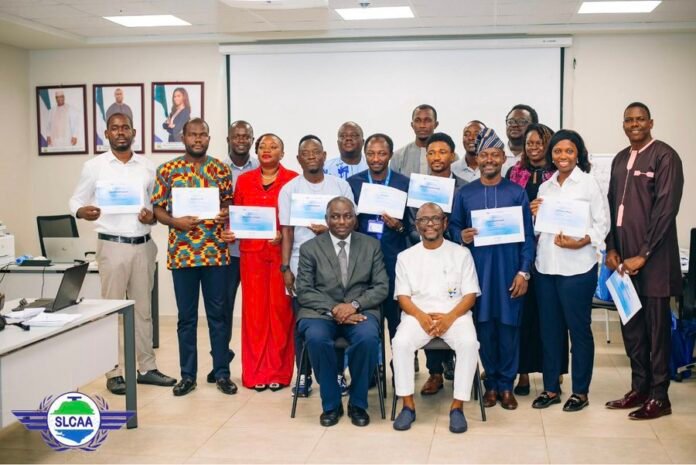
The Sierra Leone Civil Aviation Authority (SLCAA) continues to make impressive strides in transforming the country’s aviation sector under the dynamic leadership of its Director General, Musayeroh Barrie. In a major development, a team of SLCAA personnel has successfully completed the International Civil Aviation Organization (ICAO) Training Developers Course (TDC-EN), a milestone that significantly boosts the Authority’s capacity for delivering high-quality aviation training.

Congratulating the staff on their achievement, Madam Musayeroh Barrie noted, “This milestone strengthens our commitment to quality aviation training in Sierra Leone. We are grateful to ICAO for their continued support and collaboration.” The training achievement aligns with SLCAA’s broader vision of elevating Sierra Leone’s aviation standards to meet international benchmarks.

As part of ongoing reforms, the SLCAA has also declared Freetown International Airport a “No-Bribe Zone,” a bold step aimed at promoting transparency, professionalism and passenger trust. The directive, which came into effect under Madam Musayeroh  Barrie’s leadership, urges travelers to report any form of harassment or demand for unofficial payments to the airport’s information desk. The move is backed by collaboration with oversight institutions, including the Anti-Corruption Commission (ACC).

“The declaration of the airport as a no-bribe zone reflects our commitment to integrity and international service standards,” said an airport official. “This is not a symbolic gesture, enforcement mechanisms are already in place to protect passengers.”

The initiative is part of Sierra Leone’s broader push to rebrand its global image and attract more tourism and investment. Bribery and harassment at points of entry have long plagued several developing nations, but Sierra Leone, through the SLCAA, is taking decisive steps to change that narrative.

Madam Musayeroh Barrie’s tenure has also been marked by significant structural and operational reforms. A major highlight was Sierra Leone’s improved performance in the ICAO Universal Safety Oversight Audit, where the country scored an impressive 74.22% in 2023, well above the 60% Abuja safety target. That achievement has positioned Sierra Leone for potential removal from the European Union Aviation Safety List, paving the way for local carriers to operate in European airspace.

In recognition of its achievements, the SLCAA was ranked the second-best performing agency under the Ministry of Transport and Aviation for 2025. The agency also signed a new Management Performance Contract with the Ministry, laying out specific targets for safety, international partnerships and operational excellence.

Under Madam Musayeroh Barrie’s leadership, the SLCAA has expanded Sierra Leone’s global aviation footprint by signing Bilateral Air Service Agreements with countries like Saudi Arabia and Cameroon. Negotiations are underway with the UK, Italy, Ethiopia and Malaysia. Notably, Madam Musayeroh Barrie led strategic discussions during President Julius Maada Bio’s state visit to Egypt, which culminated in plans for direct Freetown–Cairo flights.

In furthering human capital development, the SLCAA launched technical training programs and, for the first time, sent airworthiness inspectors to Italy through a partnership with the Italian Civil Aviation Authority (ENAC). On the infrastructure front, recent upgrades at Freetown International Airport include a modern car park, advanced fire and rescue services, and a 24-hour power supply system.

These sweeping reforms have earned Madam Musayeroh Barrie widespread praise as a visionary and reform-minded leader. Her proactive engagement with global aviation institutions and emphasis on institutional integrity has significantly elevated the SLCAA’s reputation on the international stage.

“Our mission is to build a model aviation authority in West Africa,” Madam Musayeroh Barrie affirmed. “That means continuous training, modern infrastructure and a zero-tolerance policy on corruption.”

Looking ahead, Sierra Leone’s aviation future appears brighter than ever. With regulatory partnerships with France and potential investments from the CRIT Group on the horizon, SLCAA is positioning itself as a strategic aviation hub in the region.

Under Madam Musayeroh Barrie’s bold leadership, the skies over Sierra Leone are not only open they are charted for transformation, professionalism and lasting excellence.