

Home Blog Page 200

ECSL Commissions Modern Media Center to Deepen Public Trust and Transparency in Electoral Processes

By Francess Wright

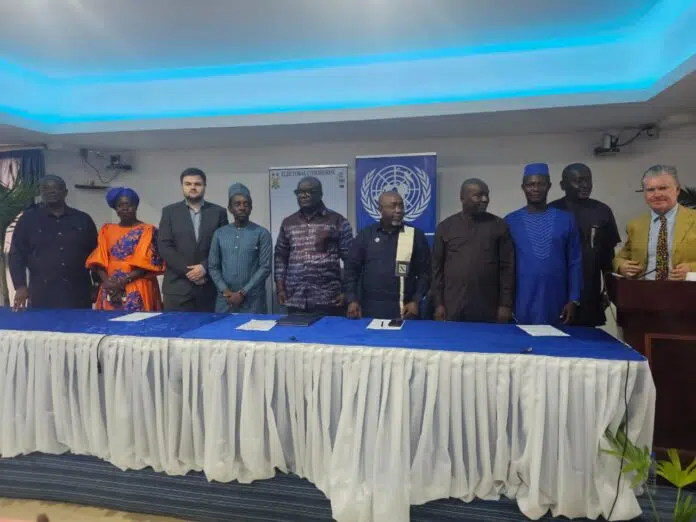
Marking a significant step toward strengthening transparency and public communication in Sierra Leone’s electoral processes, the Electoral Commission for Sierra Leone (ECSL) unveiled its newly constructed Media Center on Wednesday, 28th May 2025, at its headquarters in Freetown.

The commissioning ceremony, attended by Government officials, development partners, media professionals and Civil Society representatives was a showcase of ECSL’s renewed commitment to open, inclusive and accountable elections.

Welcoming attendees, ECSL Executive Secretary, William Davis, emphasized that the Media Center represents a strategic investment in democratic governance.

“This launch is not just a fulfillment of our 2020–2024 Strategic Plan, it’s a pivotal advancement in how we engage with the public,” he said. He also acknowledged the financial support of the Government of Sierra Leone, which covered 52% of the project’s cost and thanked international partners including UNDP, Ireland, Iceland, Canada and the European Union for their vital contributions.

ECSL Commissioner for the Western Area, Zainab Humu Moseray, described the Center as more than a physical space but rather “a dynamic hub designed to deliver accurate, timely and transparent electoral information.” She underscored its role in supporting press briefings, public education campaigns and stakeholder dialogue especially during electoral periods.

Providing insights into the facility’s design, Project Consultant, Mohamed Kamara, said the center was constructed with functionality and resilience in mind.

“From fireproofing features to advanced connectivity tools, this center is built to support both in-person and remote coordination,” he noted.

The building includes a control room for monitoring operations, meeting rooms and multimedia capabilities to support hybrid communication.

Speaking on behalf of the United Nations Development Programme (UNDP), the Resident Representative praised the initiative as a step forward for Sierra Leonean democracy.

“This Media Center will serve as a platform for informed dialogue, not only during elections but throughout the democratic cycle,” he said.

He added that a technical assessment mission would soon be deployed to identify further support needs for ECSL during the 2025–2029 electoral period.

The Deputy Head of Mission from Iceland also delivered brief remarks, highlighting the importance of civic education in electoral integrity. “This center reflects a shared commitment to democratic participation and we are proud to be part of this partnership,” he said.

ECSL’s Chief Electoral Commissioner and Chairman, Mohamed K. Konneh, recalled the Commission’s previous dependence on temporary Press facilities in past elections.

“This center marks a turning point in our mission to make electoral information more accessible, inclusive and verifiable,”

he said. He also revealed that accessibility upgrades, including the installation of an elevator for persons with disabilities, are underway.

Delivering the keynote address, Minister of Information and Civic Education, Chernor Bah, commended ECSL for the initiative, stating:

“This is more than a building,it’s a platform for truth, dialogue and empowerment.” He reiterated the Government’s commitment to civic engagement and combating misinformation. “We must not only speak the truth but ensure we have the means to spread it effectively,” he added.

The ceremony concluded with a guided tour of the facility, officially commissioned by Minister Chernor Bah, offering guests a firsthand view of the center’s modern infrastructure.

The launch of the ECSL Media Center signals a new era for electoral communication in Sierra Leone, placing transparency and public trust at the heart of democratic governance.

NP (SL) Unveils Energy Pass Card Roadshow in Kono, Championing Digital Fuel Innovation

Amin Kef-Ranger

In a bold step toward nationwide digital transformation in fuel purchasing, NP (SL) Limited has taken its trailblazing NP Energy Pass Card Roadshow to Kono District, capturing the attention of local motorists, riders and institutional stakeholders with its forward-looking approach to energy management. This dynamic campaign, which assembled influential representatives from drivers’, bike riders’ unions and institutional representatives, underscores the company’s unwavering commitment to innovation, customer empowerment and regional inclusion.

The leading indigenous petroleum marketing company continues to distinguish itself at the forefront of modern service delivery with the introduction of the NP Energy Pass Card; a revolutionary prepaid digital solution designed exclusively for the purchase of fuel at authorized NP Filling Stations. More than just a technological convenience, the card represents a paradigm shift in how individuals, fleet operators and institutions manage fuel consumption, offering a cashless, secure and highly efficient alternative to traditional payment systems.

In Kono, the roadshow served as an informative and engaging platform to educate fuel users on the vast benefits of embracing digital solutions in everyday transactions. With a focus on promoting transparency, accountability and safety, NP (SL) leveraged this outreach to deepen public understanding of how the NP Energy Pass Card is transforming the landscape of petroleum access across the nation.

Built with advanced functionality, the Energy Pass Card enables users to preload funds and transact seamlessly at NP stations without the need for cash, thereby reducing risks associated with physical currency. Each transaction conducted with the card is digitally logged, providing detailed information on fuel volume, purchase amount, time and location. For private vehicle owners, this ensures better budgeting and personal expenditure tracking. For businesses and public institutions, the benefits are even more compelling, enabling real-time monitoring, expenditure controls and efficient auditing processes that eliminate loopholes and reinforce accountability.

The roadshow highlighted how the card’s appeal is particularly strong among organizations managing large vehicle fleets. By assigning individual cards to specific vehicles or drivers, fleet managers can maintain strict oversight of fuel usage, impose spending limits and analyze fuel trends to detect anomalies or inefficiencies. Such precision in resource management is vital for both cost containment and environmental responsibility and it places NP (SL) ahead of the curve in offering smart fuel management tools in Sierra Leone.

Security remains a cornerstone of the NP Energy Pass Card system. Each card is protected with a unique PIN code, preventing unauthorized usage. In instances of loss or theft, cardholders can swiftly report to NP’s responsive customer service unit, which will block the compromised card and reassign the remaining balance to a new one thus providing users with both peace of mind and financial protection.

The exclusivity of the card to NP service points is a testament to the company’s dedication to quality assurance. Every litre dispensed under the NP banner adheres to rigorous standards and every interaction reflects the professionalism that has become synonymous with the NP brand. Whether in Kono, Kenema, Bo, Makeni, Freetown or other districts, users of the Energy Pass Card enjoy uniform service excellence and access to quality petroleum products.

The card’s enrollment process is designed for accessibility and ease. Individuals and entities can apply by completing a short registration at NP (SL)’s Head Office. Private applicants need only present a valid identification, while corporate bodies must provide a business registration certificate and an approved list of authorized cardholders. Once issued, the card can be topped up at NP stations or through partnering banks, supported by a proactive customer care team ready to assist with activation, inquiries and technical support.

Through its Energy Pass Card Roadshow in Kono, NP (SL) continues to affirm its role not just as a fuel provider, but as a key enabler of digital advancement and economic modernization. By extending this groundbreaking initiative to one of the country’s key districts, NP (SL) reinforces its commitment to national inclusion, local empowerment and service delivery that is as intelligent as it is impactful.

With the Energy Pass Card, NP (SL) is not only fueling vehicles; it is fueling progress, building trust and redefining how Sierra Leone moves forward.

SLCAA and EGYPTAIR Break New Ground with Inaugural Hajj Charter Service

By Amin Kef-Ranger

In a landmark development for Sierra Leone’s aviation sector, the Egypt national carrier, EGYPTAIR, on Wednesday, 28th May 2025, safely landed at the Freetown-Lungi International Airport and departed the same day with the first batch of Sierra Leonean pilgrims heading to the Kingdom of Saudi Arabia for the 2025 Hajj season.

The historic flight marks the first-ever Hajj charter operation from Sierra Leone by EGYPTAIR and represents a significant milestone in the country’s aviation history. The development is attributed to the visionary leadership of His Excellency President Dr. Julius Maada Bio and the Director General of the Sierra Leone Civil Aviation Authority (SLCAA), Madam Musayeroh Barrie, who both played pivotal roles in fostering this strategic aviation partnership.

The charter flight is the result of bilateral engagements held during President Bio’s State Visit to Cairo, Egypt, on 26th March 2025, during which important discussions were held between Sierra Leonean officials and Egyptian aviation authorities. This was followed by a formal agreement signed on 17th March 2025 between the Chairman of EGYPTAIR Holding Company and SLCAA’s Director General, Madam Musayeroh Barrie, to facilitate the airline’s first-ever Hajj operation from Sierra Leone.

Speaking on the achievement, Madam Barrie remarked:

“EGYPTAIR’s successful landing and Hajj charter flight from Freetown-Lungi International Airport marks a historic milestone for our nation. This reflects President Bio’s visionary agenda and our firm commitment to deepening international aviation cooperation across Africa and beyond.”

She added: “Alhamdulillah for a successful Hajj operation at FNA! A big congratulations and thank you to all who made this possible the Hajj Committee, FIA, SHP, WSL, and all Airport staff. This is a proud day for Sierra Leone!”

The collaboration between EGYPTAIR and SLCAA is expected to set a new standard in Sierra Leone’s aviation services and paves the way for greater international partnerships in the years to come. It also significantly enhances the country’s capability to facilitate religious pilgrimages in a more dignified, efficient, and nationally coordinated manner.

This accomplishment not only fulfills a long-standing aspiration of the Muslim community in Sierra Leone but also strengthens Sierra Leone’s position on the continental aviation map, reinforcing the SLCAA’s role as a proactive, visionary regulator under Madam Musayeroh Barrie’s leadership.

The successful flight marks a turning point in Sierra Leone’s aviation history and reflects a broader commitment by the government to improve international connectivity, promote religious freedom, and boost national pride.

QNET Denounces the Misuse of Its Name and Product and Urges Media to be Circumspect

QNET
QNET

Freetown, Sierra Leone. 26 May 2025 – QNET, an international lifestyle and wellness direct selling company has noted, with deep concerns, several media publications on the arrest of 42 individuals in the Hastings area of Eastern Freetown for fraud and financial crimes. The report allegedly and unfortunately linked the arrested persons to QNET and described the company with unsavoury words. QNET continues to urge journalists and media houses to be prudent in hastily associating arrested persons to the company. Many people arrested in similar fashion in the past end up not associated with QNET in any way during investigations.

QNET urgently raises concerns about the activities of unscrupulous persons who falsely present themselves as representatives of the company to commit fraud, causing significant harm to victims who were misled by false promises of oversea visa, employment opportunities and get-rich-quick lies. QNET is not associated with these individuals and these fake promises.

Biram Fall, Regional General Manager for Sub-Saharan Africa, expressed concerns over the exploitation of vulnerable individuals and strongly condemned the deliberate misuse of the QNET brand. He emphasized: “It is disheartening that some individuals continue to take undue advantage of innocent people to perpetuate fraud. These people often claim they are from QNET when they are not. We are actively working with law enforcement and intensifying efforts in public education, enforcement, and transparency. Our primary objective is to ensure that QNET is seen in its truest form, as a business dedicated to enhancing the lifestyle and wellness of people around the world.”

QNET is a legitimate lifestyle and wellness company with a global presence, operating through an e-commerce-based direct selling model. We do not offer job placements, visa opportunities, or require travel to participate in our business. Anyone making such claims is acting fraudulently and must be reported.

QNET will soon launch the “QNET Against Scams” campaign in Sierra Leone to raise more awareness and educate the public about fraud schemes that misuse our name. The campaign will consolidate the company’s current efforts of disseminating the “Truth about QNET” through media publications and stakeholder engagements with regulatory and security agencies.

In addition to public awareness, QNET has taken strong internal disciplinary action against those found violating the company’s policies and ethical marketing practices. In 2024, we issued 298 disciplinary sanctions, 210 suspensions and 88 terminations. As of May 2025, we have already taken 78 actions, including 48 suspensions and 30 terminations. This clearly demonstrates our zero-tolerance approach to unethical behavior.

We provide safe reporting channels via WhatsApp (+233 2566 30005) and email (network.integrity@qnet.net) and urge the public to remain vigilant and always verify the legitimacy of any opportunity claiming affiliation with QNET. Learn more at www.qnet.net.

###

About QNET

QNET is a prominent lifestyle and wellness company that uses a direct selling business model to offer a wide selection of exclusive products that enable individuals to embrace a healthier, more balanced life.

Since 1998, QNET’s innovative products and e-commerce-driven business model have helped build a global community of satisfied customers and microentrepreneurs, who are driven by the mission of RYTHM – Raise Yourself To Help Mankind. Popular product brands offered by QNET include the Bernhard H. Mayer range of luxury watches and jewellery, HomePure range of home care products, the Amezcua wellness range, Physio Radiance personal care range, and QVI branded holiday packages.

QNET proudly holds memberships in the Direct Selling Association in several countries, the Hong Kong Health Food Association, the Health Supplements Industry Association of Singapore, and more. QNET is also active in several global sports sponsorships including in its role as the official direct selling partner of the Manchester City Football Club and the Confederation of African Football (CAF), underscoring its commitment to excellence and global reach.  Discover a world of new possibilities with QNET by visiting www.qnet.net


AWOL Inaugurates New Executives

#image_title

By Amin Kef-Ranger

The Chairman of All Works of Life (AWOL), Ahmed Sahid Nasralla, affectionately known as “De Monk,” on May 23 2025 delivered a powerful keynote address during the inauguration ceremony of the newly appointed AWOL Executive held at the residence of Ambassador Anthony Navo Jr. at Hill Station, Freetown.

In a speech filled with reflection, passion and purpose, Ahmed Sahid Nasralla underscored AWOL’s enduring mission to inspire selfless service and community-driven development. He reaffirmed the civic movement’s commitment to promoting patriotism, celebrating unsung heroes and complementing national development through grassroots empowerment.

Tracing AWOL’s origins to the early 2000s, Ahmed Sahid Nasralla recalled how the organization emerged as a beacon of hope in the aftermath of Sierra Leone’s civil war. Officially launched in 2002 and inaugurated by former President Alhaji Ahmed Tejan Kabbah, AWOL was inspired by a call for citizens to become active participants in rebuilding the nation.

“AWOL was not born out of vanity or political ambition; it was born out of shared sacrifice and a belief that nation-building starts with us,” Ahmed Sahid Nasralla said. “We are not just an organization. We are a movement of service, dignity and unity.”

He noted that the late President Alhaji Ahmed Tejan Kabbah had compared AWOL to a United Nations-inspired self-help project; an effort to instill pride and proactive citizenship among Sierra Leoneans.

Highlighting AWOL’s National Achievement Awards, which have recognized excellence across all walks of life since 2002, Ahmed Sahid Nasralla, emphasized the organization’s inclusive approach to honouring service and achievement. He praised past honorees including hardworking petty traders, outstanding students, public servants, security officers, farmers, entrepreneurs, artists and innovators.

“Every award we give is a thank you; no gate fees, no strings attached, only a desire to uplift and inspire,” he said.

He stressed that AWOL’s recognition programs have always aimed to unite the nation, cutting across class, region and tribe.

Ahmed Sahid Nasralla detailed AWOL’s legacy of practical service beyond the awards. From feeding underprivileged children on the Day of the African Child, to providing relief during the Ebola crisis, COVID-19 pandemic, floods, mudslides and fires, AWOL has consistently answered the call to serve.

“We didn’t just applaud, we acted,” he said. “We brought food, smiles, and listening ears; not cameras.”

He added that AWOL has flown the national flag with pride at significant national events, including Sierra Leone’s 2011 Golden Jubilee celebrations.

Paying homage to the movement’s pioneers, Ahmed Sahid Nasralla remembered the late Ambassador Gibril Moseray Fadika, AWOL’s revered Godfather, for his unwavering patriotism and philanthropy. He saluted all founding members and past chairmen, including Mustapha Adams, Mohamed Laho Jalloh (late), Joseph Fitzgerald Kamara, Hon. Chernor R. M. Bah, Kweku M. S. Lisk and Ambassador Anthony Navo Jr.

He also acknowledged AWOL’s first female Vice Chairperson, Madam Yabome Lansana, for her trailblazing leadership.

“These leaders built the foundation we now stand on. Their legacy is our compass,” Ahmed Sahid Nasralla stated.

He praised the establishment of AWOL Diaspora Chapters in the UK, US, Continental Europe, Australia, The Gambia and the soon-to-be-launched AWOL Canada, describing them as lifelines connecting the global Sierra Leonean community to national development.

Reflecting on his own journey, Ahmed Sahid Nasralla recounted his decade-long service as AWOL’s Secretary General, the longest in its history and how that experience prepared him for his new role. He also cited his tenure as President of the Sierra Leone Association of Journalists (SLAJ) as further proof of his belief that “leadership is not a position, it is a mission.”

“I served not with wealth, but with loyalty, dedication and heart,” he said. “And today, as Chairman, I recommit to that same spirit.”

He announced that this year AWOL will not host its annual awards but will instead focus on strengthening its structures and reconnecting with its roots. Among the priorities for 2025 are:

  • A full Annual General Meeting (AGM) involving international chapters;
  • A grand AWOL Comeback Dinner in December;
  • Enhanced diaspora partnerships and community engagement programs;
  • A continued commitment to being non-partisan, inclusive and unapologetically patriotic.

The Chairman urged the new Executive to view their roles as a sacred duty, not a ceremonial title. “This is a calling to serve, to uplift and to be the difference Sierra Leone needs,” he said.

Concluding his address, Ahmed Sahid Nasralla reminded all present that despite the passage of time and shifting national priorities, AWOL remains the only civic movement of its kind from the post-war era still active, relevant and respected.

“To our members who never stopped believing, even when the lights dimmed, you are the soul of AWOL. Tonight, we light the torch again. Together,” he declared.

In his final words, the Chairman called on every Sierra Leonean to embrace the AWOL spirit: “Let us walk this path with sacrifice and unity. Let us be the bridge between what Sierra Leone is and what it can be. Let us be AWOL—All ‘Works’ of Life. All ‘Works’ for Life.”

Cows Wreak Havoc on Feed Salone Farms Causing Major Setback

Government of Sierra Leones Feed Salone Program

By Lansana Fofanah

The Government of Sierra Leones Feed Salone Program is seriously under threat if an immediate action is not taken. The planting season across the country has started but the bad impact of loose cow herding has already been felt by farmers.

Over the weekend, over One Hundred Cows were spotted destroying the 2,500 hectares of rice in the Sierra Tec Agricultural Investment.

Expressing his frustration, the Chief Executive Officer of Sierra TEC, Salieu Kanu said that while they as dedicated private investors remain committed to supporting the Feed Salone agenda, they continue to face grave challenges from cows that have been wrecking untold havoc on their produce.

“Some group of cattle herders are intentionally wreaking havoc on our 2,500 hectares of rice farmland. This destructive behavior is not only undermining the President’s vision for food security, but also puts at risk crucial investments aimed at bolstering our agricultural sector,” he said.

Recently, Sierra TEC demonstrated its commitment by investing over $500,000 towards essential farm tools, modern machinery and quality seeds to enhance productivity and ensure sustainable farming practices.

“That initiative, which promises to significantly impact the local economy, was launched with the backing of key figures including the Minister of Agriculture, Presidential Spokesman, the Resident Minister, the Paramount Chiefs of Makari and various Section Chiefs. Despite our efforts to address this issue by notifying the Police, the Ministry of Agriculture, the Paramount Chief and other relevant stakeholders, the situation remains dire and unresolved,” he said.

Sadly, the cattle herders involved are evading accountability, claiming that they have been granted permission by higher authorities to destroy the fields.
According to Salieu Kanu, the defiance escalated recently when the Police managed to apprehend some of the cattle responsible, yet the broader issue continues unabated.

“We are reaching out for support and assistance from well-wishers who can help us address this pressing challenge before it completely undermines our agricultural efforts and the livelihoods dependent on them,” Salieu Kanu humbly appealed.

A similar situation is happening in Kamathun village, Biriwa Chiefdom, Bombali district where the Journalists Against Hunger’s massive farm project is under threat. The planting season has started but the issue of loose cow herding is derailing every effort to plant in time.
It is very important for the Government of Sierra Leone to address this issue before it escalates to riots between farmers and cattle owners; a situation which is happening in other countries.

Rights Group Says Sierra Leone’s Justice System Failing Citizens, Urges Immediate Overhaul

By Amin kef (Ranger)

The Campaign for Human Rights and Development International (CHRDI), a leading human rights and social policy advocacy organization, has on Friday May 23, 2025, issued a strong call for urgent and comprehensive reforms within Sierra Leone’s judiciary. Citing widespread public distrust, the organization warns of a growing crisis in confidence that threatens the country’s justice system and the rule of law.

In a Press Release issued, CHRDI highlighted a number of troubling issues that have undermined public faith in the judiciary, including perceived corruption, political interference and inefficient court processes.

Key Issues Undermining Trust:

  • Perceived Bias and Corruption: The organization pointed to increasing reports of biased rulings and corrupt practices, which it says have significantly eroded trust in judicial outcomes.
  • Lack of Transparency and Accountability: A general absence of transparency in legal proceedings and insufficient mechanisms to hold judicial officers accountable have led to growing public skepticism.
  • Delays and Bureaucratic Hurdles: Prolonged delays in court cases and limited access to justice, particularly for marginalized groups, continue to frustrate citizens seeking redress.
  • Political Interference: CHRDI expressed concern over apparent political influences on judicial decisions, warning that such interference undermines the independence of the judiciary and violates international standards.
  • Inadequate Working Conditions: Poor conditions of service for judicial staff, the organization added, further compromise the effectiveness of the judicial system and discourage qualified professionals from serving.

In response to these concerns, CHRDI is calling for:

  • Immediate Reform of the Judicial System: The organization urges the Government to undertake sweeping reforms aimed at enhancing judicial independence, improving transparency and streamlining procedures to ensure timely justice.
  • Accountability Measures: CHRDI advocates for the establishment of effective mechanisms to investigate and address allegations of misconduct and corruption within the judiciary.
  • Public Engagement and Confidence-Building: The organization calls on authorities to strengthen public trust through greater community engagement and the implementation of outreach programs that foster dialogue and transparency.
  • Protection of Judicial Independence: A central demand is the full protection of judicial independence from political or other external pressures, ensuring impartial adjudication in all matters.

Abdul M. Fatoma, Chief Executive of CHRDI, noted that an informed public is increasingly skeptical of the judiciary’s ability to serve justice impartially. “Those who better understand how the system works are often those who trust it the least,” he said. Citing the United Nations Basic Principles on the Independence of the Judiciary, Abdul Fatoma emphasized that judicial independence is not a privilege of the judiciary, but a right of all individuals seeking justice.

CHRDI announced plans to host public forums, engage national stakeholders and advocate for legislative changes to rebuild trust in the judicial system. These efforts, the organization says, aim to create a justice system that is truly independent, fair and accountable to the people.

In a related development, the Judiciary of Sierra Leone has issued a formal response following the recent publication by CHRDI. The Judiciary’s Communication team condemned the report as a malicious, self-serving and misleading attempt aimed at blackmailing the institution.

Officials have assured the public that a full clarification addressing the issues raised and exposing the motives behind the publication will be provided in due course. The Judiciary emphasized its commitment to transparency and upholding justice amidst attempts to undermine its reputation.

Campaign for Human Rights and Development International (CHRDI) is a rights-based advocacy organization that promotes democratic governance, rule of law and public accountability. The organization holds Special Consultative Status with the United Nations Economic and Social Council (ECOSOC) and is accredited to various UN agencies.

CHRDI Exposes Widespread Police Misconduct & Unlawful Detentions Across Police Stations

Executive Director, CHRDI, Abdul Fatorma

By Amin Kef (Ranger)

The Campaign for Human Rights and Development International (CHRDI), a UK-based rights advocacy organization, has raised serious concerns over ongoing police misconduct and widespread violations of detainees’ rights in Sierra Leone. The findings emerged following a monitoring exercise conducted by CHRDI across five major police stations in the Western Area.

The team, led by Executive Director, Abdul Fatorma, visited the Aberdeen, Lumley, Congo Cross, Central Police Stations and CID Headquarters on 23 May 2025, engaging directly with 178 individuals in custody. The visit forms part of a broader monitoring effort that spanned from 17 April to 23 May 2025, during which CHRDI interviewed a total of 1,148 suspects.

Data gathered from the recent visit reveals the following numbers of detainees:

  • CID Headquarters: 89 suspects (79 male, 8 female)
  • Lumley: 39 suspects (37 male, 2 female)
  • Central Police Station: 22 suspects (all male)
  • Aberdeen: 11 suspects (8 male, 3 female)
  • Congo Cross: 19 suspects (all male)

According to CHRDI, while the figures show a reduction in detentions at Congo Cross and Lumley and relative stability at Aberdeen, CID Headquarters continues to reflect a troubling increase in the number of detainees.

A particularly alarming case was uncovered at CID Headquarters, where one man has been held for over six months; far exceeding the legal detention limits of 72 hours to 10 days. Additionally, 15 other individuals have been awaiting legal advice for more than two weeks. The pattern of prolonged detention without charge also persists at other stations, with 20 cases at CID HQ, six at Lumley and four at Central Police.

The report also documents instances of police abuse. At Central Police Station, one suspect reported being slapped three times by officers after requesting that his statement be taken following 48 hours of detention. CHRDI emphasized that such conduct violates both Sierra Leonean law and international human rights treaties, including the International Covenant on Civil and Political Rights (ICCPR), to which Sierra Leone is a signatory. Article 10 of the ICCPR mandates the humane treatment of detainees at all times.

CHRDI also highlighted several specific and concerning cases:

  • A 65-year-old woman held at CID for over eight days without charge.
  • A pregnant woman reportedly detained for more than two weeks without receiving medical attention.
  • 13 street beggars, including vulnerable individuals, held in police cells at Lumley without due process.
  • Two suspects transferred to CID by the Transnational Organized Crime Unit (TOCU) for “safe custody” but left there for over two months without being taken to court.

During the recent visitation, CHRDI’s advocacy efforts led to the release of 13 unlawfully detained individuals across four police stations. The organization emphasized the urgent need for better coordination within the country’s criminal justice system to prevent such delays and abuses.

Executive Director, Abdul Fatorma, stated: “The lack of coordination among criminal justice stakeholders is resulting in systemic delays and unlawful detentions, which not only undermine the effectiveness of our justice system but also violate the fundamental rights of citizens. The Sierra Leone Government must act decisively to ensure that no one is held in custody beyond the time limits stipulated by our laws.”

CHRDI is urging the Government of Sierra Leone and the Sierra Leone Police to immediately charge or release all individuals held in breach of legal detention limits, in accordance with both national legislation and international human rights standards.

The organization reaffirms its commitment to human rights monitoring and calls for urgent reforms to safeguard civil liberties, ensure accountability within law enforcement and restore public confidence in the justice system.


Koidu Crisis a Wake-Up Call-President Bio Urged to Review All Mining Contracts

President Julius Maada Bio

By Amin Kef (Ranger)

In recent weeks, Sierra Leone has witnessed a critical moment in the struggle between the people’s right to justice and the unchecked power of foreign mining corporations. At the centre of this unfolding saga stands Her Excellency, First Lady Fatima Maada Bio; an unyielding voice for justice, equity and national dignity.

The First Lady’s bold stance against Koidu Limited, the country’s largest diamond mining operator, is not merely a personal dispute; it is a reflection of the wider frustrations of thousands of Sierra Leoneans who have long suffered under exploitative mining agreements that enrich a few and impoverish many.

What began as a labour dispute in Kono District, where over 1,000 workers have been laid off amid growing unrest, has now evolved into a national awakening. The First Lady’s public condemnation of Koidu Limited’s treatment of workers, highlighting allegations of inhumane labour conditions, poor healthcare and inadequate wages, has given a voice to the voiceless. She did not pick a fight; she was drawn into it when the company sought her intervention. Yet, when she refused to play the role of corporate puppet, the retaliation was swift and vindictive, with legal threats and smear campaigns now aimed at silencing her.

But Fatima Bio is not one to be intimidated. Her statement that “defending the rights of ordinary Sierra Leoneans is not an act of defamation, but an obligation of public service” has resonated deeply across the country. Indeed, her courage in standing up to multinational interests has reminded us that leadership is not about bowing to pressure, it is about standing firm in the face of injustice.

The backlash she has faced should concern every patriotic Sierra Leonean. As citizen after citizen has rightfully declared, an attack on the First Lady is an attack on the sovereignty of the Republic. It is a line that must not be crossed.

The situation in Koidu also pulls back the curtain on a broader issue: the broken state of our mining sector. Despite vast mineral wealth, Sierra Leone remains mired in poverty, with youth unemployment soaring to over 50% in mining towns. Communities near extractive sites continue to lack basic amenities, while foreign-owned companies ship our diamonds and minerals abroad, leaving behind environmental destruction and economic despair.

What makes this crisis more painful is that it has been allowed to fester for decades under poorly negotiated contracts and weak enforcement mechanisms. The Mines and Minerals Development Act of 2022, though well-intentioned, lacks the enforcement teeth needed to protect communities and ensure transparency.

This is why the time has come for His Excellency, President Julius Maada Bio, to act decisively. Sierra Leone needs more than another mediation committee or half-hearted press release. What the country demands now is a complete, transparent review of all mining contracts starting with Koidu Limited.

We must ask the hard questions:

  • Are these contracts truly serving the interest of Sierra Leoneans?
  • Are our natural resources being used to develop our nation or to deepen dependency?
  • Why are our people unemployed and poor, while our diamonds enrich distant lands?

President Bio’s administration has consistently spoken about “New Direction” governance. There is no better moment than now to translate that slogan into bold, principled action. Reviewing and renegotiating these contracts is not just about better revenue sharing; it is about reclaiming our dignity as a nation.

The First Lady has shown courage. The Minister of Employment, Labour and Social Security, Mohamed Rahman Swaray, has worked tirelessly to push for reforms and has engaged with workers. Civil society has mobilized. Now, the mantle rests with the President to show the world that Sierra Leone is not for sale and that its leaders will not be cowed by threats from foreign companies that think they can buy silence and loyalty.

This is about more than Koidu Holdings. It’s about the soul of our country. We must not allow foreign interests to dictate who speaks, who works or who gets to benefit from our land.

In defending the First Lady, we are defending the people she speaks for. In reviewing these contracts, we are reclaiming our future.

Let this be the moment President Julius Maada Bio charts a new course; one where justice prevails and Sierra Leone’s resources uplift its people, not just corporate balance sheets.


ECSL Engages Stakeholders on 2025–2029 Strategic Plan, Turns Sod for New Regional Office in Port Loko

By Alvin Lansana Kargbo

The Electoral Commission for Sierra Leone (ECSL) deepened its national consultative mission on Thursday, 22th May 2025, as it engaged stakeholders in Port Loko City in a meeting that marked both reflection and a major institutional milestone. Beyond shaping the future of electoral governance for the 2025–2029 cycle, the event celebrated the symbolic start of ECSL’s permanent regional office in the Northwest, marking a new chapter for electoral administration in the region.

Held at the Port Loko District Council Hall, the engagement convened stakeholders from across the Northwest Region, including political parties, civil society actors, traditional authorities and electoral officers. At the heart of the discussions was a drive to evaluate the ECSL’s 2020–2024 Strategic Plan and lay the groundwork for a new strategy that is inclusive, regionally grounded and nationally responsive.

Welcoming participants, Northwest Regional Commissioner Albert Samba Kanu underscored the event’s historic nature noting that, for the first time, Port Loko would host the foundation ceremony of the ECSL’s regional office.

“This office will not only cement our physical presence in the region,” he said, “but also symbolize our institutional independence and long-term commitment to electoral transparency and accessibility.”

He praised his staff for their sacrifices during the 2023 general elections and expressed gratitude to all stakeholders contributing to the ECSL’s new roadmap. He also acknowledged the contribution of youth engagement leaders and reaffirmed the region’s readiness to support credible electoral systems.

Port Loko City Mayor, Alieu Badara Tarawallie, echoed the importance of the engagement, linking electoral reform directly to citizens’ daily lives.

“Political decisions touch every corner of our existence,” he noted. “That’s why our people must understand and participate in the electoral process.”

Calling for more regional offices of Government agencies to be based in Port Loko as it’s now a standalone region. Mayor Alieu Badara Tarawallie urged inclusivity and education to counter misinformation and apathy.

“We must educate our people about their rights, their roles and how their voices shape governance,” he said. He concluded with optimism about the city’s growing role in national affairs and welcomed all participants on behalf of the municipality.

Chief Electoral Commissioner, Mohamed K. Konneh, used the occasion to reflect on the institution’s strategic trajectory. He revealed that of the 163 activities in the outgoing 2020–2024 strategic plan, 85% were successfully implemented, an achievement made possible by strong Government support and internal reforms.

He noted that the ECSL’s engagements across Kenema, Bo, Makeni and now Port Loko reflect a deliberate bottom-up strategy.

“We are collecting honest, region-specific feedback,” he said, “and these ideas will be consolidated into strategic pillars that reflect the lived realities of all Sierra Leoneans.”

He added that the draft strategy will be brought back to stakeholders for validation before its official launch later this year.

The Commissioner also emphasized the importance of independence, citing the start of a new ECSL office in Port Loko as a safeguard against the operational constraints posed by rented spaces.

“This office will secure the integrity of our work and provide a dignified environment for both staff and citizens,” he said.

Dr. Francis Sowa, ECSL’s lead consultant working on new policies stemming from the Tripartite Committee recommendations, outlined two crucial initiatives: a stakeholder consultation policy and an information/document management policy.

“The first ensures that ECSL institutionalizes the kind of stakeholder dialogue we are witnessing today,” Dr. Francis Sowa explained. “It’s about building trust and making consultation a permanent, structured feature of our work.”

The second policy aims to streamline how ECSL manages, stores and shares its documents. “We’re moving toward a system where all non-sensitive documents are publicly accessible by default,” he stated. “It’s a shift toward proactive transparency.”

Dr. Francis Sowa emphasized that those reforms are not theoretical. “We’ve engaged political parties, civil society and other stakeholders. Their insights are directly shaping our work. This isn’t just a policy exercise; it’s democratic practice.”

As with other regional engagements, the Port Loko session ended with group work. Participants revisited the outgoing plan and submitted recommendations for improving voter registration, information systems, electoral integrity and public education.

The ECSL now moves closer to finalizing a strategic plan that reflects not only national mandates but regional realities. From Kenema to Bo, Makeni to Port Loko, one message resonates: credible elections are a shared responsibility and the roadmap must belong to the people.