Home Blog Page 201

Orange Donates Digital School Kits to Freetown Cheshire Primary School

By Ibrahim Sesay

Orange Foundation Sierra Leone has taken a major leap in advancing digital learning across the country by donating a complete Digital School Kit to Freetown Cheshire Primary School. The donation, presented during a special ceremony on Friday, May 23, 2025, at the Freetown Cheshire Home, includes tablets, a projector screen, a Bluetooth speaker and a solar power kit; tools aimed at empowering both pupils and educators through access to modern educational technology.

The initiative, part of the Foundation’s Digital School Kit Program, underscores Orange Foundation’s unwavering commitment to bridging the digital divide in schools across Sierra Leone. In her remarks during the presentation, Finnah Stevens, Head of Coding at Orange Foundation, reaffirmed the organization’s mission to promote inclusive education, health and cultural development through targeted philanthropic efforts.

“These kits fall under our education pillar,” Finnah Stevens explained. “Each one is valued at approximately 6,000 euros; a cost most schools cannot afford. That’s why we offer them free of charge. Sierra Leone should not be left behind in this global digital shift and through this program, we’re ensuring schools have the tools they need to keep up.”

Finnah Stevens also emphasized sustainability, noting that the kits are built to last if used responsibly. She assured that Orange Foundation will conduct periodic, unannounced monitoring visits to ensure the materials are being used effectively and maintained in good condition.

Grateful for the support, Acting Head Teacher, Neneh Beatrice Kamara, expressed heartfelt thanks on behalf of the school. She acknowledged the growing importance of digital skills in today’s world and stressed her commitment to ensuring the learning tools remain in the hands of pupils. “This is a world that is fast embracing technology and our children must be equipped to participate in it. As Acting Head Teacher, I will enforce strict monitoring to ensure these resources are not misused. They are for the pupils and teachers are here to guide and support them.”

Reverend Canon Dr. Reginald Spaine-Pratt, a member of the school’s Management Committee, described the donation as a significant boost to the school’s educational mission. “Digital tools are vital, but they are costly. Without this support, such an investment would have been beyond our reach,” he remarked.

Also speaking at the event, Dr. Abdulai Dumbuya, Chairman of the Freetown Cheshire Home Management Committee, highlighted the inclusive vision of the institution and the value the donation brings. “While this home was originally established for children with physical disabilities, we have since expanded to include all children to promote inclusivity. We still face infrastructural challenges, such as unreliable electricity and delayed Government support, but this donation is a step in the right direction. It will help prepare our children for a more competitive future.”

Echoing the sentiments of appreciation, Blessing Kallon, a resident at Freetown Cheshire Home, encouraged her peers to cherish and use the new learning tools wisely. “We are fortunate to receive this support,” she said. “Let us make good use of it because many other schools would be glad to have this opportunity.”

The event concluded with an earnest appeal from the school administration for continued support from partners like Orange Foundation in their future projects, as they work to create a more inclusive and technology-driven learning environment for all children.

SLCAA Installs Thermal Camera to Enhance Early Detection of Mpox at Airport

By Amin Kef (Ranger)

The Sierra Leone Civil Aviation Authority (SLCAA) has taken a decisive step to enhance public health safety by installing a thermal imaging camera on Thursday, May 22, 2025, at the main terminal entrance of Freetown International Airport. This measure aims to improve Mpox screening protocols as part of ongoing efforts to prevent the spread of the virus and ensure early detection.

The thermal camera system, now fully operational automatically scans the body temperatures of all incoming travelers. Individuals displaying elevated temperatures, a primary symptom of Mpox, will be referred to the airport’s medical unit for further evaluation, in line with guidelines established by the Ministry of Health and Sanitation.

Speaking on the enhanced safety measure, SLCAA Director General Madam Musayeroh Barrie emphasized the Authority’s commitment to safeguarding the health of passengers and staff while ensuring seamless airport operations.

“We are taking decisive steps to ensure that airport activities continue without interruption while prioritizing the health of all passengers and staff,” she stated.

In addition to the thermal camera installation, Madam Musayeroh Barrie outlined a multi-faceted public health framework now in place at the Freetown International Airport:

  • Advanced Screening Protocols: Any individual, traveler or staff, detected with high body temperature is promptly escorted to the airport’s medical facility for comprehensive assessment before gaining access to the terminal.
  • Passenger Education Campaigns: Regular announcements over the airport’s public address system educate passengers on Mpox symptoms and encourage preventive measures, including physical distancing.
  • Sanitation Reinforcements: In collaboration with the Ministry of Health, alcohol-based hand sanitizers have been strategically placed throughout the terminal to promote regular hand hygiene, a critical practice given Mpox’s surface and contact-based transmission.
  • Vaccination Rollout: Nearly 300 essential airport staff have received Mpox vaccinations. The SLCAA, in partnership with the Ministry of Health, is working to ensure complete vaccination coverage for all airport personnel.

These initiatives are part of a broader national strategy to strengthen disease surveillance at ports of entry and reflect Sierra Leone’s alignment with international health and safety recommendations for air travel.

The SLCAA has urged the traveling public to fully comply with all health and screening procedures, highlighting that collective cooperation is essential to ensuring the safety of all airport users.

Meanwhile, in a related development underscoring Sierra Leone’s aviation modernization drive, the SLCAA on Tuesday, May 20, 2025, welcomed a high-level delegation from the International Civil Aviation Organization’s Western and Central Africa Office (ICAO WACAF). The visit marked the beginning of a critical assessment mission focused on strengthening the country’s meteorological infrastructure and aviation regulatory systems.

During the opening session in Freetown, Madam Musayeroh Barrie reiterated SLCAA’s commitment to sector-wide reform and acknowledged the support of national stakeholders and the White House Office in facilitating the mission.

She explained that the ICAO mission would conduct a gap analysis of Sierra Leone’s aviation data and meteorological systems, with the goal of recommending regulatory improvements and building technical capacity. A key priority of the assessment is to enhance the exchange and distribution of aviation data to support safe and efficient air navigation services.

Sierra Leone’s airspace management falls under the Roberts Flight Information Region (FIR), a cooperative framework shared with Liberia and Guinea. While the Sierra Leone Meteorological Agency (SLMET) provides local weather services, the Roberts FIR oversees upper airspace meteorological watch duties. The Sierra Leone Airports Authority (SLAA) serves as the country’s Air Navigation Service Provider (ANSP), managing both aerodrome and approach control services.

Highlighting the importance of inter-agency collaboration, Madam Musayeroh Barrie expressed confidence in the professionalism of the SLCAA staff and affirmed the Authority’s full support for the ICAO mission.

“We are optimistic that this mission will guide our journey toward achieving operational excellence and global alignment,” she noted.

The ICAO WACAF mission is expected to produce a comprehensive report outlining actionable steps to enhance Sierra Leone’s aviation safety and regulatory performance. The mission underscores Sierra Leone’s commitment to fostering a safe, modern and internationally compliant aviation environment, not just for its citizens, but for the entire West African region.

NP (SL) Energy Pass Card Delivers Smart, Safe and Seamless Fueling for Drivers and Businesses

By Amin Kef (Ranger)

In a bold stride toward digitizing fuel transactions and promoting transparency, NP (SL) Ltd, Sierra Leone’s foremost indigenous petroleum company, has introduced the NP Energy Pass Card; an innovation that is rapidly transforming the country’s fuel management landscape.

The Energy Pass Card, a prepaid electronic payment tool designed exclusively for purchasing fuel at certain NP Filling Stations, is gaining strong traction among motorists, businesses and public institutions seeking secure and efficient alternatives to cash-based systems. It allows users to preload funds and make direct fuel purchases across NP’s nationwide network, reducing the risks and inefficiencies associated with cash transactions.

Ibrahim Kamara, a senior fleet supervisor at a leading construction company, described the card as a “game changer.” He noted, “Before, managing fuel for our vehicles was a nightmare; receipts went missing and cash was hard to trace. With this card, everything is recorded automatically and we can monitor usage from the office in real time. It has drastically improved our operations.”

A key feature of the NP Energy Pass Card is its built-in digital tracking. Each transaction generates a record of the fuel quantity purchased, the amount spent and the exact time and location. This real-time visibility is especially valuable for organizations managing large fleets or multiple drivers.

Mariama Sesay, an accounts officer at a humanitarian agency, emphasized its financial accountability: “We deal with donor funds, so every expense must be justified. The Energy Pass Card gives us clean, verifiable fuel data. It’s helped us reduce leakages and answer audit queries with confidence.”

Security is another strong advantage. Each card is protected by a personal PIN and in cases of loss or theft, it can be blocked immediately with any unused balance transferred to a new card.

Samuel Bangura, a Civil Society advocate for public sector efficiency, pointed out its broader implications: “This kind of digital system helps cut down corruption. It removes the temptation of cash and ensures that fuel is used for its intended purpose. If more Government departments adopt it, it could save the country millions.”

Though the card functions exclusively at NP Filling Stations, many see this as a quality control measure rather than a limitation. Across all NP outlets, from Freetown to Kenema, Bo and Makeni, customers can rely on consistent service and product standards.

For institutional use, the Energy Pass Card can be assigned to individual vehicles or staff. Spending limits can be configured and transaction summaries accessed easily, helping decision-makers maintain tighter control over operating costs.

Fatmata Jalloh, Logistics Coordinator at a local agricultural project, remarked, “It’s efficient. We no longer have to chase down drivers for receipts or worry about fuel misuse in the field. The card keeps us accountable and makes reporting easier.”

Getting the NP Energy Pass Card is a straightforward process. Interested individuals and entities can register at NP’s Head Office with basic identification or business documentation. Once issued, cards can be topped up at NP outlets or through selected bank partners. A responsive support team is available to guide new users and resolve issues promptly.

As more institutions adopt the Energy Pass Card, it is clear the system is not just a convenience; it’s a tool for modernizing how Sierra Leoneans interact with the fuel economy. It is setting a new benchmark in transparency, security and customer-focused innovation.

In the words of a public procurement analyst, “The NP Energy Pass Card shows how technology can solve old problems. It helps close loopholes, protects resources and gives users real control over their fuel spending.”


SLCAA Hosts ICAO WACAF Mission to Analyze Meteorological and Aviation Systems

By Amin Kef (Ranger)

The Sierra Leone Civil Aviation Authority (SLCAA) has officially welcomed a high-level delegation from the International Civil Aviation Organization’s Western and Central Africa Office (ICAO WACAF) to Sierra Leone on Tuesday 20th May, 2025 as part of a critical assessment mission. The visit marks a major step toward strengthening the country’s meteorological infrastructure and aviation regulatory framework.

The ICAO WACAF assessment mission is focused on conducting a comprehensive gap analysis of Sierra Leone’s current meteorological systems and aviation data infrastructure. It aims to provide recommendations for regulatory enhancement, capacity building  and technical improvements that will align Sierra Leone’s civil aviation operations with international standards.

During the opening session held in Freetown, SLCAA Director General Madam Musayeroh Barrie reaffirmed the Authority’s commitment to aviation sector reform and modernization. She acknowledged the pivotal role played by the White House Office in facilitating the mission and extended gratitude to all key national stakeholders who have dedicated their time and resources to the process.

In her remarks, SLCAA Director General highlighted that the mission will concentrate on improving systems that support the exchange and distribution of aviation data, a critical area for ensuring the safety and efficiency of air navigation services. She emphasized that this initiative is not only timely but essential, as it will identify the gaps within the current system and guide efforts toward achieving operational excellence.

She further noted that Sierra Leone is part of a broader airspace management arrangement under the Roberts Flight Information Region (FIAR), a technical cooperation agreement that includes Liberia and Guinea. Within this shared framework, the Sierra Leone Meteorological Agency (SLMET) operates as the National Meteorological Center, responsible for providing local weather services. However, the responsibility for Meteorological Watch Office (MWO) services, particularly in the upper airspace, lies with Roberts FIAR.

In addition, the Sierra Leone Airports Authority (SLAA) serves as the designated Air Navigation Service Provider (ANSP) within the country, managing aerodrome and approach control services. This coordinated structure makes inter-agency collaboration crucial and she underscored the importance of strong partnerships between SLMET, SLAA and Roberts FIAR to ensure seamless service delivery.

The Director General also used the opportunity to express her confidence in the professionalism and dedication of the SLCAA team. She described the Authority as being staffed by a proactive and competent workforce committed to fulfilling its regulatory responsibilities and contributing to the overall success of the mission. She assured stakeholders and the visiting delegation that SLCAA would continue to provide unwavering support to ensure the mission achieves its objectives.

She concluded by welcoming the ICAO WACAF team once again to Sierra Leone and expressed hope that the group-building activities and technical engagements planned during the visit would be fruitful and impactful.

The ICAO WACAF assessment mission is expected to produce a detailed analysis of Sierra Leone’s meteorological and regulatory landscape, helping to chart a path toward sustainable improvements. It also reinforces Sierra Leone’s broader goal of enhancing aviation safety, building technical capacity and aligning its civil aviation operations with global best practices.

The mission continues to advance with full cooperation and engagement from all key stakeholders, including SLCAA, SLMET, SLAA and Roberts FIAR, who are committed to ensuring a successful outcome that will benefit not only Sierra Leone but the wider West African aviation community.

EDSA Director General and Deputy Fired, Nigerian National Takes Over Leadership

Tesman Awo Egbe, the current Chief Operating Officer

By Amin Kef (Ranger)

In a sweeping reform initiative aimed at overhauling the operations of the Electricity Distribution and Supply Authority (EDSA), His Excellency President Dr. Julius Maada Bio has announced major leadership changes at the institution.

In a statement released on Wednesday, May 21, 2025, President Bio revealed that the Director General of EDSA, Dr. Joe Lahai-Sormana and the Deputy Director General, Ing. James Rogers, have been relieved of their duties with immediate effect. Their removal is part of a broader strategy to boost efficiency, ensure accountability and improve service delivery in the electricity sector.

Until substantive replacements are appointed, Tesman Awo Egbe, the current Chief Operating Officer, will assume interim leadership of EDSA. Tesman Awo Egbe, a Nigerian national with nearly two decades of experience in the energy sector, is expected to steer the institution through this transition period.

This high-level shake-up also includes administrative leave for several other key officials: the Commercial Manager, Head of Revenue Collection, Head of Technical Commercial Operations and the Marketing Manager.

The Government’s reform agenda for EDSA focuses on enhancing revenue collection, reducing losses and modernizing the agency’s technical and administrative systems. Among the key measures are the implementation of a centralized revenue collection framework, the deployment of tamper-proof electricity meters, increased private sector participation and a complete overhaul of the Authority’s ICT infrastructure. Staff retraining and tighter oversight by the Ministry of Energy are also central to the reform plan.

Tesman Awo Egbe’s appointment comes with a wealth of regional experience. He has previously worked in Rwanda, Malawi and Nigeria and joined EDSA through World Bank support aimed at helping Sierra Leone improve its energy systems. As an electrical engineer, Tesman Awo Egbe is regarded as a seasoned professional capable of navigating the complexities of utility management.

The changes mark a significant step in President Bio’s efforts to revitalize Sierra Leone’s energy sector. By reinforcing transparency and accountability, the President aims to ensure a stable and sustainable electricity supply that supports national development and economic growth.

Observers view the move as a clear message from the Presidency that underperformance in key public service institutions will no longer be tolerated.

These efforts underscore President Bio’s commitment to transparency and sustainable energy transformation in Sierra Leone.

Ministry of Youth Concludes National Youth Steering Committee Meeting on Status of Youth Report

Minister of Youth Affairs, Ibrahim Sannoh

By Foday Moriba Conteh

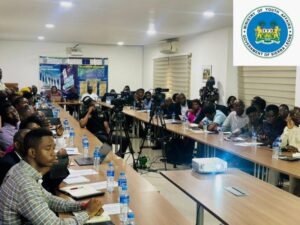
In a strong reaffirmation of its dedication to youth empowerment, the Ministry of Youth Affairs (MOYA) and its partners on Tuesday, 20th May 2025, concluded a one-day high-level “Status of Youth” Steering Committee Meeting at the Hub Hotel Conference Hall in Wilberforce, Freetown. The event brought together senior Government officials, civil society representatives, international development partners and youth-led organizations; all united by a common goal: to revitalize the national dialogue on youth development.

The newly appointed Minister of Youth Affairs, Ibrahim Sannoh, in his address made a compelling introduction, laying out an ambitious Strategic Vision for 2025-2028. With a focus on agriculture, climate resilience, skills development and digital innovation, the plan aims to position Sierra Leone’s young people as “innovators, entrepreneurs and leaders” driving inclusive growth and national transformation.

“This is not just about programs it’s about possibilities,” declared the Minister. “We are rewriting the future and our young people will hold the pen.”

The Minister outlined four major thematic areas that will guide the Ministry’s strategic focus: Agribusiness and Food Security, Climate Change Adaptation and Resilience, Skills Development and Employment and the Digital Economy and Innovation. Within this comprehensive framework, he stated that the Ministry has set ambitious goals, including the creation of 35,000 youth jobs, the launch of over 300 youth-led agribusiness start-ups and the training of 20,000 young people in climate-smart agricultural practices.

He added that the strategy targets a 15% increase in food yields and aims to boost youth incomes by 30%, signaling a bold push towards youth empowerment and sustainable economic transformation.

“We are not here to decorate reports we are here to deliver,” Ibrahim Sannoh reminded the audience, earning nods of approval and resounding applause.

Projects like “Youth Cooperative Farms”, “Youth Agripreneurship Funds” and “Value Addition Centers” were highlighted as vehicles to achieve those targets.

Adding data-driven weight to the proceedings, Andrew Lavaley, Executive Director of the Institute for Governance Reform, presented a “Draft Status of Youth Report”, revealing both the challenges and opportunities facing Sierra Leone’s youth. Key findings include:

  • Only 22% of youth are in paid employment, with men twice as likely to be employed as women.
  • Agriculture remains the largest employer, accounting for 33% of youth employment.
  • Food poverty affects 52% of young people.
  • 63% rely on charity to meet basic needs.
  • Vulnerable groups such as youth with disabilities, pregnant girls and young mothers face the greatest socio-economic risks.

Andrew Lavaley noted that while education increases employability, 39% of youth with university degrees are employed; youth without education remain largely marginalized. Alarmingly, 1 in 5 young people is unemployed, and longer unemployment spells are common among those aged 26–35.

Minister of Trade and Industry, Alpha Ibrahim Sesay, also made a key policy announcement, revealing that his Ministry will soon launch two major projects focused on boosting entrepreneurship and innovation in the informal sector. Targeting youth and small enterprises, these initiatives aim to enhance income generation and promote sustainability.

“The informal sector is the heartbeat of our economy,” said the Trade Minister. “By equipping young people with the tools to innovate, we’re turning that heartbeat into a rhythm of resilience.”

The meeting emphasized urgent policy recommendations:

  • Implement cash transfer and livelihood support programs for vulnerable youth
  • Develop family-friendly policies, including affordable childcare and reproductive health services
  • Expand access to technical and vocational training through accredited short-term courses, especially for uncertified skilled youth

Other speakers, including the Deputy Minister of Youth Affairs, UNDP representatives, NaCSA and CSO leaders, echoed support for these measures and encouraged sustained collaboration across sectors.

The Status of Youth Report will inform future Government strategies and development programs, ensuring that young men and women benefit from emerging economic opportunities. It will also guide the design of targeted interventions in employment, empowerment and education.

As the event closed with a vote of thanks from the Commissioner of the National Youth Commission (NAYCOM), the mood was far from ceremonial. The energy, ambition and clear-eyed focus that filled the room signaled the beginning of what many are calling a Youth Renaissance in Sierra Leone.

With over 60% of the population under the age of 35, the stakes for Sierra Leone’s future have never been higher. But if the resolve shown at Tuesday’s meeting is anything to go by, the Ministry of Youth Affairs is ready to lead from the front and the youth of Sierra Leone are more than ready to follow.

Health Minister Champions Health Equity & Innovation at World Health Assembly in Geneva

Sierra Leone has reaffirmed its position as a vocal and proactive advocate for global health equity during the ongoing 78th World Health Assembly (WHA), currently underway in Geneva, Switzerland. The country’s Minister of Health, Dr. Austin Demby, on Wednesday 21 May 2025 delivered a powerful address during a high-level session themed: “One World for Health,” highlighting Sierra Leone’s steadfast commitment to shared health responsibility, equity and inclusive progress.

In front of an audience of global health leaders and policymakers, Dr. Austin Demby emphasized that the concept of “One World for Health” is more than a theme; it is a lived experience for countries like Sierra Leone. “Health security must be built on a foundation of shared responsibility, with no nation left behind,” he stated.

Dr. Austin Demby praised the adoption of the new Pandemic Agreement at the Assembly, describing it as a landmark achievement rooted in equity, transparency and accountability. However, he warned that the real challenge lies in its implementation. “The task before us now is execution, ensuring no country or individual is excluded in future health emergencies,” he stressed.

Drawing from recent experiences, the Minister shared how Sierra Leone effectively responded to a recent Mpox outbreak. He credited the resilience of communities and local health structures in containing the disease. “Communities have been at the heart of our response,” he said, underscoring the importance of grassroots engagement in health security.

On the issue of health financing, Dr. Austin Demby outlined Sierra Leone’s efforts to increase domestic resource mobilization and improve efficiency. He pointed to innovative models like debt swaps, while reiterating that international solidarity remains crucial. “Sustainable progress requires continued partnerships,” he noted.

Highlighting the country’s health achievements in recent years, Dr. Austin Demby reported that:

  • Maternal mortality has dropped by two-thirds;
  • Child mortality has been halved;
  • Special Care Baby Units now operate in 80% of districts, with an 87% survival rate;
  • New vaccines for malaria and HPV have been introduced, significantly broadening access to lifesaving care.

“These achievements show what is possible when clear priorities, strong systems and collaborative support converge,” he concluded.

In a related high-level side event co-hosted by the World Health Organization (WHO) and the Buffett Foundation, Dr. Austin Demby spotlighted Sierra Leone’s transformative approach to healthcare delivery. The event, chaired by WHO Director-General, Dr. Tedros Adhanom Ghebreyesus, featured Sierra Leone’s journey from vertical disease response models to an integrated, life-stage health system centered around individuals.

One of the flagship innovations presented was the Pregnancy App, which registers and monitors pregnant women across the country. Complementing this digital tool is the newly launched Emergency Situation Room, which investigates every maternal and child death in health facilities nationwide.

“These systems have enabled us to make timely interventions and drastically reduce maternal mortality now at 343 per 100,000 live births,” Dr. Austin Demby revealed, drawing applause from attendees. “It’s a remarkable step forward, but we are aiming even higher.”

Despite allocating 11.6% of its GDP to healthcare, Dr. Austin Demby noted that Sierra Leone’s small economy limits the impact of this investment. He therefore called on development partners to continue supporting health system strengthening, especially in supply chains and universal healthcare access.

He also announced the upcoming launch of SLeSHi, Sierra Leone’s National Health Insurance Scheme, designed to reduce out-of-pocket spending and promote equity in service access.

On the sidelines of the Assembly, Dr. Austin Demby met with Dr. Sania Nishtar, CEO of Gavi, the Vaccine Alliance, on Tuesday, 20 May. The meeting focused on ongoing collaborations in public health and immunization efforts.

Dr. Austin Demby extended gratitude to Dr. Sania Nishtar for her recent visit to Sierra Leone during African Vaccination Week and for her meeting with President Julius Maada Bio. He praised Gavi’s longstanding support and swift assistance during the recent Mpox outbreak.

He detailed the Government’s coordinated response, including the shift from home-based to facility-based treatment and the establishment of specialized Mpox centers. Efforts are also underway, he said, to secure vaccines for the outbreak with partner support.

Dr. Sania Nishtar, in turn, commended Sierra Leone’s rapid response and reaffirmed Gavi’s commitment to supporting the country’s immunization priorities. She confirmed that Gavi is working closely with the Ministry of Health to secure additional Mpox vaccines.

Dr. Austin Demby was joined at the meeting by Ambassador Dr. Lansana Gberie, Sierra Leone’s Permanent Representative to the United Nations Office and other International Organizations in Geneva.

While the World Health Assembly continues until 27 May, Sierra Leone’s delegation remains actively engaged in shaping a future where health is a universal human right; equitable, inclusive and accessible to all.

U.S. Embassy Partners with Sierra Leone Air Force to Enhance Capabilities

By Amin Kef (Ranger)

The U.S. Embassy has partnered with the Republic of Sierra Leone Air Force (SLAF) on a week-long engagement focused on strategic development and organizational growth to strengthen Sierra Leone’s air defense capabilities. Conducted in collaboration with the U.S. Air Forces in Europe-Air Forces Africa (USAFE-AFAFRICA), this initiative marks a vital step in enhancing the SLAF’s operational readiness and professional standards.

A specialized team from the USAFE-AFAFRICA Manpower, Organization and Resources Division traveled to Sierra Leone to provide expert insights and facilitate knowledge-sharing sessions with SLAF personnel. The engagement forms part of a broader collaboration between the United States and the Republic of Sierra Leone Armed Forces (RSLAF), aimed at supporting the tri-service construct of the nation’s military.

Throughout the one-week exchange, U.S. Air Force subject matter experts delivered briefings and led discussions on various key areas including manpower planning, personnel development, database management, career progression systems, strategic planning, air force doctrine  and the application of manning formulas. These sessions were designed to aid the SLAF in its ongoing efforts to bolster national defense through enhanced organizational structures and improved human capital strategies.

Central to the discussions was the development of a comprehensive plan to expand SLAF capabilities in alignment with national security objectives primarily focused on deterrence, territorial integrity and conflict resolution. This initiative is expected to enhance the air force’s ability to safeguard Sierra Leone’s vital interests and contribute to regional stability.

Brigadier General David Sahr Ngaujah, Chief of General Staff of the RSLAF, welcomed the engagement, expressing strong interest in continued collaboration with the U.S. Air Force. He emphasized the importance of adopting international best practices in areas such as personnel evaluations, assignments and training systems.

“We greatly appreciate this partnership with our American counterparts, as it provides critical tools and frameworks that will help shape a more efficient and professional air force,” Brigadier General David Sahr Ngaujah stated.

The U.S. Embassy reiterated its ongoing commitment to supporting Sierra Leone in building a capable, well-structured and mission-ready air force. A spokesperson for the Embassy highlighted that such engagements are a testament to the enduring partnership between the two nations and the shared goal of promoting peace, stability and security in West Africa.

This initiative adds to a growing list of cooperative programs between Sierra Leone and the United States, reflecting deepening defense ties and mutual efforts to enhance institutional capacity within the region’s security architecture.

NP (SL) Makes Fuel Purchase Easier with Energy Pass Card As Customers Applaud Innovation

NP (SL)
NP (SL)

By Amin Kef (Ranger)

NP (SL), Sierra Leone’s leading petroleum marketing company, is modernizing the way fuel is bought in the country through the availability of the NP Energy Pass Card. This prepaid card, designed solely for buying fuel at NP stations, is quickly changing how people and businesses pay for petroleum products by offering a fast, secure and cashless method that is already winning praise from satisfied users.

The NP Energy Pass Card is easy to use and helps customers avoid the risks of carrying cash. Instead, users preload money onto the card and then use it to purchase petrol or diesel at certain NP Filling Stations nationwide. It is currently being used by a growing number of private car owners, public institutions and companies with large fleets and their feedback has been overwhelmingly positive.

“It’s a game-changer,” said Mohamed Jabbie, a private motorist based in Freetown. “I used to carry cash or rely on my debit card, but now I just use my NP Energy Pass Card. It’s fast and safe, and I get a clear record of how much fuel I’ve used. I never have to worry about keeping receipts or being overcharged.”

Every transaction done with the card generates a digital record, detailing the amount of fuel bought, the cost and the exact time and location. This level of transparency helps individual users monitor their fuel spending and supports better budgeting. For companies, it provides a full breakdown of fuel use across vehicles, cutting down on waste and unauthorized spending.

Ibrahim Conteh, a fleet supervisor for a local logistics company in Makeni, praised the card for helping improve internal controls. “Before the card, we used to give our drivers cash and sometimes it was hard to know exactly how the money was spent. With the NP Energy Pass Card, each vehicle has its own card and we can track all purchases. It has saved us time and money,” he said.

Security is another big reason why customers are switching to the Energy Pass Card. Each card is protected by a personal PIN and in the event of loss or theft, the card can be quickly blocked by NP’s customer service team and the balance transferred to a new one.

“I lost my card once and panicked, but I called NP immediately and they were able to block it and issue me a new card within a day,” shared Aminatu Jalloh, an NGO worker in Kenema. “No money was lost and that really gave me peace of mind.”

Though the card is limited to use at NP stations, customers see this as a benefit rather than a drawback. NP’s reputation for quality fuel and reliable service means users can depend on their network wherever they are in Sierra Leone whether in Bo, Kenema, Makeni or remote areas where NP operates.

Getting the card is simple. Individuals can apply by visiting the NP Head Office with valid identification, while businesses and institutions are required to submit official documents, including a business registration certificate and a list of authorized users. Once approved, the card is issued and activated. Customers can top up at NP service stations or partner banks and NP’s customer service team is always available to help with setup and support.

“The NP Energy Pass Card makes my work easier,” said Mohamed Bangura, a Government driver in Bo. “I don’t have to worry about carrying Government vouchers or cash anymore. I just use the card and everything is recorded automatically.”

The NP Energy Pass Card is proving to be more than just a payment method; it’s a smart fuel management tool that brings convenience, safety and accountability to the pump. With customers now able to take full control of their fuel usage and spending, NP (SL) continues to show leadership in digital innovation and customer care in Sierra Leone’s energy sector.

Artificial Intelligence and the Erosion of Media Credibility: Implications for Journalism Students

Theresa Kef Sesay
Theresa Kef Sesay

By Theresa Kef Sesay
For Journalism Studies

As artificial intelligence (AI) technologies become increasingly embedded in the media landscape, concerns are growing over their impact on the credibility of journalism. For students and scholars of journalism studies, understanding the challenges posed by AI is critical—both for navigating the evolving media environment and for upholding journalistic ethics and standards.

The Proliferation of Misinformation and Disinformation

One of the most pressing concerns is the use of AI to generate and disseminate false or misleading content. Deepfake videos, AI-generated news articles, and automated social media bots have become tools of disinformation campaigns. These technologies can convincingly mimic legitimate journalism, making it difficult for audiences to distinguish between credible news and fabricated stories.^1

This not only undermines public trust in the media but also challenges the role of the journalist as a gatekeeper of verified information. In an academic context, it highlights the need for journalism students to develop strong fact-checking and digital verification skills.

Public Skepticism and the Rise of ‘Truth Fatigue’

The presence of AI-generated misinformation has a compounding effect: it fosters public skepticism toward even genuine reporting. As audiences become more aware of deepfakes and manipulated content, they may begin to question the authenticity of all media—leading to what scholars term “truth fatigue.”^2

Dr. James Bangura, a lecturer in Journalism and Media Ethics, observes:

“We are entering a period where the audience’s default response to news is doubt. That has serious consequences for democratic engagement and media accountability.”

For journalism students, this trend underscores the importance of transparency, source verification, and ethical reporting practices to rebuild public trust.

The Threat of AI-Driven Content Farms

Another issue is the rise of AI-generated content farms—websites that churn out large volumes of articles optimized for search engines but lacking journalistic rigor. These sites often prioritize clicks over truth, diminishing the visibility and perceived value of well-researched, original reporting.^3

Students must recognize the commercial incentives that drive these practices and critically assess the influence of algorithms on content production and audience reach. These dynamics challenge traditional journalism values and introduce new ethical dilemmas in the digital age.

Algorithmic Bias and Lack of Editorial Judgment

AI systems are not neutral. They inherit biases from the data on which they are trained. This can lead to skewed reporting, misrepresentation of marginalized groups, and reinforcement of harmful stereotypes.^4 Moreover, AI lacks human editorial judgment—the ability to interpret context, weigh ethical concerns, and respond to sensitive issues with empathy.

For journalism scholars and students, this calls for a renewed focus on media ethics, diversity, and inclusion, as well as the development of critical frameworks for evaluating AI tools in journalistic practice.

The Disconnection from Human-Centered Reporting

AI-generated content often lacks the human voice—the empathy, intuition, and moral reasoning that define high-quality journalism. Journalism students must be trained to distinguish between content that merely informs and content that resonates. Audiences are more likely to trust journalism that is transparent, contextual, and emotionally intelligent—qualities AI still struggles to replicate.^5

Fake News Outlets and Impersonation Risks

AI has also made it easier to fabricate entire media ecosystems, including fake news websites, fabricated journalist profiles, and cloned branding of reputable outlets. These deceptive platforms can spread propaganda or manipulate public opinion under the guise of legitimate journalism.^6

This further erodes trust in the media and places greater responsibility on journalists—and journalism students—to verify sources, uphold professional integrity, and understand the implications of digital deception.

What This Means for Journalism Education

In light of these challenges, journalism education must evolve. Key recommendations for educators and students include:
• Integrating media literacy and AI literacy into journalism curricula
• Teaching advanced verification techniques and digital forensics
• Promoting ethical awareness in the use of AI tools
• Encouraging transparency and accountability in AI-assisted reporting

While AI offers powerful tools that can support journalistic work—from transcription and data analysis to audience engagement—it also introduces complex threats to media credibility. For students of journalism studies, the challenge is twofold: to harness the benefits of AI responsibly, and to guard against its potential to distort truth, erode trust, and compromise journalistic integrity.

In this critical moment, journalism students are not just learning to report the news—they are preparing to defend the credibility of the media itself.

Footnotes
1. Samantha Bradshaw and Philip N. Howard, The Global Disinformation Order: 2019 Global Inventory of Organized Social Media Manipulation, Oxford Internet Institute, 2019.
2. Claire Wardle and Hossein Derakhshan, Information Disorder: Toward an Interdisciplinary Framework for Research and Policy Making, Council of Europe, 2017.
3. Nicholas Diakopoulos, Automating the News: How Algorithms Are Rewriting the Media, Harvard University Press, 2019.
4. Safiya Umoja Noble, Algorithms of Oppression: How Search Engines Reinforce Racism, NYU Press, 2018.
5. Matthew Hindman, The Internet Trap: How the Digital Economy Builds Monopolies and Undermines Democracy, Princeton University Press, 2018.
6. Craig Silverman, Lies, Damn Lies and Viral Content, Tow Center for Digital Journalism, Columbia University, 2015.